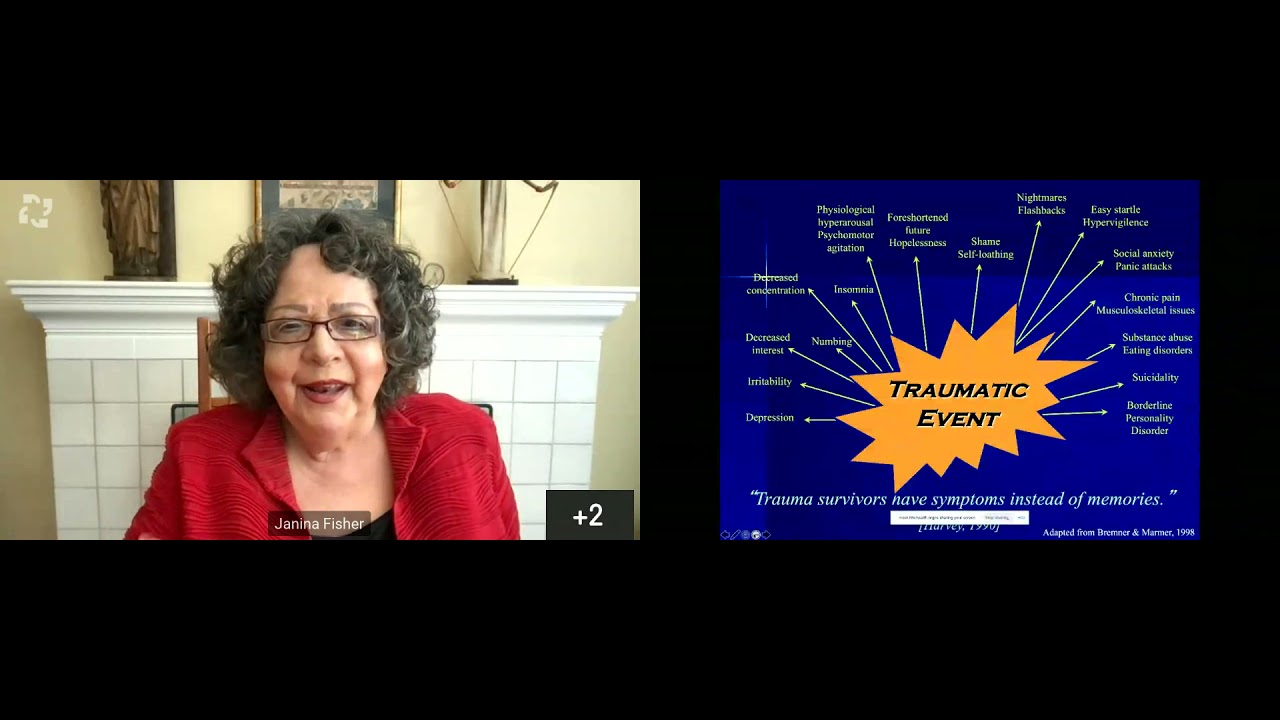
we know from the brain scan research led by Bessel vandero that traumatic experiences are encoded in the brain primarily as body and emotional memories and that that narrative memory I'm pointing at this part of the brain because this is where we store a narrative memory narrative memory for trauma is more fragmented more incomplete because when we're traumatically activated the prefrontal cortex shuts down so I I think in most cases the client with deep-seated resentment is is stuck in those feeling memories of being wronged then but of course because these are memories that are being triggered
in the present the feeling I am being wronged feels absolutely real and sometimes I I can help people to see that uh I can help them I I say you know I'm wondering if this feeling of being wronged so deeply wronged is a memory of a childhood in which you were very little and the wrongs done to you were very big and uh and notice that I'm I'm I'm reframing it but I'm doing so with a lot of empathy because that that's my my one way of hopefully breaking through this belief I am being wrong
um and sometimes clients are relieved to know that they're remembering being wrong and and I have to say I don't mean to say that you're cooworker behavior is okay or that your brother-in-law's behavior is okay not a bit but that really painful deep feeling of being wronged maybe that's the memory of being that little kid and um and and often clients get that sometimes they don't and uh and I'm thinking actually today about a client um who didn't [Music] um and uh so let me say a little bit about what does work uh um because
I think really that's more helpful than sharing a way in which nothing worked um the most successful approach I've found to deep-seated resentment um first reframing it as feeling memory and then also saying you know living well is really the best revenge well I'm not living well because look how I've been wronged and I say yeah yeah and so if you're not living well because you were wronged they're still winning they're still how they still have the power to make your life miserable and uh well that's not right I say absolutely that's exactly why I'm
saying it because I don't want them to win and you don't want them to win but the only way for you to win is to live well despite them and um and you know sometimes with these clients who have such deep-seated resentment um that approach makes them feel that they're being wronged by the therapist because it works so well with most resentful clients I I still always try it um but um there's always the risk that in some clients may feel that you really don't understand resentment remember is is connected to the emotion of anger
the emotion of anger is connected to the human or to the animal defense of fight so one of the things that I always think about when I think about resentment is that there is anger that is waiting to mobilize a fight response that was never allowed to complete and this is an idea that comes from Pat Ogden and sensory motor Psychotherapy Peter line and sematic EXP experiencing that that the defenses the animal defenses fight flight when they are ineffective when they have to be held back as when the victim submits because it isn't safe to
fight that the trauma can't resolve because the defense hasn't gone to completion so using a sensory motor psychotherapy approach I would try to help the client um connect the feeling of resentment to the body experience of resentment and usually if I ask the client to notice the sematic sensations connected to resentment um there is some description of muscles engaging the fist clenches the shoulders get tight the arms get tight and often we can help clients to complete that that urge to push away um and and I then for that purpose I have to help the
client notice the resentment without in any way minimizing it or suggesting that it's a problem because then the fight response will get turned on me which is not terribly helpful for either of us so so I can I can ask them to notice the resentment I can even call it anger or indignation um and then ask them to notice how their body is experiencing the resentment and um and if the client is still fixated and that can happen uh I'm I'm thinking about my failed case with someone with deep-seated resentment um what I didn't do
with her that I would have done now is I would have reframed the resentment as a positive I would have said good for you even though it costs you so much to feel that anger and resentment you're holding them accountable um or I could say you know congratulations it's hard to hold on to resentment for so long because it's so painful um but good for you because you're not going to let these people off the hook and when you reframe something positively it's easier for clients to say yeah I'm holding them accountable but but my
life is miserable then I could say good point so what you're saying is it's costing you a lot to to hold on to this resentment so so those are the best ways to challenge resentment and uh and I think I think it's very it's very very hard and and I feel I feel empathy for the client who is whose resentment ended our therapy um because eventually she came to resent me and uh um and I think it was inevitable because there was no one in her life um toward whom she didn't feel resentful which then
makes me think okay that's probably feeling memory um that's getting attached to all the different players in her life including her therapist unfortunately [Music]