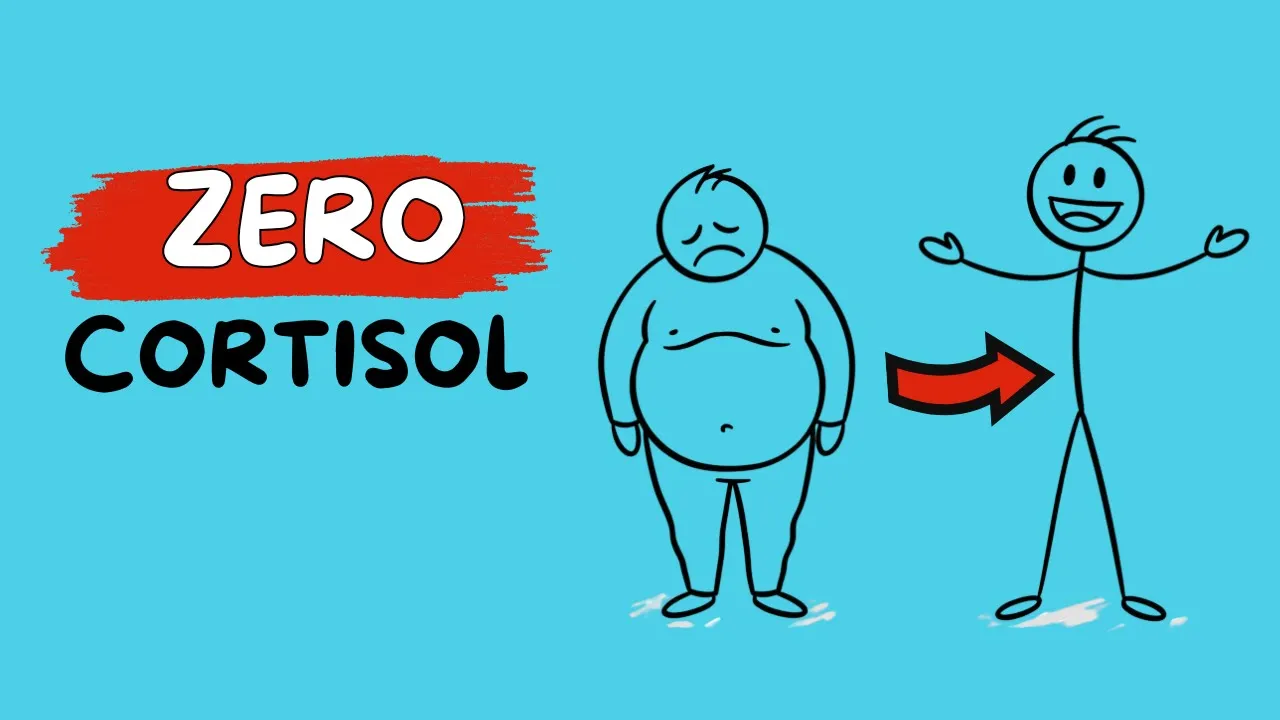
There is a siege happening inside your body right now. Most of us look in the mirror and focus on the fat we can see and pinch the subcutaneous layer that covers our muscles. We treat it as a cosmetic annoyance, something to be dieted away for beach season.
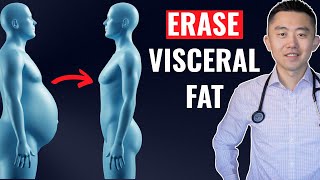
But deep beneath the surface, wrapped tightly around your liver, your pancreas, and your intestines, lies a different kind of adversary. It is called visceral fat. Unlike the passive fat under your skin, visceral fat is biologically active.
It is not merely a storage unit. It is an endocrine organ in its own right. It pumps inflammatory cytoines into your system.
It disrupts your cardiovascular health and it hijacks your hormonal signaling. But the most terrifying aspect of visceral fat is not just that it exists, but why it exists. It is not there simply because you ate too many calories or skipped the gym.
It is there because your body thinks you are in danger. To understand how to eliminate this dangerous tissue, we must first understand the architect that built it, cortisol. And to understand cortisol, we have to look at the machinery of your survival.
In the modern world, cortisol has been branded as the stress hormone, a villain to be suppressed at all costs. But from an evolutionary perspective, cortisol is a hero. For 200,000 years, it was the single most important chemical for human survival.
Imagine our ancestors on the savannah. When they faced a predator, a rival tribe, or a sudden lack of food, the brain initiated a complex chain reaction known as the HPA axis, the interaction between the hypothalamus, the pituitary gland, and the adrenal glands. This was a survival override switch.
[snorts] It commanded the body to stop digesting, stop reproducing, and stop building muscle. Instead, it flooded the bloodstream with glucose to fuel a fight orflight response. But here is where the mechanism gets fascinating and where your current struggle begins.
The body needed a quick way to refuel after the danger passed. Evolution learned that storing fat on the arms or legs was inefficient for emergency access. If you are running from a lion, you do not want heavy legs.
The liver, your body's chemical processing plant, needed a rapid source of energy nearby. So, the body developed a specific distribution system. It placed a high concentration of glucocorticoid receptors, essentially cortisol magnets, deep within the abdomen.
When cortisol is high, these receptors act like docking stations, pulling fat from the bloodstream and locking it around your internal organs. This was a brilliant adaptation for a hunter gatherer. It meant that if you survived a tiger attack or a harsh winter, your body prioritized storing energy right where your vital organs could access it instantly.
Visceral fat was survival backpack. It was insurance against death. The problem is that your biology has not updated its software in 10,000 years, but your environment has changed completely.
Today, there are no tigers. Instead, there are deadlines, traffic, blue light from screens, financial pressure, and social anxiety. The threats have changed, but the body's response has not.
In the modern world, the stress is rarely acute. It is chronic. You are not running from a predator for 10 minutes.
You are simmering in a lowgrade anxiety for 16 hours a day. This creates a phenomenon known as the cortisol trap. Because you are constantly stressed, your cortisol levels never drop to baseline.
Your body remains in a perpetual state of emergency. It constantly signals the liver to release glucose for a physical fight that never happens. When you don't burn that glucose off with physical movement, the pancreas must release insulin to clear the sugar from the blood.
And here lies the deadly cycle. Insulin is a storage hormone. In the presence of high cortisol and high insulin, your body has no choice but to take that energy and store it back into the visceral fat cells.
You are trapped in a biological loop where your body is frantically preparing for a famine that never comes while you continue to feed it. Furthermore, this chronic stress leads to a biological tragedy known as the pregnenolone steel. Cortisol is so vital for survival that the body will prioritize its production over everything else.
It uses a precursor hormone called pregnnenolone to make cortisol. But pregnenolone is also the raw material for your sex hormones, testosterone and estrogen. When stress is high, the body steals this raw material to make more cortisol, leaving your reproductive hormones to crash.
This is why we see the specific phenotype of the skinny fat individual. These are people who have thin arms and legs, but a distended hard belly. Their high stress levels are literally catabolizing or breaking down muscle tissue from their limbs to convert it into glucose which is then redeposited as fat around the organs.
They are not just gaining weight, they are structurally rearranging their body composition based on a survival blueprint intended for the stone age. Another layer to this trap is the chemical neuropeptide Y. When you are stressed, the body releases this molecule specifically to make you crave carbohydrates.
It is not a lack of willpower that makes you reach for comfort food. It is ancient biology. Neuropeptide Y tells the brain that energy expenditure is high due to stress and the fastest way to replenish it is through dense, easy to digest calories.
You are fighting a chemical signal that is as strong as the drive to breathe. So, how do we hack this system? How do we force the body to unlock these deep stores of energy?
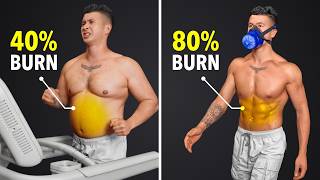
The answer lies not in starvation, but in signaling safety. You cannot force visceral fat off by adding more stress to the system through extreme dieting or excessive cardio. In fact, chronic cardio, running for hours at a steady pace, can actually mimic the stress of a long hunt, spiking cortisol further and causing the body to hold on to fat even tighter.
You must convince your autonomic nervous system that the war is over. The first step is redefining exercise. Highintensity interval training has its place, but for a body flooded with cortisol, it can be counterproductive.
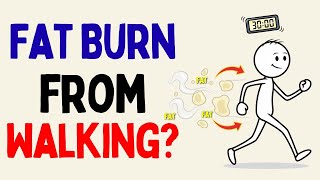
The most effective tool for lowering cortisol while burning fat is low inensity steadystate movement, specifically walking. Walking uncouples the stress response. It allows the body to burn fat for fuel without triggering the fight orflight alarm.
Anthropologists suggest that walking was the baseline state of human existence. When you walk, optic flow, the passing of visual landscapes, actually calms the amygdala, the brain's fear center. It communicates to the brain that you are moving forward, you are not trapped, and you are safe.
However, to strip away visceral fat, we need to combine this low stress activity with a high intensity signal that protects muscle. This is where heavy resistance training comes in. Lifting heavy objects sends a potent anabolic signal that counters the catabolic muscle wasting effects of cortisol.
It increases testosterone and growth hormone, both of which are direct antagonists to visceral fat storage. By building muscle, you also increase your receptor sensitivity to insulin, giving the glucose somewhere to go other than your belly. The second pillar is nutritional timing.
It is not just about what you eat, but when. Cortisol follows a circadian rhythm. It should be highest in the morning to wake you up and lowest in the evening to let you sleep.
Modern lifestyles invert this. We drink caffeine late, keeping cortisol high, and eat sugar at night, spiking insulin. To fix this, we must align with our biology.
A high protein breakfast helps support dopamine and thyroid function, setting a metabolic pace for the day without spiking insulin. Conversely, shifting carbohydrates to the evening meal, can actually be a strategic tool. Carbohydrates trigger the release of serotonin, a precursor to melatonin, the sleep hormone.
By eating your complex carbs at dinner, you blunt the evening cortisol spike, allowing the body to shift from defense mode to repair mode during sleep. This brings us to the most critical yet most ignored factor, sleep. One night of sleep deprivation can reduce your insulin sensitivity by up to 40%.
If you are sleeping less than 7 hours, your body perceives this as a stressor equivalent to a physical injury. It raises baseline cortisol the next day to keep you alert, which immediately triggers visceral fat storage. This creates the tired but wired feeling where you're exhausted but cannot fall asleep because your stress hormones are stuck in the on position.
Prioritizing sleep hygiene, cool rooms, darkness and routine is not passive rest. It is active metabolic strategy. We must also look at the micronutrient level.
A body under stress burns through specific minerals rapidly. Magnesium, often called the relaxation mineral, is the first to be depleted. A deficiency in magnesium amplifies the stress response, creating a hair trigger sensitivity to cortisol.
Supplementing with magnesium blycinate along with adaptogens like ashwagandha or rodeiola has shown in clinical studies to lower serum cortisol levels substantially. These are not magic pills. They are tools to dampen the biological noise so your body can hear the signal to burn fat.
Furthermore, we can utilize hormetic stressors, short bursts of controlled stress that make the body more resilient. Cold exposure such as cold showers or ice baths initially spikes cortisol, but trains the nervous system to recover quickly, lowering baseline stress levels over time. It also activates brown atapost tissue, a type of fat that burns energy to create heat, further aiding in metabolic health.
Finally, we must address the psychological trigger. Visceral fat is physical, but its root is often perception. The brain does not distinguish between a physical threat and a psychological worry.
If you perceive your life as a series of emergencies, your biochemistry will reflect that. Practices like deep diaphragmatic breathing are not just spiritual cliches. They are physiological switches.
Deep breathing stimulates the vagus nerve which activates the parasympathetic nervous system, the rest and digest state. This is the only state in which the body feels safe enough to let go of its emergency reserves. In conclusion, burning visceral fat is not a battle of willpower.
It is a negotiation with your biology. You are fighting millions of years of evolutionary programming that wants to keep you alive at all costs. Your visceral fat protected ancestors from starvation.
But to thrive in the modern world, you must signal to your body that the famine is not coming. You must prove to your physiology that you are safe by optimizing sleep, prioritizing heavy lifting and walking, aligning your nutrition with your circadian rhythm, and managing your mineral balance. You do more than just lose weight.
You reset your hormonal baseline. You turn off the emergency alarm. And when the alarm goes silent, the fortress of visceral fat finally begins to crumble.