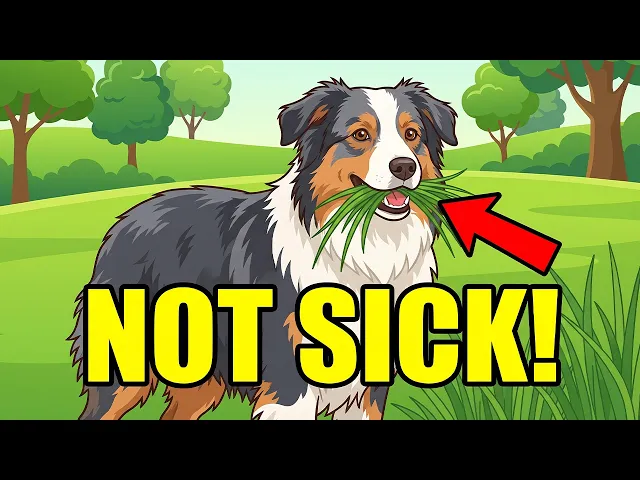
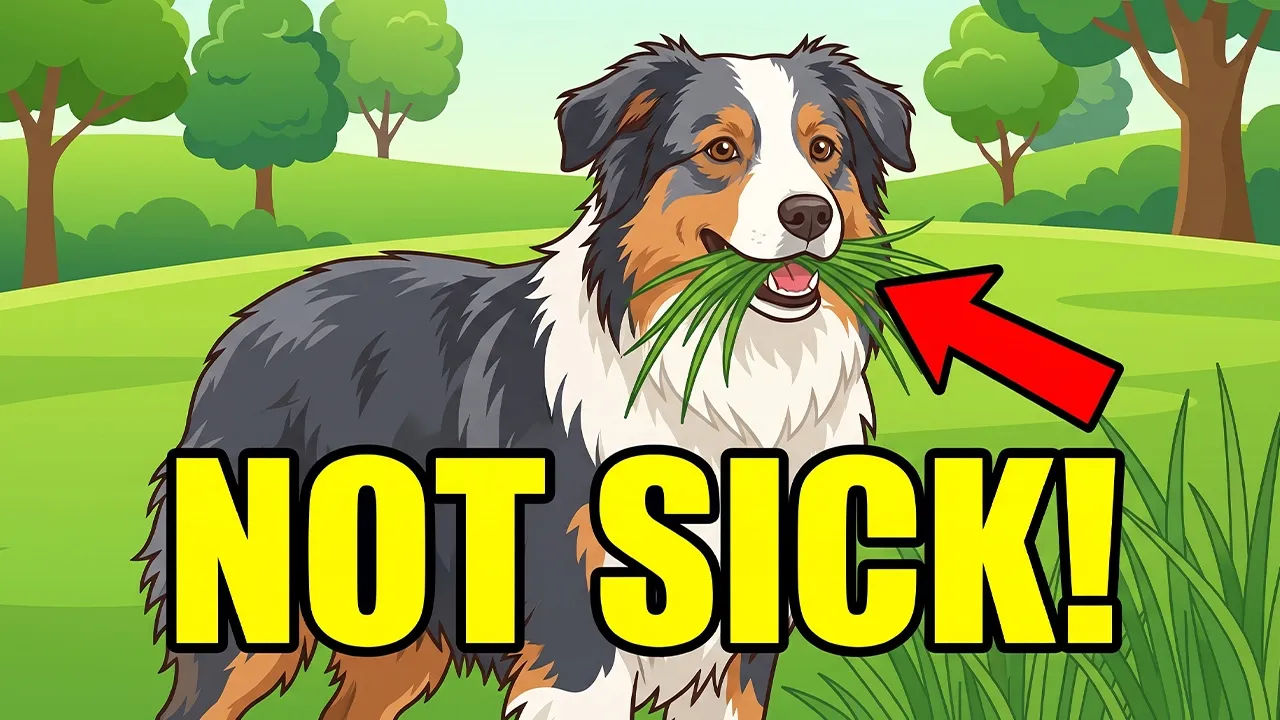
You are out for a normal afternoon walk and suddenly your dog drops their head and starts aggressively ripping up mouthfuls of grass. Your first instinct is probably to pull the leash and drag them away because almost everyone believes that a dog only eats grass when they are violently sick and about to throw up. Forcing them to stop grazing every single time is actually a massive mistake because you are completely ignoring your critical biological signal.
While they do sometimes use it to settle an upset stomach, eating grass is primarily an ancient survival instinct and very often a silent cry for missing nutrients. To truly understand this, we have to look back at their ancestral DNA. Dogs are not strict carnivores, they're opportunistic omnivores.
When wild wolves or wild dogs hunt down a herbivore, they do not just eat the muscle meat, they consume the entire animal including the stomach contents which are packed with pre-digested grass, plants, and berries. This botanical matter is absolutely essential for a healthy canine digestive tract. Even though your dog sleeps on a couch, their brain is still hardwired with the instinct to seek out this roughage in the form of fresh green grass.
You also need to look at this behavior as a potential nutritional red flag. You might be spending a fortune on premium grain-free kibble, but that does not mean the diet is perfectly balanced for your specific dog. If their daily meals are lacking in essential dietary fiber, minerals, or specific phytonutrients, your dog will instinctively take matters into their own paws.
They graze on fresh grass because it is an easily accessible natural supplement. If your dog is obsessively eating grass every single day, it is a massive sign that you need to re-evaluate what you are putting in their food bowl. There's also a fascinating psychological aspect to grazing.
If your dog is not hungry and their stomach is perfectly fine, slowly nibbling on grass often acts as a displacement behavior. When a dog is feeling anxious, slightly stressed, or just incredibly bored in the backyard, the repetitive action of chewing grass acts as a biological pacifier. It is the exact canine equivalent of a human mindlessly chewing their fingernails.
You have to learn to visually spot the difference between healthy grazing and sick grazing. If your dog is carefully selecting specific blades of grass, chewing them slowly and swallowing calmly, they are simply enjoying the fiber. However, if they are frantically ripping up massive clumps of grass and swallowing them whole without chewing at all, do not ignore it.
The long unchewed blades of grass intentionally tickle their throat and stomach lining to induce vomiting. This means they have eaten something terrible and are desperately trying to clear their system. While the grass itself is harmless, the invisible dangers hidden on it are a massive red flag.
The grass in your local park is routinely sprayed with highly toxic chemical fertilizers, weed killers, and pesticides that can cause severe neurological damage. Even worse, it is covered in microscopic parasite eggs left behind by the feces of other infected dogs. Letting your dog eat random public grass is playing Russian roulette with their health.
Hit the subscribe button right now to learn the exact symptoms of chemical poisoning in dogs before it is too late.