I remember when we first met you're like mind mapping business processes and I'm just like you're so dang technical like why is it a big argument in a fight over this is better then that's better then this is better how about no adjusting your behavior is better looking at something that's simple easy to understand and efficient that doesn't require a lot of thought process so that you can focus on what really matters Which is your family and investing in yourself so that you can earn more Revenue so that you have a way to control more
of the revenue that you do earn and keep everything else dead simple I mean like that just seem makes a lot of sense it's impossible to be efficient if you don't have that desired result and so many people don't even know where they want to go it's not it's not potentially it is it is extremely misleading there's no potentially in it Break this down and tell me where I'm going wrong like if You' got family members and you're not protecting your family I can just be perfectly blun with you I think that that's insane and
really stupid what what do you want to choose Richard I don't think I've ever done this on a podcast to Someone Like You the last thing that you said this drives me nuts when I hear this we we were 25 minutes into one of the most authentic conversations talking about Issues that our audience would totally eat up so stay stay tuned because some of the things that we talked about will be talked about in the future we talked about the infinite banking Institute what what some of the things you're working on we talked about some
of the the things that people are getting wrong in talking about infinite banking you literally in your newest book which we'll talk about have chapter eight where you go over all the misleading Things that people are saying I shouldn't say all some of the misleading things that people are saying using infinite banking I love the fact that you touch on that because most people don't want to touch on that because most people sell or create a brand around those things so definitely want to talk about that and uh you're also one of my favorite Canadians
and so you know we we want to be able to talk to talk to the people up north and I know that infinite Banking the philosophy and we're going to get into it nothing changes but maybe how you implement some of the insurance products is a little bit different and so I don't know where this conversation will go but I just want to thank you for being on and I'm grateful that we get to have this conversation yeah man I'm I'm excited it's been uh I think it's probably long overdue sometimes scheduling can be a
bit of a challenge uh you know uh having a podcast myself And having all content and calendar management so thank God we have incredible like assistance that help navigate all that they're the most amazing human beings on the planet and so very grateful to have uh incredible who to help us get the house done as Dan Sullivan would say I love it I love it so your book don't spread the wealth how many books have you actually written today this is book four uh we started with Canadians guide to wealth Building Without risk we're actually
going to be re-releasing that making some modifications to it to turn that into an American's guide book um we have cash follows the leader which is really about the mechanics of uh dividend paying life policy and what actually makes it grow and it's not what people really think or realize we have some great visualizations in there the third book is keep taxes away from your wealth that one's much more focused on the Canadian Market um Henry Wong who's a c uh CPA and works on our team he uh co-wrote that book with us some great
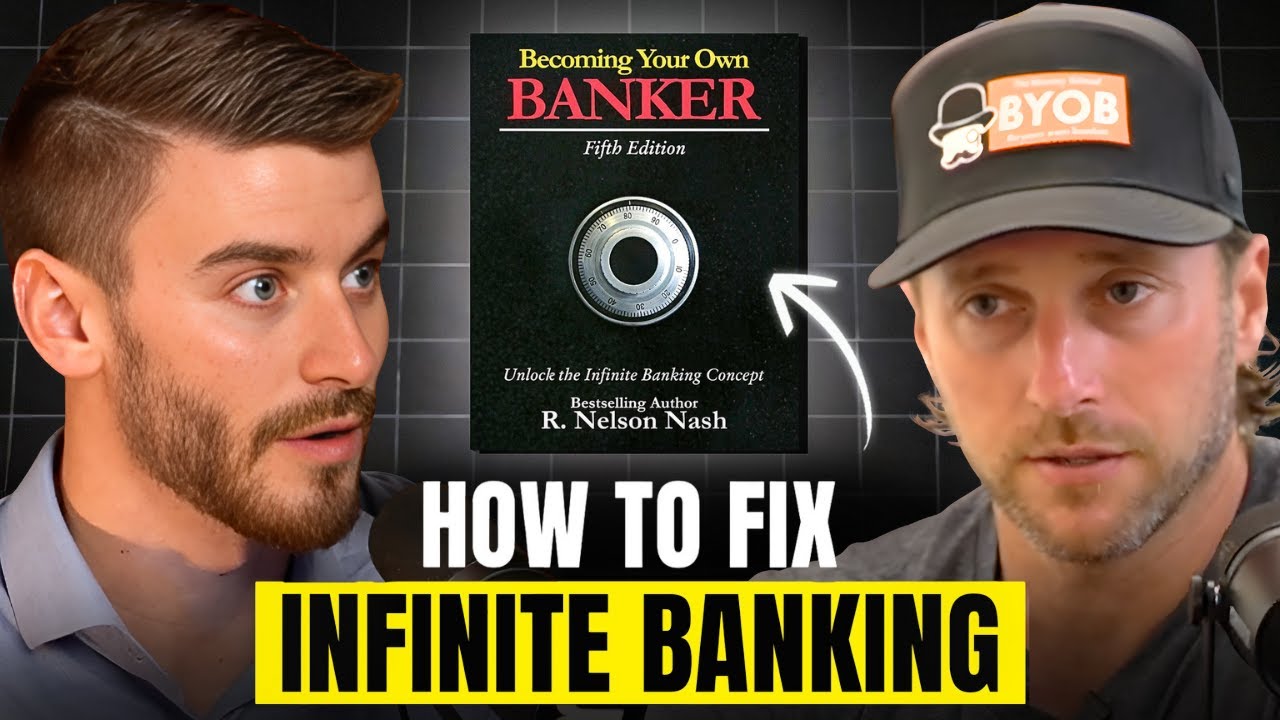
stories in there and trying to get the control back I mean fundamentally all of these things are about getting the control back at the UN and me level and each book is independent it's not like one necessarily Builds on the other and one thing I'd want people to know is like our books aren't meant to replace as an example the and asset they're not meant To replace becoming your own banker they're meant as a compliment too and maybe providing a different different way or context on how to actually view those things how to how to
um how to comprehend them at a different level so that you can when you still go through the other content you you you might see things that maybe you didn't see before so it's meant to add flavor in context right it's it's a little salt and pepper on the main meal I remember the Epiphany That I had when I was like oh I'm GNA bring on other competitors that say things different than I do and oh by the way we've grown our business because I bring on people like you that write books that are fantastic
that have different ways of explaining things you resonate with some people you bring exposure to some people that would never get exposure to this space and we all grow because of it and there's a lot I could talk about as Relates to that but I want to get back to your book in one of the first chapters you answer the question what is infinite banking how would you answer that on this podcast if someone was to ask you Richard explain to me what is infinite banking uh well you can't place limitations on something that's infinite
finite has limitations to so the infinite is the infinite capacity of the human brain to come up with ideas and Generate or your ability to generate it's your thinking that's what the infinite really is to me banking is an action word it's something that you do banking transpires it happens throughout your life every single day money has to move from one place to another in a Rel ly short period of time that's what Nelson Nash would indicate that is the activity the action of banking it is a process of money movement from a location to
a location at some measure Of speed this happening every day in everyone's lives infinite banking is thinking about that activity in such a way where you're putting yourself in the control position as often and as frequently as possible as it relates to your individual needs or your business's needs or the needs of the family members you love and care about that to me is what the infinite banking concept is concept is a is a is a modifier what Nelson say it's a it's about a it's About a thinking process it's something that is an idea
that you conceptualize you know people make concept cars every car that's driving on the road today was at one time a concept and there's a lot of concept cars that don't get into into production activity right but the concept of what it is is often displayed and it gives you a a vision or a thought process on what could be so the infinite banking concept is it is exactly that but it's around the mindset and so it Has virtually nothing to do with life insurance it is 100% in my opinion about what's going on between
this squishy mass of your ears this thing you call the human brain and how you relate to the information that fls through your life around the financial aspect and the movement of money using an insurance product to help accomplish that objective the way you want to do it in a in some form of efficiency is simply making it log a Logical decision so the separation between a product life insurance and a process of what you do things and how you think about doing those things there's a thinking aspect and then there's a doing thinking doing
thinking doing product you're thinking you implement a product and you you do activ is the doing that's now putting all those components at work but you can't have an insurance product that You own and be doing infinite banking it doesn't it doesn't work like that you have to actually be recognizing the function of banking in your life and trying to recover some of those control elements slowly and incrementally as you build so that you can see the benefits of having that the decisionmaking potential at your fingertips yeah I I want to unpack that because I
know my channel and many other people you know you could easily think okay infinite Banking is a properly designed Insurance product um that that's very much that a lot of marketing and a lot of people combine those things and I could not agree more with what you're saying is having an amazing Insurance product is great but it doesn't necessarily make or break how you think and what what you're doing for for example and I'm might go on a mini rant here some people will come to me and they'll ask me Caleb what should I invest
in and I look at them And they're making 20% of what they could be making and it's always funny to me where it's like you're asking me if I should do a Roth or this and I could an we could go down that rabbit hole and you could get the right answer but the real question should be why are you making this when you could be making that so it's changing the way you think about how you produce another question is is debt good or bad well or should I use debt for something and it's
really Going to being like okay what decision are you making to begin with debt can be an enabler you a debt might enable you to buy a home that you shouldn't buy or a car that you shouldn't buy but the way is like let's figure out how you should make that decision and then we go back to what's the most efficient way to make that decision but there really a lot of times people combine them into one but they really need to be separated with all that said let's talk about the Thinking aspect and then
the doing aspect without talking about insurance you're in Canada some of the things that you do in Canada um can't even be done in the US vice versa we'll talk about the insurance in a in a second but I really want to break down that okay if I got my uh paper and and pen out and I want to take down the steps help me understand the questions the prompts how I should be thinking what I should be doing with no product and then we'll Talk about why maybe Insurance could be better than any other
product as of the time of this recording you know I think it really boils down to getting either clear or making the recognition if someone chooses to do that again this is all about choice and Nelson Nelson in my opinion in his wisdom he isolated the power of human Choice and then Incorporated it in financial aspects so I if you think about other great financial books one what really Well-known book is uh the richest man in Babylon love it okay and people are often met or learned about this idea of oh you got to pay
yourself first pay yourself 10% like we've all heard these kind of adages before but no one actually really fundamentally understands how to do that or what does that really mean so that's a great that's a great statement but what does what does that mean and how would I go about doing that they think oh well I'm Going to put money into a savings account put 10% away or I'm going to put money into an investment account and put 10% away and then what ends up happening is people don't put put 10% away or they don't
put in one of those accounts or they put it in the account and then they take it out and use it and there's nothing left in the account like that's what actually happens for most people so here if we start incorporating the mindsets and we recognize that the Problem is that someone is performing the function of banking in your life money must reside somewhere money comes in money goes out that's everybody's life in between the period of it coming in and going out it sits in some kind of a holding tank for a period of
time most likely a typical brick and mortar Banks bank account okay or a variety of them in general well how much of that do you retain control over and for how many years of your life are you retaining That control and how many generations can you retain that control for so the question of are you thinking beyond your own lifespan comes up to me that's something that Nelson caused me to think about a great deal and I was having a conversation about this early this morning I was doing a a bit of a presentation to
a group of 25 highly successful entrepreneurs in a networking group and I was asking him these type of Questions so how many times are you thinking beyond your own lifespan very few people even consider that as a possibility but once you recognize it's possible with your thinking now you start to make okay well going from today moving forward if I recognize that every decision I'm making around Financial aspects of my life actually extends beyond my own lifespan is there anything I could do or anything I might consider changing in my life that might optimize For
that outcome and if that's an outcome you want well then now you can start taking initiative steps toward that so do you want it do you understand it's possible like again everything ties to what your brain is willing to comprehend as a possibility and if you start asking different questions and you're thinking about your thinking you might come up with some very surprising answers within your own mind that you didn't know were there it's not what Richard's mind can can peress to you okay it's what question is going to resonate inside of your own mind
it's going to get you to think differently and for me I didn't realize it was possible to think B on my own lifespan until I met Nelson Nelson taught me that it was it was absolutely possible I'll give you example Caleb Nelson uh okay you got a lot of Real Estate Investors listen to the show right probability okay cool I'm I I've Got my song and dance stories about real estate we won't go into that but here here's the example imagine for a moment for your listeners you've got 45 doors 45 properties all right all
45 of these properties well it could be two apartment buildings with 45 doors like I don't care the dynamic 45 single family houses they're all 100% paid for you own them free and clear they're growing with Equity every day regardless of the market condition they can produce a cash Flow and if you needed access to Capital you can borrow 90% of the equity on every single property with no questions asked and the money could be in your bank account within a couple of reasonable days you don't have to fill out any Mickey Mouse paperwork you
don't need to go and pay for an appraisal you can get access to that liquidity on very short uh you know circumstances now we're going to talk about you in the past tense Caleb you're No longer with us you've graduated 17 of those 45 properties are instantly sold on the market for their highest ever appraise value you don't end your realtor you don't need to wait for the market condition you don't need to kick out the tenants they're instantly sold and a tax-free amount of money with no capital gains tax shows up for your wife
and your family there's still 28 properties in place that now are under the control of Your family and they continue to have all the same benefits you need more money they have access they're still growing in equity all those so same things apply well that actually can happen in fact it did happen it happened to Nelson NES but it wasn't physical pieces of real estate but it was property property through the way of contract insurance contracts we think about property the brain pictures a box In a house or physical land because that's how we've been
trained to think about it and that is real estate property but property and exists in contracts as well and whole life insurance contracts are property and so Nelson had 45 of those and when he passed away there were 17 death benefit checks paid there's 26 policies that were still in force when Nelson was gone he left us at the time of this recording we're Approaching six years from since Nelson's been with us in that time frame unfortunately we also lost his wife married you know semi- recently in the last year so there so a number
of those contracts has have transpired again I don't know that number but just to keep things simple let's say that there was 10 more that are gone and there's 16 policies still left in force that transitional effect of what transpired is is evidence of Nelson Thinking Beyond his own lifespan okay and so you can do that now Nelson you know the story it took him 13 years to fire his Bankers but after that point in time him and his wife did not see a Traditional Bank for approximately 25 years other than the convenience of a
debit card okay and they they financed all the cars that Nelson's they financed three airplanes while Nelson was alive using the system in you know investments in real estate a number of other things And they you know they had control over that circumstance and very simply what that meant to them is that it was a peaceful stressfree way of life financially that's one of his objectives that's something that he wanted and he created in his life if you don't want that this probably wouldn't be a good process for you if you want a lot of
risk and a lot of reward and a lot of like potential chaos and a lot of sleepless night you know at the time of This recording we just had the election so if you want to be sitting here like wondering oh my God what's going to happen at the end of the election are my invest my portfolio is going to go down 30% or is it going to go up like oh my God if you want to live on the roller coaster like by all means do that but you might want to consider drisking some
of your thought process financially to create stability and consistency that is always going to be there so that when You want to make those decisions you can be empowered to make them at the right timing and at some measure of control I love it Richard I don't think I've ever done this on a podcast to someone like you but can I I'm G to share my screen and I'm going to walk through oh how I would teach somebody and I want to get your raw feedback and then I would love if you can share your
screen if you'd like um because I hear what you say about the banking function And all those things they all sound amazing I was talking to Bren Bren Kesler the other day and we were talking about infinite Banking and I was just like Bren you're literally you literally just said like you went to the seminar and you were saving zero and now you're saving four grand a month I'm just making up that number I was like no no duh like you're you you literally you Chang finan in your life and you started Saving which and
you stopped spending so you stopped spending you started saving and VOA you paid off your debt and and so what I want to say is I love like let let's there's nothing magical about the insurance aspect it's like you change the direction of money Chang you know what I'm saying and so it's like and again I said that publicly so it's not like I I love Bren and he's he's an amazing person to speak to I'm gonna have him back on because a ton of Comments were like Caleb you have to have Brent like break
down the math because I don't fully get it and that's why I'm actually doing this with you here because I you have an amaz like you have an amazing understanding of philosophical conversation but you're also one of the most practical I mean I remember when we first met you're like mindmapping business processes and I'm just like you're you're so dang technical that it's good stuff so let me Let me walk through quickly um the process that I would walk someone through if I were to help coach them around money and let's talk through it so
so number one uh let's see here number one you got you and and for those of you listening I'm I'm drawing a stick figure that's one of the only things I can draw and we can all agree that it's a very well laid out stick figure very skinny this this stick figure needs to gain some weight um but but the the First aspect and it might sound wishy-washy but it's like you got to get really clear on what you really want I have a sign behind me one life it's like we all have have one
life let's live it well let's live intentionally to live intentionally you need to to lean into the skill sets that God created uh for gave you and the relationships and used your resources and I love it yeah you have to take full responsibility of your life and one of the one of the things That many people have said nothing that I'm saying is my original idea is like you are your greatest asset that really resonates with me and I find that majority of people in Canada and in the United States are devaluing their greatest asset
which themselves so one of the one of the things regardless of what you call yourself is like we could be doing the best thing for our clients if we help them identify where they want to go it's Impossible to be efficient if you don't have that desired result and so many people don't even know where they want to go so that's that's number one then then what I'm doing for those of you that are that are listening is I'm drawing a dollar sign this dollar sign represents the creation of of cash the creation of currency
I don't even want to call it cash because cash the store value currency is is you know what we're using today you you guys spend a Different currency in Canada but at the end of the day you know currency is not just created out of thin air well that's maybe it is but it's but you get what I'm saying it's like to to create extra cash flow I need to do something for it um I either need to provide a service or sell a product or a version of both and so it's like we could
have a conversation all day long about the the dollar size some some clients that we have make a ton of dollars some people That we work with are on a super limited situation because they don't make that much money but not it's not all it you have to create cash flow we could talk to her blue in the face but if you don't have any new cash flow into the system you C you can you can uh arrange chairs on the Titanic but the Titanic sinking if no cash flows coming in okay now here's here's
the key so now you have cash flow I'm drawing two lines line number one is Consumption line number two is um I'll I'll use the word saving because it's a verb of preserving okay so saving and consumption okay now again this is this is very much inspired by David Anderson a good friend of mine who has a software program called Li live um and so the lifetime income process and so the philosophy here is your dollars can physically only do one of two things they can either be spent and consumption another way to say It
is lifestyle or they can be Sav set aside for future consumption whether it's you or three generations from now okay and so cons consumption could be you know spending it could be taxes because if you don't pay your taxes you're going to jail um it could be debt it could be like any anything that your any any cash flow that's going towards your lifestyle okay and then saving is is set set aside and then the idea is to Multiply it's it's it's to save and then hopefully you're investing and you can invest in businesses you
can invest in the stocks you could invest in um real estate um you could this is love you could invest in making yourself more valuable education all those things and hopefully not only are you potentially growing your cash here but you could be creating a double effect and and creating more money because you're Investing in your business and your business allows you to create more cash flow are we tracking so far yep okay so so so it let's just break it down the average Americans probably spending 95% on consumption they're only saving 5% maybe and
and then with this money it's it their money is Diversified so much that they're not making any difference and so one of the things that like from a coaching perspective it's like number One are are you clear in what you want and like let's do I know you're certified in many different assessments help them identify like are we maximizing the cash flow that we're creating and then looking at two of the fundamental buckets where's your money where's your money consuming are you spending money on the things that you value you might be spending your money
on dumb stuff um are you overpaying on your taxes are You are like where's your money going and really creating an audit of that and we might find that like we're consuming at a level that we just can't out out outdo um but then where we're saving this is where and again I don't want to put words in your mouth but how I've always explained the infinite banking process especially with using life insurance is like okay we can save our money and we can then re you know you can use your saving account to pay
off Debt you know do other things and then pay yourself back so you can do this whole like you know volume of savings in a an account but over over time you have a savings account that has an interest rate so it gives you certain benefits but there's tradeoffs and long term life insurance when set up and used properly gives you so many more benefits to your dollar which is one of your myths and I we agree but it's like if you can give your dollars more utility if you can Give your dollars potentially five
or 10 jobs versus one um now I could potentially save more and um and one of my theories of why people aren't saving a ton is they're they're saving they're investing in things that they're not liquid and and so it's like yeah I'm only going to save 5% I'm almost hedging I know I'm talking a lot but like the way the way that I almost talk about this whole concept is insurance is this aspect here it's the It's in between the verb of saving and the where your money's going and and um and our goal
should be to save more like you're literally like you should save a lot more than 5% and so can you save 10 15 20 25 30% and the goal is always to save more money like that's the metric I care about I don't necessarily get into the weeds of like paying yourself back like cuz I that at the end of the day what we're doing is we're just saving more and so we're Using a lot of different words for like let's increase our ability to save and good things happen going back to the Brent Kesler
conversation good things happen when you go from saving nothing to figuring out a way to save $4,000 a month using Insurance on top of that long term is going to be better for your legacy and for your cash but even if you didn't have that like your life is different if you have an ability to save a lot I just talked a ton on on a Conversation that you should be talking but I value you like break this down and tell me where I'm going wrong or let's talk about what you agree and the differences
because I think this could be super valuable to to this conversation yeah I mean fundamentally I wouldn't say there's anything I disagree with Caleb what what I would want to clarify or it would be to add additional context okay context is really important and so a couple of things yes saving More is good if anyone thinks that saving more is bad they a will never find themselves on your podcast and B they probably have a lot of other problems they need to be dealing with okay so if anyone disagrees that's more saving no if you
disagree let me know and I'll set up a conversation between you and and we'll have an amazing we'll have amazing content at your expense totally so so so where there needs to be a distinction and I'm glad you clarified You used saving as a verb saving in the action oriented aspect y you know we we're OD some context is we used to do presentation to groups man all the time I mean for years we did it and probably if I add it all up I bet you over a thousand people I've asked this question to
over the span of like seven or eight or nine years in Canada but you know Canadians and Americans are basically the same except there's a border in the way and we have some more snow if if you Know what what does savings mean to you and then we would go to the board and write it all down take everything that everyone said we write it all down and then we'd say okay great now what does investing mean to you and we would write all those things down and the themes were ridiculously common for the better
part of a decade savings fundamentally after everyone's responses isolated that you had control liquidity and you had it it Represented security it represented security for people investment represented risk and reward the potential for more and the potential for loss it was synonymous with the word investing okay nobody put down that investing meant security unless it was you can buy a security which is a product does that make sense correct yeah yeah which is super confusing by the way but yes so fundamentally those Two activities and those two Product Dynamics if we're looking at it in
a product format are fundamentally very different all right cor correct and and and the Epiphany that I had years ago going back to the the book I wrote the and asset was insurance is not an investment huge mistake that people are making when they try to compare it but it's just a better place to save protect use and pass on wealth it's like a better Container yeah it it can be when it's when you have the right behaviors in place right correct so so going back to your diagram you have the word savings and you're
looking at it from the action it's the movement part of the money so that movement doesn't happen without the decision so prior to the savings action is the behavior to commit to the savings so that's what's missing from the diagram and then well now you've got multiple other lines you've got okay now The business and the stocks and real estate so those are all now a secondary decision correct now what do now that you've done the act of saving and you've placed it somewhere now what do I want to do with it once it's there
so it could go back to the consumption it could go back to pay off debt it could go to the business but you're not saving in the business you you're investing in the business you're investing in the stocks you're investing in the real Estate you're you're making an investment decision that you'd rather pay off your debt rather than doing something else with the money so correct what we're looking at is a multi-tier decision-making process yes yes the process of becoming your own banking is around the decision-making process okay we're making decisions micro decisions along the
way about what to do and you talked about interest and paying yourself interest yeah big fan of that That's what Nelson taught us to do but fundamentally what that the reality of that the result of those activities results in is more savings activity correct So you you're taking the loop of committing savings then you're putting it to work someplace repaying your debt as an example I'm going to get rid of third- party visa and I was happily going to give Visa maybe not happily but I was giving Visa $500 a month that's what they wanted
as a minimum but I was Paying them a th000 well if I'm happy to give Visa $1,000 a month wouldn't I be happy to give my family members at least $1,000 a month uh who do I value more do I value Visa more or my my next Generation which one do I place a higher value on and if the decision process is I place a higher value on my family I should at least be willing to pay at minimum what I was willing to give Visa so now $1,000 a month comes back to your bucket
it repays a policy loan or it Builds up policy value where builds up a savings account whatever that is but the action of making the decision that's Behavior based okay that has nothing to do with an insurance contract or a savings account it's all around the decision-making process this is where banking hits the real that's where the rubber hits the road the result of that is more Capital gets accumulated because less capital is going away less goes away and more gets accumulated and the Result is psychologically the brain starts making different decisions about money you
see things building up where they weren't before you also you also do see a decrease most likely in consumption because you're placing a higher value on things that you previously didn't place value on well and if you're redirecting money back to your checking account or Insurance Pol regardless of where it is you you you're creating a greater volume on the savings Category like the the example I could use let's use the $ thousand Visa okay route number one is doing what you just said you use your banking process pay that off but but then you
pay your banking process back okay or what you could do is um instead of directing that money into the savings category pay take that money that would be residing in the banking policy pay off that visa and then Redirect that $1,000 that you were paying Visa back to savings either way you making a decision Ono going to not spend $1,000 on the dumb thing that you may have been buying so it's like there's a be it's not just the magical checking account or insurance policy you're actually deciding to consume in this example $1,000 Less in
your lifestyle in this example you you can't have your cake and E like you can't continue the same lifestyle choice and Have an additional $ thousand of magical money there's no magic pill there's no there's no circumventing the fact that you need to do the work and that you need to make change and I love it Nelson just created a a methodology that is extremely logical about how to implement behavioral change you know again being an Austrian Economist understanding the Austrian mindset of thinking there's a great book called you know Human Action I can tell
you and confess I've not read The whole book I've read pieces of it but human action and really Austrian mindset of Economics is around the behavioral aspects of individuals and how individual be Behavior impacts broader economic Cycles okay fundamentally if I were to put it into like a little bow and so so infinite banking as a concept when implemented through the utilization of dividend paying whole life insurance which is the recommended path is fundamentally Considered Austrian economics in action at the individual level so why does that matter and so we go back to savings and
so people aren't necessarily accustomed to savings if they haven't been doing it there's a training process a learning process and a habit change that must happen one of the best ways to implement that is to create a forced need insurance premiums once implemented becomes an Automatic pay yourself first you know in air quotes I'm being very aggressive on the air quotes here pay yourself implementation of the same idea of the richest man in Babylon yes and so now what we're doing is we're implementing really good fundamental basic financial principles of saving more money and we're
creating a forced mechanism that makes you do it so that you don't make dumb decisions otherwise hey it's Caleb Williams here I'm just interrupting this Video quickly to invite you to check out our anet vault you may have been there we've actually re revamping it and if you are somebody that wants to learn more about is life insurance right fit for me does this and asset make sense like does this actually help me be more efficient we've put together a 10-minute documentary style video that I think does a really really good job giving the history
why the andet different setups and designs that we use and then we have An and asset fault that gives like case studies calculators handbooks and so much more we are here to serve you whether it's a conversation whether it's education or the video so make sure to go check out and asset.com learn more I'm so grateful that we're having this conversation because you're 100% spoton And I don't know if you realize how close you sound to Dave Ramsey and I actually say that as a compliment I love like Dave Ramsey and Some of the things
that he said time for everything yeah no I I love what Dave Ramsey like the me the mission that that man's on and what he's like I do I agree with what he talks about insurance no but he literally he was just on a podcast recently and he was he he said this without he said this because it wasn't a person that was trying to like Grill him they agreed on some ideologically the deals and he said yeah the 15year mor like I get the whole Argument but the reason the 15-year mortgage is better is
people won't invest the difference it's a for it's like the reason why we have tell people to be debt free is the human aspect we the reason we get someone to cut up our credit cards is we obviously if you use a credit card and pay that off the points and all those things like obviously that's going to be better than a debit card but the reality is there's a there's something different like most People don't do that and so it's like we have to stick in our stick in our lane and the same thing
that goes with with infinite banking is like there's it's not necessarily magical in some cases you might be it might be less efficient from a mathematical standpoint but actually it's better for you and your family because you're creating a system that's creating momentum and the same thing that uh Dave Ramsey could say is like over 30 years the People that follow this device are going to be better off because they're forcing themselves to actually save more because the reality is 30-year mortgage invested difference is just not going to happen so if we so I'm just
I'm letting you know like I I tell me where I'm wrong but it's like the human aspect is something that you can't necessarily model in a calculator and it's far more important than any any we could because we don't live our life unemotionally Even the most nerd people out there don't make every single decision based on the mathematical opportunity cost of every DEC like we just don't do that and so and again thoughts would you agree with my assessment or disagree with that here's where I think you need to recognize what a chainsaw has to
do with the infinite banking concept okay have you ever used a chainsaw Caleb I I have yeah yeah believe it or not people might think I'm C I have was it battery operat or was it gas powered it was gas operat okay so you can almost instantly remember the smell of what it smells like when you fire it up yes and the sound that it makes when the chain moves and you hit the trigger yes okay people who have used a chainsaw really understand that sound it's one of my favorite things I love chainsaws I
don't know what it is I used to use them a lot I I don't have one now I don't have no need for a Chainsaw but I just think they're Fantastic Tools okay and they're fun to use and you fire it up and you rev that that thing and it's just like it's like oh my God like there's something really this is a dangerous tool but there's really cool things you can do with it it's a very powerful tool for the right job so just imagine for a moment I had the chainsaws got the oil
mix the chains oil everything's ready to go fired up give it a couple you know let it let it Run a little rip a few times and then all a sudden I just hand it to some some dude that's running by on the street on the path and I say hey buddy here you go knock your socks now you know and I turn around and I walk away yeah what's the probability low medium or high that that person might injure themselves I 100% probability that person's not going to be optimized yeah I you know it's
probably medium to high and what's the probability that they Might break the chainsaw also reasonably High okay yeah and so because you know there's some intuitive aspects but it's not it's not you know it's pretty dangerous when you're using them and so the tool wasn't the problem it wasn't the Tool's fault it's 100% the user's fault and the lack of training of the user or practice of the user and so if that tool let's just say that that tool was dividend paying whole life insurance yep but we could Replace that and say what if that
tool was buy term invest the difference as a combo tool yeah does that make sense yeah it's the exact same difference I don't care yeah what the strategy is the strategy is irrelevant if we don't have the behavioral alignment I agree I agree you if you want to my term and invest the difference knock your freaking socks off but do it if you're not going to do it and you're going to buy term and spend The difference you destroyed all the good spreadsheets that somebody ran for you a spreadsheet can't run your financial life a
spreadsheet is a static document that's not Dynamic your life is dynamic your behavior is dynamic the things that happen to you the economy is dynamic interest rates are Dynamic real estate markets are Dynamic um your health is dynamic and the people you love and care about is dynamic if you're not preparing for those things in a Logical way you are in my opinion giving up the opportunity and also abdicating the responsibility it's not just the opportunity it's the responsibility and if you're not willing to get really clear mentally on why that's important like if you've
got family members and you're not protecting your family I can just be perfectly blunt with you I think that that's insane and really stupid I'm not calling you stupid directly I think the act of not doing that is stupid so When are you going to make some change I I'll and I'll get one more step forward on this i g give two more things so Caleb I I could talk to you all day man I love this yeah I'm sure in the experience of doing this you've had people become that are uninsurable you haven't been
able to help Place insurance contract how does that feel when that comes up with your team yeah it's so it's it's terrible it's absolutely terrible it feels like I Can feel it in the pit of my stomach I absolutely despise it and it and it's it's really frustrating when it happens when it's a kid have you ever had it happen with kids miners um no no I've not I have fact fact it's happening more frequently one of the reasons it's happening more frequently is because of Behavioral adjustments a lot of kids are having behavioral issues
and now everyone's got ADHD in their son now nothing wrong with That I'm sure if I was diagnosed I probably got it that's fine but it doesn't mean that you can't get coverage it just means that might complicate getting coverage to some degree every Insurance carry is different every circumstances different all right so but I'm starting to see an increasing trend of that and when that happens and I have to go tell a parent that we can't ensure they're kid that's like a knife in the stomach man I hate that it's Frustrating and I've had
people I've even heard people say well why would you ensure your children well first of all they're coming from a place of non- understanding and not realizing that there's dangers if you look in Nelson's book there's a mortality chart on here CSO table I don't know what page it's on it's like 30 something whatever and and it shows n Nelson called it the uh the Pig and the python so for your listeners there's a little diagram right here you Can see and if you look at this chart it says you know out of a thousand
Americans would you believe it a thousand of them die yeah yeah but the line that di before age 21 is an AST atomical number in fact it's the longest line of all the lines in the chart so the number of child related mortality deaths and things that occur is an astronomical number and so so too is it for things like critical illness And whatever so to not prevent against that risk yeah seems really strange to me and you know nobody knows what their best before date is but they also don't know what their best insurability
date is yeah that's good there's the only one way to find out and that's to go apply for some freaking coverage so protecting your family fundamentally to me is just a logical step if you could also do it in such a way where you created a force savings plan that allowed you access and Control over someone else's money the insurance companies not yours because your money is now a premium but your ability to access capital is unmatched and untapped than any other Financial product that exists in the marketplace on the globe that I'm aware of
now I might be wrong but I've no one's been able to prove to me that there's a better mechanism that allows you unlimited access unlimited access to whatever you have Equity inside of a Contract of without any questions asked no one's been able to show me something better than what the dividend paying life insurance product will provide so that is a characteristic of a tool and if you're stock ranking characteristics of tools that you can Implement like the chainsaw if your goal is to cut down the tree hey I could use a drywall saw I
could use my pocket knife I could use an axe I could use a bobcat to knock it down probably but it would be illogical And I would need to go get one but the most efficient tool in a lot of circumstances is a chainsaw for the average everyday person so what what do you want to choose like why is it a big argument in a fight over this is better than that's better than this is better how about no adjusting your behavior is better looking at something that's simple easy understand and efficient that doesn't require
a lot of thought process so that you can focus on what Really matters which is your family and investing in yourself so that you can earn more Revenue so that you have a way to control more of the revenue that you do earn yeah and keep everything else dead simple I mean like that just seems makes a lot of sense well where where do I yeah yes 100% agree you would you would agree with me that if we're solely focused and I'm I'm sure it drives you nuts if you're solely focused on cash Arbitrage money
growing Borrowing against it paying yourself back how quickly can I get money into this thing and take all the money out so that I can put my money at risk how quickly can I make my money safe and then take money and put it at risk again but but I've even said I've even said this like and hear me out let me finish my thought process it's like I've even said if all if all I cared about was a place to store my money and use it I don't necess I think there's better Vehicles than
Insurance thought crime okay and and when you understand the other benefits like a death benefit that increases accelerated be death benefit Riders some of the greatest tax benefits in Canada and the United States that's one thing that we have on you guys a little bit more but like there's when you start understanding the benefits I I have a video that may be on YouTube at the time of this recording is the 11 Ben Like the 11 multi-dimensional benefits of insurance when when you start valuing other things there's no other asset that I think holds a
candle to you know properly designed dividend paying whole life insurance product as a place to store use protect grow your wealth but you have to in my opinion you have to Value other thing you have to at least be open to the other benefits and in in my experience if someone just cares about cash Arbitrage they're um they tend to be the worst clients and they tend to not value what what we're doing because all they care about is in year 26 I'm going to be arbitraging my money and the reality is yeah you could
be but it's the only reason why you're doing it there's probably better way there's probably better ways to just Arbitrage your money if that's all you care about and so but I if you understand the value of a giving a dollar more than one job Which in your book you say $1 doing more more than two jobs is misleading I think I know what you mean and they're talking about borrowing I want to talk about that but the way that I explain it is like an iPhone versus a flip phone this is I have a
phone but this gives me a lot more jobs it's my alarm clock it's my white noise machine it's my map it's my pH it's like I can text all the they do a lot of utility on this to call this a phone versus a flip phone it's I guess It's accurate but this gives me a lot more uses the way I see life insurance is it's just there's no other asset that holds a candle to it if you value the other benefits if we're not going to talk about the other benefits that it does to
your financial life then I think we're doing this aervice um you want to talk about what I just said and then and then if we we had to wrap this up shortly but I want to go through the five myths and you do have and your in Chapter eight you say $1 doing more than one job is is simply misleading I actually agree with you but someone could hear what I'm saying and then hear that and say they contradict each other yeah and I think you know we want as human beings to try to simplify
information in such a way where there's a reception to where people are at okay and so we use analogy sometimes because we hope it makes things simple to get people to like oh I I think I kind of Understand what you mean by that but you know when you pay a premium you pay a premium and you're transferring ownership of that money to the insurance company it's now the insurance companies and it's it's provided a benefit to you the benefit is the contract that protects your family and that contract now has a host of other
things that you can do with it which is what you're identifying so the other jobs or the other possible things that that that Contract can do is what people allude to as the other jobs oh I transferred a dollar here and now I have a death benefit but because I have that death benefit I can also now do these other things but if you really get clear on it that that what's actually happening is I pay a premium premium creates a death benefit once the death benefit is established and the contract is accumulated according to
its contractual features you can now do other things Which would be Ain or similar in nature you could make a case to say well isn't it sort of like I can do other jobs well not really my dollar did one job which is pay for a premium once I have the policy which which by the way by paying for the premium you get a lot of utility you get utility just that your dollar is not physically in two places correct your do your dollar is a premium it's done now what you're working with or what
you can work with Is the contract and the contract features in the utility which is the insurance with the relationship between you and the insurance company so your dollar isn't doing more than one job your dollar is doing one job but that one job just so happens to coincidentally create utility so in that I would agree with you but to Short change it and say well isn't that just like saying it does more than one job no it's not because because what happens is You're you're misleading the reality of what's taking place and you're disconnecting
the importance of the premium that's that's fundamentally what what what we're talking about and you know one of the things we cover in the book is the idea of rags to rags and three generations that's what's happening with people consistently and so if we're not talking about ways to have good Communications in the household with money we will never break That cycle and that's really important and one of the things that comes up you know we talked about these behaviors money doesn't ruin it reveals also something we talk about so good and so if you
don't have a relationship with money and you're not developing or building a relationship with you know just like you're dating and you're courting your spouse you got to build a relationship you got to get to know one another Well if you have a really crappy Relationship with money don't you need to start dating money and maybe see if you can fix your relationship maybe you need some marriage counseling with money well that's where guys like Caleb comes in to help with that part of it okay that's the thing that we're trying to create in the
world around us and uh I believe that our book helps do that and I certainly know that Nelson's book does that yeah I love it I I love it man it's it's app appreciate appreciate you Fleshing that out and I really believe these conversations that go deeper than maybe the average podcast I I think have so much value that can give to the coach the adviser that's listening to this but also the consumer um if you're if you're listening to this and really want to grasp like different wealth strategies like it's it's how you think
and a lot of our conversation is around Thinking Tools I know you're a big fan of this around how we approach different Opportunities and so I I love that the the first myth is you can't buy an infinite banking policy I think we talked about that there's a difference between a policy and a process and just because you're buying a specially designed policy doesn't mean that you are practicing infinite Banking and it doesn't necessarily mean that your be your behavior could be worse off by you getting a policy but you're but you're not changing anything
else and as a Result you're you're putting too much stake in this insurance policy that's like a chainsaw that's in the hands of someone that doesn't know how to utilize it well it's even worse than that Caleb because life insurance companies make Insurance products they don't make banking products and the general public and the consumer hear someone on YouTube or whatever telling them that they can go get a b and c and they don't understand the Disconnect because wow that a andc you talked about sounds really good I'm going to go contact the insurance company
and get me one of those or better yet I'm going to get one from you and then I have questions about it and because maybe that adviser is not explaining things very well they contact the life company directly and they say hey life company I want to talk to you about my infinite banking right well that doesn't exist You can't buy that it's not on their product list okay and by the way when they get those phone calls they go straight to the legal department and then the legal department Stacks those up in a big
folder money laundering what they have of them and then they say hey all the advisers that are promoting these things we're going to end your contracts and pull them and you can't service your clients anymore okay so using language irresponsibly is exactly That it's an irresponsible use of language we're trying to clarify these things because everyone can do better including me and and certainly I'm sure you would agree with that Caleb and so we help people get if they want a whole life insurance policy or other insurance that they might need we then teach them
a process which is how they can utilize their money and the capital with that policy to do things in their life they're already doing that is the Process of becoming your own Banker not the product a product is whole life insurance period complete separation don't mix them ever together they don't it's not a c that you're baking with ingredients doesn't exist yeah well well said moment there you can see I get little agitated with that just due to time I want to get through these quick uh think about premiums as deposits the truth premiums are
payments not Deposits yeah again on oversimplification and I've used this myself in the past a lot and some people will say premium deposits or some people will just say deposits because deposits is a banking activity and it's easy for people to understand but we're by oversimplifying we're also disconnecting the importance and the value of what a premium actually is once you pay a premium it does a job and now you're not making a deposit with the insurance Company because that also means that you could get the money back out that's not what it is you're
paying for something a product you're paying for it it's now a payment it's done you get all these benefits if you want to access Capital UT take a policy loan which is completely disconnected from the deposit the deposit in a in a banking institution assumes that it's sitting on deposit you can ask for it back that is not the case with the insurance company It is not a deposit it is a payment you're get your P premium you're getting benefit for doing that one of the potential issues is Nelson wrote his book and he never
for once was like Hey I want people to leverage this to sell a ton of insurance like he he was thinking more about the process and talking about this and then when you start marrying some of these concepts with insurance and then regulation and all like you're like I've met people that don't even Know they have an insurance policy oh yeah they're like and and I'm sure and I'm sure it D and it makes everybody look bad and it's like okay what what are we doing here and and it's because sometimes we use that language
and that's where Regulators are like this is unacceptable and it is it's like that's where I'll agree with the regulator um you won't hear me say that much on this show by the way um number four saving at 4% borrowing at six% coming out ahead The truth this is misleading love the fact that you that you've have this I've seen presentations I'm sure that you've had examples and why is this why is this misleading I've done presentations like that in the past and yep you know not the purpose is it just is to shock people
to understand how amortizations work and how uh you know the impact of a loan balance going down and and an account value going up it's misleading because it's shock therapy and it's not Really clarifying what's going on and the reality is it's just to help people see things differently to start thinking differently that's the purpose of an example like that but people will walk away they'll take a little bit of information and they'll jump to an absurd conclusion that's what happens all the time in society and so this isn't about it it's to show the
impact of having money in constant motion and if you can maintain constant Motion and have Capital accumulating in a in a format where it can't be it can't be stopped it can't it can't be turned off or go backwards and you have the ability to access it to go do other things you maintain a high level of control but the example where those kinds of things are displayed misleads people to think that oh wow everything I know about percentages in math is completely incorrect wow I can't can make 4% and do and pay six and
be fine Cuz if you just do that willy-nilly no you're going to be you're going to create unbelievable Financial chaos it is so people will take a little bit of information and jump to a Ser conclusion that's why it's misleading yep and that it's two things can be true at the same time we just talked about a system and being like changing your behavior and there's a world where you could justify earning four paying six and actually being ahead Because you're changing the cash flow situation and and the same thing can be true that earning
four paying six mathematically if you add apples to Apple's comparison never get you ahead so there's like a mathematical aspect incorrect there's another aspect where it's like hey we're changing Behavior yes mathematically we know that this is not not the most efficient but over the next 20 30 years I got someone to start Paying saving more money and by default saving more money they're better off and and that's where it's like not everything can be so black and white but I'm glad that you make this distinction because um we're all guilty it also doesn't account
for interest rate risk it also doesn't account for Behavioral risk right so we're looking at a spreadsheet of numbers over a period of time where your life doesn't L that way I'm sorry life is too Dynamic to make Any of that work it just might look good on a spreadsheet but it won't actually most like come about in the way that's described because something's going to get in the way of your life if your life is anything like mine some stuff's going to happen yeah um last thing that I'll do you have you have more
you have more here and that's why everyone should go get your book we'll make sure to have the Amazon link is that the best way for them to get it or is there a better way For don't spread wealth.com don't spread wealth.com and it'll take spread.com if it brings you to an amazon.ca site just change the.ca to.com and it'll be easier to order perfect perfect just just uh please we need to be supporting the people in the space and so you would be doing me a favor if you went out supported Richard and Jason who's
not on here who has the world's busiest schedule but I'm going to have Jason on in another time we're going to have Great conversations you guys co-authored this book encourage people to go get it so last thing that you said this drives me nuts when I hear this is and honestly I think should be number one is getting rich by buying insert the thing I can't tell you how many people that's one of the reasons I just don't like to be Associated anything with infinite banking sometimes is it's just like I got rich by buying
car that I can't afford that's how I perceive it it's Like you get rich by going on vacations and there's like a lot of people that market and they're literally showing you they're the they're the I don't want to say inappropriate word they're the person that's like the kid that's like taking a picture of their Lambo that they're renting and being like look at me and and and it's like actually that behavior is making people worse off or distracting us about actually doing what we need to do and we think we just need To buy
expensive cars but if we magically do it with an insurance policy we're somehow going to be a millionaire I obviously I'm venting but talk to me about why that is potentially misleading in your own words well it's not it's not potentially it is it is extremely misleading there's no potentially in it it's just flat out misleading and and in fact it's flat out wrong so so you cannot generate wealth through consumption consumption in a broader Economic terms can generate wealth in an economy because it's turning the wheels of the economic machine that's different in your
personal home economy system it's just not it's just not possible what what what happens for this is that people again take a little bit of information and they jump to an OB Circle they see an example and they see how wow by following this behavioral process and also coupling it to to a hopefully well-designed insurance policy I can go acquire a item as an example a car that I need anyway and if I make the payments appropriately and I follow through on exactly what I indicate I'm going to have a capital Reservoir that is matching
or similar or maybe even potentially greater than what I paid for that car later on it doesn't mean that I didn't use money to pay the car I did money came out and I paid the car dealer the money's disappeared but now I've recovered through Behavior the same Equivalent Capital that would have went to someone else and gone forever because of poor behavioral habits inside of a containment facility just so happens to be an insurance contract and because that containment facility was also growing at the same time through contractual elements that would have happened regardless
of buying the car or not you put those two things together and it seems like maybe I have more money than what I paid for the car it's Not really true but you could say okay yeah I have an account that is attached to an insurance policy that has more money than what I paid for this car but that's not really what happened and so people they they're they're misleading people to think that something grander is happening than what's happening again this is all behavioral based you don't solve the behavior you have nothing you have
great Insurance hopefully and your family's protected hope you have that But if you don't have the behavior in place you really aren't implementing anything you're not implementing a process you're not infinite banking anything yep Richard last question and then I'm on a deficit of time on this end um if if I had a mortgage payment and my interest rate was for 4% let's just say and my loan rate for an insurance contract was 6% Mathematically we can agree that it does not make sense to borrow against my insurance contract to pay off 4% mortgage the
but the reason I might do that is a con ition on getting the banks out of my life and how Commercial Banking is creating inflation in the world and is it in I is is that like I don't everyone can do their thing yeah but am I is there a is there an argument to say that like mathematically that would not be smart But the reason people would do it is because they value other things like getting actual commercial Banks out of their life so the the the so to me there there there's Arguments for
it that are that are definitely larger and grander than than just the pure mathematical aspect mathematically is it not part of a broader strategy and if it's also not something you desire like if there's so if we go back to the psychological Advantage of knowing that you're not beholden to some third party lender and what does that create for additional value in your life mathematically there's some sense to that what I agree that it makes sense for everyone no I really wouldn't but as an example like in Canada we have 5e mortgage terms generally you
guys have 15s and 30s and it's just like PL and simple fix in in Canada everyone renegotiates their mortgage interest rate typically on a on You can get a one-year term a twoyear three year fiveyear most of the nation is on a fiveyear term so every five years you're renegotiating or getting a new update on that and the payment can change and payment can fluctuate so if you've got a prepayment pilage of a certain amount and you say look I got access to Capital I'm in the first 5 years of that loan I'm going to
maintain liquidity but you know I'm coming up for Renewal now I'm going to take 40 grand And I'm going to drop it down on this loan and now I'm going to renegotiate the loan terms and I'm going to spread out the amortization to a longer I'm going to drop the payment so I can increase cash flow so now you have a logical basis to maybe make a situational occurrence that it might make sense for you given your other life scenario and goals but but also maybe not so it really just depends is there any ability
to recover cash flow in the Situation that can benefit other areas of your life financially where you're not placing all of your financial energy into a black hole of ABC Banks mortgage pool that you can't get back out if the goal is to pay off the mortgage and never never tap into the equity of the property but you're going to sacrifice doing things and give up all of your liquidity to make a decision that now if you need money you can't get to it that would be highly illogical to me that's More of a liquidity
decision and a logic based on giving yourself more options I'm all about options not taking options away Richard I love talking to you I I would love to have you back on talk about the difference between Canada and us when it comes to insurance I also would love to have you on to talk about what you're doing at the Nelson Nash Institute you're a a a leader of leaders and you're and there's some very exciting things and we can break down All the good the bad the ugly on on the on the the the past
the present and the fure future as it relates to all those topics and I just again thank you so much for coming on I want to encourage everybody go we'll have the the link down below anything else called action wise you give to us we'll have the link down below any final words that you want to say the key thing I want people to know about this is we talk about family banking meetings and the importance of Having them and in fact as a bonus you can download for free is a 15 page guide to
creating and helping you design your own family banking meetings it even has some sample exercises you can come up with as ideas to use for your kids and if if people don't even read the book and they just get that and begin implementing it I think that I would encourage you to read the book but I think you're going to get tremendous value and you can start taking money Conversations in the family and changing the environment that your family lives in around those discussions and if we can do that I believe we can make real
generational impactful change regardless of whether you have an insurance policy or not Richard can't thank you so much we'll have all the links that you've mentioned down below and I look forward to having you back on thanks brother appreciate you