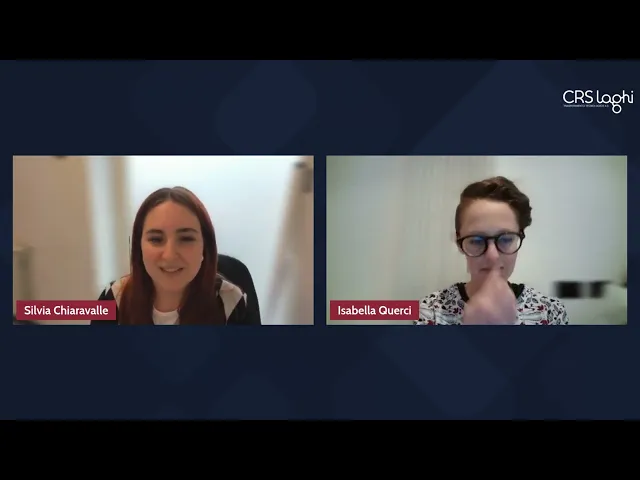
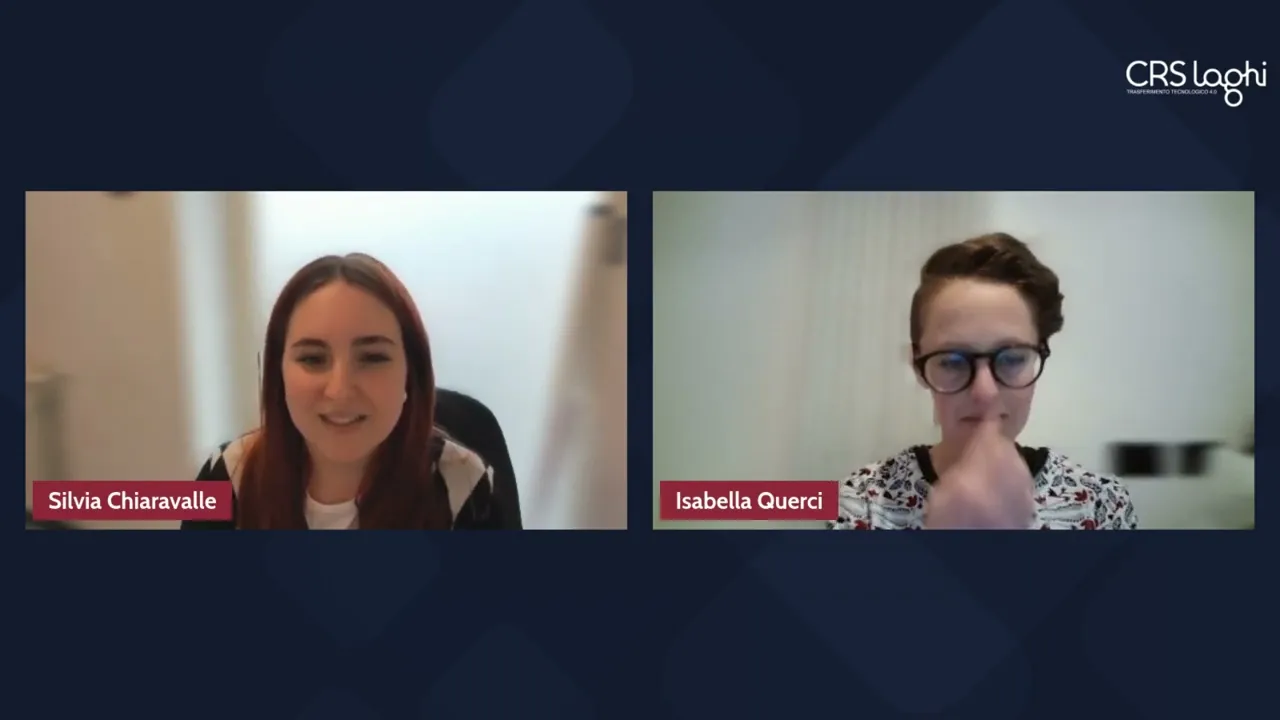
here we are interviewing Isabella queri for the Deep project hi so here's the first question what do you believe are the fundamental values that underp effective mentorship in a professional setting uh rather than values I'd like to highlight the main tenets of an effective mentorship relationship in a a professional setting and the main tenants in my opinion are the ability of the mentor to listen and the ability of the mentee to see and watch what's going on and grasp what is most effective and most useful for his professional imp personal Lang baggage while instead moving
on the perspective of the mentor I think a good Mentor is a ment that is able to actively listen and understand what's beyond words maybe what is said with body language rather than words uh to read between the lines of some maybe emails or letter or messages that we receive so being a little intuitive and being Keen to enter this relationship with the goal of being successful that's all right yeah but can you actually outline the different types of mentorship models that are commonly uh used in today's professional landscape of course uh of course I
can mention those that I know uh I there might be so many more uh especially in latest times when mentorship was recognized as an tool for making companies making work settings more efficient so a good investment for the company uh as an activity to perform Within uh their their people their staff uh so many types of mentorship arose uh so just to mention starting from the most traditional one there's the oneto one uh where usually a more senior person fluns and a more Junior one uh in terms of profession of course in terms of labor
for age uh and competen and experience and then there's maybe group mentorship where there's one Mentor with several mentees and they undergo mentorship session all together uh in this case the ability to listen should be even more cultivated uh because there are so many voices to to pay attention to uh then there is reverse mentorship which is a very nice and fun one uh where actually is the junior person who mentors the more senior one and it is very very useful for you know a quick uh res skill or upskill within labor force so on
the job learning are very effective in this case sensitivity and respect should be you know the most important values to stick to and to pay attention to uh there are of course possibilities of Performing distance or virtual mentorship uh relationship in that case um it is most advisable to go fully digital if the professional relation relation is fully digital while instead if the professional relation has is Blended and there are some uh in presence time shared in presence time at the office or anywhere in the workplace in that case it's advisable to have an impr
present session and in your opinion how does mentorship contribute to the overall growth and success of individuals and organizations oh that's a good one um it is effective when it is effective there are cases uh where mentorship session especially group ones uh ends up being meetings big meetings or talks like Ted Talks so one person talking to a group of people who listen and there's no exra relationship there's no two sides uh roads uh there's one side so it's it's not actually a mentorship relationship and this may Humper the good results of the mentorship relationship
but in in overall terms uh mentorship forces in a way people to get in contact and to share to to to crush their shelter to go out and expose a little bit of themselves and their profiles and their desires and needs and wants um and this broken shell is an opportunity despite the fact that maybe in a very busy as every day a very busy work setting we are all more and more with Blended workforces packed up in within our limits and the mentorship breaks those limit a little bit or you know um soften them
in a way uh and this is very useful for corporate growth as well because it is proved that when ideas are put together the better results follow thank you uh and could you share maybe a personal experience where mentorship played a pivotal role in your professional development um I had never the chance to go through a professional relationship that had the shape the structure of a mentorship relationship as a mentee h so the honest answer is that never happened to me in a structured environment or in a structured mentorship relationship but of there were instances
where my for first boss uh the first person I worked for and with uh he was a lawyer and I was is a traine lawyer uh several instances now return to my to my mind to my Consciousness as learning opportunities or some sentences that he spoke to me in in a kind way so I I could feel that his comments uh were coming from a good Place H so I was able to receive this feedback in a fruitful way and yet in in that occasion I think um it was sort of a mentorship despite not
being a structured mentorship relationship and uh how do you navigate the balance keep the balance between providing guidance and allowing mentees to uh kind of De develop their own unique professional identities it's a very interesting question and aligns a little bit with the you know the forever question uh should I propose this junior person to try you know something new or should I uh support them in playing safe uh and moving within the the limits of where they are familiar uh I guess that a good balance is a balance that is built on top consensus
so again we go back to the listening into the relationship uh which poses two people in connection and they are forced by the relationship to to discuss to negotiate so again the ability of the mentor to understand when it is the time to push uh a little bit to encourage uh or in other occasion and depending on the personality of the M uh when it is the case to suggest folding a little bit um depends on the personality of the Mente there are some personalities who tend you know to to be more um Keen to
trying new things and so maybe they should be encouraged to play safe a little bit more sometimes and there are personalities who need encouragement to go beyond their comfort zone so again go back to the relationship and speaking about the mentor ment relationships how uh what strategies would you uh use to Foster trust and an open communication within this relationship I'd say the first key word that comes to my mind is modeling I would advise to embody the results that you want to achieve in the person so being open in communication will Foster trust and
openness in communication um being open uh about my own person my own goals within the the limits of the relationship so stating in this relationship in this time we will meet twice a week half an hour and in this time in three months I'd like to see this result I'd like to achieve this what do you think and trying to establish I'm a lawyer so sometimes I tend to rely on this you know paradig because it's it's easier for me but establishing sort of a friendly contract if it makes sense uh between the two people
or the group of people uh having rules expectations very clear laid on um I think it's very important and being honest being honest with oneself and with the other person of course and um how do you say you you would approach mentorship in a diverse and inclusive manner uh also considering uh cultural backgrounds and uh perspectives it's a very very difficult question to respond um inclusivity means many many things but I guess that um a very a brief effective way to respond to this question uh can be accessibility being accessible uh as a person so
the environment when I'm located it should be accessible I should be accessible in terms of my capab my abilities my competences which are there to share so I guess that being accessible to people making people comfortable in giving me a ring sending me a message uh so yes being accessible and being aware and with awareness is not only listening what I said many times but it is also a little bit of reflection um I I will I will bring this example uh some times um a a handshake uh might be something that the person in
front of me is not comfortable with for several reason uh and sometimes we give for granted that we should shake hands as the first thing we we never met but let let's go on and shake hands or any many other many many other uh aspects of networking and social life within the work setting are impacted by this so being aware um and pursue knowledge so self-educate myself try to genuinely ask myself what what I have what I have in front of me who I'm facing uh and finally honesty again Ask are you are you comfortable
with this there's nothing wrong can I ask you a question um what about this and expect honesty in return that's that's really that's really good um also can you uh think about some common challenges uh that mentors and mentees encounter in these mentorship and how they uh can overcome these challenges the first challenge it's very practical and is busy schedule busy schedule very hard to tailor to carve out from our agenda within the perimeters of our working hours which is important in a professional relationship with corporate relationship of mentorship it is important that it is
part of the working hour very hard very hard for the mentor who is most likely a senior person who has many meetings many people to take care of many tasks and it's you know puzzles uh from one thing to another jumping from one t to other and very hard for the men who is most likely an entry-level person who's studying a lot researching a lot attempting a lot it requires time uh of course the the performance duration is expected to be longer for a junior person who needs to try who needs to you know self
teach things find out how to find out who to ask and so very hard very hard this is the uh most pressing challenge I'd say uh we we think okay we will do it another moment now it's deadline time and now it's summer time and now it's you know anytime very very hard how to overcome it intentionality intentionality and planning uh so for instance again writing down lists what do I want to achieve with this what are the benefits and maybe stick put a little sticky note on my laptop and say okay I'm doing this
because I think it is a good investment I think it is good for myself for my colleague for anybody for the company whatever the reason um um yes intentionality and planning thank you um before we spoke about um different backgrounds and perspectives um considering that how do you tailor your mentorship approach to uh we can say accommodate the specific needs and goals of uh each Mente it's very hard um not every person who approach a prospect Mentor is going to end up with the mentorship relationship in their hands uh sometimes there's a contact maybe uh
some mutual background research little bit of you know internet talking in a good way um some backround research and maybe a first uh meeting where the needs and goals and wants again are discussed openly honestly um and maybe they do not align simply so no there's nothing bad about it there's nothing it's not a failure it is something that was tried and something that did not work as as wanted so it's best it's the best for everyone if we do not pursue that relationship um so I'd say yes most mostly I would suggest uh to
have uh to choose mentors and mentees carefully uh to be intentional uh and it happened in the past that I I said ah I'm not sure we are a good match maybe you can talk to my colleague maybe uh personally um I for instance I feel more comfortable in coaching or leading or mentoring uh young ladies uh as it it feels easier for me to align uh and enter into you know a a sharing mode with this person a co- growth co-regulated growth mode with the person um for for obvious reason uh but I'd say
yes to to be strategic to be intentional to be open and last question um I would like to have your personal perspective about um technology about how technology uh will shape the landscape of mentorship in the future it's unavoidable um there's very little uh it can be done to to to to stop admitting stopping technology can be a thing uh so it's it's to be to be accepted and to be leveraged to be used to be you know yes um to to take the most advantage that we can of this opportunity so maybe we are
now able to reach people who are far away with the the the uh the highest ease uh we are able to schedule meeting within seconds we are able to share information within seconds um this can be an added value for mentorship it makes so much convenience scheduling calls rather than finding a moment and a place and and traffic and we know um so it is convenient in a way of course it puts two screens between the people um it's very hard to look at the other person in the eyes either I'm looking at the webcam
either I'm looking at the screen very hard um and this is not super beneficial for the mentorship relationship but we are getting accustomed I think that the new way of being colleagues of being mentors and mentees being you know working together is being shaped by us at this very moment and this relationship can be successful as well we'll be different yes of course uh we'll be worse ah I'm not that sure it will be different yeah that's for sure thank you thank you very much for this interview thank you very much Sylvia and see you
soon see you soon