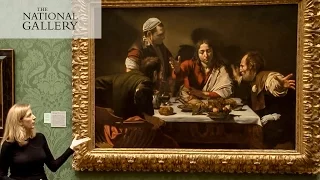
hello and welcome to the national gallery my name is matthias will i am the curator of 16th century italian pictures here at the gallery it's a great pleasure for me to be talking about raphael in this room because this is new uh i don't know when raphael was last in this room if ever usually the raphael paintings are hung in the sainsbury wing because most of the rafale we have 11 rafales at the national gallery and most of them are sort of the earlier part of his career and fit better within the context of the
paintings that are in the sainsbury wing that does however mean that he gets taken out of the context of the the the beginnings of the 16th century where he's so important which is what we usually have in these galleries so at the moment he's in here along with his older colleagues signorelli and perogino and his contemporary los panya over there on the walls and also uh gil and i thought gillen dios over there so slightly the older generation that he's in with here and he just looks i think great on these red walls and it's
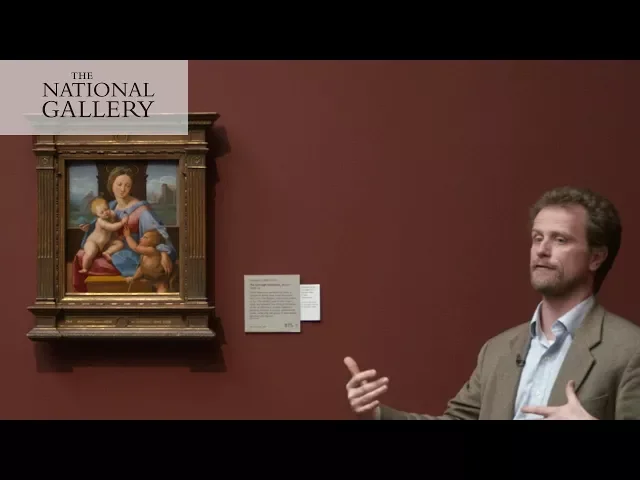
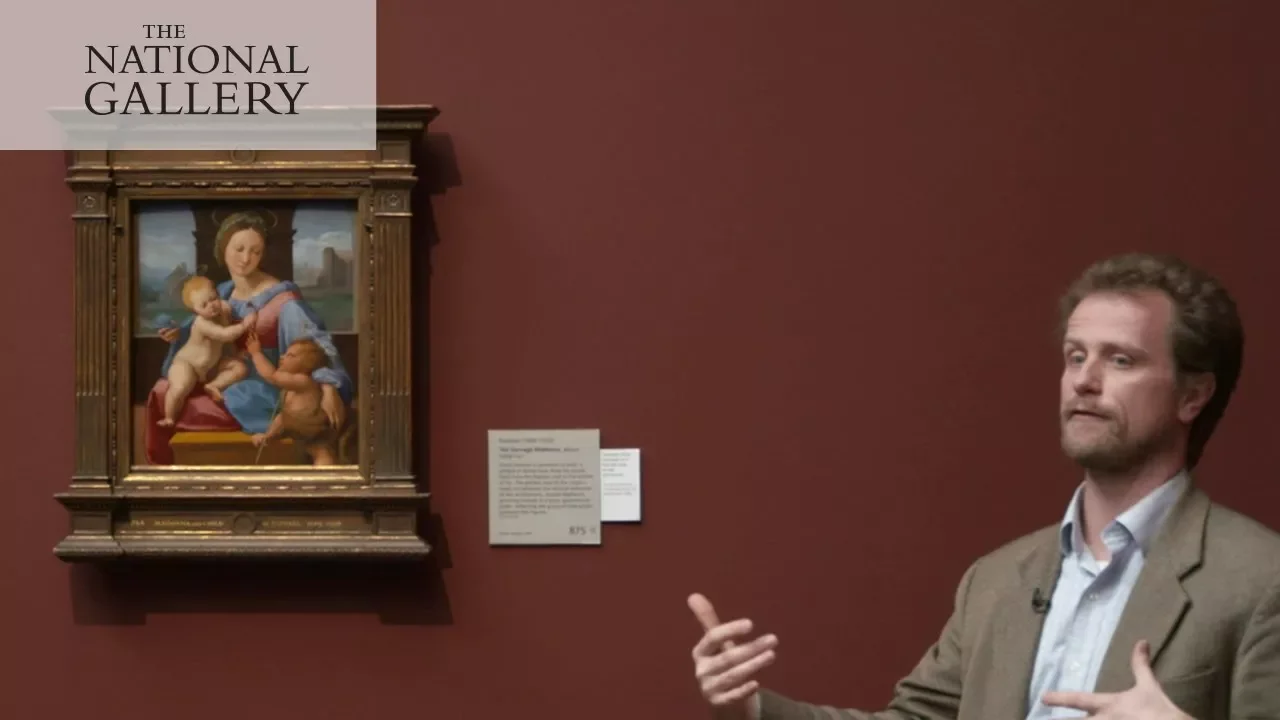
just it's always it's always instructive to see paintings in a new context so i'm very happy with that and i'm happy with our being able to display our great signali circumcision which usually we don't have space for on the main floor uh here on vista when you come in the door it's a really fantastic work and really you know if we could have it on the main floor always we would but it's this is these problems of space that we have anyway i'm here to talk about this the so-called gavac madonna or elder brandini madonna
these are calling names that refer to the collections in which it was the albertini collection was in rome uh and it was there from the it's recorded there first in the in the early 17th century and was sold after napoleon's invasion of italy when a lot of artworks were sold during the unrest in italy at that time and made its way to london where eventually it entered the collection the garver collection in scotland and that's why it has that name it has nothing to do with raphael himself or what he thought of it actually we
don't know for whom he painted it it is painted in his a very specific and very important time in his career where he has arrived in rome it's like halfway point in his career he has arrived in rome and he's working on his greatest greatest most resonant masterpiece the stanza de la seniatura the decorations of the papal library in the vatican palace this is the same time as he is working on those great paintings in that cycle notably the school of athens which is one of the quintessential images of european art it is in the
genre with which he is otherwise most identified a madonna with the child which is a very or sub-genre i would say it's a sub-genre it's a small painting meant for private devotion a private patron would have this in his house and would use it for prayer and these paintings very often have the two the two most important figures um in in the in the biblical narrative the virgin and of course the baby jesus often seconded by as we see here the infant saint john the baptist john the baptist foretold the coming of christ and therefore
he often appears in these images of christ as a child this is of course not a narrative this doesn't happen in the bible it is a construction that brings together some of the most important figures to which we pray or to which the the the owner would pray and this is a genre that that raphael specialized in from quite early in his career and that he developed um quite rapidly and and very in very interesting ways here you see the madonna seated centrally with the child on her lap he's blonde and sanjan rushes up clad
in his what he's usually clad in in his in a kind of fur it's it's camel skin as it's described in the gospels it looks a lot softer than camel skin here it looks like really soft and cuddly and nice i'm not sure but what it is but if you take a closer look it's it's the way raphael can bring out the the texture of this this wonderfully soft fur is just astonishing but he rushes up and he hands the child a carnation which is a flower that symbolizes divine love we also have it here
where this madonna which is a couple of years earlier this is from 15 57 painted in florence and i forgot to give you the date of this it's around 15 8 9 10 something like that in rome but we also have it here where the where the child is playing with the with the carnation that the mother is holding and it's it's a symbol of of the divine love of the love that with which he eventually forgave mankind so that's what we have they are seated in some kind of lodger with two arched openings to
towards the landscape which looks like the roman campania the roman countryside certainly a river but there might also be a road winding its way through the landscape and there's a bridge in the back there and a fortified town here is what there's sort of a rustic farm building here and some larger indeterminate buildings on the right the landscape is serene it's beautiful it's covered in a slight mist it could be in the morning light clouds are passing across the skies so it's a very contemplative moment that he's giving us here and this is a painting
meant for contemplation so that's important although it is small and although raphael was an absolute virtuoso he still planned this very meticulously and thought about it a lot what was important to him was first as i said to give a sense of or to invite contemplation and secondly to invite thinking about what what what what it means what we're seeing and how that informs our spirituality and this is subtle but raphael is very occupied with psychology and if you look at the christ child here he's uh and also with just the details that that give
you a sense of who the characters are so the christ child here is lighter skinned than the baptist the baptist presumably has been out in the desert even though it's only later in his life actually it's not as a baby he's out in the desert but he has certainly been out in the sun he has tan skin whereas the child also is of lighter complexion but he is is much more pale he reaches out to to grab this carnation and he does it with a cognizant look and look that makes him appear wise beyond his
years and this is fairly this is fairly common in the in the in the description of the christ child but it's very subtly conveyed here that there's a he is thinking about what he's doing and he's aware whereas uh saint john is more is acting in a more childlike manner with enthusiasm handling handing over this this carnation so the christ child already is probably aware of what his further life will bring him and so is the virgin and that is quite normal the virgin is usually depicted as also being aware and has a slight melancholy
look at her face she knows that both of these children are going to die they're going to die for very important reasons but it's nevertheless troubling obviously to a mother so ever so subtly raphael inserts this note of of melancholy into an otherwise very happy scene he's not somebody who wants to show us the the pain and anguish and conflict in life that's not really what he's about he is trying to show us something more that invites our positive thoughts he gives us an ideal that we can aspire towards and i think this is very
important i'll i'll be touching upon it a little bit later how he does this but this is this is very important to our understanding raphael and one of the reasons why in the 20th century some critics have maybe tended to say that he's less accessible than michelangelo titian who indeed deal with anguish and pain and ambiguity and the troubling aspects of life raphael shows us the angels of our better nature and that is a message that i think is as important now as it was 500 years ago and as it ever will be it's always
important to know what we can aspire towards and the good things that we can do as human beings working together and that's that's what what raphael really is about so all this is packed into this the small scene and and as i said rafael is a virtuoso he can he can draw like nobody's business and he can he presumably he could just sit down and paint this but he doesn't he plans it meticulously so the infrared examination we've made of this painting show a very meticulous underdrawing done with a metal point on a preparation that
that registered the line the metal point make across the preparation and it's very very precise it is not made from so many paintings like a little even the little uh dream of the night over there by rafael the tiny painting there is made after a cartoon which is the normal way of of working first you prepared whatever like in sketches and so on and figure out what your composition is going to be then you do a drawing in one to one scale and you transfer that drawing onto the surface that you paint and raphael would
do that even with a tiny painting like this it's not just like obviously something that you have to do for a big fresco but he would do it even with small paintings earlier in his career at this point he's moving a little bit away from that and there is no sign of transfer from a drawing from a piece of paper but the line is very precise so he presumably had a drawing next to him that he copied freehand with the help of the plumb line down the middle it was very the centrality here is very
important to him she has to be placed very centrally and as he was working on the surface before he started to paint he was also drawing in the landscape behind with all the buildings and initially he planned to have an open landscape with buildings coming across all the way and then he decided not to have that while he was still drawing it hasn't started painting yet but he was doing that on the on the surface of the panel here not in drawings uh on paper so he decided to insert this architectural element that frames the
virgin and that's probably because he want he wants her head to be clearer to us if it were on the set against the blue sky with all this architectural detail in the background it would recede a bit and not be as graphically effective notice also that although he has a very very strong command of human anatomy he is not a stickler for getting everything correct and he often challenges himself by putting his figures into very difficult positions and the way that she's sitting here for a painter at this time this is a very complex position
to put a posture to put a figure in uh he has a sense of course of how her body sits under the drapery here but still it's he's he's adjusted it ever so so slightly and there's there especially the head if you if you start looking look at this for a bit longer you see the head is bigger it's out of proportion it's it's bigger than it should be on that body and again i think that's for visual emphasis it might be unintentional but it's certainly not something he had a problem with uh because it
worked for him so he starts painting he's decided to to set off the virgin another thing that he has these arched sides here and another thing he didn't draw are the other little pieces of wall on either side of the window here and the reason he didn't i mean those are slightly unmotivated architectural elements and as you can see if if he were to he has these arches and he can't paint the edge of the window he can't paint the whole window because obviously the painting's too small and i think he was uneasy about having
the um the landscape just pass into the like like like try to crop the landscape just with the painting so he inserted these architectural uh elements that are really make no no architectural sense to frame the landscape architecturally so this is pictorial thinking rather than trying to make something that is sort of accurate in terms of the real world this is an ideal world after all there are seating on this seated on this box that it's of unfortunately the painting is not in perfect condition it's not like this which is immaculate which is absolutely remarkable
but this is a slightly raw painting and i think this box which which he also adjusted uh slightly um when he started painting would have been more like you see those those glowing steps on the on the altar there on the throne going up to the throne where where the virgin and child sit in this painting which is painted in florence some years earlier about six seven years earlier at this point in in raphael's career he had really developed a three-dimensional conception of the figure and as a great understanding of the interaction of his figures
in part from looking at leonardo da vinci his much older flawed contemporary who was in florence when raphael spent his crucial years there between 1504 and 1508 and he because he was so charming and wonderful and everybody loved him and he quickly got access to leonardo's studio and and copied things in in leonardo studio he looked very closely at what leonardo was doing also what michelangelo was doing but that's not as that's not as important here uh so michelangelo and he realized very quickly that leonardo and michelangelo the two greatest artists of this of the
time i need to you know this is who i measure myself in in relation to and i and he was a great magpie in art he stole wherever he could from fellow artists and transformed his inventions into things that looked entirely like raphael except to the people who knew that he'd stolen from them michelangelo was fuming about this even 30 years later he was stealing from him but he was he was expert at this and coming up with with inventions that the originator could never have thought of he was one of his talents one of
his great talents taking the best of what he he saw around him so uh here he is thinking about leonardo and leonardo was a pioneer in in placing figures in relation to each other and suggesting an emotional life underneath their outer appearance he was not so interested in emotional investment from the viewer because he was a scientist and wanted to he just wanted to acknowledge the fact that humans also have emotions and that's part of their scientific mega like that's how we're made and that's what he's trying to illustrate in his in his art raphael
was very interested in emotional engagement he took that from leonardo that idea of having the figures interact and and having an inner life and brought it to a new height of of perfection it's in rafael's in this period where he's painting the school of athens if you can bring that picture to you to mind uh his large compositions it's almost as if there are there are maybe 30 or 40 figures in that painting and you can't remove any of them without it falling apart everything is perfectly placed and everybody interacts with each other and is
placed in relation to each other and this is something that raphael is better at than anybody and here what he does is he he has the central um placement of the virgin but in order to not make it too boring he's not sitting frontally as he does here here he's still learning this this kind of animated three-dimensional movement um he's he's getting there but here he's he's arrived and in order not to have it be too boring and central she's her body is talked so she sits with her legs out here with her one leg
folded up in front of her and so there's a there's a body describes a curve but feels very centralized at the same time and of course there's the exchange of gases he looks at at st john who looks up at christ who looks back and that suggests that the thoughts that pass between them he also needs to balance out the composition in other ways so because the baptist has a quite large presence down here uh he can afford to leave this this um window fairly open without any any any of the figures interrupting it our
view through it whereas here he has the christ's head with it with the halo and the virgin holding a bit of a mantle which is sort of unmotivated maybe it's because sort of maybe it's because she has just enveloped christ with it and is opening it it's it's hard to say but it certainly works pictorially that there's a little bit of interruption of our view there uh balancing that and we have the halos as well the the the halo here balanced by that going up to the central one there so there's a sort of a
step-by-step uh progression there and these are the things that he he thinks a lot about composition and that this is why he has to plan very meticulously you can't he can't even he who's such a virgin can't just do that completely extemporally um in terms of color this is a very special time in in raphael's career too uh this there's this these pastel these very soft colors that are pastel-like and they differ from his florentine work which is it's more saturated as you can see very bright saturated coloring and it differs from his later paintings
just a couple of years later where he because becomes much more uh interested in strong contrasts and it's still very saturated and very saturated column a very strong shadow and light and so on this at this point he has this this soft focus beautiful beautifully muted color range and it's it's very i mean again you can't probably can't see that here but if you go up close you will be able to see how her blue dress is a slightly different hue to her mantle and those two blues match the blue of the sky and and
the the blueness of the mist in the landscape behind her and just to to add an accent to that there are turpin-like um garment jazz on her head it's in it's it interacts with blue and then green which is then again matched in the landscape the green the greenish blue they're separated out they're they're they're combined in the landscape and they're separate out separated out in their turban the uh the building the halos and the the red of her dress are this lined with with actual leaf gold and this is something which is very it's
an old technique that you see in older painting and that progressively at this time becomes less and less used and this is maybe raphael's last use of it he made use of it in the stanza de la seniatura and is using it here but after this he drops it from his painting because it is an alienating element it's it's pure flat gold in a in a painting otherwise meant to suggest there is a military the real world and it there's a there's a slightly slightly alienating um conflict between that flatness and and and the car
so in the going forward he will paint gold using pigments rather than using actual gold uh so this is the the last the last time he does that probably it's around this time anyway and but it's it's again it's it's elegantly integrated and gives a sense of of all the other worldliness to it so that is some of what what's going on and and of course this is something that satisfies us at him as an artist to be able to to so beautifully integrate his figures into into an environment and to have them interact and
to give us a sense of harmony that's and give himself a sense of harmony i'm sure however this carries more this is not just done for its own sake this is key to understanding why raphael is so important and why his art continues to speak to us i think i said before that what he's interested in is showing the better angels of our nature and as he's composing his pictures he's thinking about this he shows the interaction of his figures and for that and this is the psychological interaction as i talked about and and he
tries to get give us give an emotional charge that we can invest our emotions in it and feel um empathy with this with his characters he does but he doesn't want violent emotion as i said again he doesn't want violent emotion he wants something that makes us feel at ease and aspire towards greater things but down to the very forms this is important by looking at it he's like his idea i think is by looking at a harmonious picture harmoniously composed we are encouraged to internalize that harmony in ourselves so in praying to this this
madonna we are he is attuning us to the harmony that courses through us as human beings that courses through nature and the cosmos the the and you can put it even in in musical terms and the the harmony of the spheres described by various um uh classical writers and and and theoreticians this idea that the universe is ordered by a divine harmony that is sort of musical in character raphael is a very musical painter in this in this sense and he makes it explicit in the school of athens where he actually has a diagram of
the harmony of the spheres inserted so he's trying to show us that that and and he's that harmony that crosses through the universe also if we are attuned to it appears in our art and it appears in rafale more than probably any other european artist and this is why raphael is one of the quintessential artists of the european tradition i think he shows us what we can aspire towards how civilization should work he shows us how we can obtain not just peace but knowledge and enlightenment and spiritual harmony if we think about each other as
fellow human beings living in in in harmony together in a community he's a painter of community i think i'll leave you with with with that and say thank you for your attention