in the world I'm new Barker in London many young European and American Jews are raised to believe that their Jewish identity is contingent on their unflinching support for the state of Israel well that identity is now very much in crisis as many young Jews watch in graphic detail the state of Israel's Onslaught in Gaza and the worsening treatment of Palestinians in the occupied West Bank I don't think I realize the extent to which what I would come to see on the ground would really Shock Me and horrify me a new documentary called israelism casts a
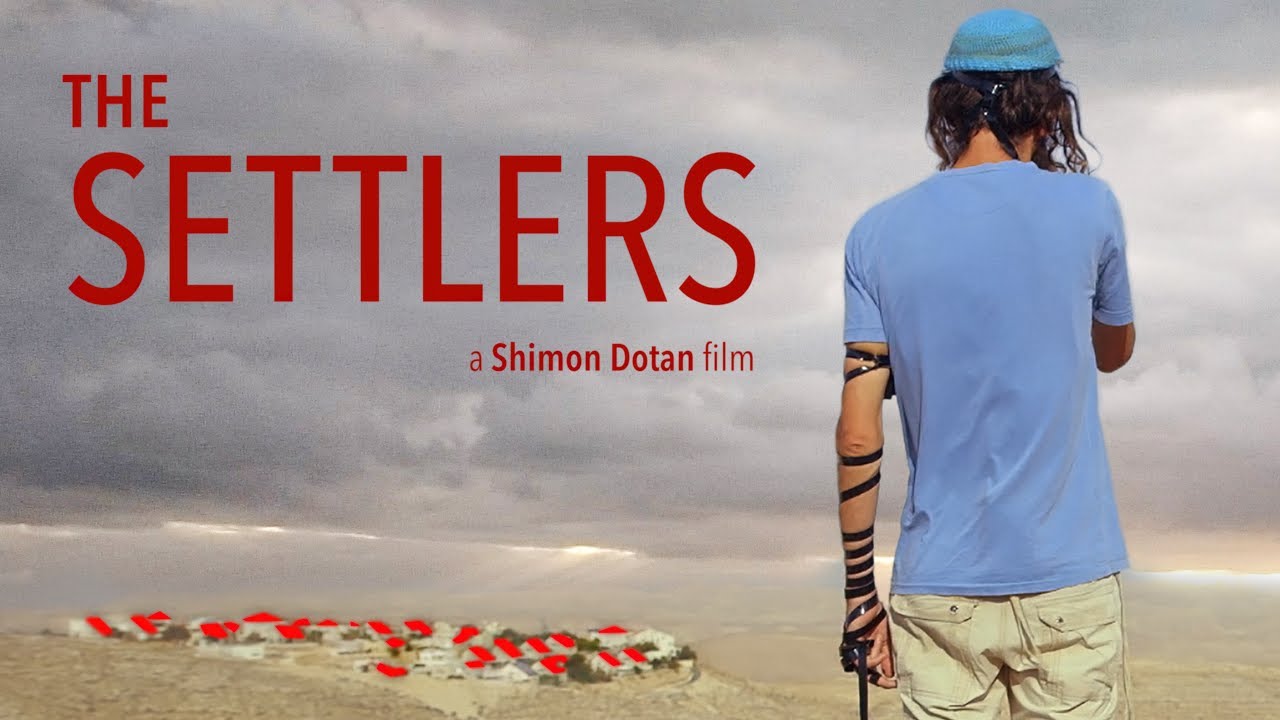
critical eye on the growing generational divide among American Jews on the question of Palestine with many young people increasingly becoming critical of Israel and less supportive of Zionism you see what non y looks like what we've been told is that the only way that Jews can be safe is if Palestinians are not safe the more I learned about that the more I came to see that as a lie it's a film by Jewish people about Jewish people and the state of Israel about the fight for the freedom and equality of Palestinians while also fighting anti-Semitism
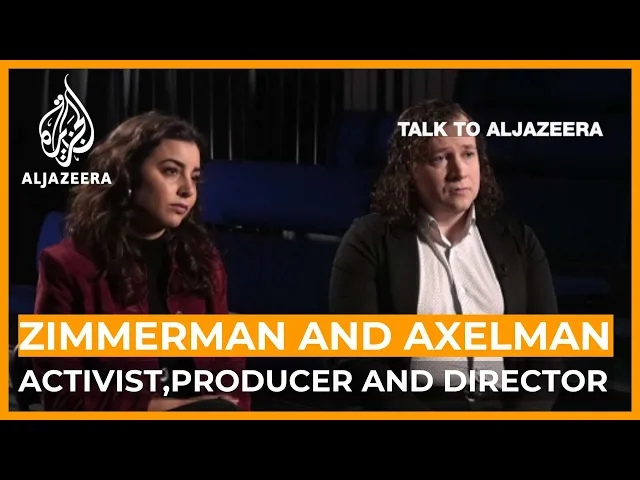
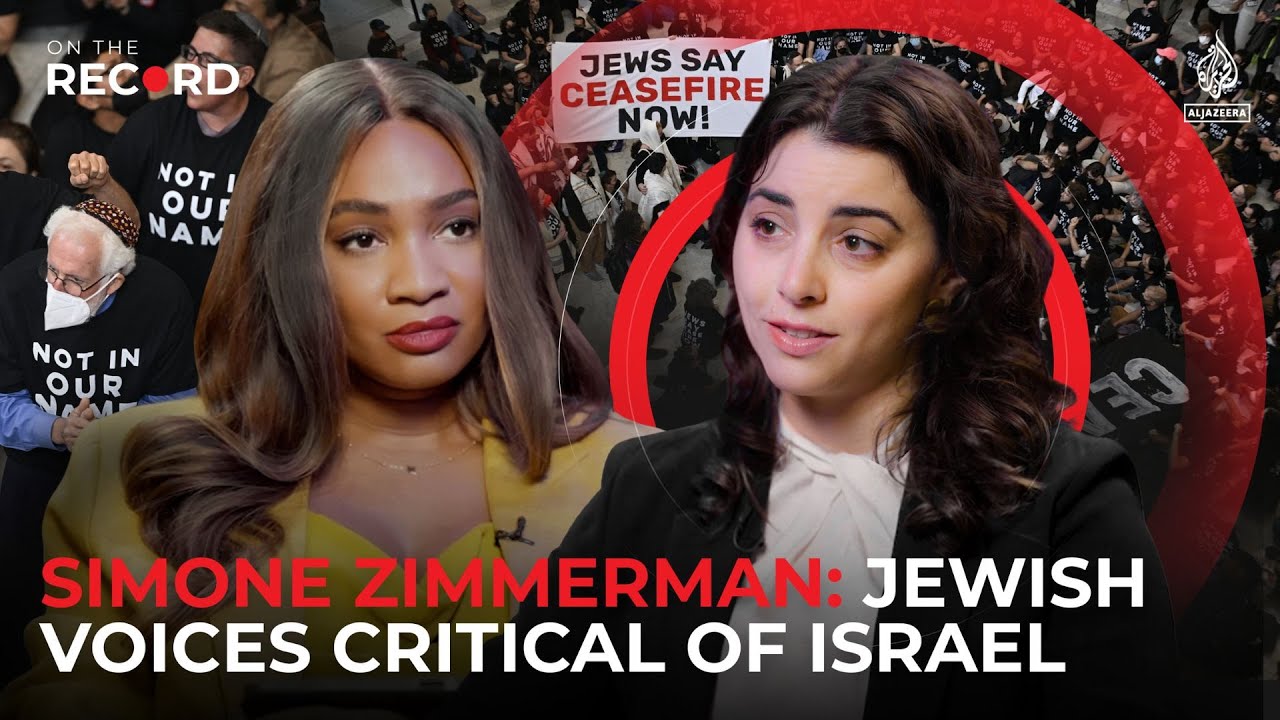
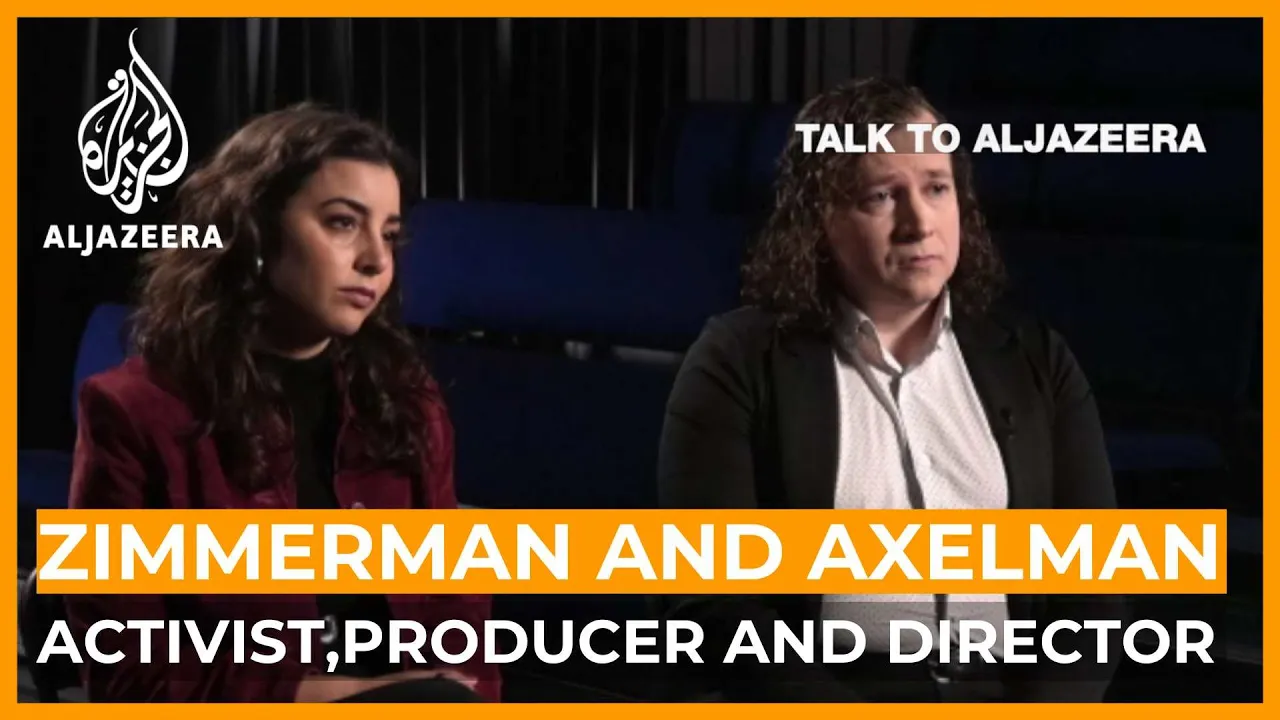
but it's faced multiple attempts by some Jewish groups to have its screenings cancelled join me over the next half hours the film's main protagonist Simone Zimmerman and producer co-director Erin axelman talk to Al jazer Simone Zimmerman Ain axan welcome to talk to Al jaaz firstly congratulations both of you on the film I was at the premier here in London there was a queue all the way down the street Erin I can start with you and ask you what you were hoping to achieve with this film we're really trying to show a mirror for to our
own community and really show our community the progressive American Jewish community that we are not Fringe that we are not a tiny proportion of American Jews we are actually a massive proportion and then our views are incredibly Humane and are actually aligned with the Jewish values of social justice and fighting oppression so I think we're really trying to show our own community that we're not alone that we're not Fringe that we are just as Jewish as anybody else and in fact we are doing this work because of our Jewish history and because of our Jewish
values I think we're also trying to show the rest of the world especially Palestinians that we are behind you that we are with you um and that again to fight for Jewish values means to fight for Palestinian freedom in this moment and lastly I think our film is also trying to help explain to The Wider World both why American Jews historically have been so pro-israel I think there's a lot of confusion um about why this very Progressive Community uh the American Jewish Community has historically been so unconditionally pro-israel and I think our film helps explain
that and I think our film also helps show how and why the massive transformations in our community are occurring as more and more American Jews come into contact with Palestinians and Palestinian narratives and realize that we actually empathize with them and sympathize with them intensely and Sone is the main protagonist or one of the main protagonists in this film how would you describe the journey that you went on because it was very much a personal one um it was one of shattering I mean I was I I was absolutely heartbroken the when I you know
first encountered the Palestinian reality you know at first it began for me as a series of questions like I was hearing things uh on my college campus that just didn't comport with the worldview that I was raised with and there's only so long that you can hear these testimonies that challenge your worldview and I think everybody has a choice which is either to go deeper into denial to close yourself off from reality or to face it headon and to say what does this actually mean and what does this mean about the narrative that I currently
hold and it forced me to do a lot of deep re-evaluation and how reflective is your personal re-evaluation of many other Jews in Europe and America when it comes to how they view Israel I mean I think my story is not unique it's as Aaron said this is the story of a generation uh I meet people at every single screening who you know come up and say I you know I just spent the last hour and a half sobbing this story spoke so deeply to my own experience we hear from people who say this has
enabled them to have the painful conversations with their loved ones uh and with people in their communities and yeah we feel we know that this is not actually a unique experience uh in the Jewish Community this is something that's happening to people all around the world Adan at least the first pretty much half of the film almost sort of went into huge detail about the whole indoctrination Pro process of particularly uh American Jews into being loyal to the state of Israel but what your film seems to want to do is reclaim that sense of Jewish
identity as you suggested um how is it possible to do that without conflating being Jewish with the actions of the Israeli government yeah I think you know as you talked about you know APAC and many other kind of pro-israel organizations have really tried to tie jewishness to APAC being the pro Zionist Jewish Lobby in the US and a lot of these kind of major pro-israel organizations in America have really tried to tie jewishness and Judaism to Israel and say that they are essentially the same someone in our film even says Israel is Judaism and Judaism
is Israel and we interviewed many people on the center and the center right and many people have told us that that they really believe that that these two things are linked and I think what we're trying to do is show that ruling over millions of people without basic rights for decades and decades and decades is not Judaism there's nothing Jewish about it as someone actually said recently one of our screenings and actually many American Jews support Israel or think they support Israel because they think Israel is aligned with their values we often hear narratives of
Israel being this Beacon of democracy the only democracy in the Middle East it's a amazing place where queer people these are the narratives were taught and when we actually see with our own eyes how Israel has treated the Palestinian people both historically during the nakba and in the occupation obviously this ongoing genocidal bombardment of Gaza we realize that actually the opposite is true that Israeli policies don't align with our Jewish values at all um and that actually to be Jewish in this moment to fight for our Jewish values means fighting for the safety and freedom
of all people who live in that land both Jews and Palestinians and just adding to what Aon just said there Simone the message Time and Time shared by the Israeli state is that only Israel is able to keep Jews safe it's the only Safe Haven um how then is it possible in the making of This film to to lift the veil on some of these is it fair to call them Foundation myths you know given how sensitive these narratives are to the Israeli identity I mean I think it's clear in this moment that Israel is
actually the most dangerous place in the world to be a Jewish person today you know every single day when I open my phone and look at Instagram I am seeing the the myths that I grew up with revealed to be lies that Israel is the most moral Army that you know the Israeli Army is the most moral army in the world that they are not harming civilians every single day the reality that young people are seeing live stream to our phones just absolutely demolishes those myths that Israeli military's conduct in the Gaza Strip right now
just demolishes every single one of those myths that we were raised on I just want to drill down into the idea of the the the the prominence the a the um unquestioning support for the Israeli military which is really really came out in in the film because one of the quotes attributed to the first female prime minister of Israel goldem Maya but it's often par paraphrased by Benjamin Netanyahu is this if the Arabs put down their weapons today there'll be no more violence if the Jews put down their weapons today there will be no more
Israel something explored in the film was that state of Perpetual Readiness by the Israeli Army that has led in many ways to the glorification of the IDF I just wonder in the context of what's happening in Gaza whether that's been seen to explain some of the military activities carried out by the Israeli Army in GZA yeah I mean I think it's a tragedy of Jewish history that this idea that to live by the sword um in this you know fortified militarized nation state has been sold as a path to safety for so many of our
people when we can see that you know of course the most endangered people right now are the Palestinian people of Gaza but Israeli Jews are also not safer right now in this situation in which they live in a country that's committing a genocide and that is INF flaming tensions with the entire region I mean in what what world are Israeli Jews or anyone else made safer and you know I'm really grateful for organizations like breaking the silence who have uh who are former testifiers from the IDF who who speak about you know every single red
line that they cross in terms of their own morality um when they're told that they're going to you know fight for a battle for the safety of their country and everyday witness that what that actually means in real time is um humiliating and degrading the daily existence of another people making everyday life in their in their Villages um you know across the occupied West Bank uh living hell feeling like soldiers are watching you at all times and of course today you know I mean the reports that we're seeing coming out of Gaza are just once
again there are no red lines um Erin I what if I could turn to you and ask you about the time frame in which this this uh documentary was made because it was started long before the event surrounding October the 7th I just wonder with hindsight whether as a filmmaker perhaps you could have gone further in drilling down into the suffering of Palestinians to really shine a light on some very dark places for an Israeli audience yeah so our film was uh began in 2016 um and it took about seven years uh to produce initially
we were a very small production team just my my co-director and myself we eventually got some really amazing producers both Palestinian and British Jewish producers um and yeah it was a really tricky balance because we our film is really about American Jewish transformation um so obviously the primary protagonists are Jewish but we transform and that transformation occurs because of contact with pal palan society and Palestinian stories so Palestinians are obviously very prominent in the film but because the main stories on American Jewish transformation it was a tricky balance um we really wanted to in a
relatively short period of time try to convey what Palestinian life is actually like um in you know under military rule what it's like to live your entire life in a walled off city in which an 18-year-old Israeli soldier has complete control over whether you can enter or exit where you live um but yeah you know it was a trick call Tricky call and we didn't end up U having a massive amount of time we wanted to make a really digestible film um so we definitely could have done more to show kind of the horrors that
Palestinians go through could have more to show um what gazin are going through there is a section of the film on Gaza but in hindsight we would have actually covered Gaza even more uh has the the timing in which this film been released taken on a whole new dimension a whole new meaning significance for the film do you think yeah you know um it came out in February 2023 um so a number of months before October 7th but we had just announced um our first kind of major tour and released our trailer only weeks before
October 7th so it was kind of in the millu um both for people who were looking for resources to learn about the context of what was happening as well as for people who were trying to cancel uh prop Palestinian and Progressive Jewish speech so it kind of became a lightning rod in that way and I think also the film kind of resonates to a certain extent because many of the phenomenon we cover in the film have accelerated dramatically since October 7th especially the phenomenon of uh labeling any criticism of Israel even if it's being done
by Jews as inherently anti-semitic even if it's talking about basic facts of reality and also Al the other phenomenon that has expanded quite dramatically is again um this massive U movement of diaspora Jews across the world saying not in my name and saying that we are proudly Jewish We Stand By and with our history and with our ancestors but what we're seeing is not Judaism tell us about the the attempts to to to cancel showings of the film there's been many um after October 7th especially I think a lot of pro-israel uh people were looking
for something to do and looking for ways to again you know fight what they saw as anti-em ISM um and a number of right-wing activists kind of began targeting our film and a number of massive email campaigns started telling universities and uh film venues to cancel our film saying that our film was dangerous to Jewish people that it was anti-semitic even though in most cases it was Jewish activist groups or Jewish leaders including Israeli activists and leaders bringing our films um to venues or to campuses so it's very ironic that under the guise of protecting
Jews they were censoring Progressive Jewish voices um but when uh universities or venues attempted to cancel our screenings it was really incredible that both Jewish activists and Palestinian activists said absolutely not we are going to show this film no matter what so we've had virtually no successful cancellations and we've been we've been able to essentially reverse all of them because of progressive Jews saying look this is my story this is literally the story of my life and Palestinians also saying you know how dare you censor you know critically important Palestinian and Progressive Jewish voices in
this moment that are providing context I hear from college students all around the country who are as aarin said you know bringing the film to campus allowing them you know giving them a tool to have these conversations about what is the context that I was missing before you know um to help them make sense of of this moment because part of what the film is showing is that you know there was both a context of deep oppression and Injustice that existed before October 7th and also that there have been you know these debates and these
Rising movements um of young Jews criticizing the Israeli government for for years and for decades so um yeah it's been just really tremendously meaningful to again offer people a tool through personal experience and personal narrative to then think about their own Transformations and you know that's what a University campus should be about that's it it was it's because of my experience on my college campus that I was able to undergo the journey that I went through I remember when I was a college student that at first there were certain things I heard that made me
feel very uncomfortable even I might have said at the time unsafe um I was really passionately pro-israel and there were a lot of parts of that worldview that I had never questioned or interrogated and it took me a long time of hearing again hearing these stories testimonies from Palestinian students that really did not comport with these this Rosy narrative that I had of Israel where I was forced to you know ask questions I I remember you know I a conversation I once had with a grad student who was actually an Israeli anti-zionist Jew and he
said to me um I said you know when you use words like aparti and ethnic cleansing they make me really uncomfortable I feel like you're attacking Israel and he then explained to me that the words ethnic cleansing and apartheid are actually terms that have you know legal and historical meanings that accurately describe things that were happening on the ground and you know that totally disarmed me because again I was taught this like deeply anti-intellectual posture to kind of like dismiss um these facts and these realities um that are really happening on the ground so I
think the first thing is it's important to say that you know activism is not meant to be comfortable oppression is not comfortable and for many people that you know being confronted um might not initially change them in that moment but activism over time can can force people to face things that they don't want to face and can lead to Transformations the other thing I want to say is that an American college campus or sorry a University campus anywhere should be a place of learning and it's so deeply concerning to me that we've seen you know
administrators both in the US and in other places who are caving to this pressure to censor um Pro Palestinian activism and um like spaces to actually learn because that is what a university is supposed to be about and we're seeing in the US I could speak to this specifically we're seeing the way that pro-israel groups are uh finding alliances building alliances with some of the most you know racist and anti-democratic forces forces in America that want to ban not just the teaching of you know critical history about Israel Palestine but also teaching of critical history
about America and it's such a dangerous precedent that's being set if you you know allow um the censorship of teaching and activism on this issue what's to say that there you can't do that on any other issue I wonder if Erin if I can pick up on a really important point that that Simone has ra raised there and it's about how fractured Jewish opinions are one of the things that film really focused on and achieved is to show the huge divisions particularly geographically and generationally most importantly uh when it comes to deep-seated views and opinions
around the state of Israel obviously you your film through a spotlight on mentioned it already American Israel public affairs committee or APAC that just repeat as the powerful Pro Zionist Jewish Lobby in the US there is of course a tendency outside the Jewish Community to forget that there are deep divisions tell us more about that totally yeah I think the pro-israel kind of like right in America has really tried to perpetuate the myth and has successfully done so for many decades that we are united on Israel that American Jews by large almost all of us
support Israel unconditionally or almost unconditionally and what's ironic is that that's not true at all it's the opposite in fact we are a deeply polarized and divided community and that's a much more honest and accurate picture of where the American Jewish Community is polling from 2021 that's widely cited on the right and the left shows that amongst all American Jews about 25% think Israel is an apartheid state is committing the crime of apartheid when you go to younger Jews it's about 40% about 40% of Jews under 40 think Israel is committing the crime of apartheid
and apartheid is a very strong word I think a very accurate word but if 40% of young Jews think Israel is an apartheid state I think we're probably already at the point or 50% of young American Jews realize something is deeply wrong with how Israel has treated the Palestinian people both historically and in the present moment so I do think that we might actually be the majority of young American Jews already we are still the the minority amongst all Jews but I think again what we're trying to also do is help actually paint a much
more honest and accurate picture of our community which is one that is not United but actually the opposite incredibly divided and Incredibly polarized over this issue turning to you Simone do do you think your findings will put Jews outside Israel off from ever wanting to live there um challenging question but Ben Netanyahu has often suggested that one of the biggest existential threats to the state of Israel may be not Hamas not Islamic Jihad not Iran not Arab states surrounding Israel but a reluctance by Young Jews not to want to go there I mean it's you
know we've seen time and time again uh pro-israel organizations and individuals actually admitting that what they see as one of the biggest threats uh are you know critical Jewish voices we saw uh in the last election cycle you know APAC poured millions of dollars into deting and 11 a former synagogue president you know very active Jewish leader uh in Detroit Michigan because of his uh relationship with congresswoman Rashida T and so I think what that speaks to to me is that there is um a deep hostility to the idea that Jews can coexist in multiracial
democracies and coalitions and part part of what is so um scary to me as a Jewish person in this moment is um the way that pro-israel politics often set Jewish communities apart from people who could be our natural allies you know in this moment we're seeing all around the world the the actions of the Israeli military inflaming not only anti-Semitism but also inflaming you know islamophobia and anti-arab racism around the world and people around the world we should be committed to taking those issues on together seeing that Jews and Muslims being attacked in the streets
anywhere in the world right now is a is a threat to the safety of all of our societies and um it's this is also part of why it's so important to us to publicly challenge this conflation of all Jews with the state of Israel you know that's why it's so concerning to me that President Biden uh repeatedly says that without Israel there's not a Jew in the world who is safe American Jews should be safe because we're Americans it's the job of the American president to protect all people in the country that we live in
not to be sending B bombs and guns to a foreign military across the world let's drill into that a little bit more if you don't mind because a fierce debate is happening here in the UK at the moment as to whether or not the UK should stop selling sending arms to Israel we know that Spain uh the Netherlands that Belgium and Canada have stopped um handing over arms the us though continues to send billions of dollars in weapons to Israel so too does Germany does that make the world a safer place or a more dangerous
place for Jews absolutely a more dangerous place for Jews you know um I recently heard a there's a talmudic passage it's like a a saying from the rabbis um who said that you know um Love without without accountability is not real love and you know I just wish that more people in our community would investigate that idea what is this notion of Love For A Place With No accountability right now we should all be yearning desperately for the Israeli military and the Israeli government to be held accountable for these you know crimes that are being
committed against the Palestinian people a world in which any government any military can Massacre people at this scale demolish entire cities at this scale show such callous disregard for human life and there to be no consequences that should terrify all of us the world the precedent that is being created by this government being allowed to act in this way and on top of that to say that all of these Horrors are being committed in the name of safety for our people for Jewish people I so deeply believe that that endangers Jews around the world associating
us with this absolutely Reckless you know untethered government that is showing such callous disregard for human life now I know uh that both of you have made enemies as a result of this film I mean you've both been called anti-semitic or you're both Jewish um and then that's that slur that you repeated multiple times in the film self-hating Jew um Erin I wonder if I can start by asking you what is it like to be called a self-hating Jew I mean luckily for us we know how absurd and ridiculous it is again my family fled
violent anti-Semitism um my family has a long history of pride in our Jewish faith and our Jewish history and in fighting for social justice in America and and other countries which my family has lived so I think it just shows that you know the pro-israel right is not actually willing to engage with the material um that our film talks about and that the movements that our film covers actually you know talk about um what they're more interested in doing is totally trying to delegitimize us pretending that we're either again self-hating Jews or not really Jews
at all and by doing that by trying to delegitimize us so fully they're basically saying that's all we have to fight against you they don't actually have good arguments against what we're talking about so they treat us with slurs they call us names and we knew that would happen when we made this film it never gets less painful to be told you know that you're a traitor to your own people I I can just say that you know it's because I was raised in a community in which you know deep uh intellectual inquiry and critical
education was prioritized that when I learned these things about Israel I I kept wanting to learn more and I I got in wanted to be part of these you know uh rigorous and critical exploratory conversations about what all this meant and I'm I'm sorry that it's inconvenient to some people that you know the conclusions that I've come to didn't fit with the political views that they wanted me to have towards the end of the film I think it's fair to say there was an attempt at healing um we witnessed a Jewish rabbi in a therapeutic
Circle almost talking to other Jews sharing what it is like to feel like an outsider do you feel that these are opinions are Fringe opinions are they left field or are they mainstream Sim I mean these are are opinions that have been pushed to the fringes of our community there have been very active attempts as we've already talked about to you know smear anybody who dares to criticize the Israeli government to stand with Palestinians as a traitor as inauthentically Jewish as self-hating um but we also know as Aaron mentioned from polling from the movements in
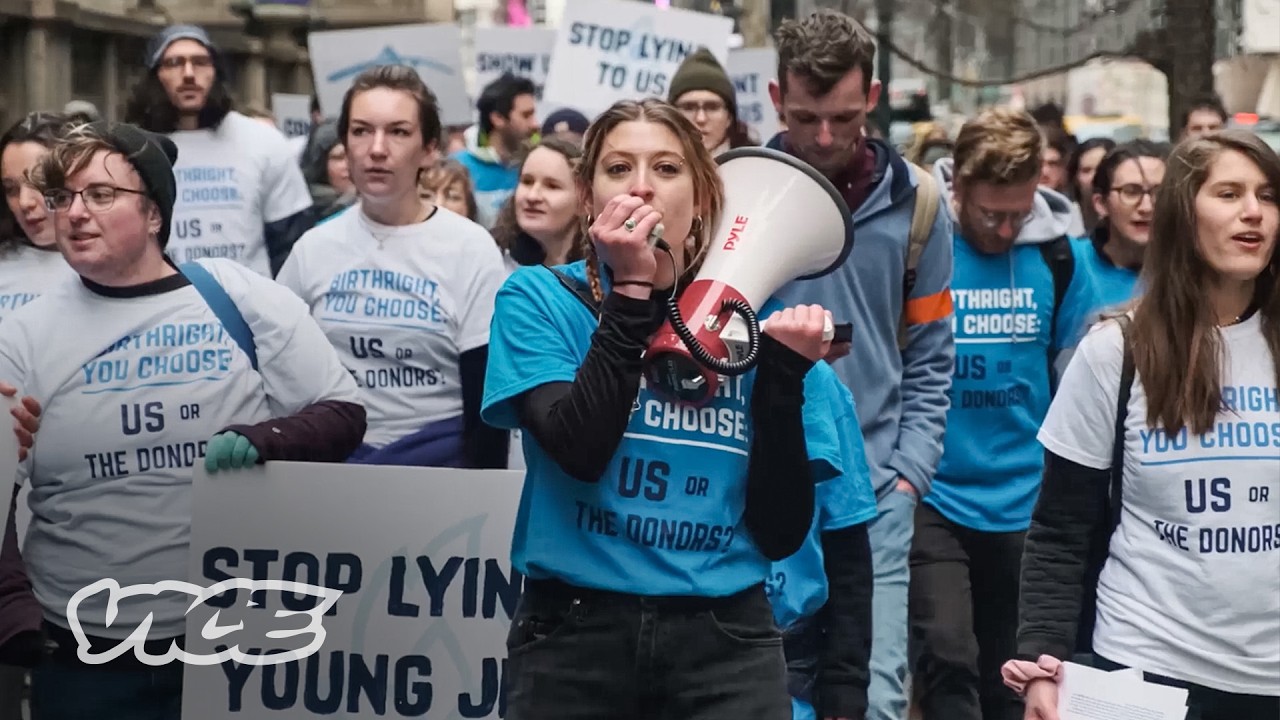
the streets we see these movements growing we see Jews out in the streets you know calling for a ceasefire in Gaza calling for Palestinian Freedom both because of our Jewish values and because of our commitment to our own Community we're doing it because we see that as also part of the way to fight anti-Semitism to break this public perception that the horrors that we're seeing in Gaza are being done in our names and every single day that movement is growing as more and more people are facing the horrors that are being committed by Israel the
the reality of what this country has become and are speaking out and are joining the movement before we go I want to ask one question to both of you and it's this Erin I wonder if I can start with you I want to ask you in the process of making this film whether there is anything that you seen experienced that you could be hopeful about I think I'm hopeful uh because of the massive movement of American Jews and diaspora Jews who are fighting for justice both where they live as well as in Israel Palestine I'm
incredibly inspired also by the incredible solidarity and the growing movement of both Jews and Palestinians working together across the world who are fighting for safety and freedom for all people between the river and the Sea this is not going to be easy um again you know the first thing we need obviously is a ceasefire but also again I'm also incredibly encouraged by polling we're seeing about who wants a ceasefire again you know right-wing pro-israel orgs in America have even said calling for a ceasefire is anti-Semitic polling shows over a majority of American Jews over 50%
want a ceasefire only about a third of American Jews want the war to continue so even though the larger pro-israel organizations claim to represent us um their claim uh on leadership is going away and people are beginning to realize that they actually do not represent mainstream American Jewish communities and that mainstream American Jewish communities are progressive we do support social justice we do support equal rights both where we live as well as in Israel Palestine Simone do you share those hopes I think for me I'm taking a lot of Hope from being in this growing
movement from seeing people who are speaking out seeing people taking taking action for the first time taking risks that they've never taken before confronting their communities confronting the institutions around them and um we can only hope that there will be accountability for these crimes and the opportunity to rebuild Simone Zimmerman Erin axman thank you for talking to aler thank you so much than much