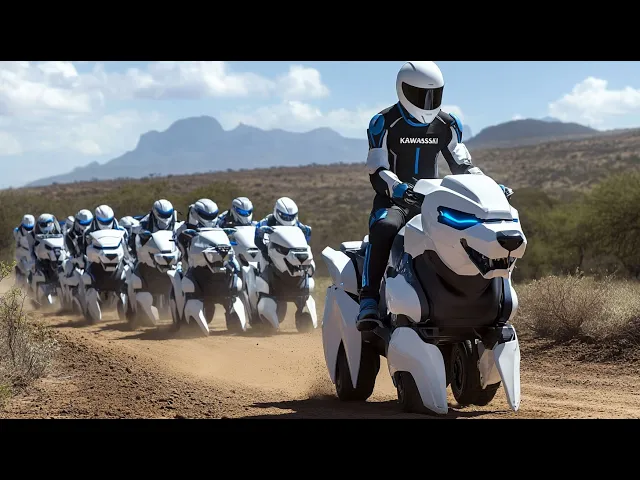
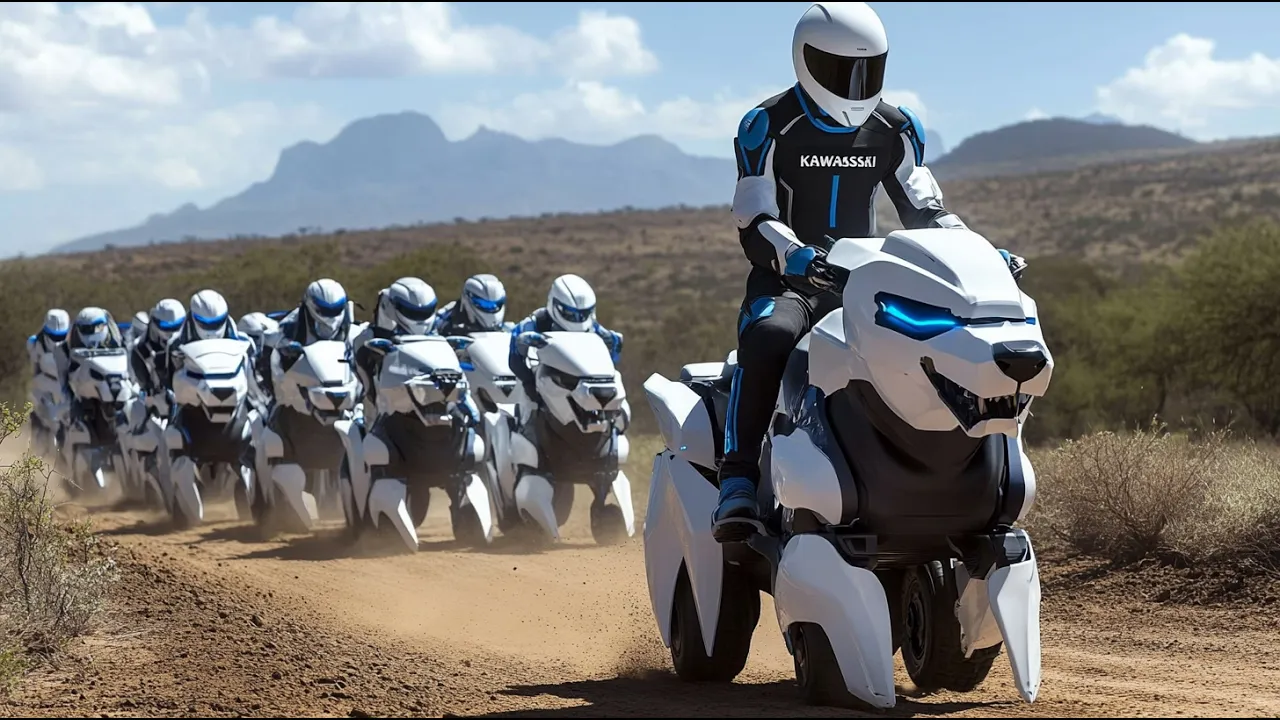
Kawasaki has made a stunning announcement with the unveiling of the Coro robot vehicle, a groundbreaking hydrogen-powered creation that promises to revolutionize robotics and transportation. This majestic robot designed like a horse was showcased at the Osaka Kai Expo on April the 5th, 2025. With its remarkable ability to traverse difficult terrains powered by clean hydrogen fuel, the Coro could dramatically reshape industries and how we approach mobility.
A revolutionary leap on April the 5th, 2025. Kawasaki Industries unveiled a new era in robotics and transportation with the Corio robot vehicle at the Osaka Kai Expo. This creation is not just another robot.
It's a complete rethinking of what a robot can be and how it can interact with the environment. The Corio isn't a traditional vehicle, nor is it simply a robotic creation. It's a dynamic piece of technology designed to operate in realworld conditions from mountains to snowcovered terrain revolutionizing how we think about mobility.
The Corio robot is powered by an innovative hydrogen engine making it not only efficient but also environmentally friendly. As the world moves towards more sustainable technologies, the Corolio is a pioneer in utilizing hydrogen as a primary power source. Hydrogen-powered vehicles have been gaining attention for their potential to reduce carbon emissions, and Kawasaki's integration of this technology into robotics is a significant step toward a cleaner future.
What sets the Corio apart from other robots is its ability to mimic the movements of a horse. The robot's four legs, equipped with cuttingedge motors, allow it to move with the agility and grace of a panther. It can leap, run, and maneuver across rough terrain with ease, offering unparalleled stability.
Its design, inspired by the animal kingdom, offers an entirely new approach to robotics, one that could change everything from how we think about transportation to how we interact with robotic technology in our daily lives. But this isn't just a theoretical concept. Kawasaki has made significant strides in developing this robot, ensuring that it's not just a prototype, but a realworld solution with immense potential.
The Corio is capable of traveling distances of up to 150 m per charge, offering a practical solution for a wide range of applications. Imagine being able to travel across diverse landscapes without the limitations of traditional vehicles or even drones. The Corio is designed to push the boundaries of what's possible in robotic mobility and the possibilities are endless.
With its unique design and hydrogen-powered engine, the Corio has the potential to transform industries ranging from logistics to tourism. It could provide efficient eco-friendly transportation in environments that are currently difficult to navigate with conventional vehicles. Its ability to adapt to different terrains makes it a versatile and valuable tool in many sectors.
The Coro could be the beginning of a new era in robotic mobility. But how does this robot actually move across such diverse and rugged landscapes? What makes its design so effective at overcoming natural obstacles?
Engineering the Corio robot vehicle. When you first look at the Corio robot vehicle, it's hard not to be impressed by its sleek, futuristic design. Inspired by the movement and agility of horses, this robot's legs are engineered to replicate the motions of a four-legged animal, giving it a natural and fluid way of moving.
Each of its four legs is powered by electric motors that allow them to move independently, offering unprecedented levels of control and agility. What makes the Coro truly stand out is the design of its hooves. Unlike traditional robotic legs, which may have flat feet or wheels, the Corio's hooves are made from a special rubber material designed to grip various types of terrain.
This dynamic flexibility is key to the robot's ability to move seamlessly across uneven ground. The hooves feature embedded sensors that can detect the type of surface they're walking on, whether it's snow, gravel, wet grass, or rocky paths, and adjust their grip accordingly. This innovative feature allows the Corio to maintain perfect balance and stability no matter where it's walking.
The robot's four legs work together in perfect harmony, allowing it to achieve a level of mobility that traditional vehicles cannot match. Whether it's climbing a mountain, crossing a river, or navigating a dense forest, the Corio can do it all. The technology behind its leg movements allows the robot to move as fluidly as an animal with quick reflexes and the ability to leap over obstacles or change direction on a dime.
It's a true leap forward in the field of robotics, demonstrating how design and functionality can work together to create something that feels almost alive. But it's not just the legs that make the Corio stand out. The robot is equipped with an advanced suspension system that allows it to absorb shocks and bumps from the ground, ensuring a smooth ride even in the roughest conditions.
The suspension system combined with the hooves allows the Corio to navigate rough terrain without losing its footing. It's this combination of flexible suspension and terrain sensing hooves that makes the Coro such a versatile and powerful vehicle. Kawasaki's design approach for the Coro is a gamecher in the world of robotics.
By blending the agility of animals with the power of cuttingedge technology, Kawasaki has created a robot that can move like never before. Its design isn't just a mechanical feat. It's a combination of nature and technology working together in perfect harmony.
But how does the Coro stay powered for such long distances? Can it truly run efficiently without a constant recharge? Fueling the Coro robot vehicle.
Hydrogen has long been considered a potential solution to the world's energy needs. And with the Corio robot vehicle, Kawasaki is taking a bold step forward in demonstrating hydrogen's viability in the robotics industry. The Corio uses a hydrogen-powered system to generate electricity for its movement, making it a clean, efficient, and environmentally friendly alternative to traditional fossil fuels.
At the heart of the Corio's power system is a hydrogen engine that generates electricity through a chemical reaction between hydrogen and oxygen. This reaction creates electricity to power the robot's electric motors, which drive its four legs. The result is a completely clean and sustainable power source that produces only water vapor as a byproduct.
Unlike traditional gasoline or diesel engines which release harmful emissions into the atmosphere, the Corio's hydrogen-powered system has a minimal environmental impact, making it a perfect example of how technology and sustainability can work together. One of the key advantages of using hydrogen as a fuel source is the efficiency and speed of refueling. While traditional electric vehicles require long hours to recharge, hydrogen-powered vehicles can be refueled in just a matter of minutes, making them much more practical for long-d distanceance travel.
The Corio is designed to travel up to 150 mi on a single charge. And with the fast refueling capabilities of hydrogen, it could be used in a variety of industries from logistics to tourism without the need for long downtime. The decision to use hydrogen as the power source for the corolio also aligns with Kawasaki's commitment to sustainability.
As the world moves towards more eco-friendly technologies, hydrogen fuel cells are becoming an increasingly popular choice for companies looking to reduce their carbon footprints. Kawasaki's decision to incorporate hydrogen into the corolio is a clear indication that the company is looking to the future of energy and robotics with the ultimate goal of creating a cleaner, more sustainable world. Moreover, hydrogen-powered robots like the Coro offer several advantages over traditional electric robots.
Hydrogen fuel cells are more energy dense than lithium ion batteries, meaning they can store more energy in a smaller space, allowing the corolio to operate for longer periods without needing to recharge. This makes hydrogen a perfect fit for a robot that needs to move across rough terrain and cover large distances. The potential applications of hydrogen-powered robots are vast.
And the Corio could be the first of many innovations to come. But the Corio is not just a marvel of design and power. Its realworld applications could transform entire industries.
The Corio's realworld applications. The Corio robot vehicle has the potential to disrupt a variety of industries from transportation to logistics, agriculture, and even tourism. Its unique design and hydrogen-powered technology make it the perfect solution for navigating difficult terrains where traditional vehicles struggle.
Let's take a closer look at some of the industries that could be revolutionized by the Corio robot vehicle. One of the most promising applications of the Corio is in the field of logistics. In many regions of the world, traditional vehicles struggle to navigate rough, uneven terrains, especially in mountainous or remote areas.
The Corio could step in to fill this gap, providing a reliable and efficient solution for transporting goods across difficult landscapes. Whether it's delivering supplies to remote villages, hauling materials for construction, or assisting with disaster relief efforts, the Coro's ability to navigate all terrains makes it an ideal candidate for logistical operations in challenging environments. In agriculture, the Corio could be used to transport supplies, assist with crop monitoring, or even help with harvesting in hard-to-reach areas.
Its ability to move smoothly across rough terrain makes it perfect for working in fields, forests or mountains where traditional vehicles often struggle. The Corio could be a gamecher for farmers, offering them a versatile and efficient tool for managing their land and crops. The tourism industry could also see a major transformation with the coro.
Adventure tourism, which often involves exploring remote and rugged areas, could be revolutionized by the introduction of robotic vehicles like the Coro. Tourists could use these robots to explore mountains, forests, and other difficult to reach destinations without the need for traditional vehicles. Whether it's a guided tour through the wilderness or a thrilling off-road adventure, the Coro could provide a unique and exciting way for people to experience the natural world.
Additionally, the Coro could be deployed in disasterstricken areas, providing an efficient and reliable way to transport people and supplies where traditional vehicles cannot go. In the aftermath of earthquakes, floods, or other natural disasters, the Corio could be used to deliver essential supplies, rescue stranded individuals, or help with cleanup efforts. Its ability to operate in challenging environments makes it an invaluable tool for disaster response teams.
The applications of the Corio robot vehicle are vast, and we're only scratching the surface. Its unique combination of flexibility, agility, and sustainability makes it a potential gamecher in industries ranging from logistics to agriculture, tourism, and disaster relief. The future of transportation could very well involve robots like the Corio providing efficient and eco-friendly solutions for some of the world's most challenging problems.
But what does the road to full-scale production look like for the Corio? Are there obstacles that Kawasaki must overcome before this robot can become a common sight in our cities and industries? Overcoming obstacles.
As exciting as the Corio robot vehicle is, bringing it from a prototype to mass production is no small feat. Kawasaki's ambitious project has the potential to revolutionize industries. But the road ahead is filled with challenges that need to be addressed before the Corio can become a common sight on our streets and fields.
One of the biggest challenges Kawasaki faces is scaling up production. While the prototype of the Coro showcases the incredible capabilities of this robot, mass production will require significant investment in resources, technology, and infrastructure. Manufacturing these robots at scale requires cuttingedge robotics technology, advanced materials, and a supply chain capable of handling the demand.
Kawasaki must ensure that it can produce these robots efficiently while maintaining the high quality that makes the Corio so impressive. Another major hurdle is cost. The Coro is a high techch hydrogen-powered vehicle that requires advanced engineering and materials.
This makes the robot relatively expensive to produce and Kawasaki will need to find ways to bring the cost down without compromising quality. If the Corio is to become a widely adopted solution in industries like logistics and agriculture, it needs to be cost competitive with existing vehicles. The development of the hydrogen refueling infrastructure is another challenge.
While hydrogen-powered vehicles like the Coro have tremendous potential, the lack of widespread hydrogen refueling stations is a major barrier to adoption. Kawasaki will need to work closely with governments, energy companies, and other stakeholders to create a global network of hydrogen refueling stations that can support the growing fleet of hydrogen-powered vehicles. Furthermore, Kawasaki will need to ensure that the Corio can withstand the rigors of realworld use.
While the Coro has been designed to navigate difficult terrains and perform complex movements, it must be thoroughly tested to ensure its reliability, durability, and safety. The last thing Kawasaki wants is for the Corio to break down or malfunction in the field, which could lead to significant safety concerns and damage the robot's reputation. Another challenge the Coro faces is public perception and market acceptance.
While the robot is an exciting technological achievement, it may take time for people to trust and embrace it as a viable mode of transportation. The concept of a hydrogen-powered robot vehicle is still relatively new and many people may be skeptical about its practicality and reliability. Kawasaki will need to educate the public on the benefits of hydrogen-powered robotics and demonstrate the Corio's realworld capabilities through trials, demonstrations, and partnerships with industries that can showcase its value.
As Kawasaki works through these challenges, it's clear that the future of the Corio robot vehicle is exciting. But will it truly disrupt industries on a global scale? Or is it destined to remain a cuttingedge concept?
The future of hydrogen-powered robotics. As the world shifts towards cleaner and more sustainable technologies, hydrogen-powered systems like the one found in the Corio robot vehicle could be key to a new era in mobility and robotics. Kawasaki's decision to use hydrogen fuel for the Corio is a bold move in an industry that is increasingly turning towards electric power.
But what makes hydrogen an attractive option for this kind of robot? And how does it compare to the more widely used electric power sources? Hydrogen fuel cells work by combining hydrogen with oxygen to produce electricity.
And the byproduct of this process is water vapor. This makes hydrogen fuel cells an incredibly clean energy source with zero harmful emissions. In contrast to traditional internal combustion engines or even electric batterypowered vehicles, hydrogen offers an environmentally friendly alternative that could be key in reducing our reliance on fossil fuels.
This is especially important in industries like robotics and transportation where the carbon footprint of traditional energy sources has long been a concern. One of the advantages of hydrogen-powered vehicles like the Corio is their ability to offer longlasting energy. Hydrogen fuel cells are more energy dense than lithium ion batteries, which means that hydrogen-powered robots can operate for longer periods of time without needing to recharge.
This makes them an attractive option for long-distance travel or operations in remote areas where access to charging stations or electrical power grids may be limited. The Corio is designed to operate for up to 150 mi on a single hydrogen charge, a distance that rivals some of the best electric vehicles on the market. Furthermore, hydrogen refueling stations can be set up more quickly and easily compared to the extensive charging infrastructure required for electric vehicles.
Hydrogen stations can be placed along highways and in remote locations, allowing hydrogen-powered robots to travel long distances without worrying about finding a charging station. As the global demand for hydrogen-powered vehicles increases, it's expected that the infrastructure for hydrogen refueling will grow, making hydrogen-powered robotics and vehicles even more viable in the future. While hydrogen fuel cells have been around for some time, they have not yet reached the level of widespread adoption seen with electric vehicles.
However, the success of the Corio robot vehicle could be the catalyst that pushes hydrogen-powered technology into the mainstream. If Kawasaki can prove that hydrogen-powered robotics are reliable, efficient, and cost effective, it could pave the way for other companies to adopt this technology, leading to a future where hydrogen is a standard power source for robots, vehicles, and even entire cities. The Corio robot vehicle represents just the beginning of what could be a hydrogen-powered revolution.
With its clean energy source, long operating range, and potential applications in a variety of industries, the Corio could very well lead the charge in making hydrogen-powered robots a common sight in our daily lives. But with all the excitement surrounding the Corio, the big question remains, can it truly live up to the hype? Will it become a gamecher in the robotics and transportation industries?
Or will it face setbacks on the road to mass adoption, scaling the future? While the Corio robot vehicle is an exciting innovation, it's important to recognize that bringing it to mass production is no small task. Kawasaki's ambitious project faces a number of challenges before it can become a common site in our cities, industries, and landscapes.
Scaling the corolio from a prototype to a widely adopted solution requires overcoming significant technical, financial, and logistical obstacles. One of the biggest challenges in mass-producing the Corio is the cost of manufacturing. The robot's hydrogen-powered engine, advanced sensors, and intricate leg design require cuttingedge technology and materials that come at a premium.
While Kawasaki's team has demonstrated the Corio's impressive capabilities, bringing it to market at an affordable price will require substantial investment in production and resources. The company will need to streamline the manufacturing process and find ways to bring the cost down without compromising on quality or safety. Moreover, there's the question of supply chain and infrastructure.
Hydrogen fuel cells are still a relatively niche technology and the infrastructure needed to support hydrogen-powered vehicles is far from widespread. While the Coro can be refueled at hydrogen stations, these stations are not yet as abundant as electric charging stations. For hydrogen-powered robots to become a practical solution for industries like logistics, agriculture, and tourism, Kawasaki will need to work with governments, energy companies, and other stakeholders to create a network of hydrogen refueling stations around the world.
This could take years, if not decades, to fully develop. In addition to the challenges of scaling production and infrastructure, Kawasaki will also need to ensure that the Coro can withstand the rigors of realworld use. While the Coro has been designed to navigate difficult terrains and perform complex movements, it must be thoroughly tested to ensure its reliability, durability, and safety.
The last thing Kawasaki wants is for the Corio to break down or malfunction in the field, which could lead to significant safety concerns and damage the robot's reputation. Another challenge the Coro faces is public perception and market acceptance. While the robot is an exciting technological achievement, it may take time for people to trust and embrace it as a viable mode of transportation.
The concept of a hydrogen-powered robot vehicle is still relatively new, and many people may be skeptical about its practicality and reliability. Kawasaki will need to educate the public on the benefits of hydrogen-powered robotics and demonstrate the Corio's realworld capabilities through trials, demonstrations, and partnerships with industries that can showcase its value. Is Kawasaki the only company making strides in this area or are other companies looking to enter the market with similar innovations facing the competition?
While the Corio robot vehicle is a groundbreaking innovation, it is not the only player in the field of robotics and hydrogen-powered vehicles. Several other companies and industries are exploring similar technologies which could either accelerate or slow the Corio's path to mass adoption. The competition in the robotics and transportation markets is fierce and Kawasaki will need to differentiate the Corio from other emerging technologies to maintain its edge.
One of the most significant competitors to the Corio is Boston Dynamics. the company known for its spot robot dog. While spot is not a direct competitor to the corio in terms of its application or hydrogen power, the general interest in robotic mobility and four-legged robots has surged in recent years.
Boston Dynamics has already gained considerable attention for its agile and versatile robots, and Kawasaki will need to show that the Coro offers something unique and revolutionary to stand out in the crowded robotics market. In the realm of hydrogen-powered vehicles, there are also other companies working on similar technologies. Companies like Toyota and Honda have been developing hydrogen fuel cell vehicles for years.
And while their focus has been on passenger cars, the advancements in hydrogen technology could easily spill over into robotics. Toyota in particular has been working on hydrogen-powered transportation solutions, and the company's expertise in this area could pose a threat to Kawasaki's ambitions. Additionally, the growing interest in electric vehicles, EVs, could present both a challenge and an opportunity for the Coro robot vehicle.
While hydrogen-powered robots like the Coro offer some unique advantages, such as faster refueling times and longer ranges, electric vehicles are already wellestablished and have a more developed infrastructure. The rise of EVs could influence the development of hydrogen-powered vehicles and Kawasaki may need to keep an eye on the EV market to ensure that the Corio stays competitive in terms of performance, cost, and technology. Finally, other robotics companies, including startups and tech giants like Amazon and Google, are increasingly focusing on automation, AI, and mobility solutions.
While they may not have a direct competitor to the Coro at the moment, the rapid development of robotics technology means that Kawasaki is not operating in a vacuum. To succeed, Kawasaki will need to keep innovating, ensure that the Corio meets the needs of industries like logistics and tourism, and build strategic partnerships to expand its reach. But even with the competition, Kawasaki's Coro stands out.
With the potential to revolutionize industries, the Corio robot vehicle's future is bright. But how will it truly change the way we live, work, and move? The road to mass production.
As with any cuttingedge innovation, the path to mass production for the Corio robot vehicle is not without its obstacles. Kawasaki has presented an incredible prototype. But for this technology to become a staple in industries such as transportation, logistics, and agriculture, it must overcome several hurdles.
The road to mass production is filled with challenges ranging from the cost of manufacturing to establishing a robust supply chain. Let's break down the key issues Kawasaki will face as they work to turn the Corio from an impressive concept to a fully realized product available to the global market. One of the most significant hurdles to mass production is cost.
The Corio is an advanced piece of technology using a hydrogen-powered system, intricate robotics, and precision engineering to create a truly dynamic vehicle. Manufacturing these high-tech robots will require specialized materials and cuttingedge production facilities. The production process for such a vehicle is not simple.
It requires both innovative manufacturing processes and a large investment in research and development. Kawasaki must find a way to bring down costs to make the Kolio commercially viable, especially if it's to compete with other traditional and electric vehicles on the market. Additionally, scaling up production is another major challenge.
The prototype that was unveiled at the Osaka Kai Expo was an impressive demonstration, but moving from a single prototype to mass production involves a significant leap. Kawasaki will need to refine their production processes, ensuring the Coro can be produced at a large scale while maintaining high standards of quality and performance. They will also need to develop a reliable supply chain for components, many of which like the hydrogen-powered engines and advanced robotics may require specialized suppliers and manufacturers.
Furthermore, Kawasaki will need to address the infrastructure challenges of widespread adoption. One of the key limitations of hydrogen-powered vehicles is the lack of a widespread refueling infrastructure. While hydrogen stations are growing in number, they remain limited in comparison to traditional gasoline stations or electric vehicle charging points.
Kawasaki will need to work alongside governments, energy companies, and other stakeholders to establish a global network of hydrogen refueling stations that can support the mass deployment of the Corio robot vehicle. Another consideration is the public's perception of robotic vehicles. While the Corio is a groundbreaking technology, the general public is not yet accustomed to seeing robots as a viable mode of transportation or a tool for everyday use.
Educating consumers about the benefits of hydrogen-powered robotics and how the Corio can integrate into various sectors will be key to driving demand. Kawasaki will need to ensure that the public sees the Corio as a practical and necessary tool rather than a futuristic concept that may not be ready for widespread use. While Kawasaki works to tackle these production challenges, what might the Corio's mass adoption look like in the coming years?
Could we see a future where robots like the Corio are as common as cars? Who's trying to catch up to the Corio? The Corio robot vehicle is undoubtedly a gamecher, but it's entering a competitive landscape filled with other companies vying for dominance in the robotics and hydrogen-powered vehicle sectors.
As innovative as the Corio is, Kawasaki will face competition from multiple directions. Established automotive giants, emerging robotics companies, and other tech firms focused on creating advanced hydrogen-powered solutions. The race to lead in robotic mobility and sustainable energy is heating up and Kawasaki must remain agile if it intends to stay ahead of the curve.
One of the most direct competitors to the Corio is Boston Dynamics, the company famous for its robots such as the Spot Robot Dog. While Spot is designed more for industrial use and lacks the mobility of a horselike robot, the interest in robotic mobility is undoubtedly growing. Boston Dynamics has already captured the attention of tech enthusiasts and its robots are becoming increasingly adept at navigating a variety of terrains.
Kawasaki must ensure that the Coro's design, power, and functionality provide a distinct advantage over competitors like Spot, which already has an established presence in the market. Hydrogen-powered vehicles also have strong competition from electric vehicles, especially with major companies like Tesla, Toyota, and Honda investing heavily in the EV space. Hydrogen technology is still relatively new compared to electric powertrains which are already more widespread.
While hydrogen-powered vehicles like the Corio promise faster refueling times and longer operational ranges, electric vehicles continue to dominate the consumer market and the infrastructure for charging them is far more developed. Kawasaki must find a way to convince consumers and businesses that hydrogen is a viable superior alternative for robotic vehicles. In addition to these wellestablished players, there are several emerging companies focused on the development of autonomous vehicles and robots powered by alternative energy sources.
Some of these companies are using cuttingedge technologies like artificial intelligence, machine learning, and advanced sensors to create vehicles that can navigate and adapt to their environment autonomously. These companies could pose a significant challenge to Kawasaki if they can develop solutions that match or exceed the Corio's capabilities, especially when it comes to realworld applications such as logistics and agriculture. The Corio robot vehicle is nothing short of revolutionary.
Will it be the future of transportation or will it face insurmountable challenges along the way? What do you think? Let us know your thoughts in the comments.
And don't forget to check out our other videos for more cuttingedge innovations in robotics and technology.