What happens when an Undercover Boss visits his own store? What happens when he sees the world through the eyes of those who depend on his business? What happens when he discovers the truth about how his employees and customers are treated?
This is a story of truth, pain, and redemption; a story that will remind us all of the power of kindness, empathy, and leadership. Meet Raymond Carter, a man who built his empire from the ground up. Raymond was the founder and CEO of a popular retail chain called Everyday Essentials.
It was a store known for its affordable prices and wide range of products, from groceries to household items. It was a go-to place for many families. Raymond had started small, with just one store in his hometown, but through hard work, determination, and a vision to serve people, he had grown his business into a nationwide success.
Raymond was a man of principles; he believed in fairness, honesty, and treating people with respect. But as his company grew, he found himself spending more time in boardrooms and less time on the ground. He trusted his managers to run the stores, but lately he had been hearing whispers—whispers of unhappy employees, frustrated customers, and a decline in the quality of service.
Raymond couldn't ignore these rumors any longer; he decided it was time to see things for himself. One Monday morning, Raymond made a bold decision: he would go undercover. He would visit one of the stores as a regular employee, work alongside the staff, and observe everything firsthand.
He chose a store in a small town called Brookville; it was a quiet place, far from the hustle and bustle of the city. Raymond thought it would be the perfect spot to get a clear picture of what was really happening. He disguised himself as a new hire named Ron.
He wore simple clothes, a cap, and a name tag that read "Ron, Trainee. " He arrived at the store early in the morning, introduced himself to the manager, and got to work. The manager, a man named Greg, seemed friendly but distracted.
He handed Raymond a list of tasks and left him to figure things out on his own. Raymond started by organizing shelves. As he worked, he noticed something: the store was understaffed.
There were only a handful of employees, and they were all rushing to keep up with the demands of the day. Customers were waiting in long lines, and the staff looked stressed. Raymond felt a pang of guilt; he had always prided himself on creating a positive work environment, but this was far from what he had envisioned.
As the day went on, Raymond observed more. He saw how Greg, the manager, rarely interacted with the employees. He spent most of his time in his office, leaving the staff to handle everything on their own.
Raymond also noticed how some customers were treated differently. Those who looked well-off were greeted with smiles, while others were ignored or rushed. Then something happened that would change everything.
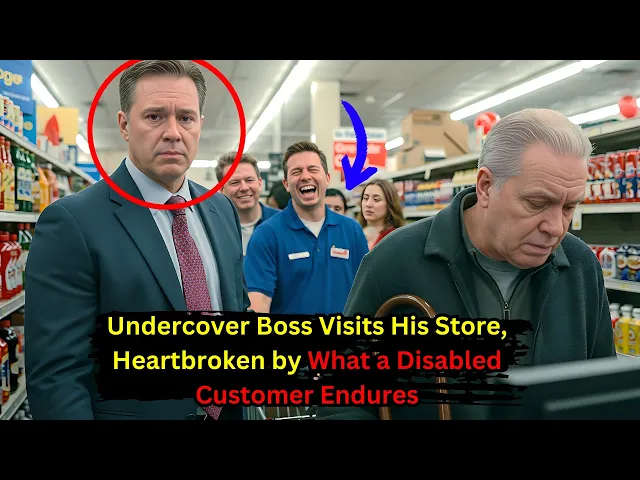
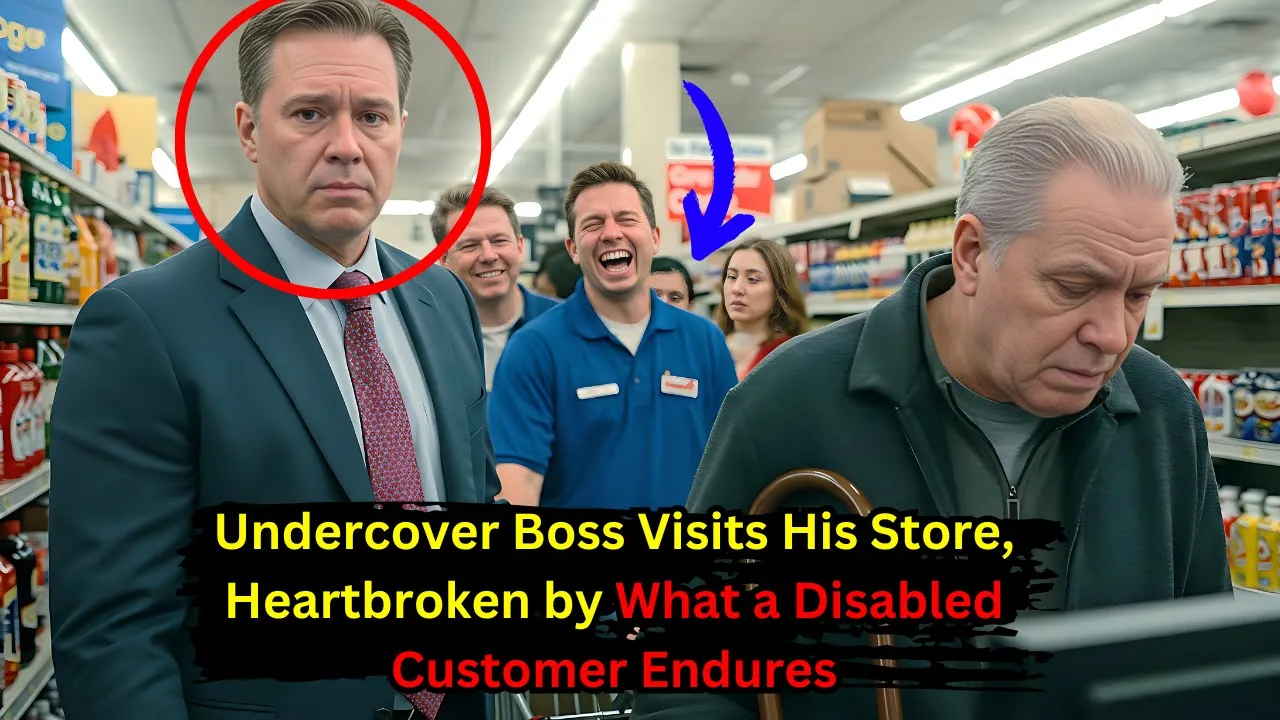
Around midday, a customer walked into the store. He was a man in his late 40s with a kind face and a slight limp; he used a cane to help him walk. Raymond recognized him immediately—it was Mr Harold, a regular customer who had been coming to the store for years.
Raymond had met him once long ago when the store first opened. Mr Harold had always been polite and soft-spoken, a man who never complained. But today, something was different.
Mr Harold looked troubled; he moved slowly, his face etched with pain. He picked up a few items and made his way to the checkout counter. Raymond was nearby stocking shelves, but he kept an eye on what was happening.
The cashier, a young man named Tyler, was busy chatting with a coworker when Mr Harold approached. Tyler barely glanced at him; he scanned the items quickly, his tone cold and dismissive. "Your total is $24.
50," Tyler said without looking up. Mr Harold reached into his pocket and pulled out his wallet; his hands trembled as he counted the money. He was a few cents short.
He looked up at Tyler, his voice soft and apologetic. "I'm sorry, I think I'm a little short. Could you please—" Tyler sighed loudly, rolling his eyes.
"Seriously? You're holding up the line. Just put something back.
" Mr Harold's face fell; he looked down, embarrassed. He slowly removed one item from his bag and placed it on the counter. Tyler took it without a word and finished the transaction.
Mr Harold took his receipt and walked away, his head bowed. Raymond felt a lump in his throat; he had just witnessed one of his most loyal customers being treated with such disrespect. It broke his heart.
He wanted to say something, to step in and make things right, but he reminded himself that he was undercover. He needed to see more to understand the full picture. As the day went on, Raymond's emotions swirled.
He felt anger, sadness, and guilt. He thought about all the times he had trusted his managers to uphold the values of his company. He thought about how far he had drifted from the ground level, from the people who mattered most: his employees and customers.
That evening, after the store closed, Raymond decided to talk to Greg. He knocked on the manager's office door and stepped inside. Greg was sitting at his desk, scrolling through his phone.
He looked up, surprised to see Raymond. "Hey, Ron! What's up?
" Greg asked. Raymond took a deep breath. "I wanted to talk to you about something.
I noticed a few things today that bothered me. " Greg raised an eyebrow. "Oh, like what?
" Raymond hesitated, then spoke. "I saw how some customers were treated, especially Mr Harold. He's been coming here for—" Years ago, he was treated poorly.
Greg leaned back in his chair, his expression indifferent. "Look, Ron, you're new here. You don't understand how things work.
We're under a lot of pressure to meet targets; we don't have time to baby every customer. " Raymond felt a surge of anger, but he kept his voice calm. "But isn't the customer the most important part of our business?
Without them, we wouldn't be here. " Greg shrugged. "That's easy for you to say.
You're not the one dealing with all the stress. If you have a problem, take it up with corporate, but good luck getting them to listen. " Raymond's heart sank.
He realized that the problem wasn't just Greg; it was the entire system: the pressure to meet targets, the lack of support for employees, the disconnect between leadership and the ground level. It was a cycle that needed to be broken. The next day, Raymond returned to the store, determined to make a difference.
He spent the morning helping customers, offering a friendly smile and a listening ear. He noticed how much it meant to them, how a small act of kindness could brighten their day. Then he saw Mr Herold again.
The man was standing near the entrance, looking hesitant. Raymond walked over to him, his heart heavy with emotion. "Good morning, Mr Harold," Raymond said, his voice warm and genuine.
Mr Harold looked up, surprised. "Oh, good morning. Do I know you?
" Raymond smiled. "I'm Ron. I work here.
I just wanted to say I'm sorry for what happened yesterday. It wasn't right, and I want to make it up to you. " Mr Harold's eyes widened.
He looked at Raymond, his expression a mix of gratitude and disbelief. "Thank you. That means a lot.
You don't know how much it means. " Raymond felt a tear well up in his eye. He realized that this was why he had started his business in the first place—not for the profits or the success, but to make a difference in people's lives, to create a place where everyone felt valued and respected.
That evening, Raymond revealed his true identity to Greg and the staff. They were shocked, to say the least, but Raymond didn't come to scold or fire anyone; he came to listen, to understand, and to make changes. He held a meeting with the entire team, sharing his vision for the company.
He talked about the importance of kindness, empathy, and teamwork. He promised to provide better support, to reduce the pressure, and to create a work environment where everyone felt appreciated. The staff listened in silence, their faces filled with a mix of hope and guilt.
Greg, in particular, looked ashamed. He apologized to Raymond and promised to do better. In the weeks that followed, Raymond implemented a series of changes.
He increased staffing, provided training on customer service, and introduced a system for employees to share their feedback. He also made it a point to visit his stores regularly to stay connected with his team and his customers. As for Mr Harold, he became a symbol of the change Raymond wanted to see.
Raymond personally apologized to him and offered him a lifetime discount at the store. Mr Harold, touched by the gesture, became an even more loyal customer. The story of Raymond's undercover experience spread throughout the company.
It became a reminder of the power of leadership, the importance of empathy, and the impact of small acts of kindness. And so, the moral of the story is this: true success isn't measured by profits or targets; it's measured by the lives we touch, the people we uplift, and the difference we make. As leaders, we must never lose sight of what truly matters because, in the end, it's not about the business we build; it's about the legacy we leave behind.