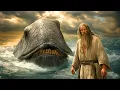
Have you ever wondered why God would choose a prophet who would flee from his mission? The story of Jonah hides a surprising truth that every believer needs to discover. Prepare for a journey that will shake your convictions and reveal the heart of God in a way you never imagined.
The story of Jonah is not just a children's tale about a man and a fish; it's a mirror that reflects our own attitudes, prejudices, and resistance to God's will. Understanding Jonah's secret can revolutionize your understanding of divine love, forgiveness, and your own mission as a follower of Christ. **The Unwanted Call** Imagine living in Israel nearly 3,000 years ago.
The kingdom is divided, political tensions are at their peak, and across the border, a superpower known for its brutality is growing: Assyria. It is in this scenario that we find Jonah, son of Amittai, a prophet of the Lord. One day, the word of God comes to Jonah: "Arise, go to the great city of Nineveh and preach against it, for its wickedness has come up before me" (Jonah 1:2).
Seems like a simple mission, right? But for Jonah, it was as if God was asking for the impossible. Nineveh was not just the capital of Assyria; it was the symbol of everything Israel feared and hated.
The Assyrians were known for their limitless cruelty; they didn't just conquer cities, they obliterated them. Historical accounts describe how they piled the decapitated heads of their enemies into pyramids as war trophies. Prisoners were flayed alive, and their skins were hung on the city walls as a macabre warning.
For Jonah, going to Nineveh was not just dangerous; it was unthinkable. How could he, a Hebrew, a worshipper of the true God, preach to those barbarians? And why should he?
In Jonah's mind, they deserved divine judgment, not a chance for repentance. But God's call rarely aligns with our expectations or comfort; often, He calls us to step out of our comfort zone to face our fears and prejudices. Like Jonah, we may find ourselves resisting God's call when He asks us to reach those we consider unworthy of His grace.
**The Desperate Flight** Faced with God's call, Jonah does something astonishing: he flees—not just from the mission, but from God Himself. "But Jonah fled from the presence of the Lord and headed for Tarshish. He went down to Joppa, where he found a ship bound for that port.
After paying the fare, he went aboard to flee from the presence of the Lord by going to Tarshish" (Jonah 1:3). Jonah's flight is more than just disobedience; it's a desperate attempt to escape not just an unpleasant task, but to confront his own beliefs and prejudices. Tarshish, believed to be on the opposite end of the known world at the time (possibly modern Spain), symbolizes Jonah's willingness to literally go to the ends of the earth to avoid facing the Ninevites.
But why did Jonah think he could flee from God? As a prophet, he surely knew Psalm 139: "Where can I go from your Spirit? Where can I flee from your presence?
If I go up to the heavens, you are there; if I make my bed in the depths, you are there" (Psalms 139:7-8). Jonah's flight reveals a profound truth about human nature: sometimes we prefer to deny reality than confront our own internal contradictions. Jonah's journey to Tarshish is not just a physical trip, but an inward journey of denial and self-deception.
How often do we act like Jonah when God calls us to do something difficult or uncomfortable? Our first reaction is often to flee; we seek our own Tarshish through distractions, rationalizations, or simply ignoring God's call. Jonah's flight also reminds us that our actions have consequences that extend beyond ourselves.
By boarding the ship, Jonah not only puts his own life at risk but also the lives of all the sailors on board. Our disobedience to God rarely affects just us; often, it has a ripple effect that impacts those around us. However, even in our flight, God does not abandon us.
Just as He continued pursuing Jonah with His persistent love, He continues to seek us even when we try to flee from Him. Jonah's flight reminds us that no matter how far we try to run, God's love will always reach us. **The Storm of Truth** While Jonah slept in the hold of the ship, believing he was escaping his divine mission, God prepared a powerful lesson—not just for the fugitive prophet, but for all of us.
"Then the Lord sent a great wind on the sea, and such a violent storm arose that the ship threatened to break up" (Jonah 1:4). This was no ordinary storm; it was a physical manifestation of the spiritual turmoil caused by Jonah's disobedience. The sailors—experienced men who had faced many storms—realized this one was different.
The text tells us they were terrified and each cried out to his own god (Jonah 1:5). It's interesting to note the contrast between the pagan sailors and the prophet of God. While they were in panic, crying out for divine help, Jonah was soundly asleep in the ship's hold.
His spiritual lethargy was so deep that not even a deadly storm could wake him. How often are we like Jonah—spiritually asleep while the world around us faces storms? The ship's captain, desperate, goes down to the hold and finds Jonah sleeping.
His words are a rebuke—not just to Jonah, but to all of us who sometimes become complacent in our faith: "How can you sleep? Get up and call on your God. Maybe he will take notice of us, and we will not perish" (Jonah 1:6).
The irony is palpable: a pagan is begging God's prophet to pray. This moment reminds us that sometimes, in our spiritual complacency, we can be shamed by the sincere faith of those we consider unworthy. Consider non-believers.
When the sailors cast lots to find out who is responsible for the storm, the lot falls on Jonah. Forced to confront the truth, Jonah finally confesses, "I am a Hebrew, and I worship the Lord, the God of Heaven, who made the Sea and the dry land" (Jonah 1:9). Jonah's confession is deeply ironic; he acknowledges that he worships the God who made the Sea and the dry land, but he's trying to flee from that same God through the sea.
His confession reminds us that we often know the truth in our minds but fail to live it out in our actions. The storm at sea teaches us that we cannot escape the consequences of our disobedience. Sooner or later, the truth will catch up with us.
But it also teaches us about God's mercy. Even in the midst of the storm, God was working not just to correct Jonah but to reveal Himself to the pagan sailors. In the depths of the sea, when the reluctant sailors throw Jonah into the stormy sea, it seems like the end of the story.
But for God, it's just the beginning. Now the Lord provided a huge fish to swallow Jonah, and Jonah was in the belly of the fish three days and three nights (Jonah 2:1). This moment in the narrative of Jonah is so extraordinary that many have difficulty accepting it as literal.
However, whether understood as a historical event or as a powerful metaphor, the message remains the same: even in the darkest depths of our disobedience and despair, God can still reach us and rescue us. The belly of the fish becomes, for Jonah, a place of deep reflection and transformation. It's interesting to note that Jonah, who had fled from the presence of the Lord, now finds himself in a place where he can't escape from himself or God.
Sometimes God allows us to hit rock bottom so that we can finally look up. Jonah's prayer from the belly of the fish (Jonah 2:2) is a beautiful expression of repentance and gratitude. He acknowledges his folly in fleeing from God and thanks God for the divine rescue: "When my life was ebbing away, I remembered you, Lord, and my prayer rose to you, to your holy temple" (Jonah 2:7).
It's noteworthy that Jonah speaks of his experience in the belly of the fish as if he had already been freed. He says, "But you brought my life up from the pit, O Lord my God" (Jonah 2:6). This teaches us a powerful lesson about faith: even when we are still in the midst of our storm, we can thank God for the deliverance we know He will provide.
Jonah's experience in the belly of the fish also reminds us of the words of Jesus in Matthew 12:40: "For as Jonah was three days and three nights in the belly of a huge fish, so the Son of Man will be three days and three nights in the heart of the earth. " Jesus uses Jonah's experience as a prefiguration of His own death and resurrection, showing that even this seemingly fantastical part of Jonah's story has deep significance in God's plan. The huge fish was not a punishment for Jonah, but an act of God's mercy.
Instead of letting Jonah drown in his disobedience, God provided an unlikely place of refuge where Jonah could face himself and renew his relationship with God. How often do we find ourselves in our own belly of the fish—difficult and uncomfortable situations that are, in fact, opportunities for spiritual growth and renewal? Jonah's story encourages us to see these situations not as punishments but as invitations to deeper intimacy with God.
After three days and three nights, God commands the fish to vomit Jonah onto dry land. Jonah's resurrection is a powerful reminder that God is the God of second chances. No matter how far we fled or how deep we've fallen, God's grace can always reach us and give us a new beginning.
The reluctant preacher: after his experience in the belly of the fish, Jonah finally obeys God's call and goes to Nineveh. "The word of the Lord came to Jonah a second time: 'Go to the great city of Nineveh and proclaim to it the message I give you'" (Jonah 3:1-2). It's important to note that God gives Jonah a second chance.
This reminds us that God is patient and merciful—not just with those to whom we are sent to preach, but also with us, His imperfect messengers. Jonah enters the city and begins to preach a simple and direct message: "Forty more days and Nineveh will be overthrown" (Jonah 3:4). It's a short and seemingly hopeless message; there's no mention of repentance or possibility of forgiveness.
It seems like Jonah is doing the bare minimum to fulfill his mission. However, something extraordinary happens: the Ninevites believed God. They declared a fast, and all of them, from the greatest to the least, put on sackcloth (Jonah 3:5).
The response of the Ninevites is immediate and comprehensive. From the king to the humblest citizen, everyone repents. This is a powerful moment in the narrative.
The Ninevites, whom Jonah considered beyond redemption, respond to God's word with genuine and deep repentance. This challenges us to reconsider our own assumptions about who can or cannot respond to the gospel. The decree of the king of Nineveh is particularly touching: "Let no one eat or drink; neither humans nor animals; neither herds nor flocks.
Let everyone call urgently on God. Let them give up their evil ways and their violence. Who knows?
God may yet relent and with compassion turn from His fierce anger, so that we will not perish" (Jonah 3:7-9). This decree reveals several important things. First, it shows the seriousness with which the Ninevites took Jonah's message.
Their repentance was not. . .
Superficial but deep and comprehensive, affecting every aspect of their lives. Second, it reveals a surprising understanding of the nature of God by a pagan king. He understands that God can be merciful if they repent.
The response of the Ninevites challenges us to examine the depth of our own repentance. Often, we treat repentance as a simple change of mind, but the Ninevites show us that true repentance involves a complete change of direction in our lives. The most remarkable is God's response to the change of heart of the Ninevites.
When God saw what they did and how they turned from their evil ways, he relented and did not bring on them the destruction he had threatened (Jonah 3:10). This passage presents us with a profound aspect of God's character: His willingness to change his mind in response to human repentance. This does not mean that God is fickle or that His promises are unreliable; rather, it shows that God's mercy is constant and that His primary desire is always redemption, not destruction.
God is always ready to forgive when there is genuine repentance. The reluctant preaching of Jonah and the surprising response of the Ninevites teach us several important lessons. One, God can use even imperfect and reluctant messengers to accomplish His purposes.
Two, we should never assume that anyone is beyond the reach of God's grace. Three, true repentance involves a complete change of heart and actions. Four, God's mercy is always available to those who turn to Him sincerely.
This part of Jonah's story challenges us to examine our own attitudes. Are we, like Jonah, reluctant to share God's message with those we consider unworthy, or are we willing to see the potential for transformation in every person, no matter how unlikely it may seem? Additionally, the response of the Ninevites invites us to consider the depth of our own repentance.
Are we willing to make radical changes in our lives when confronted with the truth of God, or does our repentance tend to be superficial and temporary? Finally, God's mercy toward Nineveh reminds us that His love and compassion extend to everyone, even those we consider our worst enemies. This challenges us to expand our own capacity to love and forgive, following the example of our Heavenly Father.
The prophet's anger: Jonah's reaction to God's mercy toward Nineveh is surprising and disturbing. But to Jonah, this seemed very wrong, and he became angry. He prayed to the Lord, "Isn't this what I said, Lord, when I was still at home?
That is what I tried to forestall by fleeing to Tarshish. I knew that you are a gracious and compassionate God, slow to anger and abounding in love, a God who relents from sending calamity" (Jonah 4:1-2). This passage reveals Jonah's true heart and the reason for his initial flight.
It wasn't fear of the Ninevites that made him flee but fear that God might forgive them. Jonah knew well the character of God: His mercy, compassion, and love. But instead of rejoicing in these qualities, he resented them.
Jonah's reaction confronts us with an uncomfortable truth about human nature: often, we want God to be merciful to us, but we hesitate to see that same mercy extended to others, especially those we consider our enemies. Jonah was so upset that he even wished for death. "Now, Lord, take away my life, for it is better for me to die than to live" (Jonah 4:3).
This dramatic statement reveals the depth of Jonah's internal conflict; he was willing to die rather than see his enemies receive mercy. God's response to Jonah's anger is remarkable for its gentleness. Instead of harshly rebuking His petulant prophet, God asks a simple question: "Is it right for you to be angry?
" (Jonah 4:4). This question invites Jonah—and us—to examine the roots of our anger and resentment. Jonah, still hoping that God would change His mind and destroy Nineveh, leaves the city and makes himself a shelter, waiting to see what would happen.
It is at this point that God prepares an object lesson for Jonah. Then the Lord God provided a leafy plant and made it grow up over Jonah to give shade for his head and ease his discomfort, and Jonah was very happy about the plant. But at dawn the next day, God provided a worm, which chewed the plant so that it withered.
When the sun rose, God provided a scorching east wind, and the sun blazed on Jonah's head so that he grew faint. He wanted to die and said, "It would be better for me to die than to live" (Jonah 4:6-8). This sequence of events—the plant that grows, the worm that destroys it, the scorching wind—serves as a living parable for Jonah.
God uses this experience to reveal to Jonah and to us some profound truths: One, our perspective is often limited and selfish. Jonah cared more about his own comfort (the plant) than about the fate of an entire city. Two, we often value trivial things, like a plant, more than the things that truly matter to God, like the lives of people.
Three, our anger and resentment often come from a distorted sense of justice and entitlement. God then drives the main point home: "You have been concerned about this plant, though you did not tend it or make it grow. It sprang up overnight and died overnight.
And should I not have concern for the great city of Nineveh, with more than 120,000 people who cannot tell their right hand from their left, and also many animals? " (Jonah 4:10-11). This powerful conclusion to the story of Jonah challenges us to see things from God's perspective.
While we are concerned with our own comfort and rights, God is concerned with the redemption of all people, even those we consider unworthy. The story of Jonah ends with this rhetorical question from God, leaving us. To reflect on our own attitudes, are we like Jonah, resentful of God's mercy toward others, or are we willing to embrace God's compassionate heart for all people?
This narrative invites us to examine our own hearts, to confront our prejudices and resentments, and to align our attitudes with God's merciful heart. It challenges us to see every person, no matter how lost or enemy they may seem, as someone for whom Christ died and whom God desires to redeem. The heart of God revealed in the story of Jonah, in its conclusion, offers us deep insight into the heart of God through the contrast between attitude and divine compassion.
We are invited to contemplate the vastness of God's love that transcends our human expectations and prejudices. God reveals His heart in several ways throughout the narrative. First, we see His persistence in pursuing Jonah, not to punish him, but to redirect him to His mission.
This reminds us that God does not easily give up on us, even when we flee from Him. As it is written in Luke 15:4, "Suppose one of you has a hundred sheep and loses one of them. Doesn't he leave the ninety-nine in the open country and go after the lost sheep until he finds it?
" Second, we see God's compassion for the Ninevites. Despite their wickedness, God desires to give them a chance to repent. This echoes the words of Ezekiel 33:11: "Say to them, as surely as I live, declares the Sovereign Lord, I take no pleasure in the death of the wicked, but rather that they turn from their ways and live.
" God's patience with Jonah is also notable; even when Jonah is furious with divine mercy, God does not reject him. Instead, He gently teaches Jonah through the lesson of the plant. This reminds us of 2 Peter 3:9: "The Lord is not slow in keeping His promise, as some understand slowness.
Instead, He is patient with you, not wanting anyone to perish, but everyone to come to repentance. " Finally, God's concern for the more than 120,000 people who cannot tell their right hand from their left, and also many animals, reveals His comprehensive compassion. This reminds us of Matthew 10:29-31: "Are not two sparrows sold for a penny?
Yet not one of them will fall to the ground outside your Father’s care. And even the very hairs of your head are all numbered. So don’t be afraid; you are worth more than many sparrows.
" The heart of God revealed in Jonah challenges our limited notions of justice and mercy. While we often desire immediate justice for those we consider evil, God desires redemption. This does not mean that God ignores sin; the message of judgment to Nineveh was real, but His justice is always tempered with mercy.
This revelation of God's heart invites us to expand our own capacity to love and forgive, as Jesus teaches us in Matthew 5:44: "But I tell you, love your enemies and pray for those who persecute you, that you may be children of your Father in heaven. He causes His sun to rise on the evil and the good, and sends rain on the righteous and the unrighteous. " The story of Jonah challenges us to align our hearts with God's heart.
We are called to see people as God sees them, not just as sinners deserving of judgment, but as potential recipients of His grace and mercy. Jonah's narrative serves as a mirror to our own soul, reflecting our attitudes, prejudices, and resistances to God’s will. As we examine Jonah's journey, we are invited to confront uncomfortable aspects of our own spirituality.
First, Jonah's flight makes us question in what ways we try to flee from God in our own lives. Perhaps we don't board a ship for Tarshish, but we may take refuge in distractions, rationalizations, or even in superficial religiosity that avoids true commitment to God. As it is written in Hebrews 4:13: "Nothing in all creation is hidden from God’s sight; everything is uncovered and laid bare before the eyes of Him to whom we must give account.
" This verse reminds us of the ultimate accountability we hold before God. It challenges us to be honest in our spiritual walk, recognizing that we cannot hide our true selves from God. The story of Jonah not only speaks about the nature of God and His mercy, but also about human nature—our tendency to run from challenges, to harbor prejudice, and to resist God’s calls.
Yet it also offers hope and redemption, not only for Jonah, but for everyone willing to heed God's call and embrace His mercy. In our own lives, we face moments when we are called to act against our instincts or prejudices. Jonah's story encourages us to reflect on these moments and choose God's way, which often leads us through uncomfortable truths and towards a deeper understanding and connection with Him.
Through Jonah's experiences, we learn the importance of obedience, the power of second chances, and the boundless scope of God's mercy. It calls us to look beyond our initial reactions and prejudices, urging us to extend the grace and forgiveness we so eagerly receive from God to others. Ultimately, Jonah's story is a profound reminder of God's overarching plan of salvation and His desire to include everyone, no matter how unlikely or unworthy they might seem according to human standards.
It challenges us to expand our understanding of who is worthy of God's love and mercy and to act as vessels of His grace in the world. Thus, as we contemplate Jonah's journey, let us consider our own. Are we running from any divine calls because they seem too difficult or are against our personal desires or prejudices?
Are we willing? To let God's compassion override our biases and lead us to act in ways that align with His will, the Narrative of Jonah serves not just as a biblical story but as a daily reflection of our own lives as Believers. Each day, we are presented with opportunities to flee from God's calling or to embrace it; to judge others or to offer them the mercy we ourselves cherish.
How we respond to these choices shapes not only our spiritual journey but also our impact on the world around us. As we navigate these choices, may we always choose in ways that reflect the heart of God, showing the world the transformative power of His love and grace.