Gamma rays are the most powerful form of radiation known to man. They are composed entirely of high energy photons and on the electromagnetic spectrum they have the highest frequency beating out even X-rays. In today's world they are used primarily in the medical and food industries from PET scans to radiation therapy as a form of cancer treatment to even killing harmful microorganisms in food before it hits the markets.
These rays come from multiple sources. One such source is pair annihilation when an electron and a posetron collide and annihilate one another and release gamma rays as a result. Another source of gamma rays is in the far reaches of outer space where celestial bodies such as pulsars and quazars emit them while they push the laws of physics to their limits.
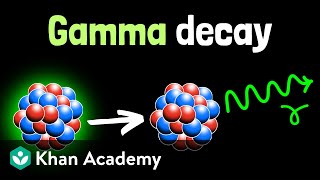
But the most common source of gamma rays on Earth, which also happens to be the means by which they were discovered is through radioactive decay. This was a hot topic of research during the turn of the 20th century as a series of new discoveries regarding radiation were being made, spearheaded by the discovery of X-rays in 1895 by Villim Runken. This single event sparked a chain reaction of investigations and discoveries in the short years to come.
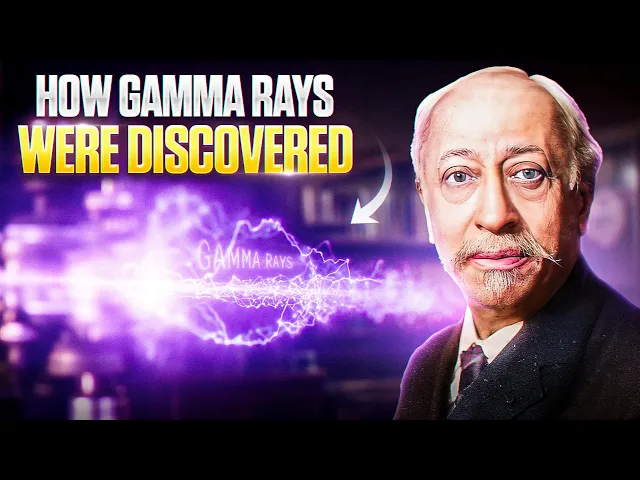
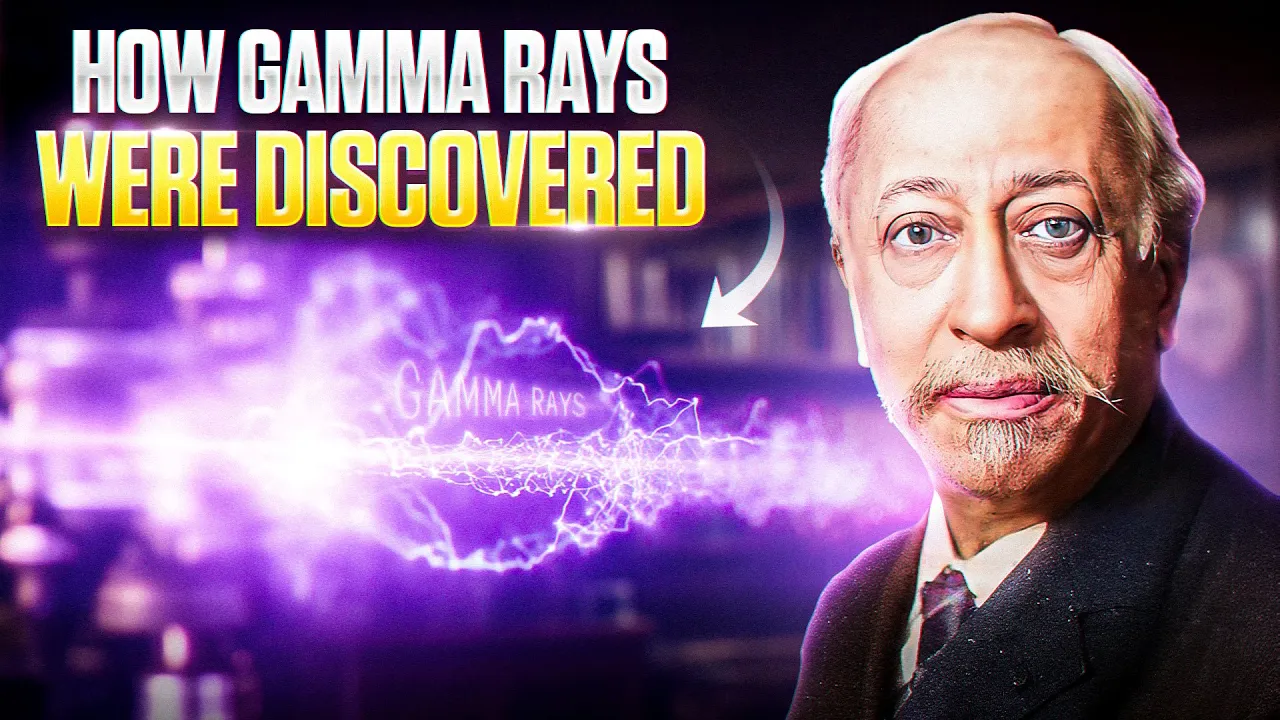
And by 1900, gamma rays would fall victim to discovery as well by a French physicist by the name of Paul Urick Vel. Paul Ulic Var was born in 1860 in Sanjar Amandor, a commune in the metropolis of Leon in France. He graduated from the echo normal superior in Paris in 1881 and began teaching at many secondary schools throughout France.
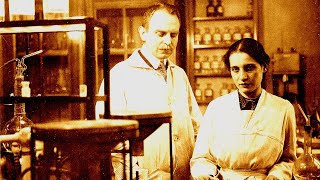
Although he held many different positions as his career developed, the experimental side of Var's career remained stable as he held a laboratory position at the Echol Superior and would continue to hold that position until his retirement. This institution was the same one in Paris that housed Marie Curi for some time. The Curies did not have a dedicated laboratory at this institution during their monumental research though and carried out most of their experiments in a shed converted into a makeshift lab and was located just outside of ESPCI.
Regardless, the research into radioactivity done by the Curies plays a significant role in the story of Vil. By the time he began his research into radioactivity, the Curies had already discovered the elements of radium and pelonium, having done so in 1898 and had samples of the two elements that could be used for further study. Marie began teaching at the Echo Normal Superior in 1900, bringing with her resources and samples, which Var was able to use in his laboratory.
Var in 1900 began tests with salts of radium to experiment with the forms of radiation recently discovered by Ernest Rutherford. Rutherford the year prior had undertaken the research that would land him the Nobel Prize in chemistry in 1908. From this research he had discovered two types of radiation from radioactive decay, alpha radiation and beta radiation.
Rutherford, though, as brilliant as he was, had missed a third form of radiation, and Var would be the one to notice it and reveal gamma radiation to the world. The reason why Rutherford was unable to notice gamma rays in his experiments is because of just how penetrating gamma rays are. Alpha rays are essentially helium nuclei consisting of two protons and two neutrons.
They are the largest form of penetrating radiation and are therefore relatively easy to block. Rutherford was able to accomplish this with a thin sheet of metal. What was left over after the alpha rays were blocked by this sheet were beta rays which are essentially very fastmoving electrons or posetrons and gamma rays essentially high energy photons.
Rutherford was not able to distinguish between beta rays and gamma rays though as he never successfully found a way to separate the two forms of radiation. That is not to say he was trying to though. Of course he did not know there was a third form of radiation to search for.
That is also not to say that Rutherford wouldn't have eventually discovered gamma rays anyways. But Var beat him to the punch. Var was studying radiation from radium salts using the same methods as Rutherford.
He used foil to separate alpha and beta particles, but then added something new to the setup. He subjected the remaining radiation to a magnetic field and observed it through a narrow aperture in a shielded container onto a photographic plate. From this, he found that some of the radiation was deflected.
But the bigger discovery here was that some of the remaining radiation was not deflected. This indicated that there were two forms of radiation still present beyond the deflecting foil. One form is affected by magnetic fields and one is not.
Varly spread word of this new form of radiation, one that is very high energy and highly penetrating, but never named it himself. That title would come from Rutherford who repeated Var's experiments and confirmed their existence. In 1903, Rutherford continued in his naming structure, going through the Greek alphabet, attributing more penetrating radiation to the alphabet's increasing letters.
This radiation was the third discovered and the most penetrating so far. So, it got the third letter and thus the term gamma radiation was born. Paul Urick Felak is not a name heard often in science in modern times for his name has been increasingly forgotten in the history books.
His discovery was overshadowed by both the naming and popularization of gamma rays by Rutherford and over time more have associated the New Zealander with the discovery than anything. Var never won an award for his scientific accomplishments and there are more to add on top of his work with gamma rays. He was a pioneer in developing safer methods of studying radiation.
He was an advocate of using an ionization chamber and helped bring it into more widespread use in his later years. He also is known for the VA circuit, a voltage doubling rectifier that is commonly found in magnetrons inside microwave ovens. Lastly, he defined the unit of measurement for the exposure of X-rays and gamma rays, later to become known as the runin.
This unit is outdated today, but was used heavily in the first half of the 20th century. Var is a name that today more so resides in the shadows rather than being in the scientific spotlight, but is a name of a pioneer of radioactivity and of who lies behind humanity's understanding of the most energetic and penetrating form of radiation known to exist. His discovery has impacted multiple fields of science from nuclear physics to medicine and to astronomy.
Vilak laid the groundwork for many scientific advancements in the coming years. Advancements that continue to benefit our society to this very day. If you enjoyed this video, please consider liking and subscribing.
Click here if you want to see more scientific progress made during this time period. Thank you for watching and I will see you in the next video.