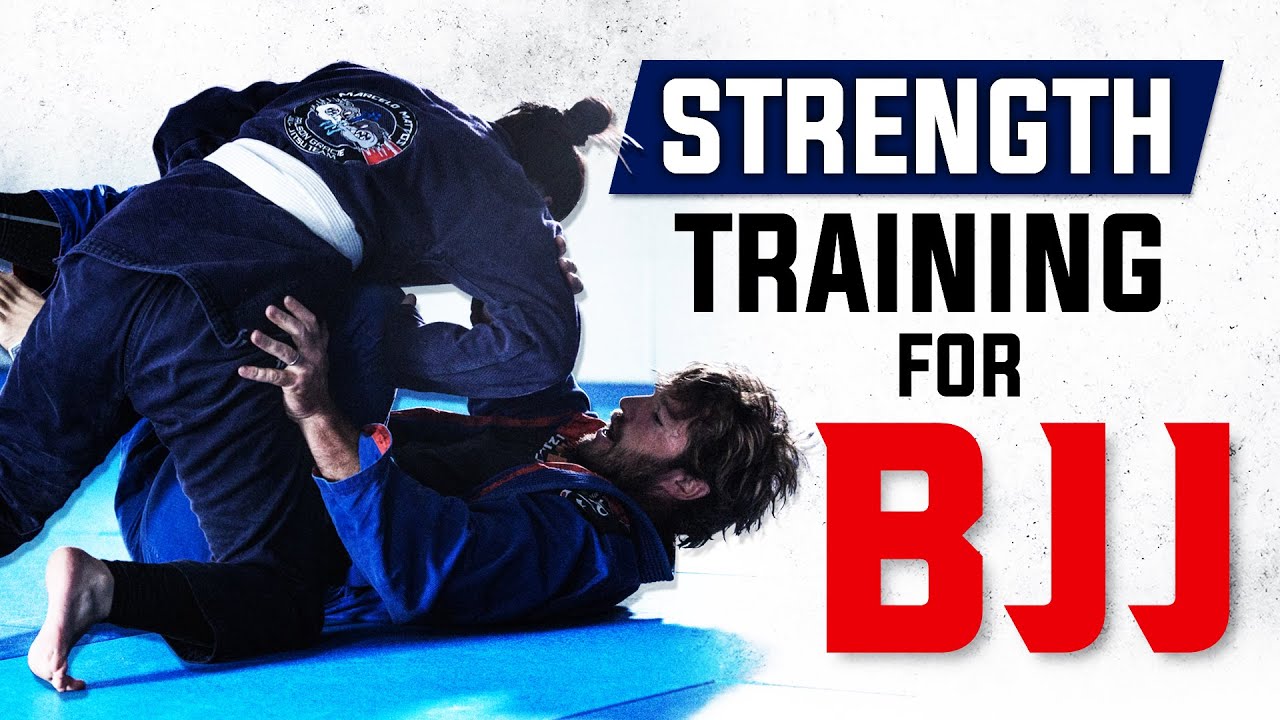
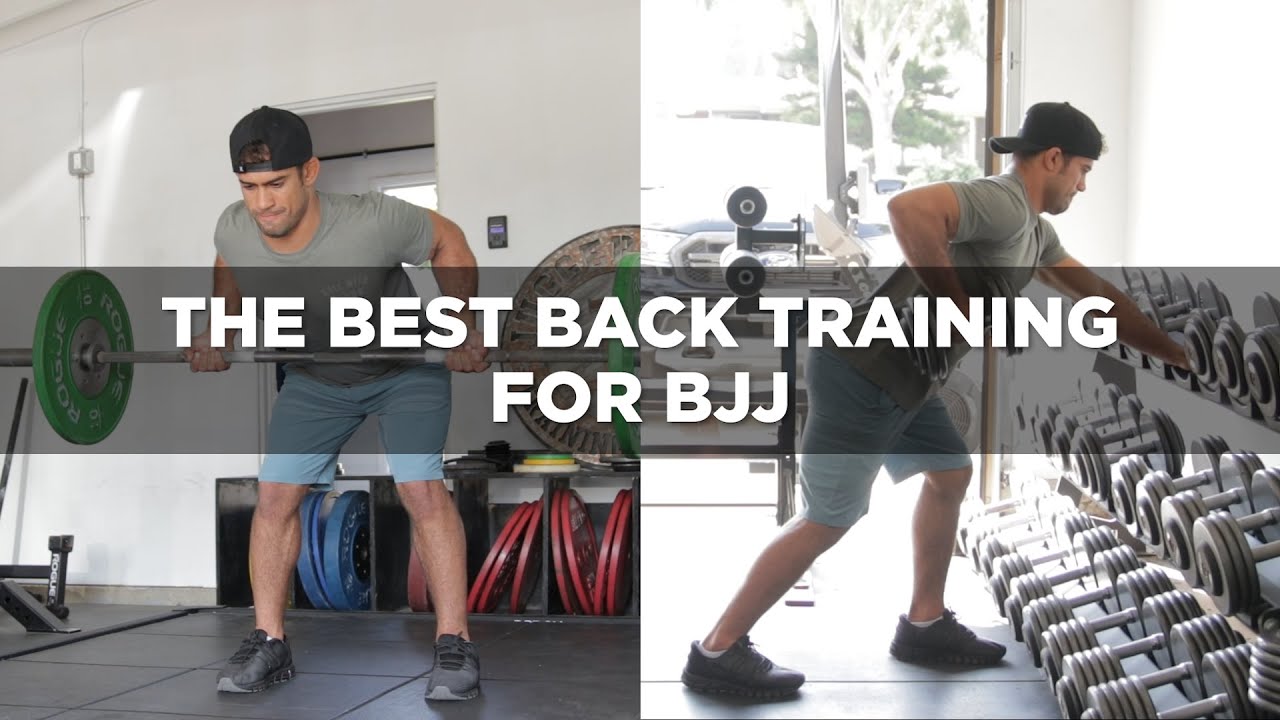
everybody what is up Chad Wesley Smith here for juggernaut training systems gonna be bringing you some more information about strength and conditioning for Brazilian jiu-jitsu if you haven't checked out the other videos we have on this make sure you do so you can better understand how to combine your jiu-jitsu and certainly auditioning and training into the same week you can understand how to stay healthier with the help of julien van der linden as well as understanding you know what exercises are best suited for what and how to period eyes these different phases make sure you
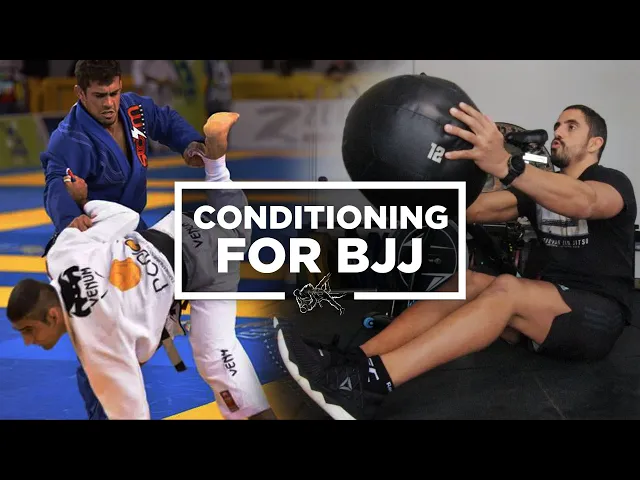
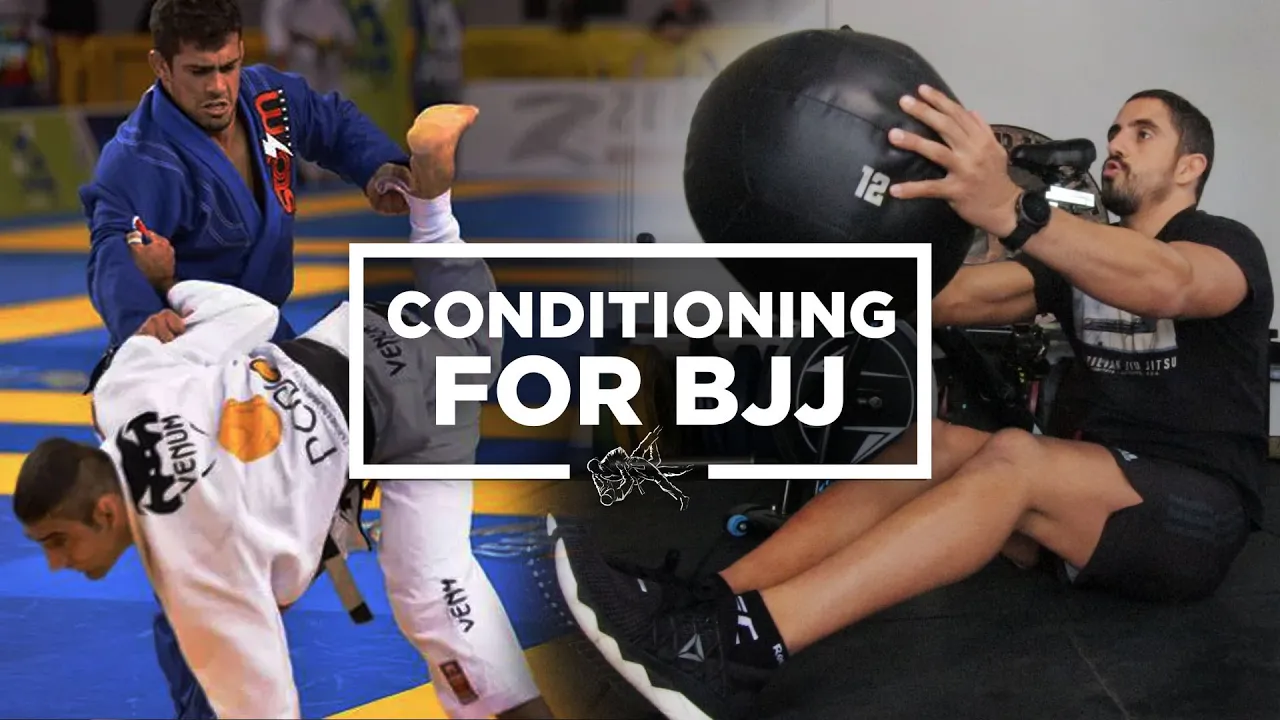
like the video subscribe to the channel share it with your friends share with people at your academy so you can all get better together today we're going to be talking specifically about conditioning for brazilian jiu-jitsu and there are three main energy systems that we are looking to develop to improve the competitor that's going to be the aerobic system so aerobic capacity a lactic capacity and lactic capacity so first up is going to be aerobic capacity and that is your ability to utilize oxygen as the the primary energy source primary fuel for your training for your
competing and improved aerobic capacity is really going to enhance almost all abilities in jiu-jitsu it's gonna allow you to do more training more high-quality training whether that's rolling longer or doing more consecutive rolls at at your school it's gonna allow you to recover better between those roles so you can have higher quality training it's also going to allow you to recover better in between training sessions whether that's you know twice a day training every other day train whatever it is improved aerobic capacity will help you train more and do more high-quality training so how do
we develop it besides you know the simple answer is just we'll just roll more or take less breaks and you know real quick note on that is there's some cost benefit to be taken into account when thinking about well I'm just gonna roll more now all things being equal yes just rolling more is going to be the most specific way to develop your conditioning for jiu-jitsu but very rarely are all things equal so while rolling more could be the most efficient way it also probably comes at a bit higher fatigue constant stress muscular stress cost
than doing other types of conditioning off of the mats like the aerobic capacity training that we're gonna describe here so if you feel like you get really beat up from rolling more and more and more then that's may actually end up being a net negative for you at least in this short term until you can develop you know more efficiency more durability on the mats you may need to do more off the mat aerobic capacity training to increase your gas tank so just something to consider that that rolling more is not always gonna be the
answer for better conditioning so there are two main ways that we look to develop aerobic capacity first off you know we're gonna be training mostly in the aerobic development zone which is gonna be about 60 to 80 percent of your max heart rate now the first thing that you can do is low intensity steady-state cardio things that pretty much everyone are familiar with going on you know long distance runs long distance bike ride swimming for extended durations of time and that's gonna be done more in that 60 to 70% heart rate intensity zone and you
know anywhere from 20 to 40 minutes maybe up to an hour that's gonna be pretty variable depending on your current fitness levels 20 minutes may be kicking your ass or 20 minutes may feel like nothing adjust appropriately for yourself I think most people doing 20 to 40 minute bouts of low intensity steady-state cardio is gonna help you improve your aerobic capacity a consideration to be made there is that longer slower work could potentially slow you down a little bit as an athlete particularly in the short term as we're dealing with transitional fibers fast twitch slow
twitch so if you're already kind of slow then maybe low intensity steady-state is not the best option for you also some of the stuff like long distance running it's gonna be a bit more stressful on the joints so if you've previously had you know ankle issues knee issues Hiep or low back issues long-distance running you might might not be a great option for you as it could compound some of the stress there so my preferred method of developing aerobic capacity our tempo intervals or tempo circuits and this is an idea adapted from a track coach
named Charlie Francis was coached to Ben Johnson a bit of a controversial figure about a lot of really great ideas about training for sport and the tempo intervals are gonna be done a little bit on that higher arrangement seventy to eighty percent of the maximum heart rate and are shorter bouts of aerobic exercise interspersed with low-level calisthenics so it allows you to combine more training modalities for me personally it just keeps the training a little bit more interesting than sitting on the exercise bike for forty minutes straight it allows me to come you know you
get some of those smaller exercises done that can be kind of tedious have done their own but organizing them into a tempo circuit makes it a bit more tolerable and it's gonna avoid any kind of transitional fibres you're going to slow twitch because the bouts of aerobic work are shorter so how do we perform tempo intervals or a tempo circuit it's really two main ways that we go about it first you choose your you know aerobic exercise and that can be a lot of different things then it doesn't really matter which one you choose you
know short of exacerbating the existing injuries it could be running or doing you know running drills like high knees back pedal shuffling it could be riding the bike really exercise bike air bike or spin bike doesn't really matter it could be on the rower you could be doing jump rope if you have a lot of joint stress going into the swimming pool for either swimming or doing high knees and about waist-deep water all are good options you're gonna do that for 30 to 45 seconds long intervals and what feels like about seventy percent effort but
go ahead and get yourself a heart rate monitor plenty of apps out there to help with this and see where you're at in your heart rate you know we're looking for mostly 70 to 80 percent of max heart rate you're gonna do that for 30 to 45 seconds then you're gonna hop out of the pool or off the bike or off the treadmill or whatever whatever you're doing stop jump roping and you're gonna do a little bit of low-level calisthenics so you could do this for a fixed number of reps like 20 push-ups or 30
sit-ups or insert so many different exercises that you can do here just low-level stuff like work for the neck disassociation exercises to make sure your low back and hips are staying healthy like bird dogs or dead bugs all kinds of different ab exercises fit in well small stuff for your grip could be something that you interspersed with these exercises and you're gonna do a set number of reps there and then you're back onto the bike or the treadmill or back in the pool whatever it is you're doing you want to make sure here that your
effort stays consistent and your output stays consistent so if on the first rep you're on the exercise bike and you're going at 110 rpms and that feels like about a 7 RPE or about 70 you know percent as hard as you could be going on your first rep you need to feel the same way on your tenth rep you can't let the tenth rep become still at 110 rpms but now 8nr p or now you're having to put maximum effort to keep that pace because that's gonna get us above the heart rate zone that we're
looking for it's gonna cause you to start to build up more lactic acid and not be what we're looking for in this type of training the other way that you could organize your tempo intervals or a tempo circuit is all with fixed you know rest work and rest intervals like 45 seconds on 15 seconds off this is the way that I personally do mine so I'll be on the bike for 45 seconds then I have a 15 second transition then I'll do whatever ab exercise or low-level calisthenic I'm gonna do for 45 seconds then I
transition back onto the bike for you know take 15 seconds to do that bike for 45 seconds 15 second transition 45 seconds of the other exercise so on and so forth and you can do that for you know a set period of time 20 30 40 minutes maybe up to 50 or 60 minutes if you're in you know really good shape are you trying to manage keep your weight down a little bit more but usually in that range of 20 to 40 minutes is a good idea what's so great about tempo intervals is not only
do they help develop aerobic capacity but they're also gonna promote recovery between training sessions not just because of your improved aerobic capacity helping facilitate recovery but doing these low intensity sessions is gonna get blood flowing throughout the whole body and help you recover faster so this is something you could be doing to maybe up to five times per week definitely on off days or low days and refer you know back to our video on weekly organization to better understand that that's a great place to put it so for my current training my higher intensity days
are typically on Monday Wednesday Friday and Saturday so I'm doing tempo work on Tuesday Thursday and Sunday sometimes Sundays switched out for like some low intensity stays they go on a hike go on a walk whatever you know you enjoy doing the last piece of aerobic capacity that's important is it's going to be in every phase of training it is always present and it is always going to be of great importance to success for the Ginsu competitor the next type of conditioning we're gonna look at is a lactic capacity so a lactic without the presence
of lactic acid so it's gonna be the short high-intensity bursts and the capacity part of things is how well can you repeat them you know while you might be able to run fast or jump high or have you know be really explosive in a scramble one time odds are you're not gonna have to just do it one time in a match or a tournament you're gonna have to do it over and over and over again so how well can you do it in minute six of your match as you know compared to what you did
in minute one so improved a lactic capacity is gonna allow you to sustain those high-level efforts over and over and over throughout the match throughout the tournament throughout training a lactic capacity work is also a great time to fit in special strength exercises and those are exercises that mimic the direction duration and velocity of the sporting movement so what we're looking to do is have three to six seconds of all-out effort with short rest periods that's probably about 10 to 20 seconds and some of that's gonna be dictated by your fitness the more fit you
are closer to 10 seconds you're gonna be less fit you are out to 20 seconds we you know we don't want the the quality of the work to decline too quickly but we also don't want to be you know taking full rest periods like we would in a lactic power training a lactic power training also really important than this because you have to have the power first to then develop the capacity so if you don't have the power and explosiveness to you know get a good scramble to win a good scramble at any point it
doesn't matter how many times you can scramble to slow so electic power is gonna proceed any a lactic capacity phase so we got to make sure that the power and explosiveness is there so we can develop the ability to sustain it over and over so a typical a lactic capacity circuit I like to choose one exercise that's a jumping type of exercise one that's a pushing type of exercise one a pulling type of exercise and one a twisting type of exercise and all of these are done for all out 3 to 6 second efforts but
again between 10 and 20 second rest periods let your fitness dictate how long your rest periods are if you're extremely fit you might be doing a 10 or 15 second rest period but instead of just standing there you're actually doing like some low-level drilling just kind of you know moving around like you would with you know some wrestling type of drills maybe even throwing in a sprawl or two in between those but that's gonna be for extremely fit athletes so a simple circuit could be something like kettlebell squat jumps for six sets of three reps
with again 10 to 20 seconds between each set and we're gonna rest one to two minutes before going to the next exercise which could be something like a clapping push-up for six sets of three reps then we move on yeah 10 10 to 20 seconds between sets and then 1 to 2 minutes before we go to the next exercise should be a single arm row propylene is explosively as possible doing six sets of two reps each hand than rs.12 two minutes before going on to a barbell Russian twist or doing six sets of two twists
to each side and that's a you know a typical a lacked capacity circuit and the way that we overload this from week to week that we make the training progressively harder is in week one you're doing six sets week to eight sets week three ten sets maybe week four twelve sets and then taking a D load I'd suggest for an electic capacity training that you have three to four week long phases and you do two you know one to three phases of this in a row and that a lot of that's going to depend on
your competition calendar if you compete more frequently very likely that you only have one of these phases but if you have a long time before competition or you're just you know training to be as good as you can at your home gym then you could get into doing two or three consecutive phases like this where we go six sets eight sets ten sets D load eight sets ten sets twelve sets D load ten sets twelve sets fourteen sets so you're building up that capacity over time and that could be a great option if you feel
like those repeated explosive bouts are something that you really struggle with and that a lactic capacity phase is going to be the second to last phase we do before competition the final phase before competition is going to be lactic capacity so this is your ability to sustain high level effort for extended duration so it's basically like a long scramble or just just if you're if you're training or competing and we're pushing the pace that's gonna be test that's gonna be testing your lactic capacity so here we're looking for 30 maybe up to 50 seconds of
continuous high-level effort within complete rest I like to choose similar exercises for lactic capacity training as I do a lactic capacity train you just want to make sure that that the exercises allow for pretty continuous effort it's can't be something where you do you know you're throwing a med ball and then you have to run and go get it and then throw it and run and go get it where it's a big explosion and then rest that's a better option for a lacked capacity or lacked capacity and we need to be staying kind of constant
tension throughout the throughout the body as we go so an example lactic capacity circuit could be box jumps for 30 seconds then you rest for 30 seconds you could do the med ball switch push-ups one hand on top of the med ball push up switch to the other side push up for 30 seconds rest for 30 seconds inverted rows or rope row rows or inverted rows holding on to agee 30 seconds rest 30 seconds barbell twists for 30 seconds rest 30 seconds and then this would be an example for a masters competitor with five-minute rounds
or a white belt with 5-minute rounds then you would finish your fifth exercise could be on the rowing machine all-out hard as you can row for 30 seconds and that would be the end of this circuit you want to extend the circuits time to whatever is appropriate for your matches if you have you know five six seven eight 10-minute matches just add exercises to this to make sure that you're working in the same demands that you're gonna have in competition we could progress this week for week to week from week one being 30 seconds on
30 seconds off week to 35 on 25 off week 3 40 on 20 off or if you go 30 and 30 40 and 20 50 and 10 a lot of that's just gonna depend on your fitness levels and how you're progressing I'd say a two to three week lactic capacity fitness cycle is going to be good I mean one or two consecutive phases of this again this is our these are our final phases before competition as they're gonna be the most similar to the energy systems that are being used in jiu-jitsu competition but keep in
mind that it's also very very stressful training you know it's it's gonna be something that you're doing once maybe twice a week that cost-benefit analysis that we talked about for before if just rolling more is better or if doing some training like this it's gonna be better where you can get some output that's maybe not quite as stressful to your body as there's more live rounds would be again remember that the robic capacity is present through all of the phases so the way that it all might set up as we do some a lactic power
or you you know get yourself being able to jump higher run faster scramble more explosively then we move into a lactic capacity and then lactic capacity then you go compete aerobic capacity omnipresent through all of the phases hopefully that helps you gain some better understanding of conditioning for jiu-jitsu what you know what to do when to do it if you liked this video subscribe to the channel share it with your friends check out the other videos on our strength auditioning for BJJ playlist visit JT s strength com be on the lookout for the new upcoming
juggernaut jujitsu strength auditioning a I should probably think of a new name that's not so long for that but if you're looking for a jutsu program that's tailored to you we have that coming up so visit JT s strength com for more information there thanks for watching I'll see you next time [Music] [Music] you