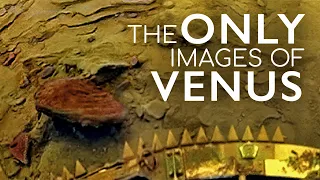
Mars has been in the news lately because of the detection of what may be fossilized evidence of past life on that world, interesting indeed, but less prominently Venus also has had a series of developments that suggest that not only might it have life, but if it does then it’s actually still alive. It is an active potential biosignature we’re seeing by its nature. If it is there, we will someday interact with it directly, perhaps in the not too distant future, and will possibly, though it’s certainly not guaranteed, mark humanity’s first provable interaction with living alien biology.
To begin though, Venus at first glance does not appear to be a very hospitable world for life, which is why the focus has been on Mars for decades now. Mars is a more earth-like environment, but only in some ways. But Venus is in some ways just as good of a place to look.
It has some similarities to earth, size specifically, but possesses a very different atmosphere that can only be characterized as a kind of hell. But it wasn’t always like that, there are some hypotheses that paint Venus as an ocean world much like earth and in some models up until relatively recently. It’s possible that Venus was a water world for much longer than Mars was, though that is very unclear.
It is not currently so however. At the surface of Venus, temperatures reach 735 kelvin, enough to melt lead. It also has a terrible atmospheric makeup with a lot of sulfur compounds and sulfuric acid in concentrations thought impossible for life to survive in, even acid loving extremophile microorganisms on earth can’t handle it, but this thinking may be changing with new information that’s come to light, more on that in a bit.
And it’s even been floated that a very different kind of life biochemically might be able to exist in sulfuric acid and even be based on it. But almost immediately upon the close study of Venus with probes things started looking a bit amiss with Venus. It was a hell world, and it overtly looked to be dead, but tantalizing discrepancies immediately started appearing that said maybe not, and that has only deepened over the decades.
The first thing that was noted was that there appeared to be something in Venus’ atmosphere that was absorbing ultraviolet light. This actually prompted Carl Sagan to author a paper in 1963 exploring the idea that this could be due to atmospheric microbial life on Venus, and indeed ultraviolet light would provide an energy source for microbes and might produce the absorption seen. Venus also has been found to actually have a zone in its upper atmosphere which is right in the area where the absorber is located, that actually sports temperatures and an atmospheric pressure comparable to earth.
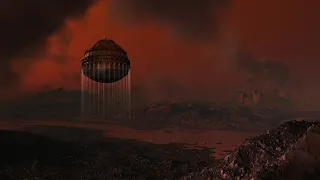
It’s very high in the atmosphere, about 50 kilometers, but is the only environment in the solar system other than earth where you can put a hole in your space suit and not fairly immediately have to seal it or die. But we may not want to do that. Venus may already have something there that we might want to be very careful in interacting with.
It may be a separate biosphere from earth, and might warrant protection at some point. Another strange finding at Venus was by the Soviet Venera missions where elongated particulate matter was detected in Venus’ atmosphere consistent with the size of bacteria. That has never been explained even decades later.
And also in Venus’ atmosphere there are unknown dark streaks that appear, somewhat prominently sometimes, that appear to be the unknown absorber, but we have no idea what these streaks are made out of. Only that they evolve and grow and contract, not unlike something microbial life blooms do here on earth. If that indeed represents an alien lifeform, then we’ve been seeing and not recognizing Venusian life for most of the telescope age.
The joke would be on us. And then there are the trace gasses. Much controversy exploded several years ago regarding the detection of phosphine gas in the atmosphere of Venus.
Phosphine is a gas linked to biology, but you don’t need biology to produce it, a problem with most biosignature gasses, biology is just one of a few ways it can be generated. What’s interesting is when several gasses are in a difficult to understand disequilibrium at the same time which can be a strong indicator of life, in the same way that earth shows this. So first is the detection of phosphine.
This claim made huge headlines and was subject to some prominent, and very incorrect, debunking on youtube. It was however legitimately called into question in several papers, the main one now discounted, more on that in a bit, and over time the consensus finding ultimately that while the detection was actually in the data, the levels of phosphine were significantly lower than initially reported. But still there.
The team led by Jane Greaves however has continued to work on the detection of phosphine with new data, much more precise data, and the phosphine is in fact present. But phosphine alone doesn’t necessarily mean life, it’s merely that life could be generating it. But as it turns out, the phosphine detection was a bit more complicated than initially believed.
So phosphine has been found in the atmosphere of Saturn. The reason it isn’t surprising to find it there is because Saturn is a gas giant with a free hydrogen rich environment. It can and does happen, and doesn’t need biology.
But you don’t expect too much of it in the atmospheres of Venus or Earth because both planets were not large enough to hold onto their original hydrogen envelopes. Phosphine needs hydrogen. What is not expected is to find anything other than very tiny amounts.
On earth the reason we find comparatively a lot of phosphine is largely thought to be due to life. There are possibilities regarding lightning but those have not borne out well in the lab, and with Venus to account for the amount of phosphine present it would require an implausibly high amount of lightning. Lightning happens there, but not to that level.
It is also sometimes noted that Venus has no water, a source of hydrogen, but that’s actually not true. It’s there, and abundant in the atmosphere, it’s just in the sulfuric acid. Another new piece of information regarding the phosphine at Venus is actually really mysterious and deepens the story.
One of the objections to the phosphine discovery was that other measurements taken of Venus did not initially show the presence of phosphine. You look at it one time with one instrument and it’s there, you look with another at another time, it’s not. It turns out, we apparently now know why.
You see, all of the observations taken showing phosphine were taken when Venus was showing sunrise from our perspective, coming out of night. All the observations that did not show phosphine were taken when Venus was moving from day into night. Twilight.
This seems to mean that during the day the area exposed to sunlight is losing its phosphine, it’s getting broken up by ultraviolet light. So whatever is generating the phosphine, it does it such that during the Venusian night it builds up, replenishes, something that again is a hallmark of life’s activities on earth. And then there was a corroboration of the phosphine in our data sets that we didn’t know we had.
Work done at California State Polytechnic in 2021 took a look back at the data from a set of four probes. This was from the now somewhat obscure Pioneer Venus missions that actually dropped probes into the atmosphere of Venus with one surviving all the way down and transmitting data from the surface. Lo and behold, one of the probes had detected phosphine at the same parts per million level that the modern detections are seeing it.
The case is strengthening. So it seems that the phosphine really is there from several angles. But now we have a new discovery and it may be key to this mystery because it could complement it making the situation significantly harder to explain without life.
Multiple gas disequilibrium. This time it’s Ammonia. This finding released just a few days ago is surprising.
So one of the real issues here for life is that the water is locked up as sulfuric acid, and nothing we know of as far as earth life tolerates sulfuric acid. However there is a type of slightly alternative biochemistry that can be envisioned that might be able to do it, we just don’t have it here on earth. So there is a sulfur compound known as S8 and it’s a ring shaped polymer of 8 atoms of sulfur.
S8 has already been detected to be present in the atmosphere of Venus. This isn’t on its own a rock solid biosignature, S8 is very common in nature and has ways to get into an atmosphere. But oddly, it does potentially give life a way to function in a high sulfuric acid environment because S8 is impervious to the acid.
It’s like a shield. Surround your biology with S8 molecules, and a microbe could hypothetically live. Oddly enough S8 also does absorb ultraviolet radiation.
It may have something to do with the unknown absorber. Clues in the mystery, if not answers yet. But now we have a second way for life to exist at Venus independent of that possibility.
So ammonia is basic not acidic usually and that means that it can act in the environment of Venus’ atmosphere as a buffer between life and the raw sulfuric acid. In other words, it can tone it down enough to get to habitability levels for life as we know it. And, exactly like the phosphine, it is completely unclear how it’s getting into the atmosphere of Venus.
It’s another hydrogen compound that breaks down in the presence of ultraviolet light. Yet, there it is. This also has another interesting aspect.
It’s actually pretty unclear what role phosphine has with life, we just know it plays a role here, but what it would be doing with Venusian life is unknown but ammonia has utility, it’s a bit different than phosphine on that count, and it’s to protect life from sulfuric acid suggesting that if there is life at Venus, and this is very speculative, it seems to have evolved the ability to temper its environment. Of course you do not need biology to get ammonia, not by far, but you do need a mechanism to replenish it in the atmosphere of Venus where it gets destroyed that has some way to get around a dearth of free hydrogen. You also don’t need biology to get phospine, but it has a strong link to biology.
Put the two together though, and we’re in very different territory indeed. This is where astrobiology is heading currently. A ton of thought and work has been put into trying to figure out which gasses are biosignature gasses.
The reality is that few have ended up as indicative of life unambiguously. Technosignature gasses are a different story, but that’s not what we have here with Venus. So figuring those gasses out is key to studying exoplanets that may be inhabited, but it’s clear at this point that it needs to be a profile of biosignature gasses, and not just a single one outside of a very few circumstances.
To put it into perspective, if aliens were studying earth as an exoplanet, they’d see the oxygen for sure. But planets can have oxygen without life, it’s an element, though replenishing it is a big part of that because it’s so reactive. If you see it, then you need to know why it’s there and persisting.
But the aliens would also see other gasses; methane, phosphine, and so on that would bolster the case for Earth having life to the point that there really wouldn’t be any other situation it could be in. We’re starting to take the very first steps into that territory with Venus. It’s now established that the phosphine detection is probably real, that’s moving past reasonable doubt, and now we have unexplained ammonia.
The ammonia detection will now go through the literature and either get questioned or accepted, we shall see. Thankfully, there are no shortage of missions planned for Venus that can shed more light on the situation including a privately funded planned Venus life finder mission on the table to directly look for it. But I leave you with this, and this is where the whole thing goes from delightfully mysterious to existentially chilling, it’s one of my videos after all.
I noted in the Mars update from a few days ago, and now here, that if we found that three planets in this solar system all hosted liquid water surface oceans at some point in their history, and abiogenesis occurred on all three worlds presumably very rapidly without panspermia, and that life still persists today under very adverse very specific conditions, a phenomenon of biological contraction known as a relict biosphere, not good, then we have two very severe problems to contend with. The first is how life in a relict biosphere might work, this is where the habitability of a world decreases and contracts and life adapted to it and is holding on. With life, we know from earth, there are usually viruses and they really get specific in trying to attack cells.
We don’t know how far that can go, it’s an unknown, and the same with infectious bacteria leading to the possibility of generalized supermicrobes and viruses on those worlds that we do not want here in earth’s biosphere and we need to be careful to check for them before before we do sample returns or send humans to Mars, or start putting balloon cities in the atmosphere of Venus. The good thing here is that we should already have had contact with such life through panspermia and it does not appear to have been a problem, so maybe earth is the one with the supermicrobes, or they simply are unviable here, and our life is unviable there. A very strong possibility.
Life finds a way. Still though, if that life is related to earth in some way, that problem gets worse. It would not be truly alien life, but a cousin.
Has it developed ways in its relict environment to overpower anything from clement earth it may come into contact with and eat? The other scary thing has been pointed out by Nick Bostrom. If you start finding abiogenesis that’s separately occurring in three different places in the same star system, this is not necessarily good as far as the Fermi Paradox and Great Filters is concerned.
If it’s microbial, it’s probably okay, it just means abiogenesis is easy and happens everywhere in the universe. The circumstances of evolution into complexity and intelligence are situational and rarel, then not too scary, though you do have to ask where everyone else is because the great silence gets louder in that case. If in the unlikely scenario though that we find that something more complex existed at some point at Venus or Mars, or universe forbid something like a vertebrate, and the great silence not only persists to become deafening, then this is very bad news because it virtually guarantees that there is a great filter for intelligence and we should not have survived it if it was in the past meaning that whatever it is, it’s very efficient, seems to work 100% of the time as a filter, and it still lies ahead and it gets all intelligent life in the milky way galaxy at least.
Thanks for listening! I am futurist and science fiction author John Michael Godier currently eyeing Venus suspiciously. It blows my mind that we may have been seeing life on Venus this whole time in the form of the dark streaks and we didn’t recognize it.
That means it doesn’t recognize us either, it would be a microbe. But that’s no excuse why they haven’t discovered us, I think we’re getting the cold shoulder and be sure to check out my books at your favorite online book retailer and subscribe to my channels for regular, in-depth explorations into the interesting, weird and unknown aspects of this amazing universe in which we live.