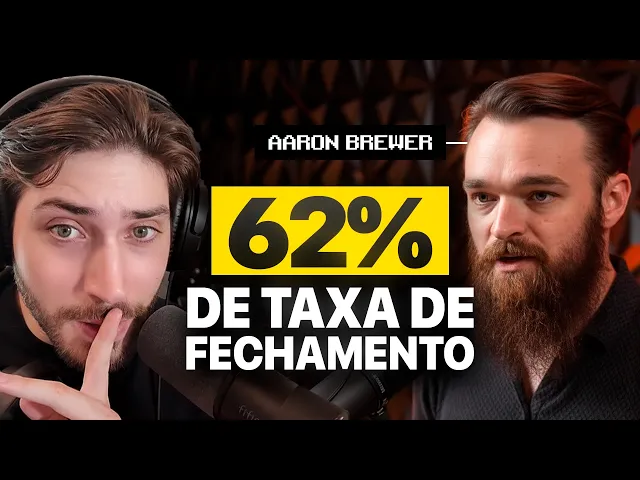
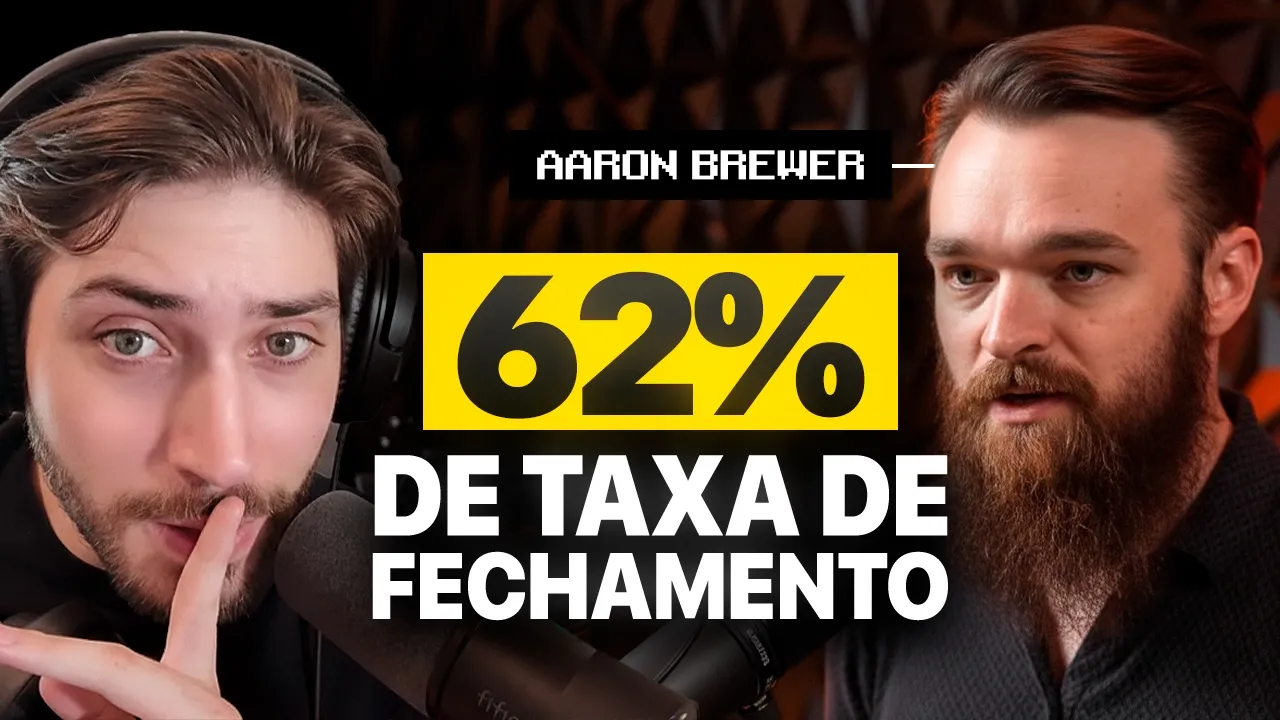
Brewer. framework. So have a bit of experience actually building up and training sales teams in the agency space.
And then obviously from there uh I currently run a school community. At the time of the recording we're at 6,500 members, all agency owners. Uh I've also coach and and mentor different agency owners.
Uh my sales frameworks are currently being implemented by over 500 agency owners in the industry uh because they are consultative and they're built specifically for agency sales, not just the generic sales training that's usually out there. And then I also have a private mentorship program where I take agency owners under my wing and help them scale up to 50,100 and $200,000 a month. >> Dude, 100%.
And we even I remember because dude, we used to do a lot of those calls, the coaching calls. used to jump in and your method was one that really resonated with me because it was so simple to understand and I wanted you to touch on a little bit in that kind of like the heaven hell heaven bridges feel framework that you have but but yeah man it was just so valuable to me and just so easy to understand because a lot of like these sales um kind of methods like they usually like a complex and you have like a lot of like different stuff like dealing with objections and all of that. So why don't you just you know explain a little bit of what what your sale methodology is, what kind of like framework you follow.
>> Yeah, man. >> Yeah. So I've been doing sales in the agency space uh since 2019 is when I first started my business.
Uh and then obviously it's now 2026. So over that seven-year period of trying to figure out sales, I've gone through quite a few different methodologies. Uh, I am quite simple-minded.
If I'm on a sales call, I'm not going to remember all of the memorized word tracks and scripts and and the 18 different objections that there are, and I need to know how to work through all of them. So, I was like, how can I simplify this down so that I can understand it uh in the heat of a sales call? And so, I'm big on simplicity.
So, I basically took everything that I learned and then also realized realizing that as I'm doing these agency sales calls, most of the generic sales training doesn't work because most of the generic sales training is either built for unsophisticated impulsive type consumers like single moms, right? Or they're built for like enterprise B2B. uh where when you're selling an agency, you know, solution, usually you're selling to, you know, a small or medium-sized business and their marketing money is kind of mixed in with their personal money and they have, you know, limiting money beliefs.
And so, you aren't able to be just strictly business or logic with them, but you also can't be asking Quinn questions like, "How does that make you feel personally? " So like most of the sales training out there isn't built for this weird middle ground that we deal with in the marketing agency space. So I kind of developed my own way of selling these people that's really built on uh developing a lot of trust and rapport early in the call that makes them feel safe investing with me later in the call.
Uh and then over time people just started coming to me and I guess word got around. I I was pretty quiet. I didn't like advertise anything I did.
Uh but word got around somehow about the stuff that I was doing and people started coming to me and asking me to coach them and mentor them and then one thing led to another and then you know next thing I'm know I'm you know have this second agency that I'm you know scaling up to $270,000 a month and people are still coming to me and asking. I was like you know what I think it's time that that I actually just share this stuff with the public. So I created a uh a very simple framework for running any type of sales call.
like I wanted it to be applicable on any sales call, not like the cold call and the intro call and the closing call and follow-up calls all have different processes. And I was like, "No, that's too much to remember one thing. " So, I created a a very versatile framework that's specifically built for agency sales.
Uh, inspired by things that I learned from other brilliant minds in the industry such as Cole Gordon, but not as complicated and more effective for this type of buyer uh taking from other things that I've developed. So, inside of the call, I call it the 10-step framework because it has 10 steps. Again, uh let's not make this complicated.
Uh and it's very simple. So the the 10-step framework also only breaks up into four phases and each step also has many substeps. So depending on an agency owner's skill level, they can learn the most basic way of running a call or down to like each question that you ask and and how they're designed based on psychology.
It's very uh very interesting, very versatile. So the simplest level, each sales call is only broken down into four phases. It's pretty pretty common sense.
You have the intro, you have the discovery, you have the consult, and you have the close. Like that's it. Uh and note how I say consult and not pitch because it's not a pitch.
My way of selling is very consultative. I get on the same side with the prospect uh and I'm helping them facilitate an optimal decision. I'm not there to sell them on a solution and try to make them buy.
Ironically, that ends up leading to a lot more sales. Uh >> yeah, because people were like usually are burned in the past and once you take like this this approach of like not really hard pitching and really like taking a consultative approach as as you're explaining, you're like just as you said, you're sitting on the same side of the table as the prospect and it makes everything so much easier. Right.
>> Precisely. And at that point as well, like they see you as more of an expert because you're not going in, you're you're automatically different than every other agency owner they've spoken to that's tried to sell them because you're not hard pitching them like, "Hey, this is what we do. " Now, your pitch is talking about, "Hey, in your situation, this is what I think would work best.
This is what I think you need to do to solve this, what you need to do to solve this. " Then the price is just, well, for us to do that for you, it costs this much, right? but you're the one who's able to diagnose their bottleneck and provide a solution within the span of half an hour.
So obviously they're going to see you as the expert that they would entrust to just handle it for them and then that's where your price comes in. But you want it to be so valuable that they could still walk off the call and if they tried to implement it on their own, they would still get results. Like it's not this is what we do on our side.
It's this is what you need to do to solve your problem and if you want us to take care of that it costs this much. Does that make sense? >> Yeah.
You sell the methodology and then you sell that you're the kind of like the guy to apply the methodology. Right. >> Precisely.
Yep. >> So like this general framework works for every type of call. Right.
So like if we're only going to talk the simple four phases which is very the simplest way of looking at it. On a cold call, you're introducing yourself and then you're asking them questions and then you're selling having another conversation and then you're closing them. You're booking them for another conversation.
Intro call, it's the same thing. On a closing call, it's the introducing yourself, asking them questions, consulting them, closing the deal. Follow-up calls, it's the same thing.
So, it's like it's the same process on all calls. Uh, and then those break down into the the 10 substeps, which if you want to go deeper into that, we can, but >> 100%. And just to expand on that, Aron, because I remember when we first had one of our calls, that was one of my main uh questions is because we're doing the intro call, but then we're getting a lot of information, right?
And then we do the the demo call, which is pretty much you have to re get this information again. And I remember you told me something that really stuck with me that you still follow the same framework, but on the intro call, remember you're like the pirate and then you're going to, you know, draw the X in the sand and then once you're in the demo, that's where you dig. Could could you please >> like expand on that?
>> A lot of agency owners are at a stage where they're the one doing these intro discovery >> and they're doing the closing call. So the way that you would maneuver it would be a little bit different. on this intro call.
This is only 10, 15, maybe 20 minutes max. And so in your discovery where you're asking the prospect questions about their business, you're not trying to find all the pain points and like get them really bought in on buying with you. You're only there to get clear on really a couple of things.
One, is this person qualified? So, is this someone that you can help? Very simple way to qualify a prospect is if they're fun.
Fun n. Are they financially qualified? Do they have urgency?
And do they have a need that you can solve? That's it. Are the prospects fun?
So, first is you're trying to qualify them. Secondly is you're identifying what motivates them. What motivates them to actually buy?
What motivates them to make decisions? You're not there to get them to buy your product. you're just there to sell the next call, right?
But what I'm going to do is I'm going to find out like as I'm talking to them, it's like, oh, I'm picking up that this person is talking a lot about like their family. This person is a family man. I'm not going to dive into that.
I'm just going to take a note on it, right? Or I hear this person talking about how they've been burned in the past. Like, okay, so this person is probably skeptical.
They're probably going to want to see a lot of like case studies or maybe they they want to understand how we're different than others. So, like, I'm going to take a note on that. All I'm doing here is I'm finding the triggers that cause them to buy without pulling the trigger.
So simple way of looking at it is like you're a pirate. In the closing call, you're trying to like dig up the treasure and like really get clear on that. On the intro call, you're just finding out where the treasure even is and X marks the spot.
This matters to them. This doesn't I need to talk about this in more detail when we sit down on Zoom or Google Meet. This doesn't matter to them.
I don't need to talk about that. So what you do is you get a very clear list of notes of like okay this person's motivated on these things and then on the next call your discovery is now only talking about those things. So it's a lot more powerful and potent, right?
And all of this is serving the ultimate purpose of the third thing which is what you're trying to do on the intro call which is sell the next call. You're not selling the program. You're not talking about all the things you're doing for them or what you do for your other clients.
It's just, hey, I'm really skilled at solving this problem. I know how to fix this. So, let's have another conversation and I'll show you what we need to do.
Dive deeper into your business, find out exactly what bottlenecks are there, and I'll give you free advice basically. And if you want to find out what it looks like to work with us on that basis, then we can do that as well. So, those are the three things you're doing in the intro call.
You're qualifying them, you're finding out what motivates them, and you're selling the next call. That's it. That's it.
That can be done in only 10, 15 minutes. 100%. And um as far as like booking the next call, because I see a lot of people doing that, like what do you recommend as far as like timing for that, Aaron?
Do you like if they're available, do you take the demo call right there? >> Yes. >> Uh do you try to book it for the next day?
How how does that work with you? Yeah, sooner is uh always better. Time kills all deals.
That statement is true. Uh speed is king, right? So if they're available, I'll literally ask you like, "Hey, are you near a computer?
If I have availability and see if they have availability and I'm just going to like bring them on Zoom, let me sit down on Zoom and we literally just transition right into all well like let's go deeper into our discovery on these things that we talked about and then go from there, close them. " I mean, you do this right. A lead comes in to your pipeline at 12:00.
You call them at 12:02. You go through your intro call, it's now 12:20. You get them on the computer and the deal is closed by one o'clock, right?
That's one hour sales cycle. Like that's obviously like a good scenario, like a ideal scenario here, but that's like if everything was working perfectly, you could do that. Right.
>> 100%. >> Then if they're not available right now, I'm going to look at, all right, what times of today do we have? Whenever I'm booking the call, I'm looking for what's the shortest distance.
What times today? If they say I don't, okay, what about tomorrow? Morning or afternoon?
We're going to get clear on a time. That doesn't work. I'm like, all right, well, let's try to go 48 hours out.
Starting to fill up the calendar here, but like let's see what we got. And then if they really can't do that, then I'm going to be like, all right, well, like this is tight. I mean, I can see if I can squeeze something in, like what's a time three days out or 72 hours out that you know 100% will work for you.
The reason why is because the further your intro call is from the closing call, the colder the prospect can get, the less likely they are to show, the less likely they are to close on that call. And then I just never book anyone past 72 hours. Like if they really genuinely don't have 45 minutes in the next three days, I don't book them.
What I do instead is I find out the next day that they're available and I say, "Let's do this. Let's put about five minutes on the calendar that morning. I'll give you a call at this time and we'll see what availability is on the calendar then and we'll sit down.
We'll talk about it. " And then literally I'm just going to set a follow-up, call them that morning, book the demo then if I can get it within 72 hours. But I want to make sure that the distance between me talking to them on the phone and the closing call is always 72 hours or less.
>> That's that's so important to highlight because I feel like some people, especially like the beginners, they feel like um especially in high ticket sales, right, when you're trying to charge like multiple thousands of dollars. Um people think that you should give them some time to kind of like get used to you and all of that, but what I noticed and and from what you're saying as well is like exactly what you said, time kills deals. speed to leave was one of the biggest levers that we pulled here.
And it's not really about the time that it's, you know, between kind of like the intro and the demo. It's about like kind of like the value that you give and um the contact that you have with the prospect, right? So like sales assets go a long way with that as well like via sales like videos, testimonials that you send between the intro and the demo.
>> That's really like kind of moves the trigger, right? Not really like the time itself like one, two days. And >> you are spot on.
Time is not the thing that gives people clarity, right? Uh ultimately, it's not going to be you giving them a week to think about it. It's going to be okay.
You can you can again you can accomplish everything within the span of an hour if you give them enough clarity around their problems and what they want to do. Like it's all about building that trust. But you're you're you're exactly right.
the sales assets, the video sales letter, the uh emails, the text messages that they get, the case studies that they see before you hop on a closing call with them does make a significant difference, right? They trust you more, they know you more, they're more likely to buy. But you can accomplish all of that in less than 24 hours, right?
And especially if an agency owner is running ads, what does that funnel look like, right? How congruent is the messaging on the ad with the messaging on the landing page and on the VSSL and then when you talk to them? It's very common in the agency space to be running bait and switch ads.
>> And the common excuse is, well, they don't even remember it by the demo call. Yeah, consciously they might not remember it, but subconsciously they do. There is now a distinction between what you originally promised and what you're actually delivering.
So, you're literally by definition overpromising and then underdelivering and you haven't even signed them on as a client yet, right? Like just in your sales process alone, you're already trying to bait and switch them. >> So, what is that going to do to your trust issues?
>> Oftent times, the agency owners that are running bait and switch ads are also the agency owners that complain about talking to skeptical prospects and getting trust objections. There is a correlation. And so if you can align your messaging with from the thing that they click on at the beginning that they originally resonated with all the way through to your sales call, your chances of conversion at every stage of that process skyrocket.
And you don't have to lie to people to have a compelling offer. Right? So very common one.
uh you don't pay until after you get the results and then you find out on the sales call that's not actually true or like oh we have a >> it's not actually a real offer, right? Uh you can set up your ad where you actually tell the truth and you make a compelling offer, right? If your offer that you're selling is genuinely good, right?
Then advertise that. But if you are having to advertise something, then your actual offer that you're selling, your problem here is that your offer sucks. Like you're you're clearly not confident enough in the offer that you're making to feel good on putting it on an ad, right?
So like we need to clean up your offer, how convicted you are in that. Then we can advertise that. And you'd be surprised that you can still get incredible marketing numbers.
The prospect's quality higher like than you could possibly imagine. Tons of lead quality. You get on the call, they're bought in, they're ready to work with you.
They're not skeptical. So again, like all those sales assets are important, but what's also important is making sure that everything is congruent or the same throughout the entire process. And that builds trust because now what you're doing is you're making a promise and you're fulfilling on it over and over and over again before you ever ask them to buy from you.
So now they trust you more 100%. And that's one of the things that really resonated with me um when when we kind of like did our calls which is like dude you're really like really at school guy and at school seller yourself you know so I used to have like this limiting belief about like my offer right which is I believe like a lot of people do have oh am I good enough am I going to like deliver results and we know there's like a lot of fact u a lot of parts to the service delivery that sometimes you don't have like kind of a control itself especially when you don't have a call center. And one of the things that really resonated with me was dude, you're just trying to like find their problem and if you really do believe that you can solve their problem, then you pitch, right?
>> Uh I remember many times where you said, hey, like you shouldn't pitch everyone. You shouldn't just try to get their money or anything like if you really do believe that you can help these people. Uh that will already give you conviction which is conviction is one of the biggest levers like in a sales call, right?
more convicted you are, the more you can uh really demonstrate your kind of knowledge and from there like get the sale. So that's one of the one of the things that really like resonated with me with your sales process of like really being like at understanding the problem and if it really is something that you do believe 100% you can solve and you can help them kind of like uh gap close the gap right then you peach. So yeah, >> at the end of the day, my methodology on selling is called anti-elling is what I've called it.
>> Uh the anti-elling method, the anti-elling system. It's really built around the idea that you're not there to sell, >> right? Like the the most effective and and I'm saying this not just from theory.
I I'm saying this because my last 12 month average selling marketing services to real estate agents, >> right? Lead gen to realtors. Notoriously the hardest, most skeptical niche in the marketing space.
My last 12-month average selling them was a 57% call to close rate with an average upfront cash collected of over $7,000 upfront on average every single time I close someone. >> So like this isn't theory. This is what I did in the trenches.
This is what I know works because I did it in practice and it's the same stuff I teach to hundreds of agency owners. So I know this works. But if you stop selling, like just stop trying to impose your will on them and instead discover what actually makes the most sense for them and then just help them get that thing whether or not it's working with you.
You would be shocked at how many people willingly just fork over thousands of dollars to you because they finally see that you're the first person that didn't try to take advantage of them. The reason why there's so much skepticism in this space is because most agency owners are looking at prospects on what can I get from the prospect? How do I get pain from them?
How do I get ammo that I can use to logic crap them into giving me money? I want to get money from them. Right?
It's all about getting. So when everyone zigs, if you want to make money, what do you do? >> Zag.
>> You zag. So if everyone's looking at how do I get and all the prospects don't trust people because all the sales people are trying to get. Then if you want to be the person that they trust, just do the opposite of that, which is how do I give give give tons of value to your prospects?
Be the person that can help them. Be the expert consultant, the leader on the call, not the person trying to get value, but to give value. And genuinely being detached from the sale.
Now the prospects are in the position of like, I've never felt a sales call like this before. You could be selling the exact same service that all of the other people tried to sell them on and they didn't buy it. And you could be selling the same thing at a higher price and they would choose to move forward with you because the conversation with you felt different.
It felt like you actually cared. And tied to that as well, uh there is um what I call the two keys to influence, which is care and conviction. Really, if you boil down a sales call to only two things, it's do you care more about them than they currently care about themselves?
There's some people want to like push back on that and say that you can't like you could totally do that. I've seen a lot of prospects that do not care about themselves very well. Right?
So, I can care more about them than they care about themselves. And I have full conviction, more conviction than anyone else that this path is the best path easily available for this person to solve their problem. I say easily available because you don't have to be the best of the best in the industry to sell what you have.
you just have to be the best easily available option to the prospect at that time, right? So, like I know a lot of people, myself included, uh are hesitant to bring their offer to market because they want to be the best of the best. And you don't necessarily have to be the best of the best.
You just have to be really good at solving a problem that people have uh and be able to be in front of them at the right time and help them at the right time. Um, but you don't have to be the best of the the best in order to do that. >> 100%.
And something that you even touched on on the beginning of the calls about Co Garden that really I I I do like it a lot is which is to say is um different is better than better, right? So you're not really like trying to be the, as you said, you don't try to be demonstr they failed. And it's, you know, the most easy um kind of like way for them to really like close the gap and get to desired situation, right?
>> Yeah. And like at the end of the day, I mean, look at it on how I run my own coaching business. Like this isn't just marketing, right?
Like my selling system. Show me one one selling system that's designed specifically for agency owners. Show me one selling system that's built on, you know, these values, right?
Show me one. There there isn't any, right? Show me one program that does semi-private mentorship, right?
Which is different than one-on-one and group coaching, but the Harvard Business Review has already proven through studies that small semi-private coaching is more effective for learning than one-on-one coaching or large group coaching. And yet, no one does it. The only one.
And so, at least right now at the time of recording this before copy me. So like this is the whole premise of like I don't need to be better than like I just have a different solution right and so far the solution works really freaking well and you apply the same thing into your agency space it's like okay like what's one thing that I can do differently than how the competiti competition does it and it is important that that different is better in some way so like in my sales calls with small business owners I'll be telling them hey so like let's say for example um the way that we run ads is slightly different Like we run ugly ads, right? That works better than what most people are doing.
Like I need to have a clear reason to show like why ugly ads is a better alternative. But the fact that it is different is the thing that matters to them, right? It's not I run the same type of ads everyone else runs and I do it better.
It's like I do something different. Here's why this different is more effective. That's the that's the most effective way to present a solution that people would actually want to buy.
100%. Yeah, that makes makes tons of sense. Erin, what I I really want to touch on and I think it's so valuable is your kind of like the hell heaven bridges feel as well.
I know we're running short on time, so do you mind like kind of like giving us an explanation on that because like for me, dude, it was so simple to understand and not I wouldn't say memorize, but like >> know where to go on a sales call, right? Because when you're in the middle of the sales call, you're trying to like remember script and all that. you get lost, you stop listening to the prospect and you start listening to your own mind and then that's where kind of like the sales goes, you know, too.
>> Yeah. >> So, yeah, dude, like could you do you mind like kind of expanding on that? >> So, I'm going to talk about this in the context of a closing call because that's where I think most effective or like helps the most people.
Um, I struggled a lot when I was first trying to figure out sales, >> especially in my discovery section because like when I was asking questions to prospect like where do I go next? It's like I need to go deeper, but like how deep and like what's the next thing I should talk about? Oh crap, what's the next thing I'm Exactly like you're saying.
And then you're not present with them and presence is the most important thing. I can't care which is one of the two keys to influence. I can't have care if I'm not even talking with them, right?
If my mind and intention is on the script. So that was something I really struggled with. I was like, okay, like what's a very simple framework that I can just implement on my calls at my at that time skill level that I would remember in the heat of the moment as I'm having a conversation with someone.
And so I boiled it down to really there's really only four main steps in a discovery. There's hell, which is identifying the problem. What is their current situation?
What about it do they not like? And then bridges. What are all of the things they've tried to get out of hell?
What are all of the things they've tried to solve this problem, right? And why have they not worked, which we'll talk about in a second. Uh heaven, which is where they want to go.
What do they imagine is the ideal outcome? And then fuel, how quickly do they want to go? Like why now?
And a lot of the the bridges in the fuel section, like most people talk about gapelling, which is just where are you at? Where do you want to be? Right?
that could work. But then I kept getting objections at the end of my call of people being like, well, let me go try this other thing or ah, let me just think about it. Let me let me put it off.
And so I added these parts into my discovery of, well, I want to prevent these objections at the end of the call. So how do I address it early? So let's look at all of your other alternatives to solve this problem, >> right?
>> And then fuel is how quickly do we want to solve it? Okay, we want to solve it now, but why? Most people want to put it off.
Why are you different? Right? So, this prevents those two primary objections at the end of the call.
So then I'm like, all right, hell, what is the issue that you're running? And there are like sub steps to each of these steps that like we could go really deep on, but let's keep it simple for now. Hell is like, all right, what's the issue right now that you're facing?
Why do we not like it? And then bridges is what are all the things you've tried to solve the problem and why have none of those things worked? Aka why can't you go back to doing it?
And then if we don't move forward, this is something most people miss. We don't move forward. What else could you try?
What other options do you have on your radar? Have you tried doing it on your own? Because the last thing I wanted is I I didn't want to reach the end of the sales call and someone be like, "Oh, I I could probably just try this on my own.
" or oh let me uh you know I I was thinking maybe I could do this other thing I haven't done that before but that might work right because the prospect is at the end of the conversation if there is another alternative they're going to go for that even if they don't act on it the idea of doing something other than having to make a decision to change their life and business right now always feels more comfortable so they're just going to opt for that so it's up to me to identify all alternatives and burn them all down. Get clear on why none of those have worked or would work. Heaven is where do you want to go?
Right? So like what is the ideal scenario here? What does that look like?
Give me specific numbers. And another thing most people miss that prevents a lot of trust objections. What do you need to see in a conversation like this in order to feel like a company could actually get you there?
And it's not what do you want to see in a program because everyone's going to say the same thing. Qualified leads. What do you need to see in a conversation like this?
You don't know if I'm going to give you qualified leads till you join. >> So how are you going to be able to trust a company like me? What are you looking for?
And then fuel is again same thing. Why now? Really easy for someone to talk a big talk, say that they want to take action now and then not actually take action.
What makes you different? What's the reason that this is something that you're you're looking to solve today rather than a year from now, a month from now, or tomorrow? Why today?
I get clear on all those things. Then there's really no objections left, right? There are other elements to this like other potential things like support, partner, uh doubt, and their own ability to solve it, all that stuff.
But like they all are substeps to those four core pieces of the discovery. >> You hit those four, you're already doing better than 99% of sales people out there and you're making money >> 100%. And dude, that's so valuable because you're also building like kind of like the the consistency bias, right?
which Kini talks about a lot which is number one like the most how can I say um influential kind of yeah bias in the in the human um and once you kind of make your as you said burn the bridges make your solution the only way that they can you know solve their problem and you kind of expand off like why now why kind of like just go with just do as most people do just you know kind of brush it on their carpet wait couple weeks why why is this something that you want to like so now and then the prospect is telling themselves why they should. >> Yeah. >> Kind of like do this and not you're the sales guy which is you know clearly has like a you know like a bias there.
So uh a lot of like they say like whatever you talk is and whatever the the prospect talks is gold right. So that's that dude that's super valuable. >> Yeah.
At the end of the day the prospect is going to be sold by what they say not by what you say. So the key is you want most of your sales call to be questions. You want it to be eliciting the truth from them.
I I tend to be a very optimistic person. I I I can be skeptical and like I can see things for what they are, but at the end of the day, I believe that everyone in their heart is good. And I believe that everyone has more potential than they realize.
Everyone. And so on a sales call, I see that potential in them. I see God in them, their heart.
And what I'm doing is I'm calling the best version of them to the surface. The version of them that makes optimal decisions. The version of them that takes action and solves their problem.
And I help them realize that. And then so by the end of the conversation, even the most skeptical business owner, the most a type is kicking back, laughing with me, having a good time, and they're buying simply because they sold themselves. they I asked them questions that helped them realize it.
So like my way of handling objections runs the same way. I'm not overcoming the objection. I'm not handling it.
I'm simply they're raising a concern which is valid and then I ask them questions where they end up selling themselves. Like I don't have to handle it. I just ask them questions that make them realize that that's not going to be an issue and they're like, "Oh, okay.
" And then they buy, you know? So, like I literally inside of my my private mentorship, I uh I send out clients this book just literally 100 different examples of how to do that exact thing, right? Asking the prospect questions that help them work through their own objections.
So, like it is uh it's fun. I had one closer uh that I had in my last agency. I told him about it and he was like, "Well, that just sounds like Jedi mind trick shit.
" I'm like, it's because it is. Um, but at the end of the day, it's effective. It works.
Uh, and it's it's ethical. It helps people. So, >> 100%.
Erin, just to kind of like close this out here, um, what I always like to ask is what would be your number one advice to an agency owner that kind of like is stuck right now. They either can't close any clients or they stuck at the same revenue level for a while. And what do you think is the number one like advice that you give these people to really kind of like break the cycle and and kind of you know start growing again?
What what would you say you know from working with hundreds of agency owners? What do you think is the really lever that that you know causes the most result? >> Zero to 100K is just volume.
It's just volume. If I'm talking to an agency owner that's doing sub 10k per month, my only advice for them is get on more calls because they're probably getting on less than 10 calls per week, which is really, really low. So, it's just do more volume and then get as much.
I mean, I have tons of content out there, right? I have the course, the whole thing. I have agency world.
It's a free community for people to join. You have these are in your community. Like learn a methodology.
Just go 110% on that methodology and apply it and do more volume. And then get really freaking good at sales. Like I might be biased here, but sales is the crux behind marketing, client success.
Like everything in the business is all you're just selling people. Get really freaking good at sales. Do volume, do sales.
That's your pathway from zero to 100K a month. It's really it >> 100%. Erin, where where can people go to kind of like reach out to you or know about more about your program?
Where are your main like channels? >> Uh I run a school community called Agency World. So you can join that.
I also have a website. >> I'll leave it in the description too. >> Beautiful.
I also have a website agency. com or you can just hit me up on Insta. Uh I'm on Instagram as well.
Um and you can just drop the thing in the description as well. So yeah, this is a lot of fun. It's great seeing you, Jo.
I have another call right now, but this is great reconnecting with you, man. This is a lot of fun. We should do it again sometime.
>> 100%, dude. Really, really appreciate you taking the time, and as I said, you're crushing it, dude. So, really, really happy you took the time to kind of like give us some value today.
Thank you, Erin. >> All right. See you, brother.
Bye. Sra.