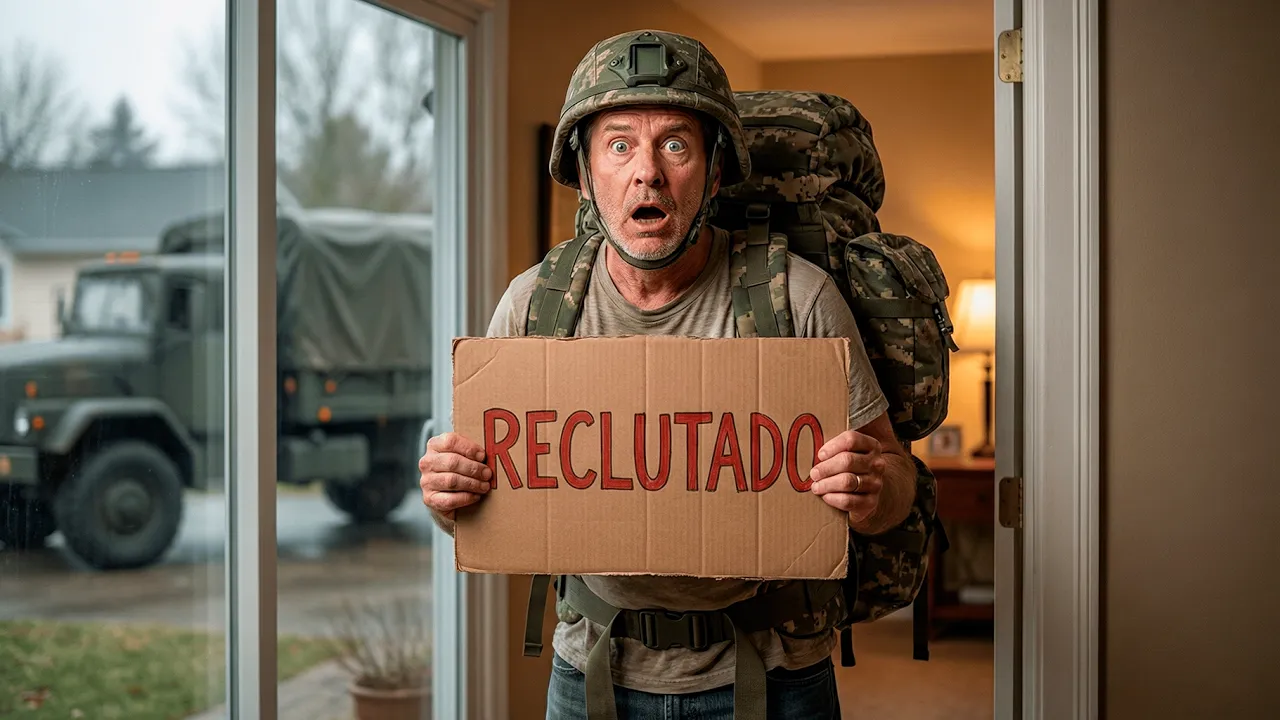
Your country goes to war, and the next thing you'd ask yourself is: Will I have to go? Who will call me up? Is there any legal way to avoid military service?
What if I refuse? What if the entire population refuses? And what if I go into hiding until the conflict is over?
I'm going to answer these and many other questions, so let's start from the beginning. War is declared. In Spain, the king is responsible for declaring war and making peace, with prior authorization from the Cortes Generales (Parliament).
In a country without a monarch, this decision falls to the president. Afterward, the Council of Ministers is responsible for making strategic and operational decisions, where the Minister of Defense plays a crucial role in the planning and execution of military operations. And of course, the Ministry is responsible for overseeing and coordinating the entire recruitment process.
And what would the order be? Obviously, the Professional Armed Forces would go first, since that's their job. The vast majority of countries have a professional army, made up of volunteers who have chosen a military career.
Initially, these soldiers and officers would be the first to be deployed. But what if a country doesn't have a professional army? Currently, there are 21 independent countries without any armed forces.
Many of these nations have long-standing agreements with a former colonial or protectorate power, such as the agreement between Monaco and France, which has existed for at least 300 years. Other countries, like Micronesia, the Marshall Islands, and Palau, rely on the United States for their defense. The Vatican, for example, doesn't have a defense treaty with Italy, as it would violate Vatican neutrality.
But the Italian Armed Forces would obviously protect them. Returning to the recruitment process, if the professional armed forces weren't sufficient, the next step would have to be taken , although this might not be necessary in a small-scale conflict. To give just one example, much of the audience will be familiar with the Falklands War of 1982.
A conflict that lasted barely more than two months, and in which only the army , navy, and air force participated—no one else. But let's suppose the conflict requires more people. In most countries, the next in line to be called up would be the reservists.
And what exactly does "reservist" mean? It's a person who, after completing mandatory or voluntary service, remains on a reserve list and can be called up in case of emergency, crisis, or war. In Spain, mandatory military service has been abolished since 2001, so only those who served before that year and all volunteers will be available.
In total, 113 countries do not have mandatory military service, but perhaps the armed conflict is large and requires more soldiers. It is then that they will call up civilian volunteers. The State will launch a campaign to attract new volunteers, offering them financial benefits, professional training, and other incentives, such as economic, educational, health, or even family support.
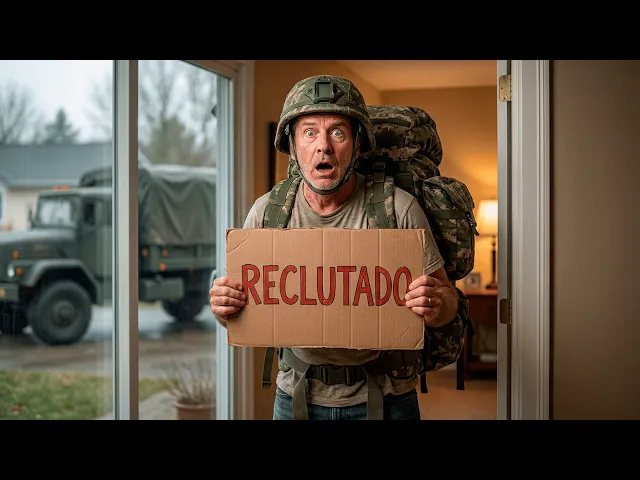
But if they still need more people, the less pleasant part begins: the forced recruitment of civilians. This is when they might call you. Generally, the first group called is the 18-25 age group, as they are usually in better physical condition, don't typically hold jobs vital to the country's functioning, and don't usually have family responsibilities like children or parents.
This group would be notified through typical State communication channels : letters, emails, text messages, and phone calls. After passing a medical evaluation, if everything is in order, they will be assigned a role and receive basic military training. If even more soldiers are needed, the age range will continue to expand, in some extreme cases reaching into the early fifties.
And this is where Spanish ingenuity comes into play. How can I get out of it? There are legal ways to avoid military service, the most common being for medical reasons.
And here the range is very broad, from your cardiovascular and pulmonary capacity to your musculoskeletal condition, including mental health or even chronic illnesses. Such as diabetes, epilepsy, or other conditions. But what if I'm healthy?
In some cases, you can object for family or financial reasons. If you're caring for a sick or disabled relative, or if you're a single parent, for example, you might be able to avoid military service after a personalized assessment. This would also be the case if your entire family depends on a single income—yours—or if your job is crucial to the operation of a business or company.
There's another option for avoiding military service: conscientious objection, which is a person's right to refuse service for ethical, religious, or moral reasons. You'll have to fill out paperwork and then be evaluated. If you're approved, you'll be offered an alternative, non- military service, which could include community service, educational or environmental work, hospital work, or work with humanitarian organizations, for example.
And can I be exempt if I'm a woman? Not in Spain, and most likely not in the rest of the world either, although each country has its own specific restrictions. You could go to war, but not into combat; rather, you'd work in administrative, medical, technical, and security roles.
On the world map, the dark green countries don't restrict women's roles in the military at all, and from there it gradually shifts to red, where women are prohibited from performing combat duties and operating heavy military equipment. And can I get out of it if I'm gay? Again, not in Spain.
But this time, in the rest of the world, most countries prohibit gay men from joining the military. The vast majority of Europe and South America do allow them, but this isn't the case in almost all the rest of the world, although this is slowly changing. For example, just a year ago, the Supreme Court of Venezuela decriminalized homosexuality within the Armed Forces.
Although the pioneers in this were the Greeks, who in 378 BC already had an elite military unit made up of 150 male lovers. And can I get out of it if I'm transgender? This time, very few countries allow transgender people in their ranks, including Spain, Chile, Bolivia, and Cuba.
The Netherlands was the first country to allow them in 1974. And to date, only 22 countries allow them to enlist without restrictions. After seeing all this, you might now be wondering, what if we all refused at once?
This would be extremely rare, because governments could respond with severe measures, including fines, imprisonment, or other even more serious forms of coercion. It would be strange if everyone continued to refuse when government pressure increases, but if that were to happen, the state could then seek mercenaries from outside its borders, negotiate support with other nations, or even contract the services of private military companies, as Russia did in the war in Ukraine with the Wagner Group. Now, let's suppose it's a normal war and people are drafted.
What would happen if I refused to go, unlike a deserter, who is someone who leaves the army after enlisting? A deserter is someone who avoids conscription from the outset. In Spain, this absence would be punished with a prison sentence of 3 to 10 years.
In other countries, equally harsh penalties can be expected, and these can even increase during times of war as more people are missing. When you refuse to serve, the authorities will issue arrest warrants , and the police will search for you. Once you are apprehended, a judicial process will take place—military or civil—depending on the context and applicable laws of each location.
But what if I go into hiding? Living as a deserter within your own country is not easy . You will be at constant risk of being discovered.
It would be very difficult to find work, access basic services, or maintain a normal life. And even if you manage to survive until the war ends, this will not prevent you from being tried, with potentially even more severe penalties. What if I go to another country?
In that case, an international arrest warrant could be issued and your extradition requested, and this will depend on where you go. Not all countries would automatically deport you, as this depends on extradition treaties . that both countries have.
Currently, there are 121 countries with which Spain does not have an extradition treaty, but none of them are European or Spanish-speaking, with the exception of Equatorial Guinea, so things wouldn't be very easy for you. The closest country you could escape to without extradition is Tunisia, in North Africa, but good luck trying to get there undetected. And the worst part is that even reaching a country without extradition doesn't guarantee anything, because you could still be accused of evading military service.
Finally, even if you had dual nationality, this doesn't mean you're subject to the laws of both countries simultaneously; most dual nationality agreements use domicile as the point of reference. And the Ministry of Justice website makes it clear that this also affects military obligations, so this wouldn't help you much. Now I ask you, what would you do if your country called you up for war?
Share your answer in the comments and subscribe to see more videos like this.