- When I was growing up, I used to really like this cartoon called "Inspector Gadget. " And I think what spoke to me about that character was I wanted to be this half-machine, half-man. Cyborg, if you will.
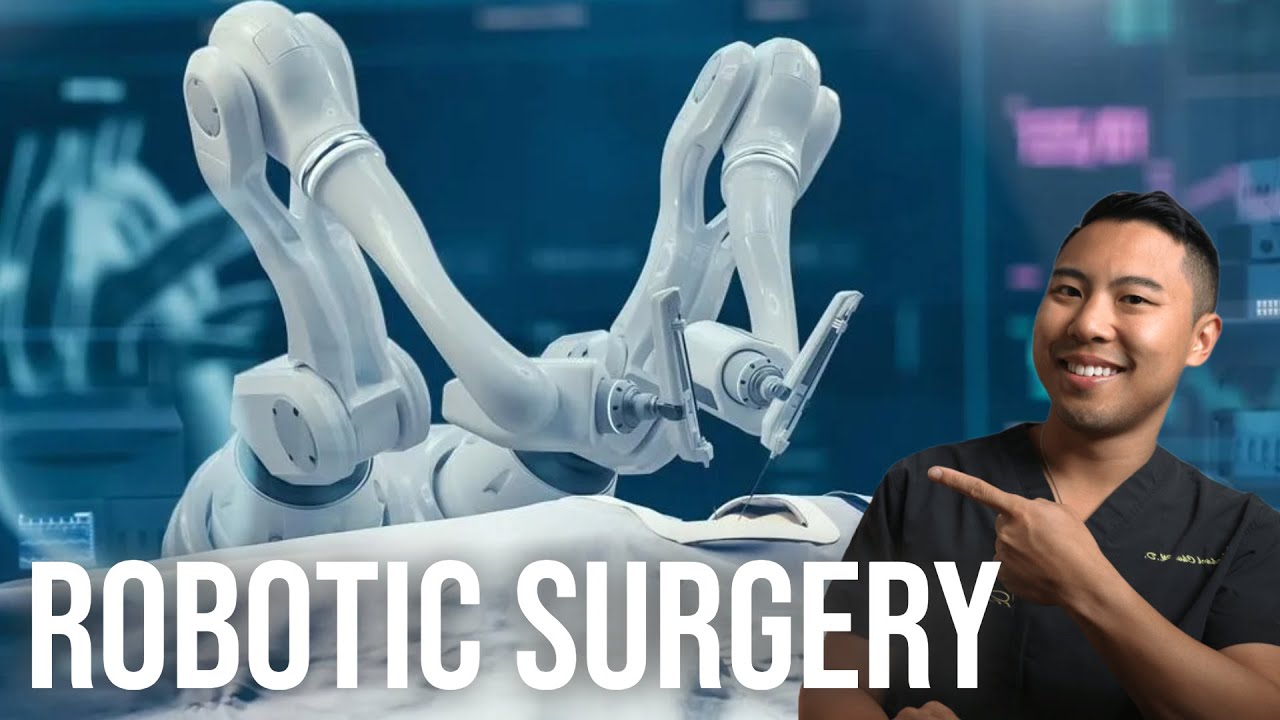
And nowadays, as a surgeon, I get to kinda be that person. There's lives at stake. Any miscalculated movement, things can happen, bad things can happen.
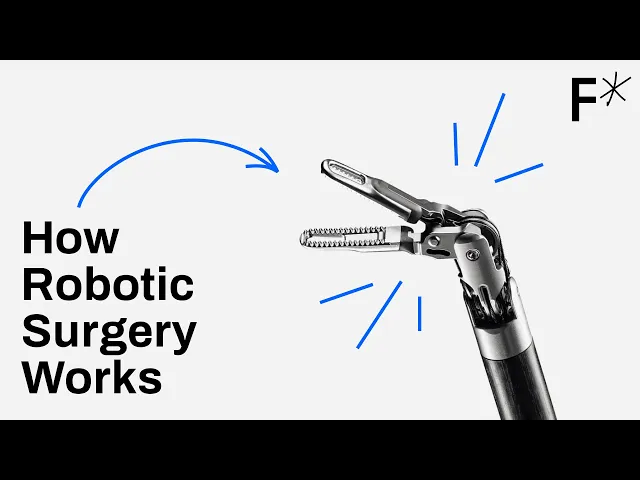
Anytime I operate robotically, I feel like I'm so much more calm and I have full control over the operation. - Once you've taken these big, imprecise hands of ours, and scaled them down and put them inside the patient, we could suddenly achieve this level of precision that simply isn't possible for the human body alone to do. The thing is, that's taken tens of thousands of hours of engineering and development, and working through problems to be able to get to this point.
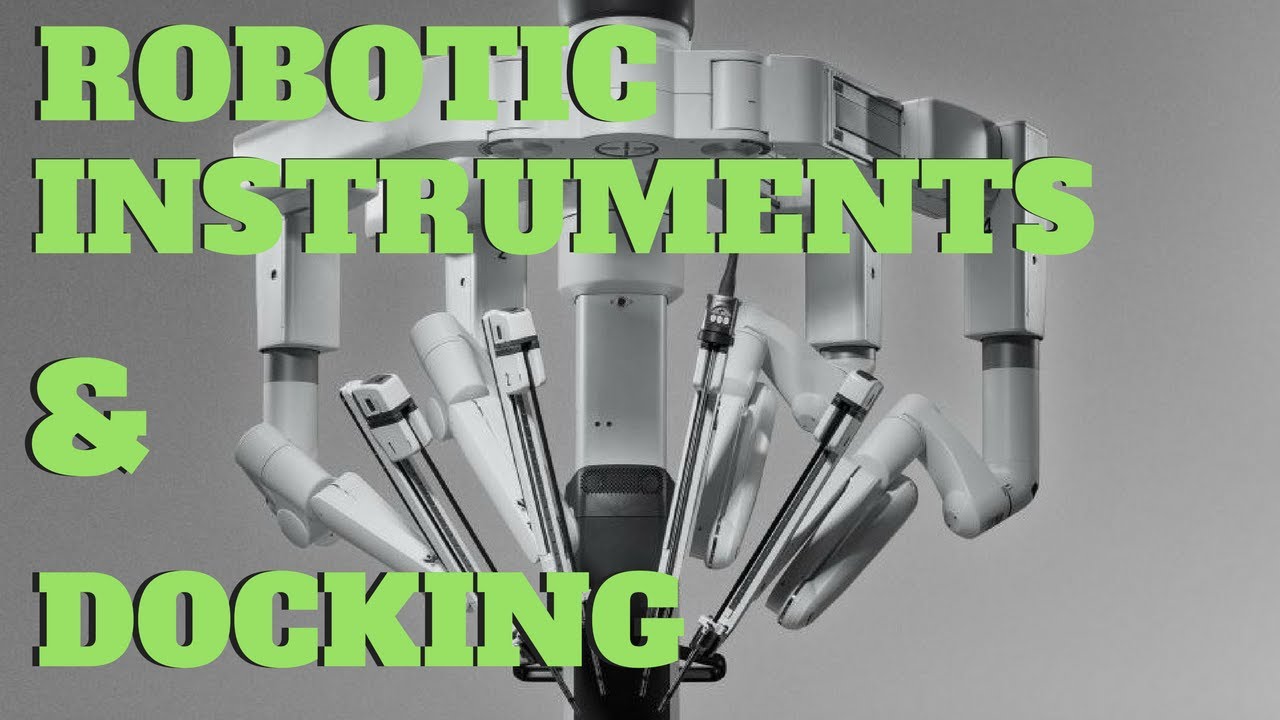
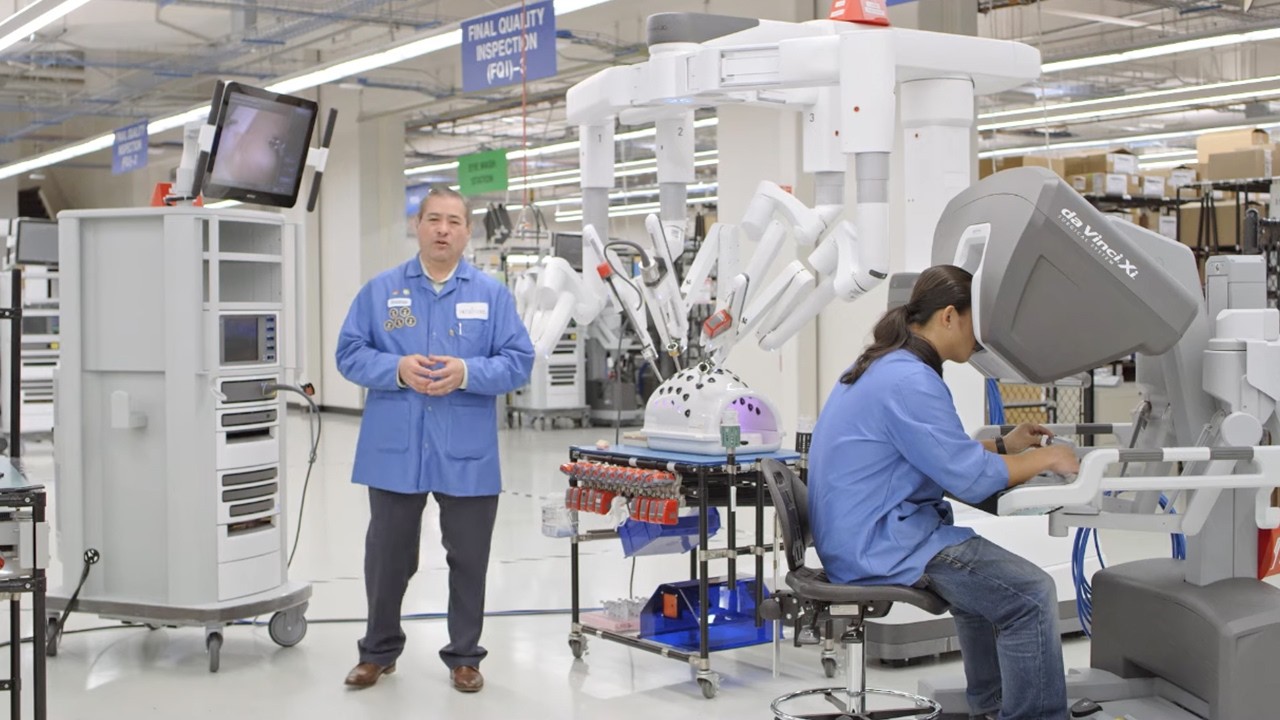
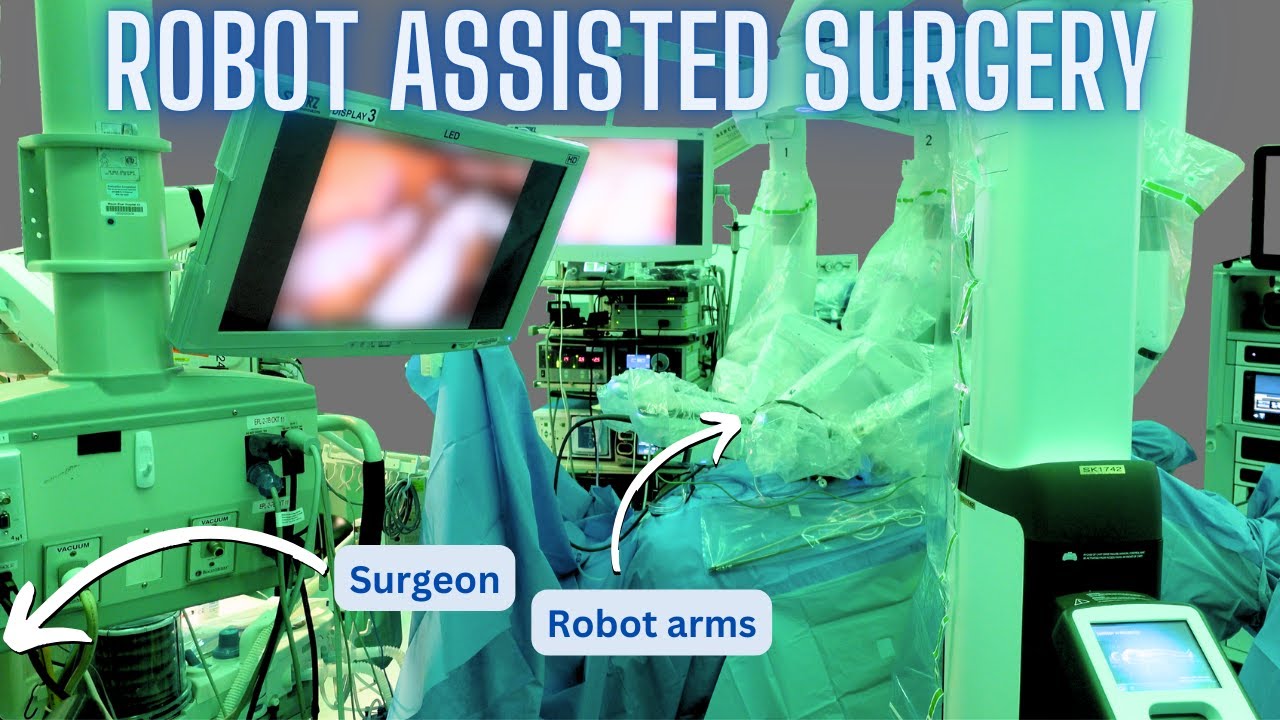
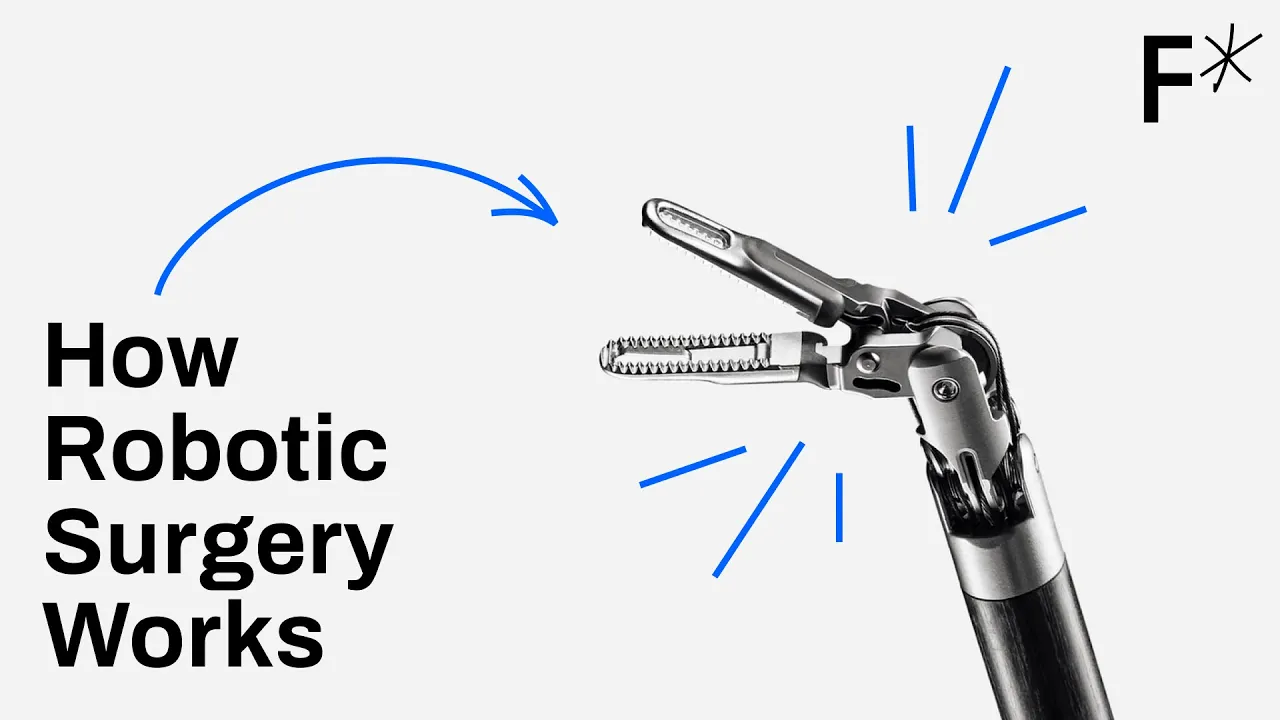
- So, when I do open surgery, a lot of the instruments that I use is something like this, like a scalpel. But when I do robotics, the difference is I'm able to have the robotic arms become an extension of me. - So in order to translate the surgeon’s movements of their hands into the patient, first we start with the grips.
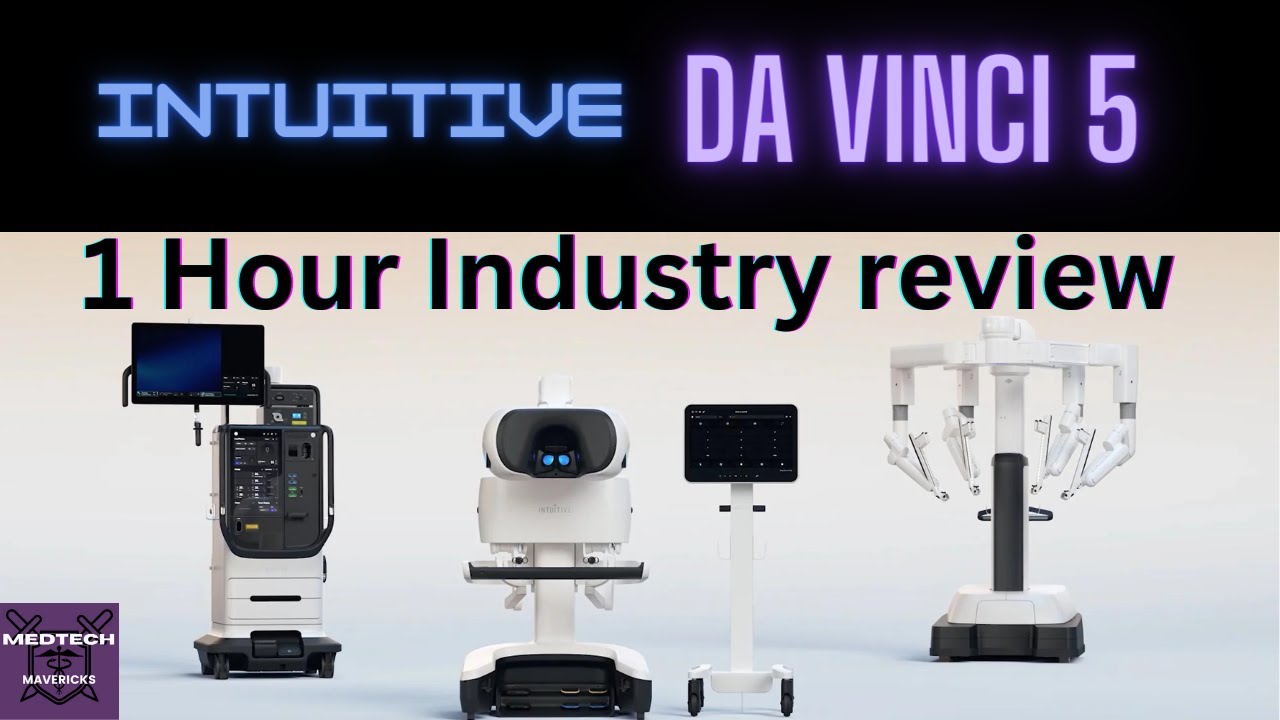
There's sensors in those grips, which sense, obviously, how open and closed things are, how much my wrist has moved, how much have I moved in and out or left and right in space. Once those sensors have captured those vectors in 3D space, that information is sent to the Vision Cart. The Vision Cart then applies algorithms on top of that to then translate those big, gross motions of the surgeon's hands, into microscopic motions inside the patient.
On the other side of the room, those series of algorithms control a series of motors and cables, which in turn control the instrument tips inside the patient. The time in-between what's going on here in the surgeon's hands, and what's going on inside the patient is called ‘latency. ’ And that latency needs to be measured in milliseconds for things to be safe.
- So when I'm operating, I may see some tissue bleeding. And if I don't react to that tissue bleeding by stopping it somehow by grasping it and cauterizing it, that could be a serious problem. - Removing latency from the system at the millisecond level is a constant battle.
So much work goes into making the software code as efficient as possible. We make sure that the translation of that signal using fiber optic cables to be as fast as possible from one component of the robotic system to another— the more latency, the less safe this is. So, just like you have two eyes in your head and you need both of those to create depth perception, we have two eyes on the endoscope inside the patient.
The key is to be able to fuse those two images into something that your brain can process as three-dimensional. When your head is in the surgeon console and you're fully immersed inside those images, you are fully inside that patient. - Doing an operation on Da Vinci is completely different than doing an operation with laparoscopy, because I was able to regain that three-dimensional experience and move around structures and see exactly how that structure would look in the real world, as opposed to a two-dimensional screen.
Lots of things can mess up your visualization. Yes, the organs are roughly placed in the same spot, but everyone, just like on the outside, is shaped a little bit differently on the inside. - Firefly's a specialized imaging system, which enables that surgeon to be able to see things that they can't see with the naked eye.
Firefly relies on shining a specific wavelength inside the patient to excite a molecule, called ICG or Indocyanine green. It's something that's injected into the patient either before their surgery or during the surgery. When Firefly mode is activated, we shine a near-infrared light inside the patient.
And what happens then is that the ICG, which has bound to the patient's blood, it reflects back that light of that near-infrared wavelength. It actually lights up green inside the patient and very differentiates where there's blood and where there isn't. - It's like night vision for surgeons.
All the lights go dark, and all I'm seeing is a big, green glow of tissue. - I'm a patient; I've had a Da Vinci surgery. My father was a patient; he had a Da Vinci surgery.
In my everyday, I'm charged up about what we're doing, about building better products. We're thinking about different types of robots, different instruments to be able to do more jobs, more efficiently or safer. Ways to bring new vision technologies to the surgeons so that they can see yet more that the naked eye can't see.
Giving that surgeon more information to do their job better.