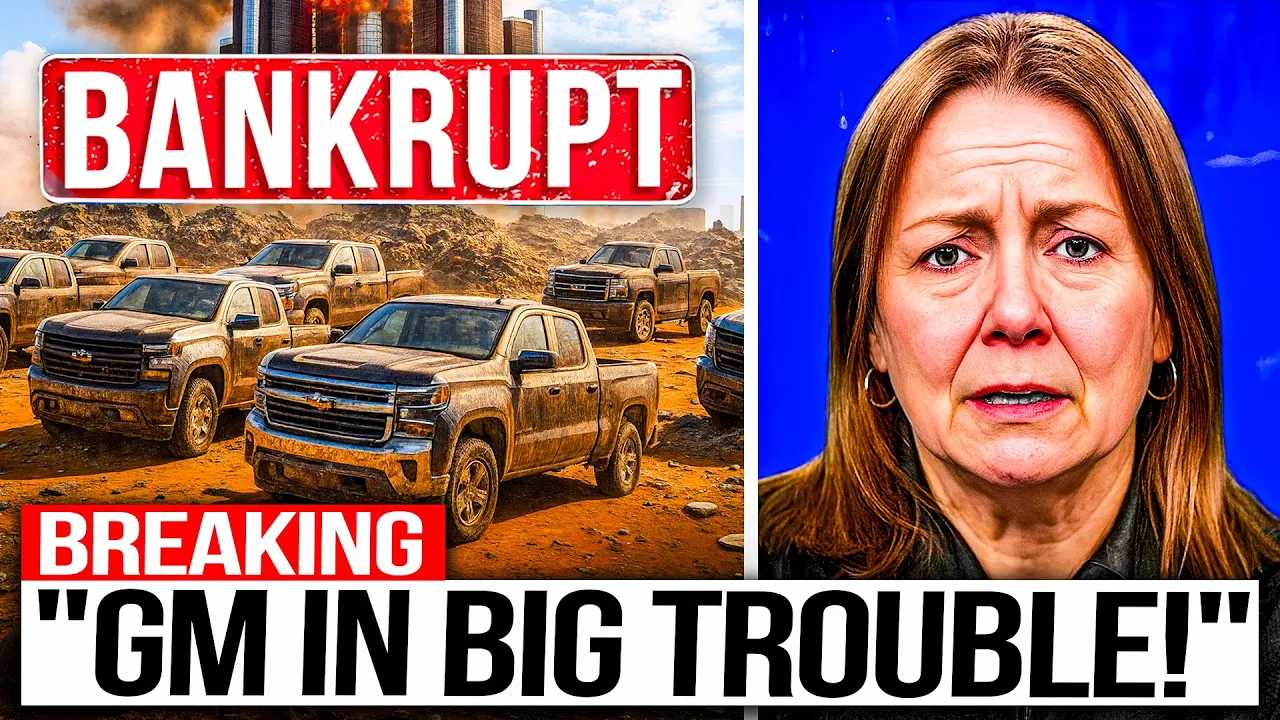
What once seemed impossible is now all but inevitable. General Motors is expected to officially file for bankruptcy tomorrow morning. The American automotive giant is crumbling before our eyes.
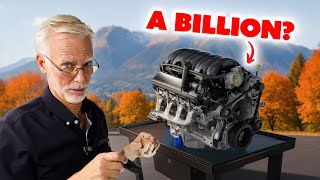
General Motors is closing plants, hemorrhaging cash, and watching their stock plummet all because of one catastrophic mistake. That mistake, an engine so fundamentally flawed, it's burning through 1 billion of the company's money. The signs are everywhere and they're impossible to ignore.
GM is temporarily shutting down more than half of its plants in North America. Their Lordstown, Ohio plant already closed. Dealers nationwide are overwhelmed with angry customers.
And behind closed doors, executives are locked in emergency meetings, desperately trying to stop the bleeding. This wasn't supposed to happen. This engine was hyped as GM's future, their next generation power plant that would carry them into the coming decades.
Now, it's become their potential tombstone. Industry analysts are whispering a word that sends shivers down the spine of every GM employee, investor, and vehicle owner. Bankruptcy.
But here's why you need to pay extremely close attention right now. When a company this massive, a cornerstone of American manufacturing, starts collapsing, the fallout hits every driver on the road. We're talking higher prices across the board, repair parts becoming impossible to find, and trade-in values plummeting overnight.
And there's something else. Something they're not telling you yet. What's coming next could hit your wallet faster and harder than anyone's prepared for.
The condemned engine. The L87 engine was supposed to be the proud heartbeat of General Motors future. A technological marvel that would power their trucks and SUVs for the next decade, but it failed before it even had a chance to live.
What's truly shocking is that this engine didn't fail during road testing or long-term fleet trials. It didn't even make it that far. The L87 collapsed in the very room where new engines are born, the testing laboratory.
The Pico vibration test, a procedure specifically designed to detect microscopic imbalances in engine components, caught something so severe that engineers couldn't believe what they were seeing. These weren't seasoned mechanics who had seen it all. These were brilliant engineers who had spent years trusting GM's machining standards, now watching in disbelief as the graph spiked into catastrophic failure territory.
This wasn't a minor deviation or a borderline reading that could be fixed with a simple adjustment. This was a total complete rejection of an engine that should have passed with flying colors. The physical unit looked perfect to the naked eye, pristine, almost untouched.
The intake ports appeared clean, the pistons unscarred, and the lubrication surfaces nearly immaculate. None of that mattered. The Pico test exposed something invisible to the naked eye, but catastrophic to the machine's integrity.
In a company built on the discipline of mass production and precision engineering, having an engine fail at birth is more than just embarrassing. It's terrifying. It suggests the flaw isn't just in one engine.
It's in the underlying process that produced it. And when GM's engineers looked closer, they discovered the first clue to a problem far more dangerous than anyone expected. But the source of the flaw was not where anyone thought it would be.
What they found would shock even the most experienced engineers in the automotive world. The microscopic failure. What they discovered under the surface was smaller than a grain of dust, yet powerful enough to bleed General Motors of over a billion dollars.
When engineers measured the roughness of the crankshaft journals, the smooth polished surfaces that the engine's bearings rotate against, they immediately saw the problem. The roughness average appeared deceptively normal. But the RZ value, the measurement of peaks and valleys in the metal surface, was wildly out of specification.
In microscopic terms, the metal surface looked smooth from afar, but under powerful magnification, it revealed itself to be jagged and violent. These tiny ridges created friction points that scraped away the protective oil film faster than it could replenish itself. Every rotation of the crankshaft carried the risk of scoring, grinding, and gradual destruction of the engine from within.
No one expected modern machining technology to betray such primitive mistakes. Yet, the numbers told a humiliating truth. The crankshaft journals revealed micro grooves deep enough to disturb oil flow, but shallow enough to escape visual detection during assembly.
GM had built an engine that appeared flawless to inspectors, but its surface finish violated the basic laws of tribology, the science of friction, lubrication, and wear. The imbalance triggered vibrations, and those vibrations triggered cascading wear that no warranty department could possibly handle. By the time this data reached management, the flaw had already doomed hundreds of thousands of engines to premature failure.
And this surface disaster was only the first half of the nightmare. What waited beneath this flawed surface would expose an even deadlier weakness that no GM engineer had predicted. Because the real catastrophe began when that flawed surface met flowing oil, the oil starvation trap.
The true catastrophe revealed itself when oil flow met the flawed geometry of the L87 crankshaft. oversized chamfers. The beveled edges carved into the journal surfaces allowed oil to escape sideways instead of forming the protective film the bearings required.
This meant that each revolution bled lubrication away faster than the pump could replace it. The result was microscopic starvation. Momentary drops in oil pressure that repeated thousands of times per minute.
On bearings with perfect machining, such pressure fluctuations would be harmless. But on surfaces already scarred by uneven ridges, they became destructive waves that battered the engine from within. When inspectors opened the failed engines, they found marks shaped like ripples.
Unmistakable evidence of oil film collapsing and surging with dangerous irregularity. No amount of assembly precision could compensate for oil that simply refused to stay where it belonged. Every test engine revealed the same disturbing signature, a rhythmic pattern of wear that should never appear in a modern power plant.
The crankshaft's excessive chamfering forced the lubrication system into constant recovery mode, fighting a battle it could not possibly win. Hidden inside early production units, this defect advanced quietly until the first engines began locking up without warning. Technicians were stunned by the failure pattern and their reports moved upward through GM with growing urgency.
By the time the evidence reached the upper engineering group, the scale of the lubrication collapse forced GM leaders to confront a mechanical truth they had never imagined possible within their own manufacturing system. And the moment those findings reached the executive level, panic took hold. GM's panic response.
When the findings finally reached the executive floor, the reaction was immediate and severe. General Motors leaders had weathered many crises before. safety recalls, labor disputes, market downturns.
But this failure carried a different weight because it originated in the most sacred part of their organization. The engine line had always been a point of pride, the mechanical core that defined the company's identity. Yet now, it was a source of deep embarrassment and potentially existential danger.
Executives poured over internal reports that detailed machining errors, lubrication failures, and production inconsistencies across facilities that were supposed to operate with absolute precision. Every page raised the stakes, revealing vulnerabilities that extended far beyond a single engine model and threatened the stability of multiple vehicle programs. For the first time in many years, GM confronted a crisis created not by external forces, but by its own internal miscalculations.
Meetings stretched late into the night as leaders debated how to contain the fallout, shield future projects, and protect the brand from long-term damage. One faction pushed for an aggressive recall strategy, while another feared acknowledging the scale of the defect would further erode investor confidence. Amid the heated debate, one overarching concern became unmistakable.
This disruption threatened the timelines of critical development paths in ways no one had planned for. And as the final report reached the chief executive's office, the crisis transformed into a looming threat that would soon spill into communities far beyond GM's walls. The moment this internal disaster leaked into the outside world, the human fallout began.
The silent assembly line. The silence hit first in a factory that normally shook with motion and sound. The abrupt stillness felt unnatural, almost threatening.
Workers stepped away from hal-finished assemblies, listening to the unsettling quiet as supervisors moved down the aisles with clipped voices and tight expressions. Everyone knew what an unplanned stoppage meant, but none of them expected it to arrive without warning. The assembly line that had carried generations of engines halted midstride like a heart skipping a beat.
No one dared to speak openly, yet everyone shared the same rising fear. A sudden shutdown rarely ends with a simple explanation. Crew leaders tried to offer reassurance that this was temporary, but their eyes revealed the truth they were not allowed to share.
Anxiety pulsed through the plant as rumors began circulating faster than the line had ever moved. Some workers blamed defective shipments. Others whispered about a possible recall.
A few feared layoffs. The plant had always been a foundation for the region, an employer that provided identity as much as income. Now that foundation trembled beneath their feet.
Mothers, fathers, veterans of the floor, new hires, all felt the same tightening in their chests. The shutdown did not just pause production. It paused certainty itself.
And as workers waited for answers, a deeper and more widespread failure began unfolding far beyond those factory doors. The first to feel the shock after the workers were the suppliers who fed the entire manufacturing network. Suppliers unravel.
When suppliers received notice that production had halted, the shock rippled instantly across dozens of states. Casting facilities that operated on strict schedules suddenly faced lines of unfinished components piling against loading docks. Managers scrambled to slow shipments, delay transport, and renegotiate tightly timed deliveries.
The supply chain that once worked with near mathematical precision now stuttered under the weight of interruption. For many small shops, even a brief pause threatened chaos. Their contracts depended on volume and consistency, and any break in the rhythm cut directly into their ability to keep workers employed.
Forklifts sat idle beside pallets of unused crankcase components. Welding crews stood down as schedules shifted faster than supervisors could update their boards. Some facilities tried to stretch out the remaining workload, while others began planning furlows they hoped would remain temporary.
The uncertainty bred frustration because none of these shops had done anything wrong. They were simply caught in the wake of a failure they did not cause and could not influence. Suppliers thrive on predictable movement.
And when that movement collapses, entire operations begin to wobble. As the days passed, tensions grew between suppliers and the dealerships that relied on their parts to keep service departments running. Calls from frustrated managers increased as they demanded updates no one could provide.
In the absence of answers, impatience swelled and the next link in the chain began to buckle under the pressure. And the first to collapse under that pressure were the dealerships trying to calm furious customers. Service bay chaos.
The first angry customer arrived before sunrise. And by midafter afternoon, service bays across the country could barely contain the crowd. Dealerships had handled recalls before, but this one struck with unusual force.
Engines were failing on highways, in neighborhoods, and even inside driveways before morning commutes began. Tow trucks formed lines outside service entrances, adding to the sense of crisis. Technicians worked through lunch breaks, yet each completed inspection delivered the same devastating result.
Engines needed complete replacement, and replacements were simply not arriving. Service managers tried to maintain composure as they explained delays, but every explanation pushed customers tempers closer to breaking. Some demanded loaners, some demanded refunds, and some demanded answers no one at the dealership possessed.
The parts shortage left them trapped between corporate silence and community fury. Employees who had once taken pride in helping neighbors now found themselves dodging accusations from people desperate for solutions. The smell of oil, coolant, and frustrationfilled service areas nationwide.
Families missed work. Weekend plans collapsed. Long trusted vehicles suddenly felt unsafe.
Each day brought new breakdowns and fewer available parts, stretching the patience of everyone involved. And just when dealerships thought the storm couldn't intensify further, the public response moved from frustration to outright revolt. In a place where outrage spreads faster than any recall notice ever could.
That revolt ignited online where customers united into a force GM never anticipated. The customer revolt. The revolt didn't begin with a lawsuit or a protest.
It began with a single video posted by a stranded driver documenting how their brand new truck died without warning. Within hours, more stories followed. Social media timelines filled with images of stalled SUVs, smoking engines, and shattered expectations.
Owners who once defended the brand now turned against it, stitching together a chorus of betrayal that grew louder each day. The speed of the backlash stunned observers because the internet transformed isolated breakdowns into a collective narrative of distrust. forums that once celebrated engine performance now overflowed with accounts of unexpected failures and desperate pleas for solutions.
Families shared stories of near miss accidents, canceled road trips, and the emotional weight of vehicles they no longer felt safe driving. This wasn't ordinary dissatisfaction. It was a communal breaking point.
Videos of tow trucks lining up outside dealerships went viral, reinforcing the image of a company losing control of its own reputation. As the outcry intensified, reporters began contacting affected owners, amplifying their voices across television and radio. What began as scattered frustration grew into a national conversation that GM could no longer avoid.
Customers expected accountability, transparency, and assurance, but instead received slow replies and bureaucratic language. The gap between expectation and response widened until it became impossible to ignore. And just as customers united in anger, another powerful group prepared to enter the conflict.
One capable of dragging the entire crisis into a new arena where consequences escalate rapidly. The next voices to rise would come from Wall Street, ready to turn outrage into financial judgment. Wall Street's warning.
The warning signs appeared long before the analysts said them out loud. It started with a sudden stiffness on trading floors as whispers slid between desks. The word bankruptcy did not roar into the conversation.
It crept in quietly, carried on worried glances and late night research notes. General Motors had taken blows before, but never one that struck the market with such unpredictable force. Major banks, hedge funds, and pension analysts began questioning the company's stability, noting the deepening recall crisis and the mounting costs tied to it.
Liquidity concerns grew as credit agencies debated whether a downgrade would trigger broader market fluctuations. Commentators on financial networks tried to soften their language, but their hesitation only intensified the tension. Investors sensed a shift and shares that once seemed untouchable fell into a pattern of jagged, nervous movement.
The uncertainty spread into bond markets where long-term confidence in General Motors began to erode. Analysts warned that if the recall expanded or part shortages worsened, the company's access to credit could constrict. That prospect alone rattled institutions that relied on steady performance within the automotive sector.
Behind these movements, competitors watched with strategic calm. They understood that fear drives consumers and investors away from instability, and instability now clung to General Motors like a shadow. What rival companies saw was an opening, and they prepared to exploit it with precision.
The first companies to strike were the ones closest to home. Rivals strike fast. Ford wasted no time.
Within days of the market shift, its marketing teams launched a campaign designed to appeal directly to General Motors unsettled customers. Incentives that once seemed generous now became aggressive, targeting drivers who felt unsure about the future of their vehicles. Ford sales representatives approached fleet managers with tailored offers, promising stability where their rival struggled.
Stalantis followed the same script, deploying discounts and redirecting distribution channels to catch customers who had begun to drift. Dealers across the country reported an increase in tradein inquiries from owners who had previously shown unwavering loyalty to General Motors. Ford and Stalantis seized that momentum, using data analytics to identify regions with the highest concentration of recalls and directing resources toward those markets.
They extended warranties, expedited delivery schedules, and showcased reliability in every advertisement. Neither company intended to wait for General Motors to recover. They wanted to capture every displaced buyer before the situation changed.
In boardrooms, executives outlined strategies that relied not only on price cuts, but also on recruiting talent. Engineers frustrated by production delays at General Motors were quietly approached with competitive signing bonuses. Teams that once competed indirectly now operated with open ambition, circling their weakened rival.
Yet, the most calculated and decisive maneuvers didn't come from domestic competitors. They came from across the ocean as overseas automakers saw the crisis as a rare chance to dominate American ground. China steps in.
Chinese automakers had been preparing for an opportunity like this for years. When General Motors faltered, companies such as BYD, Build Your Drams, and SIC Motors accelerated their plans with almost military discipline. They pushed forward with export expansions, flooding certain markets with vehicles priced to undercut every major Western competitor.
Their marketing emphasized reliability, availability, and value, exploiting the gap left by General Motors supply disruptions. BYD intensified production of models already gaining momentum overseas, pairing them with financing packages that appealed to younger buyers and budgetconscious families. SIC Motors leveraged joint ventures to slip deeper into markets typically dominated by American brands.
Their strategy wasn't reckless, it was deliberate. They recognized that customers concerned about delayed repairs or unpredictable recalls were searching for alternatives and they positioned themselves as dependable solutions. Western analysts noted the shift with growing alarm.
This wasn't merely a temporary surge. It hinted at a long-term realignment in global automotive influence. As General Motors scrambled to contain the fallout, Chinese companies filled the vacuum, expanding their footprint and challenging the dominance that American manufacturers once assumed was secure.
Politicians began to take notice. What started as a corporate crisis was rapidly becoming a geopolitical concern, pushing Washington to act. And when Washington stepped in, the tone of the entire crisis changed overnight.
Washington reacts. The moment lawmakers recognized the scale of the disruption, hearings were scheduled and committees mobilized. Washington understood that the failure of a major automaker could ripple into national labor markets, supply chains, and defense linked manufacturing.
Politicians from both parties demanded explanations, pressing industry leaders for information on how such a catastrophic breakdown had unfolded. Regulatory agencies launched investigations to examine the circumstances that led to the recall and the broader consequences now touching the American economy. Behind closed doors, discussions grew tense as officials debated whether emergency interventions might be necessary.
They considered the potential impact on domestic suppliers, transportation infrastructure, and long-term competitiveness. Some lawmakers argued that General Motors required oversight to prevent deeper instability, while others claimed that foreign competitors were exploiting the crisis too aggressively. The pressure mounted as officials sought clarity on whether the situation threatened the country's manufacturing base.
As policy proposals emerged, the crisis moved beyond corporate competition and political scrutiny. It transformed into a national question with global implications. Every decision held the potential to influence markets, trade alliances, and economic confidence.
And from that point forward, the fallout would no longer be limited to the automotive industry because what came next would shake not only industry and politics, but the global economy itself. Costs hit drivers. The ripple effect began quietly, buried inside small policy updates and subtle price adjustments that most drivers barely noticed at first.
But beneath the surface, the market was shifting in a way that would touch every household that depended on a car. As uncertainty spread through the automotive world, dealerships raised sticker prices to protect shrinking inventories. Insurance companies recalculated risk and raised premiums on entire model categories, not just the recalled vehicles.
Repairs that once took a weekend now took weeks, pushing rental costs higher and forcing families to restructure daily routines. Every driver, whether loyal to General Motors or not, began paying for the chaos through higher costs and fewer choices. Vehicle scarcity reshaped the market sharply as families searching for reliable replacements encountered limited options and mounting delays.
Used cars that were once affordable rose quickly in price, squeezing low-income buyers dependent on budget transportation. The financial strain reached commuters in cities, families in suburbs, and drivers in rural communities, all confronting a system shifting into an unfamiliar reality. What began as a recall soon bled into daily life for people who never expected to feel its consequences.
As households absorbed rising costs, a deeper tremor formed beneath them, and investors who once trusted the industry felt its first shock. Investors tremble. The financial community watched the unfolding turmoil with a growing sense of dread.
Pension managers, index fund strategists, and hedge fund analysts had long relied on the automotive sector as a stabilizing force within volatile markets. But this crisis shook assumptions that had stood for decades. Retirement portfolios heavily weighted in automotive stocks suddenly looked fragile.
Funds that quietly held shares across multiple manufacturers saw simultaneous declines, exposing a vulnerability few had anticipated. Ordinary workers with pensions tied to these investments felt the shock through numbers buried deep within quarterly reports. Market strategists shifted portfolios away from automotive bonds and equities long seen as dependable.
While hedge funds struggled to read a crisis that defied normal cycles, the industry was reacting to a structural shock rather than a familiar downturn, forcing investors to rethink global allocations as foreign rivals advanced rapidly. As analysts assessed long-term risks, the disruption spread across borders, unsettling trade partners and manufacturing hubs alike, reshaping international markets and accelerating shifts in global trade dynamics and power flows. Trade shock waves.
The crisis did not remain confined to the United States. It spilled across oceans, shaking manufacturing networks that had depended on American automotive demand for decades. Export volumes contracted as automakers reduced orders for raw materials and specialized components.
Steel producers in one region, semiconductor facilities in another, and logistics companies spread across multiple continents all felt the sudden contraction. Shipping routes that previously operated at near constant capacity now experienced irregular pauses. Those pauses reverberated through economies that relied on steady industrial momentum.
Commodity markets responded with jittery movements. Prices for metals essential to vehicle production fluctuated as supply chains lost rhythm. Some nations adjusted tariffs or trade incentives to protect local industries while others attempted to attract new investments from foreign manufacturers seeking stability.
The disruptions highlighted the interconnected nature of modern industry, revealing vulnerabilities that had remained invisible during years of smooth economic growth. Across borders, factories cut overtime, delayed expansions, and revised forecasts, creating subtle signs of strain. Each small adjustment revealed a global system absorbing the shock of one concentrated failure.
As international tremors spread, one question grew louder. Could General Motors survive long enough to shape the future it once defined? As the world pivoted toward electrification, automation, and digital mobility platforms, General Motors found itself fighting not for dominance, but for survival.
Emerging competitors raced forward with bold innovations, while foreign manufacturers seized opportunities to shape the next era of transportation. The shift toward electric vehicles accelerated as governments introduced initiatives encouraging cleaner fleets. Yet, General Motors faced a narrowing path.
Burdened by the aftermath of the crisis and the pressure to reinvent itself quickly enough to remain competitive, GM pursued new strategies, expanding battery partnerships and revisiting autonomous vehicle ambitions. Yet, analysts questioned whether these steps reflected true adaptation or desperate survival. Rival innovations intensified the pressure, carving into markets GM once dominated.
In global boardrooms, opinions split between an unlikely comeback and a slow decline. No one knew the ending, but one certainty remained. The future of mobility would belong to those who adapted fastest.
And that's GM's billion-doll disaster. A crisis that's nowhere near over. From a microscopic manufacturing flaw to a potential bankruptcy, we've witnessed how quickly a corporate giant can stumble.
The L87 engine failure has exposed vulnerabilities not just in GM, but in the entire automotive ecosystem. The consequences have reached far beyond factory floors into dealerships, homes, investment portfolios, and global trade. For GM, this is the fight of their corporate life.
Can they recover from this catastrophic engine failure and the billion-dollar hole it's burned in their finances? Or will this be remembered as the beginning of the end for an American manufacturing icon? The answer matters not just to GM employees and shareholders, but to every American driver.
When giants fall, they don't fall alone. They send shock waves through the entire marketplace that affect prices, availability, and choices for years to come. What's your take?
Is GM heading for a comeback or a collapse? Drp your thoughts in the comments. If this breakdown opened your eyes to what's happening behind the automotive headlines, make sure to hit that like button and subscribe so you don't miss our next update.