The last time a Canadian prime minister won a fourth successive term, in 1908, the country boasted a population smaller than that of modern-day Toronto. Justin Trudeau, who has led Canada since 2015 and is now in his third term, is convinced he can eke out another victory, despite trailing the opposition Conservatives in the polls for most of 2023. If he can pull it off, he will have bested his father, Pierre Trudeau, who narrowly lost a fourth campaign in 1979.
In the federal election campaign of 2015, Trudeau’s most effective critique of Stephen Harper was for slow growth under his leadership. Trudeau blasted Harper as having “the worst record of any prime minister on economic growth since R. B.
Bennett in the depths of the Great Depression. ” And economic growth during the Harper years was indeed slow. The Harper government suffered through the 2008 global financial crisis and the subsequent weak recovery, particularly in Ontario with its hobbled manufacturing industry.
So Trudeau was right in arguing that slow per-person economic growth was one of Canada’s most pressing economic challenges during the Harper era. However, he misdiagnosed its causes, and since his government took power, things have gone from bad to worse. In fact, under Prime Minister Trudeau, annual per-person economic growth has averaged just 0.
3 percent compared to 0. 5 percent under Harper. In reality, Canada’s per-person economic stagnation is by now an old problem, which the Trudeau government’s spending increases and deficits have utterly failed to solve.
So, is Canada really getting poor? Let’s take a closer look. Before we dive in, I just want to say that after 3 years of creating YouTube videos, I've learned how much work goes into it—research, scripting, filming, and editing.
That’s where our sponsor, InVideo AI, comes in, making painstaking tasks easier. InVideo is coming very soon with its newest update, InVideo AI version 3, where you can create full-length AI-generated videos with just simple text prompts. It is a game changer and does so much more than Sora, Runway, Pika, and others.
Start with a text prompt, for example, "Make me a long video about the 10 Most Incredible Wonders of India and their history! " From there, you can get creative and fine-tune your video. The best part?
You can clone your voice and have it narrate the video in any language. InVideo AI version 3 can help you create anything, from a story to a product ad, a promo video, or even educational and infotainment content. Anywhere you need videos can be covered with InVideo AI version 3.
You can try InVideo AI version 2 for free, but if you're serious about video creation, you should consider a paid plan, which starts at just $20/month. It removes the watermark while giving you access to voice cloning and high-quality stock footage. Just go to the link in the description or scan the QR code, and use my code “ECON50” to get twice the number of video generation credits in your first month.
Canada’s GDP per capita now lags the U. S. 's by almost 29%, which is bad.
Why? Because GDP per capita is a rough reflection of people’s income and living standards. And if Canada’s is slipping — well, that means they’re worse off compared to their neighbors.
Why is this happening? Canada’s GDP per capita began to lag the U. S.
's in a serious way about a decade ago, when some big U. S. tech companies took off and the Canadian economy was rocked by a severe drop in crude oil prices.
Another ominous sign: the Toronto Stock Exchange has way underperformed the S&P 500. A few huge tech companies have done much to lift U. S.
markets. But the light blue line shows that even if the S&P 500 were equally weighted to dampen the effect of these giants, American stocks would still trounce the TSX. The point is: U.
S. companies have, generally speaking, dominated Canadian ones. As if Canada wasn’t already lagging badly enough, they’re setting themselves up for future mediocre results by investing significantly less in research and development than the U.
S. That means Canadian companies, government laboratories, and research firms likely lack the resources to make breakthroughs that could generate wealth for Canada. These three charts are not terribly encouraging.
But in each example, we compared Canada only to the U. S. If you add other countries to the mix, you get a different story when we compare Canada’s GDP per capita to other rich nations’.
The U. S. has just pulled way ahead of the pack, and Canada looks pretty OK, actually.
This chart is a global stock index that excludes U. S. firms.
As we can see, Canada’s primary stock market has kept pace with the rest of the world, meaning Canadian companies aren’t huge losers; Canada is just a smaller country with fewer companies, and it doesn’t have a handful of tech superstars, like the U. S. does, to propel its markets above the rest.
There’s no denying that Canada’s R&D spending falls well short of other countries’. But it has a solid number of researchers relative to our population size; they’re just underfunded. But not everything is sunshine and roses in Canada.
There are some serious flaws. It lacks competition. Its stock market is overly weighted toward low-growth industries, like oil.
Many Canadians are struggling to afford housing, food, and other essentials. And OECD also predicts that Canada will be the worst-performing advanced economy over the next decade. This is very different from Canada's earlier success.
At the start of the 20th century, Canada boomed, driven by its rich natural resources. They were producing and exporting many natural resources, including timber, uranium, nickel, gold, diamonds, and petroleum. An influx of immigrants and industrialization was in full swing after World War II; investment rolled in from the UK and US, helping Canada to become a rich country.
As we know, Canada is the second-largest country in the world, with the longest coastline. Bookended by the vast Pacific and Atlantic Oceans, it has enormous trading advantages, alongside access to the largely untapped Arctic to its north. It is a net energy exporter; it has the third-largest proven oil reserves and is the fifth-largest producer of natural gas — but it also boasts large deposits of critical minerals vital to the green energy transition.
And, of course, it borders the world’s largest economy. This suggests Canada should be an economic powerhouse, but it is not. Poor productivity is the main problem of the country’s growth.
So, what’s causing low productivity in Canada? For one thing, the country’s economy is primarily one of services, which makes up about 70% of Canada’s GDP. That sector has slowed, and the reliance on non-permanent residents in low-paid work has contributed to the decline.
Over the past two decades, the combined activity of goods sectors—agriculture, utilities, manufacturing, and construction—has also fallen. So, what’s behind highly productive economies? It all depends on the workers and machines.
Giving workers better physical tools like machinery, using new technologies to improve efficiency and output, improving workers’ skills and training, and using capital and labor more efficiently all contribute to productivity. During the boom of the 20th century, an influx of immigrants brought skills and knowledge that boosted strong economic growth. But recently, immigration’s impact goes well beyond a simple effect on GDP—it extends to inflation, living standards, and government budgets.
And recent arrivals differ from previous ones in an important way: more are low-skilled. Although new arrivals are clearly boosting GDP, they appear to be dragging down GDP per person—the yardstick by which economists usually assess living standards. In Canada, industries that lack workers and are hiring lots of migrants, such as agriculture and hospitality, tend to require no qualifications or experience and offer poor pay and conditions.
Meanwhile, higher-paying sectors that do require qualifications or experience are not benefiting much from the migration surge. Hence the concern that low-skilled migrants are reducing incomes. Yet measures of GDP per person do not tell the whole story.
Canada really needs more immigrants as its population is aging, but it needs to invest more in them. However, businesses have not been investing in recent years. Since 2015, business investment in Canada has been weak, and investment per worker has declined.
From 2006 to 2021, investment per worker fell by 20%, and compared to other countries, it is very low, which has contributed to a decline in labor productivity. Labor productivity measures how much an economy produces per hour of work. Increasing productivity can help the economy generate more wealth for everyone and can also benefit businesses by allowing them to pay higher wages without raising prices.
Business investment and productivity are closely related: productivity growth inspires investment by creating opportunities, and investment drives productivity growth by equipping workers with more and better tools. The fact that investment per worker is much lower in Canada than abroad tells us that businesses see less opportunity in Canada and prefigures weaker growth in Canadian earnings and living standards compared to other OECD countries. Recent economic policies in Canada have hurt business investment in several ways.
The government’s own consumption of goods and services and transfers to households have raised the share of consumption and housing in GDP to unprecedented levels, reducing the resources available for non-residential investment, such as equipment, machinery, and factories. People and businesses are not interested in investing in Canadian enterprises; instead, they are putting their money into the property market. Canada’s property market has soared over the past two decades, shrugging off the global financial crisis of 2007-09 and outperforming most other countries throughout the COVID-19 pandemic.
Since 2000, the average house price has more than tripled in Canada; by contrast, in America, it is up by just about 60%. The median home in Canada costs ten times the median household income, the highest multiple since at least 1980. This means Canadian earnings have increased, but home prices have increased even more.
In 2003, the average Canadian's annual earnings were $35,937, while in 2023, they were $62,636. However, the average home price increased from $207,510 to $678,282 over the same period. Many people think that a shortage of housing, especially in big cities, and an influx of immigrants are two pillars of the bullish Canadian property market.
Like any good story, though, things get exaggerated. According to the central bank, investors, including speculative punters, now account for one in five house purchases. That means investors are putting so much money into the market, which drives property prices.
At the same time, Canada has a major vulnerability. Household debt is worryingly high—about 185% of disposable income—not far from the level it was in America before the subprime crisis. Most of that borrowing has been spent on houses.
Canadian housing is now 34% pricier than its long-term average when compared with disposable incomes. Canada may not be on thin ice, but it is skating into hazardous territory; we can see that when comparing it with its northern neighbor. The economies of Canada and America are joined at the hip.
Some $2 billion of trade and 400,000 people cross their 9,000 km of shared border every day. No wonder the two economies have largely moved in lockstep in recent decades: between 2009 and 2019, America’s GDP grew by 27%, while Canada’s expanded by 25%. The country was slightly richer than Montana in 2019; now it is just poorer than Alabama.
The divergence is more recent: since 2022, America’s economy has motored ahead, leaving Canada’s in the dust. The reason is not some bump in the road but what lies under the bonnet. Two drivers of Canadian growth have sputtered.
The first of these is the services industry, which makes up about 70% of Canada’s GDP. The job of powering Canada’s economy has fallen even more to its own services sector, which relies on demand from Canadian households and the government. The second faltering growth driver is Canada’s petroleum industry, which accounts for 16% of exports.
Canada underinvested in new production for years after 2014, when a collapse in oil prices hurt its fuel-dependent economy. In America, by contrast, oil-producing states suffered but consumers cheered. When prices spiked after Russia invaded Ukraine, investors did more to support American shalemen; the country’s crude output has rocketed.
Oil’s decline penalizes Canada’s economy at large because it is one of the country’s most productive sectors. This issue contributes to a long-standing productivity problem. When you take all of this into account, it becomes clear that the seeds of the decoupling were sown much earlier than the pandemic, with sagging services being the latest in a series of ailments.
Unfortunately, there are no quick fixes. However, Canada's economy is not as bad as we might think. In fact, Canada came through the global financial crisis better than America did, in part because its banks are prudent, well-regulated, and untroubled by excessive competition.
Despite these challenges, Canada has emerged as a global leader in artificial intelligence. Since the 1980s, it has been at the forefront of AI innovation and, in some respects, is the birthplace of modern AI systems and theories, thanks to the groundbreaking work of Canadian AI researchers. Through advances in algorithms and computing technology, Canada has built a robust and growing AI ecosystem and industry, known for its deep talent and leading-edge innovation.
This technological strength is complemented by Canada’s other significant advantages. The country boasts a geopolitically secure location, abundant natural resources, productive agriculture, functional systems of government, a good educational system, and a wealth of talent. In the simplest possible terms, Canada is a great place to live.
So, Canada is not getting poor. Canada can either stop measuring itself against the States and be content with doing its own thing, or it can learn from its neighbors and develop its own tech superstars. That will undoubtedly require more R&D spending, more competition, and more investment in moonshot innovations — plus a lot of patience.
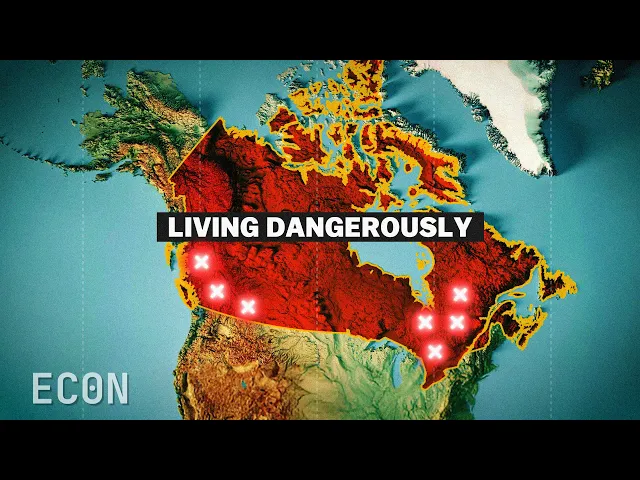
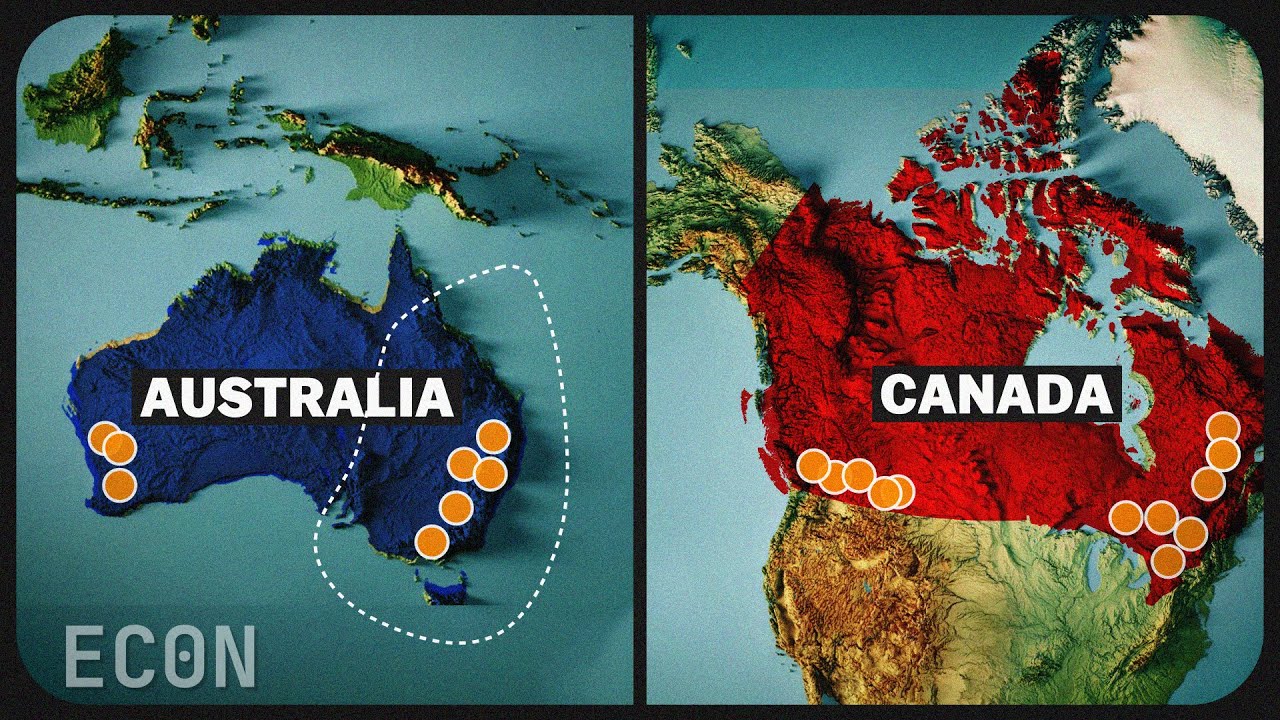
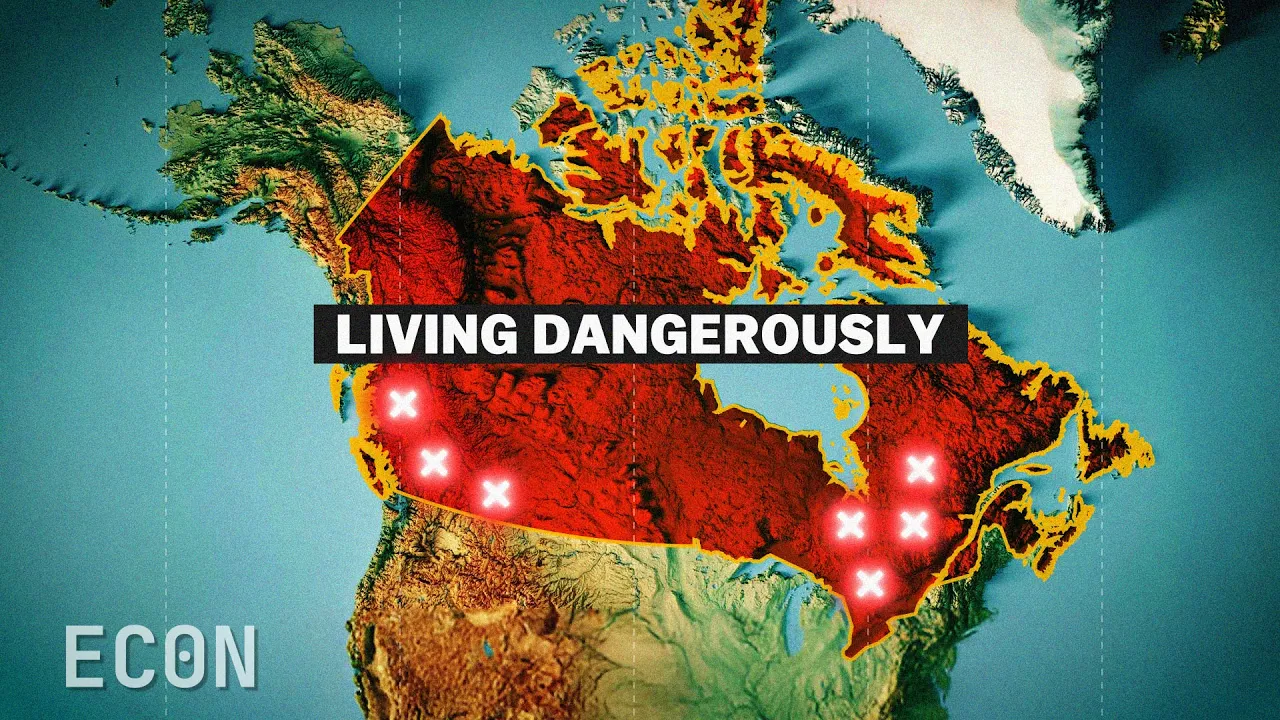
However, while the country is vast, the population is concentrated in a few areas near the US border, as much of the land is not very livable, despite being rich in resources, including fresh water, which is becoming increasingly scarce globally. To accommodate a growing population, more apartments need to be built in larger cities. This requires better regulation and limitation of immigration, along with improved enforcement.
A change in government is necessary to combat complacency and generate new ideas. Canada is trying to move beyond its reliance on natural resources; it needs redistribution and innovation to drive its evolving economy.