[Music] well I'm not sure what to make of amd's rdna for announcement to be honest the company has just announced the radon RX 9000 series for the second time headlined by the RX 970 XT and its $600 us MSRP there's some interesting features and Architectural details to explore but I'm a bit ify on the price based on what am has shown so far it doesn't look necessarily bad or like it's a huge flop but on the surface it looks to be more of a continuation of amd's graphics card strategy rather than a big shift towards providing better value well that be enough this generation certainly some interesting times ahead for the red team so the RX 970 XT will be available on March 6th at a $600 or $599 us asking price it comes with a fully unlocked na'vi 48 die featuring 64 rna4 compute units a boost clock up to 2. 97 GHz 16 GB of gddr memory and a 304 W TDP I wouldn't go so far as to say $600 is an awful price for this model thankfully they didn't go with something even crazier uh but it lacks a bit of wow factor fine okay sort of price but not great if you know what I mean to understand this value proposition we first have to look at how fast AMD claims the RX 97t XT is they say it's 42% faster on average than the RX 7900 gr at 4K though this overall average of 30 Games includes cludes both rter and R tracing titles if we look at the average of the 11 rter examples on the left we get a 37% uplift for nine rate tracing examples on the right we get an average uplift of 53% in other words rdna 4 is providing a bigger boost to rate tracing than raster as has been widely rumored compared to our Benchmark results a 37% improvement over the 7900 gr would make the 970 XT about 10% faster than the RX 7900 XT for rizing gaming with the 7900 XTX being 22% faster than the 7900 XT the 970 XT is therefore expected to sit between those two rdna A3 models roughly on par with or slightly below the RTX 57 ETI which we have as 14% faster than the 17900 XT at 4K for rate racing a 53% Improvement to Performance would place the 9070 XT about 10 to 15% above the RX 7900 xdx however this would still see it fall well short of the RTX 570 TI based on our current data this would place it slightly behind the RTX 470 super which is expected to be about where nvidia's RTX 5070 lands based on its Hardware configuration in the best cases we'd expect the 970 XT to possibly approach RTX 470 TI levels of rate tracing but in the worst cases more like a 4070 super but still around 20% slower or more than the 57 TTI at $600 us AMD appears to be offering RTX 570 TI rization performance at a 20% lower price MSRP versus MSRP and with rate racing performance likely 20% plus slower this is based on first party data which is likely cherry pick to some degree too but for the sake of this analysis let's assume it's spot on the 970 XT does have FSR 4 going for it and a few other features but a lot hinges on the quality of FSR 4 versus dss4 and the number of supported games theoretically 20% better value than the 570 TI for raster isn't awful but it's exactly what AMD has done previously with cards like the RX 7900 xdx versus RTX 480 and RX 7800 XT versus RTX 470 those cards were some of the better models in amd's lineup with around 20% lower cost per frame than their GeForce competitors and they hardly sold like hot cakes this is why we concluded earlier this year that AMD probably needs to offer more than that sort of value to entice current GeForce owners which are the vast majority of PC Gamers to switch over to the radon brand with their next upgrade this also doesn't factor in stuff like rate tracing which is usable in these sorts of tiers it's going to be dicey as to whether the 9070 XT or 570 TI offers better value for rate tracing and ultimately the radon model will be disappointing if those interested in rate tracing should just get the GeForce card as usual we're offering better Ruster value but worse rate tracing value resonate with Gamers again when they already did that last generation not sure the other point of contention with this price is the direct comparison to the RX 7900 XT while currently discontinued for almost the entirety of 2024 you were able to purchase a $ 7900 XT for $700 us with a period between October and December where the price fell to $650 this means that for all intents and purposes the 7900 xt's price was no more than $700 us with the 970 XT AMD is shaving just 14% off this price while claiming to offer around 10% more raster performance better R tracing and FSR 4 that would be for raster performance a 22% decrease in cost per frame generation on generation which is hardly Earth shattering again not horrible a little better than the generational value improvement from the 570 TI versus 470 TI super but it's not mindblowing there is a value ad here compared to the 7900 XT because of the gains made in other areas but AMD is heavily banking on those things rate racing FSR encoding quality instead of raw Baseline performance per dollar a potential Saving Grace here would be if RTX 570 TI continue to be in limited Supply and price more like $900 Us From amd's perspective uh that's a pretty huge gamble to be making because if Nvidia decided to increase Supply and make the 570 TI broadly available at the MSRP the RX 970 XT would be much less attractive at $600 for the 970x versus $900 for the 57 TI I think it would be incredibly hard to justify the Nvidia card but that Gap narrow substantially if Nvidia suddenly increases Supply overnight and the card becomes $750 which I certainly wouldn't rule out then we get to the RX 970 which aim to have priced at $549 and will also be available on March 6th this model is based on the same na'vi 48 die cut down to 56 compute units the Boost clock is dropped to 2. 52 GHz and the TD is lower as well just 220 wats however the 16 GB of gddr6 memory is retained which is definitely a good move I find the $550 price here a bit bizarre to be honest and this seems like a bit of a misstep from AMD similar to the 7700 XT versus 7800 XT last generation with the 970 XT slotting in 42% faster than the 7900 gr and the 970 at 21% faster than the gr these are amd's claims that implies that 970 is 15% slower than the 970 XT but the price is only 8% cheaper which makes no sense generally low spec cards should never be worse value than high spec cards at worst they should be similar value or ideally offering better value Instead This pricing suggests AMD doing the opposite and trying to upsell you to the $50 more expensive 9070 XT my initial reaction here is this card won't be very popular as a result with the vast majority of attention going to the ex model once again if we split out the rter and RT numbers AMD is showing a 19% Improvement in the rter titles on average and a 26% Improvement to rate racing a 19% Improvement to rter over the 7900 gr would mean the RX 970 falls short of the RX 7900 XT Performance Based on our benchmarking of existing cards it would likely be faster than the RTX 470 super aka the expected performance of the RTX 5070 may be by around 10% a 26% Improvement to rate racing would have it sit between the RX 7900 XT and RX 7900 XTX in performance which now testing would be around 25% slower than the RTX 470 super that that could heavily depend on the vram limitations for rate tracing certain titles because the AMD card does have more vram with a price tag of $550 this seems super underwhelming just a 20% increase in value compared to amd's own RX 7900 gr which also launched at $550 and relative to the upcoming RTX 5070 with its $550 MSRP we could be seeing just 10% better raster value and much worse rate tracing value yes the 9070 crucially comes with more vram at 16 GB versus 12 on the 470 super and 570 but is that going to be enough to convince the gaming masses I'm not convinced and it doesn't scream a must buy to me based on the performance claims AMD have made this card should be $500 US for example back when AMD launched the RX 7800 XT at $500 US its nearest competitor was the RTX 470 at $600 us the 7800 XT was not only a little bit faster than the 470 but $100 cheaper as well leading to 21% lower cost per frame in our day one review the RX 970 priced at $550 suggests to me a card with worse cost per frame than rdna A3 when compared to the nearest GeForce competitor that's not the direction we want to see so hope this model is much more competitive than what AMD have shown of course like with the 9070 XT AMD could benefit from increased Supply here as they've been shipping rdna 4 models to retailers for months now what we've heard is that retailers have significantly more stock of RX 9000 Series gpus than for some of the GeForce 50 Series cards so if AMD can actually hit $550 for all 970s while RTX 507s debut at say 20% above MSRP like the other Blackwell models AMD could benefit a bit in the short term how that plays out longterm as pricing normalizes not sure and AMD will struggle more if these cards aren't as good as they've advertised today let's put pricing aside and move on now to some of the other interesting things about rdna 4 firstly based on amd's performance claims the rna4 architecture is more geared towards higher resolutions than lower resolutions while the 1970 XT is claimed to be 42% faster than the 7900 G at 4K Ultra settings at 1440p it's 38% faster than the 17900 gr it's not a massive difference the relative uplift at 1440p is 3% less than at 4K but it's still important to be aware of obviously the huge and very important feature announcement AMD has made alongside rdna 4 is Fidelity effect super resolution 4 which includes an ml-based upscaling solution in my opinion the current state of FSR 2.
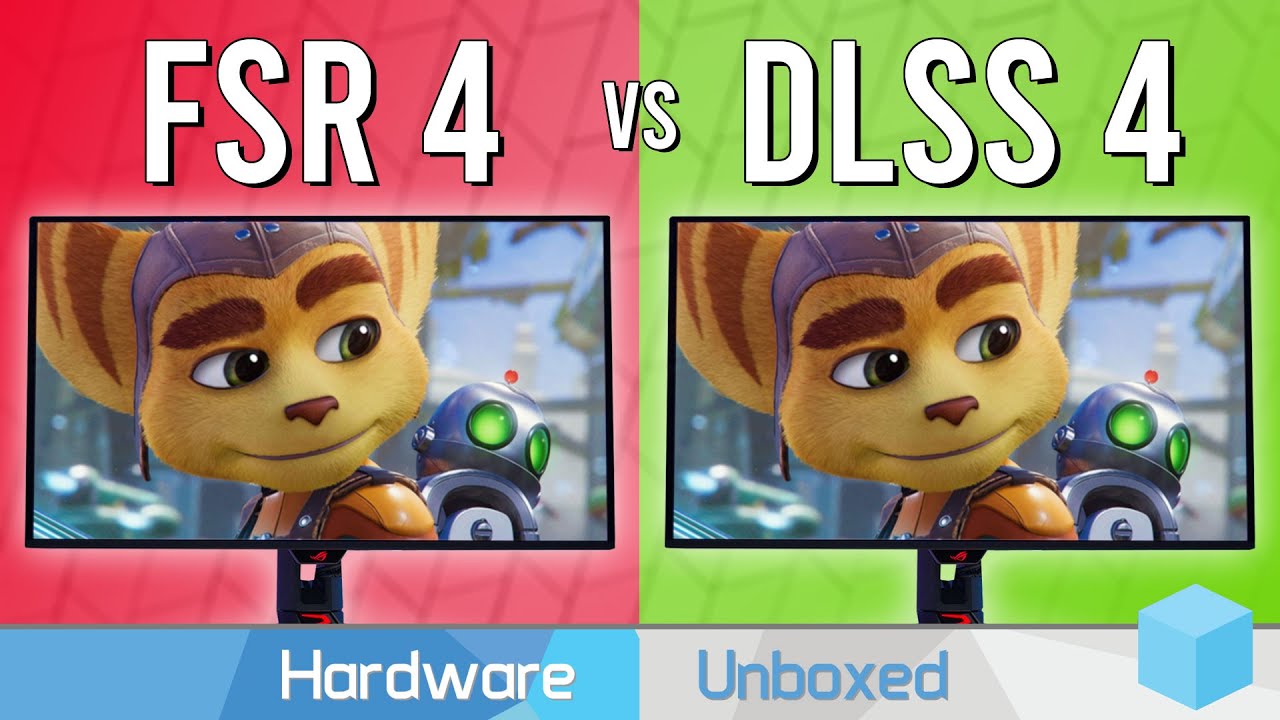
2 and FSR 3. 1 upscaling is not competitive with dlss 4 so to be competitive AMD really desperately needs FSR 4 and for FSR 4 to be a huge improvement over their previous upscales with an AI upscaling algorithm as part of FSR 4 they are in with a much better chance of being competitive now we can't take a deep look at FSR 4 until the review embargo for rdna 4 lifts and you can expect dedicated coverage after those GPU reviews but I've already seen FSR 4 in action at CES and can confirm based on at least that example that FSR 4 is a large improvement over FSR 3 . 1 in the example we saw at CES it was ratch and Clank Rift apart using FSR 3.
1 and FSR 4 performance modes FSR 4 was obviously much better at upscaling from the low render resolution used in the performance mode and this mode has historically delivered bad image quality with previous versions of FSR along with the announcement of rdna 4 AMD provided a few additional examples to us mostly still image comparisons showing differences in fine detail I don't think these are particularly great examples for overall image quality improvement so I'm just going off for now what I saw and showed in that CES FSR 4 preview I was very impressed with what I saw and I didn't think the FSR 4 performance mode was the performance mode until an AMD employee told me and then I confirmed it in the settings the big question that I can't answer right now and I actually don't know as of writing this script I can't test FSR 4 yet is how close FSR 4 gets to dlss are we talking DSS 2 era quality DSS 3 era DSS 4 era no idea really deers 4 does make some significant gains in reducing TAA blur and improving image stability so AMD have their work cut out for them to match what Nvidia offers I think for this one though there are multiple wins that AMD can achieve and the more wins the better the first win is a big increase to image quality compared to FSI 3. 1 and I would be shocked if they haven't achieved that based on what I've seen the second win is a big increase at lower and popular resolutions like 1440p and 1080p the third win would be making FSR or meet the threshold of usable which for many people would be dlss 3 light quality yeah maybe not as good as the latest versions of dlss but usable in a sense that the level of artifacting is low and acceptable which it often isn't with older versions of FSR lots of Gamers have enjoyed the experience with dss3 and wouldn't necessarily be upset with that today and the final win is matching or exceeding dss4 image quality which would be an outstanding result they are coming from a fairway back so I don't expect them to achieve all of these wins immediately but ticking off a few of them would go a long way to closing the significant Gap in UPS scalers which is a big reason Gamers flock to purchase GeForce gpus now the way FSR 4 works is interesting the new algorithm relies on fp8 processing which is a new accelerated capability in rdna 4 this new architecture also drastically improves the performance of other data formats typically used for AI like in8 and fp16 but it's fp8 that FSR 4 relies on as such FSR 4 is exclusive to rdna A4 graphics cards and won't work on rdna A3 at least initially now AMD are leaving the door open to create some version of FSR 4 that works on older Radeon gpus but the reality is that the current version of FSR 4 won't work so AMD would likely have to create a separate watered down model for those cards similar to what maybe Intel did with XS where the better xmx version runs on Arc Hardware and the lighter DP for a version runs on other cards that is not confirmed to happen with FSR 4 and may never happen the way FSR 4 is integrated into games at least initially is largely driver side FSR 4 hooks into the FSR 3. 1 API via the driver and replaces the upscaling pass with the FSR 4 algorithm whenever you enable FSR 3.
1 in a game this means that day one all FSR 3. 1 titles will be able to be upgraded to FSR 4 via the driver for games using FSR 3 or FSR 2. 2 or even some older versions they will need to be upgraded to at least FSR 3.
1 in the game to gain access to FSR 4 I'm sure there will also be a native implementation at some point but it sounded like day one that all FSR 4 titles are via this driver upgrade path similar to nvidia's override feature for DS S4 the driver upgrade feature just deals with upscaling though other aspects to the FSR family such as frame generation and anti-ag still require game integration and use the existing game integration from FSR 3. 1 so FSR 4 doesn't appear to be improving the quality of generated frames versus FSR 3 also frame generation is staying as single frame generation for now AMD are not attempting to match nvidia's multiframe generation feature with this release as for performance uplift AMD have provided this chart which has FSR 4 upscaling and FSR 4 plus frame generation the FSR upscaling mode used is the 4K performance mode now in strictly looking at upscaling AMD claiming the performance mode on average across these seven games will result in a 65% performance uplift over native 4K rendering in our recent dss4 investigation we found dss4 performance mode compared to Native TAA at 4K resulted in a 74% performance Improvement on the RTX 580 with that said there is some variance in these results for example at lower frame rates where the overhead of upscaling takes up less of the overall frame time and allows for a larger performance increase FSR 4 is able to provide more of a 2X boost Ratchet and Clank for example was exactly twice as fast in that game we found an 80% Boost from dss4 performance on the RTX 580 at higher frame rates in Ron zero Dawn remastered AMD claiming a 38% performance uplift which is very similar to what we saw from dss4 performance in that title so these are very promising performance results the big issue for AMD at launch will be game support while FSR 4 will be available in 30 plus games at launch including titles like Kingdom Come Deliverance 2 Spider-Man 2 and Call of Duty Black Ops 6 through the driver upgrade system this is still a relatively small number of games yes more games than AMD usually delivers with an FSR release but deal as is available in Far More titles today because Nvidia has used an upgradeable DSS dll for a lot longer so gForce owners can either use the override in the Nvidia app to officially upgrade over 70 games or use unofficial dll swaps to upgrade other dsus 2 and 3 titles upgrading the many FSR 2. 2 titles to FSR 4 will be much harder and this will create a huge golf between FSR 4 and dss4 in official and especially unofficial game support at launch again I think with FSR 4 game support AMD should be targeting a number of small wins over time having 30 games at launch including popular well receed titles is much better than the two unpopular titles like we saw at FSR 3's launch but creating an ecosystem where FSR 4 is widely supported will be a much bigger effort and it could be a while before AMD matches not only the quality of dss4 but its game support so hopefully AMD are truly investing big into upscaling here and are planning to enable that investment over a long period of time another eye-catching aspect of this launch were the claims that AMD are making around encoding quality which is not something we normally cover on the channel am's GPU encoders have been widely criticized for poor video encoding quality using popular formats and bit rates for game streaming leaving Nvidia as the Clear Choice for anyone that wants to use video encoding AMD are claiming with rdna 4 that encoding quality is much better and it's the examples they showed that were eye-catching AMD specifically focused on 1080P h.
264 and cod at 6 megabits per second a very popular setup showing a huge increase in visual quality in their example no idea whether this will actually be true in practice across a broad variety of scenarios but usually when AMD is talked about encoding quality it's been about say support for new formats like av1 with rdna 4 AMD are really focusing on gains that should apply in currently used real world scenarios which suggest they are much more confident in the quality of their encoder putting some numbers to this AMD ATT touting a 25% G in h. 264 low latency encode quality an 11% Improvement in hvc better av1 encoding with bframe support and a 30% boost in encoding performance at 720p I believe these mostly refer to vmf scores there are lots of other improvements to talk about here as well the ray tracing core features two intersection engines instead of one doubling the throughput for Ray box and Ray triangle intersections there's a new Ray transform block bringing some aspects of RT outou of shaders into the RT core the bvh is twice as wide and and so on lots of improvements to the r implementation here which is why rdna fors rate racing gains exceed the raster gains as for the compute engine there are lots of improvements here too then in addition there's a PCI 5. 0 time 16 interface and 256bit memory bus using gddr6 AMD claiming enhanced memory compression here plus you actually get 16 GB of vram which should be enough for a lot of modern games the display engine it's a bit of a mixed bag while it does support display port 2.
1 the capabilities relative to Rd A3 are unchanged with maximum bandwidth support of uhb 13. 5 instead of the full uhb 20 that is now being used on some 4K 240 HZ displays and is also the bandwidth that Nvidia supports with Blackwell HDMI 2. 1b is also included however AMD do claim idle power consumption is lower for multim monitor setups and video frame scheduling can now be offloaded to the GPU the die itself is also relatively interesting na'vi 48 is 357 mm of tsmc 4 NM silicon and it features 53.
9 billion transistors that is a 5% smaller die than nvidia's Blackwell GB 203 used in the RTX 580 and 570 TI But it includes more transistors 18% more which means the design is more dense unfortunately this means Nvidia are still quite ahead when it comes to area and transistor efficiency as the RTX 580 is likely to be around 15% faster in rization and possibly over 50% faster for rate tracing based on amd's RX 970 XT claims and all of that is with fewer transistors and a smaller die size however the TDP of the RTX 580 is 360 watts compared to 304 Watts for the 970 XT which is 18% higher though not necessarily representative of actual power consumption in games the 970 XT should be closer to an RTX 570 Titi with its 300 W TDP couple of additional things to Rand this one out AMD are not making a reference model of the RX 97 XT or RX x970 so all designs will be coming from Partners these Partners include Asus gigabyte powercolor Sapphire XFX all the usual guys there should be a lot of availability on March 6th as these cards have been ready since the start of January AMD are releasing a new version of their driver based frame generation ammf 2.