This program is presented by University of California television like what you learn visit our website or follow us on Facebook and Twitter to keep up with the latest uctv programs welcome to uh the first night in this next series of UCSF Mini Medical School um welcome back to um our returners and welcome uh to the new Learners uh we are very excited about this course you know the super big picture overview is where We'll actually consider um a doctor and a patient and then look into the science of the immune system what drugs may be
involved and the genetics um underpinning these sort of um disorders so we're very excited and we hope you are too so that's sort of the household um announcements and then I'm going to introduce to you um Dr gundling um she is an associate clinical professor of Allergy and Immunology here at UCSF she's the practice chief of the allergy Immunology clinic at mafit hospital um she did her undergraduate at Stanford then um worked for several years in the medical legal Arena and um then went to uh get her medical degree at the University of Rochester she
was the director of medical education at UC Davis for eight years um and is the recipient of numerous teaching Awards and tonight you will see why that is um she is well known for her work with residents and Students and um has also been been involved in um writing and studying uh the impact of alternative um medicine and um I will not take up any more of your time but would like you to join me in welcoming Dr gundling thank you so much all right good evening everybody even and welcome to not only our mature
learners but also to our are super Young Learners as well it's so exciting to have a broad range of Ages In our audience tonight my name is Catherine gundling and it's my privilege and honor to have you as a semic captive audience for the next 90 minutes to learn a little bit about the immune system and also to learn a little bit about what it's like to have a problem with the immune system so why don't we just go ahead and get started so tonight's presentation will be three parts the first part will be Reviewing
the basic concepts of the immune system and our learning goal for this first part will be to describe the essential purposes of the immune system in the second part of our talk tonight we will meet Elizabeth and our goal in meeting Elizabeth is really to learn what it's like firsthand what it's like living with a problem with the immune system because there's no better way to remember it than to meet someone who has it you know You think that you give these amazing lectures or talks when you're teaching medical students but I remember when I
was a medical student most of those faces of the teachers are long gone what I remember is the patience that they brought to the class and what they said about what it was like to have the illness and things that they could or couldn't do and to this day I remember them very clearly and so I think you're probably although I didn't tell her that I I think you're probably going to remember Elizabeth for a long long time after today the third part of our talk will be to apply Elizabeth story what has happened with
her to our new found knowledge of the immune system and the learning goal here is to understand which part of her immune system is not working quite right and of course no class would be complete without learning some essential vocabulary words so you'll get a little bit of vocabulary Along the way and your new vocabulary words will be in this sort of bright orange okay all right so that's the order of the evening now usually if you're trying to understand something or solve a mystery you sort of think of let's go to the basics who
what where when why and how so we'll do something like that tonight only not quite in that order we'll just mix it up a little bit and first we're going to address why why do we have an Immune system I'd like for anybody to tell me what do we need an immune system for anybody here's a a hand up there yes to fix whatever is wrong I love that broad answer so basically immunologists know and do everything right so that's not quite right but sometimes we like to think so yes yeah to protect us from
foreign substances so there are a lot of external threats that we can have that we're exposed to and the body the immune System has to decide is this dangerous and what do I need to do about it so name for me some type of external threat bacteria perfect yeah virus viruses yeah so infections so infections are one of the main reasons we have an immune system to protect us from that and I've got some cool slides of pictures of things that like to threaten Us in the upper leftand corner is a picture of ecoli you've
probably heard about eoli if you're unfortunate enough to eat a Piece of contaminated meat you can get a very severe infection with ecoli and if you're very young or very old you're even susceptible to death with infection with ecoli more commonly it causes bladder infections but it can wreak a lot of havoc in the body in the upper right is anthrax and many of you maybe not the youngest of you remember not too long after 911 somebody was mailing Anthrax of all things in envelopes or packages to other people why would you Do this inhalation
of Anthrax can be very deadly I'm not sure that mystery was ever solved was it um in any case um Anthrax is another example of an external threat it's a different kind of organism and helicobactor pilori down at the bottom is an example of an organism or we sometimes say bug that sometimes can live in humans quite happily and don't really bother us in some cases they may even actually help us but if you've never been exposed to it before And you get an infection with helicobactor pylori you can also get guess what an ulcer
and it causes ulcers in the upper part of the bowel in the small intestine and the scientists who discovered this no one believed them because remember 25 years ago everybody thought ulcers was due to stress right so patients with ulcers got referred to the psychiatrist so the guy who recognized this had to get a cup of helicobactor pylori and drink it and Prove that it caused ulcers which it did and I believe he won a big prize for having demonstrated that so let's look at examples of other external threats pollution all different kinds of pollution
can really startle the immune system and make it go into action okay so if you inhale a lot of polluted particles the immune system has to respond to that and sometimes it will do it very vigorously in a way that might actually be harmful for the body but It's the immune system that responds to the pollution that we inhale even when we're driving cars and we breathe exhaust okay you may or may not believe this one is it possible that this cute kitty cat or this dog might be a threat to you yes okay how
and how can how can exposure to these cute animals cause problems so hey fever type symptoms allergic rtis asthma type symptoms I have a friend who wound up in the Intensive Care Unit he was so allergic To cats and needless to say they were unable to keep their cat which was a big tragedy but this is just to let you know that sometimes furry warm little packages can actually be a bit of a threat to the immune system so this actually brings up a really important question why would the immune system even care about warm
furry little bodies and this is a very important question and it's actually the subject of our first vocabulary word and that is Tolerance okay bright orange tolerance that's our vocabulary word the immune system has to decide what's friend and what's foe okay so if your immune system is freaking out around cat dander or dust smites or a little bit of pollen that's not necessarily the reaction that you want your immune system to have right your immune system should say c dander who cares and move along and worry about something like Anthrax right you want your
immune system to be Focused correctly on the things that are dangerous to you so tolerance is very important and it's the subject of much ongoing scientific investigation right now how does any individual's immune system decide what to tolerate and what to be aware of what to freak out about doesn't really freak out too often though it's usually pretty controlled so there actually are are some internal threats that we need to think about with respect to immunity as well and here's One of them cancer can be a problem with the immune system you'll notice in Orange
our next vocabulary word which is apotosis now some people say apoptosis and you got to admit it's a lot more fun to say apoptosis than apotosis but really apotosis is programmed cell death and you see here in this slide that a normal cell that is born will divide and do its normal work and whatever it's supposed to do and then when its time is done and it's done All its work it kind of nicely involutes and does a nice little implosion if you will it's very neat and tidy and the immune system cleans that up
so when this cell is done with cell death there then you have this process of apotosis and it's a nice orderly internal way that the immune system cleans up things that are no longer needed inside the body when this doesn't work right these cells just keep replicating and replicating and Replicating and what's it called when you have cells that are replicating uncontrollably cancer okay so a problem with program cell death is one reason that we can get cancer okay failure of programmed cell death so that's one very important part of the immune system is to
perform a ptosis and make sure that all the normal processes of the body occur in the proper fashion now there's another role of the immune system internally that I want to Remind you about and that's just promotion of normal bodily function where let's say you get a cut on your skin why is it that you heal up it's because you have an immune system that's functioning okay if you didn't have an immune system that cut cut even a small cut could potentially become quite infected and kill you but it doesn't all of you have had
small Cuts or even large cuts and in general the immune system is very good at wound repair and tissue Cleanup so these are just some examples of the sort of broad variety of actions of the immune system and most of us know about and focus upon infections and that's certainly very very important but there are many other activities now if you did not have an immune system what would happen to you well within a very short period of time you would probably get eaten up and you would dry up and you would blow away okay
now if you were lucky enough to be Living in the highlands of Peru and you were very important someone might mummify you so that you could be found relatively intact many hundreds of years later but for most of us we would really disintegrate quite quickly and become part of this which I saw a picture of when I I was at a meeting in San Antonio last week and that is the great dust storm of 1938 in Texas and they had a picture there and I thought it was just amazing and mostly you know if our
Immune systems do not work we die we be go go back to the Earth and we become part of dust so on that humbling note let's move on okay where is the immune system okay we've learned a little bit about the immune system and why we have it but where is it located anybody have any ideas yeah a lot of different places and we've already got some hints and one hint is the fact that the immune system needs to protect us from external Threats right so it would make sense that much of the immune system
is in the border between the outside world and the inside world and here is a good example of that okay this little child might be doing something related to gums but in fact this kid is training his immun system okay and that is not a sterile item we don't sterilize our breakfast before we eat it right so everything that we put in our mouths likely to have some kind of dust or dirt or bacteria or Viruses but it doesn't bother us we don't die by noon time because of infection right so our immune systems know
what to do with things that sorry I keep bumping this the things that go into the mouth or things that we inhale so much of the immune system is very close to the out outside world to be able to process things that we might swallow or that we might inhale but there's something else about this kid that's really important that you can see Most of the screen and that's his skin you are right the skin is a very important barrier between the outside world and the inside World okay so what do we need to know
about that very briefly and then we'll come back to it a little bit more later the skin if I if you have a cut and you were to sort of slice it on the side looking at it from the side here's the top of the skin and here are the deeper layers of the skin and in this particular picture I think The author actually was trying to point out the vasculature so you have an artery that supplies blood to the areas of the skin and you have in blue here the vein where the blood comes
back but what you can see and what my super it guy added is lymph vessels and that's this yellow thing right here so that when you cut your skin there are a whole whole bunch of immune cells that are underneath the skin and they're kind of standing guard standing Sentry just Looking out for trouble and when they see trouble they communicate via these lymphatic vessels to cells deeper down okay so that's one example of how the immune system catches what's going on from the outside world that manages to get inside okay here's for the teenager
this is your toughest question of the night what is this it is a foot you are right okay so but when I look at this I see the immune system that is a really Good-look foot okay it's important to recognize that all over our skin we have healthy bacteria that help to protect us okay healthy bacteria all over the skin of our body so that if they're bad bacteria that we come in contact with they have to compete with all the good bacteria and you can be sure that if you did not have healthy skin
you did not have the normal good bacteria that you could have some really gnarly athletes feet and even worse okay so that's a Healthy foot but it also um helps us to understand that the outside of the skin is also an important part of the immune system with competitive bacteria all right so all that said that sounds a little confusing but in fact there are some areas of the immune system to focus on where there's actually more immune activity so let's take a look at the lymphatic system you'll not notice it's in what color orange
okay so vocabulary word Vocabulary term the lymphatic system is really where you have major sites of immune activity and here are just a few of them you're familiar with your tonsils right if you have especially when you're a kid you have those big old tonsils in there that's a good thing if you see a small child who is lacking tonsils that's a bad thing why because tonsils are lymph tissue tonsils are specifically loaded with B lymphocytes that help to provide protection to that Child and help that child's immune system to grow but as you all
know tonsils can cause problems too if they get infected too often or have other problems so the tonsils are an example of lymph tissue I'll mention the thymus a little bit later but basically that's a gland right behind the breast bone that's large when we're little and it gets little when we grow large is an easy way to remember it the spleen which is is generally a little bit larger than Might be shown there is under the rib cage on the left and any of you teenagers have you had to get the menitis vaccine yet
there's a menitis vaccine which a lot of you get when you go to college for this organism called meninga cacus and meninga cacus is one of the organisms that if you do not have a spleen you are particularly susceptible to dying from meninga menitis and so that's why many of you are vaccinated before before you go to College because that's a place where people tend to get exposed to that organism the spleen is important because it is really good at filtering bacteria out of the blood it filters organisms out of the blood in a very
efficient manner whereas some things that we'll look at later are more designed for tissue sites as opposed to screening blood and then we talked about the the gut and there are some lymph nodes called pyes patchers in in the gut and That's a center of lymph activity because we eat every day three meals that's a lot of bacteria viruses things from the outside world that we ask the gut to process so it needs to know what to do and in fact the gut is the largest immune organ in the body tons of lymph lymph nodes
and all different kinds of cells so you have billions billions of normal organisms different types of bacteria in the gut that we call normal flora that are there for a reason and We'll address that shortly again in a minute the appendix well we're still not quite sure about the appendix we know you can live without it we will come back to this bone marrow so I want you to keep in mind bone marrow okay all right now I want to see just a little closer up an example of what happens so what is Gray's Anatomy
anybody ever heard of grayy anatomy it's a TV show right what was it before it was a TV show it Was an anatomy you guys are so good it was an anatomy textbook and it's still a classic and this is a picture from Gray's Anatomy where you know close to 100 years ago they already understood that these lymphatic vessels drained to these lymph nodes and you can see how they kind of congregate right around the neck here where we get exposed to a lot of things from the outside world so even in Gray's Anatomy they
have this nice little illustration if you were to peel Off all the skin this is muscle around the eye and the various muscles of the scalp and head and you can see a lot of lymph nodes there so that's an example of the lymphatic system okay let's move along when when do we get an immune system that's a really good question when do we get an immune system well we do know that the immune system starts well before we're actually born and there are influences within the uterus in the maternal womb that can probably Have
profound effects on the entire life of that individual so not much you can do about that you know I mean your mom did what your mom did but that's also an area of active research are there things that Mom can eat or not eat to be exposed to not be exposed to um lots of questions that we have about what can Mom do if anything to ensure the best and healthiest immune system of her Offspring and from the moment early in it's not clear exactly how Early but when you're a fetus and when that immune
system starts every moment the rest of your life until the day the moment you die that immune system is working okay so I know a lot of you teenagers think that you work really hard and that your schedule is very hectic but you're not working every second every hour every day for your entire life you get to sleep sometimes right not your immune system even when you're snoring away or having a good nap Your immune system is working hard and always on guard so I hope I've impressed you with how hard that immune system works
throughout your lifetime yes ma'am the question is when does the immune system actually kick in and how do you tell that's not really well defined yet but we know it's actually pretty early it's not as easy to tell in for the immune system as it is for something like the heart because when you look at the first ultrasound you can see that Little tiny heart it's harder to see immune cells at work so we know that it's fairly early I can't give you an exact time um there are some pediatric immunologists who who do study
that so we're learning more about that all the time but it is early um within the development of the fetus okay all right let's keep moving along here we've got a ways to go next question is what who okay you guys are good okay so who has an immune System we we all have an immune system okay every one of us has an immune system and for the most part our immune systems are very very similar now there's no doubt that during our lifetime we have a lot of environmental influences that can kind of change
our immune systems and change the way that we react to the outside world so the environment is important but we're all born with similar types of immune systems now the other thing that's Important to realize is is that all vertebrates have immune systems and many of them are very much like ours there are whole floors of Laboratories here that can study the immune system in mice for example now thankfully we're not identical to mice there are some differences but there are um animals who have many similar things about their immune system that humans have and
that's a little bit humbling and even invertebrates animals that don't have Backbones and have been on the planet for a long long long time they have immune systems too although there are some fundamental differences between the immune systems of humans and the immune systems of some of the animals and especially animals we're less closely related with maybe um fish and um say reptiles there are some significant differences okay so what is this oh somebody is really good this is O'Hare um the Chicago International Air Port so why do I have a picture of this if
you think about an International Airport it is just mindboggling you have thousands of people who arrive every day by bus by car by plane by taxi cab by limo and all of these people arrive at the airport and then they might check their baggage they they go through security right everybody's checked at security and then they might go get something to eat they go to their terminal then they hear Their flight has been delayed and it's at another terminal they go somewhere else and then they take off maybe a short distance or far away and
then all the planes come in if there's a bad storm they change the whole schedule around they adapt and something else happens the complexity of an international airport is so impressive to me but let me tell you this airport has nothing compared to the immune system the immune system is Mind-bogglingly is that a word mind-bogglingly it is now more complex than Chicago O'Hare International Airport okay it is a very complex process so what I get to do now is in the next 10 or 15 M minutes summarize um key aspects of the immune system so
that when we meet Elizabeth we'll be able to think about important parts of the immune system that we've just learned about okay so what are some of the key players in the immune system Well there are what we call Sentinel cells in tissues so as we talked about before if you have a cut in your skin there are cells of the immune system there waiting and their purpose there is to identify something in general and to wave that sign anybody SE Lost in Space in the early 60s I was of course way too young for
that but you know there was danger danger the robot always said the the the earlier R2-D2 and so some of these Sentinel cells say here's a form foreign substance this is dangerous we need to act okay they're Sentinel cells they're upfront they're like the security guards but they do a lot more than than what we might think circulating cells examples might be neutrophils monocytes e eosinophils and lymphocytes and we're going to cover um a number of these in more detail in just a minute and then tissue cells well you wouldn't think That actual structural tissues
in the body would be involved in the immune system but in fact they are there are cells that are just staying in place and they're part of the body that are nevertheless involved in immune responses so when I say that the immune system is almost everywhere in the body I truly mean it with all different processes going on and so it's very very complex but let's take a little closer look at some of these Cells so stem cells are the baby cells and the stem cells from remember that picture that had the bone marrow okay
that's where the stem cells come from so the stem cells have a choice they can become myoid cells of the lineage lineage myoid cells and divide um mature rather into any one of these cells following the arrows okay or they might decide to mature into the lymphoid line and the lymphoid cells become t-lymphocytes socalled because those Cells mature in remember that thymus I talked about underneath the breast bone on the lymphatic system picture there was a blob right under the breast bone there the thymus is where t-lymphocytes mature and if you want to use sort
of a military analogy the T lymphocytes and the lymphocytes in general are kind of like Generals in the military they make executive decisions about what to do the B cells generally mature in the bone marrow but they also have much more Maturity within the tissues and the lymph nodes I showed you some of those pictures of the lymph nodes the B cells are very active in the lymph nodes and that's where T andb cells talk to each other we'll talk about that a little bit more NK cells natural killer cells I'm not really going to
address those very much tonight we used to think that natural killer cells were predominantly part of what we call the innate system um the innate system is what acts first And we're about to talk about that but it turns out that in recent years we've learned that the natural killer cells which will kill you unless you convince them not to okay so they're automatic Killers unless you instruct them not to give them the right signals they actually are very important with maybe even a little bit of memory so the cells are quite complex but we're
going to take a little bit closer of a look at some of these but we're going to look at It specifically in the context of infection okay because we've talked about program cell death and cancer we've talked about cleaning up wounds and all sorts of things but to sort of Give an example we'll talk about infection specifically okay different types of infection let's think about viruses bacteria fungi worms parasitic protozoa there these are just examples of different kinds of organisms that can be an external threat to us that might Want to eat us or devour
us or live in us or in some other way um wreak havoc with our bodies and so the immune system responds in a couple of ways innate immunity is the in general kind of the early response where you've got those Sentinel cells right up front that recognize that there's an Invader okay and they respond the Adaptive or acquired immunity the adaptive immunity is the subsequent response and what's really neat about the adaptive immunity Is that it responds very specifically to that organism Okay so um what I one of the things that I wanted to mention
before looking just a little bit more closely at that is the general time frame the innate immune system takes place in about oh within immediately to about four hours where that initial recognition occurs danger danger something's going on we need to react to this okay then for the next four to 96 hours or so there are some Other signaling going on and these cells signal the lymphocytes and they give them the general signals about what is happening and they present evidence of this foreign Invader and then those lymphocytes make decisions about how to respond but
it can actually be days before you get the really specific response exactly for that particular organism okay so you get a general response to begin with and then a more specific one later on so let's take a Brief look at some of the ways that we have of battling infectious organisms well one might be a mechanical or physical barrier what's one physical barrier we've mentioned already SK the skin very good but there are other barriers as well let's say you happen to swallow a nasty bug that wants to give you a gastroent gastroenteritis well I
guess neuro virus is the popular one right now right A lot of people are getting infections and nausea vomiting Diarrhea um with this particular kind of bug so if you think of what it has to survive to do its Duty it's a lot even if it manages to get past what's going on in the throat and the saliva it has to mix with and then even if you swallow it and it gets in the stomach your stomach is turning things all around you swallow how much mucus do you think you make and swallow a day
a liter at least a liter maybe more than that sometimes 2 liters depending on what's Happening so You make a lot of of mucus and saliva and you know that when you eat things you produce saliva right and then you swallow it so this poor bug has to compete with all that mucus and saliva it's being churned around I mean it it must be kind of an uncomfortable ride going down there so there are chemical barriers as well which would be acid the the stomach has a lot of major acid in it and a lot
of bugs can't even survive that okay so that's another challenge That a bug has to overcome um microbiological competition I metion mentioned that you guys really are just to quote one of my colleagues Homer B you are really just munib buses for bacteria and various organisms because we are loaded in the gut especially with billions and billions of bacteria and any infectious type of organism has to compete with all that so you can imagine how difficult it would be you get down there and all of a sudden you and and a Billion of your closest
friends have to um you have to compete with all of them to be able to try and actually infect your host the complement system very briefly is a part of the immune system that kind of tags The Foreigner okay so I would put it like a red tag on that particular bug and that gives a signal to other parts of the immune system to kill it deal with it okay and then there's another part of the immune system we're still learning so much About tolllike receptors tolllike receptors also are part of the innate immune system
at the front line and they just recognize patterns so you know in World War II if you were an American and and you had an American Uniform on if you saw someone else wearing an American Uniform you would assume what you weren you wouldn't want to shoot that person right you would want to say you're okay I'm going to move on that's an example of tolerance I recognize you you're okay I'm going to move on but if you were an American Soldier and you came face to face with someone wearing a Nazi uniform your alarms
would go up and you would say I'm I'm at risk here I might die I've got to take care of this I've got to handle this so I wouldn't know or that Soldier wouldn't know the other soldier's name he wouldn't know where he was from he wouldn't know his so he wouldn't know the details about him but he was he would know that he was wearing The wrong kind of uniform and I need to get help here and that's an example it's really simplified of what toll like receptors do so you can see there are
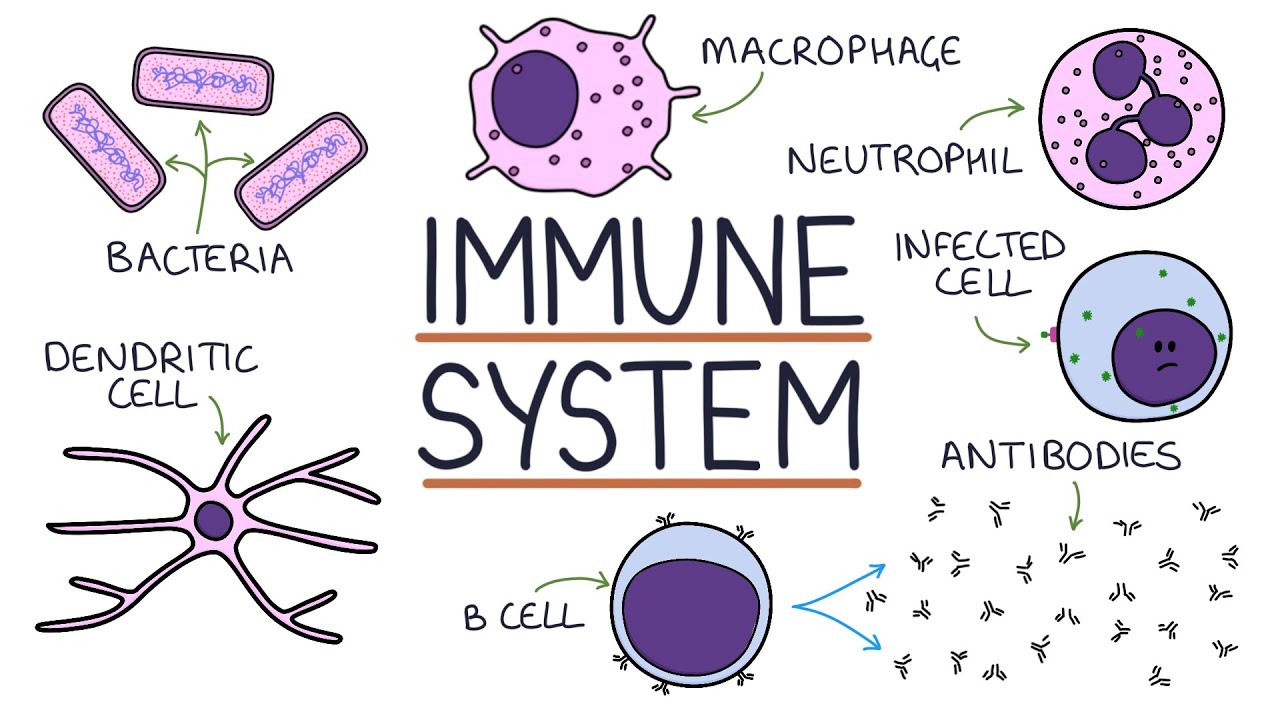
all these different ways and this is just some of them that the innate immune system upfront deals with unwanted bacteria and other types of organisms one more thing fagite phagocytosis your next vocabulary word phagocytosis comes from the roots to Devour cell and process of okay so if I'm a fagite and I showed you some of those cells on that cell line before on the right hand side like neutrophils and macrofagos they're examples of fagos sites and if I'm a fagite I come in contact with you and I don't like your looks what do I do
I eat you okay it's as simple as that and I eat you and then I process you I chop you up into little bits I process you put you Down the assembly line and then my plan is going to be to present a little piece of you along with a self recognition to maybe a lymphosis is me don't kill me and this is a piece of this little organism that I ate what do you want me to do about it okay so that's how some of that communication occurs so phagocytosis is for ingesting things that
the immune system doesn't want to have and I've got some cool pictures Here for you this one is actually from a mouse and you can see that this maccrage one of those cells that we were showing is actually putting out these kind they're almost like hands it's sensing its environment if it finds something it doesn't like it's going to bring it in and it's going to ingest it okay so it's just to show you it's not just a little round blob like you might see in a textbook these are very active um cells and here's
another that's really good This one is remember we talked about Anthrax at the beginning this is a nutrifil here in yellow that is starting to consume Anthrax okay you see that so this is one of the ways that we can address Anthrax but nevertheless even though we've got a good immune system Anthrax can kill a lot of people so these cells are very active and that term is phagocytosis okay and I have some something special for you tonight and We'll see if this video will come on which it should and this is an example from
um David Rogers who actually filmed this quite a long time ago now he's from Vanderbilt it's on YouTube it's much better than any video game you can go in and watch nutrifil consuming bacteria okay and here's an example of that so there's the neutr it looks like this little cluster of bacteria is running for its life it's running it's actually not running but it kind of Looks like that so the neutrophil is sensing it because the bacteria is sending out almost a scent that it detects and then it engulfs it okay yay Victory okay so
that's an example of Phagocytosis in action pretty cool huh okay and beyond all of that you have something else that is very important in the process of these initial stages of immunity and that is these cyia cyia are hairlike Projections in this case from an electron micrograph of um the the trachea which is the large part of the wind pipe and these hairlike projections move constantly like this and so if you inhale particles or you have particles that you don't want there these cyia continuously point the way to the exit for all of these particles
okay so this this way you want to come out this way so these cilia are very important to help move things to the exit door rather Than letting them get deeper into the body I hope none of you smoke and the reason why is because what correct if you smoke you destroy your cyia so you know after you hear for years people who smoke they start to start they hack and they start getting all this flim and you can kind of hear them coughing up part of that is because they can't me that mucus and
flam anymore because they've destroyed the cyia okay so for several reasons the Cyia are important and it turns out we're learning that the cyia are not just mechanical they actually have immune properties too so even the cyia have specific immune properties that help in the battle against infection the question is does damage continue even though you stop and in general if you stop smoking the destruction slows down and stops okay and that's true for a lot of the problems that you have with the lungs with smoking um if you stop Smoking um you do have
an well you have an increased risk of lung cancer if you smoke but when you stop as time passes that risk of developing lung cancer decreases over time you grow new Celia do you grow new Celia I don't think so you can correct me if I'm wrong but I don't think so so next we talked about all of that was innate immunity things that happen right up front let's talk very briefly about acquired immunity and And with acquired immunity this really is the subsequent responses which are more specific so it's not just recognizing a uniform
but knowing exactly who your enemy is okay let's go back to those cells that we looked at before and what you saw a few minutes ago was a nutrifil in that video that consumed staff orius was that particular organism macrofagos also can um consume them and actually the myoid line is also what produces the rth ites which are red Blood cells not talking about those tonight now let's talk about the innate immune system and that really focuses on lymphocytes and specifically tonight very brief words about T and B lymphocytes so we've got a couple more
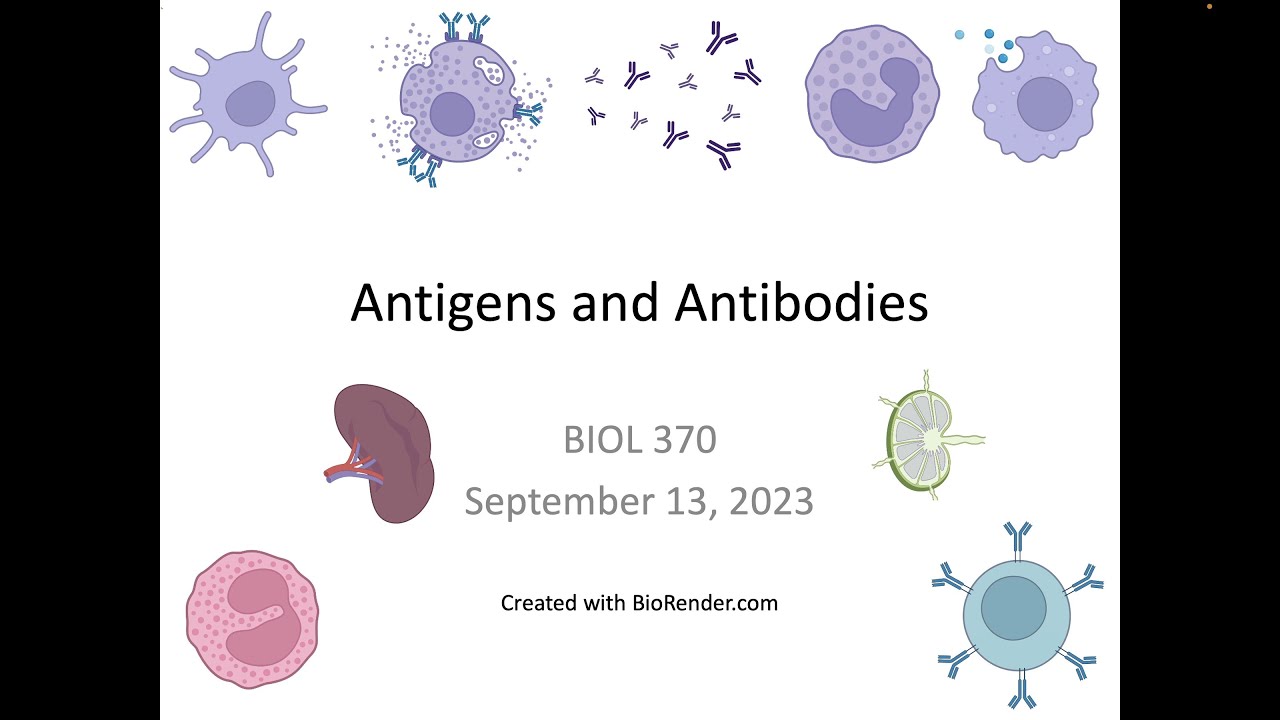
vocabulary words and those are antigen and antibody okay so when I'm talking about a specific immune response this is a really specific response so an antigen is a substance either within or outside the body that triggers an immune Response and in particular causes the production of antibodies okay so this is going to seem a little circular what is an antibody an antibody is a protein it's also called an imunoglobulin so if you've heard the term imunoglobulin that's another word for antibody um this is produced by B lymphocytes in response to very specific triggers foreign substances
or sometimes you might be familiar with the term autoimmune disease sometimes we actually Make antibodies against ourselves that's when you have failure of Tolerance remember we talked about tolerance you should be able to recognize yourself and not attack yourself but for reasons that we don't yet fully understand sometimes our immune system attacks ourself and we can have problems with autoimmune disease thyroid problems multiple sclerosis lupus those are all examples of autoimmune disease so let's um talk About antibodies which are able to identify and we'll say neutralize their target okay so antibodies are very important and
one of the important things about antibodies is that by the time you're in middle life how many antibodies specific antibodies do you think you might have there there's there have been estimates about this so think about how many things your immune system has responded to remember when I said it Works every second of your life that your immune system has responded to and said I need to make an antibody against this to protect the body we're estimating probably 10 to the 9th or 10 to the 10th billions and billions of specific responses and antibodies and
we can respond to them that precisely so in this slide an antigen which let's say um in influenza okay you're exposed to influenza or maybe there there might be a better example if we're talking about An um an organism that gets consumed into an antigen presenting cell which is like the neutrophil or the maccrage so probably better to take a different organism but for that example the organism is consumed processed and then presented to one of those t-lymphocytes and that t one of the generals of the immune system then makes decisions about how to respond
to it depending on what kind of organism it is so that Lymphocyst or whatever different kind of organism it might be that decision is made in the end analysis and what we're going to be looking at tonight with Elizabeth is the production the communication to B cells to please produce antibodies specifically against this organism and so the B cell then matures and the B cell then ends up producing antibodies specific for that exact bug okay it's a pretty cool system so what is an antibody look like well Obviously it doesn't look exactly like this but
the point here is that this business end of this whole antibody is completely specific for only one organism so if if it's influenza there is the influenza antigen and here's an antibod that on the business end of this organism will only react to influenza it's that specific okay it's just amazing and I have a picture here for you a close-up picture of a lymphocytes lymphocytes are busy Inactive all the time so this is what a lymphocyst up and all of this part of the lymphocytic active this lymphocyte on the surface of it but it has
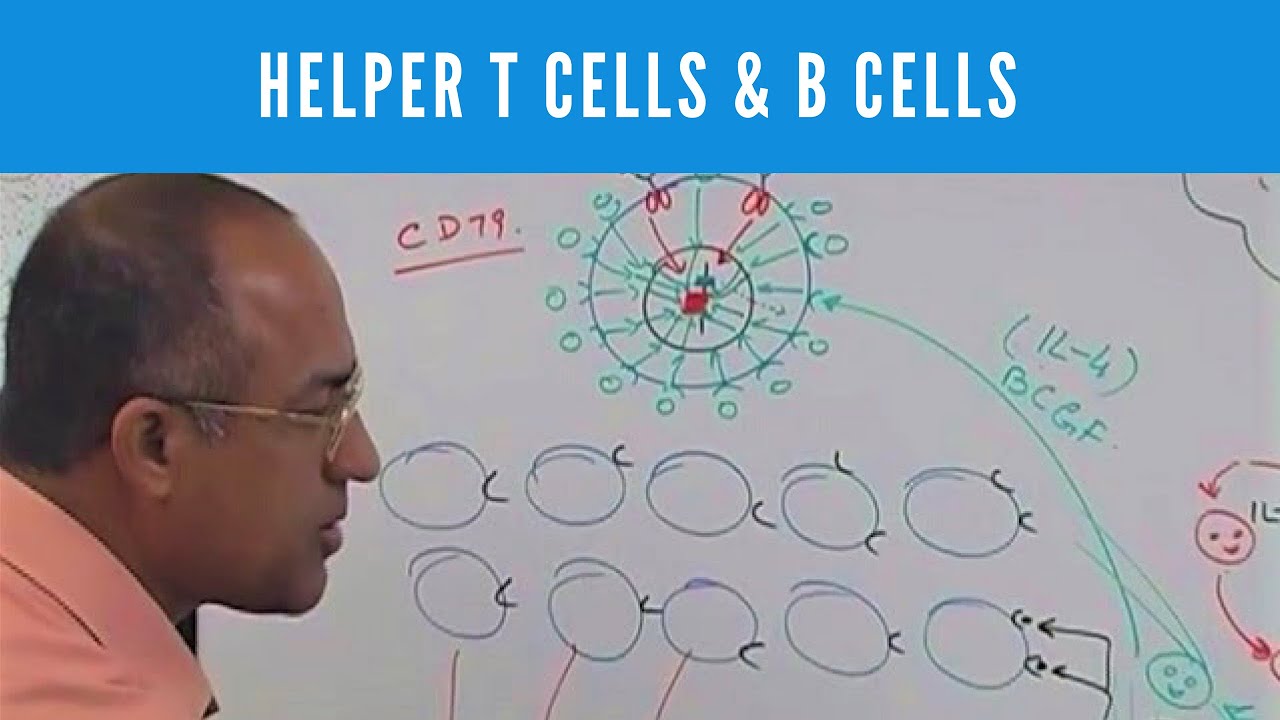
to go right up to that B cell and we actually can get videos of it I I don't have one for you tonight but they actually come right up to each other and they talk to each other and then they kind of communicate and connect and they have things that actually connect to each Other to send signals yes yes so here's a lymy the one that says T thank you for asking is a t lymphocyte and the one that says b is a b lymy t is a another immune reaction and here this lymphocyte cells
another type of lymphocytes that mature and have very specific reactions depending on the organism that's how they make the decision um this was uh the blood cells and here you can see a a doughnut that it's very flexible and That allows it to go into really narrow capillaries even into the skin so it's very flexible and bendable and there are other cells in the blood also some platelets that are kind of sticky and they allow for uh proper clotting but this is just an example of how busy it can be in the blood with all
different kinds of cells and activity okay so we're just about done um so in summary the lymphocytes after they identify more specific Al what the Invader is the Lymphocytes then generate a specific immunologic response that specifically and maximally targets the pathogen okay so lymphocytes are very important to orchestrate a very specific immune response so they're really important so did anybody get an influenza vaccine this year yeah so probably most of you had a flu vaccine this year and so guess what's happening when you get a flu vaccine vacine with the flu vaccine where do you
get it usually in the arm Right under the skin so what happens when the immune system sees that vaccine that gets injected there are Sentinel cells right we've talked about Sentinel cells that say ooh danger this looks like influenza even though it's not it fakes the immune system out and those danger signals send a message eventually gets to the lymphocytes usually in the lymph nose but can be other places the lymphocytes then send the signal to Produce ultimately those antibodies through the B lymphocytes and so the next time you are actually exposed to influenza what
happens your immune system doesn't have to wait four five or six days to make that response from the beginning your immune system is primed you've already prepared antibodies that are specific for that kind of influenza so you're ready to go okay so that's an example of how the immune system can respond with a vaccine All right so it's time to meet our patient why do we need to take vaccines every year that's a great question for the influenza and the reason for that is that every year um scientists around the world look to see which
strains of influenza are circulating because some years there are many different kinds of influenza and some years some are circulating and some are not and so they make an educated guess based upon what they see in other parts of the world as To which type types of influenza they think will be showing up in the United States each year sometimes they're really right and sometimes there are new strains of influenza that come along so if we're lucky and this year we were pretty lucky the um vaccine was pretty much on target for the type of
flu that came around this year but that's a great question because it reflects the fact that there are many different kinds of influenza but how many times in your Life do you get a measles vaccine not very often and your immune system has long-term memory after you get that vaccine can remember it a long time but influenza there are different strains that look a little different every year okay let's move on and have Elizabeth come on up I'm going to have Elizabeth stand right here and I'm going to um take a place right behind the
podium and um Elizabeth um is a patient of mine in clinic and she's just a beautiful Delightful young woman who um is such a pleasure to work with her and she has a condition called common variable imuno defici which is a horrible name um but it is a deficiency of immunity that has some specific manifestations and I thought it might be um helpful to the audience and helpful to me to learn more about Elizabeth by asking her a few questions and so um Elizabeth was you were diagnosed with this immune deficiency at what age I
was seven you Were age seven okay and what was was what did you first notice what do you remember about that time um well and this is kind of from what my mother told me as well because I was born healthy uh no problems I had normal vaccinations about the time that I was 3 years old I started to get really sick um I would actually go from specialist to specialist uh one doctor suggested we take out part of my lung I had my tonsils removed I had my adenoids Removed I had tubes my ears
I had ear infection after ear infection cough like just horrible coughs um it wasn't until I was about 7 years old that I went to Children's Hospital in Dallas Texas where I was finally diagnosed with common variable immuno deficiency okay and so were you were you missing a lot of school at that time um I don't really remember I don't think I did but if I I may have I just always remember being I I was home I remember the summer before I was diagnosed I got really really sick and I had to stay home
from Camp so I was reallyit about that but um no I I mean I I functioned like a regular kid I just was sick but it was a sickness that was unexplained okay and so what kind of infections um you mentioned that you had ear tubes so you were having problems with ear infections I had a lot of ear infections very painful ear infections I do remember that I I I would be crying um My mom she just she's like oh my gosh I can't I cannot help you I don't know what's wrong uh lots
of ear infections um lots of throat problems I was just always sick was really I um I mean this is kind of going into family stuff but um my dad had leukemia and at the same time I was actually seeing the same doctors as he was seeing because they still didn't know what was wrong with me so yeah that was problem and so um so you had sorry Go ahead yeah so I'm going to repeat yeah and and just to let you know I'm repeating your questions because this is on videotape and they can't hear
you but um the question is related L to to lab tests are there lab tests that can be done to detect this and the answer is yes but one of the challenges is that most doctors have not had training in this area there aren't that many people who specialize in clinical Immunology or problems with the immune system and so Most doctors don't either don't recognize it or they don't know what to do about it um and so but when you do suspect the diagnosis there are some specific tests that you can order and one of
them is gets right to the heart of what this gentleman in front was asking about and that was the antibodies we can measure the level of the antibodies or lack thereof in Elizabeth's immune system and I think that's probably what they did at that Time because we were able to measure antibody levels and with this particular condition um people with cvid may make antibodies but they may be really low and some people make almost no antibodies whether it's IG IGG IGM or any of the different kinds of antibodies so yes that would be the first
place to start would be to measure the total antibody levels and then there's some other tests that can be done as well looking at a functional response so Remember how we talked about the vaccine say an influenza vaccine and you can be vaccinated and you get an immune response that helps you for the winter we can actually use vaccinations like influenza vaccine or say the pneumonia vaccine which some of you probably had called numax if you've not had that before we can measure your antibodies specific to Numa pacus pacal pneumonia and then if they're too
low inappropriately low we can give you the Vaccine and then 3 to four weeks later we can measure it again and we expect a certain response we expect we expect performance out of the immune system and we can measure that and so probably what happened with Elizabeth at that time was that that she finally ran into somebody who said W she's having way too many infections this is different than other kids what's wrong here let's check her antibody levels and what happened so um a normal is between 800 and 1200 for the IG for the
IGG mine was 40 so they knew right off the bat that I was really sick and uh they gave me the treatment which is IVIG and I have had that ever since 1990 and for now I'm supposed to get it once a month for the rest of my life so what is intravenous imunoglobulin IVIG remember how I told you that another name for an antib body is imunoglobulin so we can actually if Elizabeth doesn't make IGG antibodies And she said her level was 40 which means pretty much that her immune system is not making antibodies
in our lab system and normal range for level of antibodies in the specific quantity that we look at would be somewhere between about 650 and 1500 somewhere in that ballpark and when she was first measured she had essentially unmeasurable antibodies now there's another antibody that Elizabeth doesn't make either as I recall you don't make much in the way of IgA antibodies and remember I told you that those IGA antibodies are in the gut and they're very important for processing immune function in the gut okay so now she's not making IGG IGG is very important for
respiratory infections IGA which is in the gut you can start to imagine some of the problems that people have when they don't have these antibodies so Elizabeth received the treatment of IGG infusions we can give people infusions of IG Antibodies and that's called intravenous imunoglobulin it is Poss possible to get it um as an injection Under the Skin if you get it by the vein you get it usually once a month sometimes every 3 weeks depending on how fast your body breaks down antibodies normally um but sometimes for reasons that I won't go into tonight
you can actually get it under the skin but if you do it that way you have to get it once a week so there are different ways that you can receive These infusions of antibodies and that's what Elizabeth has been doing for that time so once you started on the intravenous immunog glob did things change and if so how well tremendously um something that I forgot to mention was that um my doctors would prescribe U medicines um everything from Augmentin uh just any antibiotic Under the Sun and for a 5-year-old to take a horse pill
is very daunting and the doctors would yell at my mother and tell Her your daughter is not taking her medicine this is awful if you don't give it to her she's going to get sicker my mother gave me the medicine I took it I just they didn't realize what was wrong um since I've received IVIG um I if I take any sort of antibiotic anything of that M nature I can feel 10 times 50 times better than what I initially went through as a child so it definitely does help out a lot and it's made
my life style a lot easier to To take in so but she still has to deal with receiving these infusions once a month and of course you know she kind of has to plan her life around that but Elizabeth is not to be deterred Elizabeth is applying for nursing school she's an a student and she finds out next month Yeah mid- March and the schools you've applied to are uh University of San Diego um lyola and uh Union University in Tennessee so just Obscure all right so I can hardly wait to find out where Elizabeth's
going to nursing school tell us what it's like to get the infusion what happens when you go to get an infusion um so it's I usually have to set aside two hours of a day um what's recently happened is that I have a nurse come to my house so that makes it a lot easier for me because I don't have to plan my day around going to the hospital um I get he sticks me in I sit there I get my medicine and I have Had some bad reactions to IVIG but those are few and
far between and because I get it all the time I don't really get that sick um I get a little rund down but obviously your immune system's just kind of kickstarting so you're not you're not always going to feel that great after your treatment but always after the next day I'm I'm back to normal doing working I I don't miss work for being sick I don't miss work for um going to get my treatment I just Consider it just part of what I have to deal with so it's just one of those things that I
go and do so the term common variable imuno deficiency really is a term that was given to this condition a long time ago because we didn't really know what caused it and we'll talk about some of the genetic um underlying causes later on but um it can manifest itself in in a variety of different ways but for Elizabeth it's been predominantly these respiratory Infections so she had to deal with infection of the sinuses infection with pneumonia and different types of infection of the ear res really respiratory infections and so tell us um has anybody else
in your family had this condition or been diagnosed with it no one um they do think that my problem is genetic and the closest that they found is just my father who uh was had been diagnosed with leukemia but still no one in my family has what I have um so that Was also something to kind of deal with because we didn't have to we didn't have somebody to work off of so um at this point so far it's just me yes question okay great question the question is for each type of antibody do you
give a different infusion and the answer is no um what happens is you know how people donate blood at the blood bank and some some people donate um in a different kind of process where the blood bank can actually selectively take antibodies out Of those blood donations they take the antibodies out and Elizabeth when she gets an infusion actually gets an infusion of donated antibodies from a lot of different people okay so Elizabeth is getting the benefit of many different people's immune systems and that's really nice if you could take the immune systems of a
whole bunch of people and be protected by that her antibody repertoire if you will is much broader than mine because she's getting Antibodies from a lot of other people infused into her so this is a blood product um but thanks to the donors who are willing to do it she's able to receive these different types of antibodies but it reflects the entire repertoire of very specific antibodies whatever that individual has circulating around so they get a lot of antibodies of all different kinds yes so the question is is about um autoimmune disease and autoimmune disease
can occur In patients with common variable imuno deficiency but not as a consequence of receiving other people's antibodies it can be one of the manifestations of this particular disease and so we'll talk about that in just a minute when we go back and look at the exact part of the immune system that's involved with with her disorder but no receiving the antibodies which is a very interesting and good thought receiving the antibodies of others um is Not associated with her having a higher chance of developing autoimmune disease we're actually looking at whether or not maybe
she would be less likely to get it so we're following a lot of patients over time to see if it might be associated with a decreased incidence but of course that's hard to do because I don't have a placebo patient I'm not going to tell some patient with cvid sorry I need to compare you to Elizabeth so I'm not giving you immunoglobin we Can't do that um but these are all great questions there's a question in the back I apologize the light's a little bright yes sir well my sister wasn't either my sister was not
either and uh she doesn't have what I have so and it's a great question um you do get um a whole host of antibodies from the mom when you're in the womb so the first month of your first six to eight months of our lives our immune systems are not mature enough To actually produce the antibod IES so we receive antibodies from our mothers through the placenta and those antibodies will protect us for the first six to eight months or so of Our Lives those IGG antibodies from Mom but those finally wear off as our
own immune systems kick in in general the breastfeeding is probably not going to be associated with the development of this kind of immune deficiency but you are correct that it probably is Associated with some types of problems with the immune system and maybe even with certain types of hypers sensitivity of the immune system maybe some types of allergy so that's another area of research yes ma'am so if a healthy person to were to receive an infusion of imunoglobulin would they have a problem with it probably not um the reactions that some patients get when they
receive the imunoglobulin you can imagine these immunoglobulins or antibodies are Proteins and we're giving her a huge infusion of protein and so some patients when they receive the imunoglobulin they can feel kind of flu like for 24 48 Hours some people will get a headache there severe reactions are quite rare and when people do have more severe reactions then usually we switch to giving it under the skin because that's associated with fewer reactions it's not too often that we have to do that but if you are a healthy person and you get an Infusion of
imunoglobulin you'd probably go about your day so no it wouldn't have um specific it wouldn't create specific problems for the immune system if if say I with a healthy immune system were to receive it yeah so really addressing the types of reactions that we can get one thing that is relevant is these antibodies um don't last forever okay so the body breaks down IGG antibodies in about anywhere from about 23 to 30 days so that's why we have to keep giving Infusions every 30 days now you can continue to have immune cells that make antibodies
okay so you'll continue to have production of antibodies in a healthy immune system but since Elizabeth is not making antibodies and her body will normally break down antibodies every 23 to 30 days that's why we have to give her infusions about once a month yes ma'am back there they try very hard the the pharmaceutical companies who make the antibodies to Have it as pure as possible to be antibodies so the question being are you getting all the other immune cells to and the answer is no because then you might have a significant reaction but if
you're just getting the antibodies um then no and it's just the antibodies and I cannot tell you how intricate of a process it is it's a very expensive treatment because okay this isn't exactly what they do but it gives you an idea to to separate it from the Blood and to purify it okay because it's a blood product they bake it they boil it they fry it they filter it they bake it again they boil it again they fry it again they filter out all the other kinds of antibodies all the other types of cells
and after a long arduous process they come up with IGG antibodies that are about as pure as you can get some of the products have a little bit of IGA in there but really the business antibodies that we need are the IGG Antibodies and so the intravenous imunoglobulin is pretty much pure IG antibodies with a few things mixed in just to make sure the antibodies don't Clump up together so when you receive it you want the antibodies to be all nicely separated out um so that it's a pure product and you don't have an immune
reaction to it um yes over here yes I can I can tell a difference between the beginning of the month and the end of the month I can tell when I'm even when I go see Dr gundling I'm like I'm feeling run down and then she's like when's your next treatment I'm like oh it's in three days um also time of the year makes a huge difference so when other people around me are getting sick I get sick um so cold and flu season do affect me I will say I've never had the flu knock
on wood but I do get sick um I just cough a lot uh people are always like oh you have a smoker's cough and I'm like no actually let me tell you What I have so and then do you have a couple of hours do you want to hear my life story so um but mostly I I can definitely tell like feel a difference and especially if I'm getting prescribed I try not to take antibiotics if I don't have to just because I don't want to develop any sort of immunity from that but for the
most part if I'm absolutely truly sick or I I will feel sluggish towards the end of the month and so we talked before about how many of you have Had the influenza vaccine and your immune systems responded to it and made specific antibodies just imagine how many different influenza antibodies she has receiving the benefit of the antibodies from so many different people so she's got a lot of protection from influenza on the basis of the antibodies that she's getting from other people so a lot of times people will ask do people with this condition need
to get vaccines um sometimes the answer is yes because Some people with this condition do still have some immune function so in general for Elizabeth's particular situation I would say any vaccine that's not live okay so any vaccine that's a particle or what I call dead vaccines because it's easier for patients to think about it so influen is not a live vaccine some of the viral vaccines like measles mums rubella are live vaccines and she may not have an immune system to really manage that you can get the illness from A live vaccine if your
immune system doesn't have the ability to respond to it but many of the patients with cvid actually do have antibody responses to certain things and not other things and her specific susceptibility we'll see in just a minute let's take one more question and okay right here um so the question is regarding do we have artificial antibodies yet and the answer is not yet um you can imagine how complex it would Be to mimic an immune system that makes very specific responses to billions of different specific antigens on the other hand we do have some engineered
antibodies that were starting to use for some illnesses um so if anybody here has really bad asthma and you were hospitalized and on a lot of medication for that it wasn't well controlled there's now an engineered antib body that um specifically addresses an antigen actually another antibody within The body to reduce that ability of the body to have allergic reactions so yes there is some engineering going on but there's no way right now that we can replicate hundreds of thousands of millions of specific antibodies that she's getting donated from humans so there's right now there's
no substitute for the human product because the human immune system is so complex and so amazing all right so um Elizabeth um anything else that was in your family Your dad had leukemia and any other illnesses that run in the family just cancer okay um my all my grandparents basically died from cancer so okay what kinds of cancer did they have my grandmother had colon cancer I don't remember what my grandfather had um my grandmother on my dad's side had cervical cancer and I don't remember what my other grandfather had so um mostly just uh
cancer runs in my family okay and that's about it for all right So um for sake of time um Elizabeth why don't you come on over here and and um we're going to talk a little bit briefly about um what's happening with Elizabeth's immune system so we can stick within our time frame and then after we're done um when all the rest of this is off um we can ask Elizabeth more questions if need be but we want to see what we learned today and how it applies to you and so let's take a look
common variable imuno deficiency Okay depends on Whose study you look at but it's probably 130,000 to 170,000 people so any midsize Town likely has somebody with it we're getting better at recognizing it so there might be more people than we had originally thought you can be diagnosed with this condition at any time of your life so if you're someone who has a very obvious problem with the immune system and you're making no antibodies like Elizabeth you could be diagnosed at a very young age maybe as young as a year and a half or two years
or maybe even a little younger when you're your mother's antibodies that she donated to you wear off okay if you have no more IGG antibodies you start to get infected right so you can be diagnosed at a very young age if you're not producing antibody the oldest person I have diagnosed is 92 she had been the sickest person of Her family and friends her whole life she had had all kinds of infections but she had still been able to live her life and finally a doctor said to her why are you having all these infections
and she came to see us and sure enough she met criteria for having common variable imuno deficiency so I was a little hesitant to put a 92-year-old on intravenous imunoglobulin and in fact we actually gave her the subcutaneous route which was probably a little bit safer For her and you know what the hardest thing was about it for her to get that imunoglobulin she had a very busy social schedule and she was not tolerating the time it took which with the sub UT aneous is maybe you know all told an hour or so depending on
how much you have to get but you know she was very busy on Saturdays and it was kind of interfering with that social schedule just a delightful lady and you know what she is so much healthier and enjoying Life and she's on her weekly imunoglobulin and because it's subcutaneous and it's administered by a nurse she has a weekly visit from a nurse that she's gotten to know real well and kind of checks in on her and it's been a great relationship so it really kind of depends on when someone thinks about that diagnosis you know
if you've had a lot of sinus infections over and over and pneumonia over and over you wind up in the Intensive Care Unit with a huge infection you have to ask why right what's different about this person than the other person and it might be that they have an immune deficiency so let's take spe a look specifically at infections because that's been the main problem with Elizabeth so bad colds or bronchitis now I want to say that when people come in and they say I have colds and bronchitis colds and bronchitis that actually might not
be an immune deficiency it might be Something like hay fever and Asthma that's untreated might be allergic rinitis a lot of allergies and Asthma and we see this over and over and that's much more common than a primary deficiency of the immune system does that make sense so we think of all the other things it could be too which are more common but I want to show you a picture of what sinusitis looks like and then what pneumonia looks like here's a CT scan and you can see the dark area Lower down here is a
maxillary sinus which is one of the sinuses behind the cheekbone and where it's black that is air so what's going on with this maxillary sinus it's not black it's gray which means it's full of Gunk okay so this person has a left it's kind of like stage left and Stage right a left-sided maxillary sinusitis now I'm sorry to tell tell you you've got a lot of holes in your head sinuses are basically holes in the head we're not quite sure why They're there but we do know that if it were solid bone if all this
were bone this were bone all the different sinuses were bone your head would be very heavy and it would be really hard to hold your head up properly it'd be going around like this because your head would weigh so much that might be one reason we don't know but people can get infections in the sinuses over and over that's a sinus that's completely full let's take a look quick picture at a chest x-ray so This chest x-ray again stage left and Stage right um and this person you can see air which is normal for the
lung this there are multiple things that are abnormal about this x-ray but you can see on this side there's air which is the black you can't quite see the diaphragm very clearly there but what you really see is this thing that's the positive Circle sign okay so this person probably has a pneumonia in that particular lobe of the lung People who have common variable imuno deficiency can get pneumonias over and over one of the things that Elizabeth has had has been a pneumonia when she was younger that probably chewed up a little bit of the
lung so that she has a little bit of an ongoing problem with lung tissue that's no longer normal and is more subject to infections because that lung tissue isn't normal anymore because it got so badly chewed up when she was a kid with infection and not not Treated quite yet and here's what a CT scan might look like with an abnormal chest here's the backbone so you can tell that this person is face up again this is the right side and this is the right lung where you can see that in the left lung there
is all of this air and on the right side there's this big thing here okay and so there are many ways that we can pick up on radiologic Imaging problems that occur in people with common variable imuno deficiency And sometimes we do end up doing CT scans to see if they have any long-term damage to their lungs as one example so why respiratory infections and here we're about to um finish our last five minutes or so well why respiratory infections why not blatter infections why not other types of infections which sometimes people with primary immune
deficiencies can get but Elizabeth as you heard from her story really had a lot of these respiratory infections with Ears and sinus and lungs well there's at least one important part of the immune system that's not working properly and we talked about that it's the antibodies okay so there are some specific bugs or organisms that we really rely on antibodies for treating okay you can have a lot of anate immune processes and the inate immune system might address some of it but if you don't have antibodies you're much more likely to have that particular kind
of infection So this leads leads to susceptibility to infection with predictable bugs we know which bugs based on this immune dysfunction what types of bugs she's most susceptible to and two of them not this is not the whole list but two of them are bugs called streptococus pneumonia remember I mentioned the pneumonia vaccine the pneumonia vaccine vaccinates you against this bug so we often call it pacus for short another one is called aous influenza but this is Not influenza like influenza virus this is actually a kind of bacteria and in the last few years Elizabeth
has become very well acquainted with hemophilus we've had to deal with a few hemophilus influenza infections and I've got a picture here for you of what closeup strepto coal pneumonia streptococus pneumonia looks like so these days we can take some of these close-up pictures we know what these organisms look like it's pretty cool that we can get to know Them in ways that we never thought we might want to um but going back to this particular diagram if Elizabeth is exposed to numac cacus we rely on her lymphocytes remember those lympocytes the T lymphocytes communicating
saying hey we're exposed to pacus okay we want her t-lymphocyte and say numus I need for you to produce an antibodies specific against pacus okay so the B cell then gets to work the B cell matures the B Cell does all sorts of things and then starts to kick out antibodies lots and lots and lots of antibodies specific to numac cacus okay that's what we want her immune system to do and what we expected to do so with Elizabeth's type of common variable imuno deficiency this is where her problem is okay something in here isn't
working right because she's not producing antibodies we know from the fact that she doesn't have a lot of infections that are related to tea Lymphocytes we think they're probably working okay because she would have a lot of in other infections you might think of people who have HIV their t-lymphocytes get invaded by HIV and they get a lot of infections when their T lymphocytes are not working properly so Elizabeth is probably somewhere in the B cell that is either not receiving the signal properly or it's not getting the proper Machinery in order or not for
some reason producing these antibodies There are some people with this condition who only produce say IG and Mig but they don't produce any IGG we see all different variations of it hence the name common variable imuno deficiency so is there a genetic predisposition well it's interesting that her dad had leukemia because we do see leukemia types of disorders a little more commonly in family members of patients who have primary immune deficiencies and we also see lymphoma a Little more commonly um in some patients hopefully 10 years from now we'll be able to predict because there's
so many different kinds of cvid we might be able to predict you are more susceptible to developing p u lymphoma later in life because some of these patients do develop autoimmune disease or lymphoma so it's not just that they have problems with antibodies although some are really pure pretty antibody problems but other people especially those who have the tea Globulin she doesn't get quite as many of the infections okay so other diseases of the immune system other types of primary immune deficiency might have much simp simpler types of genetic defects that are more easily defined
and in upcoming lectures in this seminar series you will hear more about um genetics and about genes and how genes can be involved in um the regulation of health and disease so there are many different kinds of um common variable Imuno deficiency and so far about 10 to 15% of the patients we know specific genetic defects that are identified and usually these are people who have it running in the family multiple family members in Elizabeth's case she's the only person in the family who specifically has cvid and hers might be a little bit different so
she will be studied at some time not quite yet um and then so stay tuned for upcoming talks about genetic Okay so our summary immunity a condition in humans that per permits innate hardwired and adaptive acquired resistance to disease okay we've talked about those the innate and the acquired promotes and maintains Health through proper recognition and management of external which might be external Invaders or influences might be infection pollution I heard that cough H or internal ones which might be wound repair that's a normal process of The immune system or remember programmed cell death the
immune system does a pretty good job of catching a lot of cancers early and taking them out of commission okay we need to review our vocabulary right so very briefly what's tolerance tolerance of course as we talked about is the ability of the immune system to decide what's a threat and what's not tolerance enables us not to attack our own bodies okay tolerance enables me to hold a nice little furry Kitty and not sneeze and have horrible asthma so tolerance is a major part of what the immune system does and it's a we wish that
everybody had perfect tolerance okay but there are a lot of people who don't and that's an area of a lot of research why um apotosis programmed cell death that's the neat and tidy death of things that are ready to die inside the body okay program cell death lymphatic system yes so the lymphatic system is parts of the body Where really there's a lot of activity of the immune system where it focuses we talked about lymph nodes we talked about um py patches in the gut where there are um a lot of the antigens that the
gut sees are processed um the thymus behind the breast bone where tea lymphocytes develop so specific parts of the body spleen where a lot of immune activity is centralized phagocytosis you saw the video of Phagocytosis right that staff orus Didn't have a chance that immune cell just gobbled him up okay um antibody and antigen I think we've gone over those in enough detail and so the question is have we achieved our learning goals I think we've described the essential purposes of the immune system in 90 minutes or less about um understand how living with a
primary disorder of immunity can affect daily life and Elizabeth who has had this condition for most of her life thank you very much is Going on with life dealing with it which most patients do um some people do have other types of infections or problems but Elizabeth receives her imunoglobulin every month she does get infections we do have to deal with infections as they come along at some point we might need to adjust how much immunoglobuline she's getting or how frequently she gets it we often have to do surveillance for other conditions we make sure
that the skin looks okay that there's no evidence of Cancer of the skin sometimes we check for infections in the gut because people can be susceptible to that but we deal with it um and understand which part of Elizabeth's immune system is not working properly and she probably has B cells that are not producing antibodies for reasons that we're not quite sure about yet and we reviewed our vocabulary so I think that that I think we'll break it that because we're overtime and um Elizabeth and I will both be up here for A few minutes
to answer any other questions thank you so much thank you