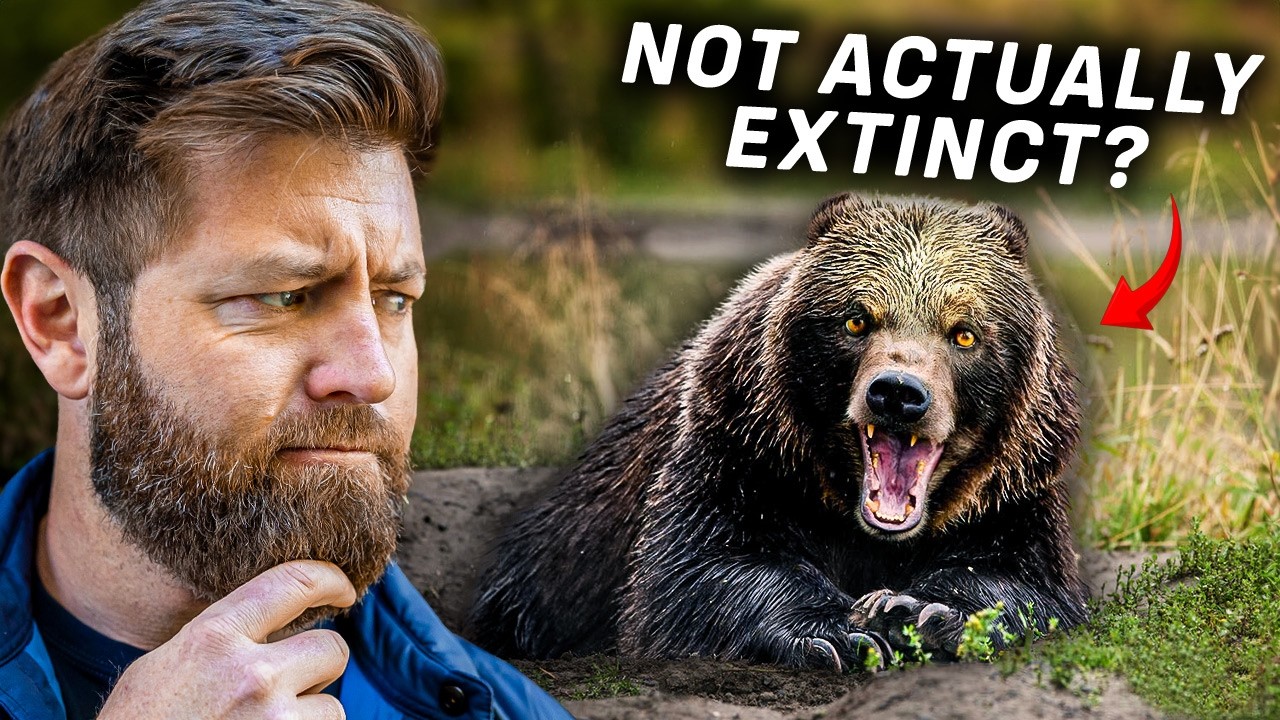
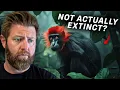
just because an animal is declared extinct doesn't mean it couldn't still be out there I know firsthand for years I traveled the world searching for previously thought extinct species and my team and I have found eight animals the world thought were lost forever so in this video I'm going to give you seven more extinct species that I believe are still out there and maybe by sharing this information someone somewhere watching this might be able to find them starting with our first species which if rediscovered would be the largest gecko on the face of the Earth
number one delort sticky toad gecko last seen in 1870 and lost for 154 years in 1986 in the basement of the Mars's Museum of Natural History A Primitive specimen of large gecko was found stuffed unlabeled and lacking any record of its collection date or its point of origin judging from the specimen it must have been there for over a century once examination of the specimen was performed it was found to be a species unknown to science this specimen consisted of a single skin and a partial skeleton but get this the skin was stuffed and mounted
on a wooden plank and when mounted it measured 2 and 1/2 ft long this meant this unique specimen of gecko was 54 4% larger than the largest known extent species of gecko on the planet closer examination of the specimen showed that this gecko was similar to the brown Forest geckos hypatius species of New Zealand this puzzling specimen was in fact the lost kaaa a giant and mysterious Forest lizard of Mai oral tradition described by the Maes as being about 2 ft long and as thick as a man's wrist it is the largest of all known
gecko species gigar kenam Del Cai the scientific name was likely extinct or extremely rare by the time of colonization of New Caledonia in the mid 19th century due to the absence of any other records of the species so all of a sudden with this Museum specimen in the bag and this Revelation in April 1990 several sightings of a large gecko were reported in New Zealand newspapers but it seemed as though these reports were the end of the excitement for the delort sticky toed gecko until recently Frank fast and his partner Philipe defol believe they know
the exact hiding place of the extent delort sticky toad gecko down to the exact tree that's right they believe that there is one specific tree in the middle of Maui country in remote New Zealand that under the bark is hiding the world's largest extinct giant gecko according to Frank this species is found to occur in the bark of a handful of different tree species two of them pook carpus Totara and agathis Australis excuse me I don't know my trees that well are trees that the animal would prefer it's semi aboral and will be found under
the bark of these Trees Deep In Mai country where no other herpetologist has ever looked the same kind of area the last two specimens of gecko were discovered in New Zealand in 1981 and 1984 really not that long ago a gecko the size of a small dog that could be living in New Zealand given the history of these two experts discoveries of other giant geckos like the new Caledonian I'm going to give this one a nine out of 10 chance of still being out there next up we'll look at a missing dinosaur fish whose relatives
have been mistaken for the Loch Ness monster himself sturgeon are the modern-day equivalents of dinosaurs making this mini sturgeon one of our last links to the dinosaur age sidara shovelnose sturgeon was last seen in the 1960s and has been lost for more than 60 years the cidara shovelnose sturgeon is endemic to the cidara river and was once found in Kazakhstan Tajikistan and usbekistan this prehistoric looking fish is among the smallest species in the world growing only to about 1T long compared to its gigantic 20ft long cousins that we get right here in North America it
was once found in the ARL sea but according to NASA the RLC shrunk by more than 60% between 1973 and the early 2000s like many sturgeon this species of fish is fully migratory between fresh and salt water however the population was cut off from the RL sea where it presumably fed back when the Soviet Union was at its highest power they performed huge water extraction for prop irrigation from the cidara river and the RLC leading to the RLC drying up to about 1 fth of its former size so this meant that major habitat loss damning
and habitat fragmentation are incredibly common in the range and when you couple that with polluted waterways these are likely all contributing factors to the demise of this beautiful little sturgeon so why do I believe it could still be out there it's likely incredibly rare but researchers and experts on the subject are hopeful the species remains just in low numbers back in 2016 and twice in 2018 local fishermen reported to researchers that they caught a CID Daria shovelnose sturgeon these fish require a moving River for their life history and I believe the ecosystem remains intact enough
to be able to support a small but viable population of the sturgeon if if the right kind of surveying and trapping were to take place and in order to do that trapping you would have to be able to identify good pieces of habitat that weren't fragmented that supported the fish's Natural History then you could go into that region and put out large San Nets to San for fish you could put out little box traps and you could lean into the natural history of the fish's life cycle like we've done with sturgeon populations around the world
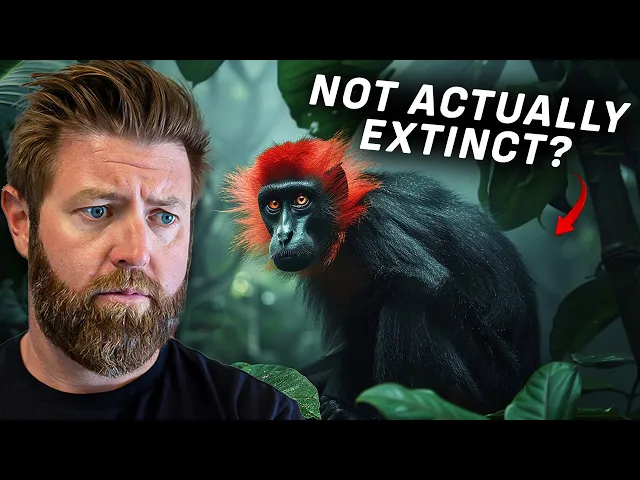
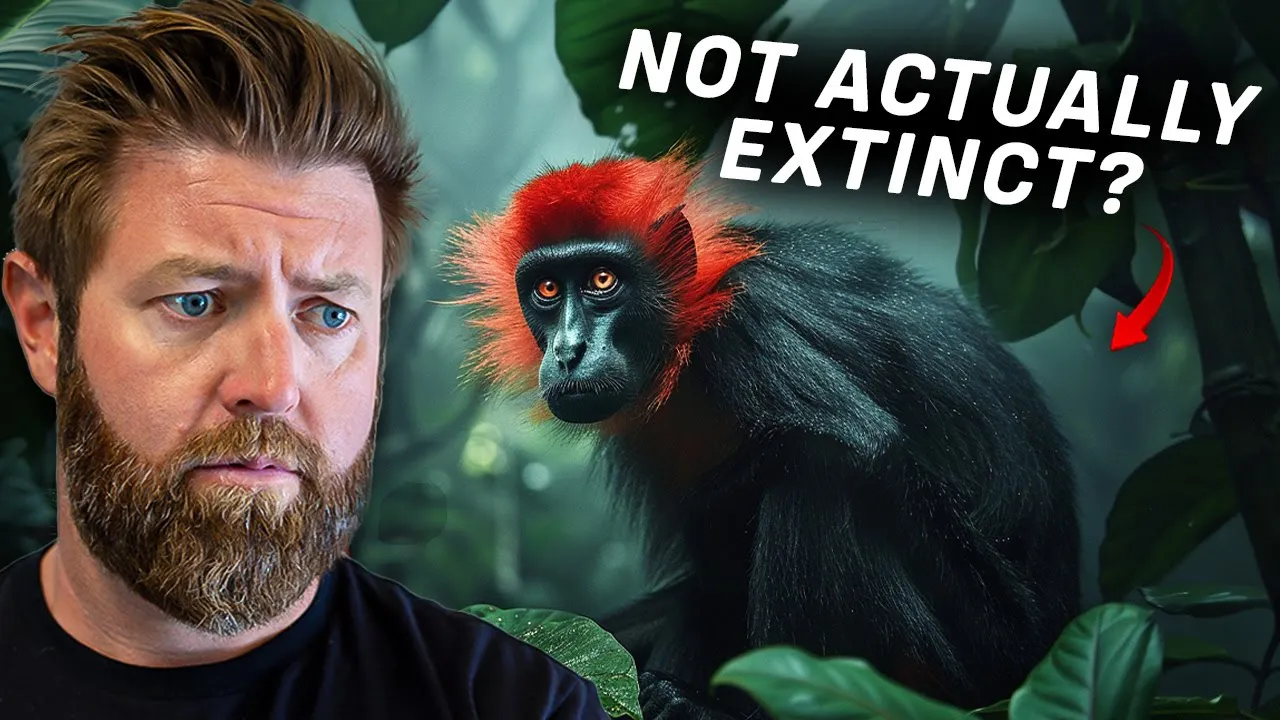
to try and pinpoint a location of this fish I believe that just like the white sturgeon that's been trapped by dozens of dams along the Columbia river that are stuck in places like the dolls Oregon this sturgeon is likely to still be there so I'm going to give this a seven out of 10 chance of still being extent next up a beautiful red primate with a coat unlike anything else in the world Miss Waldron's cbus monkey last seen in 1978 in the Ivory Coast and lost for over 40 5 years this animal still sits on
the critically endangered list Miss Waldron's red cbus is dangerously close to becoming the first primate to be declared extinct in more than 500 years after repeated fail searches but if this creature is still out there we simply cannot let this happen this species of cabus monkey has a unique red coat and a native range stretching through most of Southwest Ghana hunting and habitat loss drove their population down to be reduced by up to 80% in the 1970s and since 1978 not a single individual has been observed in the wild sadly this monkey was frequently and
illegally poached for bush meat with little interference by local governments poaching is still a prevalent problem today and those possible remaining individuals face a struggle from staying hidden from humans which really sucks because human beings especially starving ones looking for bush meat are really good at finding animals and killing them but it's not just hunting that's a problem habitat Destruction has also played a major role in its decline the Miss Waldron's red cbus is the first primate to be suspected extinct in the 21st century but there is considerable debate over whether this assessment is indeed
correct and that's why I think it is so important to at the very least give an attempt to figure out whether or not this animal is still out there and there's even a little bit of Hope although there have not been any confirmed sightings in over 25 years in 2008 calls of the Miss Waldron's cbus monkey were heard by a team of scientists from the Swiss Center for scientific research in the AE Forest along with hearing the calls a fresh skin from a red colbus was rediscovered from a poacher along with a tail in 2019
these are very clear indications that at least up until 2019 there were living individuals hanging out in in the Ivory Coast a single skin found in the possession of a hunter near the ehi Lagoon in Southeastern Ivory Coast in early 2002 raised even more hopes that at least one population of Miss Waldron's red colbus still hangs on but subsequent fieldwork in this region including several forest reserves and nearby IL national park has yielded no evidence of living individuals the problem with surveying for primates is their extreme intelligence in our Boreal nature making it so difficult
to tell whether or not those animals could still be there my method for finding them would be to use acoustic audio traps set high in the trees and AI deciphering codes which can then take those audio recordings run them through a program and give you a 100% whether or not they're actually picking up Miss Waldron's following confirmations of the sounds and knowing the general areas baits and camera traps would then need to be set out in the Treetops to see whether or not these monkeys could be moving through and if rediscovered putting in severe anti-poaching
protocols which of course all takes masses amounts of resources that likely the Ivory Coast doesn't have so it's not the best situation and given that even the most recent confirmations were over 20 years ago and the population and bush meat hunting in Western Africa has only gotten worse on a scale of 1 to 10 I'm sadly going to give this about a six out of 10 of being rediscovered man it's tough to remember all this I'm glad I have this magic mine helps me stay pretty sharp and it tastes good next up a lost catfish
so oily that you can use it as a torch the fat catfish last seen in 1957 in Columbia has been lost for 66 Years yet hope remains that it could still be out there what so unbelievably cool and unique about this fish is that it possesses extensive rings of fatty adapost tissue surrounding its body making it the only freshwater catfish in the world with these features well why is that interesting in fact this oil tissue makes it so greasy and fatty that it's sometimes referred to as the grease Bish and locals from the area used
to impale it on a stick and set it a light and use it as a torch because it had so much fatten oil its flesh that's absolutely insane for a tiny little catfish the fat catfish is only known from 10 specimens and was last seen in 1957 researchers know next to nothing about the size the biology the feeding habits or the growth of this unique species so why did it disappear well one possibility for The Disappearance of the fat catfish is trout farming on the lake in 1936 100,000 rainbow trout eggs import reported from North
America were released into the lake cesil miles the man who first described the species claimed this would caused the extinction of the catfish he literally predicted the extinction of the catfish and still they went ahead with it trout farming was originally an economic project promoted by the liberal government in Colombia during the 1930s and In fairness it's still a source of income for many local families the problem is trout are voracious predators of smaller fish which ultimately Pro problematic for our fat catfish so given that there are now trout in this Lake and trout are
veracious predators why is it that I think that the fat catfish could still be out there well even though trout were introduced to Lake TOA they haven't completely overrun the lake like we see with other invasive species in fact researchers typically only see trout in particular areas which has also made it less clear if trout actually had any anything to do with The Disappearance of the catfish in the first place now thanks to Trout's ecology we know that trout don't live in super deep water but catfish often do ethologists even think that the fat catfish
may live in the deepest part of the Lakes meaning it's possible that the two species could actually coexist in the lake in addition to this a social research team learned from Lake TOA locals that the fat catfish was never common to begin with I believe it's entire barely possible that this lost species could be hiding out in the deepest darkest pockets of this massive Lake just awaiting its rediscovery which would have to be done with very crafty new technology deep waterer fish traps which are out there we just have to figure out what can we
use to bait in these fat catfish that isn't going to attract anything else well luckily we have research teams in Colombia that feel the same and fingers crossed it will be soon that we celebrate the rediscovery of the fat catfish so given that there already attempts in place and given that a handful of e theologists and myself all believe that the fat catfish could be hanging on in the deepest parts of this high altitude Colombian Lake I'm going to give this one a seven out of 10 of the likelihood still being out there next up
we've lost one of the world's only flying mammals but maybe just maybe it's hanging on by a thread on a remote island in New Zealand the New Zealand greater short tail bat last seen in 1967 and lost for 56 years quite often we'll see the introduction of an invasive species lead to the demise of another and in the case of the New Zealand greater short tail bat we may have evaded that but the skin of our tea one of two species of New Zealand's short tail bats this fat is endemic to the island it was
once thought to be the same species as the New Zealand lesser short tail bat before being declared its own subspecies in 1985 after it had already gone missing very little is known about the New Zealand greater short tail fats habitat preferences and ecology as there just hasn't been any studies conducted from before it was labeled extinct they likely roosted in Limestone caves and it may have also roosted in tree cavities like many bats they're thought to feed on invertebrates in the air and in the leaf litter but also pollen in fruits similar to the closely
related lesser short tailed bat the New Zealand greater short tail bat vanished from New Zealand's North and South Islands following European arrival some 200 years ago it was subsequently restricted to small predator-free Islands until rats were accidentally introduced in 1963 and the species was last seen in 1967 meaning in just four short years rats were able to wipe out the species because the bat species spends an unusual amount of time on the ground it's especially susceptible to rats and the introduction of invasive species devastated the bats remaining population so given that we know rats are
all over New Zealand and that they're a problem not just for these bats but native bird populations why could it still be out there well the last refuge for this bat was Big South Cape and the neighboring Huna Island forgive me if I said that wrong until rats arrive there however the invasive rats have actually been completely eradicated from both islands and since then there have been several unconfirmed sightings in both places and one of those unconfirmed sightings comes to us from 1999 when Mia like that's its genus echolocation calls were recorded from pavuna Island
as a result of this piece of evidence the iucn actually changed the status from extinct to critically endangered despite not having found a specimen this fieled an expedition that took took place in 2009 that failed to recover any evidence of a Remnant population but it still confirmed the eradication of rats on the island so it's possible that somewhere on pahina this species remains extent given its unique roosting locations in hard to reach areas for me the fact that rats had overtaken the island and they had overtaken the mainland and the only places that these bats
could still survive are on these small Islands outside of the main island of New Zealand and anytime you have animals that are confined to a small area like an island the likelihood that it can be eradicated by a really good climbing invasive species like a rat sort of puts this one lower down on the ranking sadly I'm only going to give this about a four out of 10 of being rediscovered next up a deepsea creature that I so strongly believe is still out there I tried to rent a submarine to go and find the bullneck
seahorse last collected in 1997 in Australia has been lost for 27 years but isn't listed as extinct instead and this will give you a clue it's listed as data deficient this animal is insanely cool to me we know absolutely nothing about the species other than pure speculation but it could be the most likely to actually be rediscovered the only known individuals of this pygmy seahorse were collected off the coast of Eden Australia but the bullneck seahorse has never been seen alive in the Wilds no information is available about the bullneck seahorse's population density distribution its
range its ecology Its Behavior its population Trends its genetic structure its life history nothing nothing out there exists because it's a tiny little seahorse that lives down at 325 ft but based on its morphology scientists believe it lives in sandbeds at the bottom of the ocean lower than 325 ft underwater in fact it may even be sympatric with gorgonian sea fans and Carls giving us at least a targeted place to start the search visually it's similar to other pygmy seahorses except it has a wide neck a snuffed face and a small body with a tiny
little pectoral fin hence why the scientific name has the word Minotaur in it because of its super large head-to body ratio so given this tiny deep CC horse lives in an area where there couldn't possibly be habitat destruction it has no monetary or food value why would this creature go extinct well there isn't a reason there is no cause for extinction this is the perfect example of a lost species a species or researchers are just not concerned with finding due to its unique range and difficulty in studying because it lives at such depths this isn't
an extinct animal coming back this is an animal that we barely know about because of how unique it is endemic to such a small area and so deep that is literally just lost to signs the fact that the bullneck seahorse has been collected before means is likely still out there but because it lives at such extreme depths it is rarely if ever seen to study and identify this wrongfully labeled extinct animal would require a ton of resources and funding that's why I looked into getting a submarine to go down and try and uncover the species
it's just simply a occurs at depths that are out of the range of scuba diving but that was several years ago today as underwater ROV Technologies Advance this could be the perfect way to track down and find this lost species given the extraordinary cuts that we ran into when trying to Charter a submarine so given where this crazy little seahorse lives how unusual it is the fact that it has absolutely no pressure on it from human beings that we're aware of on a scale of 1 to 10 I'm going to give this one N9 out
of 10 of being rediscovered our next species is found in one of the most biodiverse regions on the planet and new species discoveries are coming out of that area at a high rate leading me to believe there's a really good chance it's patiently awaiting its rediscovery except for one or two individuals imported for the pet trade zugs monitor is completely unknown it's rarely if ever seen by locals and scientists know nothing about its ecology or natural history if you ask me that makes it 10 times more intriguing to go out there and try and find
what's interesting is Z's monitor was originally described from a juvenile Museum specimen which was labeled as veranus indicus and at least one or two specimens resembling the type specimen and generally agreed to represent the species have been imported at various times but not for scientific collection not for study they've been imported for the pet trade other than this the species is completely unknown its habits are unknown and it's not been observed ever in the wild as far as we know so why could it still be out there well it comes from the malan islands of
East Indonesia where another very famous extinct creature could still be the malakan Barbarosa but that's a video for another time but what's particularly interesting is this exact area the malan islands of East Indonesia is an area where a large number of new varanid meaning monitor lizard species have recently been discovered including many of which are in the same genus as the zugs monitor the rainforests of the halera island are a biodiversity hotspot and home to several endemic species and because of these recent discoveries I believe the zugs monitor is very likely hanging out there as
its own endemic species waiting to be found waiting to be noed by a lizard Catcher And rediscovered and put back on the map because it is living in such a dense remote and frankly understudied area in a place that has some of the highest species diversity in the entire world and because it's not really an extinct species but once again my favorite a lost species I absolutely think that in our lifetime we are going to see this zugs monitor be uncover I'm going to give this one a 9 out of 10 well there you have
it 7 species lost to science that I believe have the chance of being rediscovered if you guys like this topic of the extinction check out some of our other videos on the same topic let me know in the comments what species I may have missed and I may be doing another video on them and hey do me a favor like And subscribe