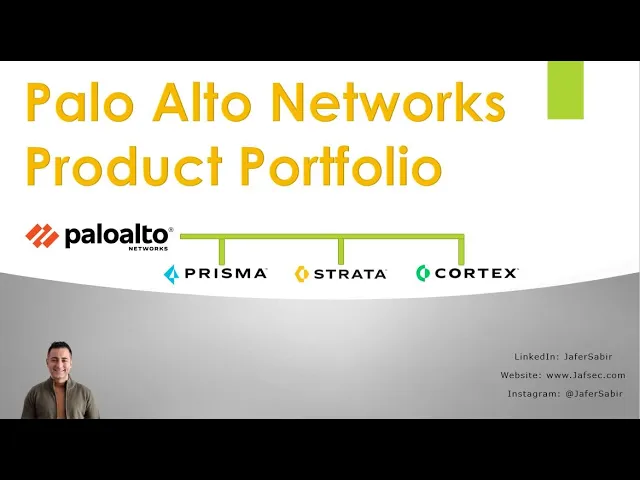
welcome back to another video in this video we'll have a look at the Palo Alto networks products portfolio so what does Palo Alto networks sell so I'll go through pretty much all of the products and have a look at them and what they exactly are and what they do so the products portfolio is split into three main areas and we can see these in the middle here so one's called Prisma the next one is strata and the last one is cortex so with the middle one which is the most common one think of network security
products or in fact think of their next Generation firewall and all of the technologies that come with it the one on the left Prisma Prisma is all about Cloud security whether you're looking to secure your Cloud environments like Azure AWS Google Etc or whether you want to consume Prisma Security Services which is effectively their firewall in the cloud for most parts and you want to use the Prisma to secure your users these could be your mobile users or users in the office like branch locations retail sites or the corporate head office and so on and
then on the right again cortex so with cortex it's to be able to deal with risk and threats think of this as a sock Security operation Center or a managed service security provider to be able to find threats and deal with them so let's take a look at each of these in a bit more depth and what products come under each Tower strata provides Network Security Solutions to protect the Enterprise which mainly consists of the Palo Alto networks firewalls and all of the built-in technologies that come with the firewalls and this includes the pier series
firewalls we can see in front which is their physical tin in which they are available in different sizes of form factors depending on your requirements and this could be right from Branch offices to dead center locations and at the bottom we can see where it says ml powered Next Generation firewalls so these firewalls are also known as ml powered firewalls machine learning and what ml powered means is traditionally firewalls have been reacted with securing threats but now with the machine learning powered Next Generation firewalls they have machine learning capabilities and machine learning is the ability
to learn and ingest continuously from vast amounts of data to detect threats across multiple fronts it makes it much more proactive and a more powerful solution against the most sophisticated threats so that's their physical tin the PA series 4 firewalls and the Machine learning part is really part of the Panos operating system so it could be for their physical tins but it's also integrated into their VM series firewalls and the CN series firewalls Etc VM series firewall so this is part of strata as well this is a virtualized Edition or version of the Palo Alto
PA series firewalls so you are able to deploy it into public and private clouds or in a virtualized environment whether that's in the branch office or your dead center again the VM series firewalls support many virtual environments and these include Amazon web services Google Cloud platforms Cisco seis Citrix netscale sdx Microsoft Azure and Microsoft hyper-v KVM kernel based virtual machine openstack VMware e6i VMware NSX and VMware vcloud air as well and we can see a few of these in the center of the screen next is the CN series firewalls and this is for containerized environments
so this moves the scooter controls as close as possible to The Container so now you do your security between the container pods and between container applications and also Legacy workloads such as virtual machines and bare metal servers so CN series firewalls is also part of strata next we've got the Panorama Management Service so Panorama Central management server is used to centrally manage the Palo Alto firewalls and what Panorama provides it provides we can see on the right hand side policy management this is centrally managing security rules for all the firewalls it provides visibility it feeds
back visibility to network traffic and threats via the Palo Alto application and control center it does Network Security Management manages devices and security configuration for all firewalls it does reporting and administration reporting with aggregated logs of managed Next Generation firewalls and user ID for user redistribution to manage devices as well it provides network security insights leveraging automated correlation engine to reduce the Clutter and it identifies compromise hosts and feeds back on all of this on malicious behavior it can also run automated threat responses as well so you can automate and customize security workflows using rest
apis to integrate with their patch systems or any of your existing tool sets for that matter and these are the main areas that sit under strata but we also have the technologies that these firewalls have within their tool set so I thought I'd go over these as well so the first one is application ID we can see on the top left in red and this determines an application's identity irrespective of the port protocol and encryption used and it applies multiple classification mechanisms including application signatures application protocol decoding and heuristics to identify the application and the
reason to be able to identify these applications is so you can enforce access control on them such as blocking of certain applications like social media applications Etc then the next one we've got is Content ID Content ID includes multiple threat prevention Technologies to undertake a complete analysis of all allowed traffic it blocks things like vulnerability exploits buffer overflows and Port scans as well as protection against attackers evasion and obfuscation and other methods Palo alto's Cloud delivered security services such as threat prevention and URL filtering leverage Content ID to stop outbound malware communication so it blocks
access to known malware and phishing download sites and it also reduces the risk associated with the transfer of unauthorized files and data user ID enables the identification of the user rather than the IP address so we can see who the user is that are accessing those applications and then we can enforce access control on them device ID we can identify devices using device IDs so that we are able to secure them from things like vulnerabilities such as outdated operating systems using device ID we can get device context for events on the network obtained policy rule
recommendations for those devices write policy rules based on the devices and enforce security policies based on those recommendations DNS security this is a cloud-based service which can generate DNA signatures using analytics and machine learning and its main job is to provide dns-based protection so it can block you from going to malicious domains prevent the use of DNS tunneling which actually exploits the DNS protocol to Tunnel malware and other data and it provides the ability to do dnsync calling so you can respond to client DNS queries and send it somewhere else into a black hole it
just lets you know what your clients are doing rather than sending their traffic to an actual malicious domain and it does other dns-based security features as well Enterprise d ELP so this is data loss protection or prevention and this is a cloud delivered DLP service protecting sensitive data it will locate where your sensitive data is wherever it flows it will identify the sensitive data at rest and data in transit throughout the entire Enterprise and it will Monitor and prevent unsafe data transfers threat prevention I feel like I'm going over threat prevention again because it's part
of content ID actually there's Advanced threat prevention which blocks threats at both the network and application layer including Port scans buffer overflows and remote code execution while stopping vulnerabilities and malware so just bear in mind there is an advanced threat prevention license which does a bit more than just threat prevention I think it's more machine learning stuff it gives you the ability to use the machine learning capabilities built into the firewall URL filtering you can monitor and control the sites users have access to and you have other features like enforcing safe search for search engines
like Google and Bing Etc and ensuring you're not exposing your credentials to efficient attack so it's got a built-in it's got a built-in technology called credentials theft which make sure your credentials aren't leaked out while fire Wildfire is a cloud-based virtual sandbox service that evaluates unknown files so we've been dealing with known files up to this point but Wildfire is a Sandbox service that evaluates unknown files and URL links for additional Security Internet of thing security this is protection for Internet of Things devices you can discover and identify all iot devices in real time and
apply policies to improve the security posture Global protect this is a Palo Alto secure remote access service for mobile users the mobile app provides secure access to your corporate network over an ipsec or slvpn tunnel the application automatically connects to the Gateway that is closest to the end user's current location so it provides connectivity and security for mobile devices 5G security this is security for cloud native 5G Networks sd-1 to explain at its basic level it allows you to combine multiple internet links and private services to create an intelligent and dynamic one service you can
for example throw it in your branch office or a retail location and you can put it at the edge of the network and with its zero touch provisioning capabilities it will reach out to the cloud and pull down its configuration and set itself up so it's got additional things it can do as well finally we have covered strata off moving on to the next one which is Prisma Prisma is all about Cloud security securing the cloud itself or using Prisma cloud services to secure your users whether they are fully mobile or in an office and
the portfolio includes prismacloud Prisma axis which is a sassy based solution secure access Services Edge Prisma saas software as a service security and Prisma sd1 prismacloud is a big one because it does so much so I'll spend a little bit more time on this solution and prismacloud is a cloud security focused product for your public clouds so think cloud security here and it Taps into your Cloud providers via apis for read-only access to your network traffic user activity and configuration of system and services so it Taps into Azure for example or AWS or Google cloud
and then it will scan all of your resources that you have inside as your or AWS or gcp and it will correlate all of this information and it feeds it all back to you to help organization security teams prioritize risks and quickly respond to issues so what does it do exactly and because the product does quite a few different things it's broken down into different pillars but let's go through the main features and what it has to offer and the first one is it does cloud security posture management and this is a set of capabilities
across all major Cloud providers where security teams are provided visibility and governance through out-of-box policies and it provides Network anomalies and auto focus integration and enables data classification and malware detection for public Cloud storages if we take a look at the image we can see a set of policies at the bottom and there's one for kubernetes and another for gcp a policy for gcp firewall rule allow all traffic on RDP port 3389 and it has a ton of these policies you can use so it will tell you stuff like this and at the top we
can see policies by severity policy drill down so you can drill down into all these policies it will tell you things about your network the next page is another example here we can see network anomalies showing suspicious IPS that have connected to our resources so you can see suspicious IPS and what resources within our public Cloud what are these suspicious IPS connecting to in our resources the next one is cloud workload protection and through the twist lock integration that Palo Alto acquired a product called twistlock there's now a new set of capabilities to protect the
workloads now you can secure hosts containers and serverless functions across the full application lifecycle across multi-clouds or even hybrid Cloud deployments the left image shows workloads protected in a multi-cloud environment and the Right image shows workloads across different environments with direct access to the internet so you can see the kind of information it gives you back about your Cloud environments you can see all your workloads that are directly connected to the internet this might be a massive security flaw that you need visibility on you could have sensitive services that are connected directly to the internet
it does cloud identity and access management security so it manages Cloud identities and managing Cloud identities is challenging and has led to numerous breaches so Prisma introduced a new set of capabilities that helps them enforce least privileged access so with this you now have control over the permissions across the cloud and on the right we can see an image here showing the detections of overly permissive policies Cloud code security and Cloud called security does things like security scans IC templates for misconfiguration across the development lifecycle integrating security into integrated development environments and Prisma Cloud enforces
policies occurred early through automation preventing deploying misconfigurations and providing automated fixes and with code security you can have policies across many of the popular Frameworks including teleform and cloud formation stock files kubernetes and so on and across the major Cloud providers as your AWS gcp Etc and here is an example of an image of build and runtime policies to protect the code and here's another image even better because we can see some chord now and he's showing all violations of code across different platforms that it has picked up it also does compliance and governance and
we can see an image of pre-built and custom compliance checks so Prisma Cloud provides visibility and control over risks within your public Cloud infrastructure and enables you to manage vulnerabilities detect anomalies ensure compliance and provide runtime defense in heterogeneous environments such as Windows Linux kubernetes Reddit openshift AWS lombardier as your functions and gcp Cloud functions and the prismacloud secures the following Cloud native infrastructures we can see on the right hand side so just to summarize Prisma Cloud you can build policies based on compliance standards you can check for vulnerabilities you can have an asset inventory
I forgot to mention as well it's got a secops dashboard you can investigate many things such as your top Internet Resources going out to the internet we've already seen an image of that or you may want to see all of the suspicious iberises that have connected to your resources within your environment which we have also seen you get was protection as well which is the web application and API security module which automatically detects and protects microservices based web application and apis in the cloud and on-premise environments and Prisma ships with maybe 650 plus out of
the box policies policies for unusual activities like user activities or Port protocol activities stolen compromised credentials and so on it provides an overview on the compliance posture and Security in the devops lifecycle for CI CD continuous innovation continuous deployment which is an approach to rapidly Building Services in the cloud and deploying them out therefore allowing teams to build applications much quicker and Prisma Cloud can integrate with many CI CD tools providing vulnerability and compliance scanning and integrating security into all deployment builds of application services so this can protect vulnerable code from being developed and pushed
out it's also again got asset Discovery inventory and identification it keeps track of all changes of all your resources so you can highlight and pick up of any issues for example how many databases do you have in your multi-cloud environments it can help you with things like that and there's automated security responses through integration tools to protect the network as well for example integration with the misto and Phantom right let's move on let's move on to Prisma access so that should say Prisma access Prisma axis is a sassy solution and Sassy stands for secure access
Services Edge it's a firewall Centric technology in the cloud Prisma axis is basically Panos being used across the cloud and the product is managed by Panorama but what does it do well it protects your users wherever they may be you just direct all your traffic to prism access now all user traffic is protected and traverses through the Prisma cloud and prismacloud offers a set of connectivity and security services and this can be from zero trust network access caspi which is their Cloud access security broker secure web Gateway firewall as a service sd1 so we can
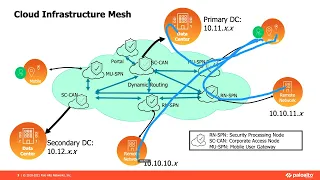
see here we can use multiple links and at the bottom here we've got autonomous digital experience management and this is adem which is directly integrated into wall Prisma ST1 appliances which enables organizing additions to gain end-to-end visibility from a single Management console also it does all of the threat prevention stuff as well like DNS security blocking of malware vulnerability exploits and C2 activity Etc and just to give you a fundamental of Prisma access it's made up of a security layer and a network layer where you can turn on sd1 for all your sites sd1 can
be put into your office and provide the connectivity and security for that site so we can see we've got some sd1 devices in here these devices here and then we've got our users on the left whether they are in the home or the branch office or the head office here and all these sd1 devices they connect via whatever medium you want them to connect via the Internet cable modem ADSL DSL Etc all these 5G satellite microwaves so it manages multiple links effectively now instead of sending all your traffic to the data center to be scanned
by all your traditional security appliances and therefore for all your users hog in the dead center bandwidth instead you can leverage security services within the cloud using your local breakout connection wherever you may be so this branch office is using its Palo Alto sd1 Edge firewall to locally break out using whichever internet method it's using and then all your security services are within the Prisma access solution here and then from here you can access whatever you want to access whether that's internet the multi-cloud environment your software as a service applications or the data center so
sassy is a general term created by Gartner which actually converges one technology with network security services so it's networking and security converged together where the networking part includes things like sd1 optimization quality of service and exclusive Services is all the stuff we've just mentioned like swg kaspy ztna firewallers service Etc and prismac says sits in the middle of everything and so it allows everything to be inspected and the whole point of this is so users can connect to Prisma access to safely access all of the services they need to access Prisma SAS security Prisma software
as a service security Prisma SAS provides visibility compliance controls and security across SAS applications and sensitive data in the cloud moving on to the last major pillar which is cortex cortex offers product solutions for security operations to be able to undertake detection investigation Automation and to be able to respond to risks and attacks and the cortex product Suite includes cortex xdr X4 expands crypsis cortex data league and autofocus cortex xdr is a sock tool to twist down breeches so you can see what has happened within the network cortex xdr is a detection and response platform
that runs on integrated endpoints Network and cloud data to reduce noise and focus on real threats it provides visibility over Network traffic user behavior and endpoint activity you're able to investigate threats with cortex xdr by correlating the logs from sensors to which it would feedback threats and their timelines and this enables you to identify the rules cause of alerts and gives you the ability to respond with actions there is some proactive capabilities as well where you can Define indicators of compromise to detect and respond to malicious activity and cortex xdr is the endpoint piece of
the cortex portfolio so one thing it provides is endpoint security Palo also can ingest endpoint logs into cortex data Lake and then can ingest Network logs too then these logs are mounted into cortex xdr and then you have the information to see things and track everything down for example you can see the full story of how a breach occurred such as a user went to a website signed up for something and received an email and clicked on a link within the email downloaded a file extracted it and the user ended up opening up a malware
and we can see the malware then and where it has been propagating itself to to the systems and this is the full story the full map or the full picture you get with cortex xdr so you can see xdr as an analytics engine which takes massive amounts of data and correlates it together to help identify incidents within the network by looking for anomalies within the network and then it presents that data back to you in a meaningful and actionable way and these incidents are basically made up of multiple alerts which in turn are made up
of thousands of logs that XTL was able to look at and pull out the key bits that were seen as causing a red flag or possible issue and in the bottom left image we can see the top incidence it's feeding back to us and the top right image we can see it's drilled down into a bit more information and you can see key artifacts so it's telling us about all the different the different alerts it's picked up cortex xor is an extended security orchestration Automation and response platform the XR technology can automate responses actions that
would usually require human review and because of this it allows overloaded security teams to focus on more crucial tasks it basically helps the security analysts in the sock by automating anything repetitive so or repetitive tasks so they don't have to do them they can instead focus on hunting down new threats and the capabilities of it being able to do this is with playbooks where you can graphically build ingestion of data and apply logic to it and then you can integrate with third-party products to enable these automated responses and the diagram shows the cortex xor architecture
with its engine in the center and then information sources and consumers around it on the right hand side is an image of the dashboard cortex expanse is an attack service management platform and it discovers and monitors every asset you have on the internet like IP addresses domain certificates and other Cloud resources it looks at DNS records domain registrars business databases so every Source out there to report this back to you about what's out there about your organization and this is for your on-premise assets as well or in the cloud or even if you wanted to
evaluate supplier risk and assess the security of acquired companies as well it finds hundreds to thousands of types of exposures like remote access protocols email Services database servers and so on and from all of this information you have an internet inventory of your organization and then you can reduce your potential attack surface and enforce security policies the image on the right shows Behavior which are unknown Communications and we can see connections to our assets including connections from blacklisted countries so it can be really useful products cortex crypsis I honestly do not have much information about
this there's not much information out there about it I think it was acquired by Apollo Alto in 2020 which is an incident response and risk management platform and because there's no information about it I don't know what they are currently doing with it at the moment for text Data Lake data lake is consumed by a lot of the Palo Alto products and data Lake enables you to collect large volumes of log data so you can gain an Insight from your environment its purpose is collecting integrating and normalizing your security data and you can run Advanced
artificial intelligence and machine learning with Cloud scale data and compute and the ability to constantly learn from new data sources to improve your security posture and it shows on the bottom right the following products that use cortex data Lake and on the left it's an image I've copied from the Palo Alto networks website it's just showing cortex data Lake right in the middle and all of the resources and the logs it consumes from the different Technologies and last but not least is autofocus so autofocus is a cloud-based threat intelligence service that enables you to easily
identify critical attacks it uses Palo Alto and external sources to gain an insight into threat intelligence and it becomes a central point for many information sources that you can make use of that can be used by your security operators and First Responders to discover important threats on the network here we can see the top applications the target Industries and top malware so this can help indicate what applications are being used for threats the industries the top firewalls seeing the threats and the top malware that has been seen