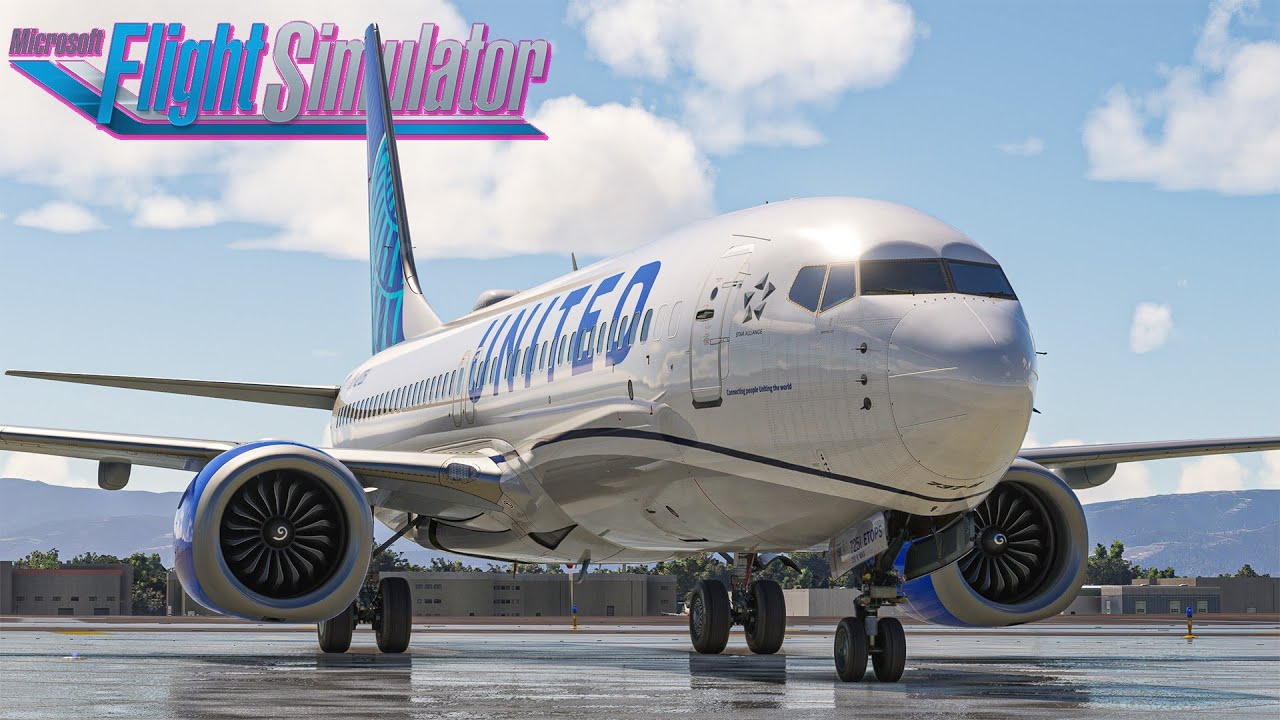
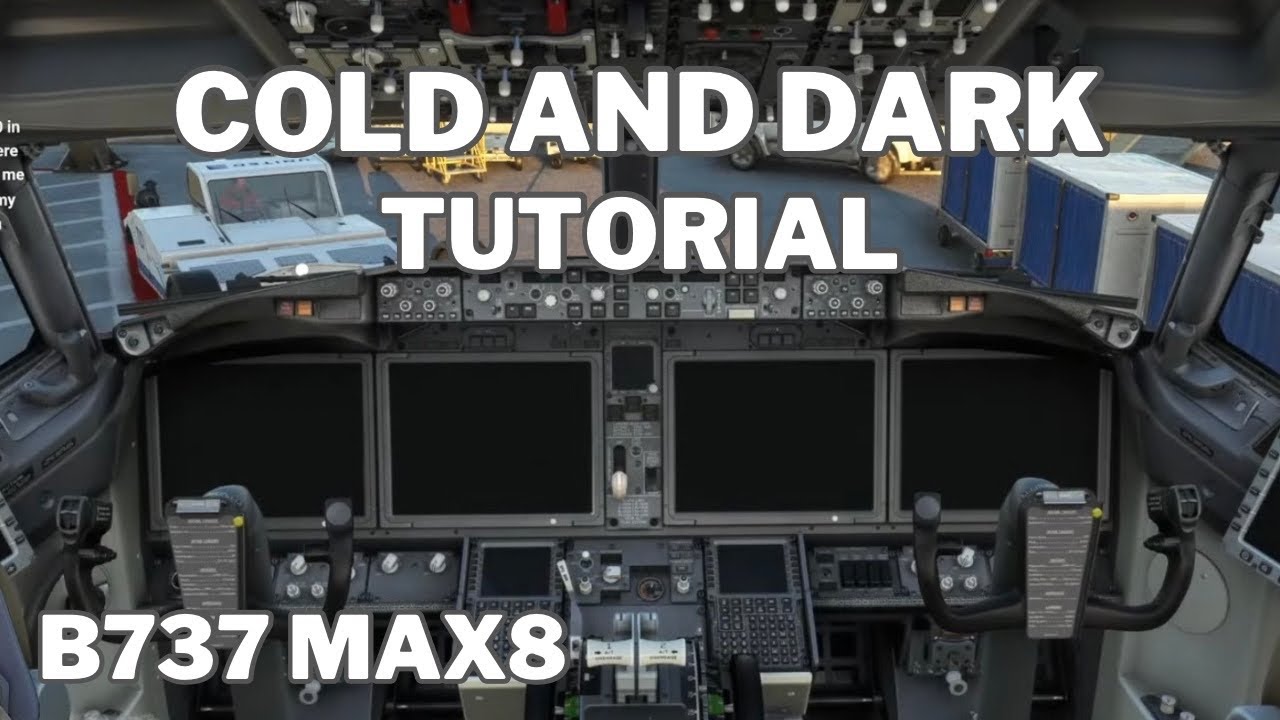
hello everyone and welcome to the channel I'm Emanuel I'm a former Boeing 737 pilot and welcome to the next tutorial for the iFly Boeing 737 Max we've just completed our performance calculations and entries and we're now ready to prepare the aircraft for push back engine start and the after start procedure which is going to be what we are going to cover in this video so first things first let's go ahead and get our aircraft prepared so once our external door is is closed and the jetway is disconnected we also must ensure that the fight deck
door is closed from here on let's go ahead and order GSX to prepare the position for push back and departure and while that is ongoing let's go ahead and do our own procedures first things first make sure that the Apu is on the bus if you forget to turn the Apu generators on before removing the ground power unit your aircraft is simply going to turn dark there is no order Automatic Transition from the generators unless the aircraft is in the air so with that done let's go down into the systems page once again simulator menu
and ground support and in here we can disconnect the external power unit and remove the three chocks around our gears so after that we go back to either the terminal charts or to the performance normally we use the terminal charts over here so before we can start our push back we must check that our windows and doors are closed so that includes the flat Windows the cockpit door and the external doors once all the passengers are seated we would get a signal by the cabin crew and we would set the no smoking sign or rather
switch to the middle position to indicate that the cabin is ready for push back as a small reminder if you are operating the windows in the 73 s if they're open over here before you can close them you must pull that little lever down here which locks the window in place only when that is getting pulled you are going to be able to close the windows like this be sure that the windows are completely closed and nothing is in the way here like headset cables Etc all right last but not least let's go ahead and
select the Lex page on the pilot monitorings FMC and the takeoff page on the pilot flyings FMC and now we can go ahead and run the before start procedures so the before start procedure is fairly easy you turn the air conditioning packs off make sure the Apu bleed is on antic Collision light comes on and last but not least the transponder is set into the auto position which automatically activates altitude off when these tasks are complete we can go ahead and start our push back so let's tell GSX that we are ready to continue the
push and we want to push with the nose facing to to the right so facing south on the taxi Lane okay so GSX is prepared so let's go ahead and release our parking break the push back is going to start and while the push back is progressing let's go ahead and talk about the engine start so in general we don't want to start the engines while we're still in the immediate gate area many airports Define Dedicated engin start points but in most of them you just wait until you have passed the road that is usually
running behind the parking stand we've got a second Road over here that we are also going to pay attention to so we'll wait until we are Beyond this before we are going to commence the engine start now let's go ahead and have a quick look into the engine start procedure itself so the 737 Max and engines are special in that due to the large size of the engine the the thermal conditions inside the engine can vary significantly and warm air rises to the top of the engine therefore the blades that are located at the top
would become hotter than those at the bottom which can cause significant issues when the fan blades are rotating at full speed therefore the aircraft is going to motor the end engines by a certain period in time which is automatically calculated from the electronic engine control unit now we are going to see this on the indications and now we'll talk you through the engine start as it happens what's important to remember over here is the maximum time for which the St is allowed to be engaged is 3 minutes so let's go ahead and initiate the engine
start we're starting in sequence two then one in order to initiate the engine start we are going to turn the start switch into the ground position and this is going to open the engine start valve N2 starts to rise and at some point between 18 and 24% N2 the gauge is going to display motoring and this is the so-called bout rotor motoring that I have described earlier what the airplane is doing right now is that through the suction of the air through the engine the heat is getting dissipated and all components of the engines are
cooled to a similar level this can take a little while and while that is in progress we monitor that oil pressure starts to rise and the N1 starts to rise and once N2 is at or above 25% we are going to turn on the fuel have a look at the engine um valves at the top and you might see some of them flickering while the aircraft performs an automatic um self test of the um systems now we are going to monitor the engine start in progress and we are going to check for any of the
following in which cases we would have to the engine start manually if there is no N1 rotation before the engine start lever is raised to the idle tent if there is no oil pressure indication by the time the engine is stabilized at idle if there is no increase in EGT within 15 seconds of raging the engine start lever to idle or no increase in or very slow increase in N1 or N2 after EGT indication or if the EGT rapidly approaches or exceeds the start limit in any of these cases we need to manually the engine
start so engine number two is started and before we go ahead with engine number one let's go ahead and add some air conditioning back to the cabin we do this when it's very hot outside in order to make it a little bit nicer for our guests and when Engine Number Two is stabilized and running you can do so-called isolated pack operation what you do here is you turn the isolation valve to close and then the right pack into the auto position now the right engine is providing air to the right pack so that air conditioning
is applied to the engine while the Apu bleed is still available to start engine number one and that's what we're going to do now so engine one start and once again we can monitor the N2 rising at about 18% we should start seeing the motoring indication and one starts to rise and now the RO motoring is in progress while we're waiting for that to complete which can take up to 90 seconds our push back has also been completed so let's go ahead and set the parking brake to do that press the brake pedals and then
you can apply the parking brake lever so motoring is in progress once the motoring is complete and the N2 reaches 25% so now we are going to turn on the fuel monitor operation of the valves and here we go engine number one is now starting up as well okay at 63% and two the starter is going to disengage and once the engine is stable we are going to select the generators on and the Apu off so here we go 63% starter has disengaged and and the engine is stable and started so with that generator's on
Apu off and before we do anything else we got to wait until all the ground equipment is disconnected so we got a tuck we have the toe bar and the ramp agent is holding the pin in his hands down there now we're just waiting for him to give us the all clear signal and once that is done we can go ahead and commence the before taxi procedure all right here we are clear signal is received B4 taxi procedure so the Apu generators sorry the engine generators are on Apu off start switches continuous propeat on anti
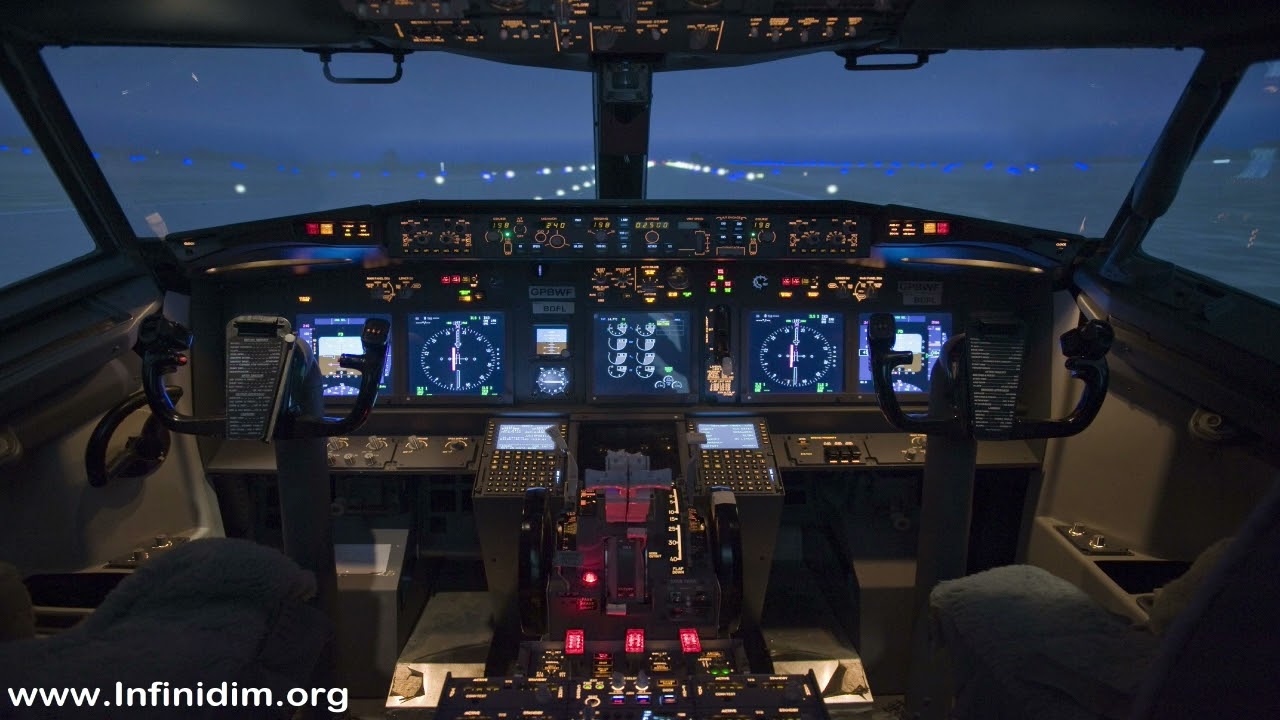
eyes as needed we are going to keep it off today on the air conditioning panel we sure that both packs are selected to Auto and the isolation valve is in Auto as well and the Apu bleed is turned off with the engine bleeds on so moving further down let's go ahead and select our takeoff flaps so that's going to be flaps 5 today once again ensure that the engine start levers are in the idle detent and then we can go ahead and commence the flight control track if your aircraft is equipped with the flight control
display on the system display you can use this but most 737s are not so you might as well just keep this closed and just do the flight control cheack down here what we're checking for is a smooth continuous movement of the Yol and we want to make sure that there are no obstructions and no strange feelings in the way that the Yoke moves which would indicate any problems with the flight control cables so before you move the pedals in order to check the rudder be sure to hold the tiller tight so that the wheel does
not skit on the ground okay so once the flag control check is complete we're going to hit the recall button we will press the engine button over here in order to remove the secondary engine indications and then we can read the before taxi checklist and that completes this tutorial so thank you very much for watching I do hope that you learned something today and that you enjoyed this one be sure to leave your feedback in the comments below this video as always like comment and subscribe and if you really love what I'm doing on this
channel I would appreciate a small donation through the buy me a coffee Link in the video description below thank you for watching and I see you all again on the next one




![PMDG 777-300ER Tutorials - Episode 1: Cold & Dark to Engine Start [4K]](https://img.youtube.com/vi/svC440NZBxg/maxresdefault.jpg)