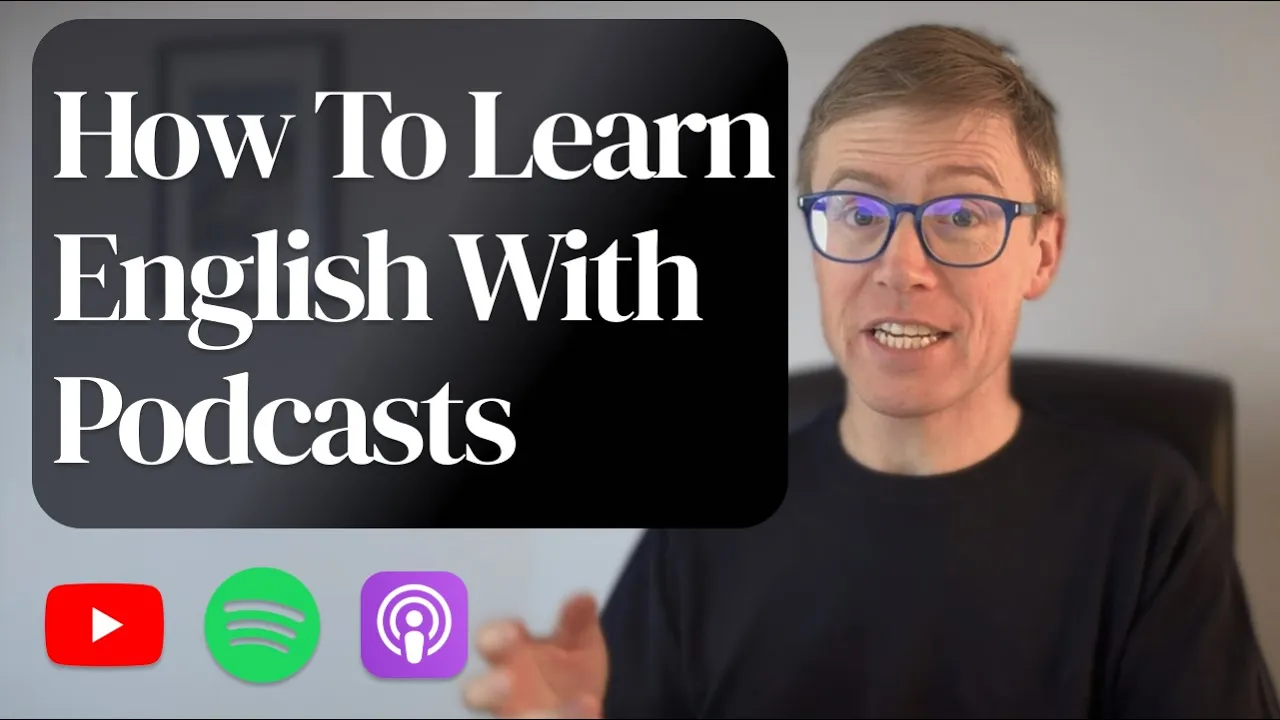
most people think just listening to English podcasts is some kind of shortcut to fluency but if you are not listening to them in the right way you might not be making as much progress as you think so in this video I will share with you my top five tips for how to use podcasts effectively to improve your English now just in case you're wondering who is this guy and what does he know about any of this my name is alist budge I am the host of a podcast called English learning for curious minds which is
for intermediate to Advanced English Learners we've been going since 2019 the show has been downloaded almost 10 million times now and I spend my days talking to people and thinking about how to use podcasts as effectively as possible to learn a language so here I will share my top five simple but effective tips with you the first tip might sound simple but it's very important and it's to choose the right podcast and there are really two things I think you should be thinking about when choosing a podcast the first is the level of language there
are of course millions of podcasts out there and hundreds if not thousands of podcasts aimed at people learning English so which one should you choose in terms of the language level you should choose one where you understand sort of 70 to 80% of what is being spoken if you understand a lot more than this if you understand practically everything well you're probably not learning as much as you could be and if you understand much less than that well it's probably a bit of a frustrating experience now this isn't some Grand science just listen to a
few podcasts and kind of see what naturally feels about right and the second thing to think about when choosing a podcast is to choose one that is actually interesting right maybe you are interested in sports or politics or business or whatever it might be if you are relatively advanced in English you can try to listen to a podcast that is aimed at native speakers about a subject that you are particularly interested in if you are not yet that advanced then choose one for non-native speakers but one where the hosts talk about something that you find
interesting maybe that's daily life in America maybe that's daily life in Australia maybe it's weird and wonderful stories it doesn't matter just choose something that you will enjoy listening to and that will help you stay motivated right tip number two and this is a super important one and it is to listen actively now when it comes to podcasts many people think okay great I can just put in my headphones and I can listen when I'm at the gym or I'm walking to work or I'm on the Metro and I can listen and learn while I'm
doing something else that's fine and podcasts are amazing like this but just remember that pure exposure passively to English is probably going to result in quite slow progress right if you just put on your headphones and you listen in the background you're not concentrating fully on the subject matter you're not really actively listening to the language so what I would advise you to do is to set aside time in your day to actually listen actively so you can focus on the language this doesn't need to be anything super complicated you don't have to get a
desk or anything like that but just find a time when all you are doing is listening to a podcast no distractions no nothing make sure you dedicate yourself and give yourself some focused listening time now that was tip number two moving on to tip number three things start to get a little bit more serious and a little bit more effective and that is to use transcripts right transcripts are the the words of what has been spoken so why do I think transcripts are so powerful well it's because many Learners think that they understand what they're
hearing but often what you're doing is you are hearing the words that you understand and you're kind of filling in the gaps you're trying to guess what else might have been said in the podcast a transcript removes that uncertainty and allows you to know for sure what was said and why is this important well it means with a transcript you can catch every single word not just the the easy ones and when it comes to learning vocabulary and Catching words using transcripts is far more effective than just listening now why firstly because you're you're hearing
what has been said and you're also seeing it right so the fact that you've seen it means you're much more likely to be able to recall it and use it later now think about what not using a transcript is like right you you hear the word immediately and by the time you're trying to process that word the speaker has moved on to something else if you're using a transcript you can follow along you can see the word coming up or you can go back and just catch what it was if you missed it so it
is far more effective in terms of recalling vocabulary it will also help you improve your pronunciation because you can look at the transcript you can try to say that word out loud at the same time as the speaker and it helps you connect how the word is written with how the word is spoken and you can't do that if you don't have a transcript now if you don't believe me try just listening to a a podcast first and then try listening again and looking at the transcript I think you'll be surprised by how many words
you missed and you're probably wondering how do I get transcripts of podcasts some podcasts do come with transcripts or they'll have kind of AI generated transcripts that you can follow along with Spotify and YouTube also have kind of automatically generated captions which kind of work they're not exact and the punctuation is often slightly out of place but of course they will only get better now some podcasts for English Learners do provide transcripts often in downloadable PDF formats for my podcast English learning for curious minds we make transcripts that are actually interactive so you can hover
over words and see definitions in English there is also instant translations functionality so we have translations for 12 different languages so you can see what the the words mean in your language we also provide vocabulary lists and study packs and so on to try and create a proper resource now not all podcasts provide this but if you can find one with a transcripts then you will be in a really good position now let's move on to T number four and this is where things go up a notch even further once you have your podcast and
you're sitting comfortably and you preferably have your transcript as well start doing exercises right there are so many different exercises that you can use podcasts with and I want to tell you about two and then a bonus one the first is shadowing now you might have heard of shadowing before what it is is an exercise where you repeat after the speaker trying to copy their intonation and their pronunciation it is an incredibly powerful exercise for pronunciation and overall fluency as well as general confidence and podcasts are basically the best resource that you can use for
shadowing the second exercise might sound like a simple one but it is to summarize a podcast so imagine that your friend has just asked you you know what was that podcast about tell them what it was about in English you can tell them what the speakers were talking about you can tell them what you thought about it you can tell them what you agreed with what you disagreed with if you have a transcript you can go back and use that as a reference point and you can also try to use some of the expressions and
the kind of interesting pieces of vocabulary that the speakers used in the podcast and the third little exercise that you can do with podcasts is to write down all of what I would call second category vocabulary now second category words are words that you do kind of know you might have heard them before somewhere you know what they mean but you wouldn't use them yourself in your own speech or your own writing so whenever you hear those kinds of words note them down and then try to use them in your own speech so that was
tip number four do exercises to lock in what you are learning shadowing summarizing and write down those second category pieces of vocabulary okay for our last tip this is one that might sound unusual and Probably sounds completely wrong in a world of gamified apps and chasing jewels and streaks and trying to complete stuff as quickly as possible but it is to take your time and focus on one episode multiple times rather than trying to listen to everything now lots of podcasts have many many episodes right English learning for curious minds I think we have something
like 550 episodes now there's a lot and it can be tempting to think right I need to start the number one and just go through as quickly as possible and try to reach the end now really think about who you're doing this for right are you trying to listen to a podcast so you can tell someone that you've listened to 10 podcasts that week or are you trying to listen to them to really improve your English if as you should be you're trying to use them as a learning resource it's far more effective to use
the same material multiple times and go over and over and over and work with it until you're very comfortable rather than just listening to one and one and one and one so for example a better approach rather than listening to a different podcast every day might be on the first day you can just listen and try to see how much you can understand on the second day you might listen with a transcript and try to fill in the gaps on the third day you might try shadowing on the fourth day you might try to summarize
the entire episode and on day five you can listen to it again with or without the transcript and notice how much more You Now understand it's so much better to understand something properly and really work with a next rather than just to push through and try to say I've learned so much okay those were my five tips for you to choose the right podcast make sure you are listening actively to find a transcript and use it to do exercises like shadowing summarizing and writing down vocabulary and to focus on one episode and master it I
hope that was useful let me know in the comments below what exercises do you find most useful and what tips do you have for other learners







![#378 | [2023] Meet the English Learning for Curious Minds podcast](https://img.youtube.com/vi/jbQYcIoAzNA/maxresdefault.jpg)