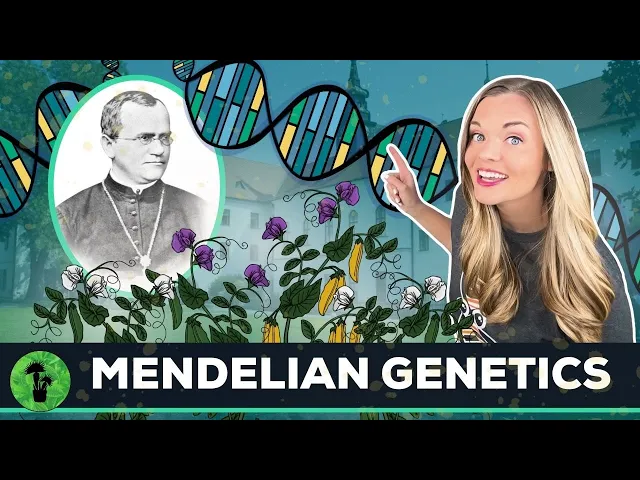
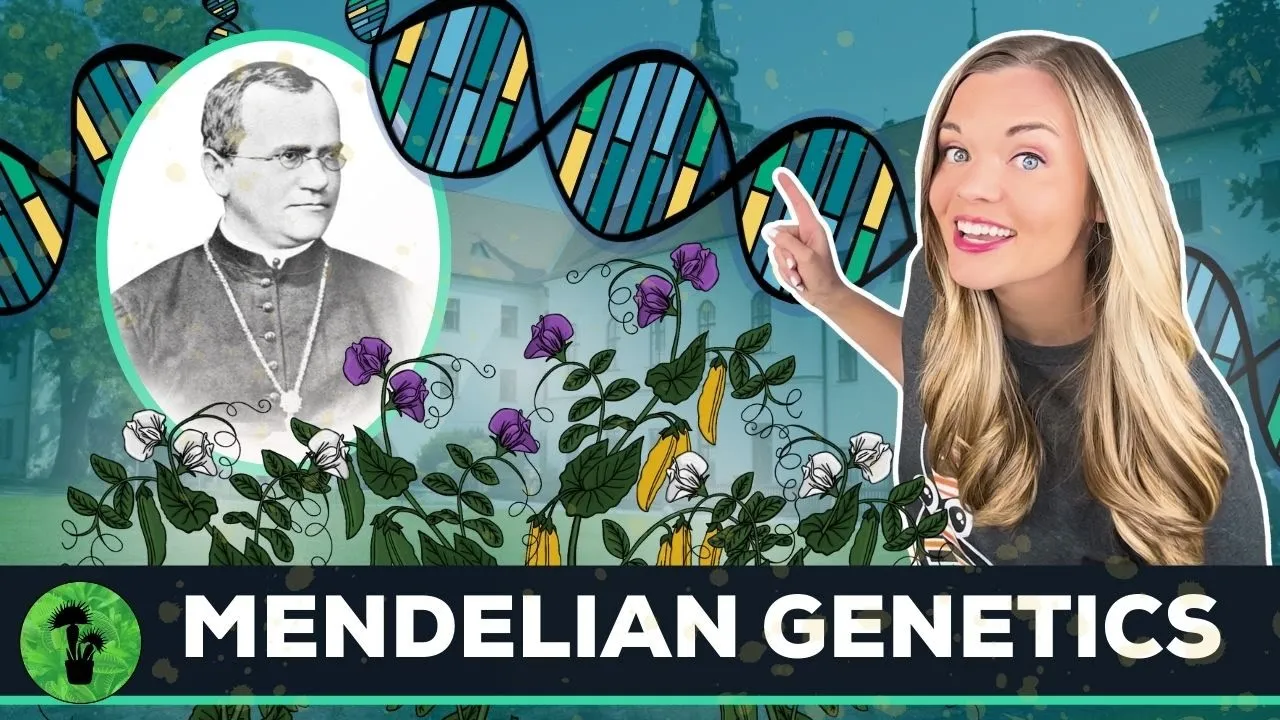
have you ever wondered why you are the way you are all the time but like why are you tall or short have black hair or red hair or what's up with freckles and why do I have blue eyes when both of my parents have green let's find out together in this episode all about genetics genetics is the study of heredity or the process by which genetic traits those distinguishing characteristics like my blue eyes are passed from generation to generation humans have been studying and modifying genetics for thousands of years without really knowing it selectively breeding
plants and animals that showed desired traits like fur type size or temperament we just had no idea that those traits we were selecting for were determined by genes Gregor mle helped us out in the 19th century thanks to his love of pea plants our human body is made up of millions of cells each cell contains organel that are busy doing different things to keep us healthy and Alive the nucleus is the star of the show for today the nucleus is the organel that contains all of the good stuff that we're focusing on the genetic material
or genome here we have a cell inside the cell is the nucleus inside the nucleus are 23 pairs of chromosomes 4 six in total each chromosome is a very long strand of DNA like over 6t long it's like this long long long DNA structure is called a double helix which is a fancy way of saying two strands that twist around each other like a spiral ladder individual sections of the DNA strand are called genes within those genes are chemical compounds that provide the coding for a person's inherited traits humans have more than 20,000 genes arranged
on their chromosomes but humans aren't the only organism with chromosomes DNA and genes in fact every living thing has DNA The Noose River Water Dog salamander has the largest Genome of any four-legged animal on earth these cuties have 38 times more DNA than you or I do don't get me started on salamanders I love them now back to Gregor mendle mendle was an Austrian Monk and biologist who used the garden at his Monastery to study plants specifically pea plants at this point humans have been crossbreeding plants and animals for hundreds of years like we mentioned
earlier the issue was that no one had really discovered a reliable way to get those traits they desired because they didn't really know what they were doing so mle began to interbreed his pea plants with different characteristics or traits the peas had different characteristics that he could see which was helpful some plants were tall and some were short some had wrinkled pods and some had smooth pods some pods were green and some were yellow some had white flowers and some had purple using a paintbrush similar to this one he would carefully move pollen from one
plant to another manually fertilizing them I know it seems weird but it's not to learn more about plant reproduction and flowers you can check out this video what mle found was astonishing rather than blending traits seem to favor one parent over the other so a green peep pod plant and a yellow peep pod plant didn't produce Offspring with chartreuse peep pods chartreuse so fancy instead they produced a plant with regular green pea pods even more Curious to mle two green peep pod plants might produce a plant with yellow pea pods these differentl looking plant traits
seemed to pop up out of nowhere mle was seeing patterns of inheritance or genetics in action even though he didn't realize it if you're still here liking this video let us know and hit that subscribe button so you never miss an episode thanks to mle's extensive experiments we now know that how an individual looks and their genetic code sometimes doesn't match up this is the difference between genotype and phenotype all the plants that mle studied showed their phenotype in the traits he recorded the traits he could see the green or yellow peas the bumpy or
smooth seed pods the purple or white flowers the genotype is the actual genetic makeup of an individual the phenotype is what that individual looks like traits that show up more often are called dominant traits traits that show up less often are called recessive traits back in our peepot example when mle combined a purebred green pea pod plant with a purebred yellow pea pod plant and only got green pea pods he called the green colored trait the dominant one because it was expressed in all the Next Generation then he let the new green peepot hybrid plants
self fertilize so they could only reproduce with their own genome in this next Generation he got both yellow and green peep pods which showed the yellow trait had been hidden or obscured by the dominant green mendle called this hidden trait the recessive trait Mel inferred that each trait depends on a pair of factors one coming from the mother and the other from the father now we know that these factors are called alals so whenever we talk about variants or versions of genes we're really just talking about Al after years of carefully controlled experiments mle discovered
how traits were passed from one generation to the next even without the knowledge of genes we call mle's Main discoveries his three principles of inheritance the principle of segregation States that every individual has two alals but only one alil is passed on to The Offspring most of the cells in a p plant are diploid but the plant also makes reproductive cells known as gametes gametes are made from splitting normal diploid cells to separate the alals the reproductive cell from each parent only has one copy of each gene that way they can each give one to
The Offspring it's kind of like those best friend necklaces I was always the B fry anyways we call these reproductive cells haid because they have half the normal number of alals the principle of Independent Assortment states that a pair of traits segregates independently of another pair during gamet formation I know sounds a little confusing basically this describes how every Al is split up from its partner independently of all the other alals so genes for one trait are not inherited together with another trait this is because they are located on different chromosomes which align randomly during
reproduction but again mle didn't know about chromosomes like we do so this is super impressive this means that if your dad has brown hair and your mom has freckles you could have both brown hair and freckles or neither the principle of dominance describes how genes that control the plant's phenotype work according to the law of dominance hybrid Offspring will only inherit the dominant trait in the phenotype remember in the PE pod color trait there is an Al for green and another Al for yellow out of these two alals one is dominant and the other is
recessive in this case the AL for green peep pods is dominant and the yellow peepot alil is recessive whenever the dominant alil is in the pair it will always be shown in the phenotype even if the recessive alil is there as well dominant Al are always pushy and just kind of want all of the attention so whenever mle saw a green peep pod he knew the plant could have either two green pea potals or a green and a yellow pot but when he saw a yellow pea pod he knew it had to have two yellow
alals remember this is because if they had been a green Al in there it would have just pushed the yellow alil aside and the plant would have ended up with green pea pods on a super basic level this is how all life works from pee plants to our noose river water doog salamander to the 200 ton gigantic blue whale thanks to mle's discoveries we also know that DNA molecules are subject to change as they are copied over and over and over and over and over again sometimes with mistakes that can result in mutations in the
genetic code but that's for another episode if you want to learn more science you can check out this video next Greg men Gregor Gregor Gregor Gregor M Mel M Gregor