Hello, everyone. A fish just jumped! Did you see it?
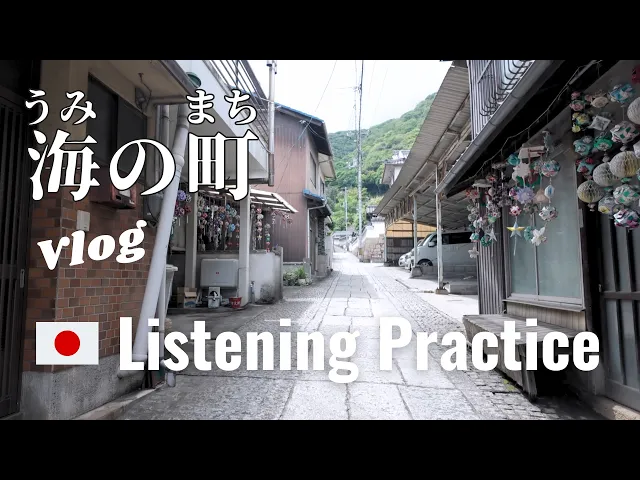
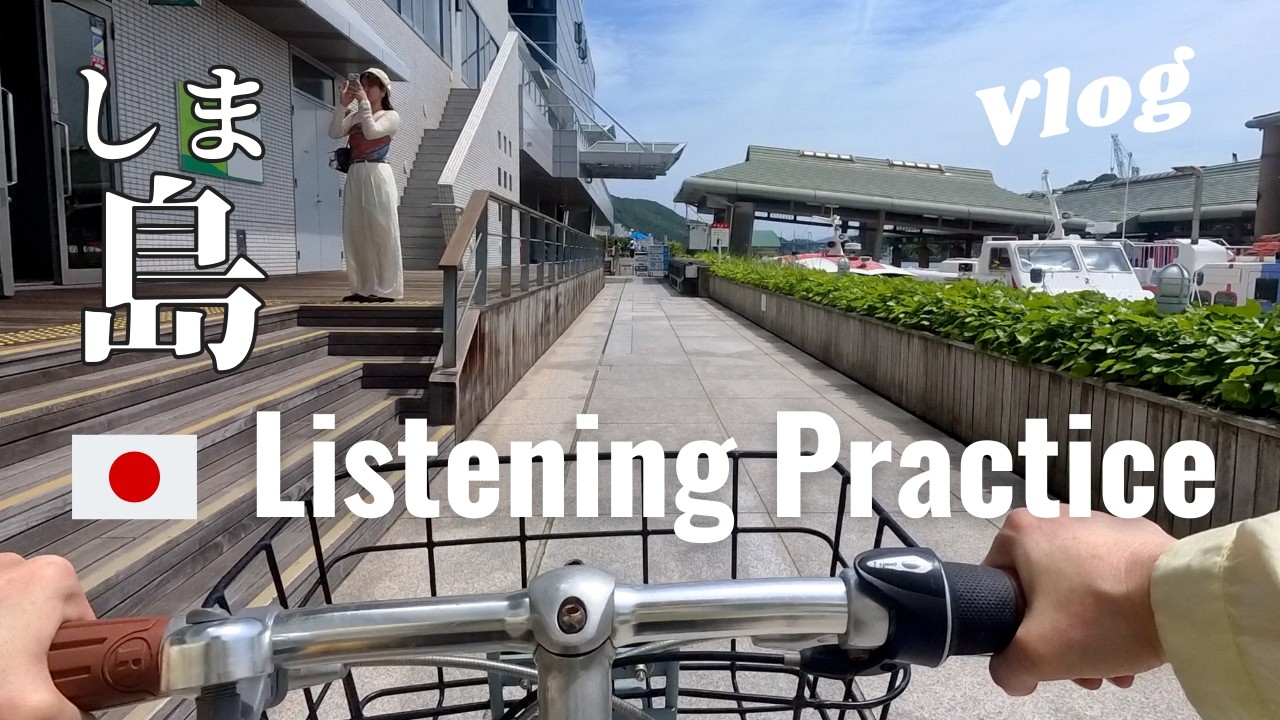
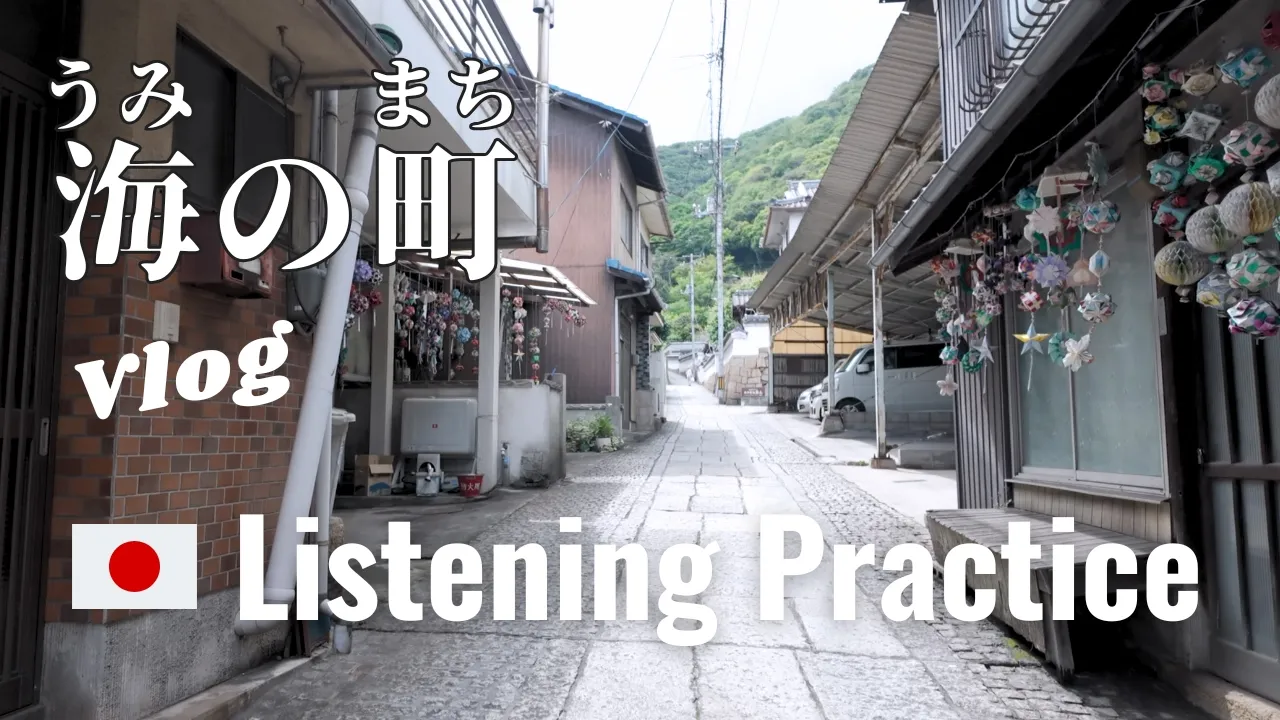
This town was the model for Ghibli’s “Ponyo on the Cliff by the Sea. ” We’ll do things like take a ferry to an island and see a beacon, visit a café, and buy some souvenirs. I hope you enjoy watching!
There’s something like a temple on top of the island. We can’t go to that island. But we’re about to take a ferry to the island behind it.
I can see the ferry dock now. This is the dock. “Hello.
” “Welcome. ” “One person, 240 yen. ” “Okay, 240 yen.
” “Sorry, here. ” “Okay, press the one-person button. ” “Now press for change.
” “The ferry leaves at 30 minutes past. Go ahead and board. ” “Put it in here.
” “Oh, here . And I don’t need a return ticket. Got it.
” We board from here. When I got on, the ferry was rocking and it surprised me. We’re at the sea, everyone.
I usually live far from the sea, so this feels really refreshing. The name of this ferry is “Heisei Iroha-maru. ” It’s a 19-ton ferry.
The ferry has started moving. Besides me, there were four other passengers. There’s a famous historical figure named Sakamoto Ryoma.
He played an important role in Japan becoming a modern nation. Sakamoto Ryoma used a ship called “Iroha-maru. ” Apparently, the ferry we’re on now was built to resemble that Iroha-maru.
I can see the place where the ferry is going to dock. We’re getting off the ferry. We’ll cross this bridge to reach the island.
The ferry we were just on is already heading back. It really does look like an old-fashioned ferry. Alright, let’s go explore the island.
This is what the whole island looks like. We’re going through a rocky tunnel. We’ve come to a fork in the road.
A “wakaremichi” means the path splits into two or more directions. For now, I’ll try going toward the brighter direction. It’s the sea.
The people who came on the same ferry were there too. The water was beautiful. Now I’m heading up the mountain from that fork in the road.
Here’s another fork in the road. I’ll take the steeper path. After climbing this path, I reached a spot with a great view.
I could see the area we passed before getting on the ferry. Going a bit further down, I found an even better view. The island in front of us is the one we saw earlier.
That statue looks like Sakamoto Ryoma. I wonder why it’s placed in a spot like that? The same ferry came to pick us up for the return trip.
Next, we’ll go to this temple right in front of us. It looks like the entrance is over this way. It’s ahead of this narrow path.
This kind of path is called “ishidatami” (stone pavement). It’s lovely, isn’t it? I wonder where this slope leads?
I’m curious, but first I’ll head to the temple. I’ve heard the view from this temple is really beautiful. It says “No shoes allowed inside.
” That means “Please take off your shoes. ” I’ll put my shoes in the shoe box. It looks like you pay the entrance fee over there.
“Hello. ” “Hello! ” “One adult, please.
” “One adult is 300 yen. ” “Thank you very much. ” Apparently, the view from here is quite famous.
Everyone’s taking pictures. Here, you could try sutra copying. “Shakyou” means to hand-copy Buddhist scriptures.
A “okyou” is a collection of Buddhist teachings. I also tried a simple sutra copying. I didn’t understand the meaning, but doing it made me feel calm.
It was a very nice experience. By the way, sutra copying cost 1,000 yen. Now I’ll head in the opposite direction from where I came.
The buildings have an old-fashioned feel—so charming. This is a hair salon—a place to get your hair cut. This path also looks appealing.
This is a hotel. It’s lovely. They say this house used to be a store long ago.
Let’s take a look. “Hello! ” “Would it be okay if I filmed inside?
” “Sure. ” “Thank you. ” This is where the shopkeeper used to sit.
It was originally a shop that sold kimonos. These are hibachi. They are used for heating and boiling water.
That’s an old-looking telephone. There’s an illustration that resembles something Hayao Miyazaki might have drawn. Under the stairs, there’s space to store things.
This was used to store water in the past. Here’s how outside looks. This house was built more than 150 years ago.
You can’t go upstairs. I wonder what it looks like up there. After it was a kimono shop, it became a place that made nets like this.
The front door is lifted up. That way, the entrance space can be used more widely. “Thank you very much.
” “Not at all. ” The person kindly explained many things to me. As I was thinking of going this way, I found an interesting shop.
This is a renovated machiya house, based on a design sketch by Hayao Miyazaki. A “machiya” is a traditional Japanese house that used to be a store. The name of the store is “Iroha.
” I think it’s named after the ship “Irohamaru. ” In fact, the real Irohamaru sank—meaning, it’s now at the bottom of the sea. The spot where it sank was off the coast of Tomonoura—this very place.
“Oki” means an open sea area beyond the harbor. I found a place where you can learn more about Tomonoura. There was an old well.
It said you could try it out, so I tried drawing water. When I moved the lever, water came out. The lever was quite heavy.
Inside, I could learn about the building itself. There were many lovely shops. At the end of this narrow path— There was the sea, and a beacon.
This beacon was built 165 years ago. It doesn’t look old at all. It’s beautiful.
Next to it, the stairs continue all the way into the sea. I decided to buy a drink at this café. “Welcome!
” “Excuse me… do you do takeout drinks? ” “Yes, no problem. ” “Setouchi lemon… soda?
” “Lemon soda? Yes, coming right up. ” “One lemon soda for takeout!
” “Can I use PayPay? ” “Sure. That’ll be 594 yen.
” “Thanks. I’ll bring it to you. ” “Here’s your lemon soda.
” “Ah, thank you so much! ” The area around the Seto Inland Sea is called “Setouchi. ” “Setouchi lemons” are well-known.
There was a police box. What a cute building! Next, I’m going to see the yellow house with the red roof from the Ponyo movie.
I can already see it. I could see it, but it took about 10 minutes to walk there. And it was a pretty steep hill!
These are origami. They’re made really well. There’s a temple here, but I’ll climb a bit higher.
There’s a sign. It looks like there’s a café ahead on this path. But first, I have to see the yellow house.
I can see it now. It’s a little set back, so I can’t see it very well. But since it’s a private house, I shouldn’t get too close.
I’ll try looking from above. It was pretty far up the hill. The trees block the view, so you can’t really see it.
Since I got tired from climbing, I’ll go to the café from the sign earlier. This path looks like it leads to someone’s house. I’ll turn here.
This one is someone’s house. When I went straight, I saw another sign. Then, a house with its door open appeared just past the turn.
I wondered if I should enter from there— —but then I saw a noren curtain over there, so I think that’s the entrance. “Hello! ” What a view!
“Welcome! Come on in. ” “Ah, hello.
” “Anywhere is fine. ” “Oh, can I sit here? ” “Yes, that’s fine.
You can also sit on it(the table) if you like. ” “Oh, here? Really?
! ” “There's tatami mat on it, so if you want, feel free to sit and enjoy your drink. ” “Ah, got it.
” “Anywhere is fine. ” “Is it okay if I record a video? ” “Oh, yes, yes.
” “Thank you! ” “You can film anywhere you like. ” “Oh, really?
” The people at the café were really kind. They said there’s a second floor, so I went up. It kind of feels like someone’s house.
This is what the second floor looks like. There were other customers outside. A ferry is heading out.
Apparently, about 20 years ago, there were plans to reclaim the harbor right in front here. They built this café in opposition to that plan. Now, that plan has been canceled.
They told me many stories about this area and things related to the Ponyo movie. When I was leaving, the café owner took me to the spot where you can get the best view of the yellow house. But first, that Japanese-style house in the back used to be a villa for a former Prime Minister.
And this is the best viewpoint for seeing the yellow house. The bus was coming soon, so I hurried back to the bus stop. I had about five minutes left, so I stopped by a souvenir shop.
“Mokeke” are sold in various places, but each location has its own versions that you can only get there. I quickly picked two. Because I have two sons.
“Could I get these? ” “Sure, sure. ” “I’ll use PayPay.
” “PayPay, okay. ” “Would you like them in separate bags or together? ” “Umm… oh, together is fine!
” “Got it. ” “They’re for my two sons. ” “Won’t they fight over them?
” “Yeah, they might. ” “How do you decide who gets what in that case? ” “Actually, now I’m kind of worried.
I just picked them quickly because the bus was coming…” “The bus is here! ” “What! ?
” “It’s here now. Go, go! ” “Okay, I have to go!
” “It’s here! ” “Oh—wait, is it too late? Oh no!
” I missed the bus. “Oh, this one’s a different bus. ” “Yeah, it’s not the right one.
” “There’ll be a bit of a wait, but another one’s coming. ” “In 30 minutes, right? ” “Yeah, that’s right.
” So I had 30 extra minutes. So I decided to check out a shop that sells Houmeishu. “Houmeishu” is a type of sake that’s good for your health.
It’s only made in Tomonoura. “You can taste the Houmeishu. Are you driving?
” “No, I’m taking the bus. ” “Bus? Would you like to try?
” “About 30 milliliters is the daily amount. ” “Oh, daily amount… thank you. ” “Even if you drink more, the effect is the same.
” “Meyasu” here means “the amount you should drink in a day. ” “It tastes good. ” “It does, right?
It’s easy to drink. ” It’s made with things like ginseng. “How many bags would you like?
” “Just one, please. ” “That will be 2,340 yen. ” “Uh, then I’ll…” “Pay with PayPay?
” “Okay, please scan it here. ” This is what “yomaseru” means. “Thank you very much.
Would you like a receipt? ” “Yes, please. ” “Would you like a receipt?
”—that’s something store clerks often say. If you want it, say “Onegaishimasu (yes, please). ” If you don’t want it, say “Ie, daijoubu desu (no, I’m good).
” “Well then, thank you. ” “Thank you. Take care.
” Now I’m heading back to the bus stop. I saw an old-looking house. It says “Ryoma’s Hidden Room.
” Apparently, Sakamoto Ryoma hid in this house when someone was trying to kill him. Here’s the bus stop. While I was sitting on the bench, I saw a Shiba dog in front of me.
As I was watching the Shiba, I got a message from Aki-san, who I’d be having dinner with later. Aki-san came to pick me up by car. We’re going to eat at Fukuyama Station.
This is the restaurant. There’s a line. First, you write your name.
You’re called in the order the names are written. “Kanpai! ” It was a little drinking party with Aki-san and her friends.
“People who study Japanese and those who don’t are completely different. ” “They want to absorb all aspects of the culture, so they study Japanese. ” “That passion is so strong, I’ve decided to focus only on people who study Japanese.
” Aki-san runs a homestay program in Fukuyama and Onomichi. Mr and Mr. Ito here recently hosted someone from America.
“Martin was such a good person. We were so glad to have him. ” “But we weren’t sure if it was just luck or if all guests are like that.
” “They’re all good people. ” “Some host families might have a different experience. ” “Yeah, it could be harder for others.
” “Most guests are just so grateful to be immersed in Japanese culture. ” “Recently, I had one write about their experience on a blog. It was really long.
” “He was so moved by the flowing soumen machine his host family had. It was just a small part of the program, but he wrote a lot about it. ” “He ended the blog with something like, ‘Oops, I’ve written so much.
I wonder how far I’d go if I kept going. ’” “He must’ve had a lot of memorable moments. ” “Wow.
” Even things that aren’t special to Japanese people can feel really special to guests staying in Japan. “He made tamagoyaki for us. ” “It was so good.
” “We asked Martin what an omelet is like in his country. ” “It’s different depending on the country. ” “I think it had onion and egg?
” “Yeah, it was good. ” Even for the host families, these small everyday things become special memories. “I don’t teach English just for exams.
I want my students to see how many opportunities there are overseas. ” “Also, if they have these kinds of experiences, they’ll realize Fukuyama isn’t boring at all. ” “I just want everyone to feel that kind of joy in their daily life.
” Aki-san is an English teacher. She wants her students to connect with people around the world and discover how big the world is. And at the same time, she wants them to realize what a great place Fukuyama is.
That’s why she started this program. If you join, I’m sure you’ll be warmly welcomed. I’ll put the link in the description.
You can also visit Tomonoura, the town from *Ponyo*, through the homestay program. Next to the restaurant we visited, there was a place called Ginger Diamond. Their chai cream puffs looked really good.
They had delicious and healthy-looking treats. Thank you so much to Huang Chiuling-san, Jeong Yeon-sook-san, and Walter Eedekens-san for your Super Thanks. I really appreciate it.
Lastly, here’s a comment I’d like to share — it’s a question from Hoit-san. Can I get scripts of videos in this channel? Thank you for your question.
Yes, you can. I’ll put the link in the description, so go ahead and check it. Now, I’d like to say something to everyone.
I want to help you feel more confident when speaking Japanese. That’s why I created a course to help you improve your pronunciation, rhythm, accent, and intonation. If you want to feel more confident when speaking with native speakers, please check out my subscription course!
The link is in the description. To everyone who watched to the end, liked the video, or shared it with friends — thank you so much. I hope you have a wonderful day!
See you in the next video! See you!