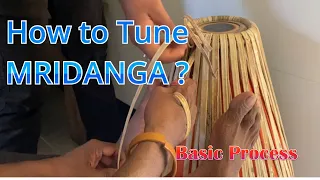
[Music] one of the most beautiful Drums of India is called coal it is a two-headed drum one smaller head and it's made of clay in South India there's another drum called manga which sometimes is also this one is called manga and the South Indian drum is made of wood and MD means mud Anga means limb so sometimes there's confusion that why is this uh wooden drum called drum of with limbs of mud and the answer to that is that both heads on each side have a patch this patch sometimes called sahi or Gob is uh
actually made of clay so why is it there if you would remove this patch uh the skin by itself has a very high pitch tone so this is undesirable because this side of the drum should give us a low pitch in this case because there's too much layers of clay and too much humidity in the air because there's a rainy season just started then the pitch of the drum has been lowered too much and it creates a a distorted sound almost like a deflated basketball so this is undesirable and one must learn how to adjust
the pitch so what we'll do is remove this layer by putting water first and letting it absorb and removing very carefully the clay and then we'll proceed to apply a new a new patch if the problem also happens if uh the weather is too hot because there's no moisture in the air and then when you play on this side the pitch is very very high so one can add a little water on the the patch itself or on the sides to lower the pitch and if it's a continuous problem well just better learn how to
apply and add more layers so that you don't have to do that every single time you have a nice sounding drum most of the time these are adjustments that every drum player uh every serious drum player at least should know because well uh there are many situations where we are changing weather climate and we need to be able to play very beautiful music for the pleasure of Krishna so let's begin the first step will be to add water to the current clay patch and we have to let it sit and moisten it for I don't
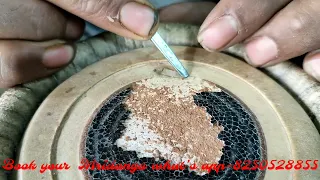
know 10 minutes 20 minutes until it absorbs fully this is necessary because otherwise we damage the skin the clay will soften and then with a little soft spatula or uh some razor blade very softly start to remove the clay you'll notice that the skin on the bottom starts to bend and form little uh irregular shapes that's all right that happens when the skin is wet now 10 15 minutes have passed and automatically some parts of the clay are chipping off it's important to be very careful at this point because we don't want to damage the
Skin So with a spatula or some uh knife or something very not very sharp very carefully start to scrape off the Clay and this will take you some time but it's better better to be slow and careful because otherwise you can break the skin and to replace the skin would be a much bigger Endeavor if it doesn't is it's not removable the first attempt is better to uh dry it with a towel and then put some more water let it sit for another 10 or 15 minutes and then uh try again will soften each time
because you're taking off layers of clay another 10 minutes have passed now and we're going to remove more clay better not damage the skin so another another 10 minutes with water and that should do the the trick and we remove the last bit of clay so you'll notice how much easier it is it all comes out smoothly and that's it for the first step now we let it dry and you'll notice the pitch is very high it has been sitting now for a day I want to let the skin dry so that you could see
the effect of having no Clay on this side of the head so it's a very high pitch which is not useful for this side of the drum and that's why we need the clay patch if we add just a little water we notice that immediately the pitch goes down the problem with that is that it won't remain low for a long time so you would have to put water all the time and it would be a big problem so we're going to proceed to apply a layer of rice cooked rice and we're going to make
it into a paste and apply it as our glue it will be our gluing agent I have this rock that I found near a river so just look anywhere around you where there's lots of rocks you need something to grind something that has a smooth edge and we're going to need just simple cooked rice has been soaking for 2 hours so that it's nice and soft so we'll take uh some rice like two handfuls like this and we're going to mash it up to make our glue [Laughter] okay so now we have our rice paste
now that we have our paste we're going to apply it and first this head has to be really wet really moist so that the glue will stick very nicely so it's important to put a lot of water doesn't matter if you see the skin bending it's all right we don't want to leave big chunks of rice so we're going to grind it as we apply it to the drum in a circular fashion to the size of the patch that we're going to do one has to press from so that the rice breaks up and then
with the spatula we have to clean it up on the sides you can put a little water on your finger so to spread it evenly and it should start looking like a layer of glue and this will stick to our clay as we put it later on you should see no big pieces of rice especially no hard pieces of rice and if there's anything left you have to mash it a little more with your stone and this will complete our first stage then we will let this dry Under the Sun for 30 minutes or if
you don't have Sun then you have to wait until it dries fully dried and then we'll proceed to apply the clay now the first layer of glue is set a day has passed and now it's fully dry it shows little cracks everywhere and that's a good sign we will put our Clay on top of this and uh it this will keep the clay together with the drum now we're going to prepare our clay mixture in this case I'm going to use two tablespoons of clay most of the clay when you buy it or when you
make it on your own from the backyard it's going to be too coarse so you need to grind it for about I don't know 10 minutes more or less until you achieve a very soft uh texture similar to when you buy some spices on the store like turmeric powder that it's very soft not grainy at all very very soft and you need to basically grind it as much as needed until you achieve that texture if it's not fine enough what's going to happen is that you'll apply your clay and it will start cracking with big
uh big cracks and it will fall off so you need this is very important you need a very fine clay powder once you have your clay powder then we will add one uh tablespoon of the rice so the proportion is 2 to one and then we'll blend them together it is very important to crush it very finely so that there's no grains of rice we will still crush it while applying but the best is to remove them all beforehand okay we've got it so let's go to the next step so we have our clay and
rice ready to be applied and we will put them one layer at a time so we'll take a little bit and put it in the center and with the help of some water and our grinding stone we'll distribute it evenly applying little pressure is very important to not leave any pieces of rice at this point it has to be just clay and rice totally fine so that is the first layer and we will repeat this process several times according to the amount of layers that we need to apply in a very humid weather the drum
will have a very low pitch so you want to apply few layers and if your weather is very dry desert like then you have to apply more layers now that the first layer is applied we let it dry for about 5 minutes and if there's any extra Clay on the sides we can remove it with our spatula then we proceed to apply another layer take another chunk of the clay and glue rice and repeat the procedure at the last layer what you can do is with your fingers with some water even it out this will
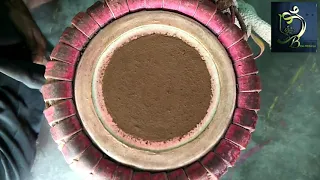
make the clay smooth and then simply remove any extra C clay from the sides and we'll have to let it dry until it's fully dry and we'll continue with the next step now our drum is nice and dry and we can see that there are some very small cracks in the clay and that is okay and normal if the clay is not fine enough then you will see big cracks and actually chunks of clay will fall off and this is a very common problem because it's hard sometimes to get the powder to be to a
very fine texture just with a hand grinder so sometimes you can use this if you have available which is just a spice grinder you put your two tablespoons in the grinder and run it for 5 minutes and then you'll have a very F powder from the clay and uh this should be the result now if you put your hand over it you'll you'll notice that it's still a little bit rough so what you need to do to finish is use a sandpaper and just pretty much uh level it out until it's nice and smooth this
is a just a very soft sanding and then uh well you notice now the pitch of the drum is is much more usable and if it gets a little bit hot during the day I can just put a little water and if it gets too cold expose it a little bit to the Sun but the drum should sound good most of the time and that is a good uh good amount of clay to apply you'll have to experiment with how many layers you apply and uh I think if you try once or twice you might
fail but eventually you'll get it right and you'll see how much more benefit another tip is that when you're uh applying the paste if it goes too much out of the ring you can use a spatula to go around like this in this motion to remove the extra clay and that will maintain your C your circle nice and straight if there's any comments or questions please post them below or visit our website theway.org thank you har Krishna