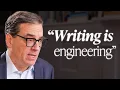
Daniel Pink is one of the most successful non-fiction writers of the past 30 years. You've probably seen his books, Drive, The Power Regret, To Sell as Human. Maybe you've even seen his viral TED talk about the science of motivation. And now in this conversation, we started by talking about his writing process. He's been doing it so consistently for so many years. So I said, "When, where, how, how Often? Tell me all about it." And then at the very end, Dan goes, "Wait, wait, wait. I got one more thing to share with you." He says, "This
is the most important question that any writer can ask before they take on a new project." Okay, let me show you this new tool that I've been using to write called Sublime. And they're the sponsor of this episode. And what I'm going to do is I'm going to show you how I use Sublime to write this post on X, which got almost a million Impressions. So, it started off with the basic note-taking stuff. I was just throwing notes in, but it's the stuff that came after that was really unique. That's what makes Sublime special. You'll
see here that I had this mind map and that allowed me to begin to see connections that weren't even there. And I was blown away by this. And then it didn't just end there. Sublime has this save one discover 100 feature where you can just put in a piece of information And all of a sudden it just starts recommending things. It's like having a research assistant that actually has good taste. And these are put in there by actual human beings. And so now I had the mind map. I had all the related ideas and I
really started to think about how am I actually going to structure this piece and Sublime helped me see parts of my structure that I didn't even realize were there to see how ideas were actually connected. See, Sublime is built by people who care about creativity and beauty and not just productivity and efficiency. And you can feel that as you use the app. So, if you want to use Sublime in your own writing, well, you can go to sublime.app and use the promo code PL and they'll give you 20% off. All right, let's get to the
episode. >> Well, I think the place to begin is I just want to hear about when you sit down to write, >> there's a certain sense of consistency, routine, ritual that seems absolutely core to your process. >> No question. When I when I have some when I have something to write, when I'm working out a book or a long article, I have a structure. I'm pretty rigid. I show up in my office at a certain time. I give myself a word count and I don't do anything until I reach that that word count. Um, and
then I do it the next day and the next day and the next day. Otherwise, there's no way I would have been able to there's no way. And I came to that in a a hard one way with struggling to write stuff and certainly struggling to write my first book. >> Yeah. So, so walk me through that. It's like 800 words. You wake up. It depends. Okay. So, so um here are the gritty grimy details. I wake up, I have a cup of coffee, maybe a little breakfast, maybe look at the newspaper. I actually still
get print Newspapers if you can believe that. I'm like, I'm going to be the last person. You're going to they're going to be tearing it out of my cold dead hands. Daniel Pink, Washington Post. >> I don't have the I don't get the Washington Post anymore because I'm pissed at the Washington Post, but I get the New York Times and the Wall Street Journal. The um uh So, I'll look at that and then I'll go to my office. My office is the garage behind my house. So, I go Out my back door, 22 steps to
the refurbished garage behind my house, and I sit at my desk and I have a certain word count for that day. For me, cuz I'm a pretty slow writer, it's often not a very high word count. Sometimes it's 500 words, sometimes it is 700 words, 800 words. Um, that's hard for me. Like, like writing is is still really, really hard for me, even though I've been doing it my whole life. And so, I will have that word count and I will I don't bring My phone with me into the office. I don't open up email.
I don't do anything like that. And then I will just crank until I hit that word count. Then there's a moment of liberation where I'm like, "Oh, I've done it." And then I can like watch some sports highlights or check my email or do the other kinds of things. And then I do it the next day and the next day and the next day >> and then and the next day. >> You would do that for a certain number Of days until you reach say 80,000 words. And then what do you do? You begin editing
phase. How does that >> Well, it's so what I what I what I will often do is I will like for a book I will work on a chapter at a time and so I'll make sure that I get the chapter right and so what it might be is I do that for several weeks to get the chapter done and then I'll spend another week editing and rewriting and editing and rewriting uh on that and um and then I'll begin the process again. But for me, I think for a lot of writers, the the the
routine and the rigidity is actually really important that the structure itself is liberating, >> right? I feel like there's two kinds of writers. There's writers who are like, "No, I never talk about my writing before I publish it." And then there's people who are like, "Yeah, I'll talk about it because talking about it helps me structure the ideas, form the ideas." You seem to be in the second camp, huh? >> I am I am the executive vice president of the second camp. [laughter] I want to be president but uh you know I'm waiting for the
the president to leave. Uh absolutely. For me um I I think it's really important to socialize ideas and uh and when I have something that I'm working on, I actually in many cases like to talk about it because I want to see how people react. You know, are they are They dead in the eyes? Are they asking me questions? Are they intrigued? If I say something, do they say, "Oh, that's interesting." Do they say, "That's interesting. have you thought about this? Do they say, "That's interesting. I disagree with you." That's really really that's really helpful
to me. I also find that I get um I I work things out sometimes by talking it by by talking about it, which I think is not which is not anything which is Not anything new. >> It's kind of a weird thing, right? You'll be blocked when you're trying to think about on your own. All of a sudden, you explain it some to somebody else. >> It's like it's weird. Your brain automatically structures it, makes sense of, okay, you do more of this, less of that. So that's that's important to me. I'm also I mean
sort of like just in the way I approach things is 360 almost Almost literally in the way that my body is in my office. So what I will also do is for me the especially for books the structure of a book is really really important. I can't write a book unless I see at least the skeleton of it the structure of it somewhere. So I'll spend months doing research and reporting to try to find the structure. And what I will often do is put either a whiteboard or big post-its with my first kind of scratchings
about what that structure Might be. And I will literally turn in my chair. I have a swivel chair. Here's my desk. Literally turn and behind me I'll have post-its. And I will sit there and just look at that to try to get the structure because I can't really write anything until I see the structure of the until I see the structure of the building. So walk me through a specific book where the amorphous lack of structure began and then where you ended up. >> Okay. So let's take let's take a book like uh when the
book about the science of timing, right? So I had all this research. I I you know I went through like like something like 600 studies about timing because I realized that what was happening with timing is that you had these different disciplines that were all asking similar questions. All right. Um, so it it's the similar questions in like in economics and in neuroscience and in uh even even in even In medicine. So how do we make different decisions at different times of day? How do beginnings affect us? How do midpoints affect us? And so I
had this whole kind of um mlange of of um of studies and I initially said I initially started organizing it like day, week, month, year. So that was going to be the organizing principle and it just didn't work and I would stare at it and stare at it and stare at it and say I have nothing to say. Then I started thinking About it in domains. All right. Timing at school, timing at work, timing in health, timing in leadership. And I tried that. Stare at that on the wall. And then finally in through some conversations,
I said, "Well, maybe I just need to do it more conceptually." And I said, "Okay, what if I do like timing in timing in a day?" And then I started thinking about um um something about beginnings and something about midpoints and something About endings that the domain itself was less important health or or leadership or whatever than the fact that beginnings operate us on us on us one way midpoints operate us on another on another way. So it wasn't so much the weak wasn't significant there the midpoint was significant there. So over time in this
tortured way kind of unpleasant in a way I kind of came to that way of organizing it put it there and said okay now I can begin now I can Begin writing and the structure doesn't always stay the same once I come up with it it you have to stress test it with what you're writing so for instance I so I started writing a chapter about the the day and I realized I was going to have a little section about breaks the importance of breaks and I had this whole pile of research about breaks and
I started writing it and I was like well there's a lot to say about brakes. Well, there's a shitload to say about brakes And suddenly I discovered like, oh, I have a chapter on brakes. So, so that that's what it is. So, it's I mean, I'm not sure how interesting it is to anybody else, but it's sort of the tortured process that that I that I go through. >> What's important to know about breaks for writers? >> Oh, the most lots of stuff for for well for writers and for everybody. Okay. So, um, writers and
and others need to think About breaks the way that athletes think about breaks, which is that they're part of our performance, not a deviation from the performance. So, a lot of times we say, "Oh, I'm taking a break. Um, um, God, I'm kind of wimping out here. I need a, you know, I need a break. You know, I'm overworked." Um, when when in fact, uh, breaks and recovery are fundamental to our performance. Um, the other thing about it is that we know a lot about effective breaks and there's a Kind of a platonic ideal of
effective breaks. We know from the science that um breaks uh when you're in motion are more effective than more restorative than breaks when you're sedentary. We know that breaks when you are so a break when you're in motion like going for a walk rather than sitting down. >> Absolutely. >> Got it. >> Um being in motion is better than being sedentary. Being outside is better than Being inside. There's some uh a lot Oh, there's some incredible stuff on the importance of being in nature just in general. But um for for breaks, being outside is more
effective than being in inside. For writers, a little bit counterintuitive, breaks with other people are more restorative than breaks on your own. This is true even for introverts. Um, it's important that breaks are fully detached. That is a break. You go out for your walk and go Out for a walk and stare at your phone. That's not a break. Uh, and so there are we we know a lot about how to take effective breaks and we have to start thinking about breaks in a fundamentally different way. It's funny that you were talking about how you
like talking ideas out. You like seeing people's reactions. That seems to be how you learn to give good speeches by I read that you would look at the audience, not the presenter. Oh, yeah. Yeah. Well, I mean, first of all, when you're when you're giving a speech, you see the audience. You're getting feedback in real time. Are they laughing at the joke? Are they not laughing at the joke? Are they staring at their phone? Are they talking to their neighbor? Are they spacing out? But um but um a lot of times for uh when I
when I watch other people give speeches, I will position myself in a way that I can see both. So I want to See what the speaker is doing, but I also want to see how the audience is doing. This is especially true if I'm going to say an event and I'm speaking at the event and I'm speaking at like 3:00 and I'm there at 11 and I want to see I want to sort of gauge the audience. What kind of audience is this? How how receptive are they? What are they into? Mhm. Well, we were
talking about David Zucker earlier when he was developing movies Like Airplane, Naked Gun, one of the things that they would do is they would host, there were some of the first movie makers to do this. They would host screenings of the movie and then they'd pay attention to when there were laughs. And if there were more than 25 or 30 seconds of no laughter, they'd say, "Hey, we need to focus on minute 47 right there." And that's why their movies are like boom boom boom boom joke joke. Um, I do that I don't do that
many speeches that are that are written out like like a commencement speech is something that I will like write out something entirely but in the course of when I when I do a speech like that um I will go through afterwards and put I mean truly L circle for when there are laughs just to see what the pace of what the pace of laughs is and because you want in certain kinds of certain kinds of Speeches, you don't want it to be too concentrated in one place >> because then it's like, oh, is this guy
doing a stand-up routine or is he like telling us something? Uh, and also if there are long patches without a laugh, that can sometimes feel beautiful to people. Um, I just I did that. Um, we were talking right before I got on that, I've started writing plays. Yeah. And and my plays I'm discovering are comedies. I thought they were dramas at First, but when we did a table read with actors, they were like, "You this is a comedy. Like, why are you calling this a drama?" And so um and so I've actually I actually went
through and did a I mean so I did a sort of an analysis of the laugh density of the plays to see are they moving you know are are there and in one of the plays there was a long stretch where there was so much exposition and so much not exposition but there's so much plot unfolding that There weren't any laughs and I had said okay wait a second the audience is going to get confused here they've been laughing at a regular pace for the first um you know four scenes and suddenly the fifth scene
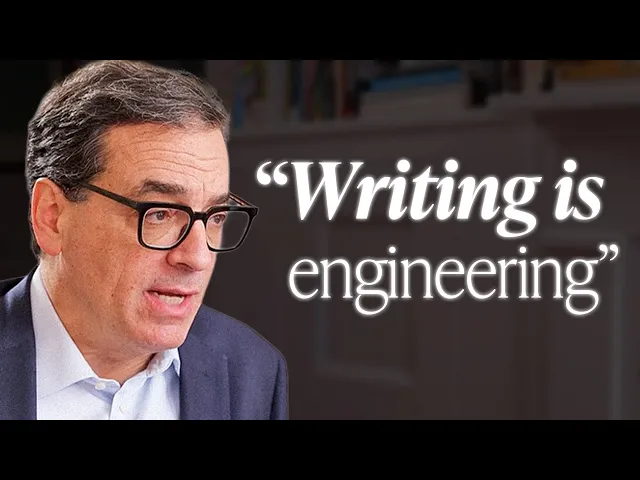
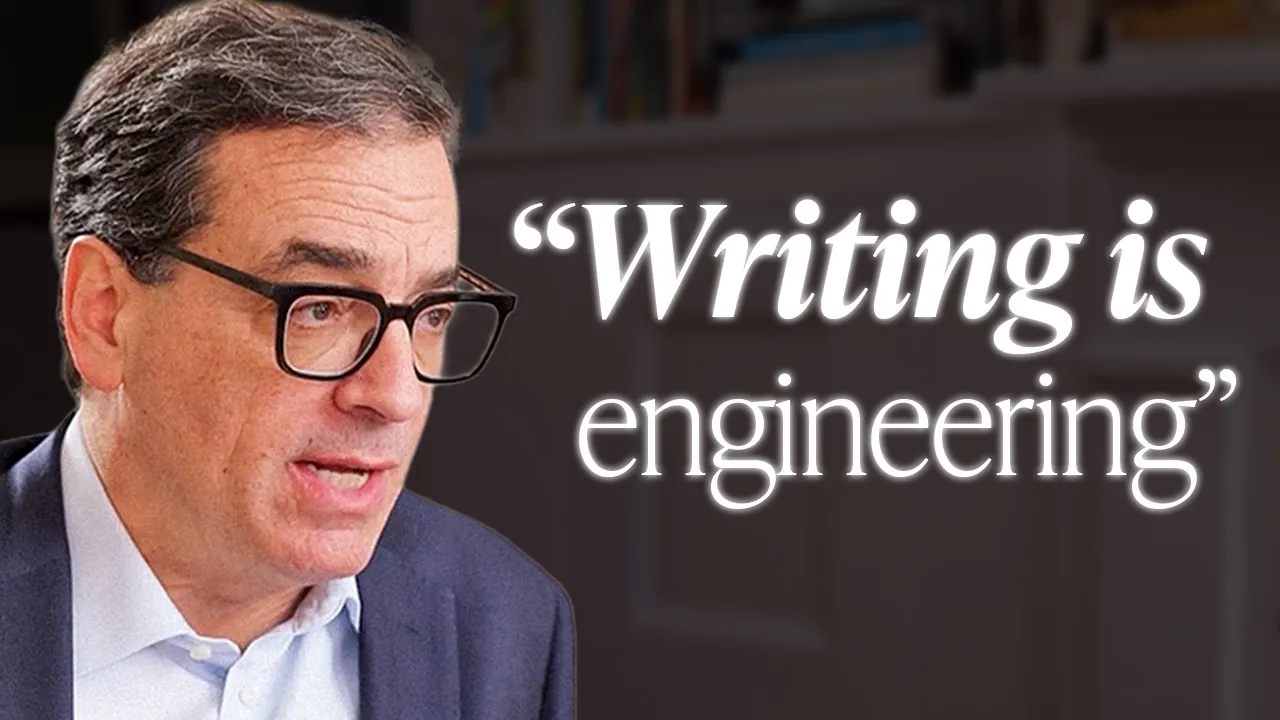
there's no laughs. I got to actually up that. So I'm I'm a big I'm a my view on this is for me writing is is engineering. >> It's an engineering. It's an act of engineering in the sense that you're building Something that has to work. >> Okay. For me, it's less a kind of art sort of classically artistic thing in that you're building something that has to work and you're you're testing it and you're stress testing it and you're seeing, you know, is this, you know, are these walls staying up? Are the walls strong enough
to support this kind of are those walls strong enough to support this kind of roof? >> Mhm. So, as you're thinking about, okay, I'm going to choose this book. Walk me through how you go from I got an inclination here. Yeah, you know, I think I might do this, too. Okay, I'm going to do this book. I'm going to spend the next few years of my life committing to it. >> Yeah. Okay. I'm glad you said that. All right. So, because it is a big it's a big commitment. And I think a mistake that some
authors write is they become enamored with something or becomes very Popular. Something they write an article or something that becomes really popular and the world starts kind of pushing them in this direction and they're not and it might not be a good idea. It might not be a good idea for them. So what I do is I start out with I have a massive list of ideas that I keep on a in my my very sophisticated knowledge management software called Word, right? So it's just a long list of um and so I'll go back and
revisit those Periodically just to see hey sometimes I come back four months later it's oh my god that's so stupid. Like what is that about? Um and then other times art certain ideas will stick and um and then I'll start maybe collecting some articles about it and maybe some reading some things about it. So for instance, I've been contemplating writing a book about wisdom, right? Like what is wisdom? And um that's an idea I've had for a while and it stuck around and so I Might end up I might end up doing that. So if
I were to pursue that, I would then um start reading some more about it, talking to people about it, socializing the idea, hey, what do you think about this? And then um and I always write very long book proposals too. Um I write maybe 30 40 page book proposals. And the reason I write them is that it's a test of the idea because if this if this idea can't withstand a 30-page proposal, it's Not going to be able to withstand a 300page book. >> Right. >> Okay. And also it forces me to think about uh
whether there is a there there. It's a it's a test of me as well. Do I like writing this 30-page proposal? If I hate writing a 30-page proposal, I'm gonna really hate writing a 300page book. So, it's a it's a it's a test of that. I have book proposals that I've never submitted. Um, you know, one story Was years ago I was I had this idea for a book. I thought it was so freaking brilliant. And I'll even tell you what the title of it was. The title was called The Invisible Present. All right? So
it's basically things out there in the world that are happening right now that nobody can see >> and it was a list of like 10 things kind of like in the tradition of mega trends and um and there was a sort of a play on words with because the present is also Like a gift. So it's like oh it's like these things are actually a gift to us as well. >> Okay. So that's the reaction I should have had. >> You had me until the present thing. >> You had me till the present thing I
heard that I was like okay that's a little too clever by >> Yeah. Yeah. I'll just wait. But I wasn't getting any traction on it. At the time, my wife and I had like little kids. So, I sent um them away. I sent them away to um visit my in-laws. And I was going to go into my office and just haul up and just crank write this proposal. And so, a week goes by and I'm cranking this week goes by, I'm writing this proposal. About 10 days in, they were going to go for two weeks.
It's a long time. 10 days in, I call my wife and say, "You guys can come home now. because this is not a book. This is just not going to work. And again, I'd much Rather find that out now. I'd rather find that out after 10 days than after signing a contract and and doing that. >> Can you walk me through the structure of a book proposal? Like, okay, so I want to sit down to do this. I have an idea. >> What is my outline? What are the >> It depends. It It depends. The
most important thing in a the most important things in a book proposal are um being able to clearly articulate what the idea is and also this is and also why it is Totally fresh but also totally familiar. >> Right? >> Okay. Right. >> So, so what you want is you want you want to have that combination. It's it basically the great pitch for the timing book was um we have lots of how-to books. We need we need a when to book. All right. So, what you have is like that's fresh, but it's also familiar. So,
the idea itself is is really important. Um, I think establishing why You are the best person to write it. First of all, establishing why no one else has written it and why you are the not only the best person to write it, but the only human being on God's green earth who could possibly write it. >> Ah, the anointed one. >> Yes. And then figuring out who the audience is. And this is actually really important. Um, um, being able to clearly articulate who the audience is. And many writers delude themselves into thinking Their audience is
everybody and it's never everybody. Um, and so being able to articulate that and then, you know, giving a giving a sense of of um what the structure of the book might be um and also kind of what it contributes to the world, you know, like why like there's a why why has nobody why has nobody written this and why has um and why do why do you need it? Now there's also the nowness is really important. Why does this book meet the moment? Why Is it the right book for the right time? There are plenty
of books that are good books that are in the wrong time. Um, so why is it the right book for the right time? And so that so you just and and then also I think publishers tend to like the story of how it came to you. So for timing it was like you know I realized that I was making all kinds of timing decisions myself. for the book about sales um to sell as human. It was kind of me coming to this idea like god Dang it I am just selling all the time right >>
like like and I don't know what I'm doing right >> and so that was that for the book about regret I was actually working on an entirely different book at the time >> and I went to my daughter's college graduation and basically had a kind of a crisis of sorts mild crisis where kind of an out-of- body experience where I Just couldn't believe this kid was graduating from college because she was just born and I couldn't believe I was old enough to have a kid graduating from college and I started thinking about my own regrets
about college which were not many but there were some I wish I had worked harder I wish I had been kinder to people and um and it really stuck with me these I was really thinking about it because it's a marker in your life when you have a kid graduates from College and I came back and because to your earlier point I like socializing ideas I was like god I told some of my friends it's like I've been thinking about like my regrets and it's like sort of bums me out. Um, and I did it
with some trepidation cuz I knew nobody wanted to talk about regret and um, so I mentioned it very sheepishly and then I discovered that everybody wanted to talk about that once I divulged it other people divulged it. Well, also in the Way that you frame the book, it's very much, you know, a lot of people are interested in this. Regret is a topic that a lot of people want to talk about, but we talk about it like that and there's an opportunity to talk about it like this. And I think that that's an important part
of that. >> That was the and and so so so what I did is I there was this book that I was working on. My publisher thinks I'm working on book A. And they had no idea That I was I was going through sort of this this dull midlife crisis about regret. And so I started looking at the research on regret and saying, "Wow, there's actually a fair amount here. It's actually it's actually pretty interesting. Um it's multi-disciplinary, which I like." And um and so I wrote an entirely new proposal. And so this editor who
thought maybe they were going to get a couple of chapters gets an email from me with a proposal for an Entirely different book. >> Well, what'd you learn about regret that that like what sticks out to you now? >> Oh. Oh, and man, like >> Oh, okay. So, number one is that everybody has regrets. It's one of the most common emotions that human beings have. >> Yeah. People always say no regrets. Like I definitely have a few regrets. >> No, no. Uh the first chapter of the book is is is called the the life-changing Nonsense
of no regrets. Um it's it's it's an act. Um, so it's a it's one of the most ubiquitous experiences that humans have and it's also can be one of the useful if we treat it right. We have piles of evidence showing that it's a transformative emotion for uh everything from negotiation to problem solving to finding meaning in life. And the problem what the mistake that we've made and it's an American mistake is that we have been taught kind of indoctrinated to Think that we should always be positive and never be negative to always look forward
and never look back. And that's just bad advice. What we should be, we should be positive most of the time. Positive emotions are great, but we want some negative emotions because they're instructive, you know, and and so um and we should look backwards sometimes because we can learn from looking backward. And so what we need to triangulate in a sense is that we've Been taught to ignore your regrets. Terrible idea. When that doesn't work, people end up wallowing in their in their regrets. a worse idea. What we should be doing is confronting our regrets, looking
them in the eye, using them as information, using them as data. And when we do that, we have piles of evidence showing that it's a it's a very very helpful emotion. >> Mhm. You had just said that you like when The source material for a book is interdisciplinary. Why is that? Um because um what I see happening, this is the the the advantage of being a generalist is that you have different domains of research often asking very similar questions and never ever talking to each other. >> And what they're >> there's no consilience. >> Exactly.
What they're finding is act is in in some ways very consistent with Each other. it's in harmony with each other and um there isn't a place in the academy that puts that all together. It rel relies on generalists in some ways to come and say, "Hey, you realize that what the um the chronobiologists are finding about uh wakefulness cycles are also what the uh the judgment and decision-making scholars are finding about choices and also what the sports psychologists are finding about athletic performance." >> Sure. >> You know, and it's like like you guys should really
meet, >> but they don't because they're all in their they're all in their world. I mean, you have the developmental psychologists don't talk to the cognitive psychologist who don't talk to the social psychologist, let alone talk to economists, let alone talk to people doing research and anesthesiology. And so, someone who can come in and go so so I like that because I think it I think it unears things that are true. I think it unears things that are meaningful to people. >> Well, yeah. You described yourself as a translator. Yeah. The academics are often speaking
to highly specialized audiences and um they often speak in their own coded vernacular and if you can be bilingual that can be helpful. Why did you choose to become a writer? Again, in my neverending quest to hand out life lessons to the youngsters out there, um what happened to me was this. Try to be brief here. I I went to law school and um no no desire to be not thinking that I would be a writer although I had I had I had some inklings. I I never set out to be a writer. I went
to law school because you know it was like something to fall back on and because I was interested in politics and what I found in working in Politics is that that I was writing articles on the side. like I had a tough I had some pretty freaking demanding jobs and yet I would be writing articles on the side. Turned out that in in in law school I was writing doing some amount of homework but I was also writing opeds for the Hartford current >> you know about things unrelated to law. Uh when I was in
college, I was a linguistics major, kind of a very sort of like quasi cognitive science Major. And um and yet I was also writing short stories and so but sort of like a hobby like some people play golf. It's >> like this is just this thing that I do. It's kind of fun. >> And what I realized as I got older and older is that this thing I was doing on the side was actually what I should be doing. >> That's the main event. >> Yeah. And it's like basically the the it's telling me what
I should be doing And like like oh I think you're constituted to be a writer. Like if you are working in these demanding jobs in politics and you are at 11:30 at midnight writing an article for you know George mag remember George magazine that which came out was a John F. Kennedy Junior's political magazine in the in the 1990s. You're writing an article for George for free because you can't take any money because you're a government employee. That's a pretty strong signal about what it is you do. >> You know what I mean? And so
that's why I said it's like I'm not saying I'm going to be a writer. It's sort of like wow step outside yourself and watch what you do. And it's like dude I think that you're a writer. Like I don't think you're a political person. I think that you're a writer. And then, you know, especially working in politics when I Was like I I it was pretty clear to me after several years that that was not what I wanted to do with the rest of my life. And then I was more inclined to do what I
was doing on the side, which is come up with my own ideas, work by myself, work for myself. And so it was a it was a sort of I discovered that that's who I was rather than saying rather than than having a clear intention and a goal and setting out to execute against that. It seems like when I think of your process, when I think of your approach, one of the core things to understand is you say read slowly, you write slowly. I'm very slow. >> So then there's a certain consistency rather than intensity that's
demanded from this. >> The tortoise won. Let's just put it that way. >> Uhhuh. Okay. >> Right. Right. >> And so I'm a tortoise, not a hair. Takes me a long time to do stuff. >> Okay. So talk me through the research. How do you do research in a way that's rigorous without getting distracted and lost in it? >> You can get distracted and lost in it. There's no question about that. Um there's a there's a there's a there's a moment when especially when you're looking at academic research, there's a moment it sort of it's
it's intuitive in a way where you feel like, okay, I've Heard this before. I've heard this before. I've heard this before. And that's when you stop. Um there also are um I had in the um in the uh in the regret book um you also have to be rigorous about what you include. So in the regret book for instance I spent probably three weeks maybe four looking at the research in how regret develops in children. When do children learn to what regret is when do children learn counterfactual thinking? I had uh just piles and piles
of that research and I knew a lot about like the or learned a lot about the child development um of of how children's brains change in order to experience regret. [snorts] Okay, I started writing that. You know what the audience needed? You know what the readers needed? They needed a paragraph on that. >> They didn't need any more on that. And I'm like But I spent all this time on this. But so you have to know what to you have to know what to include and what not to include. And you also have to triangulate
about like what's what you know what what's credible. If if someone if I see one paper from an obscure journal that says that um that um that wearing green socks makes you more creative. That's awesome. Like what a great takeaway. But if it's the only paper on green socks and creativity then I'm a little bit more skeptical about it. >> It's we all know it's yellow socks, >> right? But then if you look at things like if you look at the piles of research about the importance of being in nature and what that does for
well-being and you're like okay there's something here. If you look at there's some just the research on even on walking I mean there's the research on walking is unbelievable like you you Have um you put there's a famous study where they put people in a chair and they put people on a treadmill like this in a laboratory like you're sitting in a chair and over here there's a treadmill and they they do the alternative uses for object test which is basically give somebody a something mundane a brick. Uh how many different uh uses can you
have for the brick? Okay. Uh you can use it's a test of creativity. You can use it as a doors stop. Um you can use it as a Stepladder to reach something you can't you can't you can't reach. You can use it as a paper weight. Okay. So you just generate alternative. So it's a it's just a measure of creativity. Um the people who are walking on a treadmill generated like three times as many ideas as the people sitting in a chair. >> Wow. >> It's unbelievable. They're just in a treadmill in a laboratory. So
all of which is to say is that there are some Things where the evidence is coming from different disciplines and it's saying something that at least rhymes with each other and so you you end up using that. >> The biggest lie that writers will tell themselves is ah I'll remember that later. No, I mean there's so many times when I'm listening to a podcast, they'll want to save something and I just never end up saving it cuz typing [music] it into the phone is just too much work, you know? Well, I found a great solution
To that problem. It's called Podcast Magic and they're the sponsor of this episode. So, what you do, super easy. [music] Say you're listening on Apple or on Spotify. If you find a bit in this conversation that you really like, just take a screenshot of it and then email it to podcastmagic atsublime.app. If you email it like a minute later, you'll get an email back with the transcript, the context, all the information that you need. And then that Way, you don't need to write down all the information. So, if you find something in the conversation that
you really like, well, check out Podcast Magic. All right, let's get to the interview. plays. So, well, now what's drawn you to plays? >> I've always been a huge fan of going to plays. Um, I I think there is something about live, especially now in this moment, uh, live theater where is it's Basically one of the only places where people turn off their phones. >> Mhm. >> You know, and even in movie theaters, to the extent people go to movies, even in movie theaters, people still have their phones on. >> The movie the other night,
the woman experts on her phone half the play or half the theater. Yeah. in plays that is absolutely verboten. Like they will they will come and these theater people come And kick your ass. >> They come in with flashlights. They go they shine a flashlight. They shame you. >> So So it's so there's a social norm of no phones. That's actually incredibly important. Um you So what you're having is you're having an experience watching actual people up there. Okay? Not only do you not have your phone, you're not watching a screen. So much of our
lives are spent looking at screens with a stage is not a screen. A stage is They're real people up there. Okay. So what you have is you have this this this experience where you are with other human beings looking at other human beings in a particular moment that's not going to last very long. That is transcendent. It always has been. That's why theater has been around for so long. To me in this moment it is urgent. And so that's that. So um and then I also wanted the new creative I also wanted a new creative
challenge And writing plays um is very different from writing books >> very different from writing books. >> Do you feel like you operate with the same engineering mindset? >> Uh yes but I'm engineering a different product. Interesting question. So remember plays you know someone who writes plays is a playwright w i g ht. Okay. So there so already built into that is the idea that you are you are making something. All right. Um so but um I think you're making something very different. So and which is a challenge. So for me writing a book is
like building a house. It has to stand up. There's a lot there are different kinds of rooms. The rooms have to have some flow to them etc etc. But you can write but but you can build a you can build a beautiful house and then look at it afterwards and say ah the powder room probably should have been here but it's still a great house. People want to buy the house. It's a great house. It's a great house to live in. You see a few things here and there that you might want to change. That's
building a house. A play a play is I discovered it. Writing a play is like building a watch. If the gears don't click, it just isn't going to work. And it's there's there's very little margin for error because what you're dealing with is a is is is such a compression of narrative and a Compression of storytelling and a compression of character that if the gears don't mesh perfectly, it's not going to tell time. And so there's little more. So it's a so so yes, I it's engineering, but you're engineering something very different. >> What kind
of plays do you like to watch? And how has that made its way into the kind of play that you're writing? >> I mean, I write, here's the thing. It's like I write book I write the kind of Books that I would want to read. One of my criteria for writing a book is um if someone else had written this book, would I want to read it the first week? And uh if the answer is no, then it's probably not a book I should write. Um and so with plays, I like um I mean I
you know I like musicals. I don't write musicals. Uh, I like plays. I like plays about contemporary people. It doesn't even have to be contemporary, but mostly Contemporary people in challenging situations that give us something about what it means to be a human being on this planet. >> And what I like about plays also is the um is um is the coming back to this word this word kind of compression. Compression. It's like there's, you know, often there are just a couple of people on stage and and and the whole audience is locked in on
that and you have to actually make that moment work. Um there's there's no breathing room. There's no you can't pan out. You can't change this, you know, you can't say you you can't do some of the things that you can do in a book. Um you're you're stuck with those two people on stage doing things. And it has to have the it has to have the it has to have like the verse of militude. It has to sound like people really talk. But if you listen to a transcript of people actually talking that's totally boring.
>> Mhm. So is it the same process of writing the play? Cuz it's a narrative. Like I'll throw something at you that's intentionally provocative. It's a narrative. You need more space to get into the narrative. So the writing sessions need to be longer because of that. Yes and no. Yes and no. Um, you know, I I've tried it both ways and people have, even novelists have different ways. They're novelists who outline Everything. They're novelists who just go with the flow. And um, I've tried going with the flow and I've tried out outlining everything. And sort
of same with the books. It's like I've sort of settled in the middle where I need a I need a sense of where things are going. absolutely ready to go off on a totally detour and and arrive at a different destination, but I need to know kind of what that destination is. The other Thing is the other thing about plays is that um it's a collaborative medium. Books are are much less of a collaborative medium. What you're doing is like with a book, it's like basically oh idea in my head hits the paper, you get
the paper and it goes into your head. >> That's a transmission process. with a play is idea in my head goes on a paper then it gets handed to a bunch of other people who do stuff with it and then it Goes into your head and so the how you cast a play uh what kind of how talented the actors are what an actor will bring to it I I've learned so much um from from actors who because we've done table reads of these two of my plays and the uh I learned so much from
actors saying hey you know this doesn't make sense to me it's like why is this person doing this now? I don't know. And um and um and then also it just comes alive in a different way. It it it inevitably Sounds different when actors are performing it than it sounded in your head. Ideally, it sounds better. In most cases, it sounds better because they're actually they're actually elevating it. >> Yeah. If you were to go back to Yale or go back to school and you were basically to give the seminar on what you've learned about
writing, how do you structure that curriculum, the semester? What are the things that you want to tell people? H um I mean I would start with you know in some I don't know if I'd start with this but I but Ellen critical to it would be what do you what do you ingest? What do you take in? What do you what do you read? >> Starts with consumption. >> Absolutely. Like are you cons are you consuming both? Are you consuming both quality and are you consuming breadth? Um um and so I think that would I
think That would be important. Um >> the other one is um I would talk about um starting with shorter form before going to longer form um to get your reps. >> Yeah, exactly. I I mean I I mean I could do the seminar in the the the semester long seminar in 10 minutes by saying um read a lot and get your reps and you'd basically cover 80% of it. Um I'm a big believer in getting reps in basically in basically in everything. And so the the Best the best thing you can do as a young
writer is write a lot. Write a lot. And also have get a sense of what quality is. Uh get a sense of how do you form your taste. Um, and then if you can have people give you good, hard, smart feedback, that that's difficult. I don't I feel like that's rare, but uh so what you have to do is you have to begin over time developing your own test, knowing what's good and what's not good. Yeah. Listen, I took a And in college I took um some courses specifically about writing. They weren't literature courses, they
were about writing. I took three really fantastic courses. One was uh basically writing poetry, writing the essay, writing short stories, >> writing poetry. >> Yeah. There were three seminar classes. There were probably 11 students in one in 11 students, one instructor. And so um um in the po writing poetry was um You know, you would read poetry and then you would then you would write it and you present it to everybody. And the professor the professor basically I was pretty good at the analysis of poetry because I'm a good text reader. Um but the professor
basically said I'll give you an A minus if you promise never to write poetry again. All right. [laughter] And so um you should write a poem in your play to spite them. >> Yeah. the um um writing the short story was really um really helpful about just sort of learning in an early way about showing rather than telling. There's a tendency among you especially, you know, if you're trained if especially if you're if you're if you end up being if you're someone who's pretty good at school is you get pretty good at telling people stuff
and you're less good at showing People stuff. But the the transformative one for me was this course on writing the essay with a professor named Charlie Yarnoff. At one point I had this essay. I don't remember what it was about. And I was struggling. I couldn't get it right. And I went in to talk to him about it because it was pretty hands-on. It was really good in that way. And it's like and I, you know, Chris came in with like sort of engineering mindset of like 13 fixes that I could do. Move this Section
over here. Do this over here D. And he's like, "Dude, dude, chill out of here a second." It's like, "Yeah, you don't know what you think." Hm. >> And he and he said, "Wow." >> And he said he said to me, "The is 40 years ago, 38 years ago, and I still live by." He says, "Sometimes you have to write to figure it out." And it was different from everything else that I had learned in school at that point, which is basically you have an idea, you Have a thesis, you have an outline, and then
you write. And but for me, I often have to write to figure it out. I often have the right to figure it out. And it was like, "Oh my god, you're allowed to do that?" I had this one thing in college where of all things in ethics class. >> Okay. Okay. And we had to write an essay. And I don't know what happened. I It's like waited till the last minute or something like that. And um ended up Writing an essay saying the opposite of what I believed. Okay? Like my like you had to take
a stand on something. But the thing is is like what I probably believe was that that in writing it I figured out that I believe something different. And I always felt like in all things in ethics class I always felt sort of ashamed about that. It's like oh my god I can't believe I just did this. I basically wrote something that I don't agree with. But I actually did agree with it because I was writing to figure it out. And so the idea of writing to figure things out is I think the one of the
great joys of writing. >> Yeah. I was talking to Tyler Cowan once and we were talking about how to think better and stuff like that and he said one of the best things that you can do is write the most compelling argument you can for something you vehemently disagree with. >> Okay, that's good. >> And that stuck with me. >> I I you know what I have to say >> that's a hell of an exercise. Um, you know what? Um, as I mentioned, I did go to law school and I there like like professionally there's
not a huge amount that I got out of it except that one of the things that lawyers do and one of the things that law school teaches you to do is take both sides of an argument. And that is really important. That that Is that that is one of the that might be the most useful thing that I learned in law school was the skill of taking both sides of the argument. So, if you do something like a moot court or something like that, um, you know, on a constitutional issue, you know, and there's a
coin flip, it's like, okay, you're on this side, you're on this side, and it's like, okay, I can make that argument. Um, and then also, if you're anticipating the other side's Argument, I think that's a really, really valuable skill. >> Yeah. The other thing we were talking about taste earlier on, and and and you had me thinking about how do you develop taste? One of the best things I've learned is I don't know, you could call it like ones and tens. Like, think about books you've read, movies that you've watched, art that you've seen. I
think actually art that you've seen is a really good example because when you Walk to an art museum, right, you go to the Met. There's this weird cultural idea that everything in the Met is incredible. This is the paragon of quality for Western civilization in this building, right? And all this is to say that what ends up happening is most people walk around with this sort of dulled sense of, "Oh yeah, it's pretty good. Oh yeah, it's pretty good." Like we're some sort of like French art connoisseur. Whereas actually I think The best thing that
you can do when you're in an art museum is to think about okay what do I love but also is there anything that I despised anything that I loathed and when you kind of force yourself to reflect on not just what I love but also what did I hate I think the process of doing that consciously develops a sense of discernment and discernment is the thing that's upstream of taste. I uh I I agree with you. And also the the other thing About art and just for for for for writing it's like I think you
need to know about you know I think I think in order to appreciate visual art you have to know something about art history that this picture on the wall this painting on the wall didn't just emerge. It's it's it stands on the shoulders of other things. It was followed by other kinds of things and that helps you that helps you learn things. One of the things you see about People who are really expert in their fields is they know a lot about the field. Classic example of this is is is Mike Tyson. You know, Mike
Tyson is like this encyclopedia of knowledge about boxing history, right? >> Because he loves boxing and he knows a lot about boxing. And so, you know, so people who are um you know, if you're if you're a writer, you should know a lot about writing, you should know a lot about writers. And so just I think That's a way to develop taste is to have respect for the profession that you're in. >> There really is a certain a certain just accumulation of quantity that you need in any field. Like Danny Meyer before he went and
started Square Cafe and became, you know, ends up doing Shake Shack. He talks in his book about how he would just travel and he'd just go to restaurants, go to restaurants, go to restaurants. And there's a few things That stuck out to me. The first was I had this balsamic vinegar in Parma, Italy. And I just didn't know that balsamic could even taste like that. Like it wasn't on my map of reality. I didn't know that this existed. And I think that there's a sense of, "Wow, I didn't know it could be so good in
a lot of places." But also for writers, this sense of wow, I didn't know that you could approach the craft that way. I didn't know that You could structure it like that. I didn't know that you could use that sentence format. Wow, that really speaks to me. I'm going to try that. >> Right. Right. Right. How do you collect I mean as a writer writing teacher how do you collect examples of good writing? Do you have a systematic way to do that? >> I just dump them all in a giant sheet. I have fun paragraphs
and I have good introductions and I just put them in both of those places. >> Yeah. Yeah. Yeah. Exactly. Exactly. Do you keep a commonplace book? >> I nothing maybe in terms of the technical definition but I just have two notes and I just dump so many things in there. And then a lot of times if I'm my writing feels dull, I'll try to read those and I'll be like, "Okay, can I pattern match one of these paragraphs, this style, whatever it is." It's like a menu of different voices and things that I can do.
>> Yeah. Yeah. Yeah. Yeah. I keep a I've been keeping a commonplace book for eight years where every day I write one kind of sentence or phrase or paragraph or something that has like I've encountered that has that speaks to me. Uh I I write down like words that I didn't know the definition of. Like I didn't know the definition of the word. Like I never heard the word cac kacistocracy. >> What does that mean? >> It's uh it's uh it's it's uh ruled by the the least competent, least desirable people. The rule by the
worst. Um so uh so that was a good word. That's a useful word for our moment. But I think that the act of writing it also is basically if you have if you have a mechanism like a commonplace book, the artifact is actually valuable because you're collecting stuff. There's no question about that. But what it also does is that it changes the way you see the World. You basically are you basically it changes your attention. So I saw this play um um and then I read it and so it's a it's the it's the contemporary
version of of Edypus. Edipus, they pronounce it. He's he's running for office and he's saying that this the current situation is is really messed up. And he says, um, the water got poisoned and we got used to the taste. Whoa. Yes. Okay. >> That's a hell of a lot. >> Yes, indeed. So, if you got 3,000 of those and you're paying attention to them, then you're things crackle a little bit. Mhm. As we begin to close, as you're thinking of your writing and how you're going to frame it, how you're going to what you're going
to focus on before you start the writing, what do you really value? One of the things that I think about and is is a single question, which is what Is the promise I'm making to the reader? All right? And and if you think about this again as a I don't want to demean the act of writing and reading as a transaction, but let's just give it a transactional lens here for a moment, right? If someone goes and buys one of my books, that's incredible. Okay? Because that's $25 that they haven't spent on something else. >>
Mhm. >> So there's an opport $25 opportunity Cost they haven't spent on something else. Even more, if they spend nine hours reading my book, that's nine hours they're not spending exercising or being with their loved ones or cooking dinner or anything like that. That's incredible when you think about that. That's an incredible gift to me. And so, I feel like I got to pay that off. What I want is I want people to say at the end of it, "Wow, that was worth more than $25." Or I want people to say, "You know what? That
was nine hours incredibly well spent. I'm glad I didn't hang out with my kids during those nine hours. I'm glad I didn't go out for a walk with my loved ones during that during that time. And so so I have to make like a very clear promise to the reader that you are going to get something that's going to be entertaining, that's going to be diverting, that's going to be useful, that's going to allow you to see your world differently and do things in a Diff do things in a different way. And for me as
a non-fiction writer, people might disagree with this, but I actually think that one of the most important qualities in a non-fiction writer is not only are you interesting and not only are you smart and not only are you entertaining, but are you useful? >> And so you you win when not only do people think a little differently, but they do different stuff. And that's what I want that's What I want to try to do. That's what I've been trying to do for 20 years with my books. And um and then even in terms of playwriting,
this the plays that I'm writing are I want people to maybe think differently and say, you know what, I'm going to approach my kids a little bit differently. I'm going to approach my co-workers a little bit differently. And so the promise that I'm making at in anything that I write is that the time the precious time you're giving with me Is going to be really valuable to you. It's going to be really valuable to you. I want you to know exactly what I'm promising and I want to pay it off to you because you're doing
me this incredible honor of spending time inside of my head. Yeah. >> Well, hey, it's great to meet you. >> Yeah. Thanks for coming on the show. Appreciate it. Yeah.