Life began on planet Earth in the ocean some 3. 8 billion years ago. Over the next 3 billion years, that life became increasingly complex, with amphibians emerging onto land, where mammals evolved.
And primates gave rise to Homo sapiens on the plains of Africa 300,000 years ago. Since then, humans have spread out across the planet. .
. wiping out our competitors, domesticating animals, and building civilizations as our population climbed from 5 million to 50 million, then past a billion, to 7. 5 billion and rising.
And in only he past few hundred years, humans have altered all the systems that support life on the planet. We live in what some are calling the Anthropocene, the age when humanity is the dominant force shaping all life on Earth. We’re on a path to destroy much of that life.
But we also have the power to change course and become part of the solution. It’s not too late. And there’s really no other option because there is no Planet B.
[PLANET A] [HUMANS] What am I looking at here? So, this is our ocean survey, basically. This is all the places we just got back from.
All the dots are places where we are measuring the temperature and salinity of the ocean. Josh Willis works on a NASA mission to determine the role that rising sea temperatures are having on the melting of the Greenland ice sheet. They’re calling it Oceans Melting Greenland, or OMG.
We fly this plane around and we drop sensors out of the plane. They fall on a little parachute. And when they reach the ocean, they split into two parts.
And a part stays at the surface, and radios data back to the airplane, and the other part falls. It's like a little torpedo with a wire coming out of it. It falls all the way down to the sea floor, a thousand meters.
And as it goes, it's measuring the temperature and the saltiness of the water. That will give us a really good picture of what’s going on all the way around Greenland. The ocean surrounding Greenland actually gets warmer the deeper you go.
That’s because warm, salty water from the Atlantic is heavier than glacial runoff, which stays on top. And as the deepest waters warm, the glaciers are melting more quickly from below. In the summer of 2018, a chunk of ice of the size of Lower Manhattan broke off a glacier in Eastern Greenland, offering a dark glimpse into the future.
Greenland has enough ice to raise sea levels by 25 feet if it all melted today. That is huge and would be devastating all across the world. Now, we don’t think that the ice is going to melt in one year.
It’s hundreds of years, if not thousands. But the difference between 25 feet in a thousand years and 25 feet in a couple of hundred years is actually devastating as well. We’re like little children playing on top of a sleeping grizzly bear.
And we’re getting bigger and bigger and jumping around more and more. Garry Peterson is an expert on the Anthropocene, and works at the Stockholm Resilience Center in Sweden. Nature isn’t something that’s separate from people but can be intertwined with our lives.
Peterson and his colleagues have a new approach. They believe the only way to avoid a disaster is to recognize that humanity is a vital part of the ecosystem and the only way out of our current predicament. I think in many ways you could say the Anthropocene is a problem.
But we are in the Anthropocene no matter what, so I think it’s up to us collectively and as individuals of saying, “How do we make a better versus a worse Anthropocene? ” We can think about how we can work to connect to the Earth’s system. And rather than accidentally cause all these consequences, we can kind of purposely look after the living world in a way that also helps people.
And one of the first steps is to harness for good the power that got us into this mess in the first place. Human ingenuity is like the hope we have for having a positive future. People are always finding out new ways of working together, creating new things.
Human ingenuity and technology are necessary. Low-lying cities across the globe are already being affected, from islands like the Maldives to major cities like Venice and New York. Now, some scientists are working to delay or even reverse the rising tide by focusing their efforts on the planet as a whole.
This is hollow glass microspheres. You can think of it as a form of floating sand. It’s reflective, it’s bright.
It's basically a thin silica shell around a gas core. Leslie Field and her team from the Arctic Ice Project are hoping these reflective beads can help stop a dangerous trend. Over the centuries, Arctic sea ice has always cooled the planet by reflecting the heat of the summer sun.
But that ice has shrunk dramatically over the past few decades. Now, the exposed Arctic ocean is absorbing more energy from the sun and speeding up global warming. People are attributing a quarter to a half of global temperature rise every year, right now is coming from the loss of that reflective heat shield in the Arctic.
We want to build that back to be the Earth’s heat shield, the Earth’s refrigerator. The team is testing whether spreading reflective sand on the Arctic ice can help rebuild that shield. Based on what you’ve done so far, this area will be covered with your reflective sand.
Roughly how much longer will the ice last? The prediction is days. And that matters on this scale.
If they can prove their concept works, Field and her team plan to drastically scale up their experiment. We are looking at areas on the order of half a percent of the Arctic. By building that back, you stop this inevitable heating feedback loop of getting things hotter and hotter and sea levels rising, and destabilizing the jetstream and having more severe storms, et cetera.
Other scientists aren't just trying to counter the impact of too much carbon in the atmosphere. They're trying to remove it entirely. So, this is our plant.
Great to have you here. Oldham’s company is building technology to cool carbon dioxide from the air. Everything here is a working model.
-Full process working. -Right. Think of it like a big cooling tower.
Large fan. The fan draws the CO2 in. Chemical reaction, and we capture the CO2.
Captured CO2 gets combined with hydrogen and water to create a low-carbon fuel literally out of thin air. Got a sample here. This is the world’s first recyclable fuel.
And here’s the interesting thing— a carbon-neutral fuel that’s compatible with any vehicle in the world today. -Right. -So that car you just drove up in, we can make that carbon-neutral tomorrow.
Wow! Oldham’s company claims that we could get to net-zero emissions if tens of thousands of its plants are brought online. Why isn’t the world rushing to Squamish BC and saying, “Can we please make 100,000 of these?
” We have really just got to proof of concept here, and it’s working. So, the next step for our business is to expand across the globe, make carbon-neutral fuel, and when the scientists and the governments decide that they need to do negative emissions, the technology is ready. Many experts say this plan has a blind spot.
Making fuel from thin air takes a lot of energy, and merely recycling CO2 won’t remove it from the atmosphere. That's what climate scientists say needs to happen if there’s any hope of keeping the Earth’s temperature from rising by more than two degrees. And while Oldham hopes his technology can eventually help solve climate change, the only company to commission one of his plants is Occidental Petroleum.
That's an oil company in Texas that plans to inject the captured CO2 into its wells to speed up the extraction of oil. And there's concern about what could go wrong when humans start messing with the planet on a global scale. Even if geoengineering worked perfectly to cool the planet, it wouldn’t solve the problem of ocean acidification, it wouldn’t solve biodiversity loss.
There’s no evidence that technology by itself is going to solve our big Anthropocene problem. For Peterson, a global crisis demands a global solution. By thinking about things together, you can avoid doing an attempted solution to one problem that causes other problems.
The other more positive reason is you can actually think about trying to solve multiple problems simultaneously. Peterson and his colleagues are helping to develop an early warning system for the Earth based on so-called planetary boundaries. Risk to life on Earth drastically increases as we cross these thresholds.
Planetary boundaries is a useful idea about thinking about the Anthropocene because it’s kind of highlighting that there’s multiple boundaries that we are pushing the planet across. There are boundaries for everything from ocean acidification to freshwater overuse, to climate change and biodiversity loss. Crossing any of these boundaries has the potential to trigger irreversible changes with unforeseen and deadly consequences.
But it's not all doom and gloom. Implicit in the idea of planetary boundaries is that if we stay within them, the planet has the resiliency to bounce back. We just need to leave it alone.
There’s a movement around the world to try and tip the other way in many of these places through efforts of rewilding. And this is often quite experimental, and some people even want to do things like try and bring back animals similar to extinct animals to restore ecological functioning in places. And a great example of this has been the return of wolves.
One of these places is in the Pacific Northwest. Rob Klavins of Oregon Wild is working with volunteers to increase the gray wolf population. The group places cameras near known wolf corridors to gather information about the animals.
Humans, cars. That’s nothing. Oh!
Now, let’s look here. Now what's this? That, gentlemen.
. . -correct me if I’m wrong-- -That’s a wolf.
That is a big wolf, man! Not everyone is happy that the wolves are back. Ranchers see them as a threat to their livelihood.
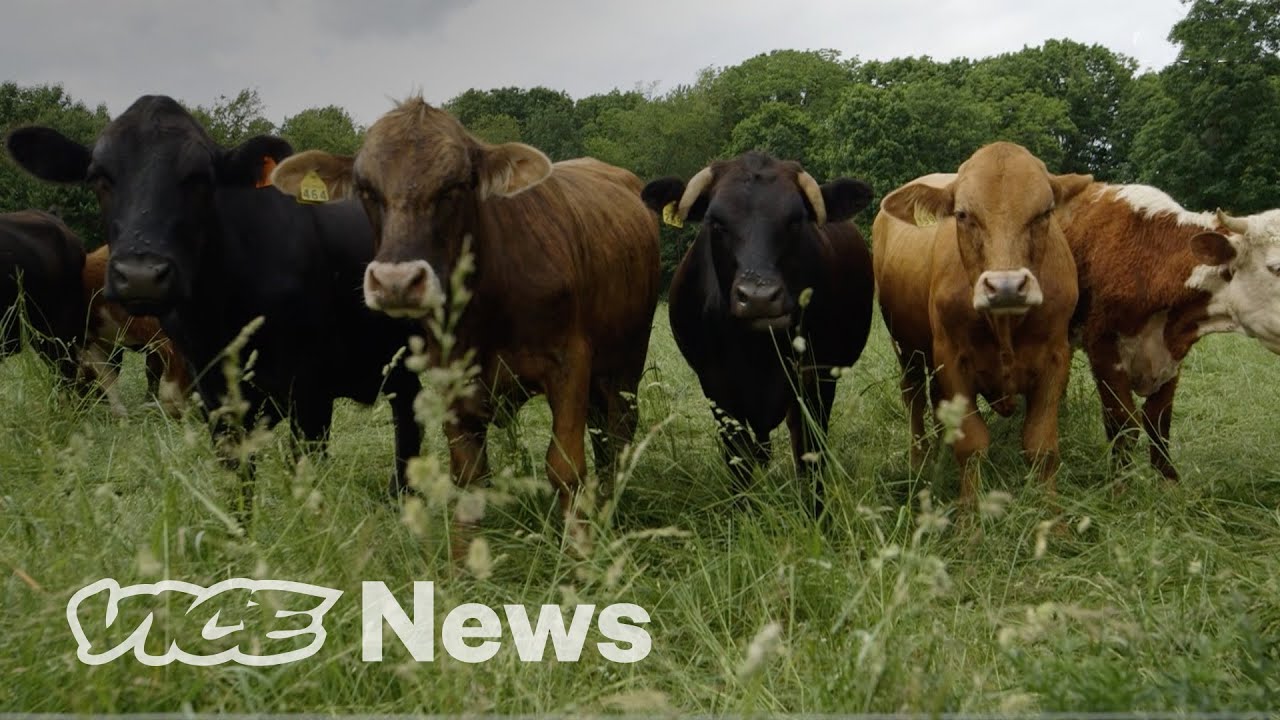
But Klavins believes there’s room for wolves to live alongside the animals we’ve domesticated. Oregon is home to over 1. 3 million cows.
The last years we had statistics, over 55,000 died from things like weather, disease, domestic dogs, calving, human thieves. The idea that it’s this humongous threat, that just doesn't match the reality. If your business model depends on killing rare wildlife to turn a profit in 21st century, that might be a flawed business model.
Oregon Wild has succeeded in getting the state to adopt non-lethal ways to resolve conflicts between wolves and livestock. The result has been more wolves and fewer dead cattle. Rewilding is obviously great if you’re a wolf, but it helps humans too.
Unexpectedly, the return of wolves improved water quality because it scared elk away from rivers, allowing rivers to run more clearly. There’s lots of examples of this. Think about making more livable cities— offers huge potentials to people having better lives, better health, and less carbon emissions.
Because most of the world’s people live in cities, most of the world’s energy consumption is in cities. So, if you design cities better, you can meet all those goals. Approaches like building better cities, rewilding, and geoengineering are all aimed at symptoms.
But they don't address the underlying causes of environmental destruction. There's one human system that consistently leads to bad outcomes for the environment. It’s really about the global economy and especially the kind of accumulation of capital that is really primarily responsible for the Anthropocene.
The accumulation of capital was only made possible by subjugating others and nature. The Anthropocene is really rooted in this European expansion. The mass death of people in the Americas, the slave trade, and the global trade in commodities that was set up at that time.
Slave labor didn't just destroy millions of lives. It also degraded our planet. You set up a sugar plantation, and that plantation required workers, which first were enslaved people from America, and enabling people, say, in Britain to live better lives and accumulate wealth and build institutions, resources, and systems that were resting on the damage to other people and the degradation of remote environments.
Addressing this brutal history doesn't just bring justice. It can also help restore the Earth. One of the first reactions that a lot of folks have when they come to a farm is, you know, a Black person will think of slavery.
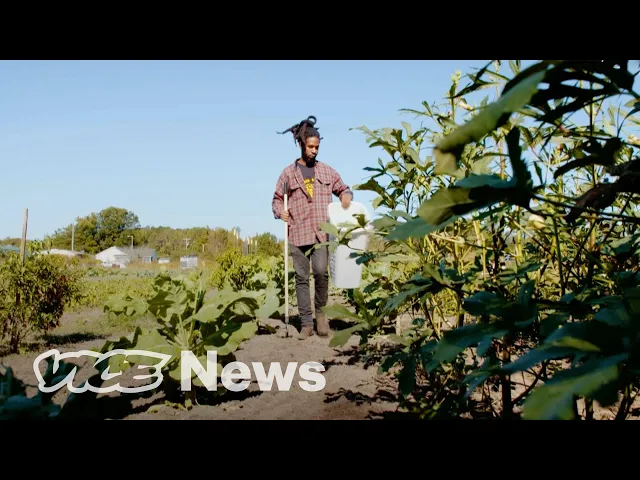
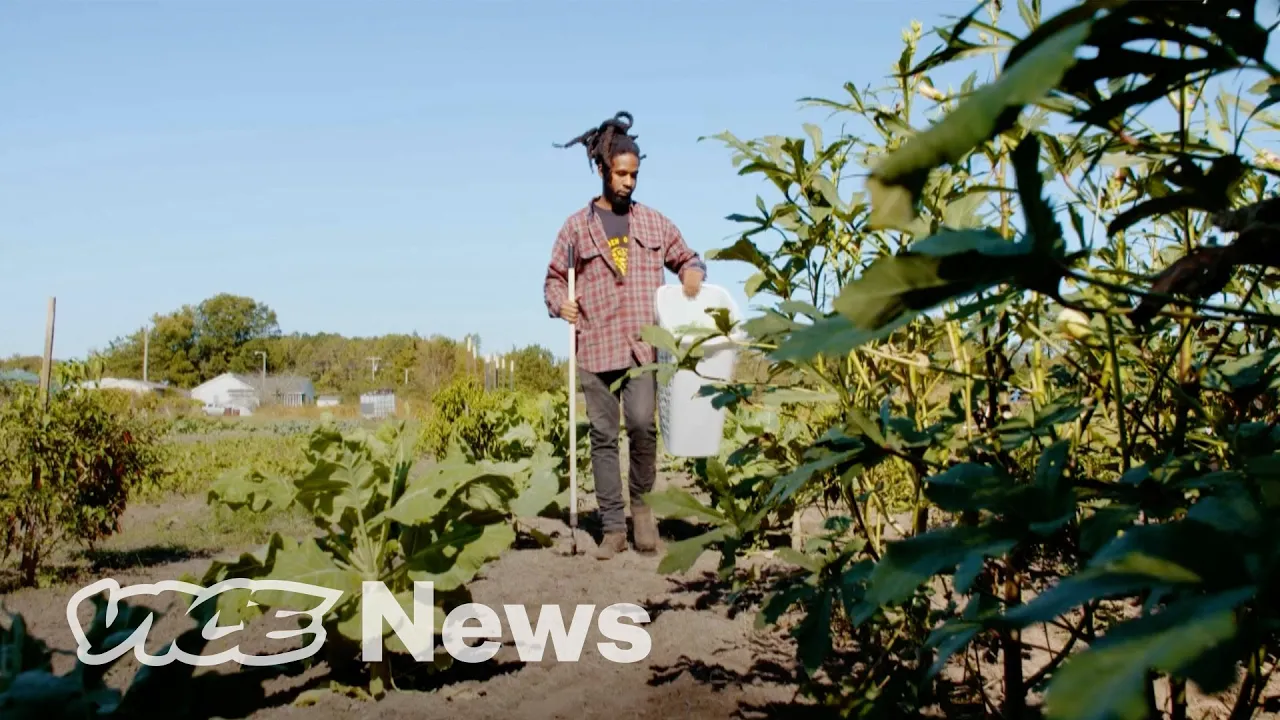
There’s really no way that your ancestors can go through hundreds of years of enslavement and tenant farming and being ripped off their land by racist violence and not have this visceral reaction to the earth because the land really was the scene of the crime. We had these autonomous, beautiful relationships with land before, and that's something we can reclaim and get connected to. Leah Penniman and her husband bought 72 acres in upstate new York to start Soul Fire Farm.
While some folks would call it Trump country, this is actually Mohican country, this is native territory, and also has a long history of being Black land as well. So, it’s not that we don’t belong here, but we are definitely reclaiming space after many generations of being forced off of this land. Penniman has made it her mission to educate others on everything from organic farming to the historical connection Black farmers have with the land.
We are situating it as a remedy, one remedy to the long legacy of land theft and dispossession. Strengthening cultural ties to the earth is considered a key part of sustainable land management. But the clock is ticking, and we need to drastically expand efforts like these to avoid disaster.
We can't achieve the goals that country’s governments have agreed upon about 1. 5 degrees climate change or even 2 degrees climate change without having radical change. And there's one growing movement that's leading the way.
The Water Protector Movement began in 2016 to protest plans for a pipeline that would carry oil extracted by fracking to the East Coast. The proposed route passed under the Missouri River near the Standing Rock Reservation. Eighteen million people depend on the integrity of the Missouri River.
This oil, which flows at 500 barrels per day, could destroy the entire river. There are numerous species that depend on this clean water. We depend for our very sustenance and survival.
The Standing Rock protest attracted activists from around the world and became one of the largest environmental actions in recent memory. As I remember, those who were willing to risk their liberties and their freedom and get arrested would go, in an act of civil disobedience, and chain themselves to the very gate where Energy Transfer Partners wanted to build a transport road. The pipeline was ultimately built but had its permit revoked in March of 2020.
While the company appeals, oil continues to flow. But Water Protectors and their supporters say the movement achieved something much larger. Since Standing Rock, I know that the American people are waking up.
But it’s clear to me that we’re drawing a line. And right now, Portland is part of the process, Minneapolis is part of the process, Los Angeles. Black Lives Matter is part of the process.
The end of Euro-heteropatriarchy is part of the process. Everybody has available to them a more compassionate way of navigating our experience here on Earth. And we have those at Standing Rock to thank for that.
Just as there are tipping points that can throw the Earth out of balance, there are others that can help restore it. Whether it's movements like those at Standing Rock, or those led by the next generation who refuse to stand by while their future is destroyed, whether it’s politicians who are trying to shape a new green economy or experts who are rethinking how to ensure a livable future where humans are both the problem and the solution. The future can change negatively in unexpected ways we have to be able to cope with, but also that real substantial systemic change has happened multiple times in the past, whether it’s the end of slavery or the fall of the Berlin Wall.
These kind of systems look like they’re going last forever, until they don’t. We have to tell new stories about what’s possible. We need people to understand how possible a better future is.
Every person being able to contribute something to solutions, so there’s a lot we can learn from just being a little bit more like nature, like the ocean. We’re the ones who actually have to change a lot in order to move in a more sustainable or a direction or future that’s going to lead us to living in a healthy way on the planet. You know, it’s a society in which we are thinking a little bit differently in our values than what we are today.
It’s a society where we think about sharing resources. It's a society where we have a little bit more social cohesion. It's not up to individuals to solve this crisis.
It needs to be. . .
governments, it needs to be businesses, it needs to be those large actors. But I want people to understand that it’s not hopeless. We have pathways to get us to where we need to be, and it’s up to us to take them now.
Yes, we are a force of nature. But we. .
. differ in one really fundamental way from all other forces of nature. And that is.
. . we can change direction.