10 exercises every man over 40 should avoid as the years go by our bodies change and with those changes comes the need to train smarter this doesn't mean stopping your progress or giving up on your goals it means continuing to move forward within the limits your body allows that's why today we'll look at 10 exercises every man over 40 should avoid these are movements that despite their popularity can pose more risks than benefits to your joints muscles and tendons as you age there's no point in giving your best every day only to spend months away
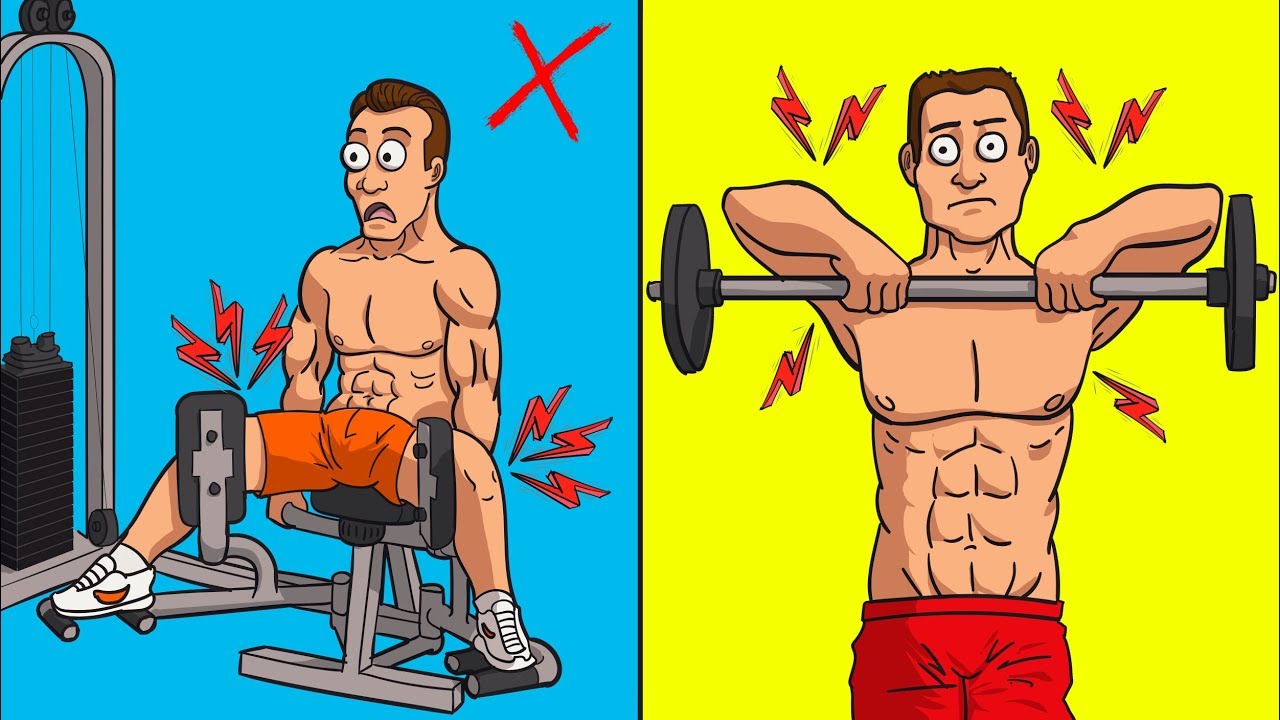
from training due to an injury right so stay tuned until the end because number four is the most harmful at this age number 10 leg press machine the fixed position and restricted movement pattern of the machine can create disproportionate stress on the knee and hip joints especially when using heavy loads additionally the angle of the seat often puts the lower back in a vulnerable position with excessive compression on the intervertebral discs increasing the risk of lower back pain or worsening existing issues like herniated or bulging discs another critical point is that the leg press often
allows the use of very heavy loads which while seemingly beneficial for strength progression can lead to muscle imbalances and a lack of movement control when the load is excessive there's a tendency to lock the knees during full extension which can result in serious injuries to the ligaments and joints number nine traditional crunches traditional crunches performed with repetitive trunk flexion from a lying position Place significant stress on the lower back and neck due to the repetitive flexion and extension movement this can be harmful for individuals who already experience reduced joint Mobility wear and tear on invertebral
discs or muscle imbalances common with aging moreover this movement primarily engages superficial abdominal muscles such as the rectus abdominis without effectively involving the Deep core muscles like the transverse abdominis and internal obliques which are essential for spinal stability and injury prevention the pressure on the lower back arises because repetitive flexion compresses the invertebral discs potentially worsening or triggering issues like herniated or bulging discs especially in individuals with pre-existing weaknesses in this area as for the neck the pulling motion often performed to lift the Torso is frequently done incorrectly leading to overuse of neck muscles which
can result in tension pain or even injuries over time to replace traditional crunches and work the core more safely and effectively the plank is an excellent alternative this isometric exercise activates not only the superficial muscles but also the Deep core muscles providing a more comprehensive and functional strengthening the plank reduces pressure on the lower back and neck by keeping the spine in a neutral position while while promoting trunk stability number eight free weight bench press although highly effective for developing the chest shoulders and triceps we strongly advise against the free weight bench press due to
the associated risks especially for those training without a spotter the biggest challenge lies in safely progressing with heavier loads as a failure during the movement could cause the barbell to fall onto the chest neck or face leading to severe injuries additionally the free weight bench press demands Flawless technique to avoid unnecessary strain on the shoulders and spine the need to stabilize the bar while working with heavy weights can result in muscle imbalances or increase the risk of joint injuries particularly if there are pre-existing issues in the shoulders or wrists common concerns as we age safer
and more effective Alternatives include dumbbell bench presses or machine presses the dumbbell bench press offers a greater range of motion allowing your arms to lower further during The Eccentric phase which better engages the chest muscles and provides a more comprehensive stimulus furthermore in case of failure dumbbells can be easily dropped to the sides reducing the risk of accidents machine bench presses on the other hand eliminate the need for stabilization providing complete support throughout the movement this allows you to focus entirely on the muscular effort without worrying about safety even when training alone the machine also
maintains a consistent movement path minimizing the risk of overloading the shoulders and joints before we move on don't forget to subscribe to our channel so you won't miss the best health and fitness tips and let us know in the comments which city you're watching from number seven dumbbell fly this movement requires a wide range of motion with extended arms increasing tension on the shoulder and elbow joints areas that often experience natural wear or reduced stability due to Aging for the shoulders the dumbbell fly puts the joint in a vulnerable position especially during The Eccentric phase
of the movement when the dumbbells lower and the arms move away from the body this positioning can place excessive stress on the rotator cuff a group of muscles and tendons essential for shoulder stabilization and may contribute to conditions like impingement syndrome or overuse injuries as for the elbows even though the movement seems straightforward the effort required to keep the arms slightly bent and stabilize the dumb throughout the motion can overload the tendons particularly the elbow extensors a safer and more effective alternative is the machine fly which provides better support during the movement the machine guides
the trajectory of the arms eliminating the need for excessive stabilization by the shoulders and elbows significantly reducing the risk of injury number six push-ups with hands too close together push-ups with hands placed very close together commonly known as diamond push-ups are often used to Target the triceps however the narrow position creates a sharper wrist flexion angle forcing them to Bear excessive load throughout the movement this can lead to joint pain inflammation and even chronic injuries such as carpal tunnel syndrome additionally concentrating weight on a smaller area significantly increases tension on the elbows overloading structures like
the triceps tendon with aging tendons become less elastic and more prone to micro tiers from competitive movements making this exercise even more problematic if there's a history of wrist or elbow pain or inflammation the risk of exacerbation is even higher a safer alternative to work the triceps and chest in a balanced way is the traditional push-up with hands positioned slightly farther apart just beyond shoulder width this variation better distributes the load among the chest triceps and shoulders reducing stress on the wrists and elbows number five behind the head shoulder press with a barbell the behind
the head shoulder press is an exercise that requires significant range of motion and a specific shoulder position that does not always align with the natural biomechanics of this joint especially as we age after 40 the body undergoes changes including reduced joint Mobility decreased tendon and ligament elasticity and often pre-existing injuries or inflammations like tendinitis or btis this combination makes this exercise particularly risky when performed with the barbell behind the head the movement forces the shoulders into an exaggerated external rotation combined with elevation this significantly increases the risk of injuries such as impingement syndrome especially if
there are muscle imbalances or Mobility restrictions to minimize these risks while still effectively working the deltoids the dumbbell shoulder press is an excellent alternative this exercise allows for greater freedom of movement reducing the need for extreme external should ER rotation additionally dumbbells let you adjust the working angle and trajectory making the motion more comfortable and safer for individuals with Mobility limitations when performed seated with the back supported by an inclined bench this exercise offers greater stability and control reducing the risk of injuries to the shoulders and spine number four front raises for shoulders this exercise
places significant strain on the supraspinatus tendon and the shoulder joint which are already heavily stressed by many daily movements and other strength training exercises such as bench presses and shoulder presses the main issue with the front Rays is that it often exacerbates an existing muscle imbalance as the anterior deltoids are already heavily engaged in pushing exercises this can lead to Chronic overuse and conditions like impingement syndrome or shoulder tendonitis furthermore exaggerated ranges of motion during front raises can cause discomfort or even injuries especially for individuals with reduced Mobility or a history of shoulder pain a
more effective and safer alternative is to focus on movements that prioritize the lateral and posterior deltoids promoting more balanced and symmetrical shoulder development exercises such as lateral raises with dumbbells are an excellent option as they isolate the lateral deltoids with minimal risk to the joints another variation is the reverse fly performed with dumbbells on a machine or with cables which targets the posterior deltoids strengthening the back of the shoulders and improving overall joint stability number three deadlift the deadlift is an incredibly effective exercise for developing total body strength but it's also one of the most
technical and demanding movements which can make it risky especially after the age of 40 this exercise requires perfect spinal alignment total control of the movement and balanced activation of multiple muscle groups including the lower back glutes hamstrings lats and core any execution error such as rounding the back excessive load or imbalanced muscle activation can lead to serious injuries such as herniated discs muscle strains or nerve compressions another critical concern is the significant compressive load the deadlift places on the spine even with proper execution this compression can become problematic for individuals with a history of back
pain pain disc degeneration or other common lumbar issues associated with aging Additionally the joints in the knees hips and even wrists can be overburdened depending on the movement pattern and the use of heavy loads number two upright row with a barbell the position required for this movement increases the risk of compressing the soft tissues around the subacromial space where crucial structures such as the rotator cuff tendons and the subacromial Bersa are located this type of compression is a primary factor in the development of impingement syndrome and shoulder tendinitis conditions that can cause chronic pain and
limit movement making not only workouts but also everyday activities difficult Additionally the movement often involves moderate to heavy loads which combined with internal shoulder rotation can overload the tendons and stabilizing muscles like the supraspinatus leading to inflammation or partial tears over time the risk of rotator cuff tendonitis or B ceps long head tendon issues increases significantly especially in individuals with pre-existing muscle imbalances or reduced Mobility common concerns after 40 a safe and effective alternative to replace the upright row with a barbell is the classic lateral Rays with dumbbells which targets the lateral deltoids additionally exercises
like dumbbell shrugs can be included to focus on the trapezius muscles without the risks associated with the traditional upright row number one one plyometric exercises plyometric exercises known for involving explosive movements such as jumps Dynamic lunges and Bounds are highly effective for developing power and Agility however after the age of 40 bone density and impact absorption capacity decrease increasing the risk of stress fractures or joint overload particularly with repetitive jumping exercises another critical concern is that plyometric exercises require a high level of motor control muscular strength and Joint stability to be performed safely without these
qualities more common in younger or highly trained athletes the likelihood of execution errors increases leading to sprains or injuries to the knees ankles or even the spine even for trained individuals recovery from these exercises becomes slower with age which can compromise consistency and progress in training now I have something very important to tell you unfortunately your muscle gains will be minimal if your body has low testosterone levels the fact is 77% of men over 40 are still making the same mistakes that lead to decreasing testosterone levels if you want to learn what these habits are
so you can avoid them and maintain high testosterone levels I'm putting a video on the screen right now don't miss it and may God bless you my friend













![Chris Langan - The Interview THEY Didn't Want You To See - CTMU [Full Version; Timestamps]](https://img.youtube.com/vi/9miVG2xT5jY/maxresdefault.jpg)