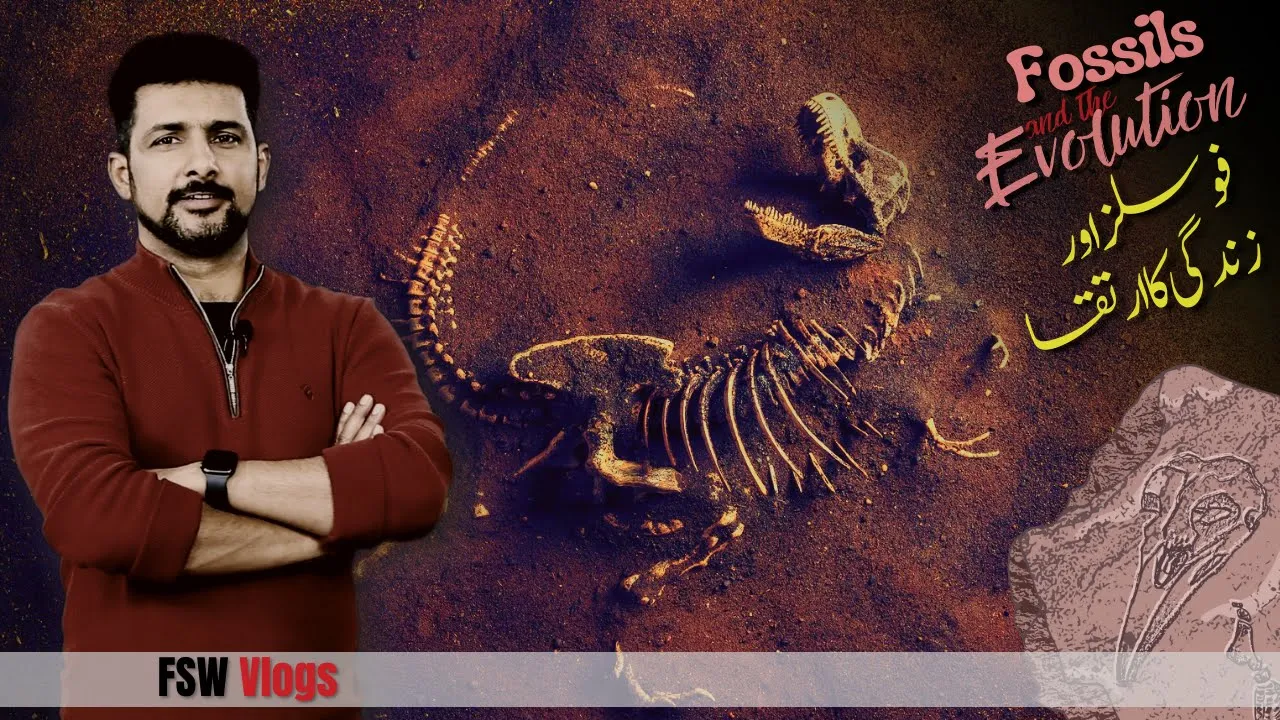
How are you, guys! In ancient times, when a skeleton of a dinosaur or any other animal of the same size was found , ancient people were filled with a mixture of surprise and fear. They were not able to the understand fully the gigantic structure what the gigantic bony structure was as to that it was, however in order to satisfy their curiosity and comfort themselves they would make up a variety of stories to explain it.
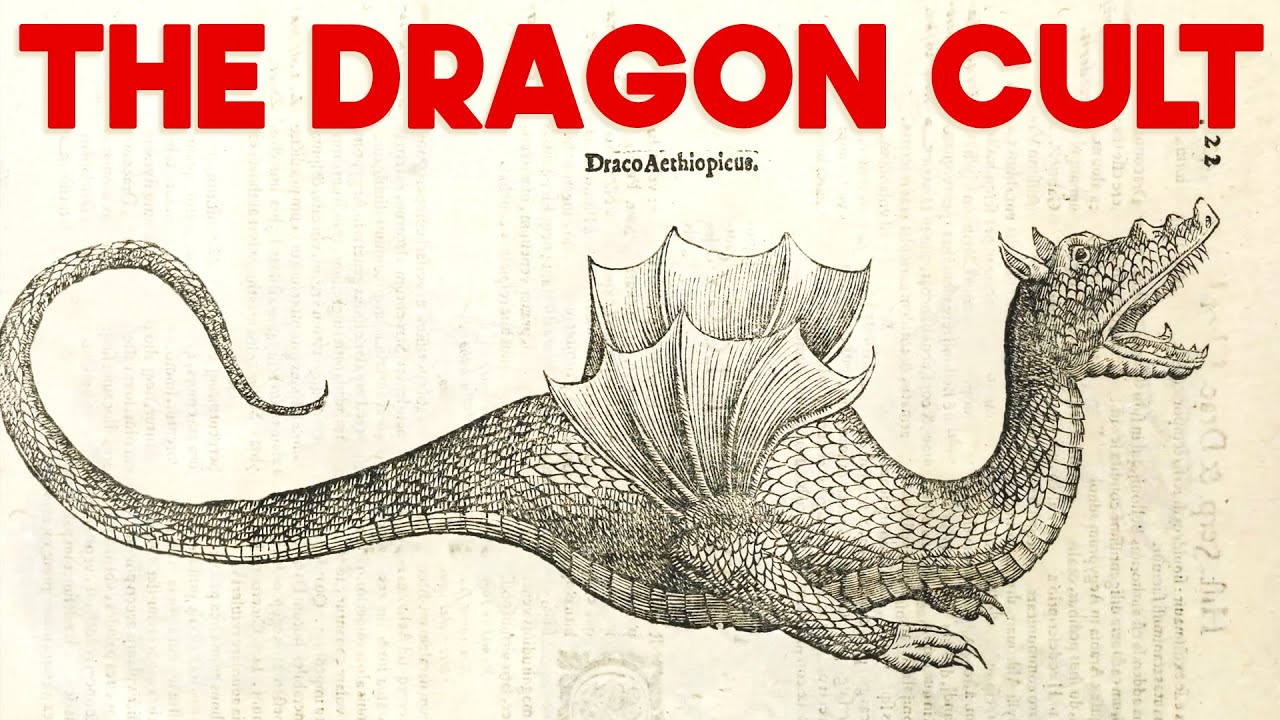
They would create characters similar to structures in his mind. And they would make legends. For example, look at Chinese dragons.
The idea of dragons with jaws like dinosaurs did not come from the nothingness. The look of these giant fossils may have led the human imagination to fly high and create the characters of dragons, around which he could make paintings like the Nine Drgons and knit fabulous stories. In these paintings are dragons raining fire.
You can clearly similarities in both their faces and stature. This 50-foot long-necked dinosaur, the type of dragon actually called the Chinese dragon, its fossils were discovered in China. Similarly, throughout Greek mythology, we find giants and mythical characters which look like dinosaurs.
For example, griffin is commonly believed to be a character based on the fossils of Protosaurus. These were fossils of whole dinosaurs, otherwise it would happen only occasionally, but mostly the bones of large dinosaurs were found here and there. Sometimes a leg bone of the the size of a human height was found.
Sometimes an arm bone was found, and at some point, it was a shoulder bone. Probably, by looking at these very large bone fossils, a person may have mistakenly understood that these are the bones of an animal like humans from thousands of years ago, or of large humans, whose height touched the tops of trees, as if they were giants. From this point, the concept of giants took birth.
They also fabricated stories that giant animals would fight and kill each other. Now, since man could not see such big humans or animals around himself so they thought they might have died after fighting with each other. The quarrelsome people mostly meet the same fate so those people might also have had it.
Then who can say, that the concept of giants by ancient man was created through the vision of these inexplicable fossils. My curious fellows, these are very old things, today's man has come far ahead of that era, who has learned a lot of new things by researching these fossils. There is no place in the world where fossils of some form of life have not been found.
Now the ancient world is being mapped based on these fossils to know so and so animals lived when and where. Which animal migrated where and when became extinct, and which animal evolved into a new form. Just look at Pakistan and India in our region.
Three million years ago, in the areas of Balochistan, Dera Ghazi Khan, Potohar and Sindh these gigantic, giant-sized dinosaurs used to roam about. Then so many large mammals would also roam here, and each one weighed as much as three or three young elephants. Where Dera Bugti is today, the complete skeleton of the world's largest mammal "Baluchi Theorem" was discovered only in the last century.
Akbar Bugti had his bones preserved, but when he was killed in August 2006 by aerial bombardment , many of the fossil pieces were probably lost and never found. Apart from this, from many areas of Pakistan, 40 million-year-old fossils of dinosaurs and whales have been found. Travelling on the Motorway between Lahore and Islamabad, you get the Salt Range in the middle.
This salt range is a mountainous area full of similar fossils of three to four million years old. This area is included in the World Heritage Sites. Similarly, in 2015, in the Pothohar region of Pakistan fossils of the human ancestor, "Sivapithecus", were also found.
This is the same fossil you are looking at, part of the upper jaw of Cevapithecus. Due to its association with Punjab, it was named accordingly, Punjabicus. Similar fossils have also been found on the slopes of the Himalayas in India.
These fossils are now preserved in the "Taylor's Museum" in the Netherlands. That is, in human biological history, after Africa, the Himalayas, Pakistan is the largest part of the Indian landmass. After Pakistan and India, let's move ahead to the Arab region.
Here is a very incredible scene waiting for you. You will see this scene in the hot desert of Egypt, the land of the pharaohs, the Sahara Desert. About 150 kilometres away from Cairo, in the desolate desert, fossils and structures from millions of years ago are scattered in a deep valley of Al-Hatin.
In particular, the "Basilosaurus" of three to three and a half million years ago was found there. Some structures on the surface of sand still tell the story of millions of years. It was a whale-like animal 56-foot long, that was probably the largest marine predator of its time.
Comrades, these structures and fossils, found in every other place in the world including Pakistan and Egypt are not even 0. 001 percent of the animals that once swam, walked and flew on this earth, meaning all the animals that existed since our earth was formed, these fossils are not even 0. 1 percent of them.
Why? Why did the rest of the animal fossils disappear? That is because after the death of an animal the existence of the fossils and structures is possible only in certain cases.
Apart from them, in any case, its body will rot forever and lose its constituent elements. Which obviously will turn into another form. So what are these forms that make up fossils?
One way to become a fossil is when the body of an animal or plant after death sinks to the bottom of water or swamp. Then before this dead animal or plant is eaten or crushed by a scavenger, a layer of soil, sand, mud, lava or any sediment covers the dead animal. The word sediment must not upset you.
The layers formed in seas, rivers and the deserts get mixed with broken stones, sand, soil, etc. , and settle in the bottom of seas, lakes, or ponds. Whatever already exists in the layers gets underneath them and then layers upon layers are built over time.
Then under immense pressure and changing weather, these layers become harder and harder. Over millions and millions of years, when the sea or the lake dry up after they relocate elsewhere, these rocks look like raised dunes, cliffs or canyon walls. So, wherever you see such rocks, you must think of them as deep seas at any point in time.
Or at least, it may have been a lake. In Pakistan, if you go from Lahore to Islamabad by motorway, while crossing the Salt Range you will see these rocks on both sides of the road. They are also common in Skardu and Hunza, DG Khan and Chalas.
Then you can also see sedimentary rocks while boating in India's Campbell River of Rajasthan. You must have seen these Rainbow Mountains of China in real life or in pictures, you may have even put its wallpaper on your laptop or computer. These colourful mountains are because time added a layer of new types of sediments to them each time and in millions of years, this shape appeared before us.
One minute I have a gift for you. Particularly to show you I have found a small piece of sedimentary rock from Skardu. This heavy stone was lying in the waters of river Skardu to tell the same story.
This is a small but complete sample of sedimentary rock. The lines seen in it are actually sedimentary layers formed over millions of years. I have in my hands a natural product developed in at least two to three million years.
So suppose this layer was once the bottom of a lake or a sea or a swamp. An animal died on top of it and fell on it. This animal was not eaten by any scavenger and it remained there.
The fossil of this animal was preserved when other layers came up over it over thousands of millions of years. Similarly, in these layers, the animals and plants of their time became fossils layer by layer. The hard parts, the bones of the animals buried in these sedimentary rocks were replaced by minerals or absorbed into it and turned into stone.
Whereas soft parts like skin, feathers, hair etc. are destroyed under such high pressure. Very few traces of them are left.
Now, because there was a little chance of this whole process, that of a terrestrial animal or plant body happens to have water, and it is also not eaten up, the layers of sedimentary rocks continue to rise and then caught up by the eyes of a geologist after millions of years. Then it may be possible to extract it safely from the layers of rocks. So all these conditions are rarely fulfilled especially for terrestrial animals therefore, it is not possible that all the fossils of animals and plants from millions of years ago can be found today.
90 percent of the fossils we usually find in sedimentary rocks are marine life, marine animals or plants. Fossils of animals like dinosaurs are very rare and difficult to find. For years, one has to cut through each layer of the mountains and look into it.
Then if somehow a fossil is found in the rocks, separating it from its environment is also a big problem. Then some fossils are found in such a place as in the Sahara Desert, there is also a risk of people being looted, fear of robbers and the weather, then the animals are afraid of the weather separately in this desert. besides the issue of scarcity of funds, because such activities are not profitable and are research-based.
If a fossil is found from a rock then it requires a very fine job to extract. The same effort is required even if you suspect that there is a fossil. as you can see here from an egg-shaped rock, a crab, Millions of years of old fossils of an animal is being extracted.
But friends, tell you that the fossils that are formed in the rocks are the same kind. One of many kings. This type of fossils carries a merit and demerit.
It is the characteristic of the sedimentary rocks that they provide us with signs and details and fossils of many huge animals. But it also has a huge drawback. The fossils found from the sedimentary rocks are large, but they are only hard parts of animals.
That is, only bones, teeth and shells can be fossilized. And their soft parts, their hair, skin, feathers and tissues, cannot be fossilized in sedimentary rocks. So friends nature has another way to preserve these fossils.
A method in which by the nature the animals millions of years ago have been preserved ditto for us even with their facial expressions. In this method, the millions of years old animals are present to us with their wings, hairs, tissues and even genetic material. These fossils are called ambers.
How did these fossils amazingly, remain preserved for millions of years? This is also an interesting story. Friends, you may have noticed that the in the pine trees in the hilly places a liquid called ''resin'' flows along the trunk of these trees.
On the hills of Skardu, Murree or Kashmir, you will see such trees and this fluid flowing from them. This fluid, resin-like, flowable glue-like substance is actually a self-defense mechanism of trees. There is a self-defense system.
This resin is antiseptic, which means that many diseases caused by it stay away from trees and harmful insects do not come close. Then, as it flows downwards, so on the say, it sucks up the stem and kills insects, including leeches. How then.
You must have thought of trees as fools. No, that is not the case. So friends, this resin family of "Panishai" trees, 50 million years ago, was present on our earth.
Forests of such trees were spread over thousands of miles. It would often happen even now, that the resin flowed down from the bark of these trees, and any animal sitting on the trunk would get trapped in it. Then this resin, which is originally thicker than honey but softer, is not crushed by anyone, it gets harder over time.
For millions of years, the animal that was on the trunk of the tree has been preserved on it, then it will not rot, and decay. The insects trapped in it, the wing of a bird got into it, the fallen tail of an animal fell into it then take it for granted that it has been preserved for millions of years. So this fossil we call amber and it is formed like this.
Only this amber came under the soil layer by layer somewhere in the forests. So somewhere they were washed away by floods or storms and went into rivers, lakes and seas. But as soon as someone finds them today or tomorrow, consider that he has found a window to peer into ancient times.
How were the animals at that time, These amber fossils are innumerable in the world. You can also buy them online by placing an order. Ambers are found in large numbers in the forests of North Myanmar.
Then they are abundant in the Baltic Sea, the sea between Sweden and Poland, and on the shores of the "Gulf of Bothnia" between Sweden and Finland above. Especially when there is a storm. Because these seas are not very deep which we have mentioned if you are 54 or 60 meters tall you will not drown in these seas.
You will keep on moving with your head above water. So when storms occur in these shallow seas, which are frequent, they overturn many things on the sea floor and shores. In this case, amber collectors, fossil collectors flock to the beaches and collect precious ambers.
These are great for both research and business. Fellows there are also very important frozen fossils, like sedimentary rocks and ambers. Fossils frozen in ice Because even if a body is frozen in ice in an extremely cold region for thousands of years, it does not become completely frozen.
Does not decompose. Rather, it is also protected with all its details. As a 40,000-year-old fossil of Lyuba mammoth was found in Siberia, Russia.
Its hair, skin, even the mother's milk and fodder in its stomach were preserved. This baby fossil broke away from its mother and fell into a ditch from where it could not get out. Dozens more such fossils are housed in history museums around the world.
Well, this baby mammoth, named Lyuba, might look like this in its original state. So friends, these frozen fossils like baby mammoths, butterflies trapped in amber and animals buried in rock layers, plants are all called body fossils. But there is another very beautiful, nostalgic and romantic form of fossils.
That is trace fossils. That is, signs of someone walking, hunting or eating were hidden. For example, the footprints of a five-toed animal 240 years ago were discovered in Germany in the 19th century.
Traces of a much smaller crab, such as a horseshoe crab, were also preserved so that its own body was also fossilized. This scene of 14 million years ago has been completely preserved for you today. This is an example of a trace fossil.
Well, all these body fossils and trace fossils have been discovered in millions in the world at this time. Many more are also happening. But from the point of view of evolution, two questions are very important here.
One is that there will be thousands and millions of fossils in the world, but how is their finding proof of evolution? Second, what is the evidence that these fossils are as many millions of years old as we are being told? That is, how do we know which fossils are how old?
These are extremely important questions. There may be other questions, but these are the most important questions at the moment The theory of evolution stands on the answer to these two questions. Friends, the answer to this question is a great pillar of the theory of evolution.
If it is not found, then the theory of evolution is over. You can see the answer to these two questions here. In this video.
While here see whether man was made of monkey and here is the sensational true story of the Great Game of America, China and Russia.