Well, Crown Prince Rupprecht, he was 45 years old when the war broke out, so he was, you know, in the prime of life. He was an interesting character certainly by the standards of generals of the First World War and I would argue by the standards of many royals at that time. He had a hinterland in a way that many generals and aristocrats did not.
He was very interested in art, for instance and very interested in travel. He was a very cultured man who had spent the first half of his life doing three things: being an Edwardian - late Victorian playboy prince, exploiting the prestige and the privileges that he had. More importantly, he started a family but his wife died very young, as did all bar one of their five children, tragically.
And also, in addition to his royal duties, he was a pretty serious soldier, so he was picked out for a military career early on, commissioned into the Bavarian army, educated very carefully because it was clear that he was going to end up as a senior German general in the German army. The Bavarian army was part of the of the German army, independently run in peacetime but once war came along the Kaiser became the supreme warlord of all the German forces and that included Bavaria. So he was, in a sense prepared, or at least as prepared as anyone could be for the war which which came along.
And then during the war, as I say, he was a senior German general, he started off commanding one of seven German armies on the Western Front. About quarter of a million men, so pretty serious job. Halfway through the war, in August 1916, he was promoted, made a field marshal and given command of an army group.
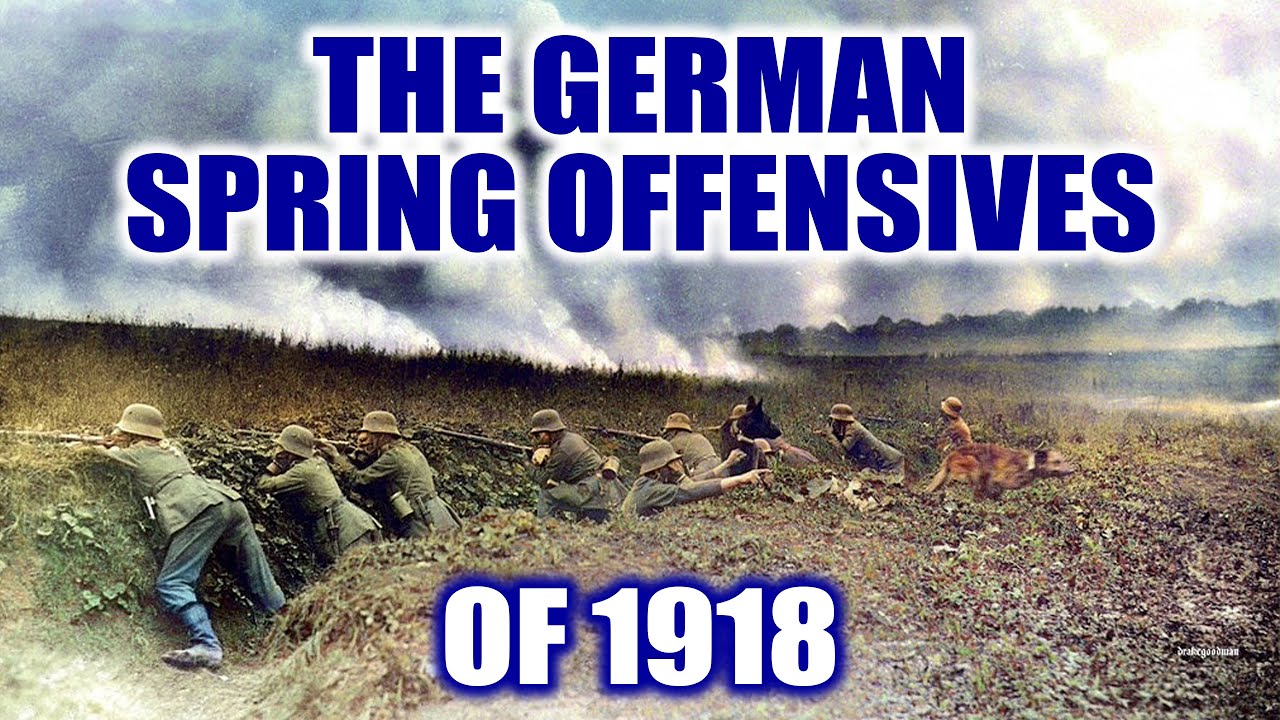
So he was then commanding about four armies, maybe a million, perhaps a little bit more, men for the second half of the war so he was really responsible for running the war and about half of the Western Front, the half opposite the British primarily, as I mentioned earlier. All the way through, so it's his men who fight the Battle of the Somme, who fight the Battle of Passchendaele, who launched the German Spring offensives in 1918 which is the last gasp attempt to win the war on the part of the Germans and it's his men who are on the receiving end of the Allied offensives in August and November 1918, called the hundred days, which are the final battles which end up breaking the spine of the German army and helping them to bring the war to a conclusion. After the war there's a revolution in Bavaria, as there is in Germany more generally.
His father abdicates, is forced into exile and abdicates. So all of a sudden, he's a crown prince with no throne to go to. He actually runs away.
He escapes into Holland, going under an assumed name, just before the end of the war. Hides there for a bit while the political violence in Bavaria dies down and then eventually is allowed back into Bavaria, lives there more or less quietly, exercises of political influence perhaps without power; trying to, if you like, establish himself to work towards some kind of a restoration of the monarchy, in some shape or form, but Republican sentiment is is too strong. There aren't very many people that are that keen on reestablishing the monarchy, so that never comes about, but he does play a part in right-wing German politics and of course right-wing German politics in the 1920s in Munich means the Nazi Party are a player there.
When Hitler launches a putsch, a coup attempt, in Munich in 1923, it's not clear exactly how much Rupprecht is involved, but certainly Hitler blames him for the failure of that putsch in 1923, which doesn't matter very much while Hitler is a jailbird locked away in prison, but it matters a lot in 1933 when Hitler becomes Chancellor of Germany. There's a very brief period where it looks as if Rupprecht might be given some form of power in Bavaria, by Bavarian politicians who were trying to fend off the influence of the Nazis in Berlin. That doesn't work.
While the politicians, talk the Nazis strike. Arrest anybody that doesn't agree with them, tear up the constitution, say 'here's how it's going to be in Bavaria, just like everywhere else in Germany'. And then he's, Rupprecht, has to spend the rest of his life, until 1945 anyway, ducking away from the Nazis.
He carries on living in Bavaria but keeps a low profile until war breaks out. When war breaks out in 1939 he is strongly advised to go on a long holiday and he goes off to Italy where he lives under the protection of the Pope and the Italian King until 1944. And then in 1944 after the fall of Rome and D-Day, the Nazi regime is getting increasingly paranoid, the Gestapo come looking for Rupprecht in Florence which is where he's living.
But he's already gone into hiding. Whether he knew for sure they were coming or just suspected they were coming is not clear. He goes into hiding.
Hides in Florence for a couple of months until it's eventually liberated by the Allies. So he's safe but his whole family is locked up by the Nazis in a succession of concentration camps including Dachau just outside Munich, until eventually they're liberated by the Americans as Germany collapses in April 1945. But his wife, for instance, nearly dies while she's in captivity and she weighs less than 40 kilograms when she's finally released and never forgives Germany for what it has done to her and her family.
Then Rupprecht lives on for another 10 years or so, finally dies in 1955, having established some kind of, a sort of king without a crown role, carrying out public functions as if he was a royal, without actually having any official position to do so and has, effectively, a state funeral in 1955 when he dies at the age of 86.