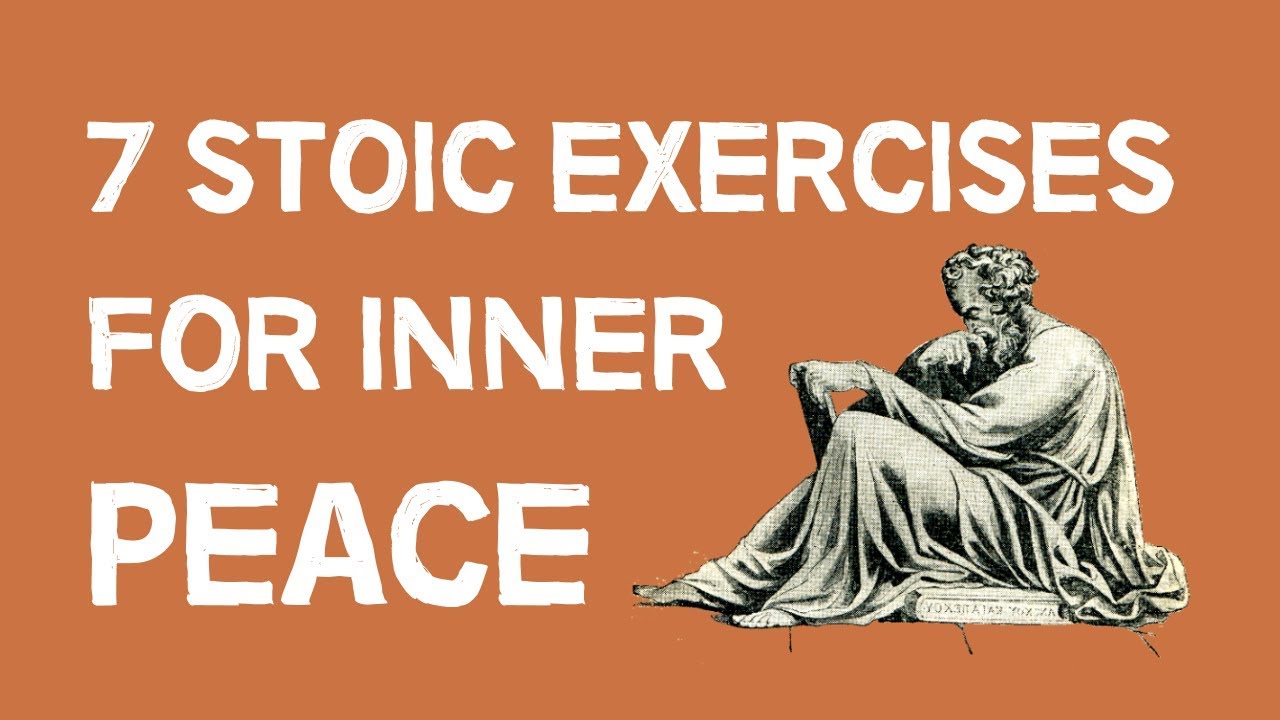
[Music] there's a lot of exercises in stoicism but I think these seven are really the core of what you might call the sort of the stoic code how to be a good person how to understand how you fit in the world how to always prioritize the right thing in the right way how to make sure you're not acting out of you go how to how to turn bad things into good things these are stoic virtues these stoic exercises you have to practice every day and you have to practice them in nd in all situations but
if you can do it you can do it consistently and then you'll be amazed at what you can accomplish and the kind of person you turn in to being Marcus Aurelius wanted to remind himself that you have to do the right thing this is just that you do the right thing the rest doesn't matter so the highest good to the Stoics was virtue was was working for that common good it was seeing obstacles as opportunities but it was it was doing the right thing in the right way for the right reasons if you're not acting
according to your moral code it doesn't matter how successful you are it doesn't matter how famous you are you are gonna be unhappy so in Christianity there's this idea that if you sin if you violate the Ten Commandments we'll go to hell I think the stoic argument is like if you're a bad person if you lie cheat steal act out of selfishness in fact you live in hell your life is a hell it's without meaning it's without purpose you have no faith in other people and so at the core of stoicism is that idea of
Summum bonum the highest good and the highest good to the Stokes's virtue they said that virtue is the sole good doing the right thing the right way regardless of the consequence was the only thing that matters [Music] one of the most powerful exercises in stoicism is the exercise of amor fati the idea that there is no such thing as an obstacle there's only fuel so Marx realist talks about fire being the metaphor for the life of a stoic everything you throw in front of a fire he says is fuel for the fire it turns obstacles
into brightness and flame he says so you want to go through your life not thinking about all the problems and all the difficulties you want to think about all that these obstacles and difficulties are offering you the fuel that it's providing for you so it's Tillich loves everything that's what a more fatty translates to a love of fate and it means that there is nothing that can slow you down because everything is actually taking you exactly in the direction that you want to go [Music] this seems like a weird one but the Stoics want you
to have really low expectations Seneca talks about premeditation malorum about thinking about the worst case scenario if you have such a tight grip on how you want things to go and be you're never going to be happy because what can go wrong will go wrong but if you're willing to be fluid if you're willing to let go if you can think a little bit in advance about how things might not go your way you can anticipate it you'll be better so Seneca says like the expected blows of fortune fall less heavily than the unexpected blows
the happier person is the one who realizes that things are not always going to go their way that knows the world is not sunshine and kittens that sees things honestly and accurately that person has lower expectations and then they're pleasantly surprised when things exceed those expectations versus the person who is constantly disappointed with how cruel and unfair the world is you another one is related to a more fatty but it's the idea that the obstacle is the way that's what Marcus really says this is the impediment to action advances action what stands in the way
becomes the way sure things are gonna happen that you don't want to happen but you can instead focus on how you can use this on how you can move the ball forward because of it so if someone cuts you off in traffic okay that's not what you wanted but this is a chance to practice forgiveness you make a mistake it's a chance for you to practice forgiveness to yourself right your car is stuck or your trip is delayed this is a chance for you to catch up on things that you've been putting off how can
you use everything that's happening to you all the obstacles as opportunities to practice different virtues so you might set out to do one thing and then that gets impeded but what that allows you to do is go do a different thing instead so the stoic is always thinking the obstacle is the way this is an opportunity the impediment is actually showing me the direction that I want to go there's an old Zen story about a king who felt like his people were becoming complacent and so he put a large boulder on the one path on
the way into town and he stood in a tree and he watched as people came up to this boulder this obstacle you know people cursed him people pushed at it and it turned around and went home some people just sat down and waited for someone to do something about it for him and finally a man walks up and he actually attempts to climb over the boulder he attempts to go around he pushes that he can't get it to budge and finally he goes off into the woods and comes back with a big stick or a
log and he jams it under the rock and finally cranking it like a lever he gets it to move and what he finds underneath the boulder was a small purse of gold coins and a note attached to it that actually the King had left and it said never forget that inside every obstacle is a chance to improve your condition the obstacle in the path is the path and that's at the essence of stoicism the obstacle is the way the impediment to action advances action Marcus Aurelius said what stands in the way is the way so
we want to see obstacles not as things that are blocking us from where we want to go but that actually in struggling with them or going around them or trying things because we can't get through them we end up discovering new things about ourselves and about the world there is almost no philosophical school that says ego is a good thing the Greeks and the Romans spoke of hubris almost all the plays of history and the myths of religions are about the dangers of pride pride goeth before the fall so the Stoics believed that ego was
the enemy Epictetus said you cannot learn that what you think you already know so the stoic is constantly asking themselves why am i doing this what is my motivation am i doing this for other people am i doing it because it makes the world better or am i doing it to feel superior to other people as fuel for my arrogance or is this fueling humility and so essential in stoicism is just the idea that you are not special the world does not revolve around you and if you make decisions or take actions thinking that thinking
that the world revolves around you thinking that the rules don't apply you'll be rudely awakened when you come crashing down to earth and lose everything you work so hard for [Music] the stoic says individualistic as they were as much as they were about individual empowerment you know deeply believed in our connection to other people and other things something like 80 times Marcus Aurelius talks about the common good and meditation Seneca spoke of sympathia the idea that we were just a small part of a larger organism Marcus Aurelius says you know what's bad for the hive
is bad for the bee so in this time of sort of self-absorption and self-interests of self aggrandizement the Stoics offer a different way of thinking about things they think about it in terms of how can I make sure I'm helping other people how can I make sure that my successes of coming at the expense of others how can I see myself as a citizen as a piece of a larger organism and that this makes sure that we're good and make sure we're doing work for other people it makes us more selfless and less selfish and
thus allows us to contribute more to society you might think that meditating on your mortality is a way to be unhappy that the fact that you're gonna die that you could die at any moment this is depressing in fact the Stokes that it was the key to happiness because when you realize life can go away you are grateful for the life you do have so Seneca says like look if you go into every evening thinking I have lived I have lived my life that's it when you wake up in the morning you're like oh this
is wonderful I get a free bonus day the stoic wants to live life as though you're playing with house money because you are each one of us was born knowing we're gonna die and every extra day we get is a gift is extra so this idea of memento mori' of meditating on our mortality is not morbid it's actually the best way to be happy hey thanks for watching daily stoke if you want to learn more about stoicism you can check out some of our other videos here subscribe we'd really appreciate it keep learning keep studying
and remember those four stoic virtues courage justice temperance and wisdom [Music]