- Hey, everyone, Davie here. Last month, we did over $6 million through email marketing. Today, I'm gonna do a beginner's course on how to set up email marketing for your business.
Email is critical for any online business, no matter what it is. Even if you're just trying to validate a product, you need a set up email marketing. Email marketing will serve as a support system for your Facebook ads.
It is a retention tool. It'll help increase the conversions and sales coming through. Today, I'm gonna show you how to set up Klaviyo for your Shopify store.
I'm also going to touch on other email providers and some common email mistakes that I see people making. As always, I'm not paid by Klaviyo. I just use them for all of my stores, and I think that they're the best for e-commerce at the moment.
If you're not doing 20 to 30% of your revenue through email marketing and you're an e-commerce business, there's probably something wrong. You need to add more automation, more sequences, and do some more campaigns. The reason why I think Klaviyo is the best is because it has a very easy Shopify integration, it has a Facebook integration, and it has a large amount of segmentation options to really customize the emails that you're sending to your list.
Often, I see people using MailChimp, which is probably fine if you're just like a newsletter or a small business, but the truth is, if you grow really big, you're going to run into limitations with MailChimp. They seem to have a very strict approach with data privacy, and they aren't really moving with the times of e-commerce. If you're watching this and panicking that you're with something like MailChimp, don't just go straight ahead and try to migrate over to Klaviyo.
That's a very delicate process, and you can really hurt your domain authority with email providers. You need to make sure that you handle that migration with an expert. All right, so why is email so effective?
You're a customer and you go to a store. You sign up to either the email pop-up because you have a little bit of interest in the brand or product. Now, you have an amazing touch point to educate that customer about your product and address any of the reasons why they didn't buy it in the first place.
If they did buy, then that's great. Now you can nurture that customer and get them to come back and purchase a complimentary product or a different product. There's so much noise in the marketing world at the moment.
People are hit with advertising all the time. Email is a great way to just consistently get in front of your audience and just remind them that you're there. You can also provide amazing educational value in the niche that you're in.
I'm sure your customers would appreciate that. Then you can become a more of an authority on the topic, and they'll be more likely to purchase in the future. Let's jump into Shopify now and set up a Klaviyo account.
I'm gonna walk you through all the features that we use and your main flows that you need to set up to make email successful. Let's do it. Alrighty, so I've got my new Davie Co Apparel Shopify store.
It's a brand new Shopify. We're going to come into the App Store, and we're going to customize your store. All right, so now we can just search Klaviyo, and it's going to bring up what we need.
We're gonna add the app to the Shopify store, install app. Don't look at my password, continue with the integration. So, I didn't have a Klaviyo account set up for this before.
It's going to create it all for me. So, that should be basically integrated. Now, we need to set up a actual address here to comply with anti-spam laws.
You can use your business address that you've already registered, or your home address, providing you feel comfortable, you know, giving that out. So, you know, I suggest, when you do register a company, use that address here. With this sender email address, it's really important to have your customer support email address there.
This support email address providing, you know, you're expecting it to be quite a large business and quite successful, you're probably gonna have to link it to a customer service channel, like Gorgias or Zendesk. And then, when people actually reply to it, it will allow you to address their questions with positive customer service. So, I'm just gonna click continue there.
Now, we can design our email templates. You can fix all of this stuff later, but it is just easy to do it now. You can just add your logo here, and make sure you add your brand colors.
We've also got our social links in here, which is really important, and also your Shopify store. I'm just gonna click continue for the sake of this video. I've got a YouTube email set up, and I'm just gonna confirm the email.
And as you can see, we are now in the dashboard, which is awesome. We are ready to send either an email or set up some flows. So, let's talk about lists and segments first, 'cause this is really important, and understanding the difference will help you set up, like, your targeting.
What is the difference between a segment and a list? Segment is basically a group of people with certain qualities or parameters that you want to send to. So, potential purchases, we've got new subscribers that have probably just come through your popup or that photo bar.
These segments can then be actually created from lists, which is a broader section of where all your emails have kind of come into. This newsletter will just basically be everyone that signed up through your pop-up, whereas these kinds of new subscribers would be like a certain amount of time that they've just signed up in, maybe the past 30 days. You can kind of define that parameter.
The other thing that you need to know is sign-up forms. Because you've just integrated with Shopify nice and easy, setting up these sign-up forms is very, very easy. When you come into here, or you're gonna do is click create sign-up form.
This will take you to a default pop-up that Klaviyo's set up. You can actually change the template quite easily, and you can use a drag and drop editor down here to kind of make it feel more on brand. One of the main things that I want to talk about today with pop-ups is making sure that you have an offer with that pop-up.
It'll increase your opt-in rate heavily. So, you want to offer either like a discount code or a freebie or something like that, to get more people to sign up to your welcome series. If you are gonna offer a discount code, you can just offer it in this header, sign up for 10% off.
One of the main mistakes here is people don't actually create the discount code and put it in this success message. What that does is, if a customer has come to your site and they've signed up for your 10% off, there's a chance that the email may be delayed. It might go to their spam folder, and they're just gonna be waiting for that discount code.
That is bad. We want to give it to them as quickly as possible so they can shop. We're trying to reduce the buyer friction.
So, I'm gonna come into Shopify and I'm gonna create my discount code now. Create discount, discount code, and I'm just gonna say 10off. Probably should be more creative with this and make it a little bit more custom based on your store, but I'm keeping it nice and general for us.
We're just gonna say 10% discount, and I'm gonna copy this 10off code. This is now all set up. Now I can come back into my form and I can go to my success message over here.
Use code 10off to save 10%. Naturally, when you do your store, you need to make it more professional and on-brand. Go to some of the top websites that you know, e-commerce sites, have a look at their pop-up, their confirmation email, make sure that the design is on point.
I'm just gonna click publish form, and I should be able to click publish here. We can go to preview it live and it should pop up. So, it's just popped up there.
I can enter my email and subscribe, and it should give me that 10% discount code straight away. Alrighty, let's quickly jump into campaigns and have a chat about that. So, campaigns are just a one-off blast to a certain segment within your list.
You can just click create campaign. You can name your campaign. Try to stay really organized, make sure, it's just like Facebook ads.
You want to exactly tell yourself what this campaign was so you can learn from it quickly. You can select your list and segments here, and you can also exclude segments, which is really important. On that, let's chat a little bit about deliverability.
You don't just want to spam your entire list all the time. You need to do, great list hygiene is really important, because otherwise you're just gonna start going into spam folders. Another tip around deliverability is removing too many links in your email.
If you've got heaps, Gmail, Apple, they don't actually like it. Make sure you're sending a lot of campaigns to highly engaged people, those new subscribers or previous purchases. You know, that the open rate's gonna be large and click rate.
You need to look at spam complaints and unsubscribe rates. Another mistake that I see a lot of business owners make is spending too much time in this campaign section. You're probably a founder with very little marketing resources at the moment.
Any of your actions should be high leverage, meaning automation is a much better place that you should be spending your time in. These are what are referred to as flows. Unless your campaign is a one-off blast around a really specific time of year, such as Mother's Day or something like that, it probably should be created in the flow section, because this will compound over time.
This is gonna allow you to send a lot of emails in a really controlled and iterative way. So, what are the main flows that we need to set up? Welcome series is a big one.
This is where you can educate your customers about your products, address any of the concerns that they have, educate them about your brand as well, trying to hit them from all different angles of emotional connection. Naturally, the early emails in this series need to be higher impact, because they're gonna have the higher open rate, because you're still more relevant to that customer. The other email flow that you do need is the abandoned cart flow.
I just read a blog post that abandoned cards on mobile can be up to 85% on Shopify. If you think about this, this is absolutely crazy. You do all the hard work.
You get people to your store. They add it to the cart, so they obviously are interested. And then, only 15% of them check out.
This is a high leverage sequence that you need to spend a lot of time on. When creating your abandoned cart flow, you really need to have a think, why did that customer not check out? It could be shipping options.
It could be they don't 100% understand the sizing options. There's so many reasons that you can address in this flow. A great tip is surveying your customers and then addressing their concerns about the product in that abandoned cart flow to increase the conversion rate.
So, I'm just gonna come into abandoned cart and show you how to set up a sequence to make sure that you've got everything you need to get started. These are what we call triggers, and you can basically set them to anything you want. It can be a time variable.
It can be an action, and it will allow you to really control when your customer gets the email. So, when they start their checkout, wait four hours, and then they send this email. This is currently in draft mode, so once we've edited it, we would need to click live to make it start sending.
You can edit your subject line up here, and you can also come into edit to change the design and the content of your email. You can obviously change your sender's email address, your preview text, and you've got your drag and drop editor by clicking edit content. If you're stuck for design ideas, obviously, my recommendation is going to some great e-commerce sites and signing up to their welcome flows, but there's a really cool website called reallygoodemails.
com. They have some amazing templates that you could get an Upwork designer to implement for your business. What you can see here is a dynamic field that will update based on the user's experience on the website.
So, this would be your product. This is really customized and a really important feature that Klaviyo has. Once I'm happy with this content, I can just click save content, click done, and I can make this now live.
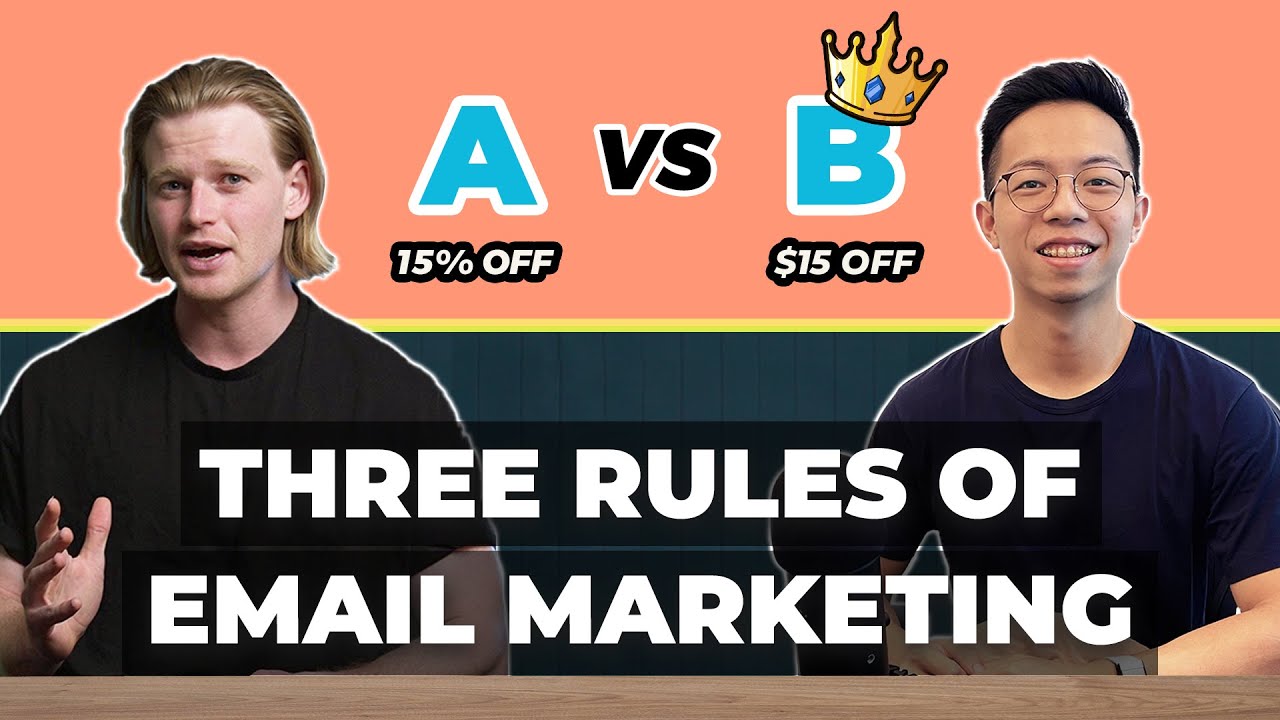
What I wanted to show you, which is really important, is our split testing that I was mentioning before. You can click add variation. Now, we've got two variations where we can change one variable and get some really interesting data.
We can click the weight here and we can enter 50, and now we'll enter 50, 50. We can now edit this variation in a certain way. If you wanted to change the subject line, you can do that here, or you can just click edit content and change anything through the drag and drop editor.
Click done, and you can see that there's now two emails that you can now make live. The third most important flow that you need to set up is the customer thank you. Basically, this is after someone purchases, you're gonna send them a series of emails.
You're gonna educate them about their order to really increase the customer experience. You can also cross-sell other products, which is really important. It's much easier to get a customer that's already shopped with you and trusts with you to buy something further than acquire new customers.
This customer thank you flow is also where you can get amazing customer reviews. You can send them to something like Trustpilot, Product Review, or even Facebook reviews. One tip I have about this is don't spam them.
You really want to make sure that that customer that you've just got is nurtured. You want to make them feel part of your brand. You don't just want to annoy them and try to get more money out of them.
One of the best things about Klaviyo is your ability to split test everything very, very easily. The main things that you want to split test to improve performance, which is generally meaning sales. is your pre-header text, your subject line, the design of your email, the copywriting, and most of all, probably the offer on the email, make sure you're only split testing one variable at a time, so you understand what is working and what's not.
Make sure you're tagging everything on your email, every button that you possibly have. Klaviyo also has an amazing tagging function, where basically you can create UTM links throughout the email. You can track every single click, really giving you an understanding of the user behavior on that email.
Even if you don't quite understand this yet, it will become very, very important, especially when you hire an email agency or someone in-house for your emails. When you're writing copy, speak to your audience like you're speaking to a friend. It's really important that you give them a reason to open that email and read the content that you have provided.
I do believe that copy is often overlooked in email. I certainly know I barely read emails anymore. I just look at the images and the overarching context of the email.
This means your design needs to be on point. It needs to be very clear what you're saying and why you're saying it. Another tip I have is get a promotional calendar downloaded on your computer.
Plan out your campaigns in advance. You need to know which holidays are coming up, because people might be expecting an email from you then. I hope you enjoyed that basic email tutorial.
If you're feeling overwhelmed with that tutorial, I suggest just jumping in and setting up the basic flows. Don't overthink it. Once you've validated your product or you know that your business is going to work, you can hire a professional.
You can measure all the revenue that you're getting through this tool and quantify how much a professional is actually gonna be worth to your business. You can hire a consultant or someone from Upwork. If you enjoyed today, please make sure you subscribe.
Only doing these videos for you. We've had a look at the analytics, and so many of you are watching, but you're not subscribed. Please hit that subscribe button and like.
Also hit me up in the comments if you have any other questions. If I missed something, I will address it. Thanks so much for watching.
I'll see you next week.