hi friends you're tuned in to legal means business a podcast by leeway we're joined by some amazing guests who help us identify how to take your legal function and career to the next level i'm your host steph smith and we're talking all things legal ops and legal tech as well as other critical skills needed to help you thrive in the evolving in-house arena don't forget you can watch us on youtube or listen on the go through spotify or apple podcasts if you enjoy the conversation please do hit subscribe and let us know what you think
on social i think it's a game at changing new infrastructure because it really helps you to automate operational legal obligations it sounds like a cliche or like science fiction but instead of instead of writing the agreement 200 times you can literally automate coded and automated using the blockchain and the blockchain organizes all kinds of transactions it could be tangible assets buying selling houses cars land could be intangible assets buying selling giving away to charities intellectual rights software whatever whatever has a value and then the idea is that in-house lawyers we can try to identify the
the operational obligations that we can that we would be able to automate with smart contracts that's why i believe it is a serious big deal for for lawyers blockchain has been around for well over a decade and yet many in-house professionals still know very little about it gartner forecasts that blockchain will generate annual business value of more than 3 trillion by 2030 and it suggests that 10 to 20 of global economic infrastructure will be running on blockchain-based systems by the same year with this in mind it's becoming increasingly important for in-house lawyers especially those in
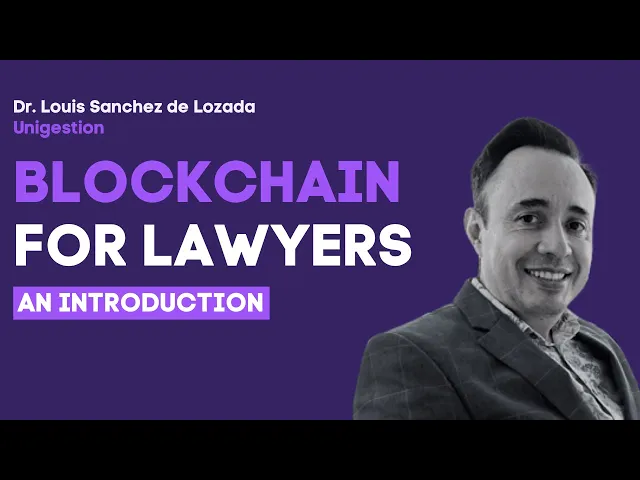
the tech space to have an understanding of this often confusing technology and its implications thankfully in today's episode we're joined by dr louis sanchez de luzad lewis has more than 20 years experience as a financial and corporate legal council in banks and asset management companies and he is now director legal counsel at asset management firm unigestion with a passion for legal tech lewis invested a lot of time and energy into understanding the blockchain and its implications on the world of in-house legal so without further ado let's hear lewis's introductory deep dive into blockchain for in-house
council well hello liz nice to have you on the podcast hello thanks for having me really nice to be here oh no no it's good i've been looking forward to our conversation um because i know we're going to be talking about something that is you know a bit of a bit of a hot topic but something that lots of people don't really understand that much about yet so i'm looking forward to it yeah yeah and uh as we were discussing it's it's really not complicated it's very simple so once you understand it's like really not
difficult for for lawyers yes exactly and it's important to start thinking about it now i think to give you time to digest and understand all the information so i suppose firstly it'd be good to to understand what sparked your interest in blockchain um at one moment you know that i i work i've been working for asset managers for a long time and i set up investment funds day and night all kinds all around the world investment companies or partnerships and at one moment i realized that it was too much work for for me for my
team for all the found controllers all the people that works in working operations and at that moment i started like being interested in ways to automate and i realized that there was like a first step that everybody is trying to like do now which is like uh really try to apply contract life management systems to their usual life operations and life negotiations uh contracts live contract and then there was a second step that is the possibility of automating all possible operational obligations so we can discuss uh about that and it was uh the the best
way to do that is uh using uh the blockchain yeah oh amazing it just i have to say you know i know a little bit about it but definitely not as much as you so it does sound a bit foreign and like this kind of new cool technology um with a bit of mystery around it so to begin with it would be good if you could explain what exactly is blockchain yeah so i was very surprised also when i saw for the first time literally the blockchain on a screen it was uh the oxford fintech
program at side business school and the teacher like a long time ago he he told us okay i will show you the blockchain this is the blockchain and i saw on the on the screen just blocks like ledges three with two columns and spaces where you put that and then the teacher said okay guys i will i will sell you my watch for 100 do you agree do you agree do you agree oh yes we agree okay so to my first bloke i will put 100 and the other two blogs will validate and then it's
done the the the entire operation of purchasing uh or selling uh a clock a watch is done and then that is why blockchain has this name in reality these are blocks that are interconnected and that are shared which means that many people at the same time can have access to the same information and it really helps to do things faster because everybody has the information at the same time in real time so when someone for example is is putting some a very specific data in the blockchain the others will will validate and agree or disagree
and at that moment on the blockchain you have just a hash that is like an identifier and this identifier will identify precisely the operation like the the the data i i just put in 100 pounds for that clock or watch and then if someone does not agree and put 150 in the other block immediately you realize how the hush which is a series of numbers and and symbols is changing because it is not the same operation it is not validating that specific operation but if everybody agrees then everybody each each block is going to be
connected to the next block by this hash and all of them will start showing the same information the same data validated and then it's like uh to have uh the title that has been transferred because it's registered and everybody agreed so that that is that is what what blockchain is yeah cool so it's literally a chain of blocks that's linked together by this hash or which is a like a unique identifier i suppose yeah and then once it's validated that can't be changed exactly yeah yeah exactly so and then uh that's why we we always
say that the blockchain is immutable and also a lot of people will hear that blockchain is decentralized distributed so if we go for example if we what what does immutable means it means simply that if i introduce like data with that precise hash it will be data that will be immutable because as we were saying if someone wants to to to to change it or or or to to to say that is not true the the two transactions will be recorded anyway and we will see that they cannot change it and why is it decentralized
is because there is this beauty of blockchain that allows several members or participants to validate the transactions by consensus and then there is no central authority telling you that that is valid in a bank for example it is the bank who tells you how much money you have in your in your account and how much money you withdraw right but in that in a blockchain everybody by consensus is saying okay this is something that we agree so all members will accept and why is it distributed is more or less the same as the centralized but
the difference is that why do we say distributed because the governance of of a blockchain will be distributed among the members so that's why we we talk about uh decentralized or distributed ledger technology so dlt and uh that is the the the magic of a blockchain there will be no no main authority validating and we will discuss after for example for the centralized autonomous organizations how all members agree for example where to invest what to what to buy what is the best and then my idea my personal idea is that you can also have a
blockchain system with a manager um yes so and how does it work it's like uh there are public and private blockchains a public blockchain for example the best example is ethereum foundation well-known and everybody in the world has access you open your wallet you want to buy crypto and you are a member yeah because you have you will receive your your your your bitcoin or your crypto your art your nft sir you will receive the the token or this hashtag that we were talking about with the final transaction and that your it is yours yeah
yeah for a public one the difference with a private one the private one is for business okay the best example for me is ibm hyper ledger so the private for business is going to be set up by one organization or one group of of uh entities that want to set up a business like a private business so not everybody will have access to the to the blockchain but we will have uh rather persons that will be from the private network if we if i want for example to set up an investment fund then i will
only use people that i want my my investors and then my services providers but then i can go further and blockchains are with permissions or without permissions so for example i can give permission to everybody to get in in a public or i can specifically manage permission and any member will need to to be allowed to be there in a private one cool and i can even go further and i add restrictions okay yeah in a private one or even maybe in public but in a private one that i know better you can add for
example a level of information that you want each party to have access to let's say that for example i don't want to give access to some things to my investors it's fine i will put restrictions to what they can see they can see their own wallets they can see their own they can see the transactions if they want yeah they will validate but uh for an auditor the auditor of the fund or or he will or she will be able to have access to everything so they can really control the entire chain of transactions of
the blockchain so blockchain is an open decentralized and immutable database that facilitates the process of recording transactions involving any sort of value both tangible and intangible to help you visualize this think about how people can now communicate directly with one another through the likes of a phone call an instant message or an email in this example the communication goes from person one to person b instantly yet when it comes to wider services like financial services people have to rely on a third party to complete their transactions with the value travelling from person a to the
third party to the person b blockchain challenges this approach and mitigates the need for an intermediary so generally a business would have a private blockchain and all the members who are validating the data inside the blockchain i suppose would likely be employees or auditors or is some kind of stakeholder of the business exactly okay they are called nodes and then one main difference that is very important today because we we want to to to save our planet from ecological destruction is energy these public blockchains because there are so many people it is it is difficult
for them to find a consensus method so what they use is many many different types but one type is the proof of work so that we also hear very often and this proof of work is so is someone that is going to have the technical and the human means to be able to solve very difficult mathematical problems to validate the data and then because the others didn't trust all their members in public blockchains they will trust this one because his i mean they showed that he had he could do it and then the others will
will validate but the problem is that the energy you need to solve uh the proof of work and with the amount of people at the same time that are buying and selling bitcoin or or any other crypt or nfts or art uh or even now any kind of assets in the in the in the metaverse that we can discuss before after sorry you really need a lot of energy it's going to be electricity yeah yeah in a private blockchain permissioned restricted the consensus is very easy normally you will give the possibility of a validator to
to propose to validate or to have the responsibility to validate so it is going to be like a kind of a manager for example in a in an investment company in an investment fund and of course uh he will because he's kind of sponsoring the thing he will he will be the the one who will be uh like uh validating the the or proposing the data and then the others will more easily validate they don't need to like solve mathematical problems or or they will just agree yeah and uh the amount of energy is almost
nothing okay it's almost like voting exactly yeah it's precisely like like yeah okay cool that makes sense and just in terms of in in practical terms how would people be accessing the blockchain is it like a google drive or a server how do you access it if it was in place at your business you access it on your screen and uh you it's you are going to have a node and the the blockchain itself will be could be for example open source and will be like uh like internet like a system that you can use
for private ones you will have a fee and then immediately you will be able to start programming like coding uh whatever you want in that blockchain and uh the result will be like a a normal screen like a very usual software on on your on your at your office i mean yeah in your on your desk and uh you will be able to to to follow from there there are other types of of infrastructure that is also needed so for example oracles and oracles are databases that are outside the the the blockchain that will help
smart contracts or the blockchain we will we can see that after to get some data to validate transactions okay but that is a service of a service provider that that you can just add as a node or or they will they will be able to send the data to the blockchain or the the blockchain the smart contracts will send the the order to pay the order to deliver yeah to to oracles or to very specific service providers that that and doing that you are automating uh the entire process yeah yeah that makes sense it's cross-referencing
and checking using a provider as well which makes sense exactly the name blockchain can help us understand how it works blockchain stores transaction data in blocks and connects them together to form a chain each block contains a digital fingerprint called a hash as well as the hash of the previous block and a group of verified time-stamped transactions linking the blocks together using the previous block's hash or digital fingerprint makes it difficult for the order of the chain to be broken and helps prevent any block from being altered therefore with every block that's added the verification
of the previous block is strengthened and as a result so is the entire blockchain but to kind of solidify this in terms of what it means for lawyers and and then how is legal why is the blockchain such a big deal in the world of legal i think it's a game changing a new infrastructure because it really helps you to automate operational legal obligations so it sounds like a cliche or like a science fiction but you can instead of instead of writing the agreement 200 times you can literally automate coded and automated using the blockchain
and the blockchain organizes all kinds of transactions it could be tangible assets buying selling houses cars land could be intangible assets buying selling giving away to charities intellectual rights software whatever whatever has a value and then the idea is that in-house lawyers we can try to identify the the operational obligations that we can that we would be able to automate with smart contracts and that's why i believe it is a serious big deal for for lawyers as i was saying before i think that the first stage where we are now is this idea that we
are working with clm companies like legal tech companies to have contracts that are not negotiated in world anymore and death inert in pdf at the end of the negotiation and then i have to go and and and look for the information i need and i have to read the entire contract again that thing is being done beautifully by companies like yours and so many others and with so many possibilities that is like it's a real pleasure to see how that is evolving and the idea is that it will give a machine readable contract that simply
means that the contract is not inert in pdf anymore static but you have all the information of the negotiation of the of the data you you you tag you need and then you will use that for a second stage that is okay now i need to to to automate what can i automate seriously what can i automate and what i cannot automate whatever any operational obligation that is like using using more or less the code system is like if a then b everything that is if a then b i can automate with with a smart
contract yeah if you give me 100 pounds i will give you my watch and i don't need to to to write it again and on on the template and then i don't need to put your name anymore i i will just i will just it will be completely automated and i know exactly what i am doing because that is extremely important i really know everything is under control yeah there is no legal risks depending on how how i set up the the the smart contract yes and there are other obligations that are non-operational obligations and
those ones are more difficult to automate they they need like best efforts of the party or uh they need like uh discretion at the discretion of the general partner or on the discretion of or and those ones i think with time we will start avoiding i don't want to to to to work more for nothing so i will try to avoid them and i will tell to the counterpart let's try to put pure operational obligations in this contract and if possible directly in code yeah it's called the the the contract yeah and uh so it
is a big deal because uh if if the the the law firms all kinds of of uh in-houses uh will start doing it little by little at one moment everybody will and it's a natural process some people uh told me but to know but we don't want to learn how to code how is it possible i want to write my my contracts i am a creative artist of the of the law it's fine but there is this new approach that is the future that can also help you to think differently so you will not put
everything that happens that that you all your experience in one clause but you will try to to put two lines of code to do what you were doing before with 400 yes 300-page contracts which is a real challenge and uh it will take time but at the same time it is already there i have uh i've been mapping around the world all people that are already uh using uh smart contracts to automate uh obligations like yeah definitely and it i mean it just makes sense doesn't it because as you say it's an evolution of the
legal world and specifically contracts as well as like you said some people do still prefer to print a document and write on the document and make their edits there um but i know we certainly know when when people have implemented leeway for example and they're using a contract management solution having all that data there readily accessible not having to search through individual contracts for for data that they're looking for or a specific clause it really makes all the difference in terms of how much time they're spending on those low value tasks and they can reprioritize
their time to things that are maybe more strategic or things that require their specific expertise i suppose so there's really a lot of value in this automation oh yes so it is like [Music] data today is like is it's a big deal also so i wrote a newsletter on linkedin on on just uh metadata for smart contracts and and uh there are so many methods to to gather this data you need so as we were saying before the best way is when when when when you use a clm solution software but also some of them
they are already proposing uh at the at the various at a very basic stage and it's on on a case-by-case basis but they are already proposing for example to to to map with you the the operational obligations and just to [Music] to see which ones they are easily automated yeah as a second step definitely and just to clarify what are smart contracts so as we were saying smart contracts are just lines of code because if we can like add data to the blockchain to one ledger like i can add numbers 100 i can also add
like programs like lines of code and uh it's just that a smart contract is just that then the uk low commission opened like the big doors for smart contracts it was a remarkable work of the commission uh identifying or making the difference between smart contracts that might be binding or not or they don't say if they are binding off or and smart legal contracts that's what i call them today yeah you see that just just to say that the intention of the parties is to give like to have a legal relationship with that specific contract
so and then that's why there are for example today traditional contracts that are written in a human language but the execu the execution of of the operational obligations will be in code so that is the the the first possibility the second possibility is hybrid contracts you take all the operational obligations and you code them in smart contracts that will automate the the transactions or the result of the of the of the operational uh obligation and then everything that is not uh an operational obligation then you just have it in natural language so for example if
you want all the definitions that we put at the very beginning it's fine you want to still leave like [Music] some discretion to the parties or you want to still write very complicated uh clauses uh that you cannot code then you can leave it in in a natural language and then they are the same contract so the each one is going to refer to the other one so they are the same contract but in two different languages and one language in one language you are kindly telling the the the machine the computer in uh their
own language that what you want to do and the using the other the natural language you are telling to your to your counterparties what you want to do and uh both are absolutely like compatible yeah yeah and there is the third possibility that is pure code so there will be a moment where everything is going to be in code mm-hmm um a bit hesitant but hopefully that'll they have time to to transition first well yes of course there is a lot of uh debate uh on the legal risks and and uh but so the the
uk law commission was very clear first of all they said that all the all the legal frame that we use for traditional contracts can be used without changing a for smart contracts a machine can send an offer or an invitation to to to to discuss and another machine can accept the offer officially like saying i accept or say or a counteroffer because the machine is not happy it's just the smart contract that is working then there is no communication or from from humans so machines can and the uk uh low commission recognize that and and
showed in different examples that it is possible that we already have it and then all the formalities of a contract will apply to smart contracts if possible don't use for example seldom names because it's going to be difficult to identify the part the the one of the parties or you can still you know add all the formalities that you would like in code if the code is not self explanatory enough you can use comments so in the code so when you are coding you can put whatever you want in natural language between like uh between
uh hashtags and the machine will ignore it okay but at the same time you are explaining clearly what was the the the line of the code above and you will clearly say that the parties intend to give a proper legal uh application to that and then uh you are explaining uh and you are creating binding comments completely binding like uh executable comments that are there and you don't need to you don't need paper anymore [Music] smart contracts are an agreement between two parties in the form of computer code they are digital contracts that automatically execute
when pre-determined conditions are met they run on the blockchain so they are stored in a database and cannot be changed generally they're used to automate the execution of an agreement so that all participants can almost instantly be certain of the outcome without the loss of time or the need for an intermediary many governing bodies are beginning to acknowledge that smart contracts are legally binding agreements so it's important for in-house lawyers to keep up to speed and learn all they can about smart contracts and i suppose thinking about in-house lawyers and the more near-term what do
you think are going to be the kind of biggest use cases that they'll be experiencing in-house in the next couple of years so what i think is that at the very beginning in-house lawyers will use a lot blockchain applications first that will come from different services providers for example just signature of documents you know when you add a signature like an electronic signature to the document is not only like adding your electronic signature your your pa will add your electronic signature to the to the to the document but you need to to to be sure
that there is a way to track that signature with the date with the moment and uh and then also to have the perfect identity of the person who is signing and who is authorized all that can be registered in the blockchain and you don't need any anything else you don't need to to to send the the the electronic with the with the with the email and uh and then wait for the other person to to to go on pdf and open them so it's already there we said we're not going to to to to give
like names of companies but i'm sure everybody knows uh there are many yes all around the world second example uh kyc aml same same more or less the same you can identify your your own clients and then once you've identified a client at one specific moment and date you put it in the blockchain and that's it you don't need anything else uh the the debate is still if you you can also put all the information your client gave you in the blockchain like ids but or you don't do it and you just will use the
tag of the of the of the of the blockchain to show that you are validating that specific kyc aml and it's done you need anything else and examples like this are like it's endless yeah but for me the main application is what we were discussing just before whenever you can automate in any in all kinds of in-house uh activities whenever you automate it you can do it really yourself you are the best person as a lawyer who knows exactly how it works very modestly or you don't need to be a lawyer you need to be
a practitioner any practitioner found contrast they really know how to how to do it and that is our that is our super power yeah we can tell the code how to how to how to do it what we want to do of course we need to understand a little bit what the coder is doing and it will come my theory is that we will start learning how to code in law schools but again it was like such a debate in uh in my newsletters on on linkedin but we will get there and uh once once
you you have operational obligations you will like it and you will try to do it more and more yeah and then you will get some budget from from uh from your ceo for using like uh more sophisticated external services providers and uh and i think the the the evolution will go by there and and it is not only blockchain but it always goes with artificial intelligence so we can get to full automation with smart contracts and artificial intelligence there are already examples of uh like for example fully algorithmically managed the centralized autonomous organizations and the
law in wyoming in the united states the first law about the centralized autonomous organizations recognize that you can set up a fully algorithmically managed decentralized autonomous organization that is like a company or it's an llc in wyoming wow and nobody's nobody's managing the company anymore smart contracts are and then it's absolutely amazing the the the like the discussion about like very legal philosophical discussion about what it will mean for example that law tells you i mean that an obligation is to have the the to you have to be able to modify the contracts at one
moment if you need you cannot let them like be forever you have to be able to to modify if needed and also all the considerations uh about the the how members will what what would be the the liabilities of of members or or or a manager or who's in charge is the question when smart contracts are literally yeah yeah yeah that's a great point i mean you're not wrong it does sound like sci-fi at this stage but obviously it's progressing so quickly so we do need to to have our our finger in the loop and
try and keep up to date a bit in terms of the the business uh impact of lawyers who are learning about the blockchain and understanding these concepts and how it can be applied and in the world of in-house legal what would that mean for business what kind of impact could these lawyers who who understand the blockchain have i think that um it is a good idea to understand the blockchain and not only the blockchain but legal tech in general i think we will become experts of legal tech all lawyers and naturally because once you you
get in the in the world of legal tech you really like it uh it is very difficult to say well no especially if you start applying to what you do so it really helps to manage better your data that is a big point whenever you want to give a good internal service in-house like your ceo asks you for what was that that that interest we gave in and you have to go and read the 200 pages or someone needs to do it and you will have this this all all this data there and you will
start like thinking data driven you will you will you will see how important it is for for you because you have more possibility to to to to share this data to give more information internally and at that moment you are managing the the legal operations and uh you are telling more or less what they need to to to know to found controllers and and and uh and other people i think that is that is extremely important a second point is that i think that very soon lawyers will be hired by companies for what how much
legal tech they bring to the table and not only for how much low they know of course we need to know the law because we know with regulation of course but it's not only that today is not it's not enough yeah uh you just need to to to to say i know this this this way this way this way to to to do it faster better uh to have the the the data the the board needs and they they will invite you to the board yeah more often or will give you a seat yeah um
i i i can automate a lot of things and they will tell you what really yes i can i have i know this this this this to automate and normally it it works i already did for example i don't know someone will say already yeah so experience and then you know it will become very very operational of course i'm talking about business lawyers corporate lawyers because i know more about that but uh i've been having discussions with all kinds of of of in-house lawyers and even from charities that were telling me let's automate a distribution
of of electricity in in in africa via using like uh using tokens and everything is possible and you are you know what more or less what to do what they are doing what a smart contract is what a blockchain private public permission it is and it's enough uh if possible if you understand a little bit of what a coder is doing like it's not the first time that you wow or i have no idea but languages basic languages like python or you start whenever you see someone coding you start at one moment you you it's
like any other language i think so lawyers sometimes they tell me yeah but you know we don't like much maths you guys working in finance you like more maths but it has nothing to do with maths you just is is in relation to technology and if you really want to to to know about like uh theory of of of computing like computing theory then it's a real pleasure it's almost philosophy you don't need to yeah you just need practical practical things today that you can get from uh from linkedin like follow the the so many
people the the the legal tech community that you know so well uh we are always there like you giving uh lots of content for free podcasts uh there are so many things happening and uh everybody is so generous it's absolutely amazing how generous people are and and and they give a lot of uh time and knowledge uh for free yeah to to to just to to push the movement because uh they feel they are lawyers so we are lawyers and we have to i mean not only lawyers i'm talking about practitioners all kinds of practitioners
that are with us compliance uh fund controllers operations we are in the same thing we want something else and and that's why they they do you you know very well all these people uh for example people like uh artificial lawyer yes giving so much in real time information about legal talent yeah it's crazy and and it is happening in france so many so many uh new legal texts uh fintechs are literally and it's happening everywhere everywhere definitely literally the entire world even africa or latin america they have their own things yes interesting to to follow
yeah and i think you're right linkedin is probably one of the best places to to keep up to date and one because you can access this content for free from some of the some great thought leaders in the space but also as you said it's real time so you're accessing it without any friction between it being made into a book for instance or anything like that because no doubt it would be out of date by that point anyway but so yeah exactly following people on linkedin and publications like artificial lawyer is a great idea yeah
absolutely so one day for example uh they were asking like uh academics professors of stanford we were in a seminar and they were asking but how do you get how do you get all this information about blockchain about about artificial intelligence and they were saying from tweet [Music] i just try to to i mean i have to like trust the the the source you're not going to to to go to to with anyone but once you realize that the source is trustable is good professional then is is enough even in on youtube you have so
many tutorials about blockchain blockchain for introduction to blockchain or already how to how to code in blockchain uh for free yeah absolutely for free there is one uh for example that is a 16 hours non-stop course on how to how to code in in the blockchain smart contracts after 16 hours that you can stop then come back and continue but after 16 hours you say i think i know a bit more now yeah yeah and the more things you automate in your in your legal function the more time you have to spend uh learning these
things and preparing for the future as well precisely it is exactly what what what i always say uh you automate as much as you can and then you have time to think about how to automate the next one yeah and or to learn how to code yeah or to spend time with your family exactly that's the thing you don't want to be stuck in the efficiency loop of becoming efficient just to bring in more tasks it's rejigging what the what the role of the in-house lawyer might look like so it now seems obvious that in-house
lawyers should understand the blockchain and its implications the first step is education to learn more and stay up to date there are a few things that you can do firstly you can follow trusted sources and people on social media most likely on linkedin secondly you can access free expert and educational videos on youtube next you can listen to podcasts like legal means business that covers trending topics such as the blockchain then you might want to explore the blockchain for yourself whether that's trying a meeting in the metaverse or buying an affordable nft or cryptocurrency the
more you read listen and explore the more sense the blockchain will make and the better you can advise your business and prepare for the future i guess just just to finish up that's a great point actually um how do you see the blockchain um and legal tech more generally impacting the day-to-day roles of in-house lawyers what might be their main focus and and what might their their day-to-day look like yeah so i think that um as we were saying before the the the the main part is to to to become more uh data oriented so
lawyers in-house lawyers will will use better uh data they will stop negotiating and in with a microsoft word and pdf and they will start like using machine readable uh softwares that that really give you the possibility to use all that rich data of of your contract and to to have statistics and to to see what what you did good what you didn't good you didn't do that that that well and why and and and then you really learn about your yourself and your teams and and and even the entire company and and and sometimes also
uh you learn a lot about the counterparties and also about your own law firms that you use because uh they are connected so we are working with uh with them every day and you also start thinking more operationally which is the dream of of all like uh of for example when you when you work in in big banks the ceo wants to to understand what what the bank is doing not only that you know by heart like miffy too but uh how to apply it how how does it work like in in reality you you
cannot go with theory in reality and for me too much wording on a contract is is is a kind of theory and and that two lines in a code that are doing what what you wanted to uh it is uh it is uh reality uh and um for example if if many things will change as the uk low commission was saying for example the standard of interpretation of of code of smart contracts the code of smart contracts would be what would a reasonable coder do here yeah or think about or interpret yeah and uh he's
not a reasonable person anymore but it's a reasonable quota and of course even judges will need to start a little bit understanding more they are they are already they are already doing it like they they know a bit about crypto and yeah bitcoin and uh because they are they start they are starting having cases like in the uk in the us even in even in uh in other other countries around the world for sure so i think that is the the the the main uh impact in our in our uh lives as lawyers and as
we were saying before uh i think that um [Music] the lawyer who knows a bit more about legal tech and how to organize more efficiently what he's supposed to to to do or to write uh will be hired uh faster that someone who who said well i don't i don't want to you know i will i will re i will still be on paper and and it is an absolutely natural process so no need to to panic or to to say oh what do i do i need to to to go and learn how to
code is natural what i did is that i started like watching videos following linkedin uh you you open your wallet uh on on ethereum you buy some crypto you see how it works you go to a metaverse but you go you create your avatar and then you see okay so what is that oh wow it's it's it's interesting and then you see you see i don't know big uh stores selling already goods and you realize that they are just registering the tokens in the blockchain so when they tell you and uh and uh you learn
and you are living with the with your time yeah no i think that's absolutely great advice because it can be so easy to think that it's really overwhelming which i completely understand it can be at first but the more you read about it the more you hear about it the more you try it out um the more comfortable you can become with it and and it can be easy as well to think that the blockchain you know might you might be spending a lot of your time working out the blockchain as part of your in-house
role but the idea is that it will make your life easier it will free up your time to focus on things where you can add more value and of course diversify your role as an in-house lawyer too so you can perhaps take on that more strategic work and as you say maybe work closely with the board providing them with the information and that you now have at your fingertips so that's all really exciting and yeah a lot lots to learn no doubt um but you've kindly shared some links as well which we can share um
in the bio of the podcast as well so we can share that as well absolutely yes brilliant well thank you so much yeah such an important topic and it's it's coming whether we like it or not so it's good to to keep up to date um and try and try and progress our knowledge on on the blockchain and legal tech more generally so thank you so much thank you for inviting me steph it was really nice to talk to you and uh we will keep in touch yes definitely and we'll encourage everyone to get to
follow you as well so they can read your newsletters and of course learn more yeah i'm hoping that sometimes i mean uh some people told me that in some parts of my newsletters were too complicated but maybe after this introduction they will be able to understand a little bit more some some things that are a bit more sound a bit more complicated yeah perfect exactly lots of different nuggets of information will hopefully create some clarity so thank you [Music] you