Don't interrupt me, man. I'm trying to tell people how to make money. >> Okay, make Come on. Let's make some money, guys. >> Because the last time I was with you, you called the fund that I was doing a [ __ ] fund. >> Can I interrupt you one more time, though, just so the audience knows first time I meet this guy, >> he says to me, I am your senior though And >> it's your podcast >> and and so Gary, Gary, huh? >> Your fans audience, they want to hear you, not me. But what
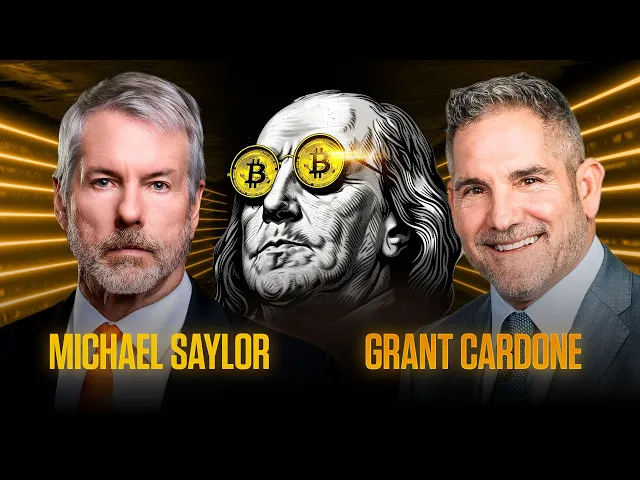
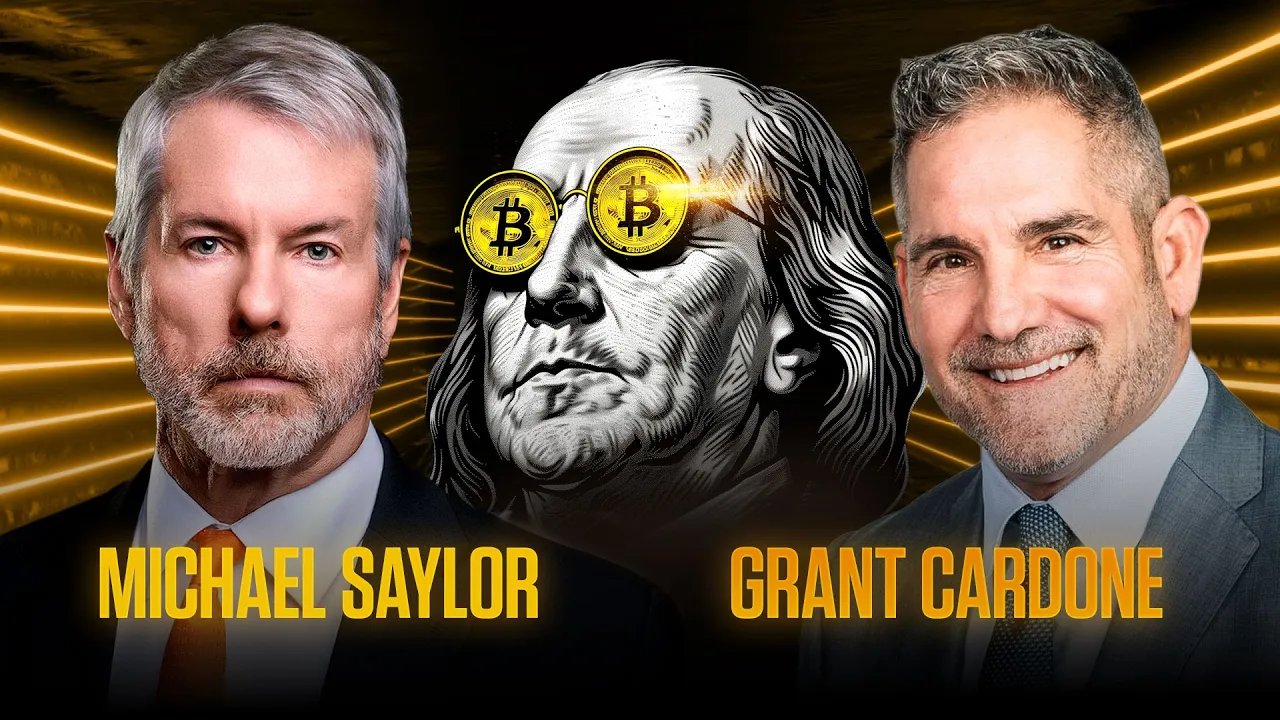
what message do you have to the degenerates? My my message is >> guys, Michael Sailor is an American entrepreneur, inventor, and Bitcoin advocate to say the least. Okay? Co-founded Micro Strategy 1989, served as CEO until 2022, and now executive Chairman, MIT graduate, Sailor pioneered business intelligence software, and amassed a personal fortune exceeding $4 billion. He's going to be in our studios today, and this interview is whack. This cat has accumulated 460,000 Bitcoin. I got that close to him telling me how much he added today when it hit $94,000. Look, we're going to be talking today
about some of these other Salanas, the Ethereums, the Ripple. He tells me at The end of the interview if they're going to make it or not. Okay. When does he have to liquidate? I think the answer is going to shock you. We had a bunch of people live watching while we were running. Interview was phenomenal. I'm going to tell you something. I've interviewed some of the biggest players in the world. This guy that's going to sit in that chair is one of the most difficult interviews I've ever done in my life. Okay. The amount of
First of All, his vocabulary is sick. Okay. His understanding of the financial markets is ridiculous. I've been with him five or six times. I'm I'm starting to just catch up with him. I'm going to try to get my questions in. I offended him on multiple at times where I had to cut him off so many times. We almost got in a fight again. Stay all the way to the end of the interview. Thank you so much for being here. Make sure you hit the Notifications. I'm going to do more interviews like this. Also, he's going
to be going to the Middle East and he's coming back and he's trying to drop by our 10X wealth conference. So, if you're going to be in Miami, what December 12th and 13th, uh, make sure you get here. family offices, RAAS, uh, personal finance, financial consultants, financial coaches. If you're in the wealth space, a family office, you run a family office and you're looking to see What the wealthiest of the wealthy are doing to reduce their taxes and create generational wealth for the next well for immortality. We even talked about immortality and church and religion
today. Okay, make sure you come see us at our wealth conference. Until then, enjoy this interview with Mr. Michael Sailor. >> What a day to be doing this interview. >> Yeah. >> Huh. Perfect timing. >> Michael Sailor, appreciate you taking time with me. It's quote. We've met a couple times now and um really, you know, inspired by everything you're doing today, Friday. What What's the date today, guys? >> 14. >> You probably know the date, huh? [laughter] We got We got Bitcoin down to 94 and a half. What's your >> a buying opportunity? >> It
is. >> Buy the dip. >> Yeah. What? What are you Did you buy some this morning? >> I am. I'm buying. >> We have bought Bitcoin every day this week. >> Every day. >> Every day this week. And we don't We normally report our Bitcoin purchase on Monday morning. So on Monday morning, we'll put out the announcement. >> Uhhuh. >> Is it a lot? >> Yeah. So So Mike, when you when you're public company when you're a public company, you you can't can you not say that day? Are you restricted and you have to say
it on Monday >> or could you tell me today? No, I I have to tell you on Monday. >> Okay. [clears throat] >> We we do it every Monday. That's our cadence before the market opens and >> and we follow an AK and in the AK we'll Tell everybody exactly what we bought, what we paid, how we funded it. Yeah. You know, so we like to be precise about those things. >> Yeah. And and so look, I met you back in January. I think my brother brought me over to your house and I didn't really
know about the Bitcoin thing. I'd been studying. I got some 13 years ago and I dabbled a little bit and I asked you about mixing this with real estate and you've given me some great advice. You've been a little short with me every once in a while because I think you you know you get tired of dumb questions right. Does that happen? Do you get frustrated with people that are new to the space and you're they're asking you questions you're like don't you get this? [snorts] You get you know it depends upon the time of
the day. If you've been talking for 12 hours, then it's then you can get a bit tired by the 13th hour. >> So, >> you catch me in the morning. >> Yeah. Is the morning's the better time? >> Cuz the last time I was with you, you know, the last two times I was with you, one you you called the fund that I was doing a [ __ ] fund. >> I I just suggested you should put more Bitcoin in it. >> And I do it and we went from 85 to 15 to now we're
like one-third debt, one-third real estate, oneird Bitcoin. >> Really? That's aggressive. I think I think the point that I'm making is is you search the entire world for a good idea and there aren't that many good ideas, right? I mean, Apple was a good idea 20 years ago or Amazon was a good idea, you know, and Bitcoin is a good idea and a good idea is something that could 10 to 100x its money. So if you think about all of the things you discovered in the last 30 years that could increase by a factor of
10x or 100x maybe >> 10x and by the way Bitcoin is 10x in the five years since I got in the business but >> you know think about all that and and then ask yourself the question should you put 2% of your money into a good idea are you going to have are you going to have 49 other equally good ideas? Okay, you put 10% of your money, put 10% of your money into an idea that you know 10xes, you double your money. But of Course, you know, is everything else does that mean that you're
going to put 90% of your money into a not good idea? So my issue there is if I think about my history as an investor, uh my number one regret is is if you found a good idea, you know, you wish you had bought more. >> Right. That's right. Always. and you wish you'd never sold. >> Mhm. >> So, if I if I can spirit you back 20 years and give you the chance to buy Apple or Amazon or Bitcoin, >> I didn't buy any of those. >> Are you going to give advice to someone
they should put two or three or 5% of their portfolio in? It's like I I think if you're going to do it, you should put in an amount of money that changes your life. Yeah. So, well, look, if you're if you're diversifying and you find a brilliant idea, maybe you put 5 to 10% of your wealth in it because you want to stay diversified, But you know, Jeff Bezos didn't get rich by having 5% of his assets in Amazon and selling 95% of his Amazon stock as soon as he could, >> right? So Steve Jobs,
>> I think he had >> Ellis, Mark Zuckerberg, Jeff Bezos, you know, Elon Musk, Bernard Arno, they don't get rich by selling 95% of their good ideas and keeping the last five or by selling 90%. So I just think when you find if if You're pitching someone a digital real estate fund, >> Yeah. You know, and if real estate's going to go up 7% a year and Bitcoin's going to go up 30 or 30% a year, then you don't want it to be 10% Bitcoin and 90% real estate. It's just a little bit better than
everything else in the world. >> Why not put it half and half? >> Yeah. >> And then why don't you deliver 20% gains A year when the entire rest of the real estate industry gives you seven? Because if it's a bad idea, it ought to be zero and 100% real estate. Yeah. And if it's a good idea, then you might as well go 5050 because because that way you're giving someone juiced real estate three times as good as every other real estate investment in the world. I just I think you're t if if it doesn't
work and you put 10% of your money into it and it doesn't work, then you just had a dog Real estate fund and it failed, right? Yeah. So, so when you have an idea, you either think it's going to work and you might as well put in enough such that you win and everybody gets rich or don't do it at all. I'm I'm not a big fan of that. I'll give you one more example. I use, you know, Rockefeller invents kerosene. >> Yeah. >> You know, kerosene is the most highly distilled form of um of
crude oil and It's jet fuel. It's rocket fuel, right? It's pure liquid energy. Okay. So, um, a good idea is I build a rocket. I build a rocket ship. I build a jet engine. I build a jet airplane. Or maybe I create gasoline or diesel. I give you a car, a truck. Those are all good ideas. Henry Ford, Boeing, >> you know, they [clears throat] did that. What's a conventional idea, safe idea? I put a kerosene lamp in the back of my horse and buggy, >> right? And I tell all my horse and buggy customers
that now they can read a book while they're in the horse and buggy crossing the nation or I put a kerosene heater in the back of the buggy because my customers complain about it taking 30 days to go across the Rockies in a buggy and so I heat them up. >> And my point is you don't really want to be the dude that's 2% invested or 3% invested in the revolutionary idea. You want to create the rocket ship. And so In that case, I I feel like either don't do it. >> Yeah. >> Or do
it in such a way that it's so much better than everything else in the world that everyone will sell everything else and buy your thing and everybody, you know, lives happily ever after. So that that's my view. >> Where do you think the diversification who who sold the diversification to America and to the world? The idea to go Into a Yeah. Just send it over to to an ETF or a mutual fund. >> It's a it's a classic thing. I I think when you don't know the answer, when you have a hundred choices and you
you genuinely don't know the answer and you're in the business of selling a diversified fund, you pitch in diversification. >> Right. Right. >> Right. So, I think partly the Vanguard 500, you know, John Bogle and then Conventional finance people, but um >> it's 11 trillion sitting over there. It's done very well for them, but I don't know that it's done that well for the other. >> Yeah. The world's full of hedge fund guys that created diversified portfolios, and their pitch was, "No one decision we make is going to bankrupt you, so give us all your
money." >> Right? >> But if you actually look at the results, they underperformed >> consistently. Uh the king of diversification is just to buy the S&P index. But but generally I think that there's a distinction here between uh the f the the financial statisticians that that want you to give them your money. For them, diversification's a good pitch because like, hey, you're a retail investor or or you're busy and I'm going to protect your money by Investing you in 27 uncorrelated diversified assets and I'm going to rebalance the portfolio every month and I'm going to
have 50 analysts that rebalance the portfolio and I'm going to charge a 2% fee and 20% of the upside and my uh and and my value added is consistent dynamic diversification. So, so that's what they're selling and they want you to believe that you need them and they charge you when you charge 2 and 20, you're basically taking 40% of Somebody's capital over the course of 10 years, right? So, it's pretty expensive service. On the other hand, there's another view of the world which is the engineers view of the world. When you build an airplane,
you've got the choice of building the airplane in copper, aluminum or steel or bronze or bricks or, you know, wood. And there's a there's a right answer, aluminum, and everything else is the wrong answer. And if you build it in steel, it doesn't Fly. And if you know, you build it in clay, it doesn't work, right? You build it in copper, it's not working. So in engineering, there's a right answer. For the plane, it was aluminum. For bridges, there's a right answer. It's like steel, right? You know, uh when you're creating uh you know, a
window, there's a right answer, you know, for how you, you know, what kind of glass you use and and then there's a wrong answer. So, engineers are used to asking the question, what's The right answer? Like how about you want to conduct electricity through a line, copper or you know titanium or you can pick a hundred metals but there's one metal that works better than the other metals. So if you're an engineer and there's a right answer, you don't diversify. You pick the solution because otherwise you die. But when you don't know the answer, when
you're not sure whether copper is going up or aluminum's going up or steel is going up or a Bushel of corn is going up in price, you know, and nor does your customer know the answer. >> Pick them all. >> Well, you can create a service which is I'll just give you a diversified mix of all of them and that justifies your business and you charge a lot of money for it. But, you know, I think the diversification only makes sense when you when there is no right answer. It's like the joke I, you know,
example I use Is yeah, you're on a a sinking ship and there's 10 lifeboats, you know, and one of them, you know, is watertight and the other have holes in the bottom of them. Find the one that's watertight. Put the entire family on that one and then then you live. And pick the one that isn't watertight. You're going to die, right? You're not going to diversify across a bunch of imperfect components. >> Were you looking Were you looking four or five years ago or before that? Were You looking for something other than what you were
doing? >> You know, in the during the COVID lockdowns uh in the middle of 2020, we had $500 million of cash and uh [sighs and gasps] and the bankers took the the interest rate to zero. >> And yeah, we were >> 500. >> Yeah. >> Half a billion of cash. half a billion. And you know, so it's like you have a $500 million real estate portfolio and the mayor of the city unilaterally reduces your rents to zero and tells you they're going to they're going to rent control the rent to zero for the next five
years because that's the right thing to do because we're in a crisis, right? There's there's COVID crisis and if you don't like it, then you must not be a good citizen, right? There's something wrong with you, right? you're you're just insensitive capitalist and The right thing to do is we just reduce the rents to zero forever >> which is easy to do with somebody else's money right >> so that's kind of what happened during co right I mean we we literally did it with >> rent yeah >> you know and uh and we did it
with capital so when that happened if that were to happen to you if someone said I'm reducing your rents unilaterally to Zero forever and you could sell the property and move to a different state or move to a different city. You might very well do that, right? So, we had $500 million worth of property. It was called treasury bills. It was unilaterally reduced to a value of zero per year. And I think Jerome Pal gave a speech and he said very famously, he said, "We're not even thinking about thinking about raising the interest rates until
the year 2024 or 2025." >> Right? Repeatedly he said it. >> I didn't need to hear that twice. So I thought I better go find something else to buy other than treasury bills. So we started thinking could we buy a stock portfolio? Could we buy a portfolio of art? Could we buy some real estate? Could I buy a fraction of a sports team? >> Should I buy a bunch of gold? Or should I buy a bunch of digital gold? >> And by the process of elimination, we Went through all those things. >> Have you been
introduced to Bitcoin prior to that? >> No, not really. Okay. I mean, I'd never really seriously thought about it. Okay. Right. >> So, I went through the process of elimination and I started thinking maybe I should buy gold. But then I thought what I'd really like is something that feels like gold, a non sovereign store of value bearer instrument like you know And I like something which is the best cross between gold and uh Google. >> Mhm. I wanted a digital monopoly >> on money, >> digital gold. And I thought, well, this crypto stuff looks
like it's digital gold. A crypto coin, 21 million crypto coins, because the appeal of gold is it's scarce and desirable as a store of value. And and uh the appeal of crypto is I can teleport it and I can self-custody it and I can program it. So Then I just started thinking well what's the crypto network which is most like gold and I eventually decided Bitcoin was digital gold and so we bought Bitcoin because yeah gold was the best idea of the 19th century and arguably if you wanted portable capital you wanted portable property you
wanted money for the past 5,000 years right gold was generally a a pretty popular idea uh but In the 21st century, what you'd like is something that's as desirable as gold, But you want it to be programmable. You want to move it at the speed of light. You want to put it on an iPhone. You know, you and the thing about Bitcoin, which is better, in addition to being programmable and digital, was that it's absolutely hardcaped to 21 million coins where and so the inflation rate of Bitcoin is zero. It was pretty obvious to me
over the long time horizon as as the limit goes from 0 to infinity the inflation rate is zero. >> Why why is it zero? >> Because there's 21 million that's all there's ever going to be. >> Okay. So >> there's 21 million. >> Yeah. >> Right. And and the the rate at which we create more Bitcoin is asmtoically following to zero. It's falling >> as what is that word? >> You know asmtoically as a big word. It's like it's like if I try to go to the to The wall there and each each time I
move I cut my step in half. >> Okay. >> And I go half as far and half as far and half as far and half as >> that's asmmptoically approaching the edge of the room but even over a billion trillion years if I keep cutting my step in half I'll never get there. Right. But on the other hand you say well how wide is the room? It's like it's like 12 feet. >> Right. Right. Well, so with Bitcoin, you know that there'll never be more than 21 million Bitcoin. And in public company Parliament, you would
refer to that as the fully diluted share count. >> The fully diluted Bitco count count, Bitcoin count between now and a million years. >> Can't be any more shares. >> It's like, it's like if you knew you were going to 21 million shares. >> Yeah. It's like when I'm valuing your Company, I want to know, well, what's the total number of shares that can ever be issued between now and 100 years from now, right? I don't really care how many shares you issued this week or this month. I just want to know, are you going
to 21 million shares >> or are you going to 2.1 trillion shares, >> right? Right. >> Right. And so the fully diluted Bitcoin count was 21 million. And the significance of that is that means the Inflation rate is zero. >> But the inflation rate on gold is 2%. And the fully diluted co gold count is infinite because if I keep increasing the amount of gold by 2% a year, that's infinite amount of gold. Um if you if you want to figure out practically how you value it, well, when you increase the supply of something by
2% a year, that means that you're doubling the supply every 36 years. That means the economic halflife of your money is 36 Years. That means the halflife is 36 years. That means you're going to live 70 years. >> Mhm. >> Okay. Well, what's the halflife if the inflation rate is zero? Infinity. So, what's your life expectancy if you if the inflation rate is zero? Your life expectancy is infinite. You're immortal. You're living for a billion trillion years. I >> like that idea. >> Zero is a billion trillion years. You're a god. >> Mhm. 2% is
you're going to die. Half of you dies in 36 years, the other half dies in the next 36 years. Maybe you make a hundred years and you're pretty much done for, right? And so it's the difference between a mortal life of a human being versus economic immortality. Um, we can dismiss it if we just think in the next 12 month time frame. But, You know, if you're an engineer, it's like, well, what's the difference between you lose 2% of your energy every cycle versus you lose none of your energy every cycle. None of your energy
every cycle is perpetual motion. You last forever. 2% of your energy every cycle and you spend it 100 times, there's nothing left, right? You burn out the motor. Okay. So, I like the idea of gold, but digital gold is better. And how much better? infinitely better, Right? Infinitely better. So, in 2020, we settled on Bitcoin, his digital goal. We decided we're going to sell our 500 million worth of treasury bills and we're going to buy $500 million worth of Bitcoin. >> First purchase was how big? >> $250 million. >> Wow. Dude, >> next purchase uh
two weeks, three weeks later was no, 20 days later or something was uh 175 million. >> Your first purchase was a quarter of a billion dollars. half half of your cash resp. >> Yeah. Well, actually, I would have bought it all, by the way. I wanted to buy it all, but the board of directors wouldn't let me. >> Well, like my idiots, huh? >> Yeah. My >> I said that you didn't. [laughter] >> So, so, but let me ask you, h how do you make a decision after years of Accumulating that much fiat, that much
cash? >> Yeah. How do you make a decision in a week I'm going to drop a quarter of a billion dollars, half of my reserves into one investment? How do you get that much conviction that didn't take a minute? >> The lockdowns hit. >> The politicians make us close the office. >> Everybody goes home. Google and Apple And Amazon and Microsoft start sniping all of our employees from home. >> It's pretty clear, right? If I if if I want to if I want to destroy your company, I sentence all of your employees to home jail,
right? To home imprisonment, and then I offer them 20% more to redirect their computer browser to some other other company. So, it's clear we're going to lose all of our human capital. The stock tanks to $9 a share and the Company's worth nothing. >> This was Micro Strategy at the time, >> 2020. Yeah. >> Yeah. I'm telling you the story of TW. You're asking me how did I >> tell the audience the your software company. >> It's March of 2020. >> Okay. >> We're a software company. We're a $500 million software company and the lockdowns
come and all of our employees Get sent home and we're losing them to Microsoft and Amazon. Uh and so we're losing our human capital. Uh we're a public company. The stock tanks. You know, it's valued at half of revenue or something. Well, >> call it $3 a share. It's what the company's worth. And if we do, and then Jerome Pal says, "Well, you know, the 500 million in capital, that's worth nothing forever." Wow. And our choice is either sell the company. It's Like a fast death. just sell the company, give up, write off 30 years
of work, or a slow death, cling on uh to $500 million of cash yielding zero, watch it get inflated 20% away a year, right? The inflation rate was 20% at that point. We're printing money like there is no tomorrow. Costs are, you know, you can't see the inflation in 2020 because it's illegal to buy anything, right? When there's a war and the government doubles the money Supply, but it's illegal to buy anything, you don't see the inflation. You see the inflation after the war ends when it's when you can go buy an airplane ticket or
go to a concert or go try to go to a hotel, you know, and at that point everything doubles or triples in cost except you don't have any money, right? Because the government doubled the money supply. So, it was pretty clear to me that that uh the currency was collapsing And we were going to have all our human capital stripped away and we were, you know, having all of our financial capital stripped away and, you know, I think the the stock traded a million dollars a day. like there's no one cared at all about the
company. And we're either going to basically sell the company, give up for, you know, $8 a share, $10 a share or whatever, or we're going to cling uh to life for five more years, at which point all of our Employees will have quit. The product won't be any good anymore. We've just had all of our talent stripped away from us. And then uh the world will say, well, you know, they went out of business because they deserve to go out of business because they couldn't compete with the big guys. >> Mh. >> You know, or
we could do something. We could take a risk, you know. So, it's that that point in the movie where the Guy's sitting in the citadel with an army. >> Yeah. >> And he and he sees there's a war and there's the War of the Roses and there's the, you know, there's the white faction and there's the red faction, the the the Yorks and the Lancasters. And you're either going to sit there and get starved to death by both of them or you're going to pick a side and you're going to ride out and you're going
to Fight and if you you know and if you win maybe you get to live and if you lose well at least you you know you went you went out fighting right and so that was where we were at in 2020 and we decided it's either a fast death or a slow death or fight and I thought maybe I'd prefer to fight. So, so you thought at that time, >> yeah, >> buying $250 million worth of Bitcoin >> in one day, had you bought any up to This point at all? Like, >> no. I mean,
the D the way we got there Bitcoin, no nothing. >> Nothing. >> No, I mean, look, it didn't happen in one day. What happened is I concluded by April that this was a way out. Bitcoin was growing 80% a year at the time. >> Mhm. Uh, so if you can buy something appreciating 80% a year, that's a commodity on your balance sheet, >> faster than your company. >> It's like, if you could buy a digital monopoly growing 80% a year at one time's revenue, would you? >> Yeah, of course you would. >> Yeah. >> If
you could buy a digital monopoly growing 30% a year for the next 20 years at one time's revenue, would you? Everybody would. It It's not complicated idea. Bit I expect Bitcoin to grow 30% a year for the next 20 years. It's a monopoly. You're getting it. You know, You buy $100,000 worth of Bitcoin, you're getting a $100,000 business growing 30% a year. That's a monopoly at one times revenue. Why wouldn't you? Everybody would. Uh the breakthrough was just thinking of it as doing a acquisition of a digital monopoly on Monday, right? It's the dominant digital
monetary network, right? So we have to do a transformational acquisition and >> and since there's no other company growing 80% a year that's available at One times revenue that'll sell sell us sell themselves to us >> Bitcoin was the deal right Bitcoin was >> yeah so so we looked at it and we thought we can buy the dominant digital monetary network at onetimes revenue it's growing 80% a year on paper it looks just fine it's just no one ever done it before but But um the theory isn't that complicated. I mean what did uh Facebook
pay for WhatsApp or for Instagram? >> WhatsApp. Yeah. >> WhatsApp. >> I mean think what did Google pay for YouTube? >> Yeah. >> Okay. So it's not a complicated idea. You buy the monopoly >> something that a billion people need. Nobody can stop that's in hyperrowth mode that'll sell itself to you cheap. Why wouldn't you? >> Yeah. >> So I that wasn't the problem. >> The problem was no public company had ever done this before. And so first I have to convince the the officers of the company. Then I have to convince the board of
directors of the company, right? And and that takes a while. And then then yeah, the logical thing is let's just go ahead. We're going to bet the company on this buy 500 million worth. But you know, between the lawyers and the risk managers, everybody Thought, well, that's too risky. So let's do some I said, well, what about I'll 400 I'll do a buyback. 400 million of Bitcoin. I'll buy back 100 million of stock. No. 350 million of Bitcoin, I'll buy back 150 million of stock. No. 300 million of Bitcoin, I'll buy back 200 million of
stock. No. Okay. Here's my best and final offer. 250 million of Bitcoin and I will buy back $250 million of the stock in the open market, the tender offer. >> Okay. >> So, so explain that to me. So, to you, >> so when we announced the deal, what we said was we're going to buy 250 million of Bitcoin. >> Yeah. >> And we're launching a tender offer. The stock was 120 bucks a share. We'll buy you out at 140 bucks a share if you don't like the idea. >> So we basically said >> who funded
that? >> The company. >> Company. >> The company had $500 million. >> Got it. Okay. >> And the company said, "We're going to buy a >> real estate guy." You got to remember I'm a real estate guy, dude. It's like to us it's like I got to see it. I got to touch it. I got to feel it. So you got to go slow with it. >> I'm the CEO of a public company. >> Okay. >> And I want to do something very risky. >> Got it. But you're and you're the outside shareholder and you
think I'm crazy, >> right? >> So I say to you, I'm going to go bet the company on Bitcoin, but if you don't agree with me, I'll buy you out your shares. >> Got it. Got it. >> And so I'm going to offer you $140 a Share. >> $20 premium. >> Yeah. >> Yeah. >> If you want to get off the ride, >> how many people took took you up on that? >> So the way it worked is we announced the $ 250 million in Bitcoin. Then we had a 20-day tender period. We made a
tender offer. We offered to buy up to $250 million. The stock traded up, then it traded above the $140 price, and everyone that didn't like it sold into the into the open market at north of 140. >> Wow. >> When the 20 days finished, we had $60 million worth of shares tendered. We paid off the $60 million at the of shareholders at 140. We had about $175 million of extra cash at that time. We turned it around. bought Bitcoin with that. So the first deal was 250 and that Second deal was after the tender offer.
It was the extra 175 million and then the and then Bitcoin rallied, the stock rallied, ran through the roof, you know, and the rest is history. >> So Bitcoin was what price then? Do you remember? I'm sure you do. >> When we we did the first deal, we bought Bitcoin and we bought it like 11,800. >> Okay. >> And do you just you just bang the the bell, right? You just hit it. >> No. Then immediately Bitcoin crashed down to 9,600 or something and we lost $40 million in the next two weeks. >> Oh my
god. >> And so >> what's going on for you when that happens? >> Cuz that seems that's what happens every time I buy it. >> It drops 20%. >> It's an instructive story because the Point is it was never easy. >> Uhhuh. >> It will never be easy. And if you were buying expecting to get an immediate risk-free return in the next two weeks, you have the wrong attitude. >> So we bought it, the price crashed, we went through with the tender offer. We got 175 million and we went and we bought the next trunch
at 10 at 10,200 or 10,300. So, we double down after the dip and then it turns around, flies Through 12,000, runs to all-time highs of $19,000. The stock 10x's. >> Yeah. >> You know, all the stock options get exercised, we get another wall of money, we buy another $50 million worth. >> Well, where's the wall of money come from? Explain the wall of money. It sounds sexy. >> All the employees had stock options. >> Uhhuh. >> And the stock options were Sorry, let me Just adjust my cushion. >> Please help. the stock options are uh
you know struck at whatever 100 90 bucks 80 bucks. This is pre-slit. The company eventually split 10 to one. So >> so if these numbers seem different to you that's because >> we we split it 10 to one. But so the stock options are whatever you know 80 90 100 110 when the stock's trading between 90 and 120 during the lockdowns the stock options worthless. >> Mhm. >> When we bought the Bitcoin and Bitcoin rallied the stock went through the roof. rallied up to 200, then $300 a share, then $400 a share. When the stock
rallies, all the employees exercise the stock options, and the company gets an avalanche of money from stock option. >> Got it. Got it. And so all they're buying the shares at 110. >> No, the comp No, the employees are selling the shares. >> They're selling the shares. >> Well, they're selling the shares of 400 and they're exercising the option, which is which means they're buying >> they're buying the stock at 110 and the company's getting >> Got it. the the company gets the one. >> Yeah. So, the company generated a lot of stock option income
because the stock took off and so we bought another trunch of Bitcoin >> and the volatility spiked, the liquidity Spiked, the stock went through the roof and by December of that year um we uh were able to do a $650 million convertible bond offering at 75 basis points interest cost. So, basically free money. So, someone gave us $650 million of free money. Mhm. >> by December. And by February, we did a billion dollar deal at 10x. The strike price was $1,400 a share. Remember, the tender offer was $140 a share, right? >> So, we did
a convertible deal at 10 Times the price of the the tender offer maybe six months previous or the tender offer was in September. So, >> can you hold that? Can you hold that thought? >> Where where did you learn the financial engineering part? Like, I know you're an engineer by nature. Okay. You're a very intelligent guy. You studied history. But where do you Every time I'm with you, dude, I'm just like, where did you start seeing this? Did you look a lot? Did you >> No, I took the company public in 1998. And so I'd
been a public company CEO for 22 years by the time we went into this. >> You were how old? >> Um, well, when I would took the company public, I guess I was 33. >> Okay. >> Yeah. >> Jesus. >> I started the company when I was 24. So I started in '89. I was 24 and then we Were a private company from ' 89 till 98 and at 33 I took the company public and then I lived through all sorts of >> You went the IPO route. >> Yeah. >> The route what do you
call that the right of passage? >> I guess you that's what you told me it is. >> Yeah. And uh you know I'd had experience as a private investor and so I invested in all these big tech stocks and I made Fortune I made a lot of money investing in Apple and Amazon like 20x my money and all the big tech things and um and and you know I had a vivid recollection that I'd worked myself to death like 3,000 hours a week for 10 years in my in my business and I couldn't get ahead.
We're basically banging our head against the wall against Microsoft. But 1 hour a month I would invest in Google or or Apple or something and I was making a fortune and it was easy. >> Mhm. >> And you know I started thinking you know if if I if I had to do again I think I take the company money and invest in the big tech stocks because then the shareholders would all get rich because simply working harder to compete with Microsoft is not a way to get ahead, right? They're just too powerful. It's it's you
cannot compete against the monopoly uh of the world. So I had that experience. I had some experience Trading swaps and currencies and and other things. So I had an intellectual interest in these things. But really necessity is the mother of invention. Grant, >> it's like when someone tells you, you know, I got some bad news. It looks like you're going to die of something. You've got 12 weeks to live. You all of a sudden get religion. And you start, you know, you go online and start interrogating the the AI. You start Arguing with the AI
about whether this is right or wrong. and someone says maybe you might want to change your diet and the thing you dismiss for 50 years, you think maybe I might want to change my diet, >> right? >> You know, so I think you get open-minded when you have this neardeath experience. And >> what they say in the history of science and you know, one of my degrees at MIT Was the history of science. They say um the only time you ever see a paradigm shift is either when the old guard dies like you know people
that think they know how the world works just have to die just got to have to get out of the way. Max Plank said, "Science advances one funeral at a time." >> Right? And then the other time when there's a paradigm shift when people embrace a new idea radically is during a War. >> Right. War on COVID World War II, World War someone's dropping a bomb on your head and you're and you're a aircraft denier. You don't believe in air power, >> right? Right. You don't believe in nuclear power and they drop an atomic bomb
on you. Okay. a lot of a lot of things that people rejected that we literally court marshal Billy Mitchell, right? Like the military court marshaled the guy that said, you know, the air Force is important and airplanes are important. The army court marshaled him, >> right? I mean, you know, Pearl Harbor >> was a war. >> What? >> You think CO was a war or equivalent? >> Absolutely a war. There are two wars going on. >> Yeah. >> Right. Maybe three, right? There's a war in CO technically, right? that that that biological war there was
a cultural war. >> Mhm. >> Right. There's a cultural war. The war when we shut down every small midsize business and bankrupted gym owners and restauranteers and bar owners and everyone that work with their hands in the blue collar labor while we enriched Wall Street and hedge fund managers, right? Everybody on Wall Street had the best year of their life. And everyone that actually was a, you know, a bluecollar laborer, >> not only were they bankrupted, they were thrown in jail for showing up to work. >> Right. >> Right. Had their reputations destroyed, their accounts
frozen, etc. There was definitely a cultural war there. You still can't talk about it, [laughter] right? You It's still very difficult to talk about. And then you had a currency war, >> a war on the currency, right? When when you basically Determine that the interest rate is going to zero, you're inflating the currency through the roof, you're devaluing someone's assets, right? I am devaluing your currency and of course all of the derivatives of the currency. So, so there was a currency war as well. And if you didn't notice it, right, you must have been in
a coma for the year. I think everybody noticed it. And the issue is how did people react to it, right? And everybody's got their own Story of how they reacted to it. But I think it was pretty transformational to a lot of people in the world. >> So you're this is co your business is suffering. Your employ you're losing employees. Did you lose a lot of employees to to the big guys? >> Yeah. I mean >> how many how many employees did you have? >> I don't have the exact number but I mean but but
when someone's got a trillion Dollars, they're not offering less money to the employees they're hiring away than you're paying, right? and they could stay home. >> Yeah. Yeah. So, we were losing our employees. We're having our talent stripped from us. The business, as I said, it was either fast death or slow death that you fight. >> So, we just decided we were going to fight. And >> when did you know you were right? >> How long before you're like, okay, this be a new industry, not just a a surviving business. by October of 2020 like
uh we launched that tender offer August August 10th August 11th of 2020 and made the second buy in September and right around the time that PayPal announced support for Bitcoin and then when when Square came out and they bought Bitcoin and then Bitcoin rallied into the teens and ran toward the All-time high and our stock rallied it was clear we'd saved the company >> and you you know and it and it was a gambit that it worked out. >> When did you know you were creating an industry? I mean obviously >> you know what happened
was our journey was we started out of desperation and frustration >> right I would say Q2 Q3 was desperation And frustration you fight or you die uh and then I think we moved into opportunistic phase it became opportunistic hey someone will give you a billion dollars for free for seven years to invest in your business do you want the money of Of course I want the money. Yeah. Right. Okay. So, it became opportunistic and then at some point we realized there weren't very many public companies being a public company that's a well-known seasoned issuer with
an Options market that can actually issue bonds and sell equity to buy Bitcoin made us a very unique creature. So, it became strategic. Right? There are a lot of people I meet even today and they go, "Well, you know, I had money locked up in a 401k back in 2020 and I believed in Bitcoin, but I couldn't buy any and then you came along and so I could buy your stock and I made a fortune." Right? People in the UK had money locked up in a retirement account. People in the US, You know, a lot
of people, they could buy an equity, but they couldn't buy the underlying Bitcoin. And if you bought our equity, you could use uh money tied up in a retirement or IRA account. You could borrow against the shares, you could trade the options on the shares, all and then we created these convertible bonds. And if you know, >> this is 21 now. >> Yeah. Well, TW actually starting in 2020. >> Okay. >> Right. I mean, if if you believe in Bitcoin in September of 2020, you can't buy Bitcoin. >> I couldn't because >> because your money's
in a retirement account >> and and the Maril Lynch wouldn't allow me to. >> Even today, you can't buy Bitcoin from a retirement account. Really? 5 years ago. >> Oh, I didn't know that. >> Go try it. >> Oh, okay. Yeah, like so you can't buy you can't buy a crypto asset in a regulated retirement account in Australia or the UK or the US, you know, for the longest time. So, a lot of people had a lot of capital tied up. Even if your money was freely yours, you would then have to go and set
up a relationship with a crypto exchange. That would take you 6 weeks to 12 weeks. >> Then you would have to wire them the Money. Then you would have to buy it. It was very difficult. Like so and even if you did it, let's say that you actually had money that was free and clear and you set up a crypto relationship. So you put all your money into that, but you can't borrow against it. >> Mhm. >> Right. And so we became >> virtually illquid. >> We were an institutional on-ramp for people. >> Right. >>
Right. You can borrow against MSTR. You can buy MSTR. You can direct your retirement funds into MSTR. You can that. By the way, >> you know the story though in 2020. You didn't know this would happen, right? >> No. >> Yeah. >> No, I didn't know. >> Yeah. Right. >> I I learned it. It was It's a It was a Fortunate happen stance, a a a serendipitous >> development, >> right? Uh I didn't know all those things. All I knew was we're going to die unless we fought, >> right? >> And so your back is
against the wall and you decide I'm not going to roll over and die. I'm going to fight. Um, what came out later was we we became the largest issuer of Convertible bonds in the world and we had the most valuable convertible bonds because they're backed by Bitcoin. And so that was a lucky find that was worth $10 billion to us. And then it turns out there was no ETF. IBIT didn't exist until 2024. IB, you know, any Bitcoin backed ETFs didn't exist. So for 2021, 2022, 2023, 2024, there were no ETFs and so we were
the equity on-ramp for people and that was another fortunate happen stance. Then it turns out that people all the derivatives traders want to trade in the options market. You want to you want to buy calls or puts or whatever. Well, we ended up going from a $1 million open interest to a hundred billion open interest. Okay, hundred billion dollars makes you like one of the 10 biggest options markets in Wall Street. So, I didn't know that was going to happen. It didn't occur to me, but but because we were a a Company that had been
public since 98, we're a well-known seasoned issuer. So, the options immediately came to life, we could we could uh issue the bonds, we could do the financing, our equity became liquid, you could borrow against it. And so we inherited all of the financial apparatus of a Schwab or a JP Morgan or a Morgan Stanley and we could, you know, our our security could be bought in, you know, UK retirement accounts. So, so we got a bit of a Benefit there and a head start by being the pioneer, >> right? >> When uh when the ETFs
got approved by the SEC >> that this year >> in January of 2024. >> Okay. Last year. >> Yeah. when they got approved, they were they were crippled by the SEC. Um the options markets on the ETFs were crippled. You could only trade very Small uh amounts of options contracts. And so we still were the dominant derivatives on ramp and off-ramp for the entire crypto economy, right? Like at one point we were like a hundred billion dollars and the next closest thing was 10 billion. So we were 10 times bigger and you know and our
stock was trading 3 four five billion a day and that was twice as much as everything else combined four five billion >> a day >> dollars. >> Yeshu billion3 to5 billion dollars of MSTR trading every day >> and and prior to that what were you trading before before you you >> in February of 2020? >> Yeah$2 >> million a day. >> Oh my god. $2 million >> a day. Yeah. Yeah. two we went from 2 million to 4 billion. >> Yeah. Uh and so even in 2020 though our Equity was trading twice as much as
all the other ETFs combined. So we be we became an institutional on-ramp for equity for derivatives for fixed income for bonds and that was all serendipitous. So on the you know answering your story right we go from frustration and desperation to opportunistic then then it becomes strategic and one of the things you can do if you're a wixie a well-known seasoned issuer is you can file a Registration statement to sell a billion dollars of bonds on a Monday and you can sell them on a Tuesday you don't have to wait for approval from the >>
Wixie is what now >> well-known seasoned issuer >> uh and you were wellknown >> W KSI Wixie >> okay well You're well known because >> it it's it's literally a legal term. >> Okay. >> It is the term applied to a public company in the United States that can file a registration statement and sell securities to the public the next day. >> Well, the well-known part is because you're public, because you've been traded, because you have >> Don't ask me why they call it that. It's just a legal term, right? >> Okay. Well known. >>
Well, you know, the legal term is this is a company we know well. >> Got it. Got it. >> It's seasoned. It's been issuing securities for a decade or some long time. >> And it's an issuer. >> Got it. >> Well-known seasoned issuer. Wixie. >> Okay. >> It's a technical term, >> right? Everybody's learning something today. >> We all learning something, guys. >> Well, here's the important something to learn. There's 400 million companies in the world. There's 40 million companies in the US. There's 4,000 big publicly traded companies. There's maybe 400 Wixies. >> There's maybe
two to 400 well-known seasoned issuers. Wow. So in the entire >> want to be one of those. >> Yeah. >> Okay. >> Yeah. The the punchline to the story is I'm learning >> if you can sell a billion dollars of security to the public without waiting for permission from the regulators that's a massive competitive advantage. >> Right. So you announce on Monday, Tuesday you're collecting money. >> Yeah. And of course this is something this is a capability we had in 2019 or 2020. But of course we never had a reason to sell securities. >> Mhm.
most well-run uh public companies Aren't in the business of selling or issuing securities. They're in the business of buying them back. So, the big inversion, right, the the the paradigm shift, the thing that allowed us to really, you said, when did you become, you know, the leader of the movement or or or create a new industry? >> Yeah. Yeah. >> Right. It's when we realized that if you're a well-known seasoned issuer, you can sell a billion dollars a week of Securities. If you're not a well-known seasoned issuer, if you're a public company, but one of
the smaller ones, you file the registration statement and you wait for 3 to 6 months to get permission >> the whole market >> and by the time 6 months have gone by, it's too late. >> Right. Right. >> Okay. Maybe you'd wait a year. >> Right. >> If you're not a public company, it's illegal to sell the securities. Then you know you might spend 3 years. >> Mhm. >> It takes [clears throat] three years to take a private company. Yeah. You know a little bit about this. >> Yeah. Yeah. >> You know it's not easy
to go from being a private company to make possible. >> They make it hard, don't they? >> Why why do they make it so hard? Then We'll get back into this. But I >> uh it go it probably goes backundred years. >> I don't think it's for the good of the investor though. >> Yeah. Go back to 1930s with the SEC act of 1933. It was it was a reaction to the 1929 stock market crash and it was a bunch of guys in Washington DC making a power grab to centralize control of the securities industry
in Washington DC and Move it away from New York City. >> Mhm. depending on who you believe. You know, there are a lot of historians that say this was a triumph of the Rockefeller interest over the JP Morgan interest and they wanted to prevent JP Morgan from creating so many companies and exercising so much control. So in the SEC 40 act or the SEC 33 act, they basically said, you know, you have to get permission from an agency in Washington DC before you sell securities To the public and we might not give you that permission.
So, I mean, I could talk about that for hours and hours, and there's tens of thousands of pages written on it, but all of it has to do with quote unquote investor protections. And you could characterize it as one point of view, right? The very regressive point of view is I can conceptualize of a of a situation where some investor might lose money or might be victimized, and so therefore, I'm going to prevent anybody from doing anything, >> right? And then the other point of view would be I think it's better to let a million
a million businesses do things and if someone commits fraud, they should be civily or criminally liable for the doing of everything. But let's let people drive the cars even though we know there's going to be an accident. >> Yeah. >> And let's let people sell products even Though some of them may be defective because the alternative would be to shut down the economy. Right. So I I think that um with regard to securities, we kind of moved uh progressively each each crisis resulted in a tightening of the tourniquet and it got progressively more difficult and
more expensive and more risky to sell securities until we got you know I think there were 12,000 public companies the turn of the century and all of the you know the Sarbain Oxway rules made officers is criminally liable for every mistake. And we went from 12,000 to 4,000 public companies and people just said screw it. I don't want to be public anymore. >> It's too risky and it's not worth it and it's just too difficult. And so I would say we reached the low point in entrepreneurism and capital markets by about 2020. And uh the
crypto movement was the opposite. the crypto movement is, hey, Why can't I just launch a token in 4 hours for 40 bucks, >> right? >> Okay. So, and so if you look at it, you say there's 40 million companies in the US, but there's only like 0.01% of them that can access the capital [laughter] markets. You know, in any other industry, if 99.99% of the businesses didn't have a telephone or a website or a truck, >> no chance >> or electricity, >> Yeah. We would declare it to be a sick Yeah. >> and you know
and more abund stagnating economy >> and you're saying finance is like electricity. >> Yeah. Capital markets are like that. So so uh coming back to our story though the point is we were a well-known seasoned issuer. We were we had an asset which we had not utilized. is we had an Under undervalued asset that is a public listing of a seasoned company and we accidentally discovered that we could use it when we when we you know when you issue stock options to employees and they exercise the stock options the company generates 50 or 100 million
like that that's a public company benefit and then when you sell a billion dollars of convertible bonds that's another benefit you're finding literally money's dropping out of the scaz of you. Yeah. And then we discovered a new thing, something that Michael Milin had created uh many many years ago called the at the market offering, a shelf registration. And the idea was you file a shelf registration with the SEC and then on any given day you can sell the shares into the market on the same terms as every other investor. Okay, that didn't exist when I
came public. But what that means is you file a billion dollar equity ATM, the company says, you know, From time to time over the next three years, we may sell equity and if the equity is trading strong in the market, you can go and sell a million dollars of it, maybe 10 million, maybe a hundred million. We had days where we sold a billion of it. >> So you're explain to me the ATM. Now you're going to sell a billion dollars worth of stock. It's >> we sell a billion dollars of stock. We take the
billion. We and then you do Something with it. You could invest it in real estate. You could buy gold with it. You bought Bitcoin with it. >> You were buying Bitcoin. >> Okay. So, we didn't know about that. And it's not something that a normal well-run company would ever care about >> because if you look at companies like >> because you don't have anything to do with the billion dollars. >> They don't have a use of proceeds, >> right? >> Apple, Amazon, Facebook, Google, every bank, they buy their stock back. >> Mhm. They generate cash
flow by selling products and services and they buy the common equity back. That's their business model. Um, and that's because their capital asset is a is a money market instrument. Money market and treasury bills, one month treasury. Uh, one month treasury is yielded on average over 5 years 2%. The cost of capital is set by the S&P index is about 14%. So, if I sell my equity and I buy the money market instrument, then I'm getting a minus 12% yield. So, I'm burning 12% of my capital. That means that if I've got a billion dollars
in cash and I invest in treasury bills, I get 2%, but I might as well just give it back to the shareholders because they expect to get 14%. Right? So conventional corporate finance was >> buy the stock >> is you either dividend out your cash Flows to your shareholders or you buy your stock back and the most taxefficient thing to do is buy the stock back. Right? So I have billions of dollars. I buy my own stock back. I surrender the capital to the shareholders. I create more leverage on the equity. The earnings per share
is going up because the per share count is going down. Right? The share count's going down. That is conventional wisdom. 99% of all companies, maybe 99.9% of all Companies just do that. Uh the only company that you know of that doesn't do that is Bergkshire Hathway, right? Warren Buffett says, "We're not going to dividend out the cash. We're not going to buy the stock back. We're going to invest the capital because I think I can do a better job." And so that's why they have the largest treasury of any public company because that was his
practice for 30 years. But no one else wanted to do that. Everybody else will brag about The fact that they buy the stock back or they dividended. >> Well, why why do you think nobody else follows Warren on that? No dividends. >> Okay. >> All the REITs the REIT industry that I compete with. >> Yeah. >> 90% of their revenue has to be distributed. >> Um I'm like, well, if you if you got a lot of money >> and good business, why don't you buy your buy more of your businesses, expand the company? But they
can't. So why why does >> well they they think they're buying more of the business when they're buying their stock back. >> That's what they're um the cost of capital the hurdle rate >> is 14%. It's the S&P index. So for the last hundred years the cost of capital has been generally set by the S&P 500 Index. So an equity investor would say if you're beating the S&P index you're beating my hurdle rate. You're a winner. And if you're underperforming the S&P index, I could have just bought the S&P index, right? And gone to sleep
for a year. And so you're a loser. >> That's the [clears throat] hurdle rate. Okay. Well, it turns out that for the most part, real estate doesn't beat the S&P index. It it performs less than I mean, the S&P is 10% a year for 100 Years, right? So, and real estate's maybe 7% or something. The way you beat it is you have to lever the real estate, right? If you lever the real estate intelligently with the right capital, then maybe you can get something that's compelling. Unlevered, it's pretty >> Thank you for being generous there.
You were sensitive to my situation. >> I mean, well, I mean, there aren't many successful real estate investors that don't use debt. >> No, that's right. Why not? >> Right. I mean, it's all question like >> what kind of leverage do you use and how intelligently do you use it? Um, so if you're a public company, then you're trying to beat that hurdle rate. And so the the issue is, okay, I've got a hundred billion dollars cuz I'm making Microsoft or Apple. Why don't you just buy the S&P index? [snorts] And there's a simple answer
to that because following the SEC Act of 1933, You had a lot of companies, the Morgan interest, and they were trust companies, and they owned a bunch of other they owned each other shares. So I would create a company that would then own the shares in 10 other companies and then this company would own my shares and then this company would own the shares of my subsidiary and you had all these interlocking trust and interlocking companies and uh and the government decided they Didn't like that and so the investment trust or the investment company act
of 1940 the SEC act of 1940 made it illegal for a publicly traded ated company to have more than 40% of its liquid assets invested in securities and it defines securities as the equity of any other company or the bonds maybe of company but not government bonds. So it g you know technically treasury bills issued by the United States government are securities like technically but for The purposes of the investment company actu of 1940 they were they were given a waiver. So, the government passed a law allowing banks, allowing public companies to own government debt.
>> Mhm. >> But not anybody else's securities. >> Interesting. >> And so if you're Apple or Microsoft, you can't just buy it. >> You're forced you're forced to buy Treasuries. >> There's only one stock you can buy, your own. >> That's right. >> So you're Apple, you can buy Apple stock. >> Uhhuh. >> And so if Apple stock is outperforming the S&P, you should buy your own stock. And if the Apple stock is underperforming the S&P, >> you're forced to >> you should give the capital backhu, >> you know, somehow to the rather than buying
you. >> But ironically, the truth is, you know, if you're underperforming the S&P, you still buy your stock, you're giving the capital back, you see. >> Mhm. >> You're [clears throat] just giving the capital back and then the investor getting the capital back buys the S&P index or something better. So, we're we're getting off topic because you asked me all they're very interesting questions and and they're important because they explain to you why >> how you got there. >> Thousands of companies do what they do and why the market is the way it is. >>
Why why the market's broken. >> Why the market is Yeah. At the end of the day, why the capital market's broken and why are we >> leading a revolution? Yeah. >> In corporate finance thinking. Why is it revolutionary? Because of uh conventional thinking. So all these companies are capitalized on treasuries, on money market instruments, and the money markets don't beat the cost of capital. So corporate finance theory tells you to decoupleize, surrender all your capital, get rid of it, run on negative working capital, go into debt, do an LBO. I don't want to have $10
Billion if I'm Toys R Us. I want to have minus $10 billion. >> Right? Why did all these companies fail? Because instead of having $10 billion of equity that which would be a liability, equity destroys 10 to 10% of shareholder value a year. I want 10 billion of debt. Debt becomes an asset because now I get to write it off. >> Mhm. >> And the debt's depreciating, you know. So >> we basically we encouraged all these public companies to go into massive debt and to decapize. And so what's the what's the game changer here? Well,
what if I created um a digital monopoly, but the asset that you held wasn't a security. It was a commodity. Bitcoin, remember I said it's like a digital monopoly. It's like the Google of money or the Facebook of money. But there's two ways that it's better. One Way, it doesn't have a management team or a company. There's no counterparty risk. There's no one to fail you or rug pull you. There's nobody to subpoena, right? That's a big advant. There's no workforce to unionize. Right. There's there's no headquarters, right? There's no product. >> Sorry. >> It's
not a product that you had to build, create. Yeah. >> Companies have risk factors. >> Right. Nvidia is banned in China. >> Uhhuh. >> Apple is being investigated by the EU. Microsoft can be sued for antitrust. >> Even the best company in the world, you can attack it, right? If it's not a company, there's no attack surface, right? So that's one way that it's superior. And then the second way is that it's not a security, it's a commodity. And because it's a commodity, it doesn't fall under the Investment Company Act of 1940. >> So there
is no prohibition on having 100% of your liquid assets be invested in a commodity. You can create a company that's got hundred billion dollars of gold or hundred billion dollars of uh soybeans or hundred billion dollars of natural gas or oil, >> but most of them don't outperform the S&P over the long term. The only one that even might pretend to maybe is Gold, but but no one ever bothered, just not compelling enough. And and uh timber and oil and soybeans don't work. They're not good investment assets. So, what's the king of all commodities? It
used to be gold. By the way, gold is uh 14% a year for the last 5 years. It's literally tracking the S&P index right now in an inflationary environment. Gold performs like the S&P. That's the king of the of the metallic or physical commodities in The real world. Bitcoin is the greatest digital commodity. And so Bitcoin gives you a 50% ARR for the past five years. So it's triple gold, triple the S&P. So if I can beat the cost of capital and if I can do it with a commodity, I [snorts] can capitalize a publicly
traded company 100% on that new asset. I can even leverage it. I can go to 150%. Okay? And so the revolutionary paradigm shift here, right? The big innovation was Take a hundredy old structure public companies in the United States introduce a digital commodity that you can and recapitalize the company on a digital commodity. If that company is now a Wixie and you start to sell billions of dollars of convertible bonds, those bonds will become the most valuable bonds in the world. And our bonds did. They became the most valuable, the highest performing corporate bonds, the
highest performing convertible bonds in The world because they've got a 50% ARR 50 wall asset underlying the convertible bond. Then >> so the convertible, let me understand this. >> You're pay you you got three quarters of a billion of that >> or you didn't. >> No, we sold 10 billion of it. >> 10 billion. Okay. So >> we sold 650 million then we sold a Billion. Then we sold another 800 billion. It became the biggest issue of convertible bonds in the world over the next. >> The convertible bond means I can convert what? >> A
convertible bond means >> you're converting or I the buyer the the issuer can convert. >> Forgive my in my audience. Okay. >> I'm taking it on the on the chin here. >> Okay. Explain convertible bonds. >> Yeah. Yeah, please. >> Okay. So, I'm a corporation >> and uh I want to borrow money. So, I issue a $500 million bond. >> Okay. Okay. And I agree to pay you 8%. That's a normal junk bond. Okay? If it's unsecured. >> If I give you security, uh, a lean on all my assets, it's a secured bond. Maybe I
pay you 6% then. >> A lower, you'd pay a lower because it's secured. >> But what if I don't want to pay 6% or 8%. What if I actually want to pay one or 2%. >> Mhm. >> Okay. There's another group of buyers of bonds. They're convertible arbitrageers or convertible bond investors. I can sell a $500 million bond to a convertible bond investor where I pay them 1%. And you're like, well, why would they take 1%. It's because I agreed to pay you back the $500 million In 5 years, either in cash or in equity
at the time. And meanwhile, I will give you an option, a warrant uh to convert that into $500 million of equity at a 40% or 30% premium to the current price of the stock. >> Oh, got it. >> For the next 5 years, >> anytime in that five years. >> So, I'm giving you a stock option to buy $500 million of my stock for five years. And that option uh if the stock is trading at a hundred bucks, the option would be worth 20 or 30 bucks. >> Got it? >> Right. So, I'm giving you
a $30 option and I'm also giving you uh a promise to give you back the $100 principal. And >> so, so the investor knows they're going to get 30% of their money. >> Yeah. >> Yeah. >> Yeah. And then what they do is they turn around and they're shorting your stock into the market in order to in order to they eliminate all the risk. >> Uhhuh. >> They basically hedge out their risk. They're arbing out the risk and then they're just getting the upside. And so it's so it's a different type of investor. But a
convertible bond is a bond with an option tied to it. >> And who's the buyer of that? Or who's the seller? I guess the issuer. >> The seller is my company, a public company. >> So who's the issuer? Who's going to be the investor on the other side? Give me in the name of somebody that would be like >> Millennium, Soros, Citadel. These are just big hedge funds, big, >> you know, mega hedge funds with billions of dollars. >> And this is their their mandate is to find opportunities like this. >> Yeah. There's hundred billion.
They've never it's a it's a part of the bond business. And they buy convertible bonds. >> This is their job every day to go place. Every week there's a deal like that. That's what they do. And you knew this. Did you know this in the beginning or is this >> No, I discovered that. >> Yeah. Somebody pitched that to me. >> Uhuh. I got it. >> So, because the kind of the kind of issuer that can sell a convertible bond is a company with a very liquid stock that's very volatile. >> Because if you value
options, um, you basically use the Black Scholes equation. And the input to the black shores equation which is first order most important is the volatility. So if you have a a stock with a volatility of 20 the option is not that valuable. But when the volatility goes to 80, the option becomes extremely valuable. Since I'm selling you a convertible bond and it comes with an option, right? Uh a convertible bond issued by a company with a VA of 80 is going to be extremely valuable to the buyer. And that's why that that's how we can
sell a billion dollar bond at zero coupon, right? I I only need to know two things. I need to know that there's enough liquidity that I can hedge it in the market. So if you're trading a billion dollars a day, I can hedge out the bond so there's no risk for me. And then I need to know there's volatility and then I need to believe the volatility. >> Volatility refers to what you're talking about it going up and down violently. >> Okay. Volatility is another word for standard deviation. Okay. So So if if I have
a stock and it trades 100 100, It is zero volt. >> There's no volatility, >> right? And if it's trading like this, plus or minus, you know, 10, you've got like a a 10 ball. >> Got it. >> And then when it's trading upper plus or minus 80, >> call it an 80 volt, right? >> And I want the ball. You want the ball. >> Okay. Well, the guy that wants the ball is the options trader because he's going To buy it here. He's going to short it at 80. He's going to buy it back
at min at 20. >> Yeah. >> He's going to short it at 180. >> Right. Do you think about >> Do you play any of this game? Do you play any of the shorting? >> I'm on the other side. I'm creating the tool for them to short. >> Yeah. This is where the other the offerings came. >> I mean, Grant, think about a roller coaster, right? I mean, >> I hate to think about him, dude. I can't invest like this. >> But the point is when you go to an amusement park, you want to go
on the roller coaster ride. Yeah. >> If the roller coaster doesn't do this up and down and go fast, >> I'm doing that when I invest. That's why >> It's not fun though. >> Yeah. >> It's not fun. I got drama in my life though. >> Yeah. Well, the but the point is there's there's two types of investors. There's the investors that actually trade the volatility. They need the volatility. >> And then there's investors that just uh want to get wealthier with no risk, no volatility. That's a different type of investor. >> If you want
to actually serve the Latter, you have to understand the former because you're in [snorts] this system together. you you're providing a product over here for these guys. >> So my point is we created a company we plugged a highly volatile asset Bitcoin that was was 50 vol was it was growing up 50% a year with 50 ball. So call that call that a 50 ton flywheel spinning 50 RPM. >> Mhm. Mhm. >> Okay. Right. Can you imagine a 50tonon weight spinning zero RPM? That's just a sculpture. >> Right. >> Right. in your backyard, that's just
a heavy sculpture. >> Got it. Got it. >> But if I shape it like a flywheel and I spin it 50 times a minute, >> that's a dynamo, right? That that's a generator. I can generate power off of that. >> Um, if I put that on the back of a train and the train goes 50 miles an hour, there's a lot of energy in that system, right? >> Mhm. >> So, what I did is I put uh I put an asset going 50 miles an hour, spinning 50 times a minute, and then the issue was
how much weight is it? Well, the number of dollars of capital. >> If you have a billion dollars of capital spinning at 50 wall, appreciating at 50% A year, >> that's a lot of energy. But if you have 10 billion dollars of capital, that's 10 times more energy. >> Right. Right. >> You get hundred billion dollars of capital, that's a hundred times as much energy. So we put that dynamo, we put that asset Bitcoin in the middle of the balance sheet of the company. And at that point that become that creates liquidity and Volatility and
we became the most volatile stock in the S&P index. We're not in the S&P but we became more volatile than every stock in the S&P. >> You were up this last quarter to be in. >> Yeah. >> They passed you up, huh? >> Yeah. >> Little chip on your shoulder. >> Different story. No, I'm We'll do that later. Uh, you know, it all works. >> So, how do I do this? How do I do this Dynamo? How do I create this d how do I take this real estate that's very heavy? This is this is
why I told you put a huge amount of Bitcoin in the company. >> Okay, we're doing that, right? If if you if you take a company with a billion dollars of real estate and you can bolt on 500 million of Bitcoin, it's it's all of a sudden got a dynamo. If you if you bolt on a billion dollars of Bitcoin, >> right now you've got a digital real estate company. You take that public and That's going to have a lot more liquidity, a lot more volatility. Now you can sell a convertible bond and you can
use the convertible bond proceeds to finance whatever you want inside the company. So you get cheap cost of capital. Right. Um let me just finish my story. Right. >> Please please. >> Right. So after the company discovered the convertible bond market and we started to feed it, We discovered the ATM market for equity. And so we created we created an ATM >> and most companies would never have a reason to sell equity. They're buying their equity. We became the first big well-run company with a reason to sell the equity. >> If if the equity is
valued at more than the underlying asset. So if we're trading at two times NAV, right? We have a if we have a billion dollars of Bitcoin and a company's worth two Billion in equity value, we just sell a we sell the equity, a dollar of equity, we buy back the Bitcoin, and we capture 50 cents of profit. >> Mhm. >> On the roundtrip transaction. So you could sell $10 million. >> The dollar the stock's a dollar. The stock's a dollar and and and the and the company owns 50 cents a share worth of Bitcoin. >>
Got it. Got it. Mhm. >> So, I sell the stock for a dollar and I buy back a dollar. >> Is that how you come over with your BTC yield? That's where you got the yield. >> Yeah. If >> Yeah. For for a long time. I'm like, what what yield is he talking about? >> If you have a billion dollars of Bitcoin >> Uhhuh. >> and then you sell uh and then you sell stock a billion dollars of stock backed by 50 cents a share of Bitcoin. If if You sell the stock at MNAV of
two, >> yeah, >> then you're going to sell a billion of stock backed by 500 million of Bitcoin, buy back a billion of Bitcoin, capture a $500 million gain. You captured a $500 million gain on a billion dollars of Bitcoin, you've just generated a BTC yield of 50%. You see, you got a 50% tax-free dividend by simply selling the appreciated stock, buying back the underlying asset. So the BTC yield is a function of how much of that can you do versus your balance sheet. >> Okay. But back to my story. >> Yeah. Yeah. I'm sorry
to throw you off. >> You got a million questions. >> No, because I mean you're sitting on 640,000 Bitcoin doing this. >> Yeah. >> Is that right? Somewhere around that and and more more on Monday. >> More now. Um a lot more. >> A lot more now. Um so >> so curious. We figured out that we could do an ATM and so we could sell the stock. We could sell a dollar of stock back by 30 cents a bitcoin. Buy back a dollar of bitcoin. Capture a 70% spread. And so we got to the point
where we're doing it 10 million a day, then 20 million a day, then sometimes 500 million a day. We got pretty good at it. And and uh we did a few billion of it. We made a billion dollars doing that. And then uh in October, October 30th of 2024, we had to renew that ATM shelf registration. It was a week before the elections and we decided, well, what the heck? 21's a magic number for Bitcoin. So, we're going to file a $21 billion shelf registration to sell $21 billion of equity. No one had ever done
that in the history of the world. That was the biggest Equity filing in the history of the capital markets. But no one ever had a use of proceeds. And at this point, our shareholders trusted us and they knew that every single time we did a transaction, it made them money, right? If if you want Bitcoin and I buy the Bitcoin and I sell the stock at a premium to underlying Bitcoin, you just made money risk-f free. You see? And so the BTC yield shows you that that was an accretive transaction. You got more Bitcoin per
share. And so we came up with a way to do a high-speed accretive transaction. We could literally do it the same day, right? So it's like I do a billion dollar, I raise a billion dollars, I develop a billion dollars of real estate, I fully lease it out. I can show you I made money on it. I put that news on the wire. I go back next week. I raise another billion. >> Mhm. >> Imagine if you could just do that with No risk every single week, right? You're running a thousand times faster than the
real estate business. [snorts] That's what we did. And we learned that. We stumbled onto that. We kind of figured it out. >> We developed all the metrics like BTC yield. If we were to do a deal with the BTC, >> is this you doing this your team? Who who gets to take the most credit? >> We did it. >> I know there's a wee, but >> we did it. >> You know, >> I invented the metrics. >> Okay. Thank you. Thank you. I think I think the individual >> necessity is the mother of invention. And
so, you know, I I drew >> You're dreaming this up at night. You're you're I just want to know Michael Sailor sitting around his house over >> my first job was creating computer Simulations. I you know I basically did this for a living. I you know I created metrics and and models. >> This is your simulation coming to reality. >> I I I was able to use some of my you know engineering training from MIT. >> Yeah. So anyway, so we create the math and uh we create the system and we do it for a
few billion dollars and and then along comes October 30th and we follow the $21 billion shelf registration. And the message was we're only going to sell the equity if it's accretive to the shareholders. Well, if you were a conventional company and you did that, the stock would crash because people would think that's diluted. >> Yeah. But if I if people believe that I'm going to use the capital to make the money, it's accretive. >> And that just comes down to trust in the management team, right? And and Alignment. Do your shareholders expect it's just like
whenever you raise money, if they thought that you were going to lose the money that they gave you, they wouldn't give you the money. >> That's right. >> And if they thought you were going to make money for them that was more than their hurdle rate, risk adjusted, they would give you the money. >> Yeah. It's just a it's just a basic matter of do I trust the management team To be a good custodian of my capital. >> So we got to the point where we've been doing it for a year. So we announced a
$21 billion shelf registration. The stock trades up. >> Were you surprised? >> Say no. I was a little a little surprised. >> Other people were, but I was. >> Were you Were you happy? Elated? >> Look, I'm the guy that build the bridge and I'm like, it's a steel bridge. We're Going to drive a truck over the bridge. It'll be fine. Everybody else thinks we've never done that before. the bridge is going to collapse, >> right? >> You know, Howard Hughes flew his own airplanes. >> Yeah. >> You know, so I'm just the guy that
thinks I built the machine. I think the machine is going to work. And so, you know, if I if I waited for skeptical People to believe the machine was going to work, there would be no machines in the world. Right. Nothing would be done >> ever, >> ever. Right. Right. >> At the the great irony is that, you know, in 1902, every learned aeronautical engineering professor was sure we'd never fly. M and the guys that went flying were the Wright brothers. They were bicycle mechanics that without a degree. It's like sometimes you need The guy
that's just going to do it that doesn't know why it can't be done because other people, you know, just engage in some mental gymnastics to convince themsself that that their lack of courage is totally justifiable and it's okay for them to not do anything. Okay, so back to October 30th. >> Yeah, >> we file the registration. really appreciate your time cuz I know you got a lot going on. So, thank you. >> Yeah, we we file the registration, the stock trades up, >> we start selling the equity. When we're doing that, we're selling we're selling
$3 of stock backed by $1 of Bitcoin. We're buying back $3 a bitcoin. We're we're basically selling dollar bills for three bucks. >> Jesus. >> And we're doing it, you know, 10 20 $30 million a day. >> And you're using somebody like Clear Street or >> No, we we just sold the open market. You're you're running this or it's >> We have bankers. We have bankers in the syndicate. So >> So the banker's calling you saying, "Hey, you want to do another 400 million or 500?" >> We we give them instruct. It's just like if
you had a block of stock and you wanted to sell $20 million of stock in a day, you'd call your broker and you Would say, "You can sell the stock. The limit is $8942 or better." >> Yeah. That's at the market. You're like, "This is >> something like that, right?" >> Okay. >> You give, you know, you know, you can give them a limit order. You can say sell it over, you know, sell it at the market for the next 8 hours. >> You give whatever order you want. So, we Have, you know, fairly sophisticated
trading routines, but you can imagine they're not that complicated. It's like if the stock is crashing, don't sell it. If the stock is raging north, >> right? >> Right. Sell it. Um, and then Trump gets elected and there's a red sweep. >> Yeah. >> And Bitcoin goes, Bitcoin was 55,000 in the beginning. >> You're friendly with those guys, right? Yeah, I have relationships. Uh, don't interrupt me, man. I'm trying to tell the story. I'm trying to tell people how to make money. >> Okay, make Come on, let's make some money, guys. >> Bitcoin is 55,000.
And >> can I interrupt you one more time, though, just so the audience knows. First time I meet this guy, he says to Me, this is what got all the trust from you to me. >> Okay. >> You said, "If you really want to get wealthy, really wealthy, and that's the first time anybody laid that out. Like, let's just get that out of the way. Like, there's nothing wrong with making a bunch of money. You agree with that? >> No. Nothing wrong with that at all. >> And and he said to me, if you really
want to get wealthy, figure out how to Add Bitcoin to your real estate. >> I did say that. >> Back to your story. >> I did say that. >> You'd meet the Trump Trump just won. So, Bitcoin's 55,000 in September. It's maybe 68,000 the beginning of November. And then all of a sudden he run he wins and it runs from 68,000 to 108 thou 106,000 in like five weeks. Okay, this is the raging, you know, Crypto wave and we start selling 500 million of equity a day >> and we're making 300 million a day on
the on the trade. >> 300 million >> and then we have a billion dollar day and I think one day we had a $2 billion day. >> This is more cash than you had 5 years ago. So, we blow through the We thought it would take us three years. We might Actually get through the equity. We go through the entire 21 million 21 billion dollar program in weeks. >> Oh my god. >> And uh and so it's the largest issuance of equity in the history of the world. And and when we sell the 21 billion
of equity, we make like $13 billion in gains on the Bitcoin just in the round trip. So we generated $13 billion just by exploiting that ATM and that's because all the equity Capital markets investors they wanted exposure to Bitcoin between the people buying the equity and the people buying the derivatives and all the leverage that came in there's just a wall of money comes and so um and so I don't know we raised more than $20 billion 20 this year >> in 2024. >> Okay. In 2024, we raised more than $20 billion. And then we
roll into 2025. And now we get to the point of the story Where you're like, well, when did you realize you're leading an industry or a movement? Well, it's kind of like in 2025 because in 2025, we renewed the $21 billion program. We had maxed out the convertible bond industry. We basically sold, we became the biggest issue of Converts. And we started thinking not how are we going to sell the next five or 10 billion, how are we going to raise the next 10 billion. The issue was how do you raise The next hundred billion?
>> How do you raise the next 200 billion? >> How do you become a trillion dollar company? >> Yeah. >> And uh at that point I took everything I'd learned, right? And you you know, you kind of have to build it the first time to build it the second time and break it so you can build it the right way the third time. You know, the iPhone 3 was the win. you Know, it just takes, you know, the the jet engine you're in right now. It's not the first version, right? So, >> so we get
to 2025 and we started thinking, you know, what's what do we really want to be when we grow up? And we realize, you know, convertible bonds are a nice trick and selling equity at a premium is a nice thing to do, but ultimately, uh, you're not going to be a multi-trillion dollar company by doing That. What is the thing that the world needs? And what do we need? Well, what we need to do is we need to be able to sell a hundred billion dollars of credit instruments that create amplification for the equity and we
need to do without credit risk. So, how do you actually raise a hundred billion dollars and take no credit risk? So, we we we don't want junk bonds. We tr we tried uh we tried bank credit with Silvergate. The bank failed. We tried Senior notes, you know, and that was a uh it was like a yoke around our neck. We had too many covenants and and Ebbit dollar covenants and the like. So that didn't work. And then [snorts] we tried convertible bonds and we did 10 billion and and they were successful. But you know at
the end of the day they weren't going to scale because >> they trade over the counter. You know it's illegal for a retail investor to buy one. >> Jeez. >> You know back to all these securities laws. They're 144A issues. That means you have to have $100 million of capital being a qualified institutional buyer and they trade over the counter. And over the counter is a um it's a polite way. It's a euphemism for you know 32 dudes trade with each other with one broker in the middle. You know, it's like a it's like a
>> titty party to me. It's like a bunch of Guys meet in the back alley in the corner and they all trade with each other in the back alley and there's a bid ass spread and there's no trade for the last 18 days and you can't get the bid quote or the bid ass quote. You have to pay $25,000 a year for a Bloomberg just to know what the last trade was. You know, it's just it's too difficult. >> And so what we discovered is they were illquid instruments. But maybe more importantly, what we realized
is They were literally investment grade. Like like they're 50x over collateralized. Imagine a bond where you've got $50 of capital for every dollar in the bond and it trades like triple distress debt going out of business. The credit spreads were like it was a triple junk bond going out of business, but the backing collateral was triple investment grade. And so if someone said to you, I want to be 50x over collateralized and I want you to Pay me 20% interest, you're like, that doesn't seem quite right. >> Right. And >> and so we just realized
it wasn't good for the issuer. It wasn't even good for the buyers. It only makes sense for the convertible arbitrageers, but the convertible arbitrageers, they're not long Bitcoin. They don't they don't want to invest in Bitcoin. They're not They don't want to invest in the company. They're not really even credit Investors. they're they're traders. And so we started thinking that we needed to fix the credit. And so we we basically traversed from bank credit, asset back loans, senior credit, convertible bonds. And we started thinking, why don't we sell preferred stock? And preferred stock is like
a bond, but it's perpetual. So, I'd ra I sell you $100 million of birds >> means it never comes due. >> Mhm. [clears throat] >> I'm going to borrow $100 million. I'm going to pay you 10% dividend a year forever. I'm never going to pay you back the principal. It's equity. And I approve the dividends. If if the company can pay the dividend without bankrupt, without being insolvent, then the company pays a dividend. But the board is not allowed to pay the dividend if it would render the company insolvent. So you see, if you sell
a a Preferred equity instrument, by definition, there's no credit risk. You can never you can never be in default. You see, if you if you structure it right, you're not paying back >> because it's first in line. >> You're not paying back the principal ever. >> Okay. >> How do you default on that? >> Right. >> You're not paying it back. >> Mhm. >> And the dividend is not a coupon. You can't be in default. You can be in default if you don't pay the coupon on a bond, but on an equity if you skip
the dividend, you know, you might you might have an obligation to accumulate the dividend and eventually pay it. But see, you're not in default. >> Uhhuh. >> You see, not not in the same way that You'd be in default on senior debt, >> right? >> You know, in senior debt, you pledge collateral, you miss the dividend. >> Been done before. >> People have Yeah. Preferred stock have been around forever. Okay. Yeah. I mean, I didn't invent preferred stock. It's just it's just I I invented the idea of putting preferred stock together with digital capital. >>
This this is STRK. >> This is the first deal was STRK. >> Strike. Then we did Strife. Then we did Stride. Then we did Stretch. STRC. >> Ford this year. >> Five this year. >> Five. Excuse me. >> Last week we did Last week we did stream level. >> Yeah. We started moving fast, >> dude. Crazy. And so 2025 you said like when did we start to take a leadership role You know I would say we're we went from desperation and frustration to being opportunistic you know and and tactical and then it was really in
2025 that we really became transformed into a new business because >> what was the funnest stage of those three? >> Oh now is the funnest? >> Oh it is? >> Yeah because now we invented a new business >> right >> and let me let me describe the business >> please. digital credit. Basically, we created a new asset class, digital credit, backed by Bitcoin, which is digital capital. And we created a new business model, digital treasury. So, we're a treasury company. We sell securities, we buy capital, and then we create credit instruments. We sell the credit.
And the credit, digital credit is 100x better than conventional credit Because because first of all, it's built on top of appreciating collateral. Bitcoin's going up 30% a year. It's not on depreciating collateral. >> When you when you create credit on a warehouse or you create credit on an iPhone 17, >> these these products and services and buildings are, you know, the Rockefeller Center has got a 40 year, 50-year life before you got to do a full rehab, right? Renovation. So, >> so you've got appreciating collateral, not depreciating collateral. The second >> point >> because it's
digital capital. Because it's Bitcoin because Bitcoin is good for Remember when I told you it's like useful [snorts] life is immortal. >> Right. Right. >> What you know would you like to build some What if I gave you a building that was maintenancefree, tax-free forever and never rusted, >> please? >> We're talking like that. >> It would change the economics of real estate, right? >> Everything. >> Okay. So, that's kind of what we did. We we built it on a digital building. Okay. So, that was the fundamental, but >> we did a bunch of other
things. We uh >> it's debt without the capex. >> The second thing we did is we issu we created the credit as an equity Instrument not a debt instrument. >> That means it's an asset on the balance sheet. It's not a liability. Okay. The third thing is we made it perpetual equity. There's no call provision. There's no refinance provision which means that the people that bought the instrument can't call it back or redeem it. Mhm. >> For example, when you're a bank, if I put a billion dollars in your bank, you've got the capital, but
next Tuesday, I can actually withdraw my money. And so, you've got the money for two days. Bank deposits are temporary capital. If I gave you a billion dollars and you gave me a five-year note, a corporate bond, you've got the money for five years, but in five years, I get it back. >> Right? >> If I gave you the billion dollars in a preferred that was perpetual, you've got the money forever. I'm not getting it back. So, so we created a perpetual credit instrument, not just a temporary credit instrument. That's the third innovation. Okay. >>
The fourth innovation is that um all of the credit was based upon that digital capital. So, it's all transparent, homogeneous, [snorts] real time. You can recalculate the credit risk every 15 seconds. Like, you know, we're 10x over collateralized on Bitcoin. You plug in the price of Bitcoin, the volatility of Bitcoin, the your forecast of Bitcoin, it spits out statistically what is the risk of being under collolateralized over the the term of the instrument. So that's the the the the third thing and then we took it public. So we made it public credit, not private credit,
which means that there's a ticker STRK, STRC. It's got a name. >> You can buy this on Robin Hood. >> Mhm. >> It's got a happy name and you can find it in Australia, right? >> A happy name mean? >> What I mean is it's a four-letter ticker and it's a name called stretch. >> Uhhuh. >> Okay. Can you name the 19th tranch of JP Morgan corporate debt? >> I cannot. >> Can you find it? >> No. >> It's a cuspip number. >> The point is that's private credit and actually that's over-thecounter credit. Private credit
is okay. somewhere someone has a loan, you know, from somebody else. So, you see, we went public and and >> that's a new thing. Nobody's done that. >> No one ever did that, right? I mean, we and we listed it and when we listed it, >> um, we attached a shelf registration to It, that ATM. So, we were taking these ideas, Bitcoin and the ATM and the preferred >> and the public, >> right? And then and then we're putting the shelf and and why is the shelf registration important? Because that meant that when we sold
the billions of dollars of it, if there's demand in the market uh at 3:55 p.m. on a Thursday for $50 million of this instrument, someone buys it, we sell it, the price doesn't Move a penny, we create the $50 million of credit in the next few minutes in real time. >> [snorts] >> So complete digital liquidity, digital creation. Like if I gave you a billion and I said, "Now I want you to go develop a billion dollars worth of real estate or I want you to like scrape together a billion dollars worth of home loans,
right? >> Or issue a billion dollars worth of Mortgage back securities." That takes people and time and it's heterogeneous. >> And maybe maybe there isn't a billion dollars worth of of underlying collateral. So, >> or worse, I have to drop down to in order to fulfill it. So, I'm >> you have to degrade >> degrade my purchase. >> So, maybe it becomes heterogeneous, right? The first 37 billion of Chicago mortgage back securities you created Were this level, but the next 37 billion >> deteriorate. >> Yeah. You know, it's kind of common sense, right? you know,
the faster I give you the money >> and the hard the harder it is then the more degraded the credit maybe the lower the returns. >> Yeah. >> But you see with digital credit it's completely homogeneous instant real Time, right? What is the quality of the credit? Well, you're backed by $5 a bitcoin. What about this trunch? This is backed by $5 a bitcoin. [clears throat] >> Well, what happens if if you slam the market with $27 billion of demand? Okay, now it's backed by $4 a bitcoin. Your BTC rating went from five to four.
Well, how much risk is that? >> That's a BTC is a rating now. >> BTC rating is another metric. It is. Yeah. >> Crazy, man. >> Well, we had to create a credit model. >> So, BTC rating of five means >> BTC yield. BTC >> you have $5 of Bitcoin for every $1 >> of of a liability or a nominal, you know, uh, credit instrument. And and you know, common sense says a BTC rating of 10 is better >> than a BTC rating of five, right? And so so the credit is created instantly. The credit
risk is transparent And that means that that means that the instrument trades with less volatility. So, if you look at Stretch, when Stretch gets to $100, we can pretty much peg it at $100 plus or minus two pennies because we've got the ATM on it. And and that at the market registration means if someone came in and wanted to slam the price to 102, we're just holding it at $100 and one penny. >> Well, how how can you hold it? How >> we're selling the instrument. >> You're selling it. So, the more you sell. >>
Yeah. If you wanted to buy a billion dollar, if you wanted to buy a billion dollar, >> if you wanted to go to 102, you would do what? >> I would just sell a billion dollars at $100 and one penny. >> Uh-huh. But Okay. So, yeah, but how are You controlling it not getting to 102? >> We're selling it at $100 and a penny. >> You're controlling the price. >> We're selling it at a at a penny. >> Uh-huh. Got it. >> So, how's it going to go to 10 cents if I'm selling it at
a penny? >> Right. Right. Right. You see that the the innovation, >> how are you controlling what it sells for if the market's there? >> Well, we're in the market, but if we're Willing to sell $80 million worth of the instrument at 2 cents, >> Uhhuh. >> it's not. Why would you want to pay 10 cents if someone will basically meet your order at 2 cents, >> right? >> This is just the way the market works. >> Okay. Okay. >> Okay. The point, let me say it a different way. >> Yeah. [snorts] If you have
a stock and You can cannot sell it and everybody wants to buy it, the price goes up. >> That's right. And if you have a security and you're willing to sell $2 billion of it and the average trading volume is hundred million a day and you're ready to sell $2 billion of it, the price is not likely to double or triple. >> Yeah. >> Right. Because you're making the market. Okay. So The point here is we created a preferred stock. We attached a shelf registration to it. We uh pay a dividend on it. The dividend
is backed by Bitcoin and because we're willing to ac become stable. If we weren't willing to create more and if there was twice as much demand and we wouldn't sell any, the price has to go up. >> Yeah. >> But it turns out you don't want the Price to to be fluctuating. You don't want the volatility. >> This guy wants he wants income. >> Yeah. And so let's take stretch. What a stretch. It pays a 10 a.5% dividend at par at 100 bucks. >> Okay. So if you wanted to buy a billion dollars of it
tomorrow, you don't want to pay $200. You want to pay $100. >> Yeah. So the only way to make sure that you can buy it for $100 is someone has to be willing to sell you a billion Dollars. And that someone is our company. >> Are you going to stay current on that 10%. Or 10 and a half. >> The way that works is every month we adjust that dividend rate. And if it if the security is below 100, if it's weak, if it's below 99, we raise the dividend rate. >> And if we ever
thought it was too strong, we could lower the dividend rate. But right now, you should think of It as a monthly dividend. 10 and a half%. And uh that takes me to the last point I want to make. The digital credit instruments are superior because we pay rates which are double or triple a money market. Like we're paying 10 and a half% your money market's paying four. >> Yeah. >> And in Europe the money markets pay two or one and a half. >> And the second reason they're superior Is because their return of capital dividends.
What we call rock dividends. If the issuer is funding the dividend by raising capital in the market, if we sell equity in order or or we have a business that keeps negative earnings and profit, then any dividend we pay becomes tax deferred to the recipient, >> right? It's like it's like refinancing a piece of real estate. >> You see it happen occasionally in the real estate business, occasionally in Oil and gas or master limited partnerships. It it's it's not a new idea. Mhm. >> None of these things I've done, Grant, are new ideas. It's just
I put together 100, you know, return of capital tax law from 1910 with the SEC 40 act with the ATM from 30 years ago with preferred stocks with Bitcoin. You combine it all together, but the result is if you're a New Yorker, you're getting 10 and a half% tax-free, and That's a tax equivalent yield of 22%. >> Yeah. It's huge. So, it's a it's what we did is we created a digital credit instrument that gives you a tax equivalent yield of anywhere from 16 to 22%. Depending on whether you live in Miami or New York
or San Francisco and we created a company, right, we discovered the asset digital with digital credit because we wanted to escape the credit risk of bonds, you See, and we wanted to scale the business. We had it was necessity was the mother of invention. So we created it. >> We created it with digital capital and digital intelligence with AI. We had a clean sheet of paper. We had like infinite money and we could do anything. And we're a public issuer. So we create the perfect credit instrument for what? Well, if the issuer wants to sell
a hundred billion with no Credit risk, it's perfect for us. But it's also perfect if the recipient wants to collect billions of dollars of fixed income tax efficiently. It's perfect for them. Who isn't it perfect for? Everybody in the middle. The traditional finance establishment. 20th century banks, 20th century investors, 20th century credit markets, right? We just bypass them and we create something. >> Why is it not perfect for them? >> Because they sell 144A overthecounter Issues and they trade with each other. >> Uhhuh. It's like there's an army of 10,000 private advisors with Bloombergs that
trade with each other that are going to put a 6% a 6% yielding banker in your portfolio until you die. >> Mhm. [clears throat] >> So the existing 20th century credit establishment, they're giving you they're selling you stuff that pays you 5% taxable. Okay. Well, so there's $300 trillion of that garbage. >> Yeah. >> Okay. And we're creating something which is 10% tax deferred. Yeah. >> Okay. Not you know so it's better four times better than what the conventional world has but the winner is the investor the public investor the the consumer small business and
the winner is the issuer and the winner is Bitcoin and the crypto economy right because we're funding the crypto economy. Our shareholders are winning. We're winning. The investors are winning but we're just disrupting the traditional credit markets. And now my last point, we invent the new asset class, digital credit, and then we discover that as long as the company has cash flow or or earnings less than the dividends, we're in a negative earnings and profit situation, which means that we're issuing rock dividends or return of capital dividends, which means they're not taxable to the recipient
until they Sell the underlying instrument. And so that's a discovery, right? That's just another serendipity. >> You know, if you look at my entire journey, it's like >> you're showing up. You're showing up and then you see something. >> We did, you know, we we tripped over being a Wixie and we discovered we had a great derivatives market and we discovered we could sell converts and then we discovered we could create Digital credit and we discovered we could pay rock dividends. And so all of a sudden the heavens open and what and we see the
big picture. Here's the big picture. We're the world's most taxefficient generator of fixed income in you know and also we're the most scalable one. So what company could basically generate a hundred billion dollar of dividends that are tax deferred and grow the business 20% a year. Nobody other than a digital Treasury company capitalized on digital capital selling digital credit with a laser-like focus. And yeah, I would love to tell you, yeah, in March of 2020, I figured it all out. I did it. In March of 2020, I was just irritated, frustrated, and angry, and desperate,
>> and it's like, I'm either going to fight or die. And so, we went on a journey to fight and not die. >> And we popped out. >> Yeah. We t we popped out having Discovered a new business model and a new asset class and a new mission in the middle of 2025. And what I would say today, you say, well, what's the mission of the company? Well, our job is to provide a billion people with a bank account that pays them 10% tax deferred. [clears throat] >> And it's a big idea in US, but
in Europe, they're getting 150 basis points. In Switzerland, they're getting nothing, right? >> In Japan, you're getting nothing. So, how about give me 10% tax deferred. Strip the volatility away. Strip the risk away. Just give me a extremely low volatility, lowrisk way to get paid 10%. while I figure out what I'm going to do with my money. And if you boil this down to the to the entire investor thesis today, I would say if you if you have money you don't need for four years or longer and you don't Trust anybody, you buy Bitcoin. >>
And I think maybe you get 30% a year for the next 20 years. If you have money you don't need for four years or longer and you're in love with a business model, you know, whether it's digital real estate, whether it's digital credit like my company, whether it's digital intelligence like Nvidia, then maybe you buy the equity. >> Mhm. >> You know, if you think you can do better Than 30% a year, right? And and and you've got a long time horizon. If you have money you need in the next four years or the next
four weeks, you buy credit. you buy digital credit ideally because the digital credit is going to pay you two to four times more than conventional credit and the digital credit we're describing probably performs like the S&P index or better but without the volatility with more stability you know and uh you know and That provides uh a solution for everybody and everybody's pool of capital and everybody's got some money they need in four weeks some money they need in two years and then some money they want to invest forever and give investors and you think that
through and that's become very clear to us now >> but I would say I probably couldn't have told you that a year ago. >> All I knew a year ago is we have a good thing we're going to figure it out. >> Mhm. Let me ask you um so things are going good, things are going great. Everybody's happy. Okay. Now we're down this morning we're down touch 95 or 94 or something. >> Yeah. >> MSTR is down on the year. How do you handle, and I'm asking for myself, how do you handle that when you
have a basically a ticker symbol on your t-shirt every day and people are judging you by the price of something? Like, What do people come up to you? Hey, get it up, Mike. Get it up. >> Well, >> get the price up, man. >> You know, first of all, >> and then I saw the Titanic. I'm sorry to interrupt you, but I saw the Titanic this morning and you in front of it, the meme. You got the best memes on X. And then I think some other people are suggesting that the ship's going down some
like >> the ship we're referring to is is the traditional establishment and you want to step off. >> Oh, got it. >> Right. That that meme in the Bitcoin community means Bitcoin's the lifeboat. >> Fiat is the Titanic and you should step off the traditional 20th century economy, >> whatever it might be. Um, but uh, you know, how do I deal with it? Seriously, if you're running a company, you have to Be making investments and taking actions that you think are going to improve the company four years out. Like everything we do, I expect to
get a return within four years. >> I might be willing to wait 10 years, but I don't expect it to take 10 years. I expect, >> right, >> I expect that I'm doing things now that might pick up in 12 months or 24 months or 36 months. I I don't think you can do things uh that you know are guaranteed to pay off in 12 months because if you did you would do nothing. >> And if [clears throat] you look at the company over the last 12 months our stock raged it was it would went
through the roof in November December of 2024. But at that point we had not raised 40 billion in capital. We had not generated 15 20 25 billion dollars of BTC gains. We went from six uh five billion in Equity or four billion in equity to 60 billion in equity. We had not added 50 billion of equity. We had not invented digital credit. We had not done the first IPO, the second IPO, the third IPO, the fourth IPO. The fourth IPO was the biggest IPO in the in the country, you know, in the United States this
year. >> The fourth was what? >> Stretch. >> Okay. >> 2 billion 521 million. >> And then we hadn't done the fifth IPO, which is more IPOs than any company's ever done in the history of capital market. So if you look at it, you know, >> not a bad year. >> In in the first 20 years of my life, I had$1 billion dollar idea which was uh micro strategy, business intelligence, software. And then I looked for the second billion dollar idea for 20 years. Couldn't find It until 2020. >> And in 2020 I found the
second idea which was Bitcoin. And then the third idea which was convertible bonds. And then the fourth idea, the ATM. And then this year it was strike, strife, stride, stretch, stream. And we had five billion dollar ideas. And stretch is already a multi-billion dollar idea. If it works, it'll be a hundred billion or a trillion dollar idea. And all of that is ignored in the Market. So the market sentiment, >> yeah, the market sentiment is negative and and in the near term, it's going to be driven and overwhelmed by macro hysteria, right? Macro sentiment about
the interest rate, about risk on, risks off assets. And if you ever listen to short sellers talk about their short thesis, they're strategically ignorant. Like like they want to not understand anything you're doing because they just want to say something simple. Oh, the Company trades at a premium to the underlying asset. Haha. Well, you know, so does every other company on Earth. So does every bank, right? That's called price to book. Every every finance company, every company on earth trades at a premium assets. Of course it does. That's not the reason to short the stock.
The reason to short the stock is you don't like the business, but the business is selling billions of dollars of digital credit. And so you have to Have an opinion on that before you can have an intelligent short thesis that we're not really at that level of the dialogue. So I I don't I I'm certainly not going to do stupid panicky things because there are other stupid panicky people in the market, right? That's like allowing yourself to be dumbed down to the lowest common. >> Yeah, these guys are gambling. I mean, these guys are gambling
for a short term. >> And you also got to keep in mind, you know, there's a lot of a lot of times the stupidest, most obnoxious post on X is the one that runs the hardest. >> And even the stuff that's not even true, someone posts something which is not true and not even believable. >> Yeah. You were selling this morning. I think somebody was saying you were selling >> that goes viral. >> Yeah. Totally >> right. That goes viral. >> Always goes viral. So, you can't take that too seriously. Like, you can dismiss it,
you know, as it's an unfounded rumor in about 5 seconds, >> but like I don't spend a lot of time thinking about that. >> I spend my time thinking about how do I launch a treasury credit instrument in Japan that I can sell a trillion dollars of to the Japanese to >> invert the Japanese banking industry and Capital markets, >> right? That's what I'm spending my time. >> What's driving you, Mike? What's driving you like what what what keeps you up to gets you thinking about doing this? Can't be money. >> I at this point,
first of all, Bitcoin represents the apex property rights of the human race. It represents, you know, financial integrity and empowerment and economic rationale for the human race. So that clearly is a spiritual driver. And then I think in my professional life, what drives me at strategy is the realization there's 300 trillion dollars of conventional credit and it's paying you like 200 basis points, >> right? >> We we live in a crippled credit economy. It's a yield stove. In what world does it make sense that $7 trillion in Japan yields nothing >> or that banks in
Switzerland steal your money? like you're getting negative 50 Basis points in the in the Swiss Frank >> or if you live in Europe, how does it how is it fair or equitable or rational that every European is expected to accept 150 basis points from a euro money market for their capital when the fair free market value is somewhere 8 to 10%. So, what drives me is why don't we just go give everybody 10% yield in euros [snorts] and 10% yield in yen. >> How much money? >> And 10% yield in dollars. And >> Grant, what's
the perfect product? >> I'm going to tell you what I think the perfect product is. >> The perfect product is I give you 800 bases more than the risk-free rate in the currency of your obligations forever. Okay. The perfect product is a product where your unborn child benefits from it before they know it exists. You're deaf. You're dumb. You're blind. You're in a coma. Your arm is broken. Your eyes have Gone bad. >> I used to think the iPhone was the perfect product. But we're on the iPhone 17 Pro Max. They have to upgrade it
every year. It's not the perfect product. If your eyes go bad, you can't even read the product. >> How about I'm just going to give you money forever. a comfortable retirement and you just do whatever you want. Pure economic energy. You buy this and it just pays you for your life, the life of Your children, the life of your children's children, the life of your great great great grandchildren and it's always more than the underlying inflation rate. Okay, that's the perfect product. So what drives me? sell the perfect product to the entire world. You give
a billion people social security and they don't you don't have to gamble your money on the latest equity idea. >> Why should you have to give your money to a hedge fund that charge you 2 and 20 When you could just have 10% tax deferred forever, no risk, and sell in and out of it whenever you want. And I think you know how can you if you if you convert 10% of the credit markets today, that's $30 trillion. Jesus. That's what I was going to ask you. How big is that market? >> If you converted
just 10%. >> 30 trillion. >> 10% today is 30 trillion. >> You think that's real for you? You think You could get there? >> We're not going to get there next year. But my point is, >> you think it's real though in your lifetime? >> Yeah, we're going to five or 10% of the credit markets are going to become digital credit. >> Okay. Why not? Somebody's going to service it. >> Hey, what was the value of of real estate before we had mortgages? >> Like like >> a lot less than it is. >> Yeah. Like
if you want the value of a home of real estate to go up, you have to build credit on top of it. If banks loan against it, the value of your real estate goes up. >> Mortgage back securities enhance the market. >> What do you think about the 50-year mortgage? >> And so so the value of >> Hang on. What do you think about the 50-year? Because it just came out as you know, >> whatever. >> Okay. I I'm in favor of giving long duration credit to retail investors, >> right? Like if you could borrow
money on a conforming loan for 50 years at whatever five 6% you can turn around and you can buy Bitcoin appreciating 20 to 30% a year positive >> and you can do it without risk. It's good for you. >> It's good for the government. >> Takes a load off the government. >> Yeah. So in any event, I think there's mortgage back credit, there's corporate credit, there's sovereign credit. I'm on a mission to commercialize digital credit. You know if we become 5% of the market uh you know it might take us 20 years and by [clears
throat] that time the 300 trillion is 600 trillion. Yeah. >> And the 5% you know is 30 trillion. And if we buy 30 tr if we raise 30 trillion and buy 30 trillion of Bitcoin, Bitcoin is going to be worth 300 trillion dollar and Bitcoin's going to $15 million a coin. And don't sell your Bitcoin, Grant. And it's going to make your digital real estate business the best real estate business in the history of real estate. >> I like this guy pointing at me. It's heavy, man. So, look what I my buddy Ivan Kaufman, >>
okay? He's a CEO of uh a a publicly traded company. He's a real estate guy. We're good. You good? >> Yeah, we're good. >> Um and he uh he's like, "Look, I said, "You got to watch Sailor. You got to watch Michael Sailor. I'm trying to get him." I showed him our real estate Bitcoin deal. He's like, "Ran, I'll put 50 million in. take the company public, blah blah blah. He's like, "But that Michael Sailor guy, he's [ __ ] greatest salesman I've ever heard in my life." >> What do you say to the guy
that just counts you and and and I want you to deliver the message straight to that camera? >> People say John D. Rockefeller. I mean, was John D. Rockefeller a sales guy or did he give us unlimited energy and help us win World War I and World War II? And was Henry Ford a sales guy when he said Everybody ought to have a car and go >> like at the end of the day if you invent a product that everybody needs that makes >> salesman >> makes their life better. The reason that you're effective sales
guy is because you come up with a product that changes the world. Yeah. >> And if you and trust me I've met a lot of good sales guys selling garbage. >> Yeah. >> Nobody remembers them as being good sales guys because eventually the product fails. >> That's right. No one's, you know, it's it's not respecting the population. The billion people that buy stuff are smart enough to know whether the motorcycle works and the plane flies and the car drives. >> And the reason that people like Starlink is cuz it works. >> Yeah. Do you have
Starlink on your on Your plane yet? >> Yes, I do. >> Yeah. Was it worth doing it? >> Yes, it was. It's revolutionary. >> Yeah. Yeah. >> So, look, I mean, tech, you know, te technology works. The reason we love AI is is not because it was sold us. It's because you have a complicated problem, you punch it in, and the AI gives you a good answer. You're like, "Oh my god, this is actually quite a good answer." >> And so if the product works, it's easy to be a good sales guy. >> Yeah. >>
And maybe I might say if your product works and you think you're going to change the lives of a billion people for the better, you get motivated to go sell it. >> Yeah. I listen. And when and when you know your product is crappy or garbagey, you know, you're selling an airplane from a kit that's going to kill onetenth Of the people that fly it, you know, deep down in your soul, you don't quite have the same religious fervor because it's not the greatest product. And so >> this guy sells $80 billion in debt a
year, by the way, [sighs] >> on adjustables. >> Sell your sell the thing that works. Yeah. Right. >> Okay. What happens complicated? >> Yeah. No, I love that. And you know, I love sales people, too. So, >> yeah. selling great products. What happens to uh and I see you more as an innovator. I mean like you're a disrup you're a mass massive disruptor. You're going to disrupt centuries of finance. Anyway, that's my my version of you. >> Our our message is why would you keep your money in a bank getting zero or a money market
getting 3% after tax when we'll give you triple or >> what happens to the banks? We have 45 4,600 banks in America. >> You know, do we have >> 10,000 of them went out of business in the 20s and we still got infinite banks. Bang. It's It's going to go on because it takes a long time to change the world. >> Yeah. Yeah. >> You know, uh we sold 1% of 1% of the treasury credit in the market. So, the biggest IPO of the year was one basis point of the market. >> Wow. When Stretch
is a When Stretch is a $300 billion business and we're a multi-trillion dollar company, it's going to be one it's going to be half a percent. >> Wow. >> And and people are going to be like, well, it's still a small part of the market, right? I mean, what how big do you have to be to get noticed? You have to be 5%. And when you're 5%, that would make us a$ 10 trillion company and we'll still be a small new thing. >> Yeah. >> So, I think the banks will go on, the status quo
will go on. This is just it's just going to be empowering for the innovators and it's inspirational to the people that get on board this decade. >> The reason I ask is because when I listen to the Bitcoiners, I was down in El Salvador. I went to that deal down there. The maxis the maxis like I would have got in Bitcoin heavier four years Ago had had the Bitcoiners not talked to me the way they talked to me. Like like >> they can get kind of toxic at times. >> Dude, the world's coming to an
end. Fiat's going to go away. the US dollar is going to like that. I'm like, you guys are you guys are losing it. What What advice would you give Bitcoiners for orange peeling, if you will. >> My advice is >> they're terrible at it. >> Is you don't sell things through hate, you sell them through love. >> So tell everybody how their life [clears throat] will be improved. I'm going to show you how to make your country better, your bank better, your city better, your money. You have money market. Fine. put my product into it.
You have a company? Fine. Put my my idea into it. I'm going to show you how to make your product, your service, your country. You know, you have an ideology. I you know, you want this kind of diet. I disagree. You know, funded with Bitcoin. You have that religion funded with Bitcoin. >> Yeah. >> Bitcoin is for everybody. Bitcoin is the universal economic empowerment. >> If you look at if you look at the world today and you think how many differences of opinions do we have? A lot. How many of the people that bitterly disagree
use electricity? >> All of them. >> Yes. >> How many people that bitterly disagree on politics drink water? >> All of them. How many people that bitterly disagree agree to use computers? Find the agreement. >> We we disagree over the computer, >> right? >> And so present this as technology >> and and don't get drawn into the ideological debates and the political Debates. I'm not here to destroy your business. I'm here to make your business better. I'm not here to undermine your ideology. Whatever your ideology, if you think the dolphins should fly and whales, you
know, should teleport and, you know, and whatever. >> I'd like it if the dolphins could just >> demons coming down to turn us all into this shuffle ducks. >> Yeah, that that's the term. >> You believe that? But just fund it with Bitcoin, right? I mean, like I I'm not we don't have enough time. Do you think change people's minds and like Henry Ford didn't try to change your mind? He gave you a car. He built the car. You want the car? Buy the car. >> Yeah. >> And and I'm not going to change the
politics in Europe or Russia or China or Japan or Brazil or whatever. I'm going to give you a bank account that pays 10%. You're getting 2%. You want it? Yeah. Maybe you do. You're a bank. You're a fan. If you're threatened by that, my answer is, "Hey, why don't you just go take Stretch, build it into your bank account, and you offer your customers 8%, keep 2%, I'll power it for you, and you can crush all the other banks." And it's like, "Okay, you're going to be the first, you know, dude with electricity in your
factory. You know, I'm just selling electricity." >> Yeah. Quick round before I leave. Okay. Quick round. I hate I could do another two hours with you. Um, what's the longest interview you've ever done, by the way? longer than this. I've done four hours. >> Yeah. Okay. Um >> Oh, four. Actually, I did the Breedlove series and there were days where we went six or eight hours, but we chopped it into one hour segments and released it as a bunch. >> What What happens to uh Salana? >> Yeah. My opinion on all the proofofstake networks, Salana,
BNB, Ethereum, the like is >> XRP >> is um the the digital assets economy is bifurcated. There's two sides to it. One side is based on proof of work. It's digital capital. Bitcoin is the king. There's there's a dozen other proofof work networks. And the killer use case is store of value. Digital capital if you will. >> Bitcoin is digital gold. And the killer app is digital credit. You know, dividend bearing securities backed by digital gold. Right? That's that business. That is what I'm in. That's strategy. That's Bitcoin. Now the other half of the business
is digital finance. Digital finance is uh tokenizing your currency like stable coin, tokenizing dollars, tokenizing real world assets, tokenized gold, tokenizing securities Like bonds, tokenizing stocks, tokenizing stretch, tokenizing MSTR. >> When you say tokenizing, explain what what is a token? >> What I mean is is >> how am I tokenizing it? when I move stable coin between, you know, my Android phone and your iPhone on Saturday afternoon is Tether. That's Tether is tokenized dollars, >> right? It's it's the ability to move a a token that represents a bar of an ounce Of gold or a
dollar bill or a share of Apple stock. >> So, I've converted a an ounce of gold to and >> yeah or to >> or Cardone Inc. issues 10 million tokens and it's like equity in Cardone or it's some kind of capital fundraiser Joe Rogan coin or Trump memecoin, right? Meme coins, Katy Perry token, >> you know, any >> should I have a token? >> It's like probably yeah >> really >> at some point but um say you have a country club membership. >> Yeah. >> And the membership is let's say the membership is transferable. It's
more valuable, >> right? >> And let's say it's transferable on a token and you can sell it to anybody. You can post it on a market and let people bid on it in real time 24/7, >> 365. >> Let's say you can take that country club membership and you can tokenize it, put on a DeFi protocol and borrow against it and lever it up 10 to one and trade it on Saturday afternoon. And I mean my point is like it becomes more valuable, right? >> But doesn't somebody get stuck in that deal? Doesn't somebody get
screwed? Like When it goes, let's say it's a dollar, then it goes to 10, then it goes to 100. Some guy in Vietnam said, "Fuck." >> I'm [laughter] not telling you to buy it. I'm just tell you're asking me what it is. >> But somebody does kind of like >> someone might someone might lose money. Yeah. >> Somebody else might make money. >> Yeah. >> By the way, that's the argument for why The country club says we're not going to let you sell your country club membership. >> Uhhuh. >> And the counterargument is, well, wait
a minute. They didn't want me to sell it because they want to censor censor who gets to come to the country club. And so instead of selling it for 200,000 and making a h 100red,000 and putting my kids through school, I have to give it back for nothing. And they screwed me. >> Yeah. >> Okay. So my point is now we're talking about property rights. Should you have the vote? >> I'm with I'm with you. You know, you got you got a good answer for everything. The guy's got more good answers for [ __ ]
than I ever come up with. I got >> Gary Gensler's position was we shouldn't let you sell, you know, raise capital because the investor might get hurt. But then there's 40 million in 40 million Small business. >> He was the guy, right? >> Yeah, he's the chairman of the SEC. >> So So uh the the nonacredited investor in America, I just want your take on this. Okay. I'm I interrupted you again. I apologize. Okay. I am your senior though and >> it's your podcast >> and and so Gary Gary huh >> your fans they they
want to hear you not me but Gary Gensler the SEC guy it's gone now he >> gets involved with a nonacredited investor says they cannot invest with me because he wants to protect them he's so worried about this person but that same person can go spend their last two grand on tattoos in a casino getting drunk vis Visa, Mastercard, buying Gucci's. >> It's Yeah. The issue is the nanny state. It's like, are you going to tell people how to live their life? And if if I run A restaurant and I want to sell 1,000 restaurant
memberships and tokenize it, and I want to promise people they get priority seating on the weekend and I'm going to use it to raise a million dollars so I can build my restaurant. It's capital formation. It put me in business. The people that bought it wanted to buy it. I wanted to sell it. And you got somebody, some regulator that says, well, you know, it's possible at some point the person won't get their Reservation filled and and they'll be a disad disgruntled investor and so therefore I'm making it illegal for everybody forever. >> Okay, great.
But then like 9,700 restaurants don't get launched because no one can raise money. >> And so at the end of the day, uh it's like where do you draw the line? Am I going to stop you from buying a donut because you might choke on it? Right? I mean, is it what is the right remedy for Selling you a piece of food that's got strep or botulism or or it's got food poisoning in it that kills you? Is the right remedy that I make it I take three years and 40 million of lawyers to launch
a restaurant because that's the status quo inities law right now. >> That's right. >> Right. And the answer is like there's no restaurants. >> Right. If it takes $40 million in three years to launch a restaurant, there are No restaurants. But you admit people do go to restaurants and get drunk, get in the car, drive their car, kill somebody. I think the answer is hold the perpetrator civily and criminally liable for the damage they do. >> And Lord, we got enough laws. >> Yeah, exactly. >> We got enough laws about that. So, yeah, you're right.
Uh something bad might happen. And I'm not telling you to do it or not do it, but what I'm saying is Back to your question, what's going to h You asked me what's going to happen with Salana, right? So, I'm trying >> You're right. You're right. >> You want the answer or you want to talk about the theory of capital formation and I want to get it all done. Okay. Ripple, all of them. >> And my point is, >> yeah, please. >> Those proof ofstake networks, they exist to let you to move tokenized currency, Tokenized
brands, tokenized securities, tokenized real world assets around. Call it digital finance. It's a vibrant economy. It's fraught with controversy. A lot of you just look I couldn't even get through the description without you disagreeing with me about the use case on the network as I tried to pitch it to you. >> Yeah. So there are some people that think that you know you ought to be able to issue you know digital tokens crap Rapidly and other people don't think you should and then there are some people that want to move money at the speed of
light and other people want to KYC it and they fight over that and there are some people that want to sell digitized securities to the world and other people don't want them to travel to Pakistan or the UK and so you've got an army of lawyers that are debating this stuff and the bill that's moving through Congress Right now called clarity act is meant to provide some bright lines around what you can do with digital tokens on digital exchanges with these digital finance networks and right now we're in the gray zone. So, you know, there's
a million good ideas and it could be a multi-t trillion dollar economy and lots of money will be made, but there's a lot of uncertainty and obs, you know, a lot of questions about, you know, can I actually raise $10 million for my Restaurant in 4 hours for 40 bucks or does it take me two years? And where does securities law stop and where does consumer protection begin? >> Yeah. Yeah. And uh you know, I know what I ideologically think should happen, but it's above my pay grade, Grant. Like the decision will be made. >>
I think a lot's going to be above your pay grade here before >> the decision is made in DC. There is a negotiation between the House And the Senate and the administration and the industry and there will be a a law and the law will provide clarity on 70% of these ideas and there will be obscurity on 30% of the ideas and you know will Salana defeat BNB or Ethereum or will they all coexist and what it's a technology competition a regulatory competition a marketing compet competition, a stability, and a finance competition. And if you're
going to be invested in that market, you need to Actually spend a lot of time to form an opinion on all those things. I'm not going to tell you who's going to win or lose. >> Any more than if you were to ask me who wins the AI race, is it Open AI or Gemini or whatever. I'd be like, it's all very promising. >> Yeah. >> Someone's going to win. >> Somebody's going to lose. the world is going to be a better off place with Digital finance and digital intelligence. But you know, at the end
of the day, if you want my investment suggestion, you either buy digital capital in the form of Bitcoin and hold it for 10 years because you trust nobody. >> Yeah. >> Or you buy digital credit from an issuer that you trust. And if you don't trust anybody, buy Bitcoin. Right. If you if you don't trust anybody and to believe In anything and you're the ultimate kermagin, >> Kermagin, >> buy Bitcoin. What is a kermagen? >> Kermagin, you're just cynical and skeptical on everything and everybody and every new idea. >> Some kerent, >> right? Bitcoin, Bitcoin
is, you know, the investment of last resort for someone that hates everybody and everything and disbelieves any business Idea. You just want to keep your money. >> Two two more questions. >> Yeah. >> Okay. You ready? >> Last two. >> Okay. Where where do you have to liquidate? Where do you have to liquidate any MSTR? I don't think we're liquidating. Uh look, we have eight billion dollars of debt and we have 65 to 70 billion. >> 57 billion of equity today. >> Yeah. So in terms Bitcoin would have to fall 90% >> from here >>
for us to be sort of collateralized to be one-on-one >> at which point we probably would dilute the equity and so it would be bad for the >> dilute equity because you would just issue more. have to sell more equity. We're not going to def But the point is We're never going to liquidate. >> The equity is going to be a loser. >> Yeah. >> If Bitcoin fell to zero tomorrow forever, >> Yeah. >> then then the the bonds won't come. The bonds won't default. >> Yeah. >> Um >> but but a 90% draw down,
we wouldn't default. >> Yeah. >> Right. >> Um that seems >> So if you think Bitcoin is going to go to 10,000, I think we're good. If you think Bitcoin's going to a dollar tomorrow forever, then yeah, the bonds would default. But >> yes, I was in a family office. >> That's like saying, you know, New York City sinks underneath the ocean. If you think that's happening, your New York City real estate bonds will go bad, too. >> Yeah. Um Mami could do it, though. This mami guy. Okay. >> Anything can happen. Is that Is
that your second question? What's the last question? >> Last question is, what do you think? Okay. How do How do I pull off my real estate Bitcoin fund? What's the right way for me to pull it off? You're Grant Cardone. You're Michael Sailor into Grant Cardone's body. >> I I have to have a lot of facts to give you an intelligent idea. >> Well, like give me give me all the give me the highlight of the facts. >> Got a billion dollars of real estate. >> Okay. >> What do I do? Trophy real estate. You
know what I got? >> Yeah, it's trophy real estate. Put it together with 500 million to a billion worth of of equity capital invested in Bitcoin. Wrap the entire thing together And get it public. >> Find a way to get it public. take it public if you can. That's the best way. Otherwise, >> the best is to do the IPO. You control everything yourself. So, >> so I would I would put the two together and I would IPO it >> and um and that would be the Yeah, that that way you're you're building it the
way you want it and there's no hair and no other >> but but if IPO it, I got to wait on the shelf. Yeah. >> So, >> you know, when I was uh I guess this is where the lectures >> when I was 27 years old, when I was 27 years old, a bunch of 23 year old guys that work for me said, "Mike, we want you to take the company public." I said, "Okay, guys." And I 24 months later, I took it public. >> Yeah. >> If I could figure it out with, you know,
no money and no experience in my mid20s. >> Yeah. >> Then I think you could figure it out. >> Yeah. >> It must be possible to take company public. I would do that. There are other ways to get public. You can do a merger, reverse merger, a spa or whatever. >> But the big idea is is bolt on. Yeah. If you bolt on 500 million of um Bitcoin to A billion of real estate, by the time you get public, it'll be worth a billion and you'll be 50/50 >> and then you'll have the highest performance,
most liquid, [clears throat] most interesting real estate company. >> How low how low you think Bitcoin goes in the cycle right here? If it goes any lower, where does it go? I think it's pretty stable where it is right now. I mean, most of the liquidation selling is Out of the system. I think we should rally from here. >> And then where where do you think it ends? >> I don't but I don't believe in four cycles anyway. I mean, >> I never believed in the four. >> I think that that they might have had
some credence in the first 12 years, but I just right now the four-year cycle is somehow based on the idea that 225 Bitcoin a day get taken out of the Supply after the next having. That's $22 million or $20 million of buying. Trust me, $20 million of buying. The market traded hundred billion yesterday. 20 million is is not even a third order issue at this point. >> Yeah. >> The dynamics in the market are much more that you know Jerome Pal thinks he wants to hold interest rates higher for longer, right? It's macroeconomics. [clears throat]
It's political. It's structural. when you know when IBIT's derivatives market went from 10 billion to 50 billion it did that in four weeks I mean so so those kind of things when JP Morgan you know offers 10 or hundred billion dollars of loans against Bitcoin that will dwarf the four-year cycle >> it's the [clears throat] actions of the mega finance actors that are determining the future of Bitcoin right now and all the fundamentals are good so My advice to anybody is first of Well, if you make decisions with a 12 month or less time frame,
you're a trader. If you're a trader, you know, you're a trader. I have zero advice for you. You know, I'm not a trader. I'm not a good trader. I don't purport to be. I have zero advice for you. >> On the other hand, if you're an entrepreneur or if you're an investor, >> you should have a time frame of four years or longer, four to 10 years. And You should have an opinion about digital credit, digital real estate, digital exchanges, digital finance. You should be on a mission to provide, you know, everybody in Africa with
something, right? Figure out what is the product or service or what is the thing you're going to do. And if you expect it to pay off in less than four years, I don't have any respect for you. You know, granted, it took me four years to get through MIT. Everybody gets through four Years. But the point but the point is like your son comes home and says, "Dad, I'm dejected. I'm not going to get a PhD in the next 12 months." And you're like, "Well, you know, son, you're not supposed to get it that fast
if you're not ready to work for 8 years. Maybe you're not cut out for a PhD." >> And so the average person does 12 years in secondary school, four years in college, and they expect their business idea to pay off in 12 weeks. >> It's like, you know, get a clue. >> Degenerate. Don't be a degenerate. >> Nothing. >> What do you What What message do you have to the degenerates? >> My my message is digital intelligence, digital assets, and digital capital is going to change the world. And if you want to do something great
in the next decade, lock on to one or multiple of those things and figure out how you can, you know, do something unique and add Make a contribution to the world and then everything else will work itself out. >> Michael Sailor, >> thank you so much, man. appreciate your time and appreciate your intelligence. You're deep and very wide intelligence. >> Thanks for having me. >> Yeah, thanks.