Are there really giants living in the Solomon Islands? It sounds like something out of a fantasy tale, but there are legends that in some remote places on earth, far from noisy cities, there exists a race of giants - descendants of the biblical Nephilim. The Solomon Islands is one of those places where these myths and legends have taken on a life of their own.
With a history full of mysteries and a treasure trove of legends passed down from generation to generation, the Solomon Islands are a fascinating and mysterious place. Some believe that giants inhabit these islands to this day, living in caves in the ground that are connected to the islands and allow them to move about without having to see the light of day. But is there any truth in these legends?
Is it really possible that there is a race of giants living among us? In this video, we will delve into the history of the Solomon Islands, look at the legends and stories of the giants that are supposed to live there and look for evidence for and against their existence. Get ready to explore one of the greatest historical mysteries of our time, revealing a whole new world of alternative theories!
I. The Solomon Islands and the Discovery of Gold The Solomon Islands have a rich and amazing history that dates back centuries. In 1568, they were discovered to the World by a Spanish explorer named Alávaro de Mendaña de Neira, who sailed the oceans from Peru and came across these beautiful, pristine islands.
Medina was convinced that he had found the place where King Solomon had obtained the gold for his temple in Jerusalem, and therefore named them the Solomon Islands. For centuries these rumors persisted, and explorers from all over the world set out to discover the truth about the islands' supposed gold deposits. However, the gold finds reported by Medina have never been confirmed.
In more recent times, however, companies managed to extract a large amount of gold from the islands. It is believed that there may still be a significant amount of it buried throughout the earth, waiting to be discovered. But the history of the Solomon Islands is not limited to gold.
They were inhabited only by the indigenous people who lived there for thousands of years, untouched by the outside world. Papuan-speaking settlers are thought to have started arriving around 30,000 BC. The emergence of Medina marked the beginning of a new era for the islands as more explorers began to set their sights on these mysterious lands.
Over time, they became a famous battleground between American and Japanese soldiers during World War II. In fact, the idea that the Solomon Islands were the source of King Solomon's gold is probably just a made-up legend passed down through the ages. However, this has not stopped people from looking for gold there.
However, this process has not been without controversy. There are allegations of exploitation, with some local residents accusing mining companies of exploiting their land and resources for their own gain. Others point out that the search for gold has caused irreparable damage to the environment, with mining activities leaving scars that may never be fully healed.
II. Legends and tales of giants of the Solomon Islands One of the most intriguing and enduring legends passed down through generations of indigenous people is that of the giants who supposedly lived on the islands. According to oral tradition, these giants are said to inhabit the earth and live in caves and underground cavities that are connected to the islands.
Like many other cultures around the world, indigenous people believe that these giants still exist today and that they are a race of beings unlike any other. The stories of the giants are fascinating and mysterious, with many different variations and interpretations. Some believe they are benevolent creatures, while others consider them dangerous and malicious.
There are even legends of giant creatures that hunt people, lurking in the shadows and waiting to attack them. Many have traveled to the Solomon Islands in search of evidence of these mysterious creatures, while others have studied the legends and stories of the local population in an attempt to uncover the truth. So, are there really giants living in the Solomon Islands?
The legends surrounding this matter are shrouded in mystery and uncertainty, and concrete information about these mysterious creatures is scarce. However, there are some rather provocative descriptions and stories related to them. According to these accounts, the giants of the Solomon Islands were over 3 meters (10 ft) tall, with some accounts suggesting that they could grow even taller.
They had very long, black, brown, or reddish hair, prominent double eyebrows, red eyes, flat noses, and large mouths. Their appearance is said to be similar to that of other creatures around the world, such as the snowman and Mongolian alms. Despite their fearsome appearance, some stories suggest giants have their own social structures and societies.
It is believed that there may be thousands of them living on the island of Guadalcanal alone, who use complex cave systems to cross from one side of the island to the other. There are also legends of different types of giants, some smaller and others even taller than 3 meters (10 ft). The local people of the Solomon Islands have long believed that giants are a unique and powerful race of beings, unlike any other creature on earth.
Of course, these tales and legends should be taken with a healthy dose of skepticism. There is little concrete evidence to support the existence of giants in the Solomon Islands, and many leading scientists and historians dismiss these stories as mere folklore. One of the most intriguing accounts of the giants comes from Marius Boyrayon, a helicopter pilot who lived and worked on the islands for many years.
He even married a local woman. Boyrayon claims to have heard many stories about the giants from the locals and even encountered them himself several times. His experiences were so strong and unusual that he decided to write a book about them, entitled "Mysteries of the Solomon Islands".
In it, he shares first-hand accounts of the giants, describing them as elusive and cunning creatures who stalk their victims and often sneak around villages at night in search of food. The most sinister part of his stories is that some of the giants killed and stole people from their villages, and there was even a huge killer giant that attacked the native population. Many warriors died trying to kill the giant, and eventually, the villages had to be moved to other parts of the islands to protect their people.
Whether there is any truth to these accounts remains a mystery. III. Foreign encounters with giants in the Solomon Islands The stories and legends of the giants of the Solomon Islands are not limited to the indigenous people, their traditions, and the Book of Boyrayon.
In fact, there are even reports from foreign powers sharing alleged encounters with these mysterious creatures during the campaign in the islands between 1942-1945. According to reports, it was during the conflict that Japanese forces had direct encounters with the giants. According to reports, Japanese soldiers have seen creatures between 3 and 5 meters (10-15 ft) tall, sometimes pouncing on entire military groups.
The bullets had almost no effect on them. The soldiers were threatened by attacks both during the day and at night. The cannibalistic nature of the giants struck additional fear into the hearts of the Japanese infantry and the encounters were said to be so terrifying that the soldiers had difficulty sleeping at night.
They often heard their comrades screaming at night when the giants launched new attacks. While there are certainly skeptics who dismiss these accounts as myth and folklore, the sheer number of testimonies and eyewitness accounts from various sources gives reason to believe that there may be some truth to the legends of the giants of the Solomon Islands. At the very least, accounts of encounters with these mysterious creatures serve as a reminder that the mysteries of the world are vast and varied, and that there is still much we do not understand.
V. Evidence for Giants in Different Cultures The legends of the giants of the Solomon Islands are not unique in the world. In fact, the idea of giants has been part of many cultures throughout history.
From the biblical account of the Nephilim to the depictions of such in ancient architecture and cave writings - offer numerous examples of the presence of these creatures in different parts of the world. The idea of fallen angels and their intermingling with humans as described in Genesis 6:4 provides a possible explanation for the presence of giants in different cultures. The legends about these mysterious creatures may be a remnant of the time when fallen angels coexisted with humans, which led to the birth of the Nephilim and the subsequent appearance of giants in various parts of the world.
While this idea may seem far-fetched to some, the sheer amount of legends and stories about such beings across cultures suggests that there may be some truth to the idea of fallen angels and their influence on the world. The legend of Solomon Islands giants is only one piece of this larger puzzle. The relationship between giants and pyramids in different cultures is also an interesting topic.
Many ancient societies around the world, such as those in Egypt, Iran, Iraq, China, Mexico, and Cambodia, built pyramids, suggesting that something was happening on earth in those days. Even more intriguingly, these cultures all have stories and depictions of giants. It is possible that these societies had contact with each other and that the giants played an important role in the construction of these pyramids.
The Solomon Islands giants may be the last survivors of this species that ever roamed the earth. What do you think? Is it possible that giants still exist today?
VI. Bible prophecy and the return of the Nephilim The subject of the return of the Nephilim and their offspring in the last days is an intriguing theme present in several Bible prophecies. One of these is found in Revelation 9, which describes an army of 200 million strange creatures that will bring a plague to the earth, killing a third of humanity.
The nature and qualities of these beings are unknown, but some theories suggest that they may be some kind of descendants of the Nephilim who were brought back to life for the war of the last days. Another Bible prophecy that supports the theory is found in Luke 21:26. It speaks of people fainting with fear and anxiety because of what will happen on earth in the last days.
The powers of heaven will be shaken and men will faint in fear at the sight of what will come upon the earth. Something so terrifying could be the Nephilim and their offspring being resurrected, brought back to life by some kind of wicked supernatural event that would occur to usher in the last days of the Earth. While these prophecies are subject to various interpretations, they are worth considering in the context of the legends and stories associated with giants around the world, including in the Solomon Islands.
It is possible that the giants still exist today, hidden in the caves of the earth. Only time will tell if the return of the Nephilim and their offspring is inevitable or just the stuff of legend and myth. Imagine a land shrouded in ancient myths and legends, where giants once roamed the earth and heroes rose to face unimaginable challenges.
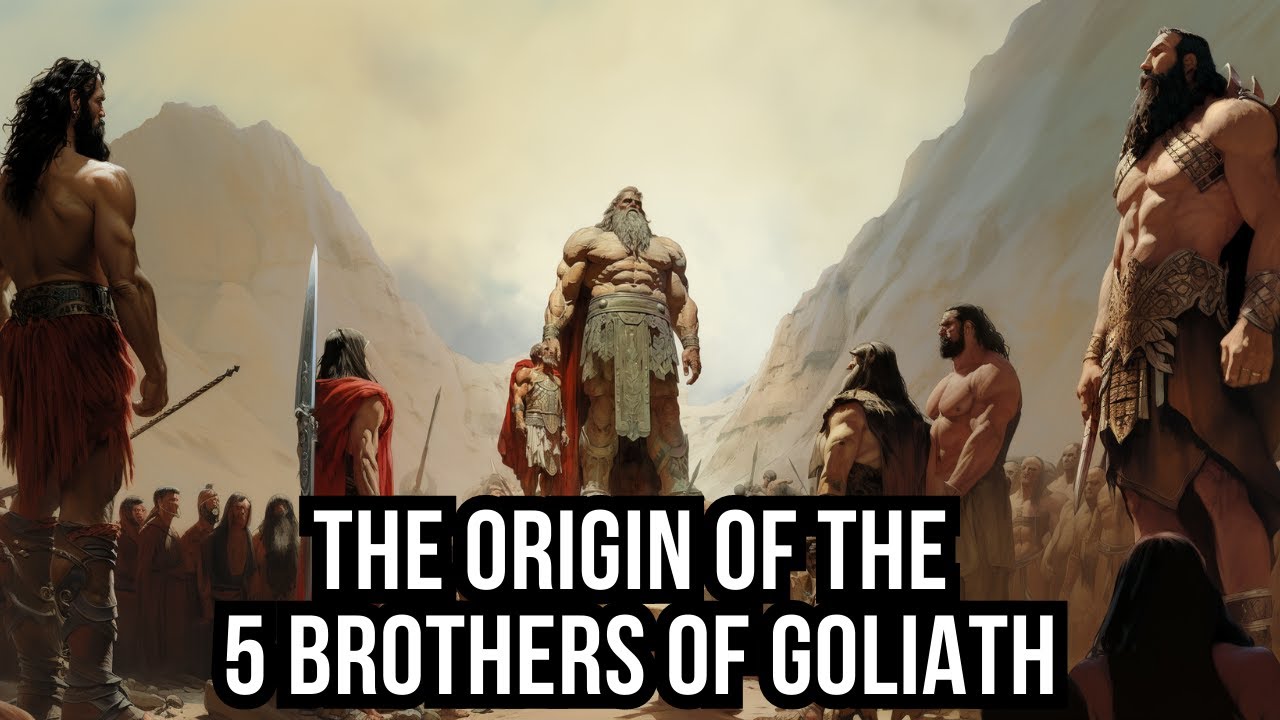
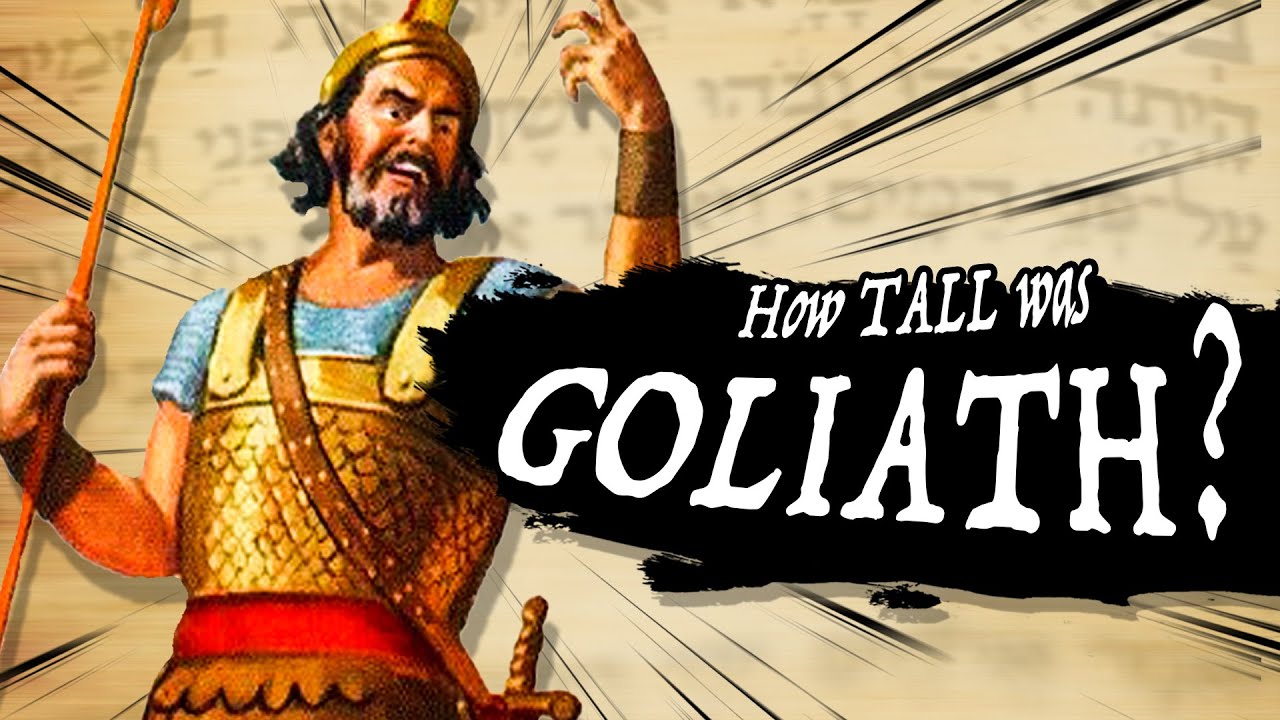
In this mystical realm, a towering figure named Goliath loomed large, his name echoing through the ages. In the ancient Bible story of David and Goliath, we usually hear about Goliath as the big, scary giant. But have you ever wondered about his family?
Did you know he had brothers? But what if I told you that Goliath's story is just the beginning? Today, we're delving deep into a story that's captivated generations—the epic tale of Goliath and his mighty family.
But this narrative has a twist that you've likely never heard before. Are you ready to discover the hidden truths and untold mysteries behind Goliath and his brothers? If so, stay with us as we uncover the secrets of Goliath's family like never before.
This is a story you won't want to miss! From ancient biblical history, we usually know Goliath as the great and fearsome giant. But have you ever thought about his family and history?
First, we need to look at the Bible's words closely. One part (2 Samuel 21) says, "These four were born to the giant in Gath. " So, Goliath had four sons, right?
But wait, in another part (1 Chronicles 20), it calls one of the giants Lahmi and says he's "the brother of Goliath. " That needs to be clarified. In 1 Chronicles 20, the other two giants are called "descendants of the giants" and "descended from the giants," using plural words.
But 2 Samuel 21 uses singular words, saying they're "descendants of the giant. " What's happening here? To solve this puzzle, we need to understand the Hebrew words.
In Hebrew, "rapah" and "rapa" talk about a person named Rapha, not giants. These words are like names, not regular expressions. So, a big, important person named Rapha had five sons, one of whom was Goliath.
This means the "four" mentioned in the Bible were Rapha's sons, not Goliath's sons. This helps us make sense of their family. You might wonder why we should care about these giants in the Bible.
Well, giants like Goliath were more than just colossal beings; they embodied immense strength and posed formidable challenges that demanded unwavering courage and divine assistance. And if you're hungry for more knowledge about these enigmatic giants, we invite you to check out our video titled "NEPHILIM & THE FALLEN ANGELS - Secret History of Giants. " There, you'll delve deeper into the captivating world of these larger-than-life figures and uncover the hidden secrets behind their existence.
With this newfound understanding of Goliath's family, the legendary showdown between David and Goliath takes on a new dimension. It's not just a battle against one giant; it's a clash against a lineage of powerful adversaries. Join us as we introduce you to each of Goliath's brothers and unravel their significance in the biblical history.
1. Ishbi-benob One of the first giants we encounter is Ishbi-benob. In 2 Samuel 21:16-17, we read about his formidable presence on the battlefield.
He was a son of Rapha, just like Goliath. What makes Ishbi-benob intriguing is his enormous spear, which weighed three hundred shekels of brass. This weapon was no ordinary spear; it symbolized his strength and prowess in combat.
But here's the twist in the story. Ishbi-benob, like his brothers, met his end at the hands of David and his brave warriors. It's fascinating how these seemingly invincible giants fell, one by one, to the courage of mere mortals.
2. Saph (or Sippai) Next in line is Saph, also known as Sippai. While not as famous as Goliath, his existence is crucial to understanding the scope of Rapha's family.
Like his brothers, saph, too, met his fate on the battlefield. 3. Lahmi Lahmi is the brother of Goliath, mentioned in 1 Chronicles 20.
His name adds a layer of complexity to the family tree. Why was Lahmi specifically called "the brother of Goliath"? It could be because Lahmi had a significant role in the ongoing battles against the giants.
His name may not be as recognizable as Goliath's, but he was part of this fearsome lineage. 4. The Unnamed One of the most curious members of Rapha's family is an unnamed giant with an extraordinary physical feature.
This giant had six fingers on each hand and six toes on each foot, making him a true anomaly. His unusual condition made him stand out even among his giant siblings. In these ancient times, people often attached great significance to physical abnormalities, and this giant's condition indeed added to the legend of Rapha's family.
Imagine the shock and awe he must have inspired on the battlefield. 5. Goliath - The Most Famous Brother Finally, we return to the most famous member of Rapha's family - Goliath.
Goliath's name has become synonymous with giants, and his story is the stuff of legends. His epic battle against the young David is a timeless tale of courage and faith. But there's more to Goliath than just being a formidable opponent.
He was part of a lineage of giants who posed a significant challenge to the people of Israel. His defeat by David marked a turning point in biblical history, illustrating that even the mightiest can be brought down by unwavering faith and determination. Let's dive now deeper into the battles between David and these giants.
Prepare to uncover the strategies, tactics, and unwavering courage that defined these epic clashes. Goliath - The Giant That Inspired Legends His massive stature and fearsome reputation struck terror into the hearts of the Israelites. Goliath challenged the Israelites for forty days to send a champion to face him in single combat.
And for forty days, King Saul and his army trembled, unable to find a warrior brave enough to confront this behemoth. Enter David, a young shepherd armed with nothing but a sling and stones. His strategy?
Speed and precision. David understood that facing Goliath in close combat would be suicide, given the giant's enormous size and strength. So, he relied on his agility and skill with the sling, a weapon he had honed while protecting his sheep.
David's choice of the sling as his weapon was no accident. While it may seem like a humble tool, the sling was deadly in the hands of a skilled user. With it, David could strike his target with remarkable accuracy from a safe distance.
The speed at which he could launch a stone was astonishing, catching Goliath off guard. Goliath, encumbered by heavy armor and a massive spear, was ill-prepared for such an unconventional attack. His confidence in his size and strength led him to underestimate the young shepherd.
Little did he know that David's strategy was not to match his might but to exploit his vulnerabilities. The Bible tells us that David carefully selected five smooth stones from a brook. Why five?
David anticipated more challenges from the giants or perhaps had a contingency plan. Regardless, each stone represented a chance for David to strike with precision. With unwavering faith in his God and his abilities, David launched a single stone from his sling.
It found its mark, hitting Goliath squarely in the forehead. The giant fell to the ground, stunned and defeated. David's strategy had worked flawlessly.
Ishbi-benob, Saph, and Lahmi - Facing David's Army Let's focus on the battles against Goliath's brothers - Ishbi-benob, Saph (Sippai), and Lahmi. These giants, too, met their fate on the battlefield, but how did David and his army approach these formidable adversaries? David's strategy remained consistent.
He relied on his soldiers' bravery and his tactical acumen. The giants' great size and strength could be a disadvantage in combat, as they often needed more agility and speed than their opponents. David's army would have used hit-and-run tactics to exploit the giants' slower movements and target vulnerable areas.
For instance, in the case of Ishbi-benob, who wielded a massive spear, the soldiers might have aimed to stay out of the weapon's reach, closing in only when opportunities for precise strikes presented themselves. The same tactics would apply to Saph and Lahmi, who could be defeated through careful planning and teamwork despite their giant stature. The Unnamed This peculiar giant's condition made him an unusual opponent on the battlefield.
While the exact details of his battles are not provided in the biblical texts, one can only imagine the shock and awe he must have inspired. Considering his physical abnormality, David and his army would have cautiously approached this giant. His enormous hands and feet might have given him an advantage in some aspects of combat, but they also presented vulnerabilities that could be exploited.
The key to victory would have been identifying the best strategy to neutralize this unique opponent. And now, it's time to uncover this giant family's ultimate fate and reflect on their stories' lasting impact on biblical history. what happened to their legacy?
Did the giants leave a lasting mark on history, or did their stories fade into oblivion? As we explore their decline, the giants' presence in biblical narratives dwindled. With the giants defeated and their numbers dwindling, their influence in biblical narratives gradually waned.
The later books of the Bible shifted their focus to other stories and characters, leaving the giants in the shadows of history. While the giants may have faded from the pages of the Bible, their legacy endured in popular culture. The tale of David's victory over Goliath symbolized the underdog triumphing against all odds.
It inspired countless stories, songs, and works of art, resonating with people throughout the ages. In the face of daunting challenges, it's not always sheer physical might that prevails but rather the indomitable spirit, unwavering faith, and relentless commitment to uphold what is just. We sincerely appreciate you joining us on this enlightening voyage through the annals of biblical history.
If you found this video intriguing and crave more riveting content like this, please do us the honor of clicking that like button, subscribing to our channel, and commenting to share your thoughts. Here's a thought-provoking question we'd love to hear your answer to in the comments: Which other biblical tales resonate with you, inspiring courage and unwavering determination?