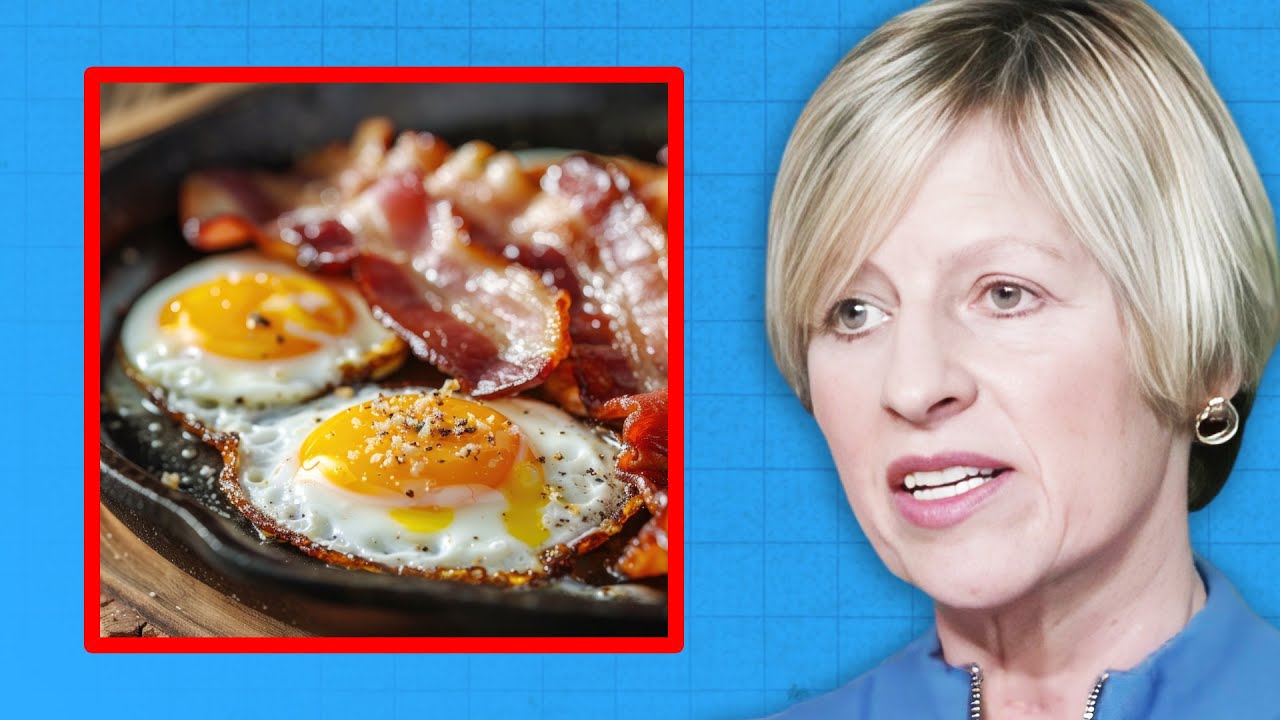
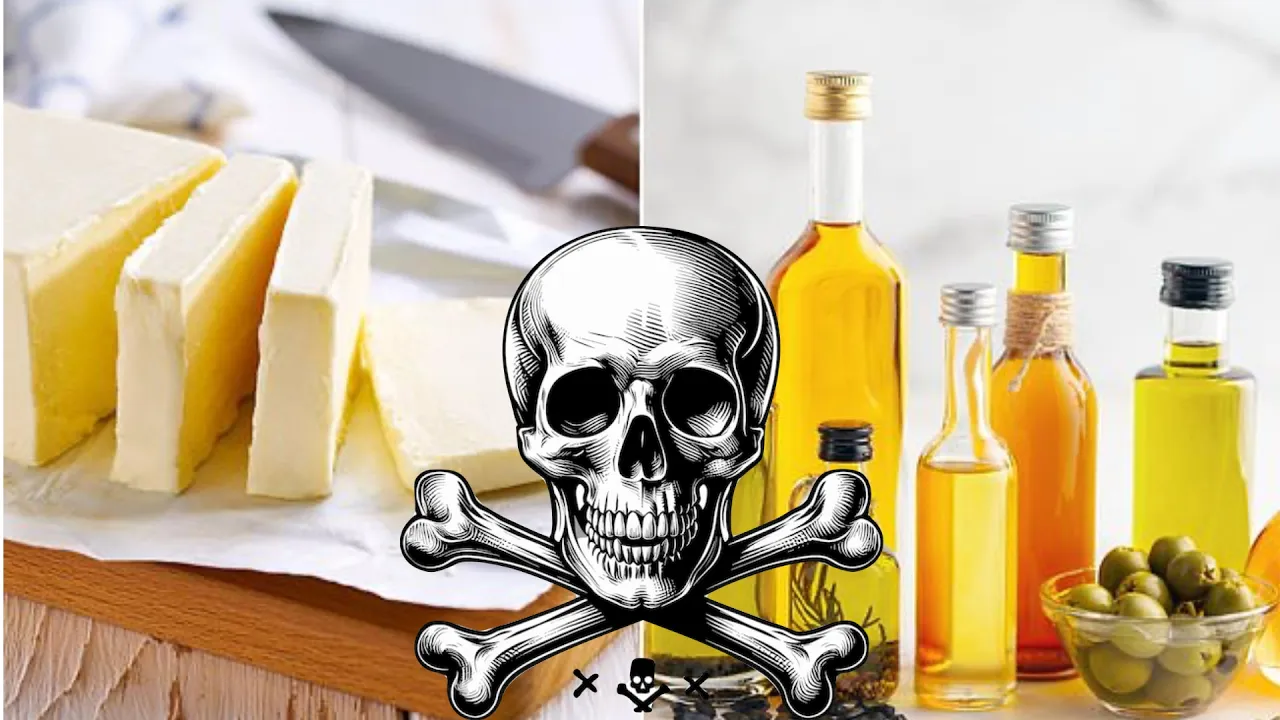
So there's a new study out on different fat sources, butter versus plant oils, vegetable oils, and the risk of death of intake of different fats so of course it made all the headlines and there's a lot of hoopla on social media, a lot of back and forth, a lot of controversy so we're going to go over the main findings of the study and a lot of questions that came up, the approach used in the study is what's called epidemiology or an observational study so there's no randomization, there's no intervention per se, the investigators don't tell the participants to do anything different, they ask them about their regular eating habits and then they follow them over many years and they record their health outcomes and specifically in this study they were interested in death so total risk of death and then deaths of specific causes, so this type of studies, the epidemiological studies are often misunderstood and kind of butchered on the media headlines and a lot of social media commentary so we're going to go over the basics of how these studies are conducted and a lot of frequently asked questions, weaknesses and shortcomings of this approach. So basically they followed the large number of people, over 200,000 people for about 30 years and as we said they were interested specifically in the intake of different sources of fat and risk of death. Basically in a nutshell what they found was that people who ate more butter had a higher risk of death compared to people who ate less butter, 15% higher risk for about 14 g a day of intake which amounts to about a tablespoon or about two pats of butter a day, and they divided their participants into four groups of increasing levels of intake, level one was the reference group, they had close to zero butter intake, level two about 4g a day average, level three 7 to 9g so let's say 8g a day and then level four had about 13-14 g a day so that's the tablespoon ballpark, and level four was the only one where the risk was clearly statistically significant so this suggests that the effect is mild or non-existent maybe at moderate intake and then it becomes more marked at higher intake, maybe around this range of the tablespoon a day.
On the other hand they found that people who ate more vegetable oil, more plant-based oil, had a lower risk of dying compared to people who ate less plant oil, 16% lower risk of dying for about 2 tbsp of plant oil, of vegetable oil. Then they looked at specific types of vegetable oil, they asked okay, do we see this for any vegetable oil or is it specific to some types? And basically they found that olive oil, canola and soybean oil all showed that trend of lower mortality for higher levels of intake, for each 5 g a day of intake which is a bit less than half a tablespoon they found an 8% lower risk of mortality for olive oil, 15% for canola and 6% for soybean.
Interestingly there were a couple of vegetable oils where they didn't see this trend with different risk of mortality, corn oil and safflower oil, for those two oils there was no statistically significant change in mortality, the authors suggest some possibilities of why that might be, what's different about these two oils, one thing is the level of intake of these two was pretty low, especially safflower, it was the lowest intake of any plant oil in the study in this population so maybe it's just a lack of statistical power because the level of intake is so low we can't really detect an effect, that's possible, they also suggest the possibility with corn oil for example that maybe the commercial frying, how these oils are sometimes used in fast food restaurants, deep-fried repeatedly, so maybe that type of extreme treatment causes oxidation of these oils and eliminates any benefits or maybe even causes them to be harmful at some point, that's certainly possible. And finally the authors point out that some of these oils that didn't have that beneficial trend with mortality also tend to be lower in Omega-3s and so maybe that's why they may be less beneficial. Okay so that was total mortality, total deaths, then they looked at specific causes of death and for cancer mortality, similar trend, people who ate more butter had a higher risk of dying of cancer, people who ate more vegetable oils had a lower risk of dying of cancer.
They also did a number of analyses, they broke down these results in all kinds of different ways, for example they looked at butter used in specific contexts and they found that butter used for frying or baking for example, they didn't see that association with higher mortality. They also pointed out here that the amount of intake of butter used in frying/baking was much smaller than the butter used in other contexts so maybe it's just a sporadic use thing, people bake maybe once a week or something like that and so at that level of intake it doesn't make much difference, or maybe because the intake is so sporadic there's not enough difference between individuals to pick up a significant effect, all possibilities. On the other hand, butter added to food or added to bread did have that association with higher mortality, the investigators asked if maybe it was the bread and not the butter that underlies this harmful association so they adjusted their results for two factors, white bread and then separately for glycemic load of the diet and in both cases it didn't make much difference, the results remained essentially unchanged so this is suggesting that doesn't seem to be easily explained by the bread itself, at least by these tests.
All of these results are interesting but we have to take this with some caution because so far everything is looking at one type of fat, more or less of it, and it's not specifying what it's being compared to, right, so people eating more butter versus people eating less butter, but what are they eating instead, those people who eat less butter, what are they eating more of, is it more olive oil, is it more trans fats, is it more refined grains, is it more candy? And that makes a massive difference, so the authors explained this in the introduction really well: "butter has been traditionally linked to adverse health outcomes but recent studies have yielded mixed results, for example there's a meta analysis that concluded that butter has a small or maybe even a neutral association with disease and mortality, however that study did not explicitly compare butter with any alternative food so when they don't specify a specific alternative what it implies is a comparison to the standard Western diet, the typical Western diet which as we all know is full of other unhealthy foods, so refined grains, sugars etc etc etc". So this is a really common source of misunderstandings on social media, where somebody will say well, scientists are telling us that food X is bad but here's a study that found no effect, more of that food versus less of that food, no difference, so it's debunked, it's a myth, scientists are wrong.
Well what is the food being compared to? And when it's not specified it's usually pretty terrible options, unfortunately for Western populations, often it's being compared to things like refined grains and if we don't see a difference compared to refined grains and junk foods, well, that's not very surprising and it's not very flattering for the food we're studying. So the study then goes into specific comparisons, butter versus other plant oils specifically head-to-head, so in this graph that vertical line is the null, to the right of the line is higher risk, to the left of the line is lower risk, so total butter replaced with total vegetable oil, total plant oil, lower risk of death, about 15 to 20%.
Total butter replaced with plant oil minus olive oil, so except for olive oil, kind of similar result, that little square in the middle is the average, the whiskers to the side are the confidence interval so if the whiskers don't touch the line, the vertical line, we say it's statistically significant, and then total butter replaced with soybean oil, kind of similar, if there's a difference it's not very large, doesn't look statistically significant, the whiskers all overlap, and finally total butter replaced with olive oil, roughly the same ballpark, maybe slightly stronger effect, doesn't look statistically significant. This is for total deaths overall, then cancer deaths, kind of a similar trend, and then cardiovascular disease deaths, similar trend but just a trend here, didn't reach statistical significance, olive oil comes closest but you can see the whisker overlaps with the line so it doesn't quite make statistical significance, so two possibilities here, maybe the effect of these different fats doesn't affect cardiovascular mortality or maybe it's a statistical power thing and if we had larger number and more deaths maybe the whiskers would be shorter and it would become statistically significant. Uncertain.
There is one other study that we've looked at before that looked at different fats and specifically used to cook with and they had a massive scale, they looked at half a million people, over 500,000 people followed for 16 years so they had more people and they had a much larger number of deaths so their statistical power was much higher and they did find in that study lower cardiovascular mortality, statistically significant for olive oil compared to butter so olive oil instead of butter and canola oil instead of butter so maybe it's an issue of statistical power, to be determined. So basically this new study concluded "substituting 10g a day intake of butter (so it's about two small pats of butter) with roughly the same equivalent amount of vegetable oil, plant oil was associated with a roughly 17% lower total mortality and 17% lower cancer mortality. Okay, funding, I know people are going to ask who paid for the study, who wrote the checks, the study was entirely funded by the National Institutes of Health so there was no funding from dairy industry or seed oil industry or olive oil industry or anything like that.
Okay let's talk about some common frequently asked questions with epidemiological studies that always come up and it's important to understand how these studies work, what we can and cannot conclude here, what you'll sometimes see in media pieces for example is people look at one of these epidemiological studies and assume cause and effect, they'll say oh, so X causes Y, this study proves it, and that's not really how it works, that's kind of a superficial view and a misunderstanding of these studies, what you'll sometimes often see on social media is the reverse of that coin where people go too far and they say oh, so this is garbage, it's junk science and we just pretend it doesn't exist, it tells us nothing, that's also a wild misunderstanding, it's a very superficial view of how these studies work and what they can tell us. So basically there's two questions that always come up with epidemiological studies, one is how do we know what these people are eating? And you may have heard about food frequency questionnaires which is these long questionnaires asking people about all their dietary habits and there's a common talking point, you may have heard this on podcasts where people say well, I don't even remember what I had for dinner last week, how am I going to know what I ate a year ago or 30 years ago, so this is all bunk.
This is just a misconception, that's not how this works, that's not how food frequency questionnaires work, I'll link a full food frequency questionnaire in the description for you guys to check it out if you're interested but basically what they ask you is not what you had for dinner a year ago, it's your average frequency of intake of specific foods, so for example bacon, how often do you eat bacon? Is it never, is it once a month, is it a few times a month, is it about once a week, a few times a week, is it daily or is it more than once a day? And then it might ask you to estimate amount, so ballpark, is it a rasher, a strip of bacon a day or two strips of bacon a day?
Right? To give you, to give an idea of how much. Soda, how often do you drink a can of soda, is it monthly, is it never, is it weekly, is it more than once a day?
How often do you eat legumes like beans and lentils? Is it never, is it monthly, is it weekly? Right?
And then it puts you in these buckets and separates the participants by these categories, so I can tell you I could answer that with precision, I could tell you exactly how often I eat butter or soda or legumes and I could give you a pretty tight ballpark of the amount but I couldn't tell you what I had for dinner even a few days ago let alone a year ago, so completely different questions, completely different approach. When we understand how these things work it makes a big difference. Now, maybe people will lie, maybe people will forget or maybe people will misrepresent what they eat, totally possible, in fact some level of underreporting of calorie intake for example is often seen, so what we do is there are methods of validating these food questionnaires, there are different methods actually and one method is to look at biomarkers, so levels of metabolites detected in the blood or in other tissues that reflect the intake of certain foods and when we're talking about different types of fats, and specifically these seed oils, we have the luxury of having a specific type of fat that is enriched in these seed oils called linolaic acid, it's a type of omega-6 that is an essential fat which means our body doesn't produce it so all the linoleic acid you find in different tissues came from our foods, and linoleic acid is the main type of fat found in these seed oils, and several studies have done this type of analysis and what they find is that people with higher levels of linoleic acid in their tissues have lower risk of chronic diseases and death, so that's another layer of confirmation that suggests.
. . aligns with the result from the questionnaire and it's telling us that the questionnaires are probably not just being completely made up and these results aren't a complete artifact of people just randomly saying whatever comes to mind.
Okay, another question is, okay we ask them what they eat then we follow them for 30 years, how do we know they didn't change their diet completely? So that is a real concern in epidemiological studies and studies that only record intake at baseline once before the study, yeah that lowers the confidence, that lowers the value of the study, in this cohort. .
. these three cohorts, this study is actually a compilation of three large cohorts and here what they did was they repeated the food frequency questionnaires every four years, so over 30 something years that's like seven or eight repeats so it gives us a bit more confidence that changes in dietary habits over those 30 years weren't completely missed by these recordings and that we're seeing a more faithful representation of what people were eating in general over that period than if you just record it once before the entire follow-up. By the way, it's interesting to realize that sometimes we have this simplistic idea that epidemiology is this garbage science and randomized trials are this perfect thing, how do you know people in a randomized trial are eating the assigned diets?
In the vast majority of randomized trials it's also by self-report, it's also by asking them because with the exception of metabolic ward trials where the participants live in the research facility and you watch every bite, but those are a tiny percentage and they have all kinds of limitations as well, the vast majority of randomized trials, people are going about their lives and so they can eat whatever they want, you can't really control it so you end up asking them about their regular diets, essentially food frequency questionnaires, and then you also have these methods of validation, the food diaries and the biomarkers, same things that are used in epidemiology so it's not that different as far as the recording of intake is concerned. Now, one thing that is a fundamental difference between epidemiology and randomized trials, and this is the other big question that comes up in addition to the questionnaires, the other big question is confounders, what's a confounder? Well it's other variables, other things that change in these groups, so people who eat more butter, they also tend to smoke more and exercise less and be fatter, right, and have all these other unhealthy habits so how do we know that the higher risk of disease and death is caused by the butter and not these other things?
So there's a few levels to this, the first thing to understand is that all epidemiological studies adjust statistically for a number of confounders, so all these common confounders that we understand, the smoking, the exercise, the caloric intake, the BMI, all of these go into the statistical adjustment model and the results that we cite that are reported in the study are already adjusted for that, in fact in this recent study if we look at the unadjusted risk for butter it's much higher, it was like 40% and then the adjusted risk adjusting for all those confounders, that's when it came down to 15%, so that's one level of confirmation, another thing I always try to do is look at these things systematically, not just look at one study or one pocket of evidence, see if these things reproduce across, so for example there is that study we talked about with the half a million people looking at different fats used for cooking, right, and in that study the population that consumed the corn oil, the confounders, the amount of smokers, the amount of caloric intake, the BMI, was identical to the people on the butter, there isn't a fundamental difference there and yet in that study they still picked up a lower risk of death when corn oil replaces butter so it's not the case that every time that we see these associations we can explain them trivially with differences in smoking or not enough exercise, it's not that simple. Now, does that give us 100% certainty? Absolutely not.
Is it theoretically possible that the adjustment isn't complete for the confounders or there's another confounder that we're not even thinking of? Yes, that's possible, epidemiological studies never give us 100% certainty but nothing does, randomized trials don't give us 100% certainty either, in fact randomized trials have their own set of limitations, one being the scale, you can't do randomized trials with a quarter million people over 30 years, it's just not possible, right, so you can't ask these questions of mortality and cancer because they take massive scale so that's one area where randomized trials are not going to help us, realistically in nutrition you can't do a trial to ask that type of questions, so here's how I look at this, okay, this is my take on the whole thing, none of these studies are ever going to give us 100% certainty, not on diet, not on smoking, not on exercise, not on junk food, on nothing, so I don't go over all these data to get 100% certainty that a food is bad or that a food is good or for science to convince me that something that I like to do is bad and to finally begrudgingly let it go, that's not what I'm trying to do, I'm looking for information, I'm looking to have the highest level of knowledge and understanding that I can, with imperfections, with uncertainty but the highest level of information that I can get so that I can stack the deck in my favor, I can increase my odds of success and I can minimize the odds of disease and death, right, so I look at these epidemiological studies, with their imperfections, I see higher risk of disease and death for high intake of butter, lower risk of disease and death for high intake of vegetable liquid oils, then I look at the studies that adjust for the most confounders possible, that are the most rigorous epidemiological studies that we can find, and that trend holds, statistically significant, then I look at studies that focus on these fats used to cook with and we see overall the same trend, then I look at studies that focus not on the intake but on the tissue levels, the biomarkers that we talked about with linoleic acid for example and we see a similar trend, then I move past epidemiology, I look at randomized trials, the largest randomized trials that we have in nutrition, that go for a few years, are still not long enough statistically, you're not going to have power to ask questions about cancer development or even mortality realistically but they can answer for example cardiovascular outcomes, cardiovascular events like heart attacks or strokes and there we see a similar trend, higher intake of butters and meats, saturated fat rich foods, higher risk of events like heart attacks and strokes, higher intake of olive oil or these liquid vegetable oils, lower risk of events. Then I look at trials that focus on biomarkers, I see higher apob, apob goes up with intake of saturated fat like butter, apob goes down with olive oil and these other liquid oils, and by the way not much difference in other key biomarkers like glucose metabolism biomarkers for example, then I look at randomized trials where they manipulate apob B levels pharmacologically or surgically, different methods, you push apob down, less heart attacks, less strokes, less death.
Then I look at genetics, people born with low apoB genetically determined, less heart disease, less heart attacks, less death. So does that give me 100% certainty? No, nothing does but I am quite happy looking at the balance of evidence, I personally avoid the butters and the lards and the tallows and the suets and whatever else people are coming up with and the creams and the fatty meats, I'm not saying never, once in a blue moon I might go to somebody's house and eat something with some butter on it but it's not a staple of my diet, I don't buy butter, I don't cook with butter, I don't use it, and as we said, some levels of intake are probably fine and then at high levels of intake we probably see risk go up, so I avoid those foods vast majority of the time and I favor the olive oil and the canola oil and the nuts and seeds and some seafood, so that's my strategy, and by the way if the epidemiology wasn't there it wouldn't fundamentally change that because I'm looking at this large tapestry and if you take out one corner the big picture is still similar, it would just be a little lower level of confidence but it wouldn't make a fundamental difference, so that's my approach, I'm quite happy with that given the balance of evidence that we have, if other people have different approaches or different preferences, godspeed, I wish everybody the best, my only suggestion would be that you try to make an effort to understand these things, try to look at these studies, try to read these things once in a while, try to become familiar with it because a lot of the takes out there, guys, on media headlines, on social media, is incredibly low level, a lot of people that are very opinionated don't read studies, don't know how they work but they have these strongly held beliefs and preferences and they're very angry but there's very little understanding, so my only suggestion is inform yourself so you can make an educated choice and protect yourself because it is, at the end of the day, life and death.
Okay last couple questions, what if the butter is grass-fed, what if the butter is from a cow that was massaged on Tuesday and Wed. . .
we don't have as far as I know these human outcomes longterm of specific variants so I would say the certainty there is lower, there's more uncertainty about the health effect, if somebody's on social media telling you that it's healthy because it's grass-fed or it's safer, I would ask them for the evidence. Show me that that variant isn't linked to higher risk of chronic disease, that my apob doesn't shoot up, that risk of death isn't associated with that, show me the evidence. If they're just telling you a story about "it's natural so it's got to be good" or it's something something ancestral food, I would get my guard up.
Personally I avoid the variants until there's demonstration that they're fundamentally healthier but to each his own. Okay, why eat any oil at all, why not avoid all of these foods, avoid the butter, avoid all the oils and just eat the nuts and seeds, they're natural so they must be better? We have a whole video going over this, all the available studies, and there's kind of a tie, there isn't a clear superiority of either the vegetable oils or the nuts and seeds or the olives themselves so it's personal preference, you can check out that video where we go over the studies one by one, I'll link it right here.