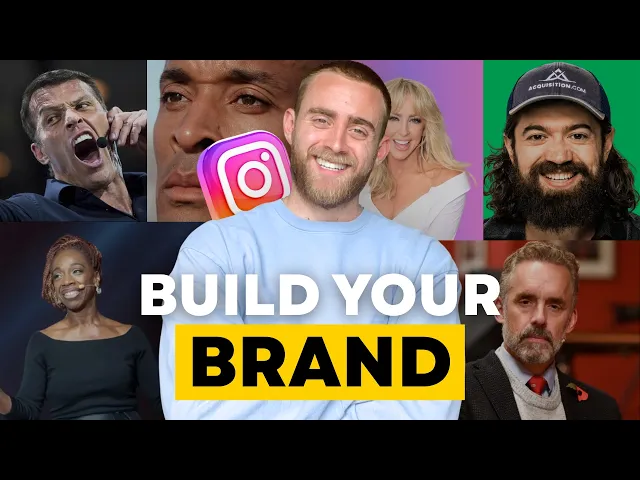
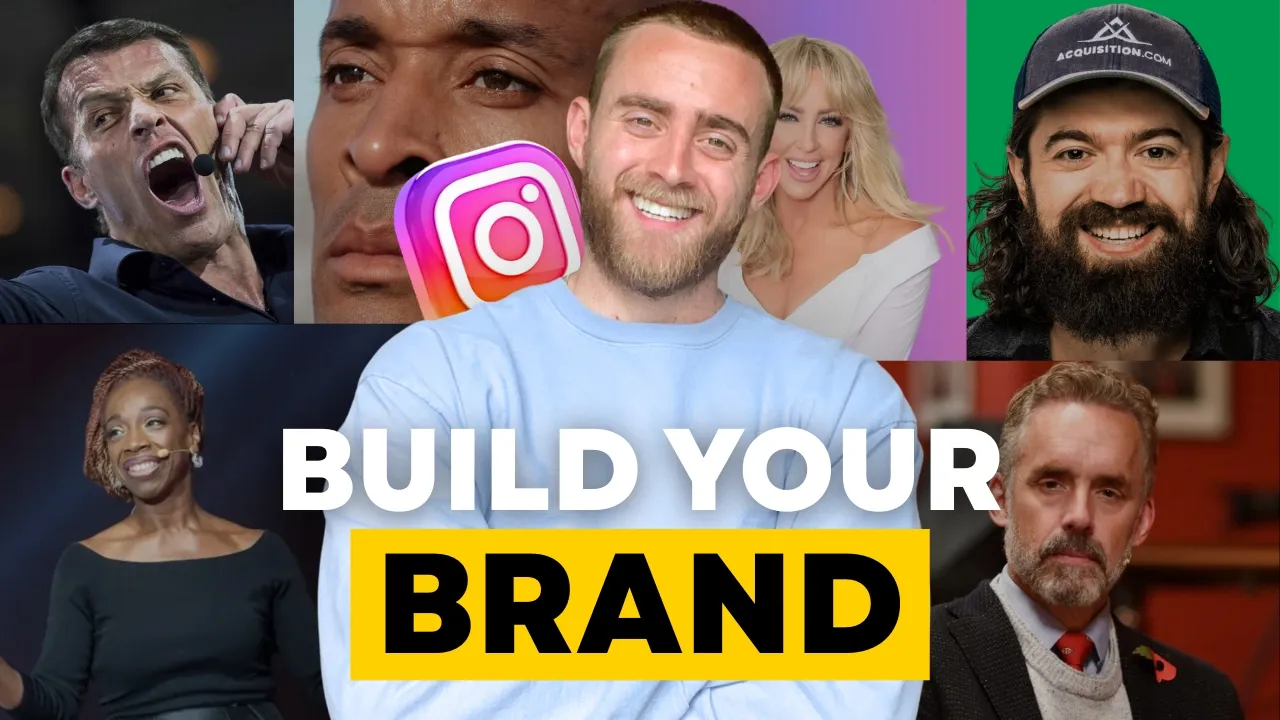
You do not need to be young, good-looking, techsavvy, or rich in order to build a personal brand. You just need one thing, a story that can help someone. And if you're breathing, you have one.
And I would actually argue you have many. Today, I'm going to walk you through personal branding on Instagram for beginners. And before we get into the myths and tips about personal branding, let me share with you why I think personal branding is more important in 2026 than ever before in human history.
Number one, job security is almost non-existent. Whether because of competition, AI, or changing industries, keeping a stable income or a traditional 9-to-f5 like you might have been able to 50 years ago is far less reliable today. Plus, with inflation, side hustles are becoming almost essential just to make ends meet.
And while you can have a side hustle without a personal brand, your side hustle is going to be so much more successful thanks to your personal brand. Artificial intelligence relates to your personal brand. Not just in the fact that it could take your job, thus making having a personal brand necessary, but also with the rise of AI content, we are all asking the question, who can I trust?
What media, what influencer, what business, what content creators can I trust, can I look to for reliable information, for storytelling, for the facts? And building a personal brand is one of the most powerful ways to build trust and to counteract the AI epidemic that we are being flooded with nowadays. And I know that branding or having a personal brand sounds scary, but I would argue that you already have one.
The question is just whether or not you are intentionally shaping it because we all have a digital footprint. Even if you have a private Instagram account, you have a digital footprint. Even if you live in the woods, well maybe I guess if you live in the woods and you don't have internet connection, you might not have a digital footprint, but you're watching a YouTube video, so you probably don't live in a cabin in the woods with no Wi-Fi.
So in today's episode, I'm going to guide you through how you can intentionally shape that and shape that in a way that's going to be beneficial for you. And ultimately, I want you to think of your brand as essentially just your reputation, the way other people view and perceive you online. Before we get into the actual tips for personal branding, there are some myths that I want to debunk or refute or just talk about for a second.
Number one, I'm too late. No, you're not. I know it might feel saturated and there's definitely way more entrepreneurs and content creators now than ever before.
There's way more personal brands and influencers now than ever before in human history, but it's still less than 1% of humans on Earth who are entrepreneurs or content creators. Ask any seasoned entrepreneur or talking head in the space that I'm in and they'll tell you how just 101 15 years ago they were begging people to become entrepreneurs. They were trying to teach people that entrepreneurship is an okay alternative to the traditional 9 to5.
And so while these things have become very normal and common today, even just 5 10 years ago, they were very uncommon. And according to the numbers, they're still quite rare. The next myth is either I'm too young or I'm too old.
Don't you want someone who looks like you? Do you only want people who are older or younger than you in this space? I think that that is absolute BS.
We all want someone who looks like us. We all want someone who is our age. We all want to follow people who we can relate to.
And so, no, you're not too young. You're not too old. You're just on a different path than other creators.
I don't need to get into a side tangent about comparison is the thief of joy and you're on your own journey, but it's true. These things are cliche, but they are the reality. You are on your own path.
You are not too late or too early. You are not too old or too young. You are on your own unique journey.
And because you even had the inspiration to click on today's episode, I would be willing to bet that you have stories to tell and you have an impact that you can positively make on this planet. The third myth, I don't have a niche. Don't worry, we're going to talk about that one later.
And then finally, I'm just not that interesting. Guess what? Almost no one is that interesting.
Very few people are jetting around the world living crazy extravagant lives. You do not have to live that style of life in order to have a successful personal brand. Having a successful personal brand is so much more about connection, relatability, and authenticity than it is wow factor.
So, it's okay if you don't feel that interesting. You don't have to be that interesting. You just have to learn to tell stories in a way that can captivate because then once people are captivated, they will relate and connect with you because you're a real person living a real everyday life.
Now, let's get into the actual strategy. I believe that there are three key elements of a personal brand. And the first key element is a promise.
A clear promise on what people can expect from you every time you show up. And this doesn't have to necessarily be a topic. For example, a clear promise from me in my personal brand is that every single time I show up online, I'm going to do so enthusiastically.
That doesn't mean I'm always going to be positive. That doesn't mean I'm always going to be happy. That doesn't mean I'm always going to be loud and obnoxious, but I'm going to be enthusiastic with every single piece of content I create.
Oftentimes, your promise might relate to your personality because your personality is probably not going to change that much whether you're recording a podcast, making an Instagram reel, or showing up online in any other way. And I don't want to scare you. I know I'm calling this a promise, but it can change over time.
As your personality evolves, as you evolve, as you grow as a person, it's okay to change how you show up online, just as long as it's not like changing every single day or every single week. Over time, you will grow. Over time, you will naturally change and over time your promise will have to be adjusted.
But I guess you could say you want to make a promise to always be true to yourself. But if you're taking notes or writing down a to-do list from this episode, one thing to add to that list would be to come up with a promise or promises that can clearly define and articulate how you intend to show up online every single time you do so. And like I said, the promise of what people can expect from you every single time you show up doesn't have to necessarily be a topic, but it can be.
So, very likely from me, you expect every single time I show up online that you're going to learn about social media marketing or maybe even more specifically Instagram or maybe even more specifically Instagram reels or hook ideas or something like that. This is what my brand has come to be known by, but it didn't necessarily start out that way. And so I want to give you that word of encouragement that again your personal brand can grow and evolve over time.
But I believe it's very helpful to start out with a clear promise of how you intend to show up online and what you intend to show up talking about or discussing. The second key element of a personal brand is a clear intended audience. Now there's two different ways that you can approach this and neither one of them is necessarily right or wrong.
Your intended audience can be an audience that you choose, as in, I'm going to choose to specifically try to target moms over the age of 40, or your target audience could be the one that you naturally attract. And neither one of these is necessarily right or wrong. Although sometimes I do hear people say, "I really want to attract moms over the age of 40, but all of my followers are men under the age of 20.
" Well, you have two choices. Either you need to change who you want to attract, which I probably wouldn't suggest because that means that you're probably changing what your product is for or changing your messaging or your offering. Or more than likely, if you're attracting an audience that isn't aligned with who you want to attract, then something in your messaging, in the way you're showing up and the way you're presenting your content needs to be adjusted.
But again, you can either choose who you want to attract based off who you want to attract, or you can choose the ideal audience based off who you usually attract. You know, maybe you just find that men in their 50s really resonate with your content. Maybe you're not a man in your 50s and you never would have intentionally tried to attract that audience, but your content just really resonates with them.
And so, you're going to run with it. You're going to use that audience that you clearly have a way of connecting with and you clearly understand their humor and you can clearly tell stories in a way that captivates them and you're going to use that to build your personal brand. Something that I want to make sure that we're clear on because I can feel your anxiety coming through the screen right now.
I know it's one clear promise and one clear ideal audience, but these things can evolve and change and they will evolve and change and they will grow and you will broaden out. So, when I first got started with online business, some of you are familiar with the story, I started with helping moms keep their teens safe on Snapchat. My reach has grown since then.
My audience has grown since then. My followers and demographics have changed since then. I kind of like to analogize it to being like a tree.
If you try to branch out and go in a million different directions and attract every single audience and reach all over and connect with all kinds of people at the beginning, then you're never going to grow to be a big beautiful tree. You're just going to stay this little tiny bush on the ground. Your personal brand is never going to have impact.
You're never going to have wide reach. You're never going to be a successful personal brand because no one's ever going to see that little tiny bush. And the reason again that it's a little tiny bush is because you branched out too early.
Instead, I need you to build this strong trunk, this solid foundation, and then you can branch out. Then you'll be this big, beautiful redwood tree, and you'll have a wide impact, and you'll be able to make a big income, and you'll be able to impact a lot of people, and you'll be able to do all these amazing things through your personal brand. But it all starts with that one clear thing, one clear promise for one clear demographic of people.
And when I say demographic, I really want you to consider every different category that you could possibly attract. Does their marital status matter? Does the number of kids they have matter?
What about their religion? What about their level of education? What about their age?
What about their experience? All of these different things are things that you might consider when you're defining who your target audience is. And then the third key element of starting your personal brand is picking one platform to focus on.
one platform, meaning one social network or one kind of content. Maybe you're going to start with Instagram reels. Maybe you're going to start with YouTube videos.
Maybe you're going to start with podcasts. Whatever it is, pick one to focus on. That doesn't mean that you need to put all of your eggs in one basket, but put 10 out of your dozen eggs in that basket.
Put most of your eggs in one basket so that that one platform can have success. If you decide, I want to have a personal brand that's omniresent. I want to show up across every channel because that's what Gary Vee does.
Well, then you're going to burn yourself out and you're never going to have success on any platform because you're simply spreading yourself too thin. So, pick one platform. And which platform should you pick?
Well, the answer is going to vary based off of a few different criteria. Those criteria that you might want to consider are number one, what kind of content do you enjoy making the most? Do you like really love just yapping and creating podcasts?
Do you love filming long form video? Do you love text posts and graphic design? Maybe you're going to create carousels for Instagram.
Also, I want you to consider not just what you enjoy doing, but what you're really good at. And I say this because I truly believe that you can have success on any platform. Sure, it might be easier to go viral on Tik Tok than it is podcasting.
Sure, it might be easier to build trust through a YouTube video than through a tweet. But ultimately, I truly think you can have success on pretty much any platform as long as you're willing to put in the work. And I think you're a lot more likely to have success on a platform if you enjoy the kind of content that is normal on that platform.
And if you actually are good at creating the kind of content necessary for that platform. Now, of course, if you're not good at any content creation and if you don't enjoy any content creation, then we need to have a different conversation. The conversation might need to be around who can you hire, who can help you get good at these things, who can you hire to do these things for you to maybe edit your podcasts or create your graphic designs.
But ultimately, if you want to build a personal brand, you as a person are going to have to show up in your content. Whether it is your voice, your face, your video, your streaming, whatever your words, your captions, you are going to have to infuse yourself and your personality and all that makes you you into your content in order to build a personal brand. Some other things that you can consider when you're deciding what's my promise, what's my demographic, and what's my platform are what's a problem that I have uniquely or maybe recently solved.
Like a big problem. I'm not like, "Oh, I didn't know how to tie my shoes, then I figured it out. " But like a big problem or a challenge that you've recently overcome and maybe you could create content around that.
Maybe you could help a demographic of people who is just like what you just were, the demographic that you were just a part of or maybe the demographic that you are a part of right now. Is there a special problem you've solved or something that you're you're really good at compared to your friends or some other people that you know? Besides just your own problems, I want you to consider what problems are out there.
like what problems are people talking about when you're talking to your friends, when you're conversing with your family, when you're reading forums and Reddits and group chats and comment sections. What are people struggling with nowadays? And I'm not saying like people as a whole.
I'm not talking about all 8 billion people. I'm talking about, you know, if you were to say, "Hey, men in Missouri who are under the age of 30 and are married, like what's a big challenge that they're facing? What's something that they're struggling with?
" When I first created my original business, helping moms keep their teens safe on Snapchat and I was building my personal brand around that topic, I identified that that was a problem because when I turned on the news, there was oftentimes stories and headlines about this crazy thing happened on Snapchat and these moms are worried about what's going on on social media and this group was started to combat what's going on over on these social networks. And so I figured that there was a market for that besides just there is a market for that because it's a problem that people have. What are people already paying for?
Because if no other product exists in this market and no one is paying for this thing, it might be a golden opportunity. You might be the first to market, right? You might be the first person selling shovels in San Francisco in 1849.
Or there could be a reason that no one else is selling it. Maybe there isn't a market. And so I want you to consider, are other people already paying for this problem to be solved in some way?
I also want you to consider what you're obsessed with. And I'm not talking about like a momentary obsession. I'm not talking like Lando Norris won the Formula 1 World Drvers Championship and now you're obsessed with Lando for a day.
I'm talking about longtail obsessions. Things that you geek out over. Things that you've been into since you were a little kid.
Things that you could corner someone at a party and talk about for 3 hours. things that if I were to put a microphone in front of your face and say you have to talk about one topic for the next hour or else something really bad is going to happen. What is the thing that you would talk about for the next hour?
Like what is the thing that you're sure you could geek out over? The thing that you are just obsessed with, a thing you had a hyperfixation on, something that you know a lot more about than most people. That might be something to consider when you're determining what your promise is, what your topic is that you're going to talk about or the demographic that you're going to focus on.
And then the final thing that I'll say about these three key elements is if you have absolutely no idea, I want you to just start posting. One of the really cool things about the way the algorithms work nowadays, the Tik Tockification of social media is that having one singular niche is no longer necessary for views. Having a niche is still essential for growing a following and building a business, but for getting started, for getting views, for going viral, it definitely is not necessary.
So, when you're first getting started, experiment, play around, try talking about different topics, try different kinds of content. And as you do so, don't just pay attention to what is getting the most engagement or the most views. Also, pay attention to how it feels inside.
Like, what is the topic that as you go to talk about it or create content around it, it fires you up. You're like, "Oh my gosh, I I can't wait to make a new video about this. Oh my gosh, I can't wait to share my knowledge on this thing.
Oh my gosh, I I really enjoyed making that post. " post, even if it didn't necessarily do well, it brought me joy. Pay attention to that and it might be a clue as to what your thing should be.
When you do start to niche down or get a little bit more clear as to what that promise is and who your ideal demographic is going to be, here are six posts that you can make to get started. Number one, your origin story. This is kind of like your why.
Why you care about this topic, how you got into this topic, how you got interested in it, how you learned more. Just kind of sharing some background and some details. Number two, your I wish I knew this sooner lesson.
Maybe you're going to give advice to yourself three months ago or three years ago or when you were first getting started with the thing that you're obsessed with now. Basically, share the thing, share the lesson, share the tip that you wish you knew in the past because if your ideal demographic does represent the past you, it will be something that they need to hear. Similarly, but slightly different, number three is a beginner mistake, a common pitfall, a common trap.
This could be a mistake that you made or it could be a common mistake that you see other people making. Share that mistake and how to avoid it. Number four, a tool, habit, or a resource that helped you.
This could be an AI software. This could be a physical product. This could be a mindset shift.
Basically, just share something outside of yourself that has helped you. This will help get you used to recommending things to your audience and it will help get your audience used to what it's like for you to recommend aka sell to them in the future. Number five, a little rant about something that is broken or misunderstood in your industry.
You don't have to necessarily get controversial here, but think about maybe unpopular opinions or something that you could fix or something that you would do differently or just something that needs to change that relates to whatever your promise is going to be. And then sixth is a quick win for your viewers. As you are moving through this process, you're starting to identify who your target audience is and what that topic is that you're going to be posting about.
So you can share with them a quick win, something that they can implement, something that they can do, a minor change, something that they can do in, let's say, 15 minutes or less and actually see results from. Then I want you to keep iterating and reiterating on these six posts. I don't want it to just be six total posts and then you're done and you come back and you're like, "Okay, now what, Brock, keep recreating these.
Keep telling different stories. Keep presenting these in different ways and your content will evolve and you will get better over time. " Speaking of time, I want to be realistic with you about the timeline.
Building a personal brand does not happen overnight. Building a personal brand takes time. Even the most viral creators you can think of, even the people who absolutely blow up and are getting hundreds of millions of views within their first couple months of creating content, it still takes those people time to build a true personal brand.
People might see a viral post, you might gain followers, but those things are not a personal brand. Because remember, a personal brand is all about your reputation, and you don't have a reputation from a couple viral posts. So realistically, your first 90 days are all about messy action.
They're about niching down. They're about figuring out your voice, finding your style, and just experimenting with different things. Assuming you stay consistent throughout that time, from the 4 to 6 month mark is where you start developing your skills.
You start refining your process. You start improving on the different things that are necessary for the content creation and whatever platform you've chosen. This is where you start to hone in on your consistency.
It's not just messy action of a post here and a post there. You're posting every day and you're starting to build slow momentum. That doesn't mean you're necessarily going viral or gaining that many followers yet, but you're building towards that.
Month 6 through month 12 is where you start to build trust, where you start to see the momentum and the hard work really paying off, where you start to have a couple videos that are not necessarily going viral, but hey, they're really outperforming the rest. Maybe they're getting 10,000 or 30,000 views. Maybe your following is starting to grow.
Maybe you're over a,000 followers by this point. That's awesome. This is also where you're starting to see your first opportunities for monetization, whether that's public speaking, whether that's brand deals and partnerships, whether that's creating your own digital product to sell.
This is where you're starting to see not necessarily dollar signs coming in, but you're starting to see dollar signs in terms of, hey, I could monetize this personal brand. And it's usually not until after that first year that you really start to see an income that you launch your first product or you do your first brand deal or you make your first paid gig. It takes time.
And that's really what I want to leave you with today. And if you want me to talk more about personal branding in the future, make sure that you hit subscribe because one of the things that I look for is not just how many subscribers I have or how many views different videos get, but I also pay really close attention to how many subscribers come from each video. And so if you're watching this video and you want more content about personal branding in the future, please consider hitting that subscribe button.
And as always, happy networking.