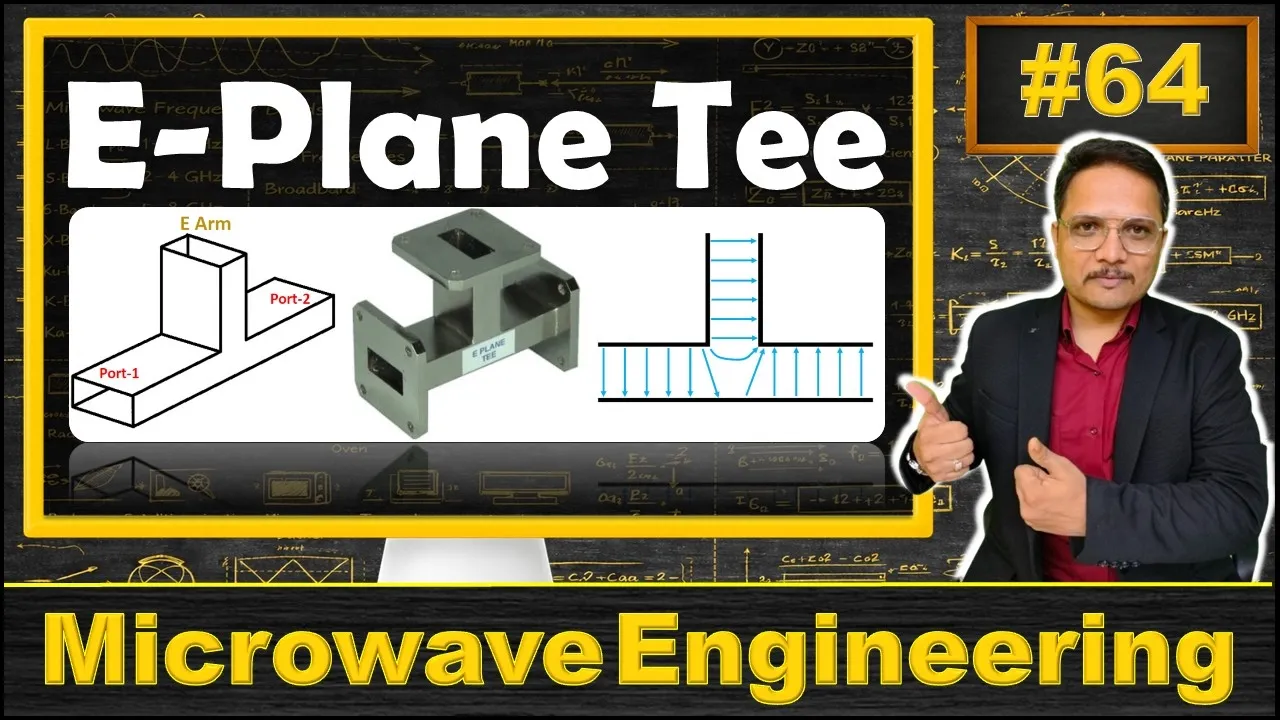
Hello friends welcome to engineering Funda family in this video I'll discuss about e plane T Junction before I start with my explanation let me tell you how many points that I'm going to cover in this video first of all I'll discuss about basics of Ean T Junction after that I'll derive scattering parameters of e-lan T Junction and at last I'll discuss about applications of e Junction so let us begin this session with first agenda that is basics of e-l Junction If You observe the structure of e Junction then that is having in total three ports
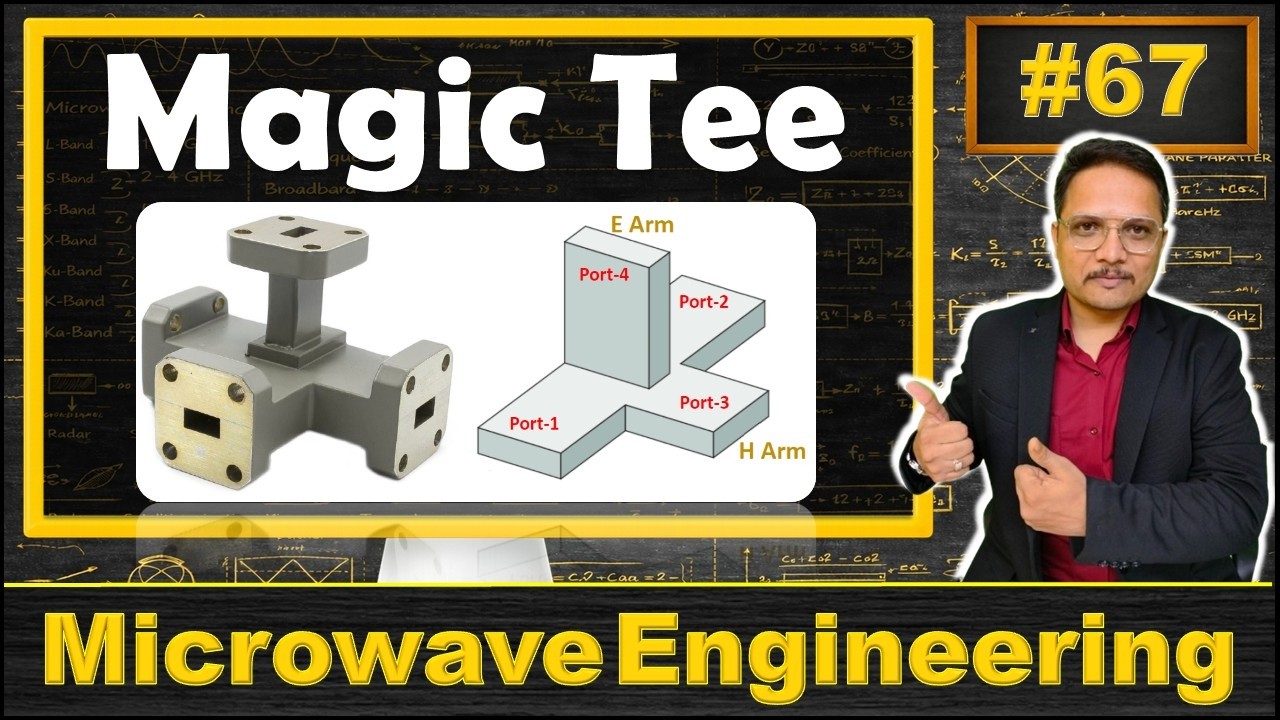
see this is e AR that is port number three and here we have Port one and Port two in your laboratory you might have seen this e PL Junction that is appearing somewhat like this if You observe the cross-section then here we have e AR this is Port one and this is Port two if you you want to understand working then it is quite simple if you give input at eem then electric field orientation that is shown over here but if You observe output at Port one and at Port two then here at Port one
and at Port two we have 180° out of phase signal so as and when we give input at eem at that time output will be appearing at Port one and Port two right but that output is having out of phase signal magnitude wise signal will be equal over here at Port one and at put two but phase wise that is 180° phase shift Here If You observe this is e AR why it is referred as e AR the reason is orientation of this arm that is there in alignment of electric field if you have alignment
in this direction then that alignment is there with respect to magnetic field which is H PL T which we have seen it in my last video here with this arm orientation is there with respect to electric field that's why this is e AR and this T is referred as e plane T right so e plane D that is three port device this e that is perfectly matched arm that one can say and as in when you give input at eem output at Port one and at Port two is equal and out of phase that is
how basic working and structure is there so here in E plan T we have three port device here e PL is having e AR that is one port and two other ports are there these are these two ports in total three ports are there here Port one and Port two are symmetric with respect to eem so you can observe this is eem and this this port one and Port two these are symmetric ports with respect to e AR with e plane T this e that is perfectly matched arm means reflection at that Port is zero
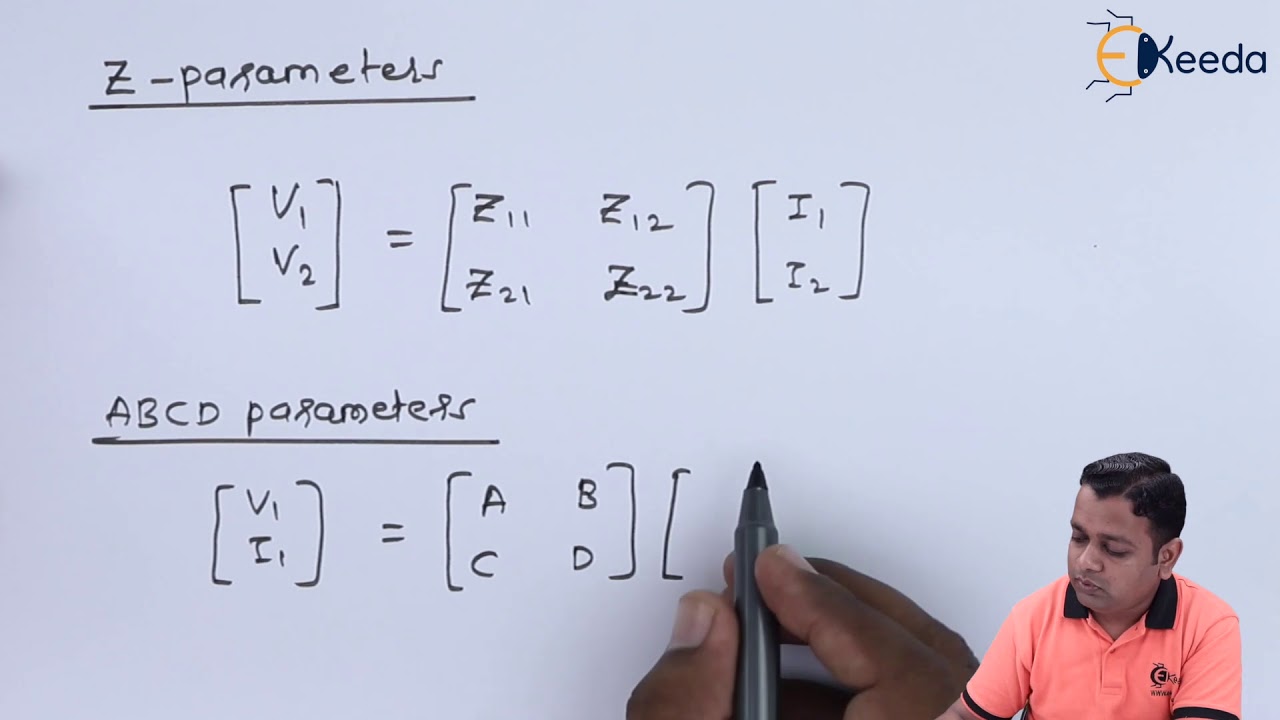
that one can say so here return loss at e AR that is zero as it is perfectly matched arm if you give input at e AR then output at Port one and Port two at these two Port that is equal and out of phas that is how Basics are there now based on this Basics I'll derive scattering parameters e PL Junction is three port device so scattering Matrix is having size of 3 cross 3 let me explain you how here s Matrix will be S11 S12 s13 S21 s22 s23 S31 s32 and s33 here we
have in total three ports and based on three ports s Matrix is of 3 cross 3 size now I'll derive this scattering elements to derive this scattering elements first of all one should know the meaning of this scattering elements in general if you talk about s i j then s i j is B / a here this B is is normalized output voltage and this a is normalized input voltage here this I fits I output Port this I States I output port and this J States J input Port this is very essential to understand this
scattering parameters now now to derive this values let me explain working of this e plan T see this e plan T that is having e that is port number three and that is perfectly matched arm means reflection at Port three is zero so as if reflection at p 3 is zero then one can say s33 is zero so as this port three is perfectly matched D s33 is zero now let me explain working of this e PL D if you give input at Port three if you give input at Port three then that is equally
divided into Port one and into Port two but here see this two signals which are there at output of Port one and Port two that is having 180° phase shift that is having 180° phase shift s that is having 180° phas shift here s13 that is equals to minus of s23 so here when we give input at eem that is equally divided into Port one and Port two but that is having 180° pH shift means if you talk about s 13 so that is output at 1 input at three that is equals to minus of
s 23 means output at two input at three right now I'll use property of symmetry property of symmetry states that SI J is equals to sji So based on that one can say S12 that is equals to S21 by which we can minimize number of elements even one can say s13 that is equals to S31 and here I have explained s13 is minus s23 so this is minus s23 and s23 is s32 so one can say this is minus S 3 2 now based on this working and property we can minimize this scattering Matrix let
me explain you how now Here If You observe we have S12 that is equals to S21 so instead of S21 I can write S12 over here and here s13 is S31 so instead of S31 I can write s13 and s13 is minus s23 so instead of minus s13 that can be written over here and s23 that will be minus s13 so here I can write minus s13 right and here s33 that is zero so I need to replace this by zero now we have minimized cing Matrix and with this cing Matrix now I'll apply identity
property identity property states that s Matrix into conjugate of s Matrix is identity Matrix so here I'll multiply this s Matrix with conjugate of s Matrix that is equals to Identity Matrix so here we have S Matrix into conjugate of s Matrix that we need to do so with each element I need to place conjugate over here and this matrix multiplication that is resulting into identity Matrix in identity Matrix that diagonal will be one and other elements will be zero so that is how we can apply identity property now based on this identity property I'll
calculate values of these elements to calculate values of these elements first of all we will multiply this third row with third row if you multiply third row with third row then you will be getting s13 squ plus s13 squ that = to 1 means s13 is = 1 by < tk2 now I'll multiply first row with first row if you multiply first row with first row then you will be getting S11 squ plus S12 s + s13 S that is equals to 1 over here and if you carefully observe s13 that is 1 by <
tk2 so s13 square is half and that half that one can take it on other side so we'll be getting S11 squ + S12 square that is equals to half let us say this is equation number one now I'll multiply second row with second row so here we will be getting S1 2 s + S2 2 s + S1 3² that is equals to 1 now here s13 square that is half you can take it on other side so you will be getting s S12 s + s22 S that is equals to half let us
say this is equation 2 if you carefully observe these two equations then here S12 is common right what it means S11 is equal to s22 you can say S11 is equals to s22 right now to identify value what we can do is we can multiply first first row with third row so if you multiply first row with third row you will be getting S11 into s13 conjugate plus S12 into - s13 conjugate and that is equals to this row into this row that will be zero here if you carefully observe s13 conjugate that is common
Take It Outside it is getting multiplied over here so one can say S11 - S12 is 0 so S11 is equals to S12 right this is also very essential relation now from this you can understand one thing you see here S11 squ + S12 square is there so if you place this into equation one S11 squ Plus instead of S12 Square we can write S11 square that is equal = to half so here we will be having S11 squ that is 1x 4 so S11 that is equals to half right now we have S11 that
is half S11 is S12 that is also half right and S11 is equals to s22 so that is also half and we have s13 that is 1 byun2 so we can place all these values in this scattering Matrix here here we have s13 that we have calculated that is 1 by < tk2 so I'll be placing that over here s13 is 1 by < tk2 and here S11 S12 s 22 all these values are half right as per these relations that I have explained so here you need to place half over here right so this
is how simply one can derive cing Matrix of e plan T now based on this scattering Matrix I'll explain you few essential applications of e plan working of e plan T is based on input at e if you give input at eem then output at Port one and at Port two is equal and out of phase based on this working there are few essential applications like one can use e-l T as a power divider and Power combiner if you give input at e then power is equally divided into Port one and at Port two and
if you give input at Port one and at Port two then that is getting combined and output is resulting at eem so that is how simple applications are there even e plan T Junction that can be used as a phase shifter If You observe working if you give input at eem then power is equally divided into Port one and at Port two but that power is having 180° of phe shift so one can use e-l Junction as a phe shifter enty Junction is also used in microwave mixtures and it is also applicable in impedance matching
Network so as in when we have a need of impedance matching at multiple ports at that time one can go for E PL Junction I hope you have enjoyed this session still if anything that like to share just note it down in comment section I'll be happy to help you thank you so much for watching this video