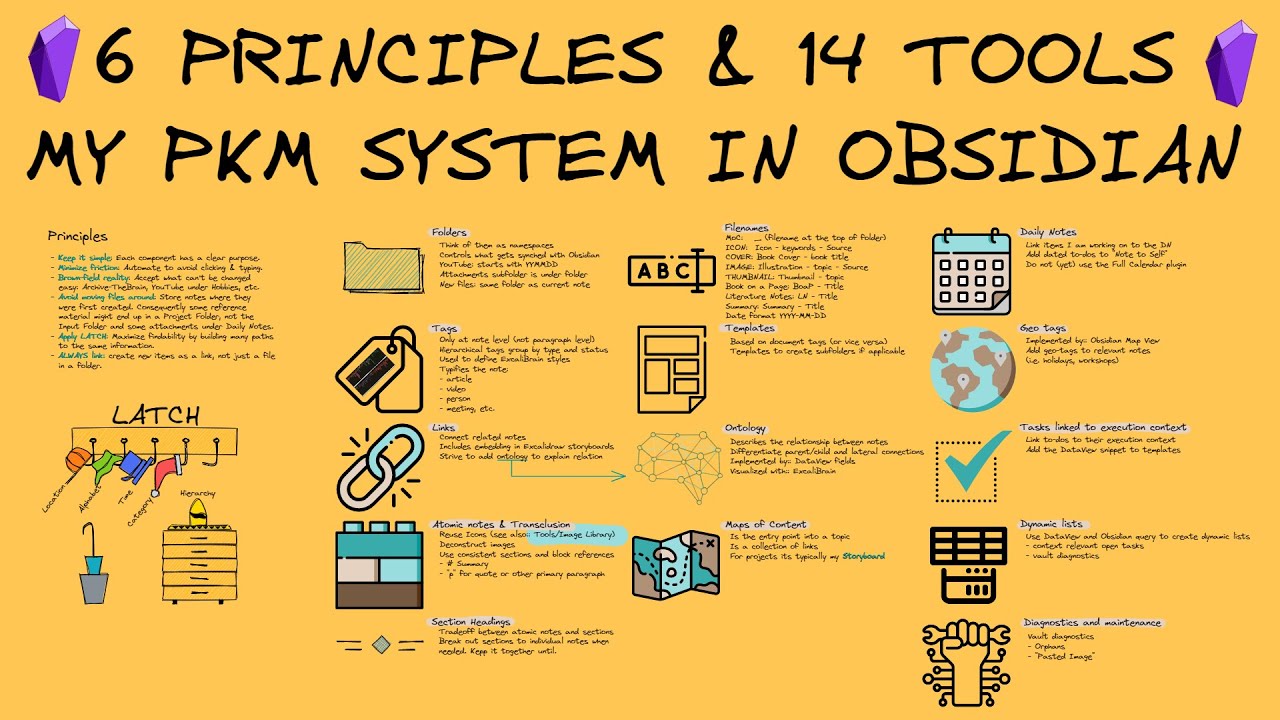
what is sense making in short it's making sense of the world around us good sense making illuminates our thoughts and guides our actions adding clarity and enrichment to every moment of our lives so if we can improve our sense making by even a tiny bit we can greatly improve the quality of our inner world and the quality of our contribution to the world around us let's now explore how to improve our sense making through a process called note making focused note making sessions are one of the most fun and valuable activities i consistently do with
my notes and yet nobody talks about it because too many people with platforms are steering their audience towards a dangerous path of weak thinking where strong minds go to become soft highlighting the highlights of their own highlights before regurgitating those highlights in a frustrating loop of passive consumption talk about taking the joy out of thinking there is a better way but you're going to have to get uncomfortable you're going to have to make the transition from a note taker into a note maker and spending more time as a note maker means you are spending more
time as a better sense maker and as a reminder if we can improve our sense making even a tiny bit it's going to result in a cascade of positively compounding effects in your personal and even your professional lives that brings us to this live experiment in active thinking of which you are now apart that's what this video is here to prepare you for this video is actually the second half of a recording of a live sense making session so in that way it's more like a christopher nolan movie going in reverse to make you pay
attention or like mortimer j adler might say we're going to read around the book reading the table of contents skimming the chapters before diving into the meat of it that means you'll actually see the results of helen and gary's sense making sessions first and then you're going to listen to a q a about the session as a whole before you even get into the session itself sense making sessions like these are a crucial part of the linking your thinking workshop i'm sharing this public version of it because i want to steer the thinking conversation about
what matters from highlights to insights and if that resonates with you you should definitely consider enrolling in the workshop but it doesn't matter if you join what matters most to me is that you break free of being this full-time note-taker and that you experience the breakthroughs that come from more time as a note maker after this video you will be prepared to enter a focused environment where you can work your note making muscles in real time with the core part of this recording so i'm asking you now to lean forward to get uncomfortable and to
be an active participant in this thinking experiment so just like memento let's begin at the end and hear from helen and gary first before going through the q a before inviting you to enter the arena as an active note maker yourself how was your experience i'm curious kinda like bragat showed us you know how did it go for you yeah so this is not my first sense making session but this time around i really leaned into the uncomfortable um i tried to follow the prompts a bit more the first time i started my mind sort
of went in all directions and this time around i focused mainly on hug and the prompt what did this remind you of it made me think about a handshake and how it's just a more intimate form of a handshake and the thing you hear a lot about handshakes is that you can tell a lot about a person from shaking hands with them and i think that the same applies to hugging somebody you know there are some people who i when i think hug i think them because it's just the most wonderful feeling to be hugged
by them and then there are others where i don't even know that they've hugged me because you know it's very awkward and their arms are just hovering in my vicinity and i thought that was a really cool um some really cool thoughts i had around huts that i didn't even realize which i i really appreciate about the sense making sessions it brings forth a lot of knowledge and opinions that i didn't really realize i had until i'm forced to you know sit with these things that are familiar and externalize these thoughts that i already have
that's really profound yeah thanks for sharing that i don't want to cut you off is that is that every every the big the big parts that was yeah that was the big takeaway for me and and it's something that even though i have already taken the workshop it's something i i needed to be reminded of um because i think it is so easy to get caught up with new things all the time and to fall back into that novelty bias and even providing that space to go into the note making state of mind is something
that has to be wrestled with on a continuous basis it just because i i know these things and i've done them before doesn't mean that i ca i don't need to still work at keeping that in my life on a regular basis yeah i mean to that point i do think it's it's um you know use it or lose it a little bit and it just it's kind of what i what i hope you know you got out of the workshop among other things is just that it's an environment like we went through today that
forces you to create habits habits where you are using it like using the better thinking muscles and then it becomes like after the workshop transformational because then every everything you look at you're looking at a little bit differently but it's easy also to fall back off the wagon or on the wagon i always forget which one it is but um you know we have to keep it up we have to keep the practice up thank you for sharing this yeah yeah no problem i just want to add um going through the the workshop i think
does help with coming back to this um way of thinking because my my vault is generated around um providing things that pull me back into my vault i think it might have been me actually that said that i don't go to youtube as much um i don't know if i can't remember who said it but that's a cool thing yeah um that i i do find myself going more towards my vaults when i do have free time um and i see all the external sources as something secondary to to contribute to the vault instead of
the other way around well thanks for that i'm curious gary and deirdre did you want to share i don't want to put you on the spot or make feel like you have to i can quickly share go for it please please share yeah i just focused on frankenstein because i had nothing wrong with revisiting the other concepts but um it was just the first thing that that grabbed me based on uh some discussions of helen and bob and your mention of mycelium networks throughout the course so some of the questions yeah i kind of started
with the prompts but just it's basically a lot of stuff from conversations that just flooded into uh an idea of what what is life and i think so yeah reminds me a little bit about some themes on cybernetics cyborg culture that seem to be emerging a conversation with you about my clm networks actually led me to a quote that i quite liked by uh by donna haraway that talks about how the smallest unit of life is a relation and um and then that got me started thinking you know like what is life how does uh
how do these thresholds you know what is a thought how does information and thought interact or uh sort of bridges the boundaries of life where where does that threshold of information and life you know when data takes form in life like maybe like a virus generating instructions in in our body and then producing a sort of material reality and then how that so how information becomes behavior and information becomes culture and and so on so forth and then it makes me think a little bit about what is thinking even yeah that's really cool to see
i mean frankenstein it seems to do that and that's what i was hoping to do with those examples is we have something like you know bitcoin we have hug i mean they're so random but wanted to have at least one good uh literature source in there and that one really makes me think of a lot of things and you even have like stuart brand in there who's you know great thinker um it's really cool to see all the different directions that goes so thanks for sharing and raise your digital zoom hand for questions how do
you find random concepts such as those today i'll answer in two different ways the first one is for this exact session i'm thinking about a good mixture where they're just as random as possible but that there are some fun angles to go into and those concepts came from workshop participants part of the onboarding process is where they share some underrated concepts that they really enjoy so then they fuel the conversation and i kind of just choose the ones that seem like they'll work now like on a practical level like what you do on a daily
basis is you just stumble across something like you know you're reading a book or somebody says something like this concept uh motto uh what is that that's pretty cool i read it in this book on art history okay what is that so apparently the reason the one one idea about the mona lisa is it's so interesting because we don't know what she's really thinking kind of looks like she's smiling kind of looks like she's not how do how was that accomplished and i guess there's a technique or a trend of style whatever it's called motto
which is kind of like the the the gray areas i'm not doing it justice i like that term i came across it and i was busy at the time so i did not externalize it into a note then it came up in a conversation that i mentioned this thing to somebody else i was like wow this really means something to me let me like throw it into a note and then really start to link it to these things that it reminds me of and then you can start building this personal custom meaning through that process
so i hope that answers your question this is my first time i use a sense making zoom session is this a thing well it is now we've done these for the the linking and thinking workshop and it's my favorite activity as i'll say no one else is i'm aware of is doing things like this obviously you can see where it's rough around the edges with technology but we're able to do quite a bit we're able to create an environment that forces forces you draws you into it and forces you to think for yourself and not
passively consume so how are we doing that well we're doing it through note making so just kind of like broad umbrella sense making is what we do every moment of our lives just by living you know we can't help ourselves note making is a very specific exercise that can help accelerate and improve how we make sense of things so yeah we do these during the workshop and i'll probably i don't know maybe sometime next year i'll do another one just publicly but it's also something people can just do on their own too there's no reason
not to how do you find balance between consumption and sense making sessions everybody by and large if i'm going to generalize in today's society they're consuming too much so whatever amount you're consuming do less of it and then you'll have more space that you can force in for sense making it takes a little bit more effort to get into this note making stuff so you have to create the space for it you have to create the environment and hopefully you know do it enough times where you create the habit the way i look at it
though is it's fun it's so much fun once you kind of feel comfortable with the tools and the technology and so then that starts to supplant like i don't really care to look at random articles that pocket recommended to me there was a point in my life where i did i'm past that like now i i see something out there and it i it's what i call signal and my god yeah let me let me learn more about that and then i'll figure out ways to have conversations engage with that material much sooner and you
know the consumption there's nothing wrong with highlighting but when you're highlighting the highlights of the highlights of the highlights you're doing the wrong work at some point you have to and very quickly you need to transition from this note-taking methodology that too many of us are trapped in into recognizing that you are part of this conversation so um hopefully that gives some perspective on it we have to do both but it's just you need to create the space where you can do your no making your sense making efforts and then it becomes a self-fulfilling positive
feedback loop that you just want to keep doing it are the question prompts the same with just words being different or do you have a bank of more prompt questions definitely have a bank so this yeah this is the warming up session and then the next one in the workshop is getting opinionated and then the next one after that's about mapping kind of like more of a structural one but yeah they're all they're all a bank of prompts we go heavily into prompts um questions questions about questions those are the things that really get us
activated then we can take anything you can look at the wall there's a lamp okay let's work with lamp and then you just start connecting it to things and it's pretty wild how not only fun that is but how you can end up creating value again value internally and value externally in the conversations and creations that you have so definitely it's different every time although i will say um as i forget who mentioned it i think it was gary or helen or both but we've worked on a few of these words before i just couldn't
help but reuse kansugi and hug and future proof because i just think that those are topically important to bring into the conversation but yeah it's always it's always different prompts after the warm-up session this prompts this time focused on generating new layers of interpretation and associations for each of us personally it'd be interesting to contrast these evocative prompts with challenge prompts or support prompts that ask for what grounds there are for disagreeing with or providing further evidence arguments for a statement note that would be a more public discursive process thanks for adding yeah i totally
agree with you joel thanks for sharing that because um yeah this a good good choice of words there this is quite evocative where it's trying to really force force that thinking um but it doesn't mean that we support it so even you should feel the freedom to type something that you don't believe in with bitcoin i made a supposition that was kind of a joke it felt like a comedy routine i didn't believe in it but i just it's starting something and then i can challenge it and say well do i really even think that
um and then what's and then to joel's point you can take it further and actually look a little bit more at the grounds and evidence and to to see what those arguments stand on do you cover note making of non-fiction books so this must be referring to the workshop um yeah we we do cover in unit 5 how to process information and some of that information are books including non-fiction books um so we do spend some time on that again we don't spend so much time on it because uh there's kind of an obsession with
all that input stuff and so that's where everyone gets caught and stuck and they don't move on from that so that's why instead of making it the first unit the input stuff is actually the second to last unit and then that way we can focus on our own processes first our own thinking and then by the time our own personal knowledge management customized system so by the time we get to unit 5 now we kind of understand what is signal to us versus what is the noise but yeah then we do have um some basic
workflows for how to process things like non-fiction books i'm not familiar with obsidian tools do you also cover that oh yeah and we do it's not the linking and thinking workshop is not a course on obsidian but i think you can't help but kind of through osmosis pick up a lot through all the conversations oops i'm gonna have to switch my camera i think a lot of the conversations and all that you you can't help but start to learn about the process so yeah how do students use the sense making in writing their thesis paper
well i think that would tie into you know academic and research sense making a good good place to start is definitely zonka ahren's book how to take smart notes just to consider the bottom-up process of accumulating information that you can then make sense of i do think the one thing that you'll want to add to the process is considering where bottom up grabbing notes randomly making new notes connects to the top down structuring information in such a way that when it comes time to to write that phd dissertation whatever it might be master's thesis that
you have both all the ingredients and kind of a structure in place to manage these ingredients so then you can start outputting something that we call middle out using things like maps of content maps of content to structure those notes a lot of gobbly goop there but i hope something there makes sense uh jose you had your digital hand raised as an student how can we balance between taking notes in in homeworks and stuff like that and taking the value to our boat for long term knowledge management i worked on this process after my formal
education so keep that in mind with my answer and just use it as one dot on a map of dots that you have to decide for yourself but i would say this you have a curriculum and that curriculum has a syllabus it has a pre-built structure and from that structure you can put aspects of it into your note making software of choice that structure will look a lot like a book's table of contents and so now when you start working with the material you already have a scaffolding so to speak something that that stuff can
stick to and all you have to do is make connection alge you know let's imagine is algebra the algebra curriculum is pretty understood at this point there are different ways to teach algebra of course but you can understand when you're going to cover you know variables x and all these different things and so if you use a pre-made map that has stood the test of time it's been vetted over the course of as long as we've had algebra as a formalized form of education then you can be pretty confident as you're having ideas as you're
reaching this material you can kind of link or add notes and this table of contents will start to morph into a map of content which means that it's it's more customized to you you're gathering information you're developing it within an existing framework so then you have it now okay this does take more time than the churn and burn approach where you're just trying to pass that course or whatever but when you do it this way you don't only have that note this is like the note i don't know why this is my symbol for note
but this is your big map of content table of contents for algebra but now you can start on the fly while you're taking this course link it to those other notes that you make in your your life you're walking by the field one day and you say well you know why is a tree at this angle and then you think well i can actually measure how high it is if i know this angle and the distance so all of a sudden using this well it's more like geometry but you can connect it to another note
in your note making personal note library and so all of that stuff is going to create a fuller experience of you learning this material so it supports and compounds in value and it's not just a turn and burn you know get a passing grade move on to the next one kind of hard to answer on the fly but hopefully that gives you something to chew on are there any plug-ins you'd recommend to make the sense-making session much better yeah totally well the thing is so if you are using obsidian you don't have to really use
any of the community plugins to make this work there are only four that i would recommend and out of those four there's only one and out of that one you don't have to use it so what are the four first one is sliding panes well here i if i show my screen it's a little bit more helpful so let me so for the plugins like this was our session i'll make it a little bit smaller if i can okay i could put bitcoin in a new window fluid thinking novelty bias okay so sliding panes means
that if i hold down shift and then i scroll with my mouse wheel i can kind of go to left to right to mimic index cards so for me i love it you might not so that's one community plugin that i use the other one that i absolutely love is called note refactor i think that's the most important for note making and for sense making times because good example would be today's session um i wrote this big long thing on frankenstein and i want well let's not use that one let's use let's say i want
to just make these sense making takeaways their own note so what note refactor does is i just made it its own note and it links back to the note i was working on it's like whoa this is so powerful and you know five years from now ten years from now it'll be second nature it'll be like hitting a on the keyboard but for right now it's mind-blowing this is how it should work when we work with text like their ideas and we can just move them around so that's pretty cool however note refactor is not
needed as much because there is a chord plugin called note composer that you should also get to know and a good way to use that would be on frankenstein here where i'm going to select this text specifically and using the core plugin i'm going to hit note composer and i actually have a note on frankenstein i don't even remember what's in it but i'm going to merge we're not going this isn't a tutorial on uh obsidian but if i did merge it let's look at the frankenstein note oh okay see that's no note composer i'm
a little new with but what it did is it actually pulled in the entire sense uh session in here so not exactly what i wanted but the point is we want to be able to shift around text so there's sliding panes and then there's no refactor that are community plugins i definitely recommend you don't have to use either of those the other one that i find really helpful is tag wrangler which allows me to really quickly go to my tags which you can nest in obsidian pretty powerful let's say i want to change this book
tag which you can see right here in the frankenstein note i can just rename it here to gobbly goop and it's renaming that note in every single note so then when i open it up in the search sidebar let me collapse so it's a little bit cleaner and let's go to the random random note like on the almagist uh let me just move some of the make it a little bit wider for you you can see that in the tags it's updated now obviously we don't want to do that so tag wrangler allows you to
quickly manipulate your tags like you should be able to i mean again this is one of those things that should just be second nature eventually i am confident it will be some sort of core plug-in that obsidian offers along with all the software to come like you just have to be able to do that stuff in today's day and age and the fourth one ah i'm blanking but i have recommended plugins so the calendar app so if you like the calendar mode if you like daily notes then you can go ahead and have a calendar
so those are the recommended plugins i'm getting a lot of i like my my reason for doing all this is to to meet really fascinating people and to think with them and just to have fun thinking and improving how we do thinking and all that that being said everybody's asking about obsidian specific courses so before the end of the year i'm going to create my very opinionated upsetting course for thinkers fiddlers and noodlers so that should be fun and it will cover this sort of thing how do you handle security concerns when using community plugins
do you check the github repos of the plugins yeah so that's that's a really important question and what is handling community plug-in security so essentially the way obsidian works is anybody can create a plug-in and then you might download it but that plug-in's not safe because they have something hidden in the code so there are a few factors that prevent against that for one on the two developers look at every plug-in it goes through a review session before it's approved they are pretty pretty good they're pretty good at what they do that's the first line
of protection the second is the community itself if there are zero downloads somehow and you happen to beat everybody to it don't download it wait for the people who who are the very early adopters to try it out and so it becomes community proof as another form so yeah you can check out the github but the obsidian discord forum is really where you can ask these questions about hey what what are people's experience with this plug-in does everyone feel like it's safe and then you'll hear opinionated responses and if it's out there it's going to
be safe that's how i feel but you know you have to have your own privacy policy and safety policy with different plugins do you use prompts in your note making process well the prompts are training wheels and they're also kickstarters after you are used to the process you no longer have to read the manual to just get going so sometimes you need a kick in the butt though and so let's go back to the prompts or you need to overcome the big wall in front of you so hey let's go back to the prompts and
just kind of get a boost or help to go around it but yeah for the most part it's about getting repetitions with these prompts so then it becomes second nature to think that way i'm all about repetitions and and that's why the from my opinion the workshop is so valuable to a lot of people because it's not here's how you create you know use these three folders use these fivefold it's it's a holistic and sustainable way to get people thinking better in a sustainable long-term way and that's super valuable as far as i'm concerned and
i think important for a healthy society this is only the opening conversation around sense making through note making sense making through note making is so vitally important that i want to share with you the hands-on interactive session where you are actually put in a focused environment to work out these most valuable muscles are you ready to lean forward and actually go through the note making process if so click the link below so you can learn the details of the exercise get the instructions and most importantly enter a focused environment on the internet where you can
work those note making muscles without a bunch of distractions because for this to work you have to do the work i'll see you on the other side