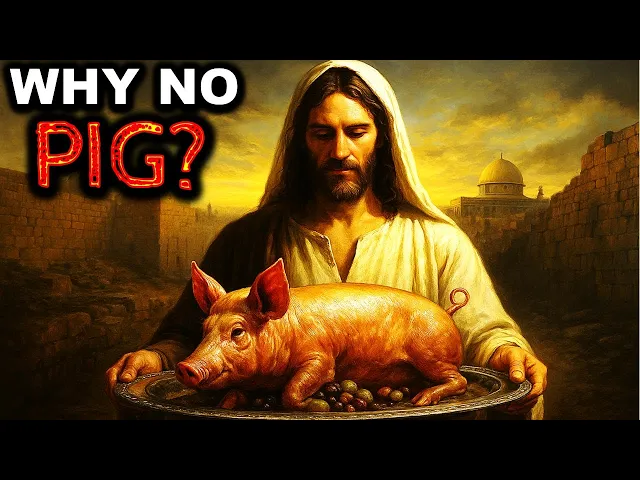
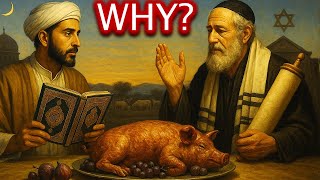
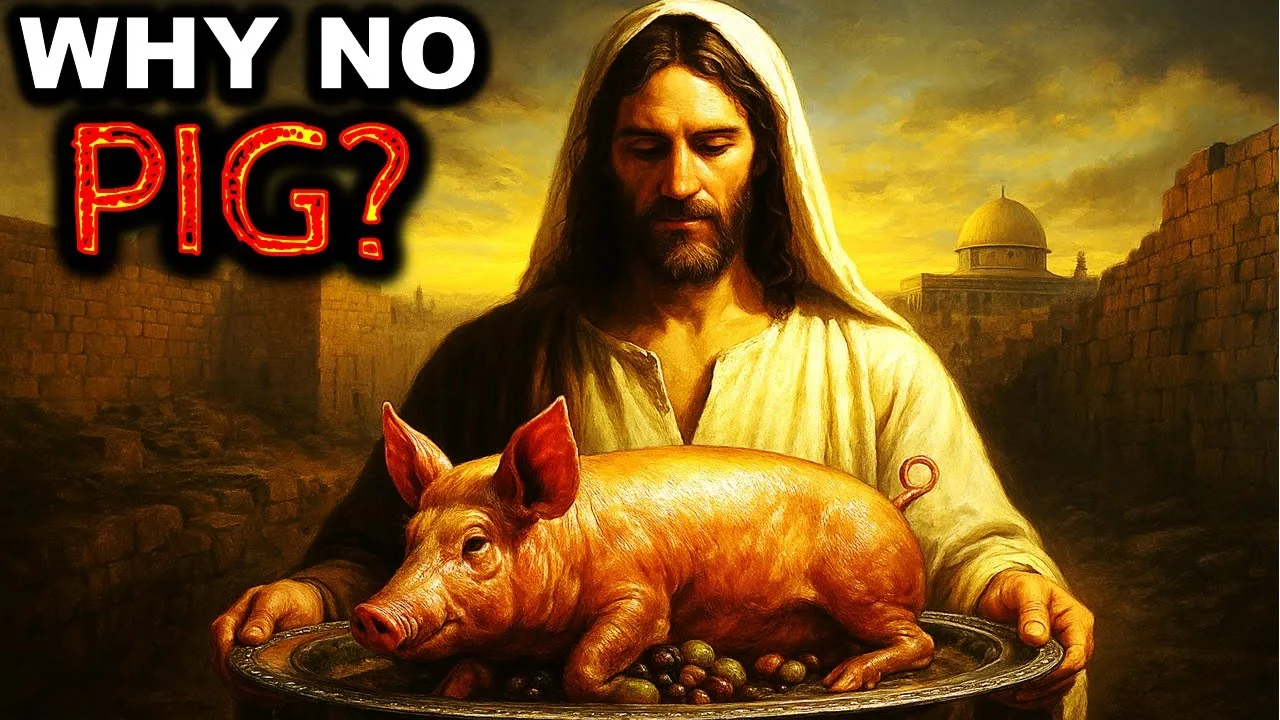
For centuries, the question of what we eat has carried deep spiritual meaning. In ancient Israel, dietary laws set God's people apart from the surrounding nations, marking them as holy and distinct. Among these laws, one command stood firm.
Do not eat the flesh of the pig, for it is unclean to you. But as the New Testament unfolds, a new era begins. Jesus steps into the scene not just as a teacher but as the fulfillment of the law and the prophets.
His ministry challenges traditions, redefineses purity, and points to a deeper reality. Later, his apostles wrestle with how faith in Christ transforms every aspect of life, including what goes on our tables. The result, a rich, often misunderstood teaching that touches on freedom, conviction, and the glory of God.
In this video, we're going to take a journey from the law of Moses to the words of Jesus, from Peter's vision to Paul's letters to uncover the biblical truth about eating pork. Whether you've held to Old Testament dietary laws or embraced freedom in Christ, this teaching will help you see the bigger picture, one that goes far beyond food and into the heart of God's plan for his people. Stay with us until the end.
What you discover may not only answer your question but also deepen your understanding of what it means to walk in faith, freedom, and love. Let's get started. Let's start at the very beginning.
When God called Israel out of Egypt and made a covenant with them at Mount Si, he gave them a set of laws and commandments, not just for worship, but for every aspect of their daily lives. This included what they could and could not eat. Leviticus 11 7 to8 says, "And the pig, though it has a divided hoof, does not chew the cud.
It is unclean for you. You must not eat their meat or touch their carcasses. They are unclean for you.
" This wasn't a suggestion. It was a direct command from the God of Israel. Later in Deuteronomy 14:8, Moses reminds the people of this instruction.
The pig is also unclean. Although it has a split hoof, it does not chew the cud. You are not to eat their meat or touch their carcasses.
Pigs were considered unclean because they don't meet both criteria of a clean animal. Chewing the cud and having a split hoof. Animals like cows or sheep, which do both were acceptable.
But it didn't stop at pigs. Leviticus 11 and Deuteronomy 14 list a whole range of forbidden animals, land animals, birds, sea creatures. This was part of the kashroot, the dietary code that defined what was kosher or fit to eat.
For ancient Israel, these dietary laws served several purposes. First and foremost, the dietary laws were a symbol of holiness, a way for God's people to be set apart from the nations around them. Leviticus 11 44 to 45 says, "I am the Lord your God.
Consecrate yourselves and be holy because I am holy. Do not defile yourselves by any of these creatures. I am the Lord who brought you up out of Egypt to be your God.
Therefore, be holy because I am holy. " The Hebrew word for holy is kadosh, which means set apart or distinct. By following these food laws, Israel was visibly different from their pagan neighbors.
While other cultures feasted on pigs, shellfish, and scavengers, Israel refrained, showing their obedience to God in even the smallest acts of eating. But there's another layer. Many of the animals declared unclean were also used in pagan rituals.
In Canaanite and Mesopotamian religions, pigs were often sacrificed to idols or eaten in ceremonial feasts of false gods. By forbidding pork, God was protecting his people from associating with or being drawn into idolatrous practices. Exodus 34:15.
Be careful not to make a treaty with those who live in the land. For when they prostitute themselves to their gods and sacrifice to them, they will invite you and you will eat their sacrifices. Eating pork wasn't just about food.
It was about allegiance. Would Israel align with Yahweh, the holy God of heaven, or blend in with the pagan cultures around them? Some scholars also note the practical health benefits of these laws.
Pigs are omnivores and scavengers. In the ancient Middle East, they often fed on refues and carried parasites like tchinosis, which can be deadly if their meat isn't cooked properly. God's prohibition may have protected Israel in a time before refrigeration, sanitation, and modern medicine.
But remember, while health may have been a benefit, the primary purpose was spiritual, to set Israel apart for God. Exodus 19:6. You shall be to me a kingdom of priests and a holy nation.
So, let's summarize. Pigs were unclean because they didn't meet God's criteria for clean animals. The laws taught Israel holiness, obedience, and separation from pagan practices.
They may also have offered health benefits in the ancient world. But here's the big question. Were these laws permanent or were they part of a temporary covenant pointing to something greater?
Fast forward to the New Testament and we find Jesus walking among those same people teaching healing and challenging traditions. Did he uphold these food laws or did he change them? The answer might surprise you.
Now we arrive at one of the most debated passages in the entire New Testament regarding dietary laws. Mark 7 18 to19. Don't you see that nothing that enters a person from the outside can defile them?
For it doesn't go into their heart, but into their stomach and then out of the body. In saying this, Jesus declared all foods clean. At first glance, this might seem like a definitive answer.
Many Christians quote this to argue that Jesus abolished the dietary laws of the Old Testament and made all foods, including pork, acceptable for his followers. But is that what he meant? Let's slow down and take a closer look.
To understand this passage, we must first understand the context. The scene begins in Mark 7:1-5, where Jesus is confronted by the Pharisees and some scribes. They accuse his disciples of eating with defiled hands because they didn't follow the tradition of ritual handwashing before meal.
This wasn't about hygiene. It was about ritual purity. The Pharisees believed that touching common objects or being in contact with Gentiles could defile a person spiritually.
So they developed elaborate traditions for washing hands, cups, and utensils to remain ceremonially clean. Mark 7:5. So the Pharisees and teachers of the law asked Jesus, "Why don't your disciples live according to the tradition of the elders instead of eating their food with defiled hands?
" Notice carefully, this is not a debate about clean and unclean foods. It's about human traditions versus God's commands. Jesus responds powerfully in Mark 7 6-7.
He replied, "Isaiah was right when he prophesied about you hypocrites, as it is written, "These people honor me with their lips. " Their hearts are far from me. They worship me in vain.
Their teachings are merely human rules. Here Jesus exposes the Pharisees hypocrisy. They elevated their own traditions above God's word, focusing on external rituals while neglecting the condition of their hearts.
Then in Mark 7 14-15, Jesus makes this radical statement to the crowd. Listen to me everyone and understand this. Nothing outside a person can defile them by going into them.
Rather, it is what comes out of a person that defiles them. This would have shocked his Jewish audience. For centuries, purity was defined by avoiding unclean things, foods, people, places.
But Jesus flips the script, teaching that defilement is a matter of the heart, not the stomach. Now, back to Mark 7 18 to19. Don't you see that nothing that enters a person from the outside can defile them?
For it doesn't go into their heart, but into their stomach and then out of the body. The phrase in saying this, Jesus declared all foods clean is actually a parenthetical comment added by Mark for his readers. It's not a direct quote from Jesus.
Mark writing to a gentile audience decades later may have been clarifying how Jesus's teaching about the heart eventually opened the way for Gentile believers who didn't follow Jewish food laws. But here's the key. In the immediate context, Jesus isn't discussing pork or shellfish.
He's challenging the idea that ritual washing or lack thereof can spiritually contaminate a person. To drive the point home, Jesus explains in Mark 7 20-23, "What comes out of a person is what defiles them. For it is from within, out of a person's heart that evil thoughts come.
sexual immorality, theft, murder, adultery, greed, malice, deceit, lwdness, envy, slander, arrogance, and folly. All these evils come from inside and defile a person. The Pharisees focused on outward appearances.
But Jesus was exposing the root problem of humanity, sinful hearts. So the question remains, did Jesus abolish the dietary laws here or was he pointing to a deeper spiritual reality about the nature of true holiness? Jesus's statement doesn't mean the dietary laws were meaningless.
Instead, he's revealing their true purpose. In Matthew 5:17, Jesus says clearly, "Do not think that I have come to abolish the law or the prophets. I have not come to abolish them, but to fulfill them.
" Jesus didn't cancel the Torah. He fulfilled its righteous requirements and showed their ultimate meaning, transforming hearts, not just external behavior. This teaching laid the groundwork for the early churches wrestling with food laws, especially as the gospel spread to Gentiles.
But we're not there yet. First, we need to examine Peter's vision in Acts 10, often cited as proof that God abolished dietary laws. Was it really about food or something much bigger?
Let's take a closer look at that vision and find out what God was really saying to Peter. As we journey further into the New Testament, one of the most significant turning points in the early church comes in Acts chapter 10. Here we encounter Peter, the same disciple who once vowed never to let Jesus wash his feet.
The same man who struggled with fear of Gentiles, receiving a vision from God. But was this vision about changing the food laws? Or was God showing Peter something much deeper?
Let's step into the story. It was about noon and Peter had gone up onto the flat rooftop of a house in Jopa to pray. As he prayed, he became hungry and fell into a trance.
Acts 10 11 to 12. He saw heaven opened and something like a large sheet being let down to earth by its four corners. It contained all kinds of 4-footed animals as well as reptiles and birds.
Then a voice from heaven spoke. Acts 10:13. Get up, Peter.
Kill and eat. But Peter, a devout Jew who had kept the dietary laws all his life, was horrified. Acts 10:14.
Surely not, Lord, Peter replied. I have never eaten anything impure or unclean. The voice responded a second time.
Acts 10:15. Do not call anything impure that God has made clean. This exchange happened three times before the sheet was taken back up to heaven.
At first glance, it might seem like God was abolishing the dietary laws and declaring all animals clean for food. After all, pigs, shellfish, and other previously forbidden creatures were included in the vision. But let's not stop there.
Peter himself was confused. The text says, "Acts 10:17, while Peter was wondering about the meaning of the vision, the men sent by Cornelius found out where Simon's house was and stopped at the gate. At that very moment, three men sent by Cornelius, a Roman centurion, arrived to invite Peter to come to his home.
Cornelius was a gentile. A man considered ceremonially unclean under Jewish law. God's spirit instructed Peter to go with them without hesitation.
When Peter arrived at Cornelius's house, he entered and saw a gathering of Gentiles waiting eagerly to hear the word of God. For a Jewish man, even stepping into a Gentile home was unthinkable. But then it all clicked for Peter.
Acts 10:28, he said to them, "You are well aware that it is against our law for a Jew to associate with or visit a Gentile, but God has shown me that I should not call anyone impure or unclean. " Did you catch that? Peter didn't say, "God told me I can now eat pork.
" He said, "God has shown me that I should not call anyone impure or unclean. " The vision wasn't about food. It was about people.
Gentiles, once considered outsiders, were now welcomed into God's covenant family through faith in Jesus Christ. This vision marked a revolutionary shift in salvation history. The dividing wall between Jew and Gentile was being torn down.
Ephesians 2 14-15. For he himself is our peace, who has made the two groups one, and has destroyed the barrier the dividing wall of hostility by setting aside in his flesh the law with its commands and regulations. The ceremonial laws, including dietary restrictions, had served their purpose of setting Israel apart.
But now through Christ's sacrifice, the way was open for all nations to come into God's family. This wasn't about Bacon. It was about breaking centuries of prejudice and reconciling Jew and Gentile in Christ.
Even after this vision, there's no record of Peter or any of the apostles openly eating unclean animal. In fact, years later, Peter still struggled with fully embracing gentile fellowship. Galatians 2 11-12.
Clearly, the vision was symbolic, not a literal command to change diets. So, if God wasn't abolishing the food laws here, what about Paul's later teachings? Did Paul take it further?
That's where we turn next. Let's explore Paul's letters and see how he approached food laws, freedom in Christ, and whether Christians today are bound by Old Testament dietary restriction. Now, let's turn to the Apostle Paul.
Few figures in scripture speak more clearly about the relationship between Old Testament law and Christian freedom. As the gospel spread beyond Jewish communities into Gentile lands, questions about food laws became front and center. Were Gentile believers required to follow the dietary laws of Moses, or did faith in Christ make those laws obsolete?
Paul tackled these questions headon in his letters, offering profound insights that still challenge us today. In his letter to the Romans, Paul writes, Romans 14:14, I am convinced, being fully persuaded in the Lord Jesus that nothing is unclean in itself. But if anyone regards something as unclean, then for that person it is unclean.
Here Paul affirms a radical truth. Under the new covenant, food itself holds no spiritual defilement. Clean or unclean is no longer about what's on the plate.
It's about what's in the heart. But notice his sensitivity. Paul recognizes that not everyone sees it this way.
Some believers, especially Jewish converts, were still deeply convicted about abstaining from certain foods. In first Timothy, Paul warns about false teachers who tried to impose dietary restrictions as a measure of holiness. 1 Timothy 4:es 3:5.
They forbid people to marry and order them to abstain from certain foods which God created to be received with thanksgiving by those who believe and who know the truth. For everything God created is good, and nothing is to be rejected if it is received with thanksgiving, because it is consecrated by the word of God and prayer. Paul reminds Timothy that God created food for enjoyment, to be received with gratitude, not to become a tool of spiritual pride or control.
He's saying, "Don't let anyone enslave you with man-made rules about what you can or cannot eat. " But here's where Paul's teaching shines. He balances freedom in Christ with love for others.
Romans 14 20 to 21. All food is clean, but it is wrong for a person to eat anything that causes someone else to stumble. It is better not to eat meat or drink wine or to do anything else that will cause your brother or sister to fall.
In other words, Christian freedom is not a license for selfishness. Yes, you may be free to eat pork or shellfish, but if doing so offends or confuses a weaker believer, Paul says, "For their sake, refrain. " This is not about giving up freedom.
It's about practicing love. Galatians 5:13, "You, my brothers and sisters, were called to be free. But do not use your freedom to indulge the flesh.
Rather, serve one another humbly in love. " It's important to remember that even the early church wrestled with these issues. In Acts 15, during the Jerusalem council, the apostles met to decide whether gentile converts needed to follow the law of Moses, including food laws.
The Verdict, Acts 15 28 to 29 IV. It seemed good to the Holy Spirit and to us not to burden you with anything beyond the following requirements. You are to abstain from food sacrificed to idols, from blood, from the meat of strangled animals, and from sexual immorality.
This was not a reinstitution of the full dietary law, but a pastoral compromise to help Gentiles avoid offending Jewish believers and to distance themselves from pagan temple practices. Ultimately, Paul's teaching echoes the words of Jesus. Matthew 5:17.
Do not think that I have come to abolish the law or the prophets. I have not come to abolish them, but to fulfill them. Through his death and resurrection, Christ fulfilled the ceremonial aspects of the law.
The dietary laws designed to set Israel apart found their completion in him. Colossians 2 16-1 17. Therefore, do not let anyone judge you by what you eat or drink or with regard to a religious festival.
These are a shadow of the things that were to come. The reality, however, is found in Christ. Pork and other forbidden foods were symbolic markers of Israel's separation.
In Christ, that separation is no more. He has made all believers, Jew and Gentile, clean through his blood. What can we conclude from Paul's letters?
Food is no longer spiritually clean or unclean in Christ. Believers are free to eat any food, including pork. But freedom should be tempered with love, sensitivity, and respect for others convictions.
Paul's teaching isn't about food. It's about the heart. Are we walking in freedom?
Are we walking in love? So, where does that leave us today? Should Christians eat pork?
Or is there still a spiritual principle we're missing? In our conclusion, we'll bring together everything we've learned from Moses to Jesus to Paul and answer the question once and for all. So, after exploring the law of Moses, the teachings of Jesus, and the letters of Paul, we come back to the question, should Christians eat pork?
The answer, as with so many things in scripture, requires understanding the heart of God's word. First, let's be clear. Jesus never directly addressed pork or any specific food as clean or unclean.
His ministry wasn't focused on food laws, but on something far deeper, the condition of the human heart. Matthew 15:1, "What goes into someone's mouth does not defile them, but what comes out of their mouth, that is what defiles them. " Jesus shifted the focus from external rituals like dietary restrictions to internal transformation.
True holiness, he taught, isn't about what's on your plate, but what's in your soul. The New Testament emphasizes two key truths about this issue. Our righteousness comes through faith, not food laws.
Galatians 2:16. Know that a person is not justified by the works of the law, but through faith in Jesus Christ. Food is neutral, but how we use our freedom matters.
1 Corinthians 8:9. Be careful, however, that the exercise of your rights does not become a stumbling block to the weak. In Christ, food is no longer a spiritual boundary marker.
It doesn't bring us closer to God, nor does it push us away from him. What matters is our gratitude, our obedience, and our love for others. For some believers, abstaining from pork remains a heartfelt conviction, a way to honor their understanding of scripture or their cultural heritage.
For others, it's a matter of Christian liberty, freedom in Christ to eat any food with thanksgiving. Both positions can glorify God when approached with humility and love. Paul reminds us Romans 14:3, "The one who eats everything must not treat with contempt the one who does not, and the one who does not eat everything must not judge the one who does, for God has accepted them.
" Whatever your conviction, Paul gives us a guiding principle that transcends all debates. 1 Corinthians 10:31. So whether you eat or drink or whatever you do, do it all for the glory of God.
It's not about pork. It's not about laws. It's about living every moment, every bite, every choice in a way that honors God and reflects his love.
So now we turn the question over to you. What do you think? Should Christians eat pork or should we still observe the dietary laws of the Old Testament?
Share your thoughts in the comments below. We'd love to hear your perspective and join you in meaningful dialogue. If this teaching blessed you, hit like, subscribe, and turn on the notification bell so you never miss a chance to go deeper into God's word.
And don't forget to share this video with a friend or family member who's been wrestling with this very question. Remember, Jesus didn't come to burden us with rules, but to set us free. Not freedom to indulge, but freedom to love, to serve, and to glorify God in all we do.
Whatever you decide about what you eat, let it be rooted in faith, guided by love, and offered up as worship to the one who gave his life for you.