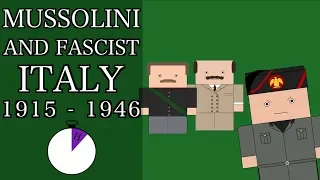
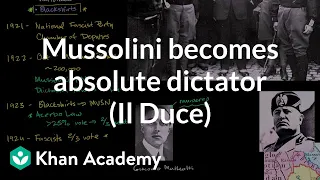
hi guys i hope you're doing well and welcome back to another video which today we're going to continue taking a look at musumi's domestic policies by moving on to his economic policies if you haven't however watched the last video on this channel where we discussed michigan's cultural policies i'll highly encourage you to do so and i'll link it up here as well just because you can thoroughly follow this whole section of the content that is very very important just a reminder that in your exams you can be asked any type of domestic policy from the
social to the cultural to the economic and even the political ones that we're going to be discussing in future videos which is why it's extremely important that you keep up with these videos so you know exactly what to expect when it comes times for your exams which i know are just next week because this section of the abbey history syllabus almost when these economic policies is quite a hefty one i chose to break down the content into two major videos to make it very digestible for you guys so uh without further ado let's get started
with this one because there is quite a lot to discuss so when we talk about muslims economic policies we can actually distinguish pretty much all of the policies that we're going to be discussing into two major categories the first are those policies that were directed towards italian industry and italian manufacturers being heavy industry steel coal and so on and the other being those policies that were directed towards the agricultural side of the economy in this video we're only going to be talking about muslims industrial policies because there are quite a lot to discuss so much
so that on our last video we're going to be discussing some of the remaining industrial policies that we're swimming i think you implement as well as the agricultural ones as well so keep that idea in mind throughout these next couple of videos so you know that when we're talking about students economic policies we know that he's trying to tackle a couple of different things at the same time but what were these things that he was attempting to tackle exactly well to understand that we have to look at his economic policy aims which is the first
thing that we're going to be discussing in all sunni had two main aims for his economic policies the first was to build a corporate state in italy which was this new economic system that muslim attempted to implement that was a third way between communism and capitalism with neither of those supposed failed ideologies and also muslims second aim with his economic policies was to achieve alter key which is just another word for self-sufficiency in pretty much all of the relevant industries for war these relevant industries include anything from the heavy industry side which encompasses the prediction
of steel coal and raw materials but also the food industry of italy it was extremely important for mussolini that he became self-sufficient in these major wartime industry so he did not have to rely on other countries when it came time for war and when he was going to battle major powers like britain and france who could uh sustain themselves for long periods of time italy had to find a way of keeping up without relying on foreign trade which would be limited at the time of war so yeah guys these were muslims overall goals for his
economic policies of course there were minor ones that are going to become clearer as discussed individual policies but it is extremely important that you keep these two in mind as we discuss the policies themselves so when it comes time to examining whether their policies were successes or failures you can ask yourself to what extent did the policy actually allow for me to achieve these two major goals and just a spoiler for you guys even though mussolini tried extremely hard to achieve these two goals in the country he ultimately failed due to the failure of these
policies that were not very well thought out as we're going to be discussing in just a moment but even worse than that the fact that he was so fixated on achieving these two goals in specific meant that he basically left aside the other long-standing economic issues of italy that have been harming the country for several several years so now let me just list a couple of these long-standing issues that i think is important for you guys to keep in mind as we discuss with some of these policies the first was the major industrial underdevelopment of
the country which was a very prominent issue in italy since its creation in the 19th century another major issue was the social and economic divide between the classes of the country most probably the rich north and the poor south another major issue was rural poverty which left a significant proportion of the italian population in inhumane conditions as people were still living in the rural sides of the country and could not have access to basic necessities such as potable water or even the sewage system and a fourth really big one was the illiteracy rate of the
country which meant that people were still very uneducated preventing the country from moving forward alright guys so what i've just given you there was a really quick summary of the economic condition and background of italy prior jim sumi's ascent to power besides of course explaining him his overall goals with his economic policies and you can see that his goals and the issues that haunted italy throughout most of the 19th century and after the beginning of the 20th century as well were very different from each other which is why it's no secret that sweden's economic policies
were a major failure and we're subject to a lot of frustration by the italian people so keeping this idea in mind let's finally get on to discussing a couple of musumi's economic policies to start off let's take a look at some of musungi's early on economic policies that he implemented between 1922 and 1927 which is precisely the period that he transitioned from the prime minister of italy to its dictator in his early years as prime minister and as dictator mussolini passed very liberal economic policies engaging in a very liberal economic style which as you can
probably deduce was because he was trying to gather the support of big businesses and the industrialists of italy if you remember our videos on muslims rise and consolidation of power you will remember that we actually talked a lot about why it was extremely important that muslim gather the support of big businesses to finance his political ascent if you don't quite remember this idea that's totally okay i'll just link the videos down below in the description and also up here in the card but for now since this is not exactly the focus of our video let's
just move on to discussing what these liberal economic policies actually were between 1922 and 1927 the economy was being led by de stefani who was a muslim minister of the treasury and he passed a variety of liberal economic policies in the sense that he opened up the competitive economic landscape for business interactions facilitating business activities in the country he basically did this by removing a lot of the barriers that hindered business activities in the country while also providing a variety of incentives to encourage more firms to join the marketplace so now let me just list
a couple of these barriers that were reduced and a couple of these incentives that were provided in terms of removing barriers the stefania lowered corporate taxes which was extremely prosperous for businesses it basically meant that rather than giving a large proportion of their revenue to the government in the form of taxes businesses could reinvest their revenue in their businesses expanding their business activity which would in turn benefit the italian economy and also the stefani removed the major barrier of trade unions by outlawing all of the trade unions of the country trade news were a major
entrance to economic activity because they gave workers a lot of power to negotiate their wages and working conditions with their employment essentially forcing businesses and firms to abide by certain standards such as not paying workers below the minimum wage or not overworking them past an 8 hour working day and as crazy as this sounds these were great limitations for businesses after all it prevented them from cutting costs to their full extent and from producing the maximum amount of stuff they could in a single day and therefore by outlining all these straight units and revoking all
this power from workers the stefanie was essentially removing all of these limitations on businesses it was essentially allowing businesses to pay workers below their minimum wage and reduce their cost and was also allowing them to overwork workers past an eight hour working day to produce as much as they could in terms of the incentives that he provided this defending greatly decreased the government spending of the country as to stabilize and control inflation stabilizing inflation basically means that the greater fluctuations in price levels of an economy are becoming less and less frequent meaning that prices are
more or less the same for a long term period of time this makes an economy very predictable and less risky to operate in which basically means that businesses are more confident in operating in that economy and that they will operate in that economy therefore by stabilizing inflation the economy becomes more attractive and therefore business activity increases now another major incentive to testify provided was the privatization of a lot of the major industries of the country such as the telephone industry whilst in the past it was the italian state that would provide these services now because
these industries were privatized uh the italian state was essentially allowing private companies to compete for the business of providing these services as well all right guys so closing of this section you might be actually thinking to yourself that although a lot of these policies came at the cost of the italian working class who lost more and more rights in the workplace they were actually very prosperous for muslim and for this stefani on the one hand mussolini was indeed getting the support of big businesses and industrialists just like he wanted and also the italian economy was
prospering due to the increase in business activity and you would actually be correct in thinking that because for the most part this period between 1922 and 1927 was extremely prosperous however the economic tide would soon begin to turn primarily because of this next factor that we're going to be discussing which is of course the battle of digita which occurred between 1925 and 1926. although in my opinion the staffing was doing a pretty good job with the economy as we just saw in 1925 he was actually dismissed by mussolini mainly because mussolini being a control freak
wanted to completely command the economic policy of the country and so immediately after dismissing usually took matters into his own hands and established his first major economic policy which was the revaluation of the leader the leader of course was the italian currency and re-evaluating it basically meant that he wanted to make the leader as a currency stronger in comparison to the other currencies of the world however this in itself when considering the situation of italy shows how little of economics muslim actually knew after all he was implementing this policy whilst completely disregarding big businesses or
italian consumers and this was because although the leader was a weak currency in comparison to other currencies like the dollar or the pound this was precisely what made italian exports more attractive after all they were extremely cheap to the outside world which meant that their demand was very very high and this was very very good for the italian economy after all italy was selling a lot of goods to foreign countries and receiving a lot of money in return however muslim completely disregarded this idea because in his mind a weak currency meant a weak country which
is why he sought the re-evaluation of the leader in order to make it a strong currency that resembled the strong country of italy if you've done any economics in the idea or have just read a little bit about the circuit you're probably pulling your hairs out right now and rightly so because this was truthfully a very very stupid idea mussolini started off by strengthening the exchange rate of the data from 150 liter to one pound to 90 liter to one pound but of course this had great adverse effects on the nation mainly and most obviously
italian exports decreased significantly as it was now simply too expensive for foreign countries to import from italy and this had great negative effects on the domestic economy primarily in industries that were export-led in the sense that the bulk of their revenue derived from them exporting their goods rather than selling them domestically these industries actually were forced into a deep depression after all the demand for their goods greatly greatly fell but you might be asking yourself wait if the italian currency is now stronger it's probably cheaper to buy goods foreign which probably helps in telling consumers
right and yeah you would be right if that was what happened but musumi completely prevented this benefit from being seen by any italian because he immediately imposed a variety of protectionist measures in the country which essentially made foreign expensive as well even though italians would have been able to import food more cheaply from abroad after all their currency was now stronger musumi imposed a variety of tariffs and taxes that significantly increased the price all over again and these protections measures only aggravated the situation they're only prosperous for industries that were involved in militarization after all
like they spoke in the beginning of the video this was part of misumi's goals for the economic policies but pretty much all of the other industries of the country were completely neglected and the italian economy suffered quite substantially alright guys so this goes off the section on the battle of the video which just exposed a little bit of how stupid muslim was with respect to the economic policies that he implemented and with respect to economics as a whole but now let's move on to his next and major economic marvel which was of course the establishment
of a corporate state through a new economic system that he devised himself known as corporativism to go over this factor i'm actually going to be splitting up the explanation into two major sections the first is going to be the explanation not the theoretical idea of cooperativism and how it was supposed to have played out according to mussolini and the second section is going to be about how he actually played out when the fascists implemented this system in italy okay so now let's start with the theoretical explanation of what muslim hoped that cooperativism would actually be
theoretically cooperativism proposed that within each industry of the italian economy a corporation would be set up which would be represented and run by the italian confederate which was of course the big businesses of the country however within that same corporation there would be a fascist trading to represent workers the whole point of the system was that within each individual corporation workers and employers having the same amount of power would come together to compromise on the conditions and standards of production meaning that they would negotiate what the minimum wage would be what the working hours would
be and what working conditions would be as well and of course in case there was disagreement between workers and employers the case would be taken to a labor court which was part of the ministry of corporations which would settle the dispute amicably and the whole point of this system the mussolini device was to find harmony between workers and employers which of course was the complete opposite of communism which incited class struggle between the pluratarians and the bourgeoisie in missouri's mind this was the perfect economic plan to unite the italian nation as it would essentially eradicate
all of the struggles and disputes that frequently occurred in the workplace between employers and their employees however in hindsight we know that this system didn't exactly work which leads us to the next part of this explanation which is taking a look at exactly how corporativism actually played out in reality there's actually many reasons as per why this system did not work out but one of the winning ones was because they can confidus organization refused to share power with the fascist trade unions that were put in place they were not at all fun of the idea
of setting on standards of protection together with workers after all they were trying to use workers to their full potential which could not be done if there was this mediation going on back and forth between workers and employers they essentially wanted complete control of the industry in order to set extremely low wages and overwork workers to their full potential however besides this obvious power struggle between employers and employees which inevitably would have played out there was also a lot of mistrust between these two groups for example the minister of corporations at the time giuseppe bottai
largely distrusted the union leader of the fascist strategist rosoni and actually wanted the employers to take on most of the power within the industries of italy in order to maximize production as he believed that rosani together with the workers would attempt to set back production as much as they could in order to improve their conditions in the workplace and the last major reason why cooperativism failed was because mussolini himself who architectured the whole plan was unable to propagate the idea properly in the sense that when employers were attempting to take over the industry and withhold
all of the power of production rather than standing up for workers and advocating for the admitable relationship between the confidence threat and workers muslims simply sided with the big businesses as he feared losing their support as a result of all this the power of employers only increased in the workplace knowledge to the extent that they were denying that workers paid holidays and were also forcing their workers to work hours that they had not even signed up for and to make matters even worse the once very large fascist trade unions that truly gave workers the power
to bargain with employers were transformed into very small fascist trade unions instead small unions which had no power whatsoever and truly could not bargain with their employers so yeah guys and as a result of all these failures the corporate revolution that muslim had imagined never fully materialized as the corporations never took their pivotal role in the economy that muslim had dreamt of which like we talked about was majorly a result of the constant disputes between employers and employees that prevented the italian economy from properly moving forward at the hands of the corporations alright guys so
just before we close out the section let me just give you three quick points in historiography that you can reference when discussing cooperativism in one of your essays alright guys so the first perspective that i want to bring to today is by historian alexander the quran who is an american historian that is very prominent when we discuss fascist italy and mussolini he will be recurrently coming up on our next video on economic policies but also on their future videos falcons will use domestic policies as well so keep an eye out for him but basically the
kron's point is that corporativism was not a new economic system per se but just a way for the italian government to increase his presence in italian capitalism right here in front of me guys i have a quote by alexander graham where he discusses this exact notion and i'm going to reach you guys in just a moment so you can have it in your mind if you're able to memorize this quote that would be truly spectacular because we probably might build the examiner when it came time to write it in your essays but i know we
have a lot of stuff to memorize besides this quote so if you're not able to memorize it or snippets of it that's totally fine just try your best to memorize the perspective of the ground so you can reference in your essays and that would be just fine but let me get on to the core according to alexander the grand fascism did not create its own unique economic system but rather grafted further status and bureaucratic tissue on the existing body of italian capitalism which is the exact notion that i summarized just moments earlier moving on guys
the second perspective that i want to bring to you is by british historian martin lincoln who is also very prominent in this field according to blinkhorn corporativism merely disguised the exploitation and oppression of labor which is something that we discussed just moments ago as we saw that the employers were trying to overwork workers to the full extent so they could maximize production and their profits as well and finally guys the third perspective that i bring you is by historian tanyan bomb uh i think i'm mispronouncing his name so it's written right here anyways on my
notes just in case but basically his perspective is also something that we discussed a little while ago which is basically that muslims simply not have the strength or confidence to stand up to the big businesses of italy again guys i have a really good quote by tenenbaum here right in front of me which i'm going to read you guys in just a moment and just a heads up this was a quote that i personally tried really hard to remember and memorize because i just really wish i could use my essays at the end of the
day it wasn't a question that i could address it but i tried really hard to memorize it because i just love the way he puts this together i think it's really impacting and it is something that in my opinion would blow the examiner away by far because it truly shows knowledge uh by your behalf if you can include it but basically the quote goes like this neither sudanese government nor the fascist corporations were prepared to build a fiat pirelli or the bank of italy fee apparently in the bank of italy uh just to clarify for
you guys were three major monopolies that had been cultivated at the time as a result of the major uh concessions and aid that was being provided by the fascist state as we're going to see in our next video during this time the fascist government was allowing monopolies to grow in italy in order to maximize production because of their economies of scale again we're gonna go into that uh in the next video so i'm not gonna go into much depth right now but just a heads up so you guys understand what i'm talking about and this
actually helped out these companies quite significantly in the long run as well for example nowadays fear is a major cars manufacturer that is still very much thriving much of it as a result of the great a that it received by the fascist during the 1930s and 1940s as well so yeah guys we have reached the end of our video and i truly hope you have enjoyed it because i enjoyed recording it even though it was quite stressful i know there was a lot of content to digest and this was a rather lengthy video but be
sure to watch it all over again if you have time before your exams just to make sure that you absorb all of this content that i've addressed as always guys please make use of my notes that i've been providing here on my left because they truly will help you out in memorizing all this content and be sure to get the link down below on the description where you can find my full set of notes with all of husband's domestic policies besides his economic ones as well and there should be some notes there on what we're
going to be covering on our future video if you want to get a head start or do some preliminary reading as well before watching that video which is coming up later this week if you have any doubts questions or concerns please just leave them in the comment section down below because i've been trying to read them and respond to as many as i possibly can and thank you so much for all of you that have been leaving very kind words in the comments as well they truly inspire me in order to make more and more
videos on this channel if you don't want to leave a comment because that's to public you can email me i'd be with you in gmail.com as it is linked in the description down below as well or just send me at the right message on my instagram which is i'd be within as it is always linked at the end of the video if you send me a direct message you know that i always catch you though so please uh if you wanna uh just have a chat don't be shy don't be shy to reach out uh
as well uh with that said guys i wanna wish you the best of luck on your exams tomorrow because i know that's when the may 20th 22 exams are beginning so i'm sure you're all gonna be just fine uh you've been watching these videos and revising on your own time and you've put in the word just remember that as soon as you sit on that chair and open that paper just know that you got this and you're gonna be just fine no matter what as always guys thank you so much for watching this video i
really appreciate all of you and i'll see you in the next one bye [Music] you