22 June 1941. Under the codename Operation Barbarossa, Nazi Germany invades the Soviet Union, its ally in the war against Poland. Among the first territories to be occupied by Germany is Belarus, officially called the Byelorussian Soviet Socialist Republic, a territory that, prior to the Nazi invasion, had been under Russian control for almost 150 years.
Within just a week of the invasion, the Germans capture the capital, Minsk, and immediately implement their genocidal policies. Among the first to be targeted are the Jews, who are confined to ghettos where they face extreme overcrowding, severe food shortages, and starvation. Along with the Jews, Hitler also intends to exterminate the Slavs, the dominant ethnic group in the region, whom the Germans view as racially inferior.
As a result of Nazi policies, the local population is subjected to mass murder, shootings, starvation, and forced deportations. One of the worst atrocities in occupied Belarus, which resulted in the deaths of thousands of civilians, is committed by the German 35th Infantry Division. Its commander is Johann-Georg Richert.
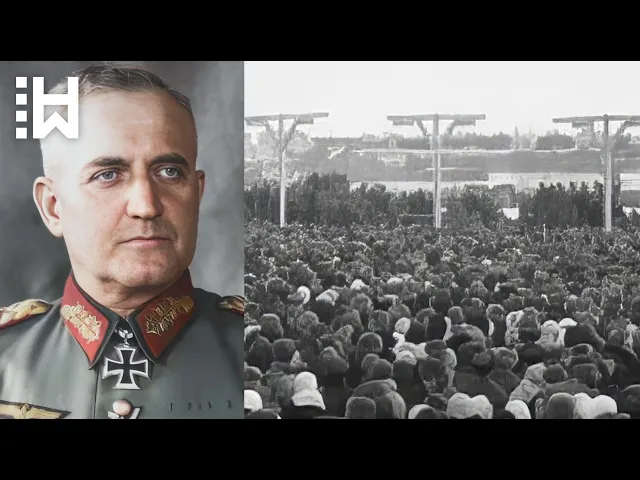
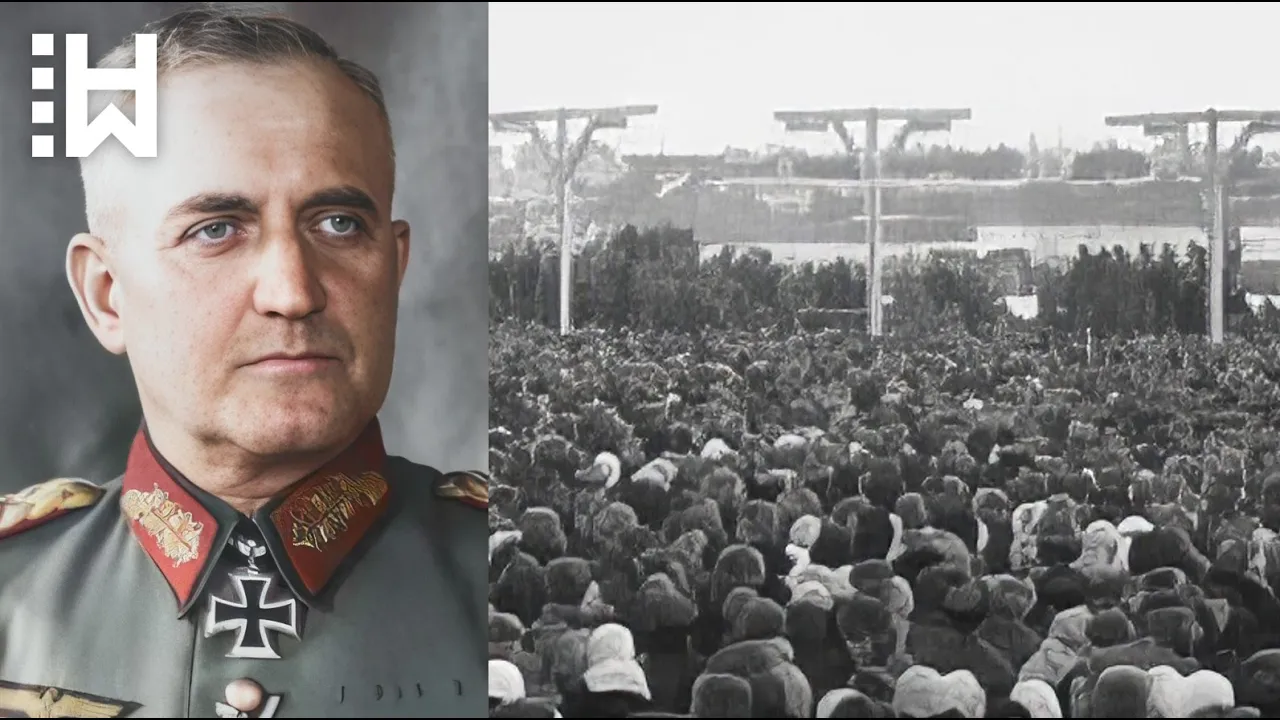
Johann-Georg Richert was born on 14 April 1890 in Liebau, then part of the German Empire. In the autumn of 1909, he enlisted in the German Army and, after attending military academy, was promoted to the rank of lieutenant in March 1911. Richert took part in the First World War, which began on 28 July 1914, and he was awarded both classes of the Iron Cross for his service that same year.
In 1918, he was captured by the French and spent 14 months in captivity. After the First World War ended on 11 November 1918, Richert continued his military career in the German Army as an Oberleutnant, which was equivalent to First Lieutenant in the US Army. Adolf Hitler and his Nazi Party came into power in January 1933.
By mid-1938, Richert had risen to the rank of Oberst, which was equivalent to Colonel, and in February 1939, he was appointed commander of the 23rd Infantry Regiment within the 11th Infantry Division. The Second World War began on 1 September 1939 when Nazi Germany invaded Poland using Blitzkrieg tactics, which combined speed, armored units, and air strikes. This invasion prompted Britain and France to declare war on Germany, initiating the broader European conflict.
Within weeks, Poland fell, and Germany turned its attention westward. In May 1940, the German Army launched a rapid invasion of France, bypassing its defenses through Belgium. Paris fell within six weeks, and by June, much of Western Europe was under Nazi control.
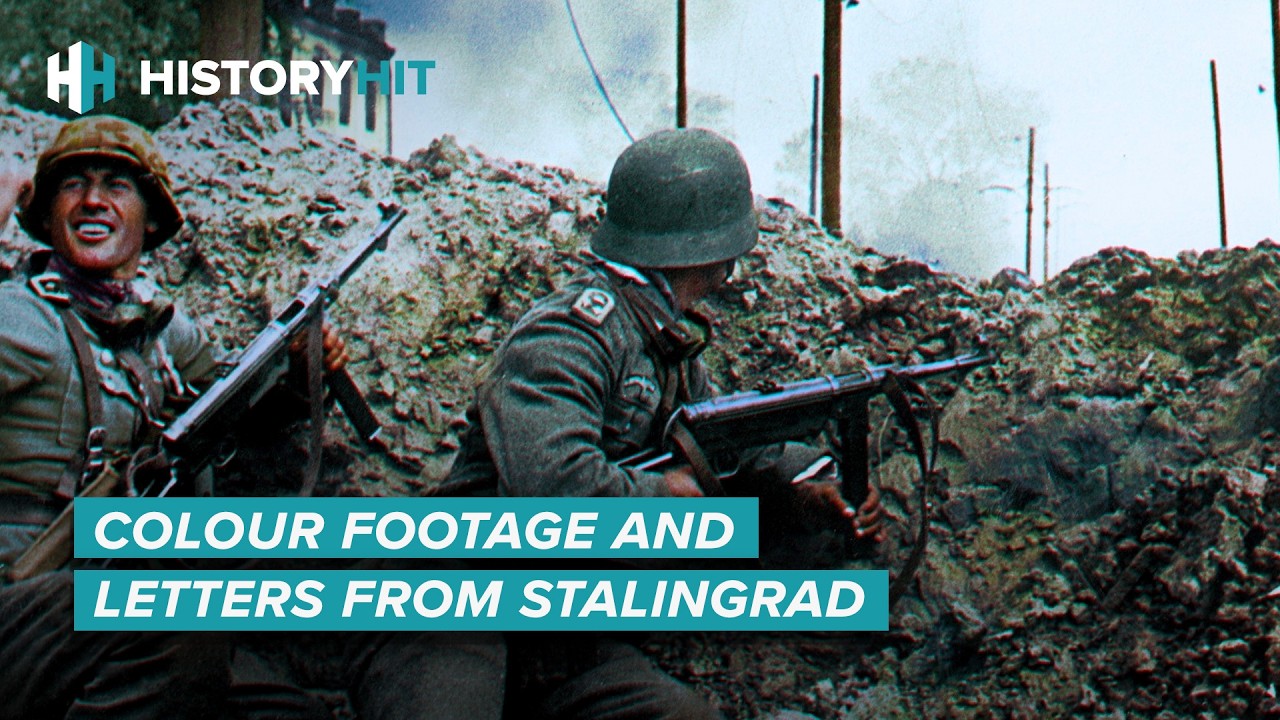
With the 23rd Infantry Regiment, Richert took part in the Polish Campaign and the Battle of France, for which he was decorated for his military achievements. On Sunday, 22 June 1941, under the codename Operation Barbarossa, Nazi Germany invaded the Soviet Union. Three million German soldiers were supported by Finnish, Romanian, Hungarian, Italian, Slovak, and Croatian troops.
For Nazi Germany, this attack was not an "ordinary" military operation. The war against the Soviet Union was a war of annihilation between German fascism and Soviet communism, a racial war between German "Aryans" and subhuman Slavs and Jews. Following the invasion of the Soviet Union, the Nazi regime unleashed a campaign of unprecedented brutality.
As the German military advanced, Nazi forces, including the SS and Einsatzgruppen, which were Nazi mobile death squads, systematically targeted civilians, particularly Jews, Communists, and other groups deemed "undesirable" by Nazi ideology. Entire villages were wiped out in mass executions, and millions of Soviet prisoners of war were subjected to starvation, forced labor, and summary execution. From June 1941, Richert fought with his regiment in northern Russia, and in December of the same year, he was awarded the German Cross in Gold, a decoration given for bravery and outstanding achievements in combat.
In April 1942, Richert was promoted to major general and appointed commander of the 286th Security Division, which was actively engaged in anti-partisan operations in northern Belarus, particularly in the Orsha region. Soldiers under his command committed numerous war crimes against civilians—atrocities that Richert not only failed to prevent but, in many instances, actively encouraged. During the four-week anti-partisan operation "Forest Winter," which started in late December 1942, the violence reached appalling levels.
A total of 1,627 Belarusian civilians were killed, 2,041 were deported for forced labor, and an estimated 8,000 livestock and 167,460 meat rations were confiscated. The operation's primary objective was to suppress partisan groups to secure the German army's rear areas and ensure the integrity of supply and communication lines. German forces conducted systematic sweeps through forests and rural areas to eliminate resistance and dismantle support networks.
These actions often led to widespread civilian casualties and the destruction of entire villages, as the Nazis employed extreme measures to root out partisans. Richert, in particular, became infamous for his extraordinary brutality. One of the harshest tactics employed to clear minefields near partisan camps involved forcing local civilians to plow, harrow, or walk across roads and paths.
In one village in the Orsha region, this method resulted in 28 deaths, including 18 children. In November 1943, Richert was replaced by Lieutenant General Hans Oschmann as the commander of the 286th Security Division and was subsequently appointed commander of the 35th Infantry Division, a position he held until the end of the war. During his tenure as a divisional commander, Richert demonstrated a ruthless approach to discipline and control.
He also ordered that all of his soldiers who were in hospitals without injuries or a diagnosed illness be executed and threatened units and commanding officers who were defeated in battle with severe penalties. In March 1944, Richert played a significant role in the forced relocation of Soviet civilians to the Ozarichi Concentration Camp, located near the city of Babruysk, around 140 kilometers southeast of Minsk. The camp was established under the orders of Josef Harpe, the Supreme Commander of the 9th German Army.
There were no buildings or sanitary facilities—just a massive, closed-off area surrounded by barbed wire. Soldiers of the 35th Infantry Division, led by Richert and reinforced by additional troops from Sonderkommando 7b of Einsatzgruppe B, forced at least 40,000 civilians into the camp. On the way, the guards had already shot at least 500 people who were too weak to continue walking.
The 9th Army advised that for similar operations in the future, the marching columns should be followed by burial commandos, who would dispose of the dead bodies. Within the camps, the guards, without warning, shot any person who approached the. .
. Fencing in search of water. The prisoners were mostly family members of slave laborers—children younger than 13, the sick, mothers with infants, and the elderly.
Many of them had contracted typhus and were left to survive in the open marshlands without shelter, medical aid, food, or clean water. Within just one week, at least 9,000 more had died. To avoid the Red Army discovering the operation before the retreat had taken place, the civilians were forbidden to make fires, despite the severe cold.
Larisa Stashkevich, who survived the camp, recalled after the war: "There was a gate with barbed wire, small watchtowers with soldiers and German shepherds, but nothing else. " She explained that anyone who tried to light a campfire was immediately shot. To find warmth, she hid behind the corpses of murdered prisoners.
The German high command celebrated the thousands of deaths as a success, referring to the victims as "useless mouths. " German historian Dieter Pohl has described the establishment of the camp as "one of the worst crimes the Wehrmacht ever committed against civilians. " In the summer of 1944, the Russians launched Operation Bagration, during which the Red Army destroyed 28 of the 34 divisions of Army Group Centre and completely shattered the German front line.
The 35th Infantry Division, under Richert, suffered heavy losses during the Soviet offensive but managed a relatively successful retreat to East Prussia. Later, the division was involved in the Soviet-led East Prussian Offensive, during which it was encircled near Polish Gdańsk in the final days of the war. The Second World War in Europe ended on 8 May 1945, and on the same day, Richert and his division surrendered to the Soviet forces.
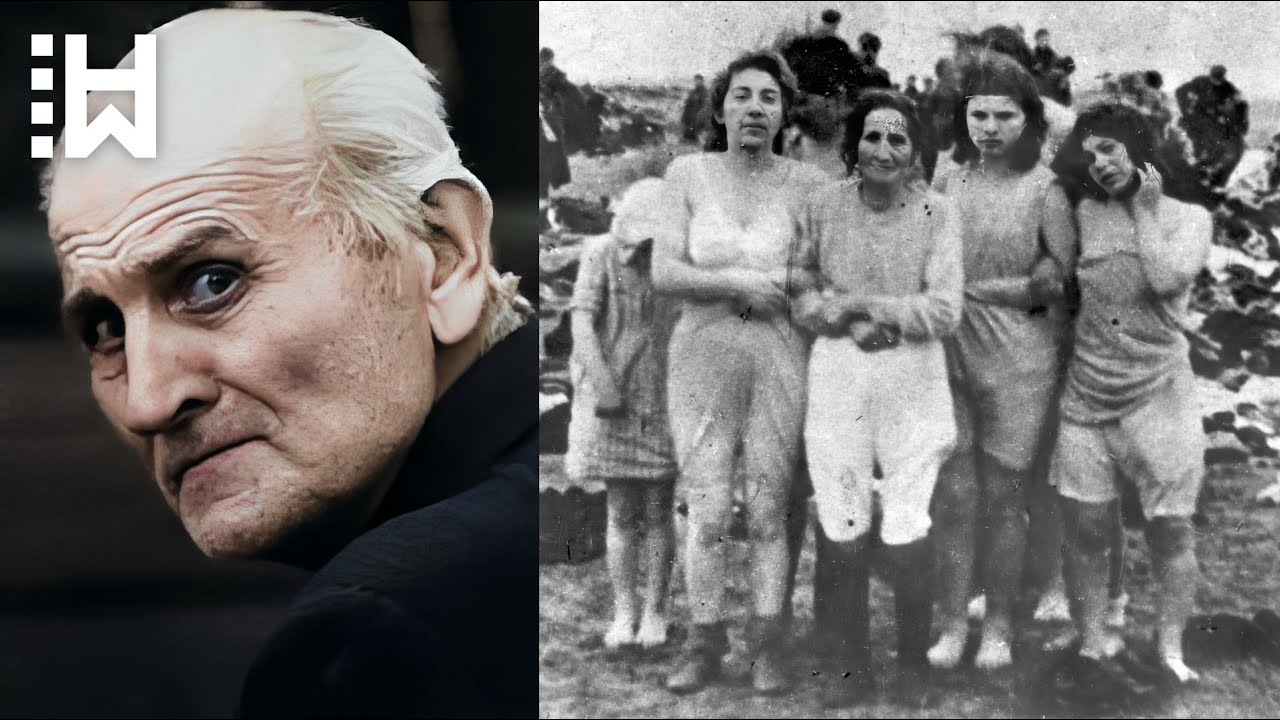
Shortly after his capture, Johann-Georg Richert was held accountable for his role in the atrocities committed in Belarus and became one of the 18 defendants in the Minsk Trial, a war crimes trial conducted by a Soviet military tribunal in Minsk, the capital of Soviet Belarus. The trial began in December 1945, and Richert was interrogated on 15 December 1945 from nine o’clock at night until two in the morning. Even though Richert cooperated with investigators and admitted his guilt, he repeatedly claimed he had been merely following orders from his superiors.
In his last words, he said: “Horrible and mind-shattering facts were demonstrated in the court. Now I am a determined opponent of the Nazi regime and ready to do my share in the antifascist struggle. ” Afterwards, he pleaded for leniency.
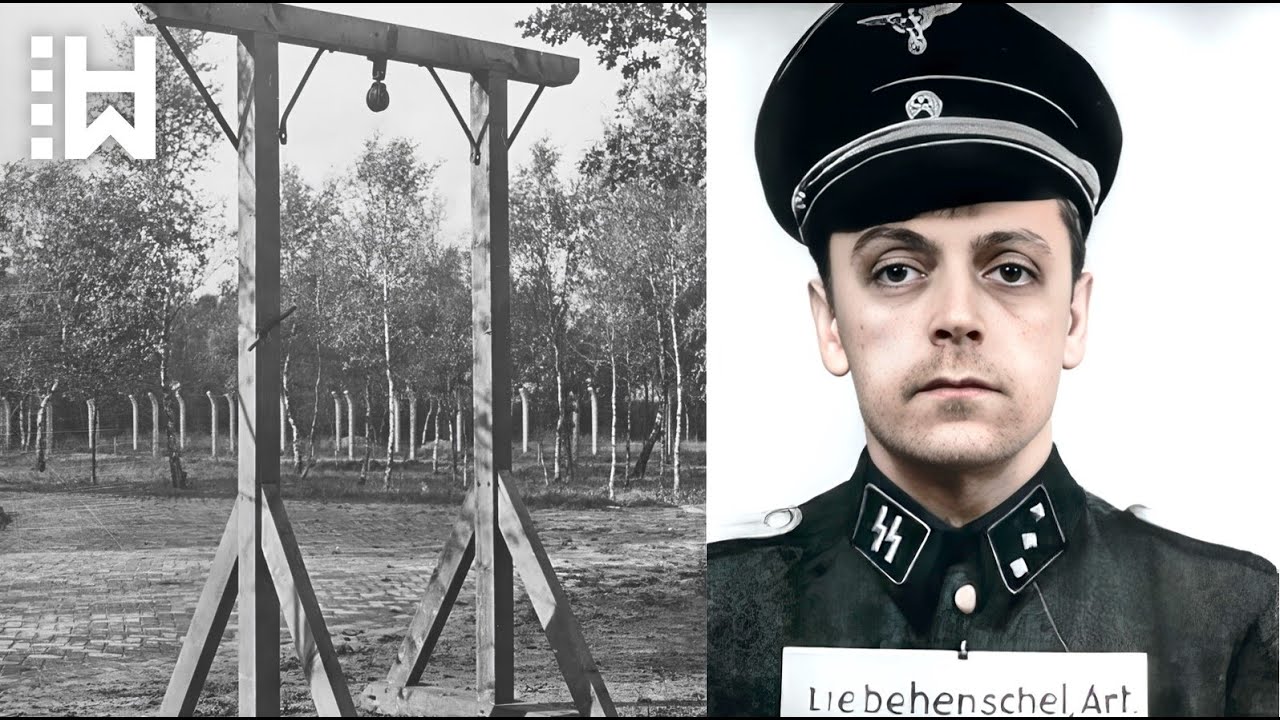
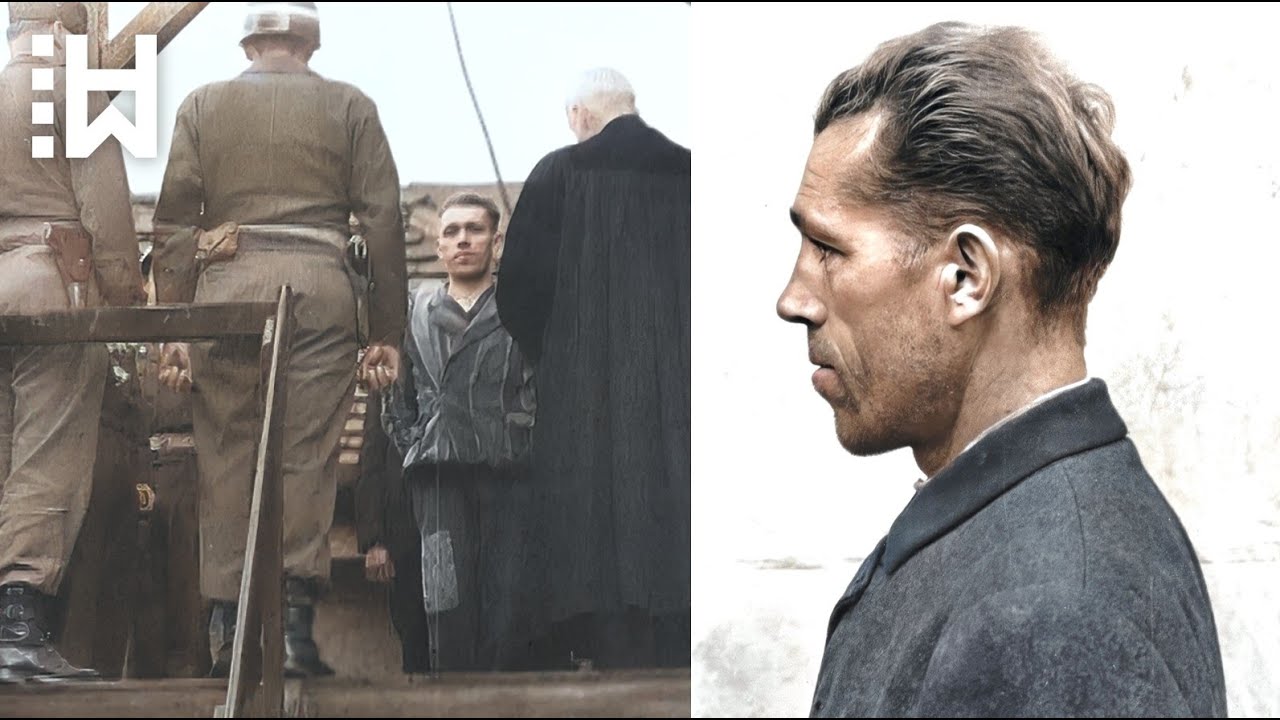
Despite this, on 29 January 1946, Johann Richert, the main defendant at the Minsk trial, was found guilty on all charges and, along with 13 other men, was sentenced to death by hanging. When the judge read the death sentences, all the spectators in the courtroom clapped their hands. Their execution was held publicly on the following day and became a theater of horror.
The 14 Nazi criminals were hanged in front of over 100,000 civilian spectators who came to witness the execution, which took part in the horse racing venue of Minsk, today’s Victory Square. Soviet officials brought the 14 men to the gallows on 14 trucks and tied the nooses on as thousands of men, women, and children watched. On the platform of each of the 14 trucks stood one convict.
While some of the Nazi criminals who were to be hanged stood proudly, the others wet their trousers. When the trucks moved forward, the condemned Nazis were left to hang swaying in the air. When Richert was executed on 30 January 1946, he was 55 years old.
There were no tears shed for Johann-Georg Richert. Thanks for watching the World History Channel. Be sure to like and subscribe and click the bell notification icon so you don't miss our next episodes.
We thank you, and we'll see you next time on the channel.