To understand how we measure rhythm in music First you have to talk about the beat. The beat is the basic unit that is used to measure time To find the beat of a piece the idea is to try to tap with the hand or the foot to the rhythm of the music. The beat is in fact measured just like the heartbeat, in beats per minute.
If the score says that the beat is 60 Then there are 60 beats per minute. And if for example, it says 120, it would be double. The speed at which the song beats we call it Tempo.
And as we have already seen, Tempo can be indicated with a number, but also with some of this long list of Italian words, some will sound familiar: Allegro, Andante, Adagio, Lento, instead of telling you a specific number, they give you a general idea of how fast you should play the piece. Allegro means happy, that is, fast Andante means walking, that is, not so fast. Adagio means calm And lento means slow.
. . I think you get the point.
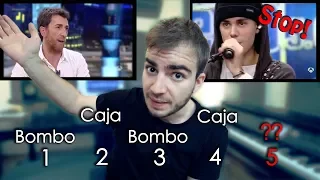
Whilst playing music, you structure these beats into patterns. Say, for example, that you accentuate the first of every 2. Or the first of every 3.
Or the first of every 4. Each of these entities formed by the accented pulse and those that come later, we call it a bar. And in turn, each beat can be subdivided in two or in three.
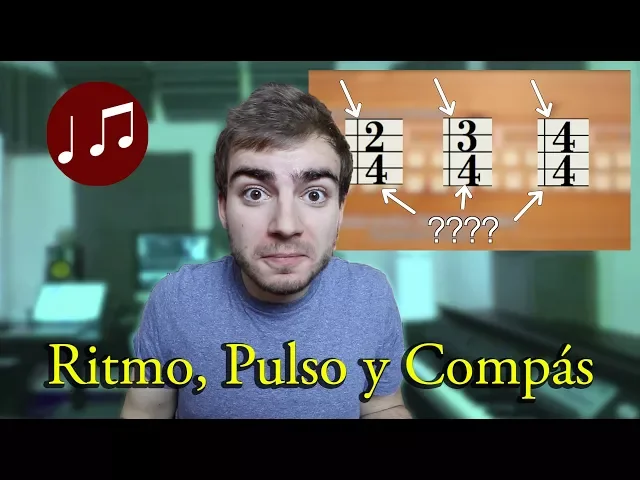
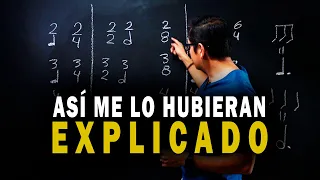
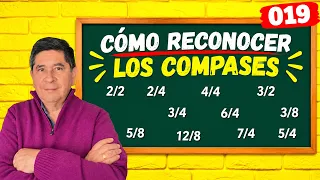
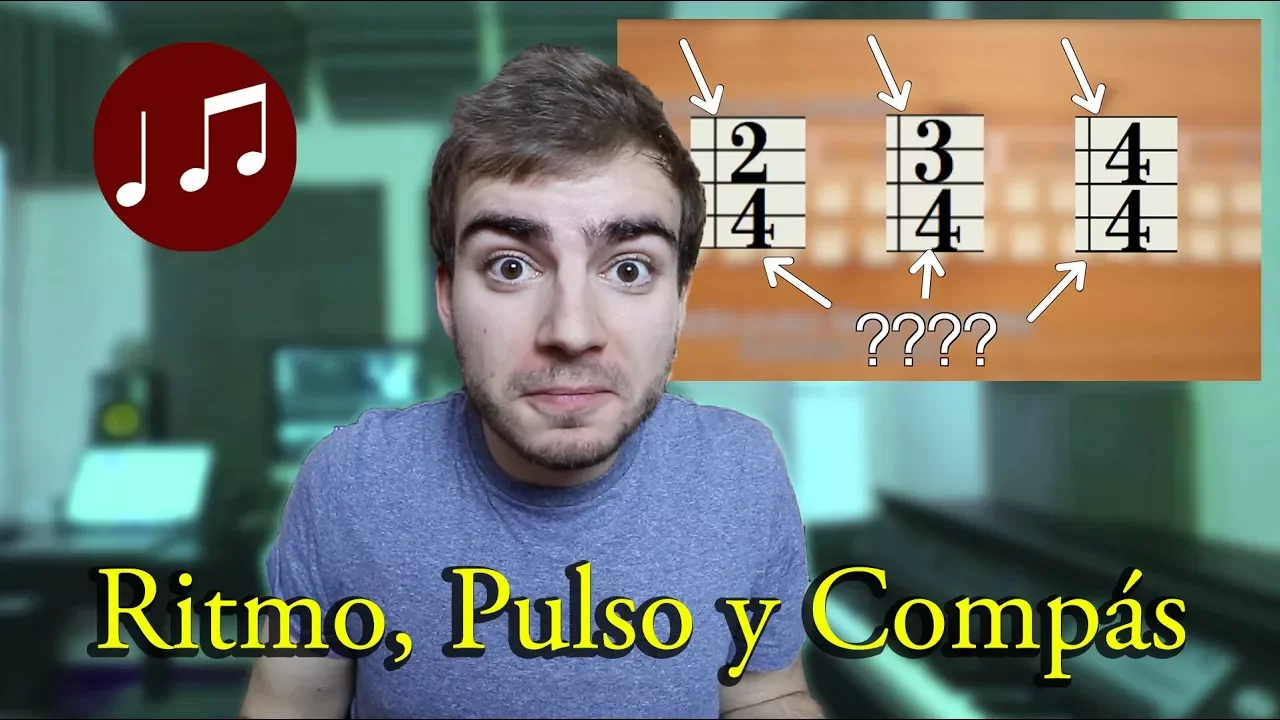
This already gives us many different possible rhythms. Say subdivision is binary, then if it has two beats per bar, it is called 2/4. If you have three, 3/4.
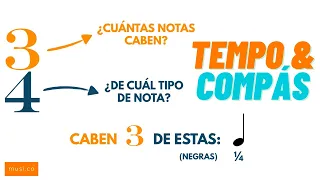
And if you have four, 4/4. And we write it like it's a fraction. Maybe you are asking: Ok, the number above indicates how many beats per measure, but, what about the one below?
Well, it tells us that a beat is going to be represented by a quarter note. In a measure of 2/4 there are two quarter notes, in one of 3/4 fit three quarter notes, And in one of 4/4, four quarter notes. And what is a quarter note a quarter of?
The answer is: a whole note. which is the longest note we currently use. Although longer things were used in the past some a little demonic.
As one might expect, a whole note is two half notes, which equals four quarter notes, which is eight eighth notes, and so on That is, the whole note is worth one, the half note one half, the quarter note one quarter and the eighth note one eighth And so we can see 4/4 as writing 4 * 1/4, that is, 4 quater notes per measure. And 2/4 and 3/4 they also mean two and three quarter notes per measure. And yes, there are also 3/8, three eighth notes per measure, and 2/2, two half notes per measure There are other types of measures but they are less common and we'll discuss them in another video.
When the subdivision is ternary the notation becomes a little weirder. If it has two beats it is 6/8 if you have three is 9/8 and if you have four it is 12/8. The explanation is simple.
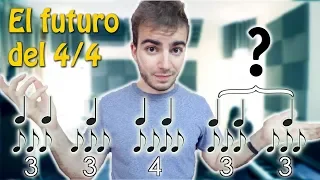
For example, on 6/8 there are two beats with three subdivisions each, if each subdivision is an eighth note, there are six eighth notes per measure. And the same for 9/8 and 12/8. There are many more time signatures, but those will be left for another video on the subject For now I want to leave you with this, what is the method to find the time signature of a song?
Well, what you have to do first is find the beat, Then see when you feel the beat accentuate And then see how each beat is subdivided, but that might prove harder if you are just starting. Let's finish with an example. Listen to this and try to feel the beat.
This was the beat And now to see if you notice when is the beat accentuated. This was the answer With this information it could be a 3/4 or a 9/8, depending on how the subdivision is, which is something more complicated and what we are not going to get into. And here we've come, If you want to know more about more complex time signatures, leave it in the comments.
This is the fifth video of music theory that I do, you can check the rest in the description. And I'll be back next week. See you soon!