Hi, everyone. Welcome to today's video. So recently, I did a poll on my YouTube member community, and I asked the community that should I be making riskier topics like Futures and Options, microcap investing, smallcap midcap investing, IPOs, and overwhelming majority voted yes.
76% people said yes. Approximately 21,000 votes as I'm seeing as of now. So this.
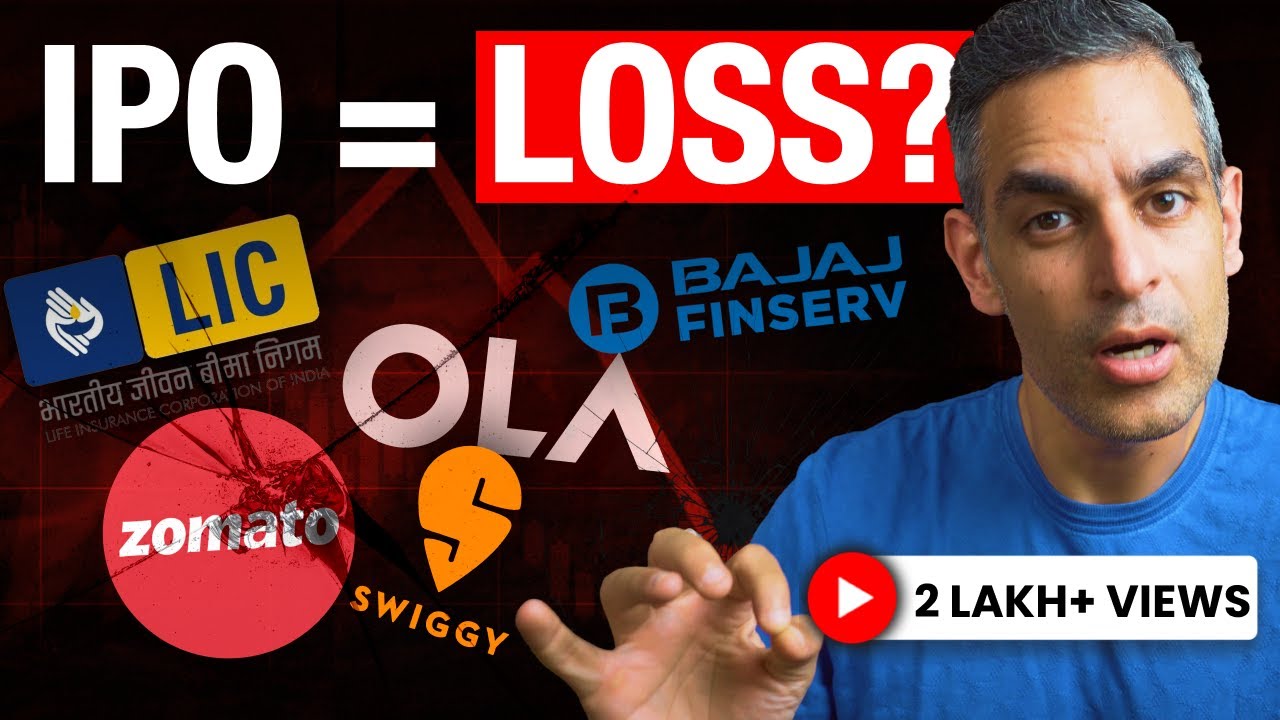
So in that spirit, today, I will make a video on IPO investing. I will take you through an entire risk mitigation framework on how to analyze an IPO properly. This is not a stock recommendation video.
. Half of the people who watch the videos are just here for stock recommendation. Please don't behave in that way.
Please learn how to. Do I invest in microcaps? Yes, I do.
I Why IPOs do I buy? Seldomely, if the IPO is good, I will buy. Why does it make sense to invest in IPO or invest in microcaps or do F&O, all this stuff?
So today we are going to cover the story of IPOs, and subsequently, I will continue this series of analyzing slightly higher risk instruments. For example, I will show you, Mr. Becter IPO.
Here, the company got listed at Rs. 594, and it made an high of Rs. 1,327 within a couple of years.
So what are the returns. Similarly, a lot of IPOs are there that have given multi-bigger return, so to say. So IPO investing is rewarding.
If you have to double, triple, so it helps. And therefore a lot of investors get attracted towards it. Similarly, small cap, midi-cap,.
The point is that this space is very thrilling, but it also means that it comes with risk. On this video, I'm going to help you understand the entire IPO game, that how do you go about researching an IPO, what are the tools, techniques that you can use, what are some salient points that you should keep in mind. So in that context, I'm making a video, please understand the framework.
That is the most important point. I will take a few names here and there, but please do not consider it as a stock buying recommendation or something. That's a simple, humble request.
And let's get started. So first key thing is that you will naturally think,. Here you can take a look at what are the upcoming IPOs in India this week.
So you'll see that Nova Agritech IPO is there, RK Swami is there, Brisk Technovision is there, etc. So you'll find all the IPOs. Similarly, which IPOs are active?
So this is a worldwide list. You can see this as well. In the year 2024, which are the IPOs that are about to come?
So you will see this as well. Then you can start your preparation. And there are seven, eight points that you need to remember.
So let me take you through all those seven, eight points in very simple, easy to understand language. Please like, like button, so that these type of fundamental videos reach out to more That is the goal of making these type of videos, that retail investors become more educated. .
On that spirit, let us pick an IPO from here that we can possibly go and analyze. Let's say, now these IPOs are You can go and read more about it. You can see all this data.
Now, the issue is whenever an IPO is about to be launched, before that, much before that. They do something called DRHP filings with the SEBI, and all that stuff. And you can find this entire set, entire detailed information.
So for example, if you are analyzing NoVA Agritech, you can type out DRHP NoVA Agritech. And then you will see this SEBI website. You can go and check.
Now, you can go and read this 443 pages worth of report. Now, 90% people watching this video would not have the time to go and read this five-hour report, so to say. What time it will take?
. Now, what are some salient points that you should find out? Or at least these seven, eight points, you have clarity.
What are those seven, eight points? And this is not a stock recommendation video. This is an analysis study.
The first critical point that I will keep in mind is the market situation in which the IPO is getting launched and how hyped the IPO is. When a good market is going on, a lot of companies take out their IPO. So Tata Tech, let me just quickly show you.
So IPO open, here in November, 1,300 Rs. . Now it is trading at 1,100 Rs.
. So it was overhyped in an overvalued market, so to say. So the IPO timing and the hype around it becomes extremely important.
So typically what I've seen is that see, when the IPO is launched in a good market, I'm not saying euphoric market, I'm just saying good market. That is a good time to invest. In fact, up euphoria may be invest.
So from a market But the important point is that the hype around that company should not be very high. Because if the hype is very high, then technically it is seen that the IPO will go down, not going to go up. Like in the TataTech case, we are.
So let me share one or two more case studies. So as a geo financial services, you have to look. It was in August.
It went a little bit higher. And then it started falling quite aggressively. So now this sideways movement is going to be going on.
But geo finance was launched in a decent market. That's good news. But it was an overhyped IPO.
So you have to be careful. So for example, if we are doing, again, coming back to the company that we were analyzing, just like Novatech Limited that we were analyzing. Just figure out, just google Novatech IPO and see how much hype is going on in this.
That will give you a sense whether that particular IPO is overhyped or not. This is literally step one. Now, the second key point that you need to study about the IPO that you're considering investing in is how does the company make money?
. If the business model right now is not very clear to you, but you feel that the business model will become clearer and you have a sense that how the company is going to make money, then you could possibly consider investing in that IPO. If you have no clue what the company is doing, how strong the industry is, then please do not touch such a company.
Let me give you a couple of examples. For example, if we consider geo financials. Now, geo financials, at the time of IPO launch, it was not clear what business the company is going to do in the future.
. But So everyone understands, Ambani ji , so he will be able to build some company around it. Amc's launch, insurance business launch, etc.
So basic idea was there. So of course, when you are investing in a slightly newer company, not having business clarity about its current business is okay, but you should have a sense where the business is going or where the money is going to come from the company. So this is an important point.
But on the flip side, if you take a look at something like. It has been crushed into half or more than half in roughly two, two and a half years. Why?
Because this was a loss-making company. You can see that the net losses were there. So now you will say, in 2022, 2023, we are getting the data because it is a listed company.
But at the time of analyzing the company at almost at the time. All those things are happening. So you should be careful.
If you're not sure how the company is going to make money, and if the profit margins in that industry is not high or the company does not have any MOAT, so. So again, you have to go on DRHP and they will give you some financial data around it. And we have to assume that the financial data presented is correct.
So if you take a look at Nova Agritech, you can see that the revenues from operations have been 160 crores in 2021. . It's the company profitable?
Yes. Is the ROCE high? Yes.
So it's the idea that the company is profitable. So that's part one. Part two is that you have to understand what the company does in order to make money.
So this may have highlights. So Axis Bank, for example, did a coverage of this particular company, and they have consolidated the points. So by reading and understanding more about the business, what the business is, you will get an idea of how the company is making money.
For example, you can see that this company has been in operation since 2007. So try to get more data that how the financial performance of the company is. Google market, you will get an idea.
Then what type of products does it sell? So it sells soil health management, crop, nutrition, bio-stimulant, bio-pesticide, pest management product, new technologies, crop protection. .
Then you should Google further, what type of new technologies? For example, I took a look, I studied the company more, and they are into drone making. And drone making, if you look at agricultural products, they are able to monitor the crop.
So by aggregating and using more technology, they are able to streamline operations. So India will be in India as well. They will consolidate all this and they might start using drones and better technology in order to manage monitor crops.
And then this data you will get, which products are in. So you have a clear idea that this is an agri-sector and they are doing end-to-end management. So you have a clear understanding that this company is into crop management and they are using some technology also.
Now, the next part for you, our next homework for you is to figure out what is the moat of the company. Now, moat means competitive winning advantage. For example, if I ask you, moat of Zomato.
What is the moat of Zomato? Well, it's the brand. It has a very, very strong brand.
Now, if I ask you that what is the mode of Apple products? Well, the mode, again, is brand because they are able to price the product really, really high. So that company is mode.
Zomato, you can say creative advertisement is also a mode. So this is the way that you can see some winning advantage in any company. So now identifying the mode of an IPO is really tough.
You need to study, but you need to have a vision, you need to have a thesis. For example, this company, if you study, I tried to do that. And I thought, for example, this is a crop management end-to-end company.
It is a small cap player. And it's more this financial management as of now. Because one of the biggest reasons why small cap is unable to turn into mid-cap or large cap is that they are unable to survive in the market for the next five years.
So you can see major problem. So you can see that the last year, ROC or return on capital employed is 27%. Now, this was fairly high.
There will be fluctuation of ROC when it comes to small companies. But typically, a good company's ROC is more than 12%. The reason why 12% is that because the cost of capital in India is roughly 12%.
If some company has consistently maintained above 12%, then again, not a stock recommendation. I am just simply picking this as an example of a small-cap company so that I can make a point. This is the third key thing that you should have a very clear idea about the moat of the company.
Now, moat of the company here also seems to be that they are into tech, they are launching better products, as a drone,. There will be a lot of cross-collaboration or cross-selling. .
There is a lot of cross-selling opportunity when it comes to this company. Now, the fourth point is at what price you are getting that IPO. Now, this is a very, very important aspect of IPO because many of the IPOs in the past have been launched at crazy valuation.
And if you are buying something at crazy prices, you're never going to make money in it. So how can you check? Number one, you can check the PE ratio of the company, and you can check the PE ratio of that For example, if the company's PE is 25 and the company's PE is, let's say, 10, then the company is likely to be undervalued as long as it is depicting growth.
That is one assessment of this situation. So that is what I have googled and this is what I've been able to find, that the PE ratio of Zomato at the time of IPO launch, you'll be able to find that the PE ratio of the company is 12. 5, industry PE is 25.
64. And agricultural, this is a sensible data. .
For example, many times, there are a lot of foreign companies that underwrite the Indian IPO, and then they just blow it out of proportion thats the the important assessment. Can you 100% validate that this is the right price of the IPO? You cannot.
There is a degree of risk that you are taking, and. That is the correct set of expectations to have. The next point that you need to decipher is that are there any apparent red flags?
Now, red flags, that means you can see that there is not a problem, that promoters are bad or some funny game is happening, that they are bringing this IPO just so that existing investors can find an exit. So for that, you have to understand the concept and. Offer for sale versus fresh security issue or fresh issue.
Now, offer for sale means that the existing set of stakeholders in the company, from the moment it is going from private to public,, that a privately listed company is now becoming public. So that process is called as an IPO process. .
Now, if they are selling their own stick, then that process is called as offer for sale. That existing shareholders are selling their stick. Fresh issue means that more equity is being added to the entire company.
You can read the technical definition. Now, it is very important to go and read why the company is issuing the IPO. Is it for offer for sale or is it for fresh issue?
And What are they going to do with the money? . You can go and read it.
You can go and read that 450-page document that I was speaking about. And you would have to pick this information and make a sense. Additionally, other red flags would be offer for sale, but the big stakeholders, they are exiting, and no other big stakeholders are buying.
So I'm going to show you how many stocks are buying. These are anchored investors. How many stocks are buying?
. You can see that almost 2. 25 is QIB plus HNI and retail is 1.
22. So it's like 66% and 33%. So it's not an ultra-ratio.
70, 80% is being bought by small players and only big players are buying 30% of whatever the new equity is coming. Next point that you need to understand is the concept of tailwind. So tailwind means, for example, IPO, IR.
So now that company has been recently listed. Now, are there any supporting factors that will push the stock price or push the growth of the company fast? Because once it gets public trust, then it's got PE expansion.
So you should look at tailwind factor. For example, budget. And usually, it's agriculture sector,.
It might happen that these type of companies might do well. Now that is a news-based play. On top of this, there can be additional tailwinds.
For example, genuinely, growth in the agricultural sector in India. Credit disbursement in agricultural sector is high. So you have to identify this factors given the core business of the company.
So whichever IPO you're looking to analyze, look at these type of tailwinds. Then comes the next point, which you have to look at the quality of management. There is no way that you can figure out or you and I can figure out that whether the existing management is good or bad.
You can just do an assessment. I would rather do what I will simply do is that I will look at the name of managing director, partners, just go and Google their past work. For example, Mr Vaidyanathan.
Who runs IDFC First Bank. He was able to grow IDFC First Bank really, really fast. Why?
One of the core reasons was that he actually was an architect in terms of building the ICI-CI bank also. So he had relevant experience in that particular industry, and he used that experience to grow the bank that he's currently now leading. So if you get this leadership in an IPO, then probably your chances of success in that IPO is fairly high.
So similarly, you can do analysis. Again, you can DRHP, entire IPO investing or investing in this particular IPO or investing in some other IPO, it really comes down to your investment style and investment thesis. Just because I'm speaking about it or some other person is speaking about some stock does not mean that you go and buy that stock.
Again, this entire framework, I hope that you will note it down, that what are the steps involved? You will take every IPO that you are looking to invest in, take that through that lens and then make your decision of buying or not buying that. This is a framework explanation.
This is a framework that I use. Now, if you feel, you know what? This framework is good enough for me.
I can go and change it a little bit and apply it to my investing style. Definitely go and do that. I would encourage you to do that.
You should understand different contrarian viewpoints about a particular topic and then reach your own conclusion. That is extremely important. That is called as doing, fundamental style of investing.
I teach this on my YouTube member community also. In case you guys are interested, I will write a post on microcap investing tomorrow. I will explain you more details about what microcap investing is, give you fundamental knowledge around it so that that is the entire goal of me teaching.
I hope that you enjoyed this video. If you did, do press the like button and I will see you soon.