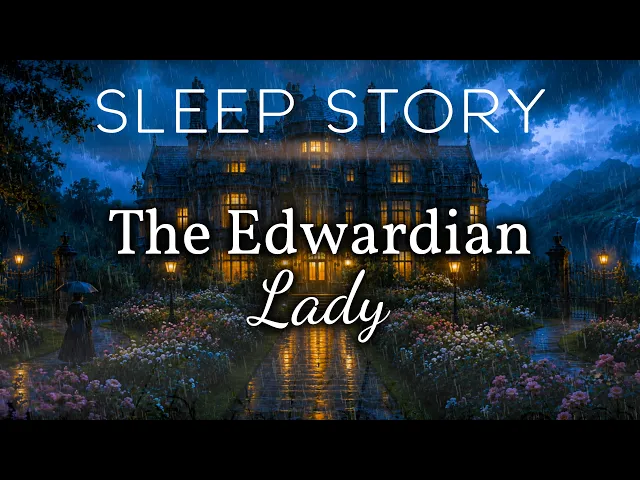
Hello my friend. Welcome to your sleep story. My name is Steven Dalton.
I'm an Irish storyteller and it's my great privilege to be the voice that you listen to as you go to sleep tonight. Tonight we will visit a grand old country house. Think down to Nabi for example and in that time period as well and we will follow a day and night in the life of the lady of the house.
This is a story of a simple day in a simpler time and an opportunity for you to completely switch off and indulge yourself in the enjoyment of having a little walk back in time. But first, let's do the relaxation session, which will take a few minutes before tonight's sleep story. I'm going to count down from 10 to 1.
And as I do, allow yourself to let go more and more. 10. Feel the support of the bed beneath you or the floor or whatever you lie upon tonight.
And beneath what you lie upon, feel a deeper support. The support of the earth, our home, our constant support. And as you become aware of that support, see if you can sink into this moment a little more now.
Just let go. A little more now. Nine.
You are safe. Allow my voice to be an anchor of safety tonight. To be a friend, to be a gentle guide.
A guide that only ever brings you to safe places, to warm and cozy places, to places that enable and support your sleep. Trust that my voice is a friend tonight. Eight.
Feel into your body now. Notice where you might still be holding tonight. Notice where you may have pain or tingling or tension.
Notice anything. Maybe you feel something in your feet or in your lower legs or your thighs or your belly, your chest, shoulders. your neck, your back, arms, hands.
Or maybe you're like me and you hold tension in your face. Just see if you can soften a little now. This is a time for kindness to yourself and to your body.
Seven. The day is done. Whatever has been has been, whatever will be will be.
But right now, all you have is this moment. Your thoughts can't change what has gone before. Your thoughts can't change what will come tomorrow.
Your brain needs rest now. So as thoughts come and go now, don't fight them. Don't chase them away.
See them for what they are thoughts. Then just watch them go like leaves floating away on a moonlit river or clouds passing through a starlit sky. Six.
This is your moment. This is your time. You have earned this moment of kindness to yourself.
You deserve to have peace in your life. We all do. So as you become aware of that fact, as you come to the understanding that we all deserve peace, see if you can settle into this moment a little more now, letting your body know that it's really time for rest.
Five. Peace lives within you. It is a constant friend waiting to be found.
waiting to be felt. Where does it live within you? Maybe it's in your heart.
Maybe it's in your head. It's up to you to find it. But I promise you, it's there.
Four. Perhaps allow a little gratitude now. Gratitude for the simple things.
for your body, for the shelter you have tonight, for the ones you love and who love you. For the beauty and wonder of this world, of this planet that you can find when you look for it. Three, begin to engage with your imagination now.
begin to see a beautiful old country house. There are fires lit inside. It is summer and green and lush outside, but it is raining, so it is warm and cozy inside.
Two. Checking in with your body one more time now. Finding the places you are holding still and allowing yourself to give in [clears throat] to allow the tension to ease away.
Your body has worked hard for you today. It's time to give it rest and one completely letting go. Now, as I tell you tonight's sleep story, it was raining when she woke, and by the sound of it, it had been raining for hours in the great house of Renfield Park, in the high green country of the Yorkshire Dales.
The storm had come up in the small hours and settled in to stay. The rain came down steady and heavy and straight. [music] Hour upon hour of it.
Drmming on the lead of the roofs and the slates of the stables, running in ropes from every gutter and downpipe. And beneath it, the wind moved through the full summer trees of the park with a long wet rushing sound. Turning the leaves so that their pale unders sides showed silver.
All the great cedars and oaks and limes streaming and tossing in the gray light. Somewhere far off down the dale, there had been thunder before dawn, a low rumor of it carried on the wind, and there would be more before the day was done. And yet for all that it was high summer, the longest green heart of the year, the borders all out and the hay not yet in.
There was a chill in the house that morning. the strange cold that a summer storm brings down with it. And so the fire had been lit.
A housemaid named Annie had seen to that. Coming along the corridor on slippered feet in the gray first light, kneeling at the wide marble hearth in the countess's bedroom, and building [music] the small fire that on such a morning the day asked for. By the time Lady Cordelia woke, it had caught and was crackling quietly in the great, and the room held that loveliest and most contrary of comforts, a lit fire in summer, a small warm art of orange light and snapping wood.
While beyond the streaming windows, the whole green world ran with rain. Lady Cordelia, Countess of Renfield, lay in the great bed beneath a light summer coverlet and listened to it all. She had been half awake somewhere in that warm unhurried country between sleep and the day where the world comes to you gently and asks nothing in return.
She heard the fire crackle and settle. She heard the rain on the windows, steady and deep and endless. She heard the wind go through the trees outside in long soft surges, rising and falling.
And far away, another slow roll of thunder somewhere over the moore. She kept her eyes closed a little longer because there was no hurry anywhere in the whole of Renfield on such a morning. And the bed was warm.
And the rain was the kind of rain that asks a person to stay exactly where they are. Then came the soft rattle of china at the door and she opened her eyes. It was Hannah, her maid, with the early tea.
She came in with the tray held in the practiced balance of long habit, set it on the table by the bed, and went first to the windows, as she did every morning, and drew back the heavy curtains pair by pair, the rings hissing along the poles. and let in not the bright June morning that the calendar promised, but a low gray green storm light and the sight of the rain coming down and down over the dripping park. Still at it, my lady, said Hannah, by way of good morning.
Come down in the night and never stopped. Mr Fletcher says he's not seen the like in a summer these 20 years, and he's gone about with a face on him to match on account of his hay. In June, said Lady Cordelia, sitting up among the pillars.
How wild. Look at the green of it all, Hannah. And it was worth looking at.
Beyond the streaming glass, the park lay drenched and brilliant. greener for the rain than any dry day could have made it. The lawns silver gray withstanding water.
The great trees dark and glossy and tossing. The roses on the terrace below, beaten down and hung with bright drops. The whole soaked summer world glowing under the iron gray sky with a deep wet green light that seemed to come up out of the ground itself.
It's green enough, Anna allowed, pouring the tea, the steam rising up, gold in the fire light. It would be greener still if it would only stop long enough to let a body look at it without a Macintosh. your team, my lady.
Lady Cordelia took the cup in both hands and held it a moment for the warmth before she drank. And it was a curious and delightful thing to sit up warm in bed with a hot cup and a lit fire across the room while a cold rain came down on a summer garden. The fire crackled.
The rain ran on the glass. The room was full of gray light and green light and fire light all at once. What is the day, Hannah?
She asked. A stop at home one my lady and no mistake said Hannah nobody's going anywhere far in this lordship means to go down to look at the river after breakfast for it'll be coming up with all this water and to call it the farm but that's the wetest errand I ever heard love and his own affair. Then you've Mr.
Pem broke at 10 for the week's ordering and the rooms to think of for when Lady Victoria comes and after that my lady Anna considered nothing at all but the fire and a book unless you're brave enough for the garden. I might be brave enough for the glass houses, said Lady Cordelia. Mr Fletcher has been wanting me to see the new vines this age, and there's no better day for it than one too wet for anything else.
One can hardly get wetter than the rain makes one, and the houses will be warm. They will that my lady said Hannah warm as the tropics and twice as green. So her lady ship rose and the day began in the slow and settled way that such a morning was conducted in such a house.
and which she had long ago stopped hurrying. There being a pleasure in the doing of it that haste would only have spoiled. The bath came first, deep and hot in the great mahogany framed tub along the corridor.
The cold tiled room gone thick and warm with steam and the high window blind and white with it. while the rain that she could not see came down steadily on the other side of the glass. There is a particular luxury in lying in a hot bath in a cloud of warm steam while a cold rain falls a few feet away on the far side of a good stone wall.
kept entirely at bay, unable to reach you. And on a morning when the rain was a summer rain that had no business being so cold, the luxury of it was finer still. Then the dressing performed to its settled order.
the fine lawn under things and the corset that Hannah laced up the back with quick shore fingers and the petticoats and the silk stockings. And then, because of the chill the storm had brought, not the thin muslins of high summer, but a soft dress of dove gray wool, light but warm, with a full of cream lace at the throat. a long rope of pearls, two rings, and then Hannah suttered down at the glass and dressed her hair, brushing out its long gray brown weight and putting it up in the full soft style of the day.
while the fire crackled at their backs and the rain streamed down the window before them. There, my lady, said Hannah at last, standing back. Very nice.
You say that every morning, Hannah, and it's true most mornings, said Hannah. So I see no reason to stop. Lady Cordelia went down to breakfast.
She went down the great staircase where the long windows on the half landing showed the whole green park streaming below in the gray light. every tree heavy and dark with rain and a black bird sheltering under the ballastrade of the terrace with the disgusted air of a creature whose summer had been personally interfered with the hole at the foot of the stairs. was warm.
A fire had been lit there too against the dump, small and bright in the great stone hearth. And the house held that particular smell of a country house on a wet morning, which is the smell of wood smoke and beeswax polish and coffee and rain. And underneath it all, drifting in at the garden door whenever it opened the heavy green sweetness of a soaked summer garden.
Wet leaves, wet earth, crushed grass. roses. Breakfast was laid in the breakfast room, which on a fine June morning would have been full of sun and was this morning full instead of the soft gray green underwater light of the storm.
The rain running down the tall windows and the wet garden glowing beyond them. On the long sideboard stood the row of silver chafing dishes over their small blue flames, each under its domed cover, keeping hot a [music] breakfast far too large for two. Eggs and bacon and butter and toast.
A comb of honey from the home farm's bees. The year's first dish of raspberries from the garden picked in the rain. There was coffee and there was tea, both kept hot on their stands.
The Earl was already at the table behind the broad pages of his newspaper, a day old and faintly damp as it always was, brought up the line, and carried the last wet miles from the village, which he read each morning regardless. as though the news of the world were a thing that could keep. And which on a morning like this had the additional use of something to hold while the rain made going out unthinkable a little longer.
He was a big comfortable man going gently gray and he lowered the paper when she came in and smiled at her over it. Filthy morning, he said with enormous contentment, in the tone of a man to whom a filthy morning that keeps everyone at home is no bad thing at all. So Hannah tells me and Mr Fletcher by way of Hannah, said Lady Cordelia, going to the sideboard to lift a cover and see what there was, though it is a beautiful sort of filthy.
Have you looked at the garden? It has never been so green. I shall look at it from under an umbrella in half an hour, said the Earl, and like it rather less, and he returned to his paper.
at his feet. In the warm place by the fire they held to be theirs, by ancient and unbreakable right, lay the two spananiels, Pip and Jess, curled nose to tail, opening one eye each to confirm that her lady ship carried nothing edible. and closing them again.
She took her place and helped herself to a little of the raspberries and a piece of toast and poured her coffee. And for a long while, neither of them said anything at all. In the comfortable silence of two people who had breakfasted together across a great many thousand mornings and had said at that hour everything that ever needed saying, which was very little.
The fire crackled. The rain streamed down the windows. The earl turned a page.
Pip sighed in his sleep. The long whistling sigh of a dog who can hear the rain and is glad to be where he is. After breakfast, the earl was put into oil skins and a sisterister and a great deal of waterproof by his man.
And presently she saw him from the morning room window, setting out across the wet park with a stick and a dog and the resigned cheerfulness of a countryman who means to go and look at a rising river in the rain because that is the sort of thing that must be looked [music] dwindling slowly down the green slope toward the trees and the water meadows until the rain took him. She watched until he was gone and then sat down to the post. The morning room was hers.
The warmest and most comfortable room in the house. small and low and lined with books, with deep chairs and a writing table at the window and a fire that Annie kept fed all day. Her letters waited in a neat stack.
There were not many. The weather had held up the post, and what had come was the ordinary, pleasant business of a country summer. There was a letter from the vicer about the church fate.
Now thrown into grave doubt by the heavens. There was a letter from a cousin in the south describing with the particular complacency of the southern English, the great heat and dryness there and the trouble they were having keeping the lawns from scorching, which Lady Cordelia read out to the streaming window with some enjoyment. There was a catalog of bulbs for autumn planting which she set aside to enjoy properly later as one saves the best thing on the plate.
And there was a bill from the dress maker and a note about the flower rotor and a card concerning a garden party in August that now seemed with the rain hammering on the glass a wild and improbable notion belonging to some other and sunnier world. She answered them all in her clear, unhurried hand at the writing table by the window, dipping her pen, the fire glowing at her back, and the green rain light filling the room. And the only sounds, the small scratch of the nib, the tick of the courage clock on the chimney piece, the crackling of the fire, and beyond it, all the steady drumming of the rain and the thunder in the distance.
It was, she thought, very nearly the most agreeable way of passing a morning yet devised. A warm room, a good fire, a little stack of letters that asked nothing hard of her. And beyond the window, a storm so thorough that nothing whatever could be expected of anybody.
At half 10, while the long case clock in the hall was still working through its account of the matter, Mr. Pembroke came in. Mr.
Pembroke was the housekeeper and had been for 20 years. and ran the great house. The way a good captain runs a ship with a vast quiet competence and a bunch of keys at her waist that announced her down any corridor with a soft compable jingle.
She came in with her household book under her arm, and the two of them settled to the morning's ordering by the fire, as they did every day, with the easy short hand of two women who had done it together for 20 years, and could very nearly have done it without speaking at all. There were the menus to be settled. Mr.
Galloway the cook had sent up her suggestions and they were good ones fitted to the chill of the day and to what the gardens and the home farm could give a soup to begin and salmon from the river before the storm colored the butter and a fricase of the early chickens and a saddle of lamb and the first of the garden's raspberries again with cream and a savory to finish. Lady Cordelia approved them all. As she approved very nearly everything Mr.
Galloway proposed the cook having been at Renfield longer even than the housekeeper and being in the matter of dinner almost never wrong. Then there were the guest rooms, which were the real business of the morning, for Lady Victoria was to come up with her husband and the baby for the long summer visit, and the house must be made ready. Mr.
Pembbrook had her views, and Lady Cordelia shared most of them. The blue room for Lady Victoria and the major as always, and the old day nursery opened up and aired for the baby, and fires lit in both, a day or two ahead, despite the season, to drive out any dump the storm had driven in. for the walls take a chill in weather like this my lady said Mr.
Pimbroke summer or no and I'll not have that blessed child laid down in a room with a damp wall in it or I Mr. Pembroke said Lady Cordelia. Good fires in both.
A clear day ahead. The blue room sucks if you give it less, even in June. It does, my lady, agreed Mr.
Pembbrook, who held strong and settled views on the temperaments of the various bedrooms, and was always glad to find them shared. And she gathered her book and her keys and went away with the soft jingle of them fading down the corridor and down the stairs into the great warm working depths of the house. And after that, as Hannah had promised, there was for a while nothing at all.
and Lady Cordelia spent the last of the morning before the fire with the bulb catalog she had saved, planning in her head a great drift of daffodils for an April that seemed with the cold rain streaming down the glass as distant and as fabulous as the moon. Before lunchon, she went down to the kitchens, partly on the morning's small business, and partly because she liked to. The kitchen being the warmest and most cheerful place in the whole house on a cold, wet day.
She went down the stone stairs and along the flagged passage where the cold damp air smelled of wet stone and opened the green baze door. And as the kitchen breathed out at her in a wave of heat and light and good smells. And she stepped into it gratefully as one steps into a warm bath.
The kitchen at Renfield was an enormous high room. And on a cold, storm, dark morning, it was the beating heart of the house. The great black range roared along one wall.
Every door and dumper of it tended like an altar. and the heat came off it in waves. Things were happening at every surface.
A girl rubbing butter into flour at the long scrubbed table. Another shelling the first of the garden peas into a bowl. A great stockp muttering at the back of the range and a kettle as ever eternally on the boil.
The high windows showed nothing but the gray rain falling, and the wet that ran down their pains was the only cold thing the room would acknowledge. Mr. Galloway ruled it all from the middle of the floor.
a broad redarmed woman with flower to the elbow who at the sight of her lady ship wiped her hands on her apron and pressed upon her as a plain matter of medical necessity given the unnatural cold of the day a cup of hot tea and a slice of seed cake still warm from the oven. Lady Cordelia took them standing by the great warm range and praised the morning's baking which sat cooling in golden ranks on the dresser. and heard Mr.
Galloway's views on the storm and on the salmon having been got before the river colored which was a mercy and on the strawberries which would be spoiled and beaten into the mud if it kept on which was a sin and a shame. And all the while the range roared and the stockpot steamed and a kitchen cat the color of marmalade slept on the warm flags before the fire as though rain were a rumor from a distant land. It did not propose to believe.
Lunchon was a quiet meal, for the Earl had sent word up from the farm by a soaked and cheerful boy, that the river was a grand sight, and well up the meadows, that he and the baleiff had a great deal to say to one another about drains, and that he would take his bread and cheese in the farm kitchen and not be back till tea. So, Lady Cordelia lunched alone in the small dining room very comfortably off a little of Mr. Galloway's soup and some cold chicken and a dish of the raspberries with a book propped against the water jug and the rain at the window.
And there are few things in this world pleasanter than a good lunch eaten alone with a book. while a storm sees to it that nothing else can possibly be required of one. It was as the cloth was being drawn that Sumes the butler came in grave and unhurried as ever carrying the small silver salver and on the salver lay a telegram.
A telegram was an event. They came rarely to Renfield, and the sight of the buff envelope could give the heart a small ungoverned jump before the mind had read a word. But SS, who had been a butler 40 years, and knew precisely what a telegram did to a household, and held it part of his office to manage the moment, had a way of carrying an ordinary one that drew the alarm clean out of it.
And he carried this one. So from Lady Victoria, my lady, he said, which was as good as to say before ever she opened it, that nothing in the world was wrong. Lady Cordelia opened it and read it and her whole face warmed.
It was from her daughter and it said in the clipped economical way of telegrams [music] that they would come up a week earlier than planned if it was no trouble. the major having got his leave brought forward and that the baby, the first grandchild, six months old and by every account that reached Renfield, a child of quite unequaled genius and beauty, had two teeth now, and was enormously pleased with himself about it. Arriving the 14th if convenient, it ended.
Longing to see you both and the garden, tell Fletcher Victoria. Lady Cordelia read it twice and then a third time and laughed aloud at the last of it. alone in the room.
And then she folded it small and put it into the pocket of her gray dress where it stayed for the rest of the day and where her fingers found it more than once in the quiet hours that followed. The way one returns to a warm thought. They come up on the 14ths.
She said the whole party a week early. Will you tell Mr. Pembbroke and I think Lady Victoria would never forgive me if I did not tell Mr Fletcher myself.
She has left me my instructions. With pleasure, my lady, said S, and beneath his gravity there moved the very faint warmth of a man who had known Lady Victoria since she was a baby in that same nursery, and was as glad as anyone under the roof at the thought of the house full again. and a new child in it for this summer.
It will be very pleasant, my lady, to have them the longer. " And he went away to carry the word downstairs, where it would travel through the household by tea time, and gladden every soul in it. The afternoon then gave Lady Cordelia her excuse and she took it.
She would go and see the glass houses and tell Mr Fletcher his news herself. She put on her stoutest shoes and an old waterproof cloak with a hood and went out by the garden door into the rain. And it was after the long warm indoor morning, a wild and splendid thing to be out in it.
The air thick and cool and washed and full of the green smell of the soaked garden. The rain drumming on her hood. The gravel of the path running like a stream.
The borders to either side bowed down and dripping and brilliantly, impossibly green. Every leaf and petal hung with water, the whole garden roaring softly with rain. You went quickly down the path and through the door in the high old wall into the kitchen garden and across it to the long range of glass houses that ran along the warm south wall and opened the door of the great binary and stepped inside out of the storm into another country all together.
It was warm. That was the first thing. always the soft enveloping warmth of the glass house kept up by the hot water pipes that ran along the floor.
So that to come in out of the cold rain was to be wrapped at once in a still green heat. And it was loud, but loud in the opposite way to outside, for the rain that had been drumming on her hood now drumed far harder and grander overhead on the glass roof. A great seething roar of it three feet above her head.
while she stood perfectly dry and warm beneath. And it was green, green beyond any green the wild garden could show. The long vines drained up under the roof and along the wires, their broad leaves translucent in the gray light and the young bunches of grapes hanging down already formed and swelling, small and hard and green and perfect in their dozens and their hundreds all down the warm length of the house.
Mr Fletcher was there, as he nearly always was on a wet day, pottering happily among his vines. A rain that ruined a gardener's hay and buttered his borders drove him gratefully indoors to the houses where no weather could touch him and everything was exactly as he had ordered it. He was a small weathered man of 60 odd with the gentlest of natures and a passion for growing things that 40 years had only deepened.
and the sight of her lady ship come to see his houses on her own account on such a day made his whole week he showed her everything. He walked her the length of the vinery and explained the new vines and the old and which bunches he would thin and which he would let stand and lifted a leaf here and there to show her the grapes coming. He took her through into the peach house where the trees stood fanned against the warm back wall and the peaches hung among the leaves, flushed and fattening.
One or two nearly ripe enough to make a man weep. He showed her the long house where the tomatoes grew and their heavy sweet smelling rose and the cucumbers hung like green commas and the cool fernery where the maiden hair stood in banks of impossible delicate green and the air was wet and still and the little stove house warmest of all where he kept a few orchids and a great old sweets that had been there longer than he had. And everywhere they went, the rain roared overhead on the glass.
And the houses stayed warm and green and still beneath it. And the good wet earthy growing smell of the whole place wrapped around her like a blanket. She told him in the fernery about Lady Victoria's telegram and the 14th and the message left for him by name and Mr Fletcher, much moved, said only that he would have the best of the peaches kept back for her then, and the first ripe melon, and that little one should have a bunch of his sweetest grapes the moment he was old enough for them.
teeth were no teeth which was from Mr Fletcher something very like a sonnet. She came back to the house through the rain, glowing and damp and happy with the green warmth of the houses still about her and gave up her wet cloak and her wet shoes at the garden door and went to the morning room where Honey had built the fire up bright against the afternoon's chill. And there she settled into her chair by the hearth with her needle work, a length of cushion cover she had been at without urgency since about Easter.
And the long quiet heart of the afternoon closed gently round her. For a time there was only the fire and the small pull of the thread and the green rainlight at [music] the window and the rain itself and the thunder. Pip and Jess, having seen the earl and found the day not at all to their liking, had come in to lie before the morning room fire.
and they slept. The boneless complete sleep of dogs who have decided the day's real work is done. Twitching now and then after some dreamed and rabbitshaped quarry.
The courage clock ticked. The fire settled with a soft collapse and a brief rush of sparks. And outside as the afternoon wore on, the storm gathered itself for its grand moment.
The thunder that had grumbled all day far off down the dale came up at last over Renfield itself and broke directly above the house in long slow magnificent peels. wheels rolling from one end of the sky to the other so that the windows trembled gently in their frames. And Jess lifted her head and thought about being alarmed.
And then observing that no one else was, put it down again. He'll be sat in the farm kitchen this minute, said Hannah, coming in to make up the fire and meaning the earl dry as a bone with a cup of tea the size of a booket telling Mr. Hardesty about drains.
He has a gift, said Lady Cordelia, for finding kitchens. Tea came at 5 in the drawing room by the fire. It came on the trolley wheeled in by a footman and presided over by her lady ship herself.
The full proper ceremony of a countryhouse tea on a wild wet evening which is one of the great small civilizations of the world. There was the silver pot and the hot water jug and the little strainer. There were thin cups of old china.
There was bread and butter cut almost to transparency and hot buttered toast under a domed silver cover and a dish of the garden's raspberries and a dark rich fruit cake and a sponge as light as the cake was dense and a plate of Mr. Galloway's little jam tarts. The earl had come in by now, dump and ruddy and vast with the day wet adventuring, full of the river and the drains and the farm kitchen.
And he sat by the fire in his old dry tweeds, with a great cup of tea and a piece of toast, and a spananiel leaning warm against each leg, and was as content as a man can reasonably expect to be. She told him the news of the telegram and he was as pleased as she had known he would be and said the 14th several times in a tone of deep approval and observed that if this rain ever stopped the fishing would be wonderful for the major. here and that they must get the old swing down from the loft and rehung in the big lime when the child was bigger.
And the two of them sat by the fire while the rain ran down the windows and planned in the loose happy way of grandparents. A summer a week longer and fuller than they had thought it was to be. When the tea things were taken away, the evening drew on toward dinner, and the long northern summer light began at last to go.
And a little after 7, the dressing gong sounded, far off and deep, rolling up through the house from the hall below, and Lady Cordelia went up to dress. A room was warm and lamplit, the curtains not yet drawn against the gray green dusk, and the rain still streaming down the glass, and Annie had made the fire up so that it threw its moving light across the ceiling. Hannah was waiting.
And there now took place in reverse and in finer stuff the long ritual of the morning the gray wool laid aside. And in its place, layer by careful layer, the dress of the evening, a gown of dark silk, the deep green of a U that took the fire light in its folds when she moved the pearls again and pearl drops at the ears. and her grandmother's little diamond crescent set in her hair.
Hannah took the day's arrangement and dressed her hair a fresh, brushing and pinning in long, slow, unhurried strokes while the fire burned and the rain whispered on the window. and neither of them felt the need to fill the quiet. "There, my lady," said Hana at the last, settling the cresant.
"Very fine. " You would say so, Hannah, if I came down to dinner in my gardening apron with a tel in my hand. A wood m lady, said Hannah comfortably.
for you to carry it off, which was the sort of thing the two of them said to one another and meant nothing by except a long affection, that did not care to announce itself any more plainly. She and the Earl dined alone at the small round table in the family dining room rather than the long cold reach of the great one with a fire in the hearth and candles down the middle lit early tonight. For the storm had stolen the evening's light a good two hours before its time and ss and one foot men to wait.
It was not a large dinner but it was a very good one and they ate it slowly and without hurry. The candle light gleaming on the silver and the glass and the dark polished wood. The fire warm at their side.
And the rain beyond the curtains blinging itself in long soft rushes at the house. After dinner, they sat together in the drawing room before the largest fire in the house while the rain went on outside. The Earl took up a book over which he very soon and very gently fell asleep in his chair in the the immorial way of a countryman after a long wet day in the open and a good dinner.
the book sliding by degrees down his waist coat and the spananiels sighing at his feet. Lady Cordelia did not wake him. She sat across the hearth with her own book unread in her lap, content to watch the fire and to listen to the rain at the windows and the last of the wind moving in the wet trees outside.
and to feel through the silk of her pocket now and then the small folded shape of the telegram and to think without hurry of the house a week from now full and loud and lit and a small person with two teeth somewhere in the middle of it being carried from room to room. The clock on the chimney piece struck the half hours softly, one upon another, and the fire burned down from a blaze to a deep red glow. And at length the Earl woke himself with a small snort, declared that he had merely been resting his eyes, and allowed that it was perhaps getting late.
And so it was. And they went up together, the two of them, by the light of the candles set ready on the whole table. up the great staircase where the long windows on the half landing showed nothing now but the wet summer dark and the rain streaming down the glass.
And they parted on the landing with the small unremarkable good nights of people who have said them to one another for 30 years. And below them, as they climbed, the great house was putting itself to bed. They could hear it faintly the way one hears a familiar machinery.
S going his last round. The soft heavy sound of the bolts going home in the doors. One after another, front and garden and offices, the snap of the last lamps put out.
The muffled good nights of the servants on the bike stairs going up to their own rooms under the eaves. A final clutter from the far kitchen as the last of the day was set straight for the night. Room by room and floor by floor.
The lights went out and the doors were shut and the fires were banked. And the great house drew itself [music] in settled and grew quiet. Anna waited in the lamp lit room the last time to undo what the evening had asked.
The green silk was laid aside. The pearls returned to their case. The little cresant lifted out of her hair, and Lady Cordelia sat at last before the glass in her night gown with a soft wrap about her shoulders.
And Hannah took down her hair and brushed it out. The long slow strokes of the poor brush. A great many of them unhurried while the fire crackled low in the great and the rain whispered on the dark window.
and the thunder rang out in the distance. Then Hannah set the brush down and bade her good night and took her candle and went. and her lady ship was alone with the fire and the rain.
She said her prayers at the side of the bed briefly as was her habit for the Earl and for the household sleeping under the same roof and for Victoria and the major and the baby coming up to them on the 14th. And for the men out in such weather, minding stock on the high wet farms, and a word of thanks while she was about it, for Mr Fletcher's grapes and the green warmth of his houses on a cold day. Then she climbed up into the great bed and drew the light covers up and lay on her side and watched the fire.
She lay in her warm bed, high in the great house with a telegram folded small in the pocket of a gray dress across the chair and a house full of summer. a week nearer than it had been that morning. And the countess of Renfield slept.