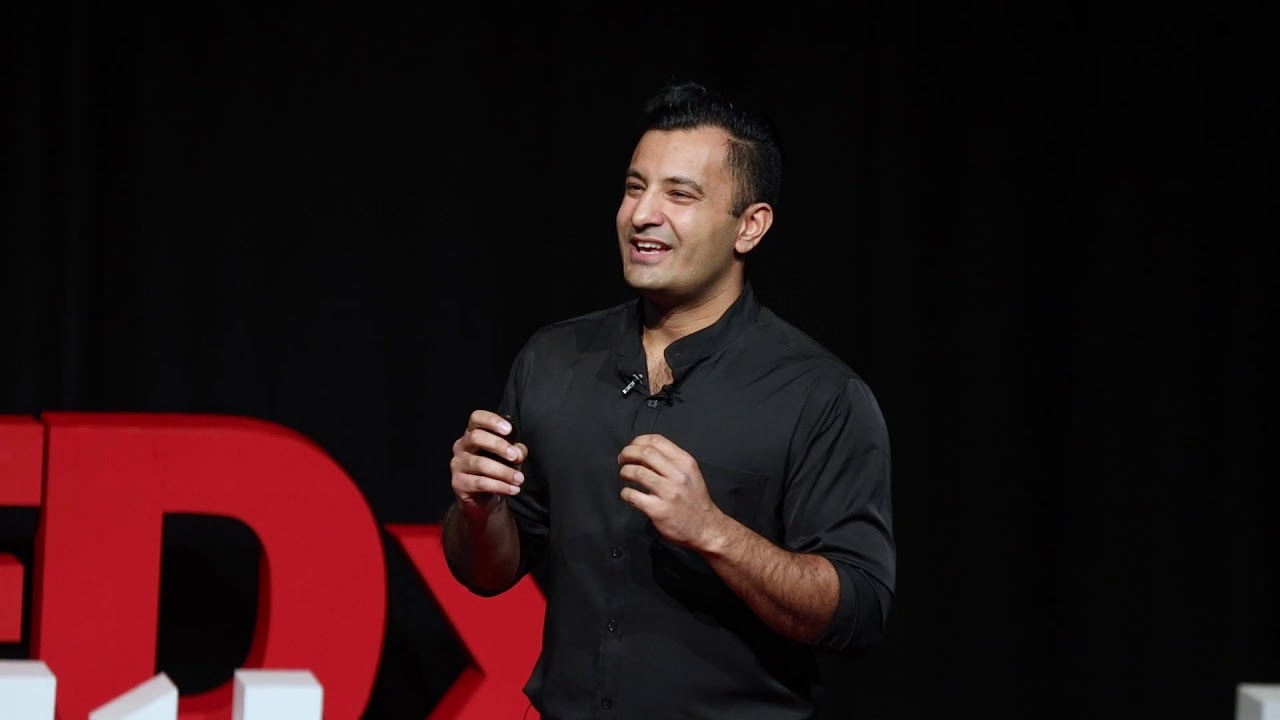
[Music] hi and welcome to talks at google i'm onyan today we're excited to welcome neuroscientist matt johnson and marketer prince gooman co-founders of pop neuro and authors of the book blindsight the mostly hidden ways marketing reshapes our brains please help me extend a warm welcome to matt and prince Hello welcome how are you good good to be here good to have you well doing well thanks so much for having us absolutely so blindside tell me how did you two come to write a book together it's a great question anya uh i'll i'll start here by
just giving the audience a little bit more uh information about our background instead of where we come from so as you said in the intro Neuroscientist marketer i'm the neuroscientist in this equation uh neuroscience is my academic background so i did my phd in cognitive neuroscience i am really endlessly fascinated by people we are these very strange uh conflicted paradoxical uh uh entities uh which which try and navigate the world and try to attain what we think we want to attain and uh we're just Very strange quirky things and through the tools of neuroscience we're
able to probe some of these reasons some of the mechanisms which allow for this complexity to express itself uh so typically in a psychology curriculum you'll have uh developmental psychology you'll have cognitive psychology you have perceptual psychology you have social psychology et cetera you typically don't have Consumer psychology and so i think really by looking at how we operate in the consumer world why we buy what we buy uh what we'd like to sort of show off in terms of conspicuous consumption i think what we buy and how we buy actually reveals deep truths about
the human condition uh so this is really my perspective on marketing really my perspective on Consumerism uh most of my mid-20s these were spent in uh labs and libraries i was uh really kind of dedicated to trying to dive into all the minutia all the literature about uh really why we do the things we do from a purely neuroscientific standpoint uh and and that was really my orientation so i'm i'm purely driven by sort of a curiosity about really why we do what we do And then as it pertains to consumer world i think the
uh consumer world is such a fascinating uh window into the human condition because it's one that isn't often explored and for me it was quite the opposite and for me uh labs and libraries were not how i spent my 10 years it was rather reading reading abstracts uh over the weekend Um quite a lot of neuroscience and psychology abstracts and like i'm sure some of the audience here i worked at startups for quite a bit before i graduated onto a public trading company and my secret to to being a a marketer was using these psych
abstracts and applying them and testing them immediately right so i did that for over a decade and When uh when when matt and i met when we both were teaching at a business school in san francisco it was like peanut butter meeting jelly right he'd spent his life at researching i'd spent my life reading research of people like his and then applying and testing it and that sort of grew into the idea of man we should we should probably write a book About this and that that's how blindside came to be i love it and
love the merging i think being on a you know a marketing background especially with the name you know of the book blind site it's it's intriguing and really thinking about the alternative of kind of the neuro uh background why did you guys choose that name of blind site how did that kind of um spark your interest Yeah so it's actually inspired from a a very real neuropsychological condition uh this is real despite the fact that it's been noticed in a relatively small amount of individuals and uh it's the rarity that kind of presents as a
sort of an interesting psychological oddity so these are individuals who uh in terms of their own internal subjective experience It's a world of darkness they think they're blind if you ask them in any given moment what are you looking at right now it's almost insulting to them they're like i'm a blind person blind people don't don't see anything it's just you know it's just darkness inside uh and yet with blindside individuals if you are to toss a ball in their general direction they'll just snag it Out of mid-air and you ask them well how did
you do that and they're as behooved as the researchers are they'll you know sort of confabulate a little bit you know i had a sort of a general you know intuition about it i kind of felt it was there you know you look like the kind of researcher who would throw a ball at me and so i just i knew it was coming those sort of you know have reasons that That sort of confabulated a little bit but they really don't know why and so when you look at blindside from the perspective of the brain
we're able to sort of see uh what's going on here so it turns out there's many different pathways in the brain which composes our visual system we have a conscious visual pathway and this is what allows us to see and operate in the world and gives rise to our our visual worlds internally But we also have unconscious visual pathways as well and so blindside is a condition where there is a bifurcation and there is a a divide between conscious and unconscious pathway whereby the conscious pathway is uh damaged through some sort of brain damage only
preserving this unconscious pathway and it's it's a really fascinating condition It is one that uh neuroscientists philosophers debates still endlessly uh and one which i think we saw as as really the perfect metaphor for how we operate in the super world prince you want to say a few more words about that yeah i love that you said many different pathways to vision because blind sight as a condition also illustrates Our lives as consumers right just like there are many different pathways to vision there are many different pathways to engage or to connect and uh consumers
are largely blind to them and marketers believe it or not there is certainly a 95th percentile of marketers that have a bunch of neuroscientists and social psychologists and they're on their squad um outside of them they are largely uh Blind to it as well and uh if you would allow me to make one little analogy i think this also sends the sends the message home it's the analogy of an airplane um full confession i'm learning to fly an airplane and it's and it's not easy but think of the airplane as a brain right it's got
its it's a machinery it's it's physical and it has all of its rules and when you're flying In the air the air is the consumer world you're flying through all of these uh branding messages uh ads everything and at the end of the day both consumers and marketers have to ask themselves are you a pilot or a passenger right a passenger is autonomous she's sitting down and rolling around on the airplane wherever it takes her whereas a pilot she has the ability to Control it and the pilot in this analogy definitely is a consumer but
also marketer right absolutely um and you know while reading the book one thing that becomes clear and i think we aren't necessarily taught in school is we don't really know why we do what we do um can you elaborate a little bit more on what you mean by that and kind of how you guys discuss it in The book yes this is a very old idea in psychology actually dating back to freud and we can talk about freud from stanford psychology neuroscience a lot of his ideas are completely crazy out of this world it's it's
you know we should treat freud with with caution for sure uh but we owe freud a great debt in recognizing the impact of the unconscious that the Uh really as we operate in the world and as we go about making quote-unquote decisions that appear to us uh to be rational and engage in behaviors which appear uh to be you know well-informed uh these decisions are actually the uh the culmination of many factors outside of our control and we'd never really fully understand this full cascade of influences that are going on Completely outside of our awareness
and i think one of my favorite examples of this comes from an experiment which was done uh back at uh university of colorado so what they did is they had people come into the uh the lab come into the experiment and from the perspective of the participants they're just there to rate faces so they're told you know come to the lab we're just interested in Uh you know what your perspective is on attractive faces so they go into the lab they make these judgments on faces you know this one's attractive this one's not attractive this
one not so much this one's a little bit fugly uh you know they kind of go back and forth on attractiveness it's not you know completely out of the ordinary when it comes to Looking at you know psychological research a lot of times you know you're interested in these sorts of things from the standpoint of research so then the final question comes and it's not about attractiveness it's about why did you rate the faces as you did and all the participants are going what do you mean i just you know this one's attractive this one's
not attractive and then they're like well how did the Person in the hallway influence you and they're like what what person in the hallway so it turns out that the experiment had started 10 minutes prior so as the participants are coming in there's actually a confederate of the experiment someone who's working with the researchers who intentionally bumps into the participant as they're walking to the lab and the uh the confederate Spills a bunch of papers and the participant picks them up and they they give them a cup of coffee it's either a hot cup of
coffee or it is a cold cup of coffee and then they pick up the papers this this little interaction is over with and they come to rate the faces and it turns out that there was two groups of participants one that got the cold cup of coffee one that got the hot cup Of coffee the p the group that got the cold cup of coffee they actually rated the faces to be less attractive the group that got the hot cup of coffee they actually rated the faces as being much more attractive so there's an interesting
conversation to be had about you know the influence of of you know temperature as a metaphor in terms of attractiveness etc But i think the more interesting finding here from our perspective is nobody had any idea that this temperature of the coffee that they interacted with 10 minutes prior had any influence at all and this is how we navigate the world there's all sorts of factors and influences that can be in some cases deterministic of our response but we have no idea what these Are thanks matt i think everyone's going to show up to their
tinder date when calling when cold it ends with a hot cup of coffee now because of you uh it is it is it is really random i think you know thinking after the fact oh warm cup they were also rated for being friendlier uh more successful there were quite a few ratings but I think what what's fascinating about this is uh when we talk about neuromarketing one of the first questions we get is oh you mean like subliminal it's like this weird voodoo thing and i think to understand the implication of this coffee study where
something completely random can have this weird impact on your behavior that you're completely unaware of let's understand a little bit about subliminal And then what i really want to talk about is the limit so subliminal is not mind control what um you know the old school story is of this guy named james vickery um he had a movie theater and and and the rumor was that just before intermission back in those days they had intermissions he flashed by coca-cola right for really quickly and of course intermission happened and coca-cola Sales went through the roof turned
out he was more of a hypebeast and he was actually a neuromarketer it's not true um and and he confessed to it and it was if anything he he sold more soda from people coming in after hearing that story but subliminal doesn't really work in nudging behavior and what research is showing is what matt and i call mid-liminal dots and and truly neuroscientifically Subliminal messaging is too fast for you to be conscious of so in the visual domain it's 30 milliseconds right anything faster than 30 milliseconds you're not conscious of it and they've done tests
to see how much influence that actually has right what mid liminal is like what mid liminal is is hiding in plain sight right what the liminal is is when you're following Beyonce on on instagram and she's with jay-z in cuba and there's a small little corona bottle at the bottom right that you maybe didn't notice but for some reason you're craving a corona later on in the week right when matt and i wrote the book we wanted to include a red pen with the book to nudge people to a sub uh a mid limital prime
to go have a preference for red products We couldn't do that um but research after research has shown that this stuff that hides in plain sight actually has a more potent impact on behavior than subliminal voodoo absolutely um and so with that you know you're saying our brain takes notes of elements in our environment that we aren't conscious of um can you tell us a little bit more about how that works Yeah so this goes back really to uh this idea that we're constantly taking information about the world that we don't necessarily realize from the
standpoint of of the conscious entity uh so we're only aware of a very small fragment of the amount of information we're taking in both from the auditory domain visual domain etc this is coming into our Very very complex brains and it's changing the weights in our synaptic connections in ways we don't fully understand uh and this is really how we operate in the world generally and then we're looking at this from the standpoint of uh the consumer world we're constantly being bombarded by by stimuli which is not only not fully broaching our conscious awareness but
Also has uh hooks in it as well that's trying to sort of nudge our behavior in a certain direction so it's not just you know we're staring at a scene of of trees you don't see every single tree and all of its its glorious detail uh but the tree doesn't have necessarily a motivation there the trees just beat a tree uh when you're looking at you know billboards or banner ads or whatever the Case may be we're only processing you know a very small amount of these we're sort of scrolling through these things maybe we're
not sort of fully paying attention we're sort of glazing over them uh but the stimuli from the consumer world is unique in that it has a specific goal in mind and not only are we not aware of the full range of stimuli that are Impacting our brain and may impact behavior later on uh but we're also not aware of of how this is impacting our future behavior in line with the goals of some of these advertising tactics as well i think um i think perception on top of the mental modeling is really one of the
things that i wish more marketers and consumers know about right we take perception from reality and i Guess in a weird poetic way it is because that's what we have but it's but we're not really experiencing reality as much as we're experiencing our brain's mental model of it and and one of the examples matt and i use when we're coaching this stuff is we're in fact all blind in a very specific part of our visual field right 15 center to the left of each eye We are uh we are blind and we never see that
blind spot because our brain is actively practicing mental modeling and filling that in and we go into our lives not knowing that and actually i know if it's cool with you we'll include a link in there so people can actually do this exercise where you see where you're actually completely Blind with the card that you can print out and and matt and i love that because brands what are they if not mental models right your brain is a pattern-seeking modeling machine and brands are personified things that it's constantly uh picking up on right so really
for marketers brands are really that the play in Between that area between objectivity and subjectivity and and it's only getting more and more important and and i'm sure you can look around the last four years where brands are actually now struggling on how to create a more honest real persona with social issues political issues insert name here but that's because that is part of what the consumers now want And mental modeling brands are people it fills into that and that's the data point that consumers are now asking for yeah i think that's that's a really
important point worth underlying that from the standpoint of uh the human experience we don't experience reality objectively perhaps we can't experience reality objectively so we we what we ultimately experience Isn't reality we experience our brains mental model of reality so every time you take a bite of chocolate cake for example uh you're not actually eating the cake per se you're experiencing your brain's mental model of that cake and what we uh elucidate uh in more detail in the book is that uh these mental models are extremely fungible they're experimentally flexible Uh they're extremely malleable uh
they're not these sort of hard and fast faithful relays of reality uh they can be tweaked and they can be amended in all sorts of ways uh so if you look at the example the food uh so we look at that chocolate cake that chocolate cake uh is modeled by the visual input that's coming into it so it's a really really Really delicious chocolate cake studies have shown that you know the more delicious a food looks like the more delicious it takes like even if you fully control for all the the ingredients uh we talked
about a case in the book uh where people couldn't tell the difference between uh duck pate and straight up blended dog food uh when you control for the visual elements Of it so it's the same exact actual reality quote-unquote which is meeting your tongue the same exact uh gusatori response the same exact nutrients that are uh you know inciting your gussetory system and yet we experience it extremely differently because this mental modeling process is complex and it's influenced by things that uh were not always fully realized and and prince just said It best there is
this gap between objectivity and subjectivity and this gap is the marketer's playground all of these tools to tweak mental models are well within the purview of marketing so of course you know restaurant practitioners know this to a t they know this intuitively you've changed the lighting you change the way that the The waiters interact with you or the the the visual aesthetics of the plate or even the story they tell you about the food all of these things impinge on our mental models in ways that uh really create amazing experiences so uh really i think
that the take home message here is that we again we don't experience the world objective we experience our brains mental model and marketers have the ability to create Our mental models and by saying that marketers really have the ability to create our reality and that's that's a huge uh power and that that's a huge responsibility as well absolutely i love the duck pate example i thought that was crazy in the book um on your mat gives me matt gives me a lot of crap because i studied to be a psalm and he and and so
much research neuroscientists Love wine or researching wine and and there was one piece of research that said so to everyone in the audience taste is our dullest sense and if there's any somalia in the audience i've already offended you it's all good it's uh and there's multiple pieces of research where you have the exact same white wine and you put red food coloring that's tasteless and odorless And you have people taste both and write down their tasting notes right oh toasted oak cigar box whatever versus melons and what have you and up at the end
of the day it's this exact same wine and it isn't just tricking their reality they've been able to do this under fmri functional magnetic resonance imaging machines we actually look at the level of the brain And completely different parts of the brain without so it isn't a trick as much as your brain is experiencing it better or differently yep and i think that brings us to actually a really interesting part of the book around memory right so thinking about what we perceive and what we actually perceive right especially when it comes to memory and our
recall Would love for you to kind of just explain a little bit more about you know what's so special about memory and how does this influence it yeah absolutely so this is is the one uh mental faculty in the book that we spent two chapters on because memory is a trip memory is uh really really complicated uh and memory really when it comes to the human experience probably couldn't be any more Important uh so there are these very strange uh incidents of people who not only lose their memory but along with that lose their identity
so this is this very rare case of disassociative fuge uh the first noted case uh his name was ansel board actually the original inspiration for the jason bourne movie series uh people are likely familiar with that uh and it really goes to show just how Inextricably linked uh memory and identity is we wake up uh every single morning as a slightly different entity the cells in our our body the physical constituents of what makes us who we are are constantly changing constantly evolving technically we are a different person in terms of our physical constituents uh
every single morning when we wake up yet we don't feel like a different Person we feel like we're an enduring entity that is consistent through time and it's really memory which is the glue that holds us together and so despite this incredible importance of memory uh memory is something that is extremely fallible and it's also something that we when we reflect on memory intuitively we get extremely wrong Uh so we think that uh when we have an experience we have the record but not so we're just taking information we're just recording this and then when
it comes to conjuring up a memory we're just pressing the replay button but it turns out that neither of those things are true so we're having an experience as we talked about with perception we're not taking in sort of the full complexity of the scene Our conscious attention uh could not possibly take in everything around us we're constantly being bombarded by uh aspects of of our sensory experience that doesn't fully broach consciousness but nonetheless can be further laid down in memory uh and all of the experiences we had are not weighted equally in memory either
and then when it comes to replaying A memory it's not a sort of a faithful replaying objectively of how the experience was just like perception memory is also a mental model uh and it's here also we see a lot of the uh the interesting ways in which marketing can really come in and and utilize these interesting some would say fallibilities of memory in order to give rise to really interesting consumer experiences and real opportunities for brands Yeah i mean one of the things i mean we dedicated two chapters to memory we also dedicated two days
to me bugging matt to define memory for lay people who are not neuroscientists i'm like matt define memory it is not a single thing like nice what is it and ultimately we're very happy with what we came up with which was memory is our brain's attempt at Connecting us to the past right that is what memory is it is valuable it is it is like matt said you don't hit record and hit play again in fact next time you're able to go to a concert recording it via your smartphone actually reduces the memory encoding and
recall then versus watching it yourself ironically so but um this is one thing that i you know i'm proud of the marketing Community because i think a lot of the marketers have intuited how to create a memory and and we actually spoke to um uh the event manager for oprah who literally was behind that you get a car you get a car you get a car everybody gets a car um and and we spoke to so many brilliant people who have created intuitive how to create memories right um and and and i think if it's
worth pausing for a second and and Sort of giving a formula for all the marketers in the room and for all the consumers in the room as well is firstly attention to plant a memory to encode a memory as matt would say you need attention and we think we know attention that's a whole nother sidebar and if you want to go there we can but in order to get attention um you need to violate an expectation That is how attention is earned attention earned equals violated expectation and if you want to implant a memory you
have to have attention so violate an expectation and once it's violated add friction and if there's any ux people in the room they're already jumping up and down friction is not always bad okay when it comes to memory friction is Good but a little bit of friction goes a long way um there was a uh a bit of research uh about a particular font where they had two different groups read two different exact same story and two different fonts and one of those fonts was purposefully made tougher to read and then in memory tests after
the fact that People who read the hard to read font high fiction friction recalled significantly better and did much better in the memory tests right so um i'll give a give a super basic example here is is instead of having a billboard in your yamaha and you're selling pianos instead of having a billboard that says we make pianos you maybe paint the keys of a subway the keys the color of the piano Or if you want to go one step further make them musical when actually people go up and down the stairs it makes a
sound right that mental model of yamaha broke an expectation of what a billboard should be like and planted a memory that is easier to recall later matt if you want to talk about retrieval um we can get into that too yeah i mean we if if we had like three days we could fully unpack memory not Only from a neuroscience standpoint and but but also from the standpoint of uh you know how it manifests the consumer world but yeah suffice to say that uh there are different ways which uh marketers or any sort of experienced
designers can optimize the experience in a way where it's more likely to give rise to a memory so not all experiences are weighted as equally in memory as any others and Prince is highlighting a few examples here where you add a little bit of friction which really forces the person to think it forces them to pay attention and the more we're paying attention to something the more we're actually giving those memories those experiences the opportunity to be laid down into memory uh you can also look at other types of sort of memory boosters we talk
in the book about uh the use of Analogy uh for example which is a is a great way to make uh elements in our experience stick so if i were to ask uh the audience how would you describe uh the movie speed in a single sentence uh they might come up with you know a range of things but this is actually how speed was described when it was originally pitched back in the 90s it was die hard but on a bus And that is just like the perfect distillation of the movie speed and it's leveraging
analogy you know the movie die hard you know it's sort of the you know this is bruce willis this is you know action-packed this is the movie the action movie of the 90s maybe of all time someone argue and it's die hard but on a bus and yeah there's you know some nuances kendall reeves and center both et cetera But it's basically 900 bucks i mean that basically captures the whole movie and that's really the power of analogy not only does it uh really crystallize what you're trying to describe uh in a nice crisp way
but it also leverages this fact of our brain's memory system which is that it's fundamentally about connections uh you can't learn something which doesn't connect with something you Already have so another memory booster which again we sort of dive into a bit more detail in the book is using analogy to hammer home these connections great i think um one thing i do want to make sure we cover here and especially prince right with your marketing background in the book one concept most readers and myself included And definitely a lot of marketers weren't familiar with was
essentialism can you guys impact this for us a little bit especially to those who maybe haven't heard of it before absolutely so essentialism is uh sort of this unspoken layer that is in all of the objects that we interact with without us fully recognizing it so it sounds strange to say but ordinary objects have souls we see them as being greater than Their simple sort of physical nature so just like we sometimes think that you know people have souls or some sort of essence to a person that you know transcends the physical when the person
dies the soul lives on we sort of think the same way when it comes to objects so if you were to find yourself in uh possession of i don't know a george clooney sweater or travis scott sweater or some insert you know Celebrity uh thing here uh that would cease to be more uh it would it would cease to simply be a sweater it would be more than that even if you washed it uh it would still be george clooney's sweater it would still be travis scott's sweat it would still be something uh there's still
an essence there that again transcends the physical and there has been a bit of interesting Science on this this is uh paul bloom and bruce hood's work which has looked at why exactly things have essences and how can we give an object in essence and it really sort of comes down to the story about the object so there's an experiment which was done blicking on the exact year but it was sometime in the early 2000s called the ordinary objects experiment what they did is they took These objects could not be any more ordinary they took
all these these sort of like rubber duckies and paper clips and water bottles they bought these from ebay for their listing price of like two dollars three dollars and then what they did is they recruited a team of storytellers they recruited a team of fiction writers and authors to write stories about these objects so this little rubber ducky for example this was You know something that uh you know a two-year-old clutched you know every night as he as he went to sleep and his mom gave it to him and it was you know originally got
it from his uncle who fought in some you know some background story to uh to the object and then what they did is they relisted them on ebay and now with these stories attached These went for 200 300 500 sometimes saw a massive uh increase just by putting a story there uh so we do see this sort of hidden essence in the objects we interact with it's something that again we don't tend to sort of think about unless you know we find ourselves in possession of a george clooney sweater and then we sort of understand
the essence of it Um but it's something that is also well within the wheelhouse of what marketers are capable in terms of how they're able to uh inject that into their into their products yeah i mean think about etsy in an e-commerce world where amazon has eaten everyone's lunch and dunked all over them etsy has grown and it's because you're buying the essence of the artist you're buying the essence of their Product and their story and i love that paul bloom did that seminal research on there's a bunch of other research as well but it
just really speaks to the soul of something the brand the product uh i love the example this happened while we were writing the book where i'm sure some of the audience members would know about it maybe you do to anya it's the banksy story where it was at an auction big Graffiti not big normal size graffiti piece at an auction banksy have actually hit a shredder in there and as they're bidding on it and it's sold it just boom tricks on and it sheds it but in that moment the essence of that piece changed right
and and matt and i would argue there's a story there now and that story adds to the soul of that piece and you can see the objective valuation Of that piece went up immediately after it was shredded which is super ironic right um but you see this a lot with brands you see this with um i love under armour because they went from making underwear for high school football kids to being sponsoring steph curry right but they didn't jump straight to steph curry they went and Got misty copeland because ed they couldn't afford big-name athletes
but also misty copeland fit the uh the essence of an underdog misty copeland was rejected by the american ballet academy for um not having the right body type and should rather go to and suggest this is a 13 year old girl they're speaking to um Go you're better suited for dancing in vegas right this is the rejection letter that's actually public and she said the helipad she applied and she actually got in and she was the first mixed race ballet uh american ballet uh except which under armour found out about and doubled down on it
and that in effect added to under armour's essence as a brand For the underdog and and you know we see this happening quite often you see this happening with red wing one of the oldest still made in america shoe companies and they have an entire heritage line and it's all branded uh iron ranger and iron ranger and there's a story about the iron ranger that used to work in blah blah blah mines and did this this and this and this shoe represents that person right and then They have a lager shoe and it's all the
way they used to make it but they have this entire essence that's baked in and it might sound so subjective until you look at the research that shows what happens when people buy into the essence or the soul and use these products right so you might think oh someone who really loves red wings might feel more confident wearing them right um But they've actually done research where you give people three golf clubs no name a generic brand and nike and people it's exact same golf club but people hit further with the nike golf club and
that to me is the soul of a brand this subjective soft untouchable thing is actually having objective Uh impact on on behavior and i think essentialism and storytelling is a big part of that um this was this is a true story i was at a vineyard and there was a bottle served to me it was called shannon and i was like well what's the story here and it was the best story ever it's like oh the winemaker's youngest daughter shannon did not like cabs at all and his goal Was to make her the cab that
she would fall in love with and on her wedding uh he presented her with a case of shannon because he was that convinced that this is going to be the cap you're going to like right oh my god it tastes better already and it's not even on my table yet that's the power of essentialism and storytelling when it comes to the soul Of a product or a brand yeah and it really kind of takes takes this full circle right so we talked in the beginning about uh mental modeling right so we don't experience the world
objectively we experience our brain's mental model and so if we're trying to alter the the visual aesthetics of something that influences our mental model even if we're operating the agusatori Uh domain uh but one way which uh very clever marketers can uh deeply sculpt our mental model is through storytelling that that really fills in this mental model this the the essence of of an object what we come to believe about the story the hidden essence the the origin story of of the products uh we interact with the brands we Interact with that influences our mental
model and as prince's example really exemplifies this does have very objective consequences so if you believe that you're hitting with the nike golf club you'll actually hit farther and that's pure brand that is the power of the brand uh similar findings are found with ray-ban sunglasses so if you're led to believe you are Uh are putting on ray-ban sunglasses uh instead of a generic sunglass even if it's the same exact sunglasses you'll actually report that it blocks the sun better uh so it is it is pretty wild how this can go we can you know
look at this as you know we don't experience the world objectively there's a subjective you know subjectivity to to everything but this this gap which is the marketist playground this does have very very objective consequences in the Real world yeah i love the banksy example and that was i think a plot twist for sure um as well as some of the ones you provided prints um and for the audience we do have a couple more questions but in a couple minutes we'll actually be moving to audience questions so please add your questions in the youtube
live um and matt and prince will answer prince do want to ask you before we get To those audience questions right i think you know we bring up this is the marketers playground right and the ways that we go approach this with everything that you've learned and everything within the book um where does this put you as a marketer and how do you kind of you know marketers use centralism storytelling to collectively get this right Oh that's a good question where does this put me as a marketer well right now in the hot seat is
where it puts me um i think that well there's it's it's a life of dissonance honestly anya um on one hand i love being a marketer i love creating brand experiences events products that charm their pants up for people right i love creating that product and as a consumer if i'm being honest um I love being charmed by brands and companies i like arguing about you know nikon versus sony or xbox versus playstation right we and that's part of the life that our society has created right so but occasionally there is this level of distrust
and i think and i think you know um there's a couple things i wish uh one thing i i wish is Us as marketers and consumers i wish we could agree on the definition of marketing that was actually fair that tracks back to the old days when before there were logos and tracks to today when we have you know way more complex way of driving each other and i think the best that we have come up with is trading value i wish marketers and consumers really looked at consumerism and marketing as creating Value because ultimately
that's what we're doing right and and you know back in the old days you had a shop that had goods to sell and you had a buyer money product done and then evolved to a couple years later you have the shop that has a bigger selection a higher form of providing value at the end of the day a buyer comes in and pays and gets the product fast forward to today It's a complex world we have more product options than we have needs to fulfill and and and and consumers can provide value with user-generated content
with reviews consumers have other ways besides uh money or bitcoin to pay for stuff now right and i think understanding that responsibility and that balance is key and i think the second thing and This is more speaking to marketers in the room we think we are scientific right because frankly for a while we did we adopted we adopted research in the 50s and 60s and we adopted user experience we adopted a b testing and that's sort of a stalemate and it's not often we get to go beyond that and there are fmri and eeg research
we can do but most of us don't Get the opportunity to do that i'll bring that up because we think that is understanding the consumer but it's but it's not right we think that i can test for early adopters for a new product i'm launching right and that's you know that was forever that was over a decade ago but christensen said that in crossing the chasm and and gladwell made it popular uh in uh in his book but ultimately why is it That early adopters adopt products early right and is there science behind that well
of course there is this psychological uh uh impact of newness and safety right we call it new and safe and and and that is understanding how that hits at the level of the brain helps marketers and and product managers have a much deeper Understanding than just let's test for early adopters right so so i guess my first thing is understand neuroscience because it's going to make you a better marketer it's going to make you find more genuine new engaging ways to connect with the consumer and for the consumers you don't want to be that passenger
on the plane right it doesn't feel good To be taken for a ride and if anything if consumers know a little bit more about their own psychology when it meets marketing they might appreciate all the stuff that we all the effort that we put into marketing so um that's that's that's a big thing for me um thank you for asking that question despite it being on the hot seat absolutely and final question here right so with pop neuro with your book um What is the impact you both kind of and i feel like i have
a guest but would love you to speak to it what is the impact you guys want to have in the world um and what do you want people to kind of take away from you know not only today but also kind of from the book in your research yeah so i think we both have maybe a slightly different uh answer for this so for me it is to to Really appreciate marketing uh so as prince said marketers are flirting more with consumers now than ever in history so i think as as consumers we sort of
take marketing for granted so brands come into our lives brands come out of our lives products come into our life products come out of our lives and we don't really think twice about it but there's a design behind all of this there is A thought and human ingenuity that goes into all of our consumer experiences that we uh don't fully appreciate so there's a lot of of conversation that's worth having about the ethics of marketing and we do talk about that in the book but at the end of the day we're all consumers so if
we're you know sitting here complaining about marketing that's like the fish complaining about water Uh it's a it's it's a it's definitionally within our environment and so i think we should grow to understand it as as people uh and grow to sort of see the power we have as consumers to shape the consumer world because it is in reaction to us if everybody you know suddenly snaps their fingers and goes vegan uh that changes the consumer world that puts you know meat companies out of Business and now you know who can sell the best vegan
burger becomes you know the richest person in the world so that's a massive impact that is actually in control of of consumers and so there is a back and forth there that i think needs to be realized as well for me it really is about going beyond a b testing it really is about the next evolution of the marketer Right we have a ton of data and that's great but i think there is still a blind spot for marketers with neuroscience and i think understanding that and i think our big audacious goal if i'm allowed
to dream out loud in a public sense is i hope neuroscience today is what user experience was 10 15 years ago right you go get your cockside degree You go get your design degree and you put the two together right and now there's at least one user experience person in almost every company why is it that we don't have one person who knows the behavior science game or the neural marketing game right we don't have that so i think that is going to be great for marketing but i think it's going to be great for
consumers too Because ultimately consumers are getting smarter and ultimately we both want to create amazing products as marketers and people want to fall in love with amazing products and and neuroscience is only going to help bridge that gap and and and that would be my design audacious goal it's more eeg stuff more neuroscientific rigor in in marketing campaigns i love the moonshot and the best of both Worlds great with that i think we're ready for our first audience question great so from david how is the understanding of memory affected by people with edict memory or
by the use of memory palaces yeah it's a it's a really great question so uh this is some some interesting uh research ed cook has done some really interesting Pioneering work on it about really tapping in everybody's sort of tapping into their their potential when it comes to memory so uh there's this sort of technique in memory where uh if you're able to imagine if you're losing you know your keys you don't know where your keys are and you put it down somewhere one of the best things you can do from a tactical standpoint to
remember them is imagine your keys then just imagine It like exploding uh and that's a really highly salient uh visual image which will be weighted uh very heavily in memory so this is a way of another tactic that can be used to really try and give experiences the best opportunity of being laying down in memory so one thing is there there are certain tactics that all of us Can do to sort of tap into our our potential in terms of our memory abilities uh but there are so are uh sort of genuine individual differences in
terms of memory abilities as well so there are sort of grand master memory people that uh what you or i you know here would do in uh you know taking a day to memorize you know these people can do in uh you Know 20 minutes or 30 minutes uh there's also really interesting examples of what's called hsma which is highly superior autobiographical memory uh where individuals remember uh this morning they remember rather events that happened three years ago like you or i remember this morning so they remember you know february 9th 1986. they Remember uh
you know they have this vast compendium of memory they'd never ever ever forget uh so there are genuine individual differences when it comes to memory as well so uh it's it's it's uh one of those mental faculties where there is you know a general uh science to it and there's things that all of us and the general population can Do to you know further augment our memory abilities but there are you know people at the at the end of these extremes as well great thanks matt and our next question from mason can you offer any
tips for recognizing the impacts of marketing on our brains in real time i try to live mindfully but marketing seems to work at a different level than our awareness for mindfulness Oh man that's such a good question mason and i i tried to implore a similar uh philosophy as well uh what what i like i like to sort of think of this from the standpoint of mindfulness because i think that is a really good perspective uh so there is this perspective for mindfulness when it comes to food consumption for example where uh you really out
of out of a you know a love for yourself and out of An appreciation for food and the appreciation for your circumstances you should appreciate and enjoy each bite of food and and understand as much as possible how that food impacts your physiology and your health and you should really be mindful of that process as much as possible um and i think that that's a great analogy for how we should look at us as consumers in the digital space Specifically uh just as when we're consuming food you know food science is what it is right
now we can't be fully sure how these nutrients are being you know assimilated into our body it's this you know it's this incredibly you know complex system which involves our genetic endowment as well as our you know lifestyle etc so it's very very complex but we have Some general understanding the more mindful we are of how this is impacting our physiology and how we feel and i think the same type of perspective can be applied to digital consumption so when you go on you know twitter for example and you're scrolling down you might not know
exactly how this is impacting yourself and your your sort of state of mind and your your you know self into the future Uh but you know that it may have a uh may have an impact you may fully never understand the complexity of it but the more mindful we are about consumption the same way we can be when it comes to food i think gives us the opportunity to see these interactions uh uh sort of unfold so long story long i don't think there's a way for us to fully grasp with the complexity of how
Consumption influences us especially the digital domain but i think the more mindful we can be about consumption uh the more we can can sort of notice uh these things in this interaction and i think if i could add to that um it's a great question i think the mindfulness piece works and this is going to sound odd if you Know what to be mindful about right and what i mean by that is um understanding the different ways marketing interacts with you is one way you sort of have to do that homework ahead of time and
i had to use the term homework because then when you sit down and you really go well why am i buying more tesla stock it's extremely overpriced well then you think about you know the neuroscience of empathy and Human connection and and what you learned about that and you can and then when you're practicing mindfulness during these marketing times you're able to see well we're programmed to empathize more with a single person than we are multiple people and elon musk is tesla right and and little things like that right once you understand what psychological elements
are at play behind marketing The mindfulness piece is going to be more effective or effective in general so hope that helped answer your question a little bit if you're curious about what those neuroscientific principles are there's a book called blindside you should check it out quick plug can't turn off the marketer there's no off button on them awesome thank you matt prince next question from mark how do you deal With the lack of replicability for many of the social psych studies you mentioned that's led to a big reckoning for the field of psych yeah it's
a great question uh there certainly has been uh concerns about replicability for sure uh we were fairly careful in the book to to try and uh not cherry-pick uh the science uh and not cherry-pick these sort of highly Salient uh examples which uh you know they show a cool effect once but then they never get replicated and we we really can't if we're being rigorous have confidence in them uh the the temperature uh water study i believe has been uh replicated that one in particular uh the our our main insight from that is not that
that temperature can impact Attractiveness that may not have been replicated but it's uh really the uh this idea that we're never really fully aware of of what we uh why we do what we do and and that was the main insight we took from that paper and to that effect there's massive massive literature i think that that is a a finding we can be very very confident in Uh for sure so if we're you know moving away from the water study we can look at you know stocking studies replace water with stockings uh get a
very very similar uh effect uh and this has been noted in the literature since the the 1970s and 80s so uh yeah it's a great question this is a a massive issue that the field is reckoning with absolutely Uh we did our diligence to really try and extract the signal which is coming out of all of the the research not to cherry pick it but to define the most consistent findings and have that inform uh sort of our standing under our understanding of consumer neuroscience for the book thank you matt yeah and our next question
from david what ethical obligation do marketers Have given all these easily manipulated parts of human psychology more uncomfortably what can be done if people choose not to proceed ethically oh that's a good question do you want to start that one matt you you go for it you're the marker in the hot seat i think uh thank you for asking that david that's something that um you know we have done research in ethics and it is ongoing Um we are trying to put together some sort of a framework for this because that is often how it
happens right innovation consumers eventually catch up in public policies where the hell down here um and that happens over and over um i think the uh one place to start is trading value as a philosophy for marketers right and it's really about being fair in that trade of value what Do i mean by that when um we are restricting uh cognitive um ability in the consumers let me give you an example right you wouldn't advertise to a six-year-old right because you don't have the cognitive ability to make that decision you uh and some countries allow
this right but you wouldn't advertise to um an alcoholic you wouldn't there Are certain things you don't do because you are acting upon a infringed autonomy cognitive autonomy so that's the second pillar right be mindful of the cognitive autonomy um but i think it comes back to having a fair trade of value and hiding certain terms behind terms and conditions that are written in something that Requires me to get a jd to understand i would argue that that is a form of um limiting that that cognitive ability and i think ultimately it's us as marketers
owning this right consumers will have to own the the cost of free with free products right but us as marketers we have to own this as well right we have to own that we have like matt said if we're in on the branding team the Ability to create reality right we can alter perception so with that comes responsibility and and the fact that we don't think about ethics in general and having a conversation about ethics and starting with the fair trade of value and not infringing upon cognitive autonomy that's one of the steps right and
the rest matt and i are doing active research on This exactly to see if we can unearth some other pillars to this framework yeah it's a great question it really does cut to a lot of the research we're doing right now i think looking at marketing as a trade of value is a great perspective so the respect for autonomy is certainly recognized at the level of industry uh so this is why antitrust Laws and anti-competitive laws exist so you can't have a monopoly because that you know reduces consumer autonomy they don't have a choice when
there's one player but this is not yet uh recognized so much at the level of marketing tactics so autonomy we recognize to be an important value of the level of industry but not at tactics at least not so far and that's a lot of the research that prince and i are doing Right now uh the one thing i would add above and beyond any specifical any specific ethical precepts is just the orientation to what we're doing as marketers so as marketers we say we're marketing to consumers but really well what's a consumer consumers are human
and there is something a little bit dehumanizing about calling them a consumer because it Reduces their complexity uh so you can of course aggregate uh humans together and once you put them into a large group and sort them by demographic features psychographic features uh you know data profiles etc they do seem to you know go in this direction or that direction uh but at the end of the day people are still people and we have to recognize Uh human complexity and markets with that in mind if we're truly going to be ethical i don't think
we can fully say what we're doing is ethical as marketers if we don't understand uh the full psychological reality not just behavior of the types of of tactical uh uh advertisements or whatever we're doing as marketers has on the consumer thanks matt thanks prince very interesting question and look Forward to see kind of the research that you guys continue to do next question and our final one for today will be from lauren matt and prince thank you for coming today how do you see marketing neuro marketing evolving in the next 20 years taking into account
emerging technologies lauren i love that question i think i think marketing is going to get um i think the testing methodologies for Marketing will change i think that we have personally i'm sure maybe some of you have in your professional life seeing the limitations of current market research and i think when just as marketers as a profession when you're able to find and test using eeg and not just surveys and focus groups to see if people like something that is the proverbial game changer when It comes to marketing right so i do see that changing
i do think i firmly believe that behavior science is going to be more common in an average marketing team right not just google or facebook or or or apple i'm talking a 50 person shop that sells auto parts and they may 100 million a year there's going to be a behavior science person There i think this is the next sort of evolution or frontier and very similar to what user experience was a few years ago matt anything you want to add to that yeah i think uh really behavioral economics you know opened up everything so
this is you know pioneered by and popularized by conor mciversky i think it fastens low is probably the best you Know distillation of this that's you know accessible and popularized and this is really this realization of course that we're not rational entities we're not rational when we think we are we think we're rational beings we think our decisions are well informed uh but they're clearly not and there's a really robust science to that i think this was a great conversation Starter but we can go a lot deeper we can look at not only the fact
that we're not rational but we don't really understand even how the uh the the sensory information that we're receiving actually impacts us on a perceptual level and on a memory level we're not working with the full uh realization of human fallibility when it comes to decision making we're also not layering in Uh a conversation about sensation and perception and how we can create amazing experiences that may not result in a direct behavior but may nonetheless change attitudes and emotional orientations towards a brand or towards a product it hasn't layered in yet conversations about human sociality
how tribalism plays a role in decision making and in marketing so i think behavioral economics was a Fantastic uh conversation starter and really busted this you know open but now that it's open uh there's so much more uh to this conversation which fully takes into account human complexity and so that's i think where where the field is going next and i think we accidentally glossed over the second half of lauren's question which was about emerging technologies i love that question right um i think That having a foundational understanding of the human condition right is only
going to help as we maybe live our lives via vr or augmented reality or whatever else is going to come in the next 15 years like you said but right now we're at a point where our understanding of the neuroscientific experience is anemic already so although there's there are People coding for oculus and creating apps not having any idea the psychological impact of it right these are just you know garage coders who are making money trying to create apps for vr that's a perfect example and that's going to continue happening but if you actually want
to have a leg up in this world that this emerging tech aspect of the changing world we live in the foundational understanding of Neuroscience is only going to help you as a consumer and a marketer be better prepared for what comes next great thank you prince and matt i think that's a very interesting point to end on and a lot of questions still remain i think for all of us um this will be the end of our session so thank you audience for joining us and big thank you matt and prince for kind of joining
us today and sharing more with us Thank you guys thank you so much yeah thank you so much for having us you