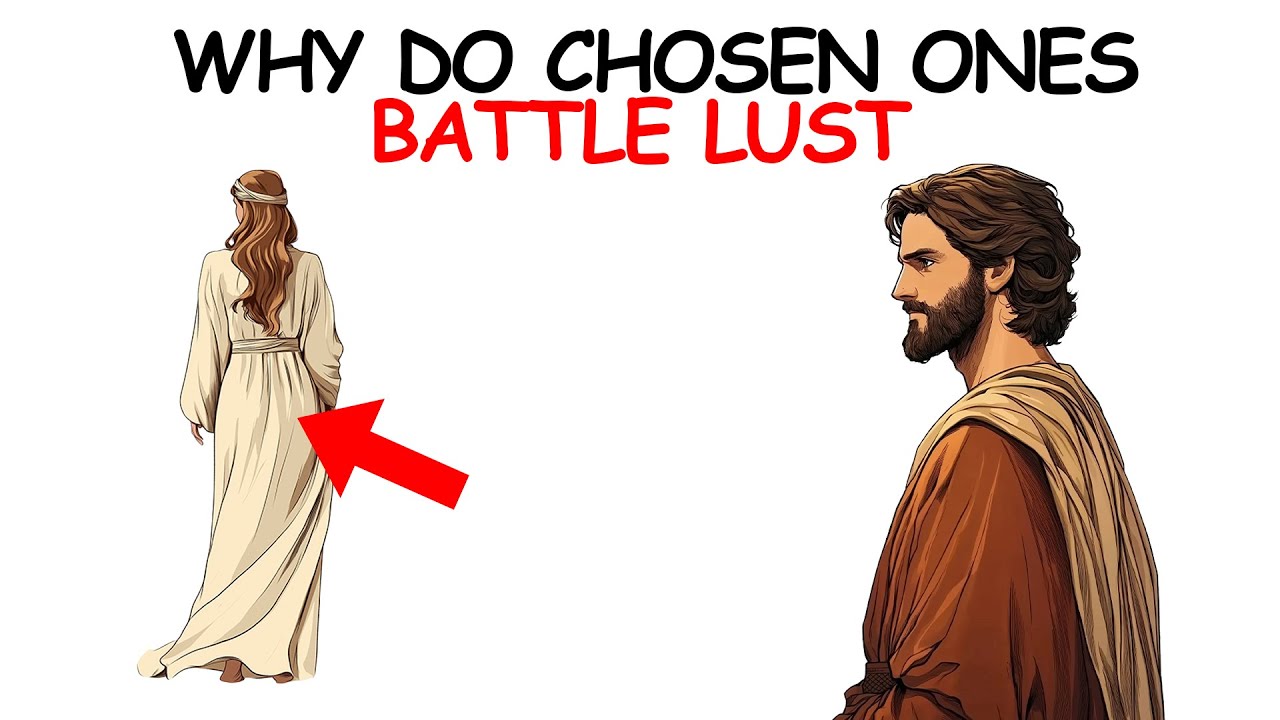
The burden of being chosen is not just about carrying a higher purpose; it also means facing greater temptations. Lust is one of the most insidious struggles that chosen ones must battle, often in silence. But why?
Why do those who seek enlightenment, wisdom, or a higher calling find themselves secretly wrestling with one of the most primal human desires? The answer lies in the paradox of awareness. The more conscious one becomes of their spiritual or intellectual growth, the more they become aware of their own weaknesses.
Lust is not just a physical urge; it is a force that tests the very foundation of self-control, discipline, and purpose. The struggle is not about mere indulgence; it is about the internal war between higher ideals and the temptations that pull one toward base desires. Chosen ones are often deeply introspective individuals—thinkers, visionaries, seekers of truth.
They see beyond the surface of reality, recognizing the illusions of the world and the transient nature of material pleasures. But with this heightened awareness comes a unique challenge: an acute sensitivity to the very desires they wish to transcend. Lust, in this sense, is not just a biological impulse; it is a distraction, a temptation, a force that diverts energy away from one’s higher calling.
Many spiritual leaders, monks, and philosophers have written about the struggle against bodily desires, warning that giving in too easily can lead to a loss of clarity, focus, and purpose. What is forbidden becomes more tempting. This psychological phenomenon explains why chosen ones, who often seek purity, discipline, or enlightenment, may find themselves more drawn to lust than the average person.
The very act of suppressing desire makes it grow stronger, creating an internal battle where the mind resists but the body craves. This struggle is seen throughout history. Religious figures, saints, and even great intellectuals have spoken about the temptation of lust as an unavoidable force that tests their dedication.
The more they resist, the more they feel its pull, because what is restricted becomes even more desirable. Chosen ones often walk a lonely path. Whether they are deeply spiritual, highly intellectual, or driven by a greater purpose, their journey often sets them apart from others.
This isolation breeds a deep longing for connection—emotional, intellectual, and physical. Lust, in this case, is not just about desire; it is about seeking intimacy in a world that feels distant. When one is set apart from the crowd, the need for physical or emotional closeness can manifest as a struggle with lust.
Many spiritual seekers find themselves torn between their aesthetic ideals and their natural longing for human connection. At its core, the struggle with lust is a battle between the physical and the spiritual. Chosen ones strive to transcend base instinct, seeking higher knowledge, purpose, and enlightenment.
But the body remains a part of the human experience, with its own needs and impulses. The challenge is not to eliminate desire entirely, but to master it— to control rather than be controlled. Many have sought to channel their sexual energy into creative pursuits, spiritual growth, or intellectual endeavors.
But the temptation remains, lurking in moments of weakness, testing their resolve at every turn. Lust is a secret battle for many chosen ones because they fear the consequences of admitting their struggle. Society often holds those on a higher path to a different standard, expecting them to be above human weakness.
This creates a hidden war—one where the chosen ones fight not just against their desires, but also against the shame of having them in the first place. But this struggle is not a sign of failure; it is a test, a lesson, a challenge that forces one to develop greater discipline and self-awareness. The struggle with lust is not just a momentary weakness; it is an ongoing battle that chosen ones must confront throughout their journey.
In Part One, we explored how heightened awareness, isolation, and the clash between the flesh and the spirit contribute to this struggle. Now we delve deeper into the unseen forces, psychological traps, and societal expectations that make this battle even more complex. Chosen ones often find themselves placed on a pedestal.
Whether they are spiritual leaders, intellectual visionaries, or individuals walking a path of enlightenment, society expects them to be above human temptations. But this unrealistic expectation only fuels the internal conflict. When someone is seen as a beacon of wisdom, they may feel immense pressure to suppress their desires completely.
But repression does not eliminate temptation; it only forces it into the shadows, where it festers and grows stronger. This leads to a dangerous cycle: the more one denies their human nature, the more it seeks to assert itself in ways that are difficult to control. This is why history is filled with stories of revered figures who have fallen from grace.
The world is quick to judge those who fail, yet it rarely acknowledges the impossible standards placed upon them. With knowledge, wisdom, and influence comes an undeniable attraction. Many chosen ones possess qualities that naturally draw others toward them, whether it be their charisma, intellect, or spiritual depth.
But this admiration can easily turn into temptation. Power itself is seductive; the ability to inspire, to lead, and to shape the minds of others creates an aura that can be intoxicating to those who come into contact with it. For the chosen one, this tension can become a hidden source of internal conflict.
Some resist it while others succumb. The challenge is not just external; it is a test of self-discipline. Can one wield influence without being swayed by the temptations that come with it?
Can they recognize when admiration turns into something more dangerous? Many who walk the path of wisdom are unprepared for the allure of their own power. Those who fail to acknowledge this reality are the ones most vulnerable to its pull.
Many chosen ones believe that their struggle with lust is not. . .
Just psychological but spiritual throughout history, mystics, monks, and sages have spoken of temptations as more than mere desires; they are tests of the soul. Religious texts describe figures who were tempted by demons, visions, or supernatural forces. Whether one interprets this literally or metaphorically, the idea remains the same: lust is not just a personal battle but a war waged on multiple levels.
Some believe that the more one ascends toward enlightenment, the more forces will try to pull them back down. It is not just about resisting temptation; it is about proving one's strength in the face of it. But this war cannot be won through fear; it can only be won through understanding, self-mastery, and a deep awareness of one's own nature.
The battle against lust is more than just a momentary weakness for chosen ones; it is a war fought in the depths of the mind, body, and soul. In previous parts, we explored the crushing weight of expectations, the seductive nature of power, the psychological traps of self-denial, and the hidden war within the subconscious. Now we dive even deeper into the forces that make this struggle so intense.
The things that are forbidden often become the most desirable; this is known as the forbidden fruit effect. When something is placed out of reach, it becomes far more tempting. For chosen ones, who often seek purity, wisdom, and discipline, lust becomes one of the most dangerous forbidden fruits.
The very act of suppressing it makes it more enticing. They may not even realize it, but by trying to shut themselves off from desire, they create an even stronger fixation on it. History has shown us that some of the most disciplined individuals, from monks to philosophers, have secretly battled overwhelming temptations.
The more one attempts to escape lust, the more it pursues them in their thoughts, dreams, and subconscious urges. This is why chosen ones must learn a fundamental truth: suppression is not the answer. True mastery comes not from avoidance, but from understanding and balance.
Many spiritual traditions believe that our struggles in this life are linked to our past lives. If someone carries unresolved karma, their soul may be drawn toward certain desires as a means of working through unfinished lessons. Chosen ones, who are often seen as old souls, may be carrying the echoes of past experiences, some of which manifest as deep-rooted struggles with lust.
This is why, no matter how much they try to resist, certain temptations seem to follow them throughout their lives. This does not mean they are doomed to struggle forever, but it does mean that their desires are not random; they are lessons waiting to be understood. The only way forward is to confront them, not as enemies but as teachers.
Lust is not just a desire for physical pleasure; it is a raw, untamed energy. This energy, when harnessed correctly, has the power to create, inspire, and transform. Many of history's greatest artists, poets, and visionaries channeled their deepest desires into their work.
Instead of letting lust consume them, they turned it into something greater: art, literature, philosophy, or spiritual enlightenment. For chosen ones, the real challenge is not eliminating lust but transmuting it. This concept is deeply rooted in spiritual teachings, from alchemy to tantra.
The idea is simple: sexual energy can be redirected into something far more powerful. Instead of allowing lust to become a source of shame or destruction, it can be used to fuel creativity, purpose, and higher consciousness. The key is learning to control it rather than letting it control you.
One of the reasons chosen ones struggle so deeply with lust is because they are often isolated. Their journey sets them apart from the masses, and with isolation comes loneliness. Loneliness creates an emptiness that seeks to be filled; lust becomes an escape, an attempt to feel connection, intimacy, or validation.
Even those who have committed to spiritual or intellectual paths find themselves longing for something more. This is not a weakness; it is human nature. But chosen ones must recognize that lust often disguises itself as a solution to loneliness, when in reality it is only a temporary distraction.
True fulfillment does not come from fleeting pleasures but from deep, meaningful connections—whether with oneself, with others, or with a higher purpose. The challenge is learning to distinguish between genuine connection and temporary gratification. At its core, the struggle with lust is a battle between mastery and slavery.
Either one masters their desires, or their desires become their master. Many chosen ones spend years, even lifetimes, caught in this struggle. Some give in completely, allowing their desires to consume them; others try to fight them with repression, only to find themselves falling even harder.
The truth is, neither extreme leads to true freedom. The only way to win is through understanding. Lust is not evil; it is energy.
When left unchecked, it leads to destruction, but when understood and redirected, it becomes one of the most powerful forces a person can wield. Lust is not evil; it is energy. When left unchecked, it leads to destruction, but when understood and redirected, it becomes one of the most powerful forces a person can wield.
Those who learn this secret become unstoppable; they no longer live in fear of their own desires. Lust is a force as old as humanity itself. It has been praised, feared, suppressed, and indulged.
But for chosen ones—those destined for higher knowledge, spiritual awakening, or great purpose—the struggle with lust is not merely a moral dilemma; it is a battle of the soul, a test of mastery over the most primal aspects of human nature. In this final chapter, we explore the ultimate resolution to this struggle: the path to liberation and the wisdom needed to transcend the cycle of temptation and guilt. Many chosen ones believe that discipline alone can keep their desires in check; they impose strict rules.
Engage in self-denial and try to avoid any situation that could trigger temptation, but lust is not something that can be eliminated through sheer willpower. In reality, suppressing it does not destroy it; it only forces it into the subconscious, where it festers, grows, and finds new ways to manifest. This is why so many people who claim to have conquered their desires end up falling harder than ever before.
The key is not control through force, but control through understanding. Lust is a natural part of existence, and denying it only gives it more power. The goal is not to eliminate desire, but to master it.
Lust, at its core, is energy, and energy cannot be destroyed, only transformed. This is the secret known to sages, mystics, and spiritual masters throughout history. Instead of repressing desire, they learned to channel it into something higher.
This concept, known as sexual transmutation, is found in ancient traditions like Tantra, Taoism, and Alchemy. It teaches that the raw energy of desire can be redirected into creativity, ambition, spiritual growth, and even enlightenment. Great artists, thinkers, and leaders have used this power to fuel their greatest works.
Instead of allowing lust to consume them, they turned it into poetry, philosophy, art, and wisdom. For chosen ones, the challenge is not in resisting temptation, but in learning to wield this energy for their true purpose. Lust is often seen as purely physical, but for those on a higher path, it is also deeply spiritual.
Every desire we experience is a reflection of something deeper: an unmet need, a longing for connection, or a search for meaning. In many traditions, lust is considered a lower vibration of a much higher force—divine love. When we seek pleasure, what we are truly searching for is fulfillment.
But lust alone can never provide that; it can only offer temporary satisfaction followed by emptiness. This is why chosen ones must go beyond the surface. Instead of being trapped in cycles of desire and regret, they must look deeper into their own hearts and ask, "What am I truly seeking?
" For many, the answer is not physical pleasure, but a sense of unity, love, and purpose. The moment they realize this, lust loses its grip; it becomes nothing more than a shadow of something far greater. Greater mastery over lust is not achieved through repression nor through indulgence; it is achieved through wisdom.
The final step is acceptance. To break free, chosen ones must accept that they are human, that desire is part of their nature, but they must also recognize that they are more than just their desires. They are not slaves to temptation, nor are they defined by their struggles.
When a chosen one reaches this state, lust no longer controls them; it becomes just another tool in their journey—an energy that can be used for something far greater. Master your desires, and you will master yourself, and when you master yourself, there is nothing in this world that can stand in your way. If you found value in this journey, be sure to like, subscribe, and share this message with others on the path.
There are many struggling in silence, searching for the wisdom that you now hold. Let's spread this truth and awaken more chosen ones to their destiny.