Hi everybody, Alex here from Expert Forex and in this video I'm going to take a previous video which is which was called grid trading explained that experienced 360,000 views. So there a lot of interest in grid trading. I'm going to take that video and move it on into more advanced grid trading techniques.
The other thing is that expert forex has many trading robots. Now, many traders that trade our profit retrieval type robots do not realize that they are actually trading aspects of grid trading. Now, this video will further explain the gap between grit trading and profit retrieval trading.
And many of our clients will be very surprised. And that's why we've made this video bridging the gap between grid trading robots as you can see grid being traded to profit retrieval type of robots. Okay.
So, let's start straight away. Now, here's the initial simple grid system. So, grid trading is a random trading system.
In other words, it doesn't matter which way the tra the price moves, you will make a gain on that movement. And that's the whole idea of grid trading. It's a set and forget random trading technique.
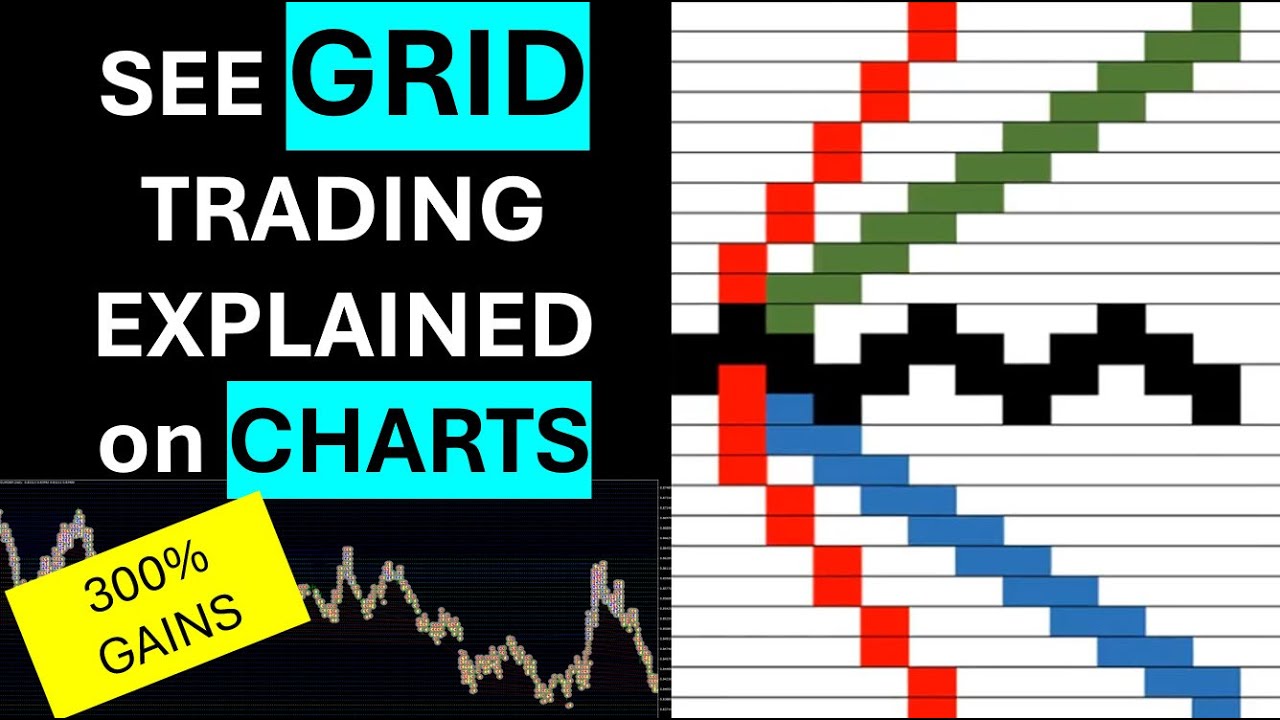
So, how do we make this a random trading technique? So we essentially take a chart and we divide the chart into grids. Now a grid is basically just lines on a chart and it is separated by a distance and we call that the gap size and and on your screen here you can see a chart that has a red line in the beginning which is the starting point and then the grid has been established upwards and downwards and they are consistent grid grid gaps that occur.
So how does grid how does grid trading then operate? So firstly it says in the beginning you start with a buy and a sell. Now what does that do?
That assures that no matter which way the tra the price moves you will have a positive transaction and then transactions only occur at grid level. So the target for the sell for instance would be on the bottom grid the next bottom grid level or the target for the buy will be at the next top grid level. So it's a nice it's a nice automated system.
It has built-in targets and that's how it operates. So when one of the transactions, one of the buy and sell transactions reaches the next grid level, it will be positive and you cash that in. One of the legs will be negative because it's gone the wrong way and you just leave those open.
As simple as that. And then you let price action happen. And then what the next thing you do is you make sure there's a buy and a sell opportunity at the next grid level.
So you would enter a buy and sell at that level. So that you're always assured of a positive trade if the price moves from one grid level to a next level. Now a lot of traders, oh but that's silly.
It's buy and sell. You're not making money. But what all I can say is you need to try the system and you'll realize that transactions repeat themselves.
In other words, the price moves up and down like a wave and it visits the same grid level over and over again and therefore you're cashing in more than what your negatives accumulate. Now, that can sometimes take a while before you reach a point where you've cashed in more and you than your negatives and we'll look at that later on. But that's essentially how the grid system works and it is profitable.
You just need to there are few um areas that need attention and the first one is you need to have gap sizes that take the volatility of the instrument that you're trading. So if it's a high volatility instrument, you might have gap sizes of 100 pips. If it's a low volatility instrument, you might have gap sizes of 30 pips.
That is one of the key success factors of grid trading. You have to have your grit sizing really good. And don't worry, we give you guidance in that area.
And this basic grid is actually free. You can download it for free. There will be a link in the description of the video as well as in the commentary of the video.
So, I hope you understand how the basic grid works. And here's an example of the free grid trader. It's it says all you need to tell it is what kind of grid size you want and what kind of lot sizing you need.
only two entries. How's that? That's so simple.
The most simple EA that you could ever imagine. But we do give you guidance. And here's the guidance.
We say these currencies need that gap size. And depending on the size of your account, that's the kind of lot sizing that you use. So we actually give you the settings.
You don't have to guess. You don't have to back trade. You don't have to do all kinds of things.
There are the settings. Okay. So let's move on to the next strategy.
And that's generation two because we have created EAS that trade these specific strategies. So generation two says, well, we don't want all of these open trades to just be there all the time because you could end up with, let's say, 12 open trades. They could be accumulating overnight charges.
It's expensive. We want to close those trades. And how do we close it?
We say since the start that we've done there will be transactions that have been cashed in and there will be transactions that are remain open. Once the total of the cashed in transactions and the total of the open transactions is positive and equal to a profit figure that you can put uh do in the input. So in other words, you can say to the ear robot, I want a profit of $20 or $10 or whatever.
Once it reaches that point, it will close all the trades. So you'll have zero open trades and you'll have zero draw down and then you start trading again from scratch. So that's the next refinement to grit trading.
we add what we call a basket closure and those details are shown on the chart and you can purchase this particular grid trader for495 and again the link will be in the description. So we have the basic strategy and this is strategy two two and now we onto strategy three which we call generation three because that's what the robot is called. And what that says and if we go to back to generation if the price starts running very strongly in one direction.
What can happen is that you could accumulate a lot of negative open trades. So in this case you would have 1 2 3 4 5 6 7 eight negative trades when it reaches that particular point. So one way of doing that is varying the grid sizes.
So as the price moves in a certain direction you would increase the grid size and that in fact is what generation 3 does. It says okay we're starting over there it goes up we then in this example that's only example I'm just showing you that let's say we double our grid size so the next grid side is not over there but over there and then we double it again so the next grid size is over there so instead of having eight open trades you have 1 2 3 4 so that's a a riskmanagement tool to that builds safety into grit trading and you can purchase this particular version a whole grid trading which incorporates generation 2 uh for $80 and again the the link will be in the description. And here's an example of generation 2 and generation three being traded very successfully.
This account has doubled its balance of $300 in 53 days and it has very little draw down. Now we get a little bit more complicated and we say okay how can we improve risk management but also increase profitability at the same time. So what we then said is we say why don't we have a with a trend grid and an against the trend grid.
So why that is important is that the with the with a trend grid is a smaller grid like there as you can see and the against the trend is as you've seen before it it increases the side of the grid as it's trading against the trend. Now why do why would you want that? And the reason is because if you do it on for both legs then uh it has to move a lot.
Let's say that's uh 100 pips or even 200 pips. The price has to move a lot to get to the next grid level. But if you say no, for the the price action that is with a trend, we're keeping the grid small, then there are more cashin opportunities and more multiplication opportunities.
Multiplication applies to where the price visits the same price level over and over again. So the price might go not go straight up there. It will go up and down, up and down, zigzag all the way up, up like that.
And therefore you have multiplication opportunities to cash in over and over again. And therefore this technique generates more income. So creating more income is a way of risk management.
So we look at the risk control there and we say profit maximization is a method of controlling risk. So this me this generation 4 you control risk by h trading by having gap sizing that takes volatility into account and we have already shown you we tell you the grid sizes we have b market closures to not have too many open deals and uh we have increasing grid sizes for against the trend uh price action and then we have pro profit maximization for the with the trend price action. So this is actually a an incredibly powerful grid strategy v variation.
I think this is variation four. And here are the trading principles which I've already mentioned. And uh you can purchase that.
It will be available this week. We're hoping to launch it this week. And the likely price is about $120.
So, watch out for the YouTube videos or your emails for notification of this launch. Now, just an aside, we have a grid trader called the grid trend multiplier. It has a combination of these strategies, but it has a lot more.
I just want to make you aware of it. It has a lot more than I've already covered in this video, but it also has a lot less in that certain of the uh strategies are not built into the grit trend multiplier. It is, however, an incredibly powerful one.
It has won numerous trading uh competitions over the years. It is quite an old one. I think it's around uh 10 or 12 years old.
We've been trading grit uh techniques for over 20 years. So, just making you aware of that particular EA. So now this is where we're going to bridge the gap between grid trading and profit retrieval robot.
So let's have a look and and owners of our robots are going to be completely surprised by this. So the heading here is already in place. So it's actually another technique that you can use in grid trading but we already have them in place.
And what we say we say we take generation 4 but we add the trade direction. So instead of going buy and sell in the beginning, we say no, we want to buy or no, we want to sell and we use different techniques to determine that. You can use indicators, you can use all kinds of other techniques.
So it just adds that little bit more feel of control to the trading. The other aspect that we do is we say in grit trading up to now we've assumed the same lot sizing. So you let's say that's lot sizing one.
Every single transaction would be lot sizing one. Now you can actually add more safety and more profitability if you vary your lot sizing. So you could either increase your lot sizing from the beginning uh uh upwards or you could decrease your lot sizing.
So if we add those two elements, the trade direction in the beginning and the lot sizing, we come very close to existing EAS that we already have. And the profit retrieval process is nothing more than a grid process on its head because it starts operating when only once uh you have two transactions that are negative. So there's an added risk control element in that you have a higher probability start chance.
And for more details about how these EAS work, please visit the marketing pages of the Lucky Trader, the Wave Liberator, the RSI Liberator, and the Hedged EA. And again, links for those robots will be in the description of video, as well as the commentary of the video. And here's an example of the lucky trader.
Now, the lucky trader has a one month trial period. So if you don't if you'd like to go and test these principles, go and do this trial period on the lucky trader and you'll start experiencing grit the and here's an extract of the input from the RSI liberator. And you can see here it uses the RSI to determine the direction of the first trade.
And it also has a a a price gap of 30 it starts with and it scales. So it says do you want to scale from the first one or the second one and how much do you want to scale and in this case it's 105% is the scaling you they also scale the lot sizing so it says we starting with 0. 01 and we will multiply that byund 110% so the lots will increase as the transactions move away from the starting point.
So here you see a practical application of grid trading within the liber liberator range and then we have a further refinement. Now the further refinement gets quite complicated in that you can vary the grit sizes quite dramatically. So you can have increasing grits for a while and then decreasing grits for a while.
You can have increasing lot sizing for a while and then decreasing lot sizing. So, it's it it gets a little bit complicated. And we have one EA that does this complicated stuff.
It's called the profit retriever, and it allows you to be more more dynamic with your lot sizing and and grid sizing. So, let's have a look at some of the settings used by the profit retriever. So, here's an example.
Price gap again. After how many movements do you want to start it start it off? Uh do you want to use a percentage based or pip based?
In this case they select this percentage and it will increase by 110%. So the lot sizing uh the gap sizing is controlled but then it says okay now we're starting with 0. 02 lots.
That's the starting point. um we want to change it and uh so we want to do it by 80%. So every time the it goes to a new grid level it will uh use 80% of the original lot sizing.
So 80% then the next one will be 80% of that one and and so on until the lot sizing in this example reaches 0. 0806. So it goes from 02 to 06 because it's decreasing but it says once you've reached 02 06 start increasing the the lur.
So in this case it's it increases by 130% until it reaches. 3. Now I must say this is a little bit complicated.
It is the top end of group trading. So you can vary and obviously you can do the opposite. You can increase in the beginning and decrease later on.
So there's a lot of variety that happens there and that's how the profit retriever works. Now as I mentioned earlier the grid sizes are the most critical elements of any grid trading and just as a guideline 50% to 80% of the daily ATR. So that's the a uh the average true range that's the range that a currency would trade in a day.
And here's a table from our currency selector EA uh that actually measures that over a period of time. So it's an average over let's say 10 days or or 20 days. And it will say the Aussie New Zealand has only moved 37 pips on average in a day whereas the uh pound oz has moved 131 pips in a day.
So what we're saying is take 50% to 80% of the average range is a guide to what's what what the grid um sizes should be. The smaller the grid size, the higher the risk but the higher the profitability. So it's a balancing act.
The bigger the grid size, the safer it is but the lower the profitability. But grit sizing is highly important and this is where a lot of grit traders fail in that they use grid sizes that are too small. Rather use a grid size that's too big than a grit size that's too small.
Now, I hope I've achieved my objective for this video. I hope I've shown our existing clients how the grit trading principles are built into profit retrieval robots already. So, you're going to go and buy them already.
They're there. And as I said earlier, links to anything mentioned in this video will be in the description of the video as well as the first commentary of the video. Also, I hope I've taken you from the basic grid concept that people have in mind which is a fairly it works but it has risks and that's why we build in different strategies to eliminate the risks and to increase the profitability.
Now you know that this is this introduction to GR trading and now you know of a whole lot of other strategies that you can apply to GR trading and as you see most of the strategies are fully automated. Now I hope you've enjoyed this video and from me Alex Deploy cheerio. Just a reminder to join our expert forex community of over 30,000 Forex traders.
It is free, so don't miss out on any new developments.